
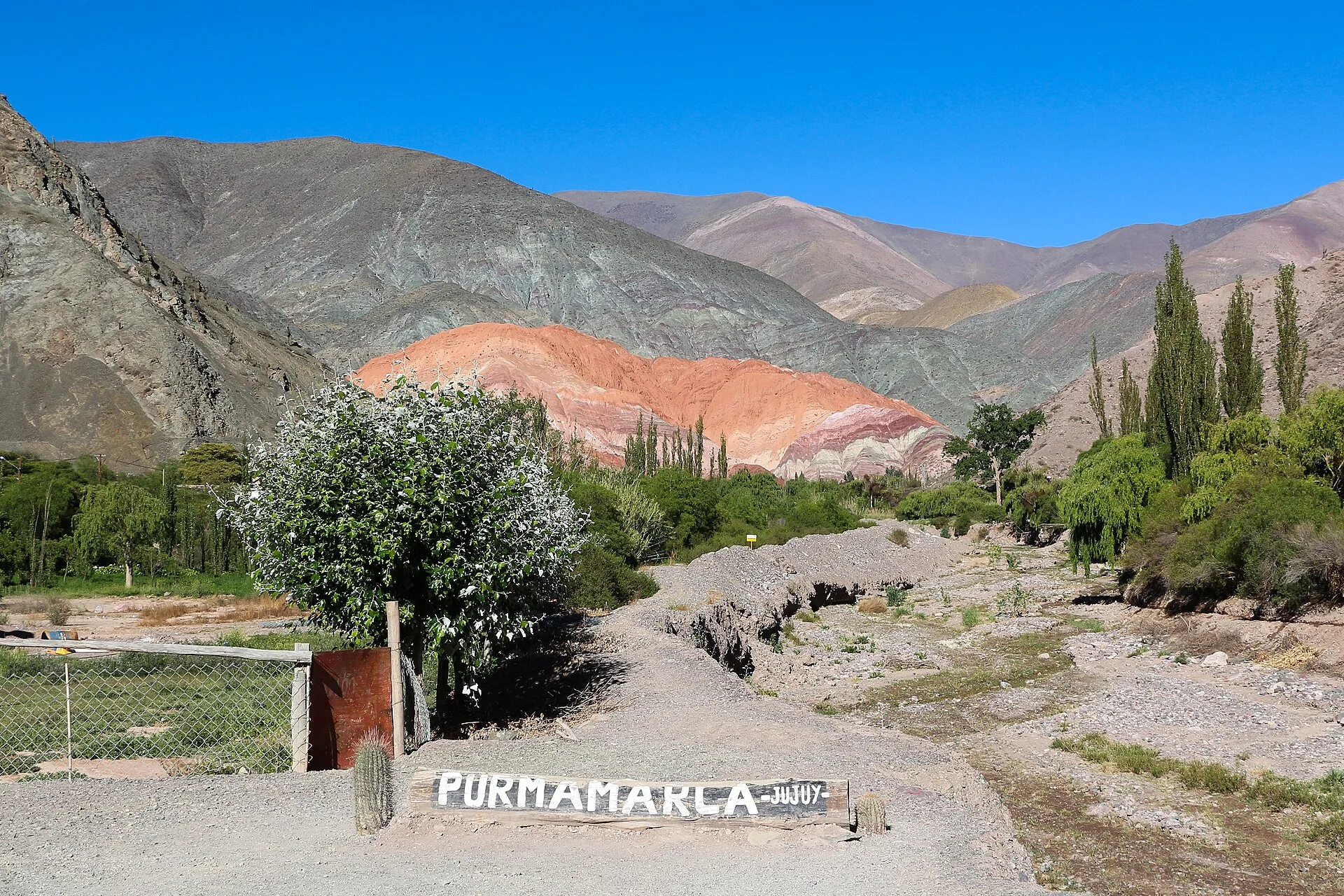
This is the essential short loop through Argentina's far northwest, built around two bases: colonial Salta and high-Andean Jujuy. You spend two nights in Salta soaking up its plazas, its astonishing Inca-mummy museum, and the red-rock canyons and Torrontes vineyards to the south, then ride a short bus north to San Salvador de Jujuy for two nights using it as the gateway to the Quebrada de Humahuaca, the UNESCO-listed valley of painted mountains. Over five days you take in the seven-coloured hill of Purmamarca, the pre-Inca Pucara fortress and daily craft market of Tilcara, and the blinding white Salinas Grandes salt flats up on the altiplano. The two cities are barely two hours apart by road, so a single bus leg connects them and the rest of the distance is covered on easy day trips. Each day below is time-blocked around real places, with practical tips on altitude, timing, and what to skip. It is paced for the long, dry, sunny shoulder seasons.
5 Days in Argentina's Andean North: Salta & Jujuy
The route
- Salta2n
- Cafayate0n
- San Salvador de Jujuy2n
- Purmamarca0n
- Tilcara0n
Everywhere you'll go
Every stop on this itinerary — tap a card for details or to save it.
Plaza 9 de Julio
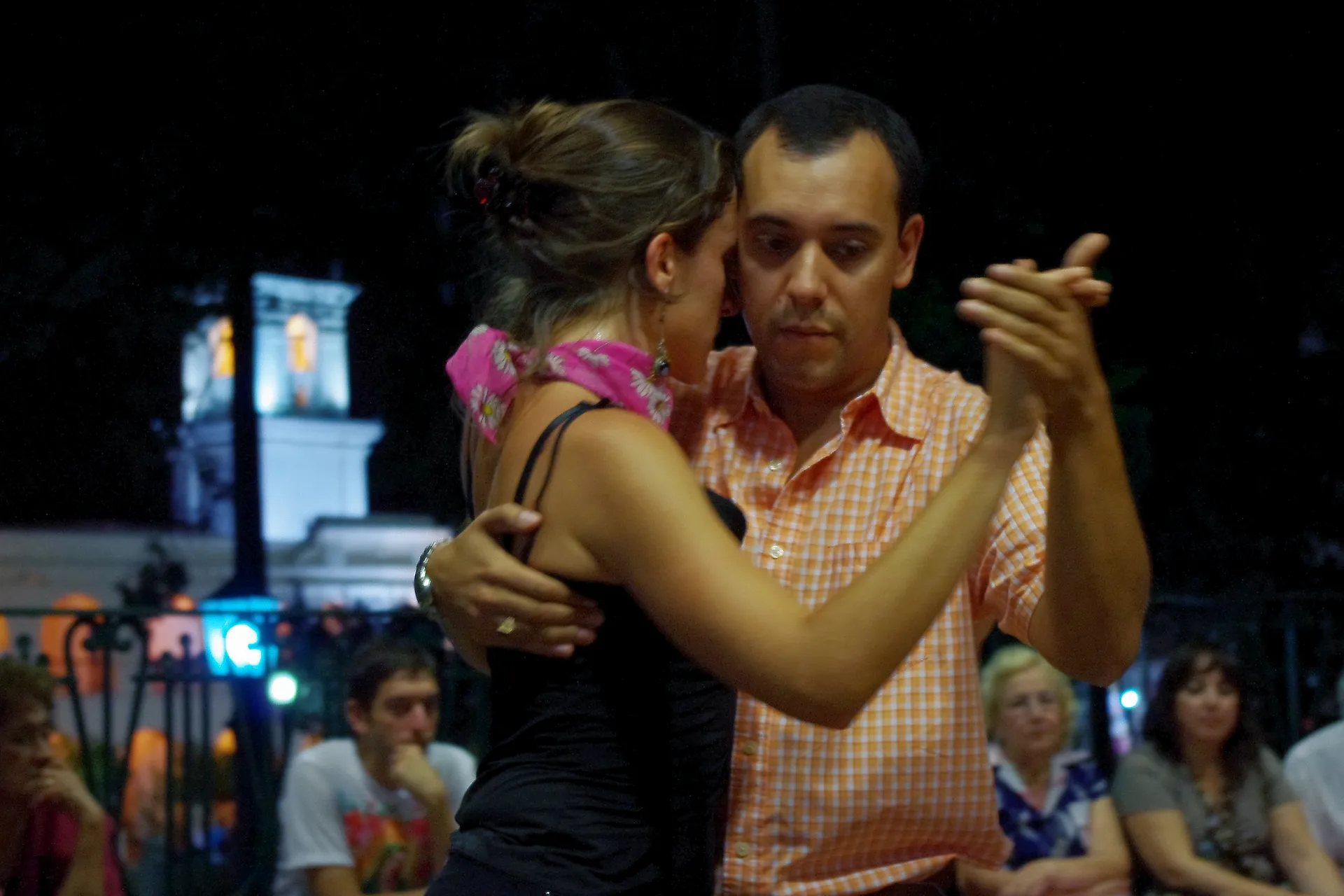
The heart of Salta and one of Argentina's most beautiful main squares. Surrounded by colonial buildings, the cathedral, the Cabildo, and shaded by mature trees. Outdoor cafes line the perimeter.
MAAM - Museo de Arqueologia de Alta Montana
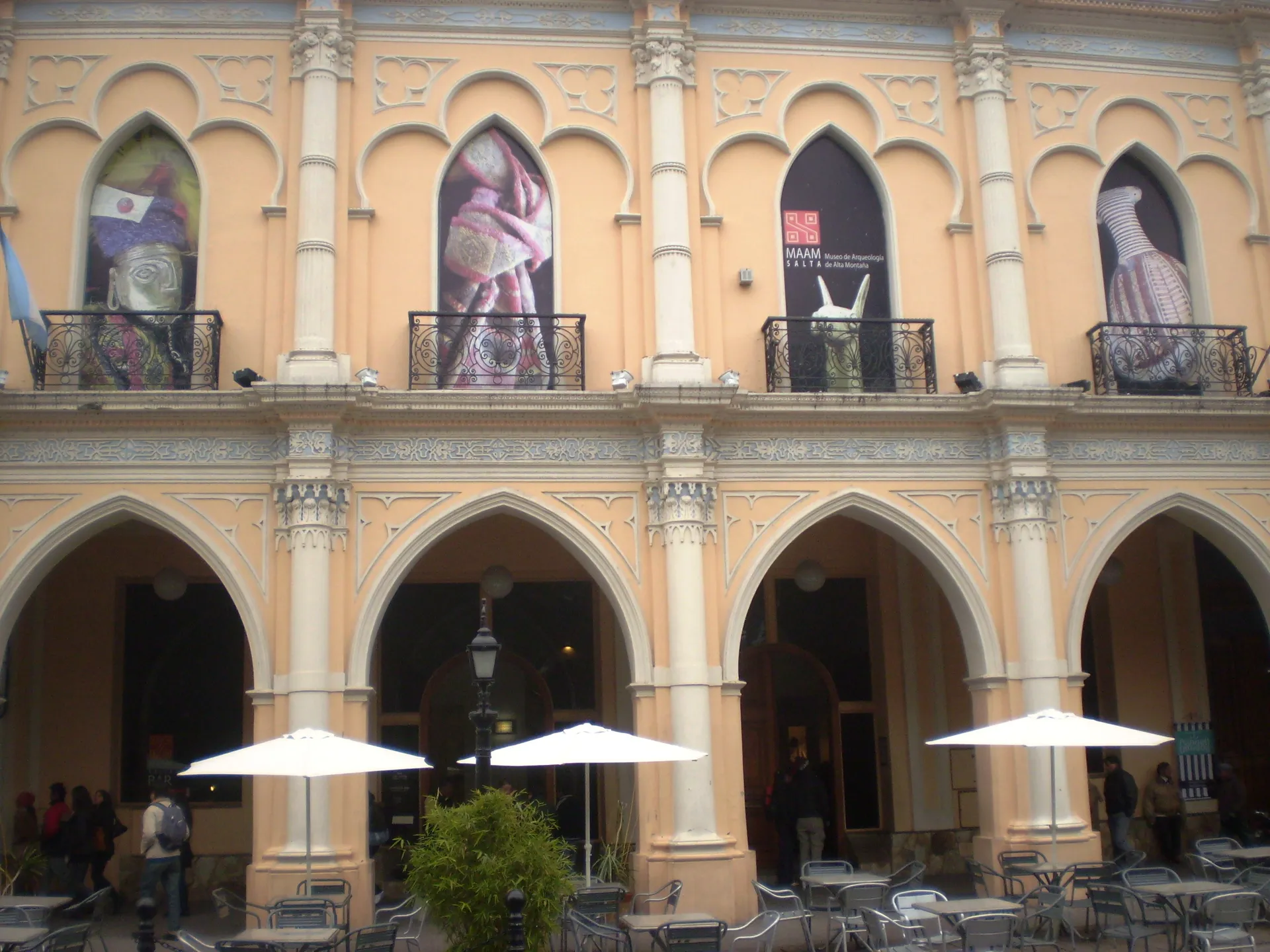
World-renowned museum housing the Children of Llullaillaco — three remarkably preserved 500-year-old Inca mummies found at 6,739m on Volcan Llullaillaco. One of the most extraordinary archaeological displays in South America.
Catedral Basilica de Salta
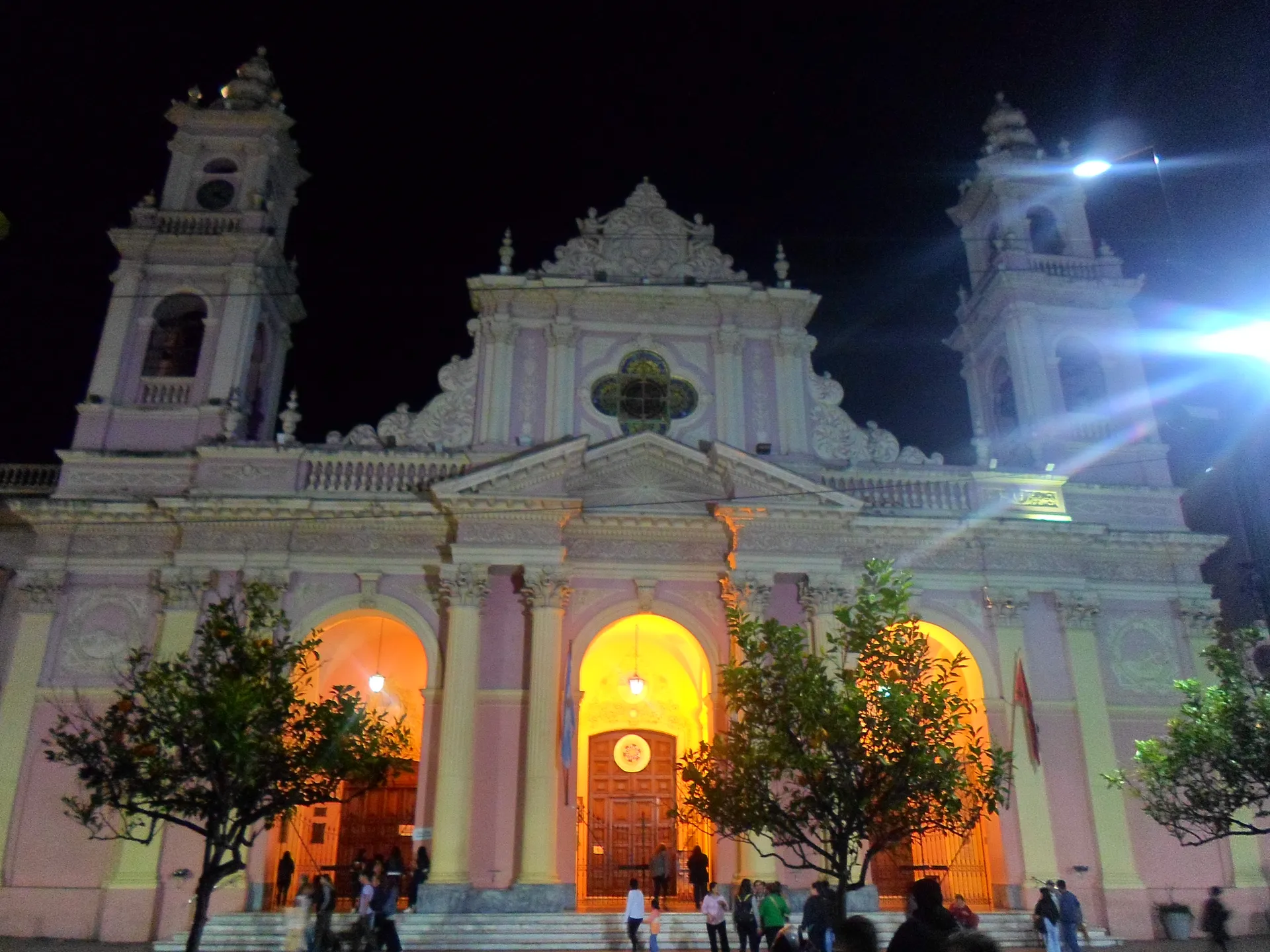
Stunning 19th-century cathedral with an ornate salmon-pink facade facing Plaza 9 de Julio. Houses the images of the Senor y la Virgen del Milagro, Salta's patron saints. The interior is richly decorated with gold leaf and frescoes.
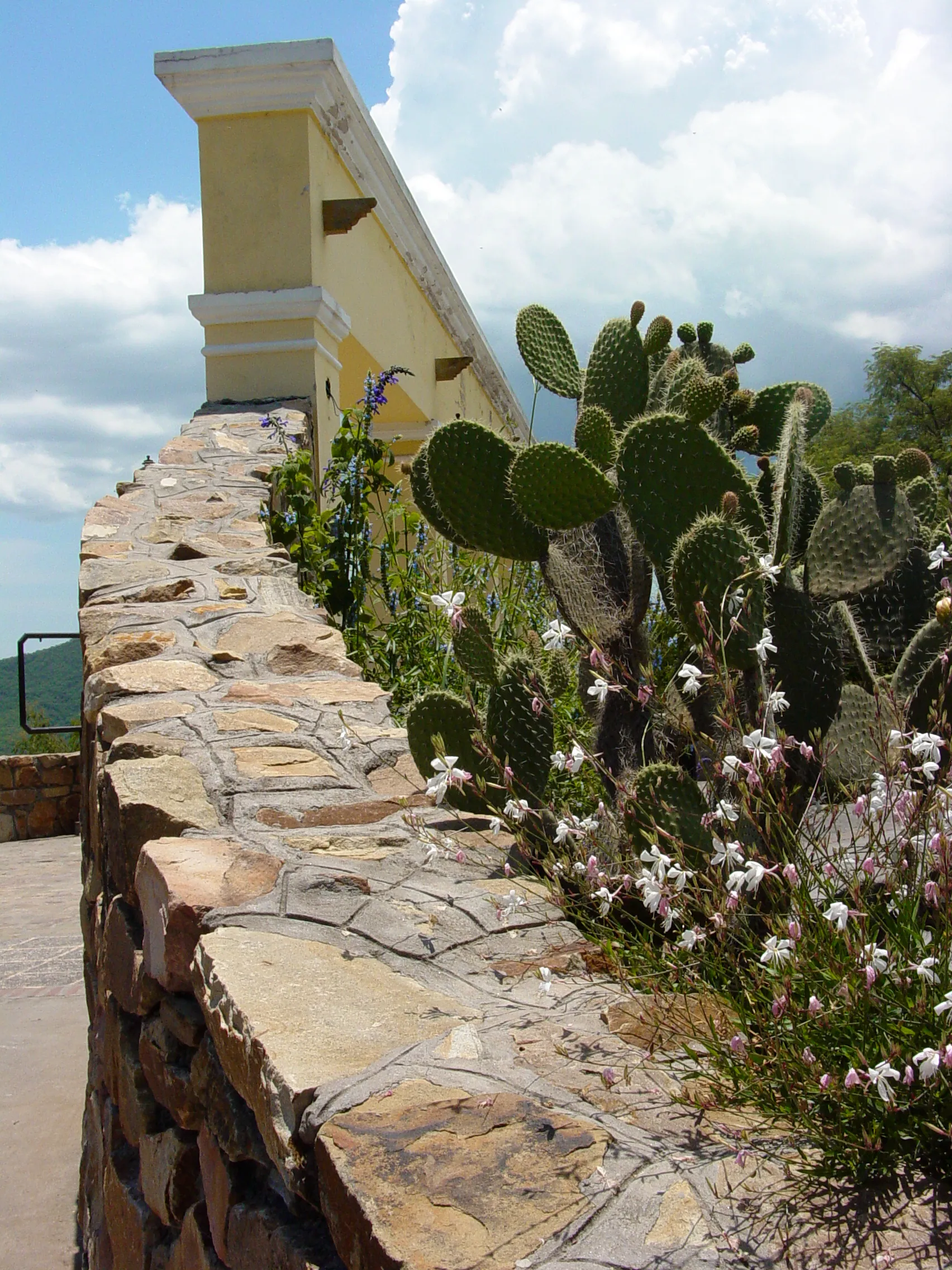
Cerro San Bernardo
Hilltop viewpoint offering panoramic views of the entire city of Salta and the surrounding valley. Accessible by teleferico (cable car) from Parque San Martin or by a 1,000-step stairway. Gardens, waterfalls, and a cafe at the summit.
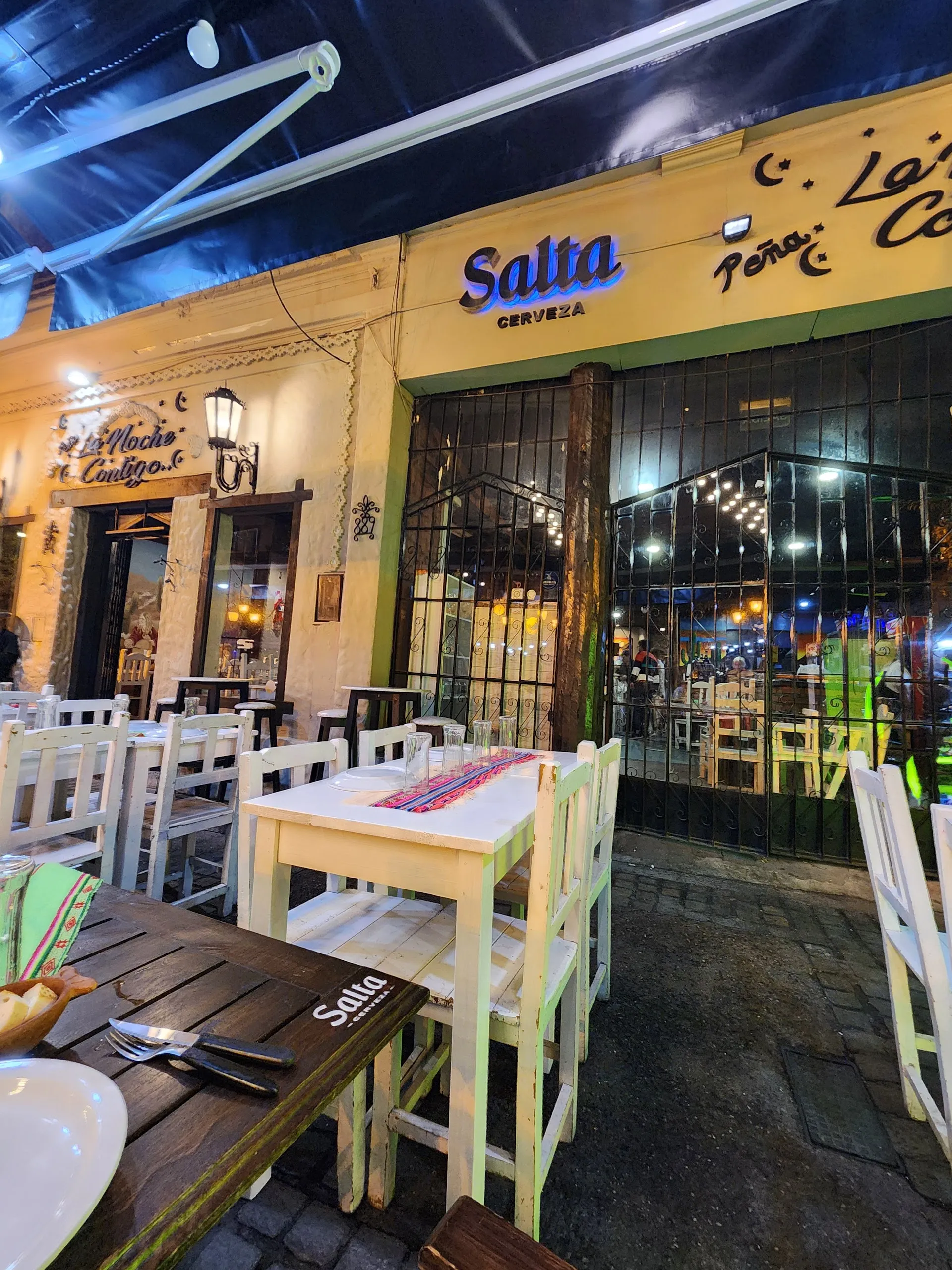
Pena Folklorica Night on Balcarce Street
Experience the northwest Argentine folklore tradition at a pena on Balcarce street. Live performances of zamba, chacarera, and baguala music with audience participation, dancing, and regional food and wine. Salta is the cultural capital of Argentine folklore.
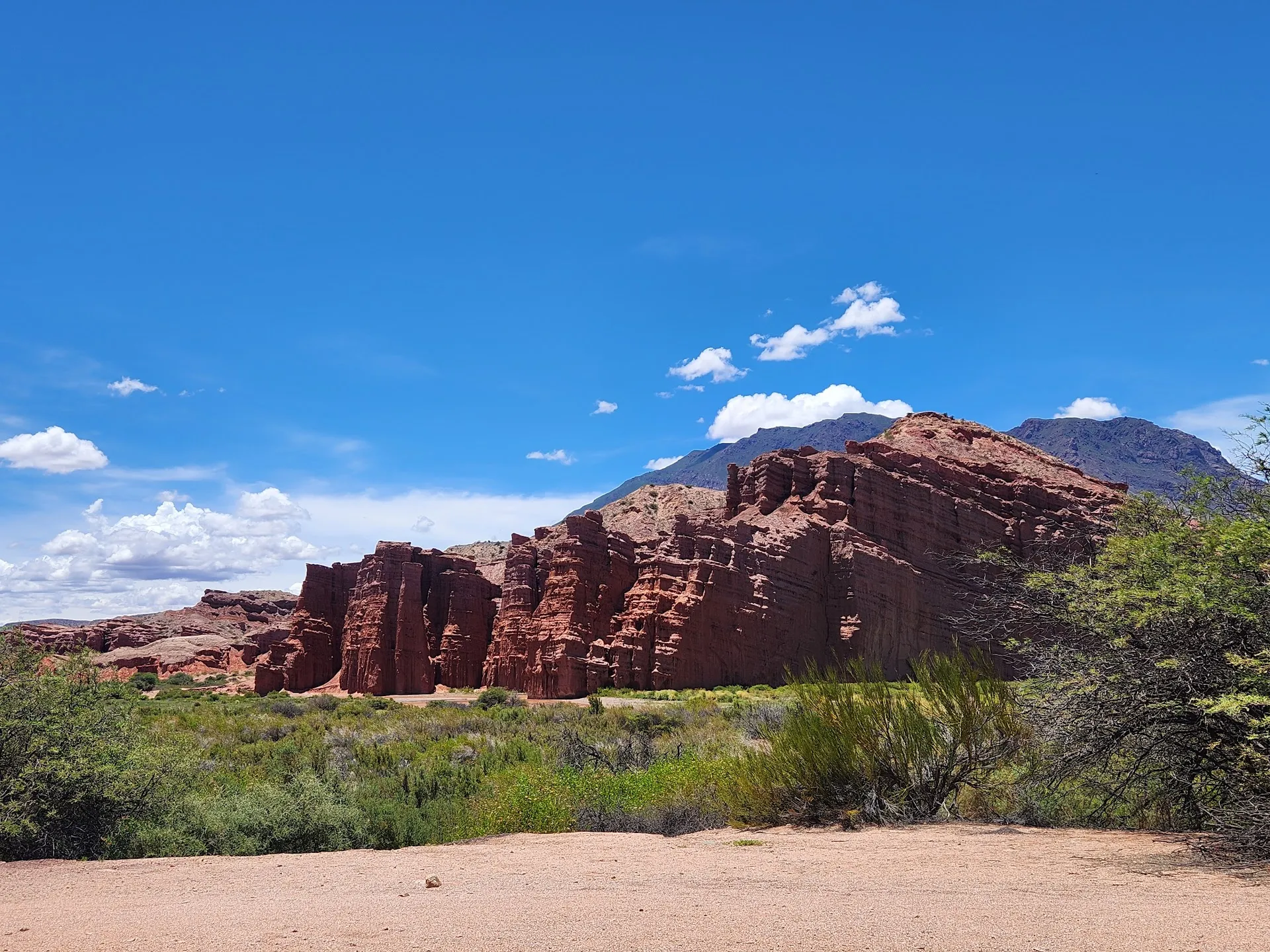
Quebrada de las Conchas Drive
Drive through a spectacular red rock canyon with surreal wind-eroded formations — the Garganta del Diablo, El Anfiteatro, El Sapo, and El Obelisco. The 180km route from Salta to Cafayate is one of Argentina's most dramatic drives.
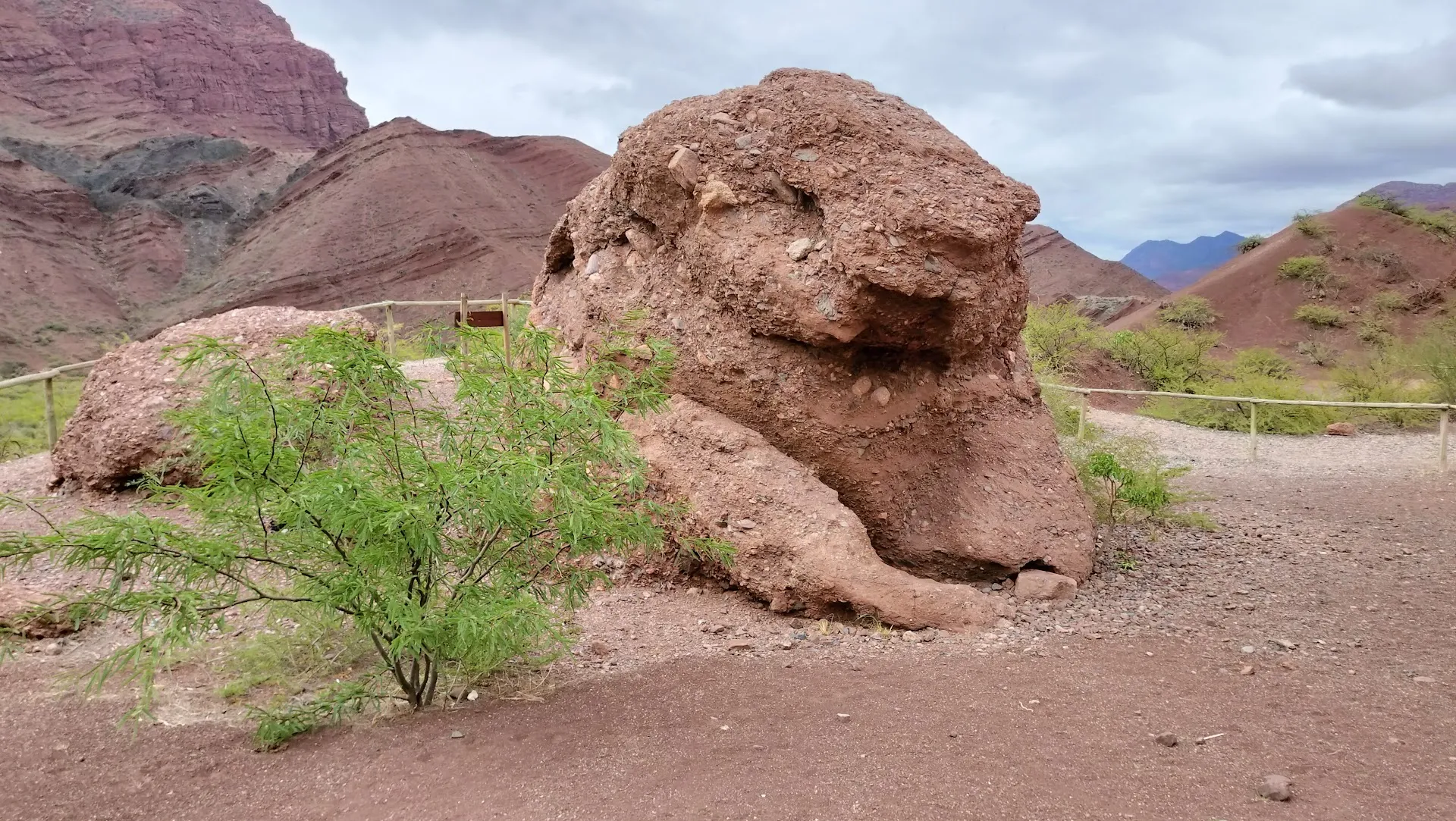
El Anfiteatro - Quebrada de las Conchas
A natural amphitheater carved by wind and water into towering red sandstone walls. The acoustics are extraordinary — a whisper echoes around the circular chamber. One of the most dramatic formations along the Quebrada de las Conchas route.
Torrontes Wine Tasting in Cafayate
Taste Argentina's signature white wine at its birthplace. Cafayate's high altitude (1,660m), intense sun, and dramatic temperature swings produce exceptional Torrontes with intense floral aromatics. Visit boutique and historic bodegas along the RN 40.
Cafayate Vineyards at Sunset
Vineyards at 1,660m surrounded by red sandstone mountains create one of the most dramatic winescape settings anywhere. The late afternoon sun turns the mountains a deep crimson while the ordered rows of vines catch golden sidelight. Many bodegas allow vineyard walks.
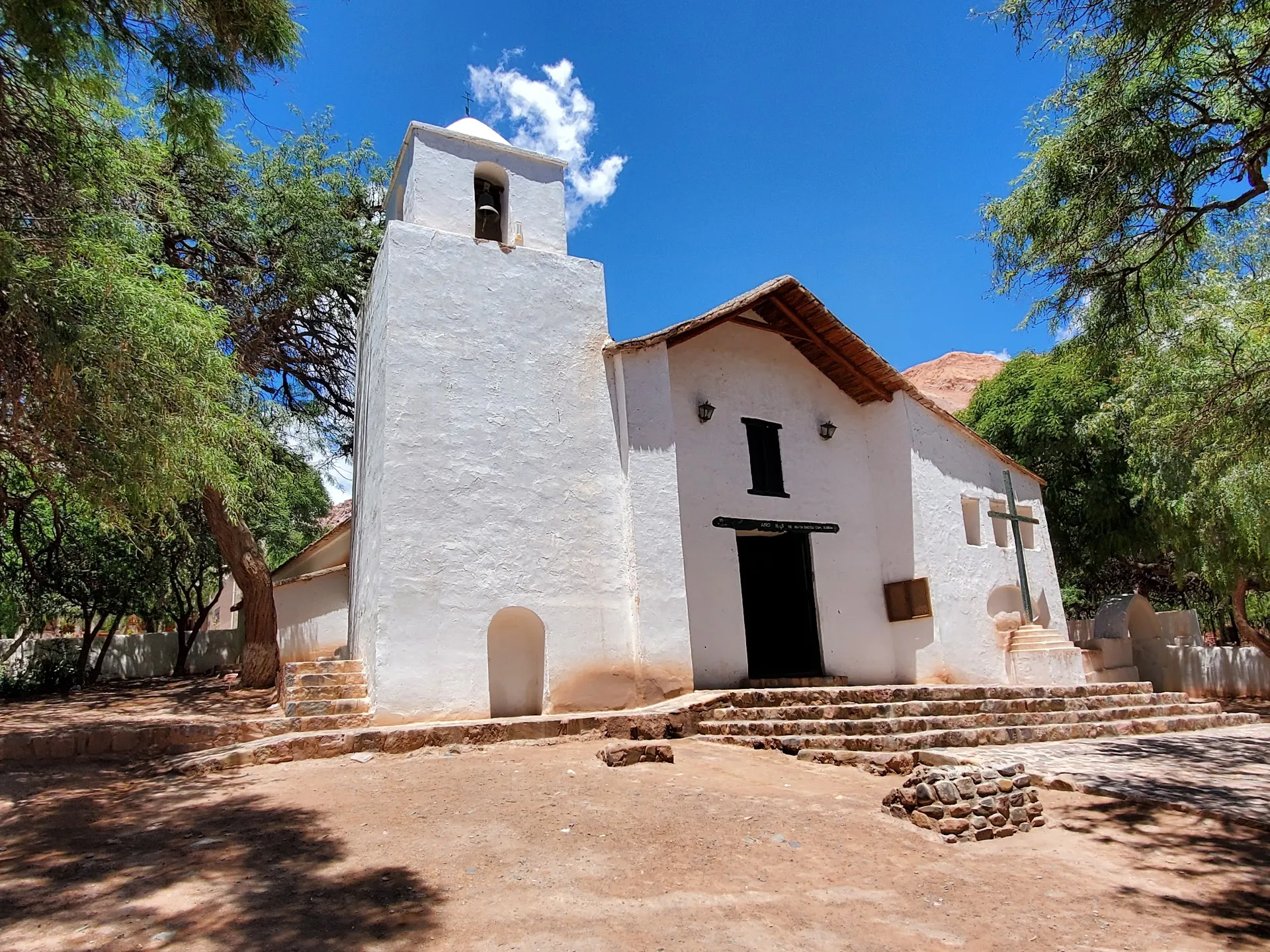
Iglesia de Santa Rosa de Lima
Adobe-walled colonial chapel facing Purmamarca's main plaza, roofed with cardón-cactus wood in the Hispano-American Mudéjar tradition typical of the Quebrada de Humahuaca; a carved lintel dated 1648 places it among the valley's oldest standing churches. Declared a National Historic Monument in 1941, its narrow single nave holds 18th-century oil paintings attributed to the Cusco School.
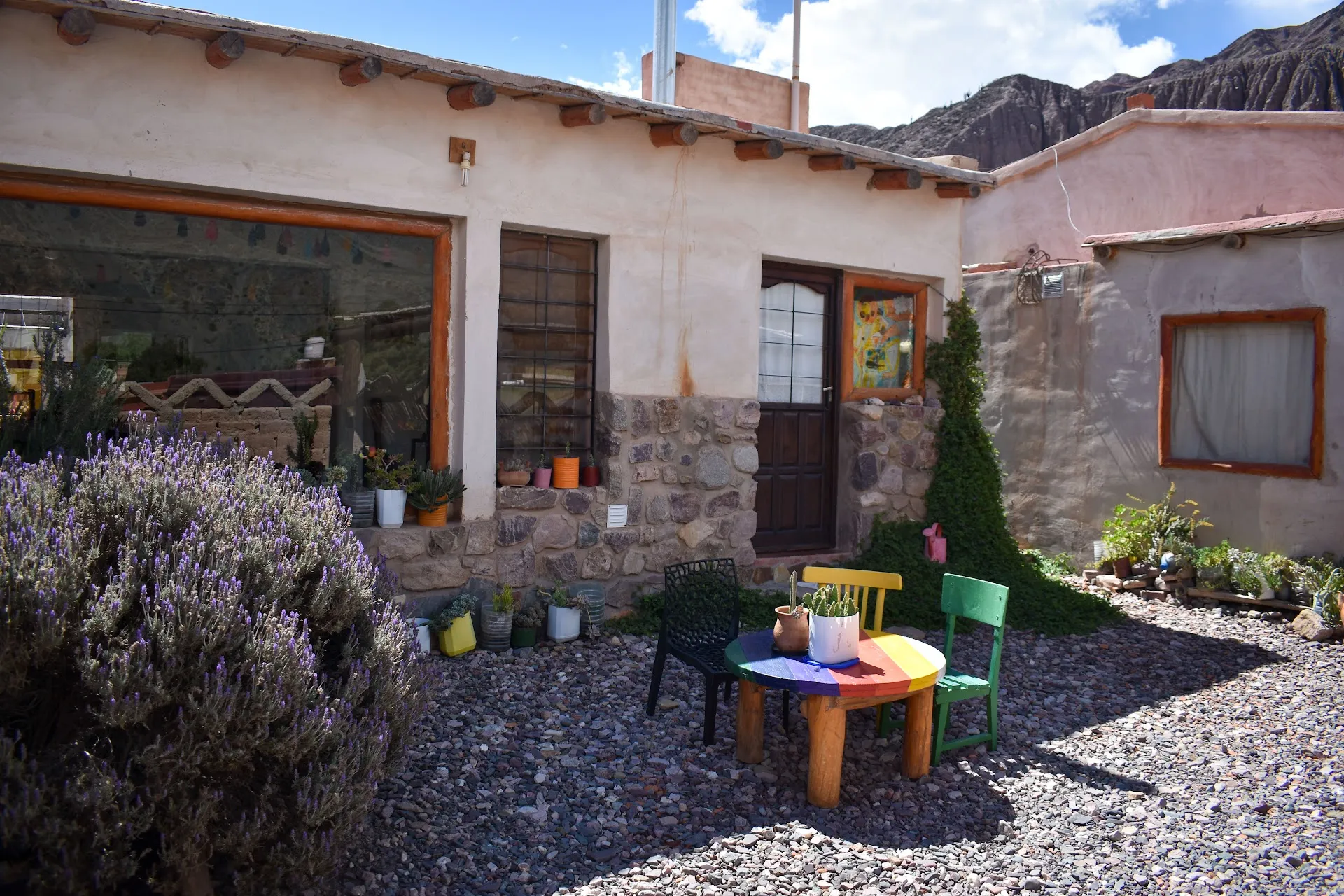
La Pushka (taller de tejido)
A working weaving workshop run out of artisan Marta Valdiviezo's family inn, where she continues the spinning technique on the pushka spindle passed down from her great-grandmother. She and other local women teach the craft on antique looms using naturally dyed llama and sheep wool, producing scarves, shawls and blankets.
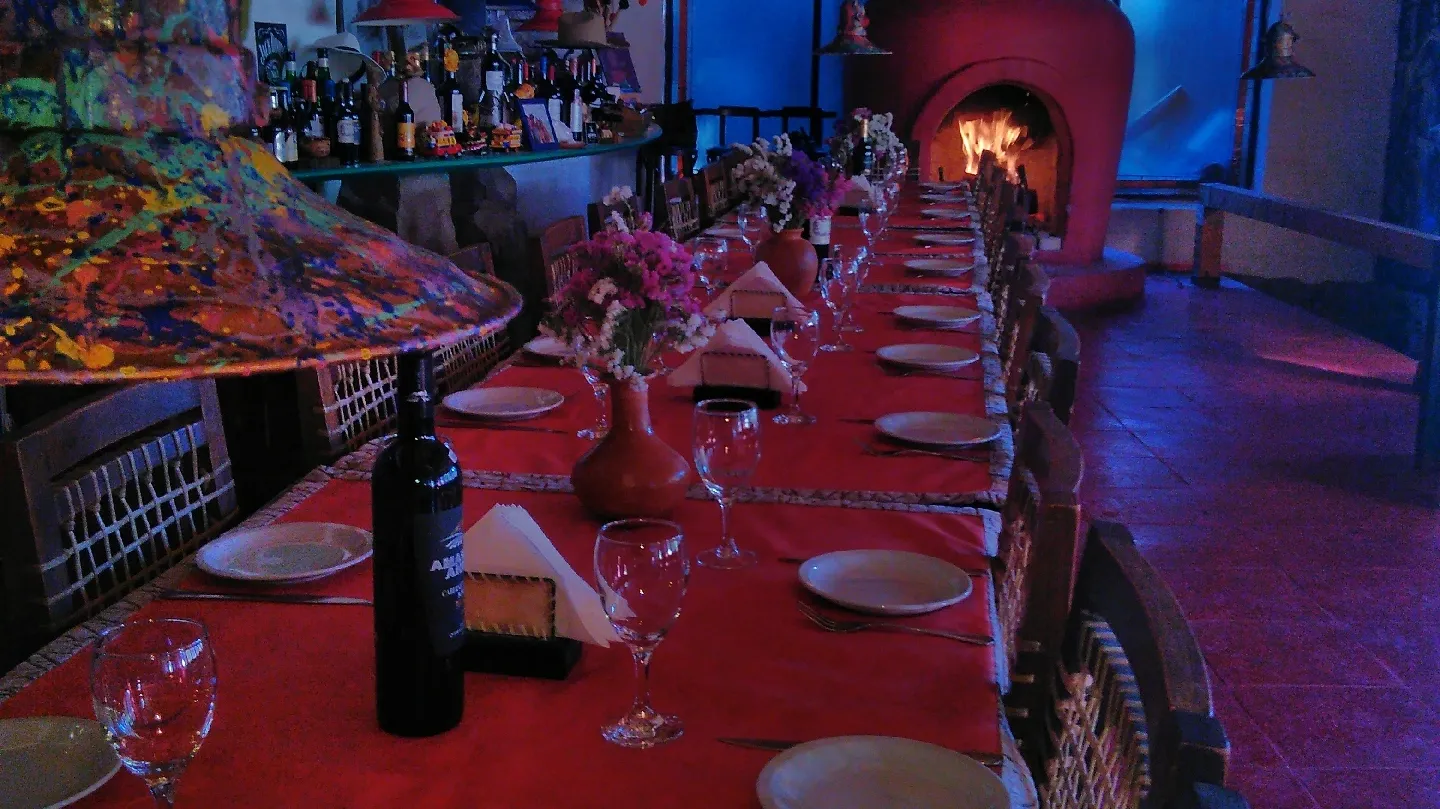
Los Morteros
Long-running restaurant on Calle Salta in central Purmamarca, widely considered one of the village's most representative spots for Quebrada cuisine. Serves hearty Andean/NOA classics — llama dishes, locro, regional stews — in generous, home-style portions.
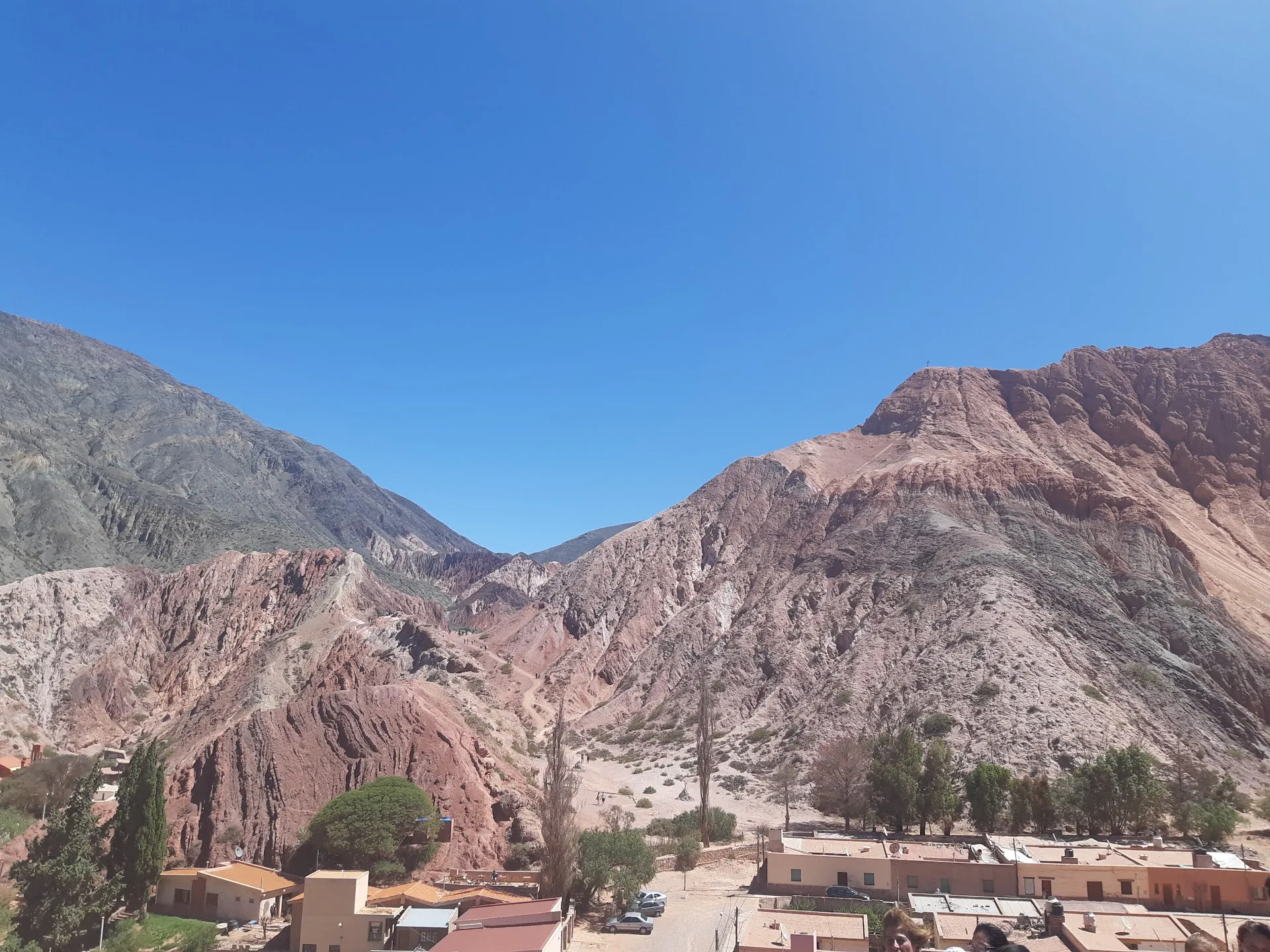
Mirador Cerro El Porito
A staircase-and-railing viewpoint built into a small hill at the western edge of Purmamarca, marking the end of the Paseo de los Colorados walking circuit. From the top, visitors get a head-on panorama of the Cerro de los Siete Colores and the town below; the municipality rebuilt its access stairs and safety railings under Argentina's Plan 50 Destinos program, reopening the site in January 2025.
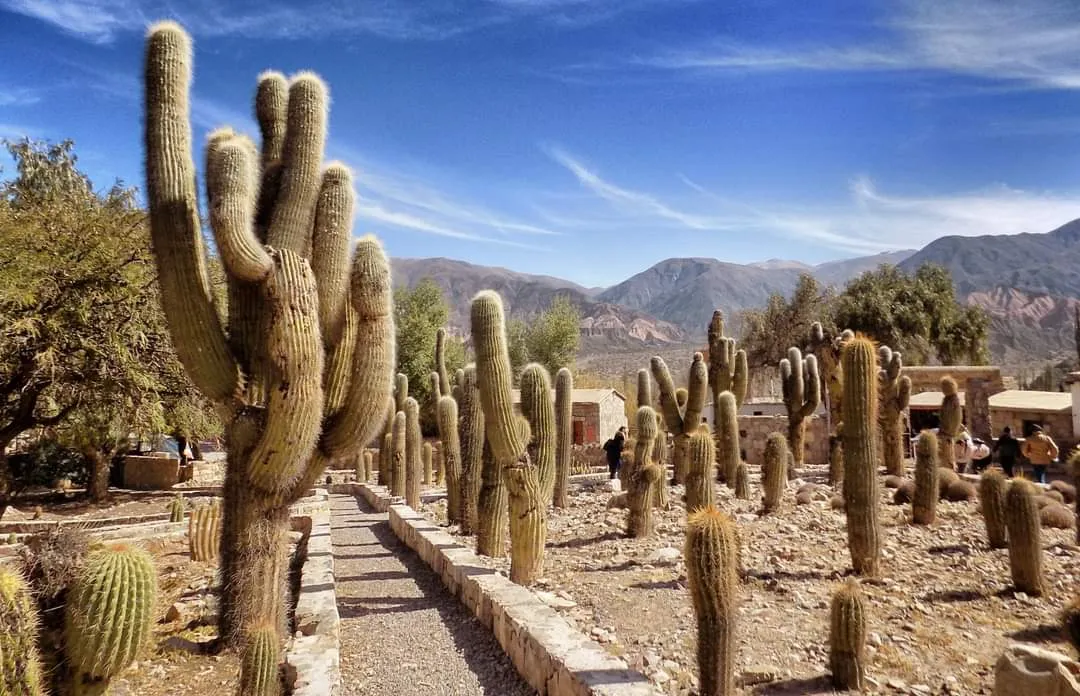
Jardín Botánico de Altura de Tilcara
A 3-hectare high-altitude botanical garden created in 1970 through an agreement between the UBA Faculty of Philosophy and Letters and the Jujuy provincial government, sitting at 2,580 m right beside the Pucará entrance. Its collection is organized into sections of cacti, medicinal plants, food crops and Puna/Quebrada de Humahuaca alpine flora, and it includes the 'Piedra Campana,' a 2.5-ton volcanic rock that rings when struck.
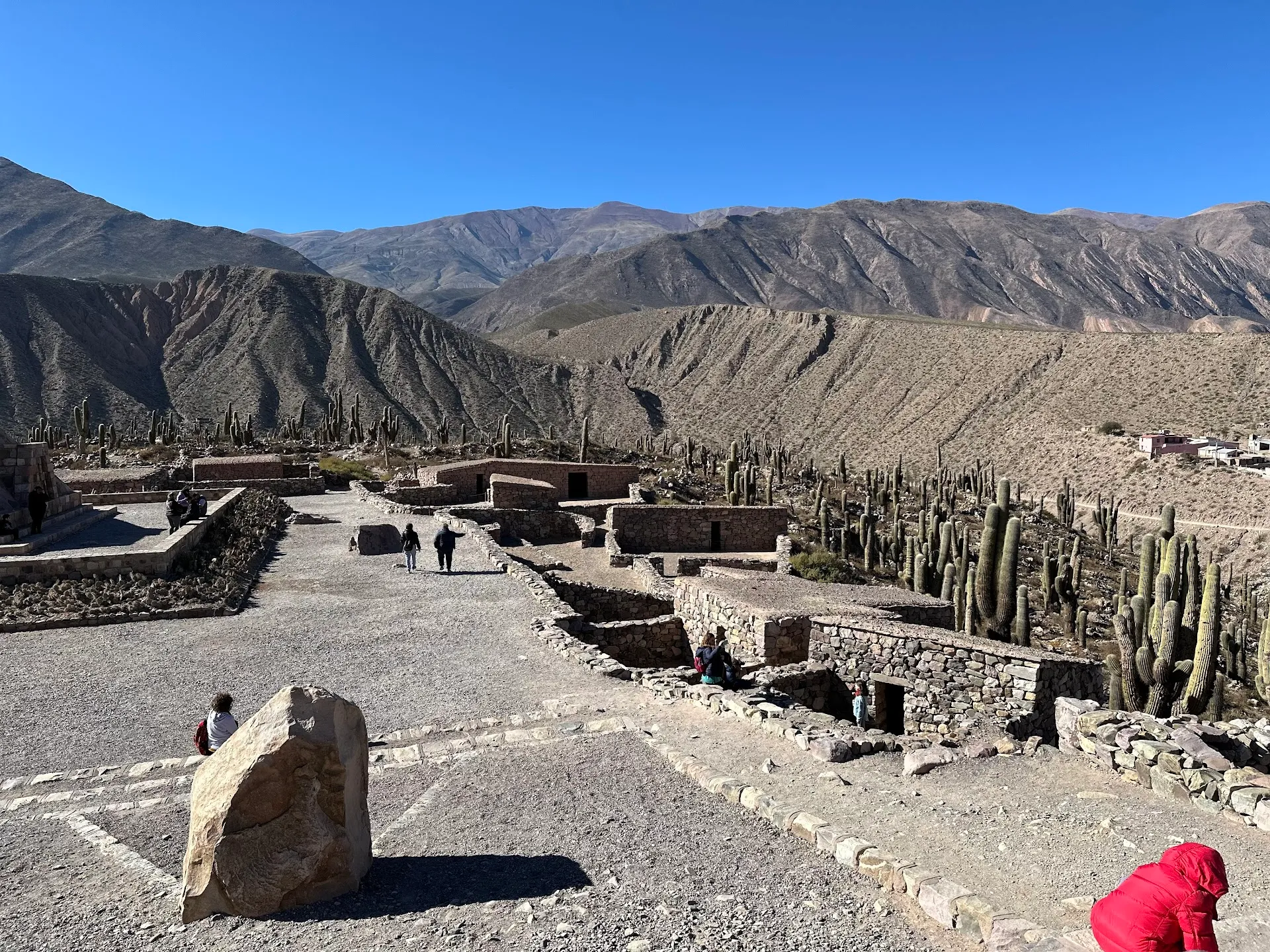
La Iglesia (Barrio Ceremonial del Pucará)
The central ceremonial precinct inside the Pucará, named after old Tilcara residents' accounts that 'the church of the Indians' once stood there — a claim later borne out by excavation. Archaeologists uncovered courtyards, altars and trophy-skull burials here, in what is believed to have been a center for Inca-period sun and moon worship adjoining an artisans' quarter.
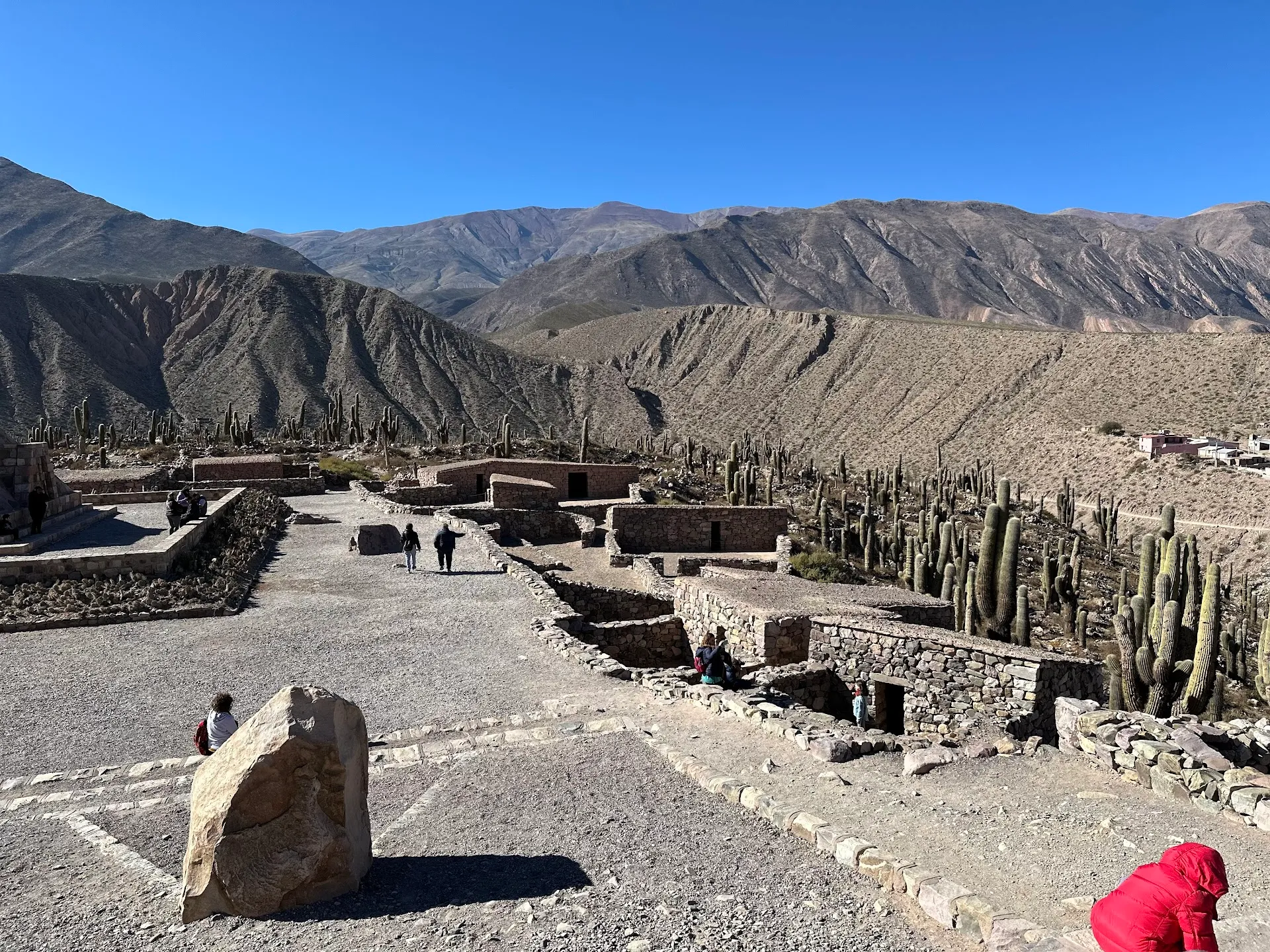
El Monumento (Pirámide del Pucará de Tilcara)
A truncated stone pyramid built in 1935 atop the Pucará's hill, designed by architect Martín Noel to honor pioneer archaeologists Juan Bautista Ambrosetti and Salvador Debenedetti, who first excavated the site from 1908. It is not a pre-Hispanic structure itself but has become the site's most photographed landmark, doubling as a panoramic viewpoint over the Quebrada de Humahuaca.
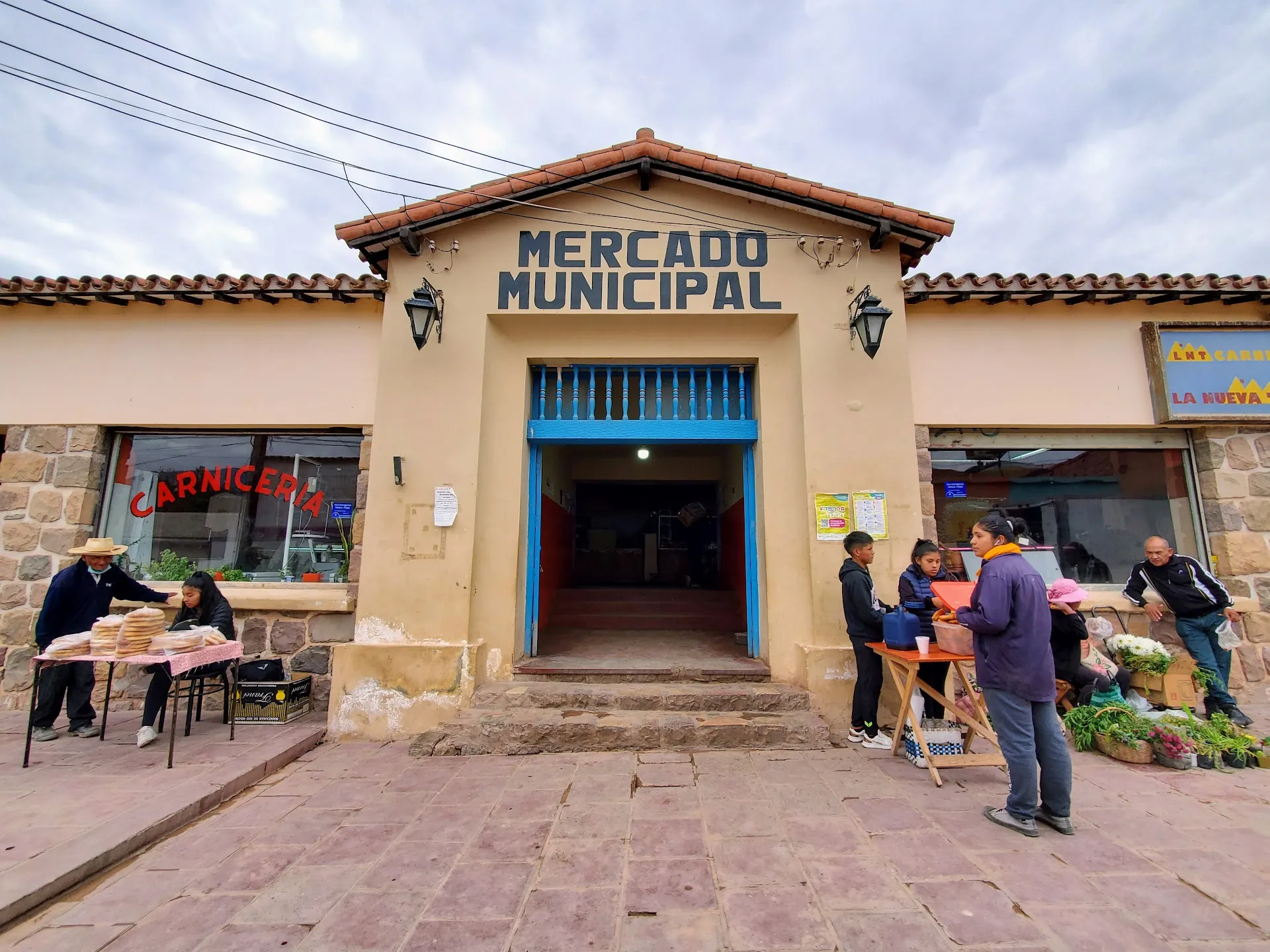
Mercado Municipal de Tilcara
The town's covered municipal market mixes everyday commerce with a craft and souvenir section, offering local textiles, clothing and small handmade goods alongside food stalls serving breakfast and simple regional dishes. It's a more workaday, less touristy counterpart to the plaza fair, popular with residents as well as visitors.
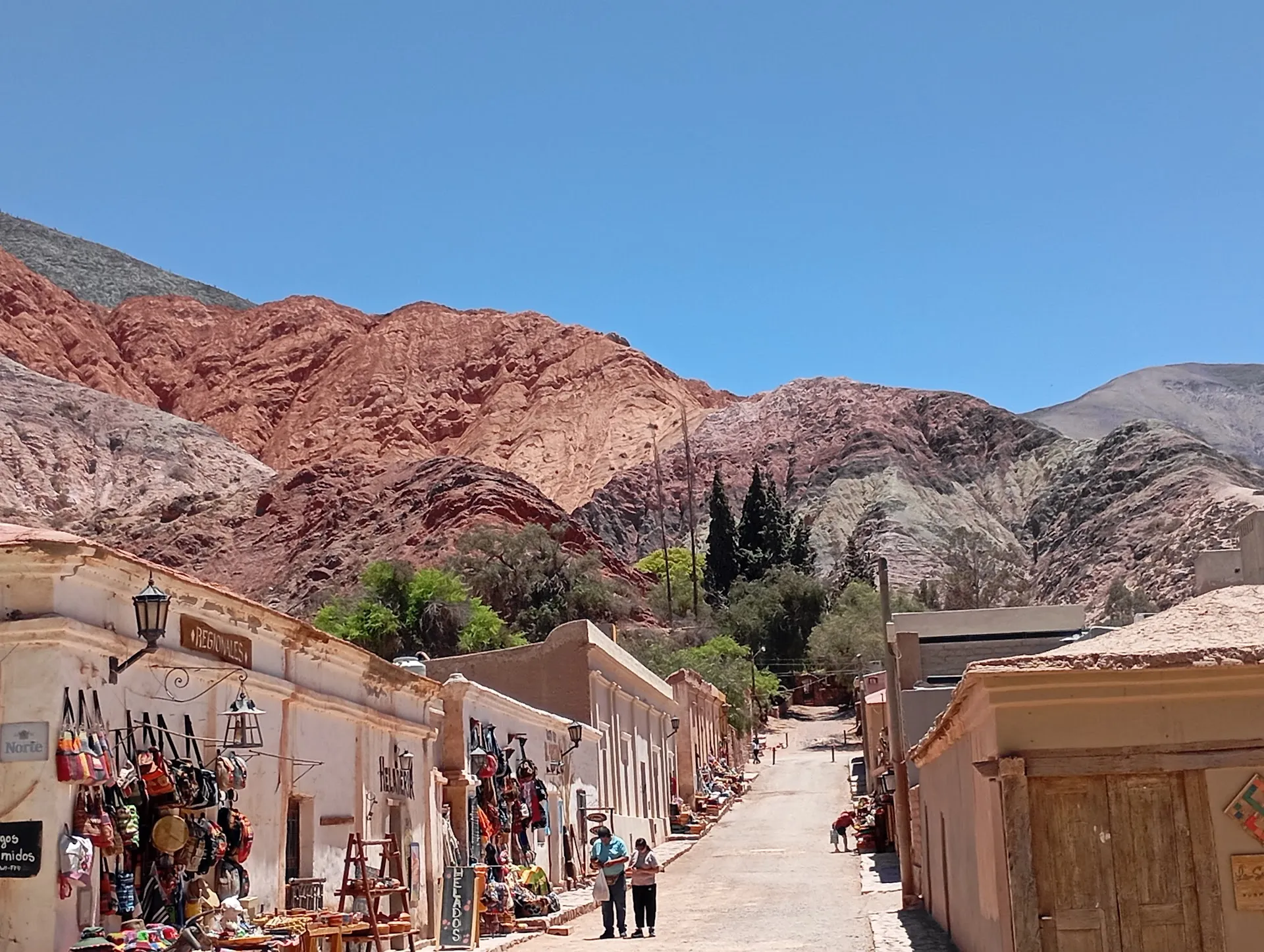
Feria Artesanal de Tilcara (Plaza Álvarez Prado)
A permanent open-air artisan fair beneath the shade trees of Tilcara's central plaza, where stalls run by local and visiting artisans sell llama and vicuña-wool textiles, black and red ceramics, silver filigree jewelry, mates, woodwork, leatherwork, basketry and handmade Andean instruments. It's the town's most concentrated single stop for regional handicrafts and a daily gathering point for both vendors and visitors.
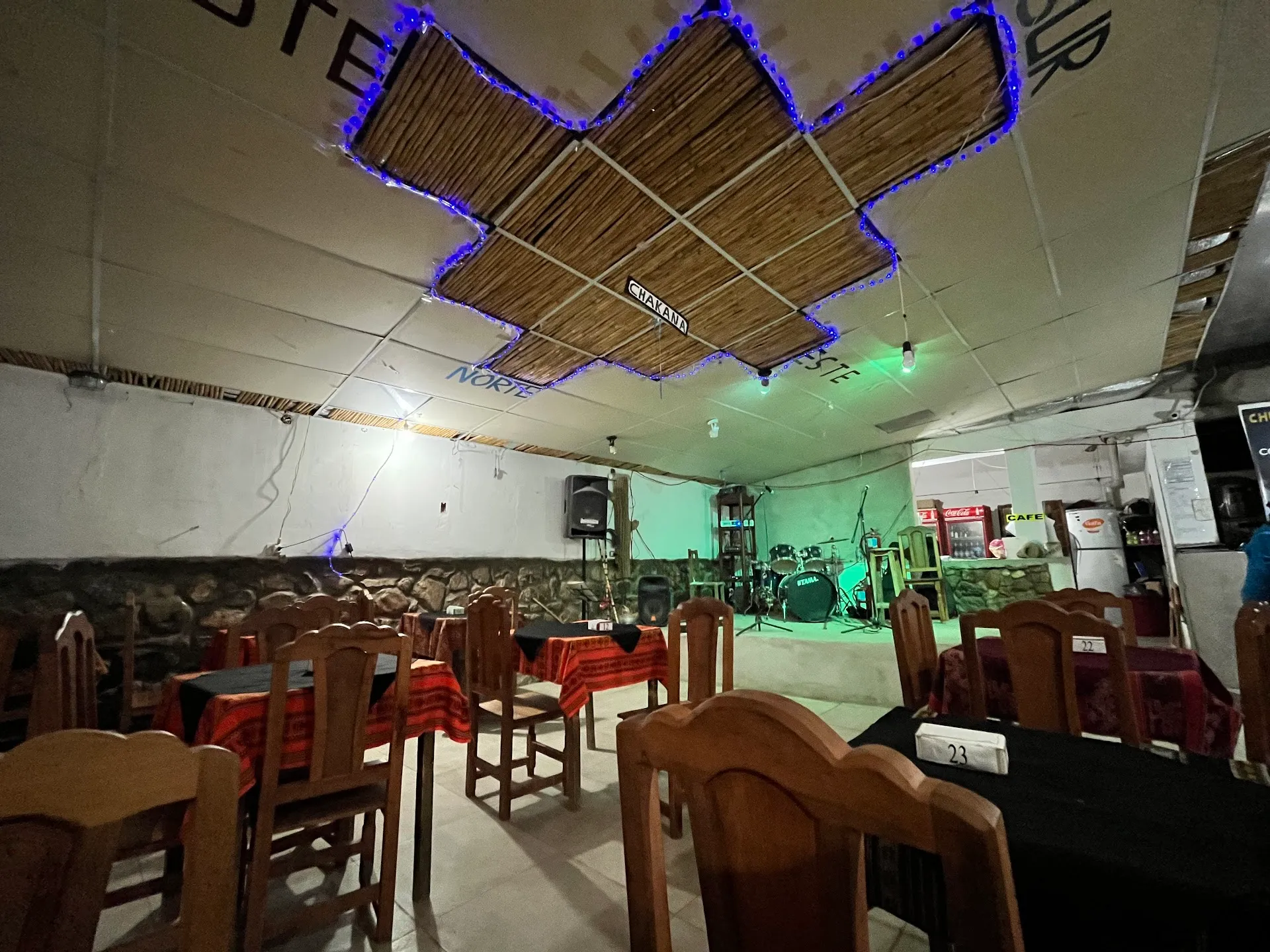
La Peña de Chuspita
Founded by Tilcara-born musician Rosendo "Chuspita" Martínez, who took Andean sounds around the world for over 25 years, this intimate peña puts visitors face-to-face with the carnavalitos, huaynos and coplas that define Quebrada folk music, with Martínez or fellow Tilcareño musicians often performing live on a stage barely bigger than the crowd around it. Regional dishes such as quinoa-and-cheese empanadas and quesillo con cayote round out the nightly sets.
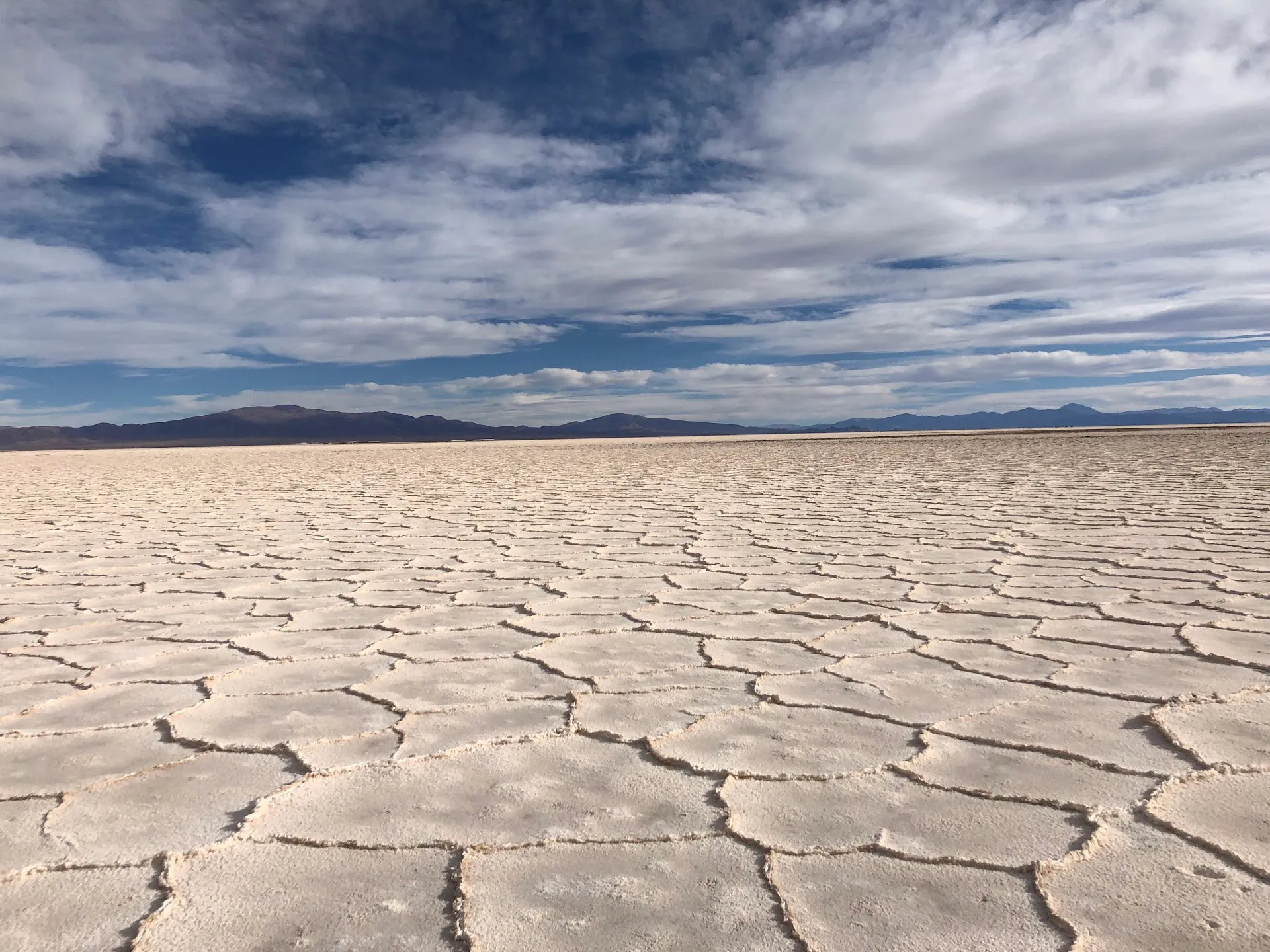
Salinas Grandes from Purmamarca
Drive from Purmamarca over the Cuesta de Lipan pass at 4,170m to the vast Salinas Grandes salt flats. The drive itself is spectacular — switchbacks through desert mountains, vicuna sightings, and surreal high-altitude landscapes before arriving at the blinding white salt pan.
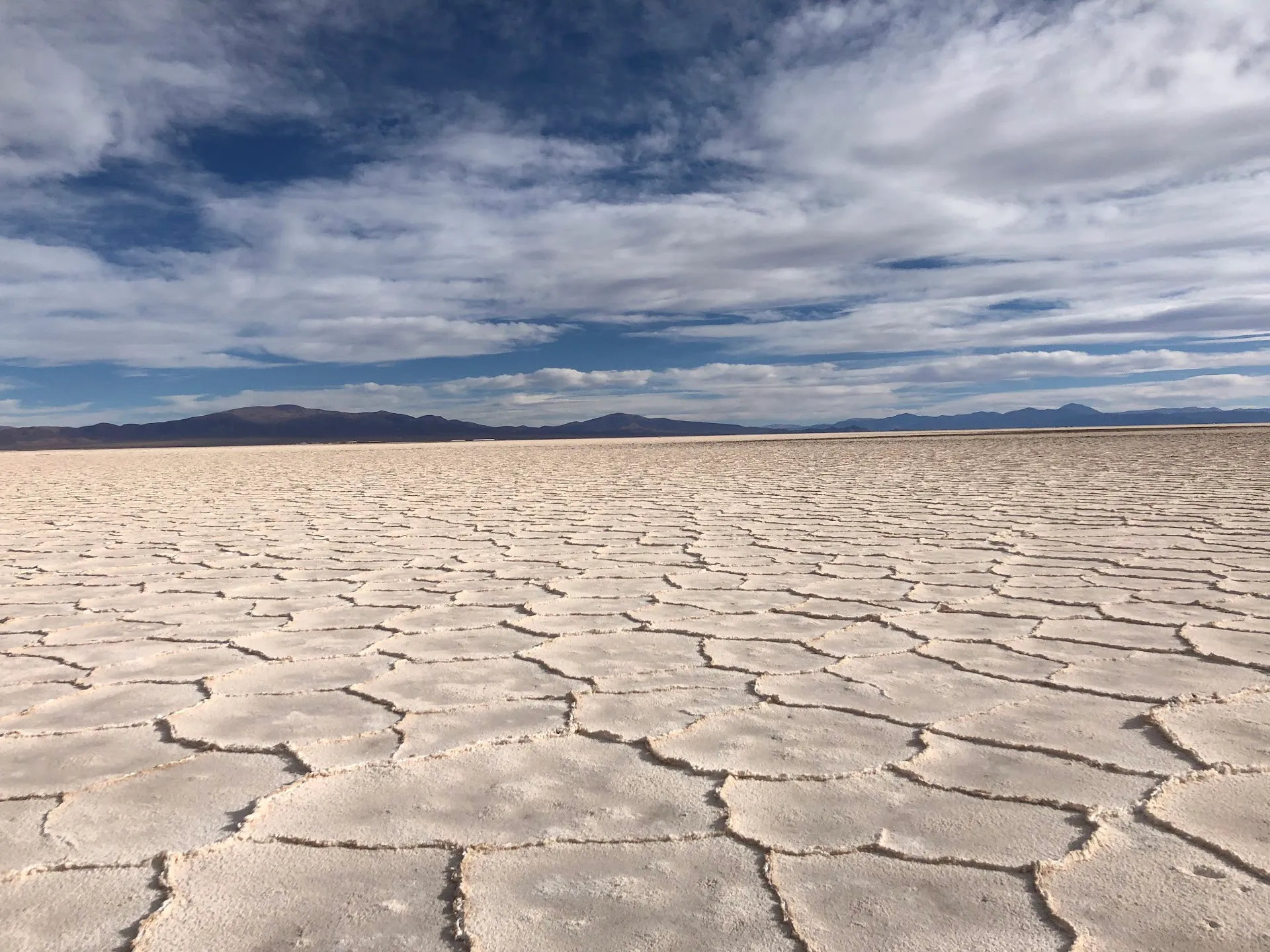
Salinas Grandes
A 212 sq km salt flat at 3,450m on the Jujuy-Salta border. The geometric hexagonal salt crust patterns are mesmerizing up close, while the vast white expanse stretching to the horizon creates surreal minimalist landscapes. Artisanal salt pools carved by local Atacameno communities display turquoise brine.
Day by day
Colonial Salta & the Inca heights
10:00Plaza 9 de Julio
Start at the heart of the city, the palm-fringed main square ringed by colonnaded buildings and pavement cafes. Salta is nicknamed La Linda, the beautiful, and this plaza is why; it is the natural place to get your bearings.
Tip: The cafe terraces under the arcades are the spot for a first coffee or a glass of Torrontes while you watch the city wake up.
MAAM - Museo de Arqueologia de Alta Montana
Step into the extraordinary High Mountain Archaeology Museum on the square, home to the remarkably preserved Inca child mummies found on the 6,700-metre summit of Volcan Llullaillaco. It is one of South America's most significant and moving museums.
Tip: Only one of the children is displayed at a time, rotated for preservation; the exhibition is somber, so allow a quiet hour.
13:00Catedral Basilica de Salta
Cross the plaza to Salta's pink-and-ochre cathedral, a richly decorated 19th-century church that holds the venerated images at the centre of the city's biggest festival. The gilded interior is among the finest colonial-era work in the country.
Tip: A quick, free visit just off the square; pair it with the Cabildo on the same corner if you have time.
Cerro San Bernardo
Ride the cable car (or climb the stations of the cross on foot) up the hill that overlooks the city for a sweeping panorama across Salta to the surrounding mountains and the wide Lerma valley.
Tip: Late afternoon gives the best light; there are landscaped gardens and a cafe at the top to linger over the view.
21:00Pena Folklorica Night on Balcarce Street
End the night at a pena on lively Balcarce street, where folk musicians play and the whole room sings along over wine and empanadas. It is the north's signature evening out and the most authentically saltena thing you can do.
Tip: Things get going late and run long; order a mixed dozen of the famous baked empanadas saltenas to start.
Red canyons & Cafayate Torrontes
08:00Quebrada de las Conchas Drive
Head south toward Cafayate through the Quebrada de las Conchas, a canyon of wind-carved red rock formations with surreal names. The drive itself is the scenic highlight of the Salta region and easily a full day out and back.
Tip: Start early so you have time to pull over at the formations; going with a tour or driver lets you taste wine in Cafayate without worrying about the return.
10:00El Anfiteatro - Quebrada de las Conchas
Stop at the Anfiteatro, a natural rock amphitheatre with astonishing acoustics where local musicians sometimes play to a crowd of travellers in the cool shade. It is the most photogenic of the canyon's formations.
Tip: The nearby Garganta del Diablo gorge is the other essential stop; both are short walks off the road.
13:00Torrontes Wine Tasting in Cafayate
Reach the high-altitude wine town of Cafayate for lunch and a tasting of crisp, floral Torrontes, the aromatic white grape this corner of Argentina grows better than anywhere on earth.
Tip: Cafayate's wineries cluster right around the town square, so you can comfortably walk between a couple after lunch.
16:30Cafayate Vineyards at Sunset
Before turning back, take in the vineyards spread beneath red-rock peaks, some of the highest-altitude vines on the planet glowing in the late afternoon sun.
Tip: Allow time for the return drive in daylight; the canyon is, if anything, even more striking on the way back to Salta.
Bus to Jujuy & the seven-coloured hill
10:30Iglesia de Santa Rosa de Lima
After the short morning bus up from Salta and a scenic climb over the Cuesta de Lipan, drop into Purmamarca, the tiny adobe village at the foot of the Cerro de los Siete Colores. Start on its plaza at the 1648 adobe chapel, roofed in cardon-cactus wood and one of the Quebrada's oldest standing churches.
Tip: Dress modestly and check for morning Mass before wandering in; the centuries-old algarrobo tree just outside is tied to the region's independence-war history.
11:30La Pushka (taller de tejido)
Walk the daily feria artesanal along Calle Rivadavia to this working family workshop, where naturally dyed llama and sheep wool is still spun on the pushka spindle and woven into ponchos and blankets on antique looms.
Tip: Buying directly here supports the weavers themselves rather than resellers, and it's the best place on the route to watch real work in progress.
13:00Los Morteros
Sit down for a hearty Quebrada lunch at one of the village's most representative kitchens - llama dishes, locro, and regional stews served in generous, home-style portions.
Tip: It gets busy with tour groups around 1pm; arrive close to opening for an unhurried table.
16:00Mirador Cerro El Porito
Walk the short Paseo de los Colorados loop to this built viewpoint for the classic head-on shot of the Cerro de los Siete Colores, its bands of pink, ochre, green, and violet rock stacked up directly behind the village.
Tip: Late afternoon light deepens the colours, and the stairs and railings were rebuilt in 2025, so the walk is easy underfoot.
Deep Quebrada: the Pucara de Tilcara
08:30Jardín Botánico de Altura de Tilcara
Drive up-valley to Tilcara and start at the entrance to the Pucara: a three-hectare high-altitude botanical garden tended by the University of Buenos Aires since 1970, its Puna cacti and native flora built around the Piedra Campana, a 2.5-tonne volcanic boulder that rings when struck.
Tip: Go before 9am, since the path up to the fortress gets hot and crowded with tour groups by mid-morning.
09:15La Iglesia (Barrio Ceremonial del Pucará)
Climb into the Pucara's ceremonial heart, the sector old Tilcara residents long called 'La Iglesia' - a claim excavation later confirmed, uncovering courtyards, altars, and trophy-skull burials from what is believed to have been an Inca-period sun-and-moon worship site beside an artisans' quarter.
Tip: This is the most archaeologically dense part of the site; slow down here rather than rushing straight to the summit.
10:15El Monumento (Pirámide del Pucará de Tilcara)
Climb to the truncated stone pyramid at the hill's summit, built in 1935 to honour the archaeologists who first excavated the Pucara. It is not pre-Hispanic itself, but its panoramic view over the striped red walls of the Quebrada is the real payoff.
Tip: There is little shade on the upper terraces; bring water and a hat even on a cool morning.
12:30Mercado Municipal de Tilcara
Break for lunch at the covered municipal market a few blocks from the plaza, where food stalls serve simple, inexpensive regional dishes alongside the everyday textiles locals actually shop for.
Tip: It is less geared to tourists than the plaza fair, so prices and portions are closer to what residents pay.
14:30Feria Artesanal de Tilcara (Plaza Álvarez Prado)
Spend the afternoon at the permanent artisan fair under the shade trees of Plaza Alvarez Prado - llama and vicuna-wool weaving, black-and-red ceramics, silver filigree, and handmade instruments, sold by the same families who make them.
Tip: The plaza empties out during the midday siesta; late afternoon is when both the stalls and the shade are at their best.
20:30La Peña de Chuspita
Close the day at this intimate pena founded by Tilcara-born musician Rosendo 'Chuspita' Martinez, with carnavalitos, huaynos, and coplas performed live most nights alongside regional plates like quinoa-and-cheese empanadas and quesillo con cayote.
Tip: Reserve or arrive early on weekends; the room is small and fills up fast once the music starts.
Salinas Grandes salt flats & farewell
08:00Salinas Grandes from Purmamarca
On your last day, climb back up the Cuesta de Lipan and over the altiplano to the Salinas Grandes, a blinding expanse of white salt crust stretching to the horizon at 3,400 metres. The drive up and over the pass is half the experience.
Tip: Bring sunglasses and high-factor sunscreen; the glare off the salt is intense, and a local guide on the flats keeps you safe and points out the salt-harvesting pools.
11:00Salinas Grandes
Walk out onto the salt flat itself, where the geometric crust and shallow pools create a surreal, mirror-like landscape and the classic forced-perspective photos against an empty white plain.
Tip: Stay on marked areas and follow your guide; the crust is thinner near the working pools, and conditions change with the season's rain.
Getting between stops
What it costs
Budget roughly $500-900 per person for five days excluding flights to the region. The biggest costs are the day-trip excursions or a rental car for the canyons and the Quebrada; the single Salta-to-Jujuy bus leg is only around $15. Beyond that, Argentina's north is excellent value: empanadas saltenas, locro, a peña night with live folk music, and Torrontes tastings in Cafayate all cost a fraction of their equivalents elsewhere. Carry pesos for the smaller villages and market stalls, where cards are not always accepted.~$100-180 USD / day
Frequently asked questions
- Is five days enough for Salta and Jujuy?
- Yes, five days covers the headline sights of Argentina's northwest comfortably. Two nights in Salta give you the city, its remarkable Inca-mummy museum, and the red canyons and Cafayate vineyards to the south, while two nights in Jujuy put you within easy reach of the whole Quebrada de Humahuaca and the Salinas Grandes salt flats. Because the two cities are only about two hours apart, you spend your time at the destinations rather than in transit.
- How do you get from Salta to Jujuy?
- The two provincial capitals are only about 125 km apart on National Route 9, so the simplest way is the long-distance bus, which runs very frequently, takes around two hours, and costs roughly $15. Operators include Balut, Andesmar, Flecha Bus, and La Veloz del Norte, departing from Salta's central bus terminal. Renting a car is the flexible alternative if you want to fold Quebrada stops into the transfer.
- Can you see the Quebrada de Humahuaca as day trips?
- Absolutely. Using San Salvador de Jujuy as a base, Purmamarca and its seven-coloured hill are about 90 minutes away, Tilcara around two hours, and Humahuaca about two and three-quarter hours, all on the paved National Route 9. Full-day excursions string together Purmamarca, Tilcara, and Humahuaca, with the Hornocal and the Salinas Grandes salt flats reached on separate trips up onto the altiplano.
- How high is this trip and should I worry about altitude?
- Altitude is the main thing to plan for. Salta sits at a comfortable 1,200 metres, but the Quebrada climbs steadily — Purmamarca and Tilcara both sit above 2,300 metres, and the Cuesta de Lipan pass to the Salinas Grandes rises above 4,000 metres. Ascend gradually, drink plenty of water, eat light, and use coca tea or leaves as locals do. Anyone with heart or respiratory conditions should check with a doctor before the highest excursions.
- What is the best time of year to visit northern Argentina?
- The dry season from about April to November is ideal, with clear skies that make the painted mountains and salt flats glow. Winter days are sunny but cold at altitude with sub-zero nights on the puna. The summer rains from December to March can make the unpaved road to the Salinas Grandes difficult, though they green up the lower valleys. Shoulder months like April-May and September-October balance good weather with thinner crowds.
Make this trip yours
Save this itinerary and customize it — dates, stops, budget and friends, all in one place.