
Three days is just enough for a first visit to Prague — long enough to read the city's layers without rushing. This itinerary moves through Prague's three faces, one per day. Day one stays in the Old Town and Josefov, the Jewish quarter: the Astronomical Clock, the synagogues and old cemetery, the Art Nouveau Municipal House and a golden-hour crossing of Charles Bridge. Day two climbs across the river to Prague Castle and St. Vitus Cathedral, then wooded Petřín Hill and the galleries and lanes of the Lesser Town. Day three turns to local Prague — hilltop Vyšehrad, the Dancing House, Mucha's Art Nouveau, Wenceslas Square and a Vinohrady beer garden at sunset. Almost everything links on foot, by tram and by metro.
Prague: The Perfect 3 Days for First-Timers
3 days1 stopsFirst-time visitors who want Prague's essential sights, history and atmosphere in a focused long weekend
The route
- Prague2n
Everywhere you'll go
Every stop on this itinerary — tap a card for details or to save it.
Landmark
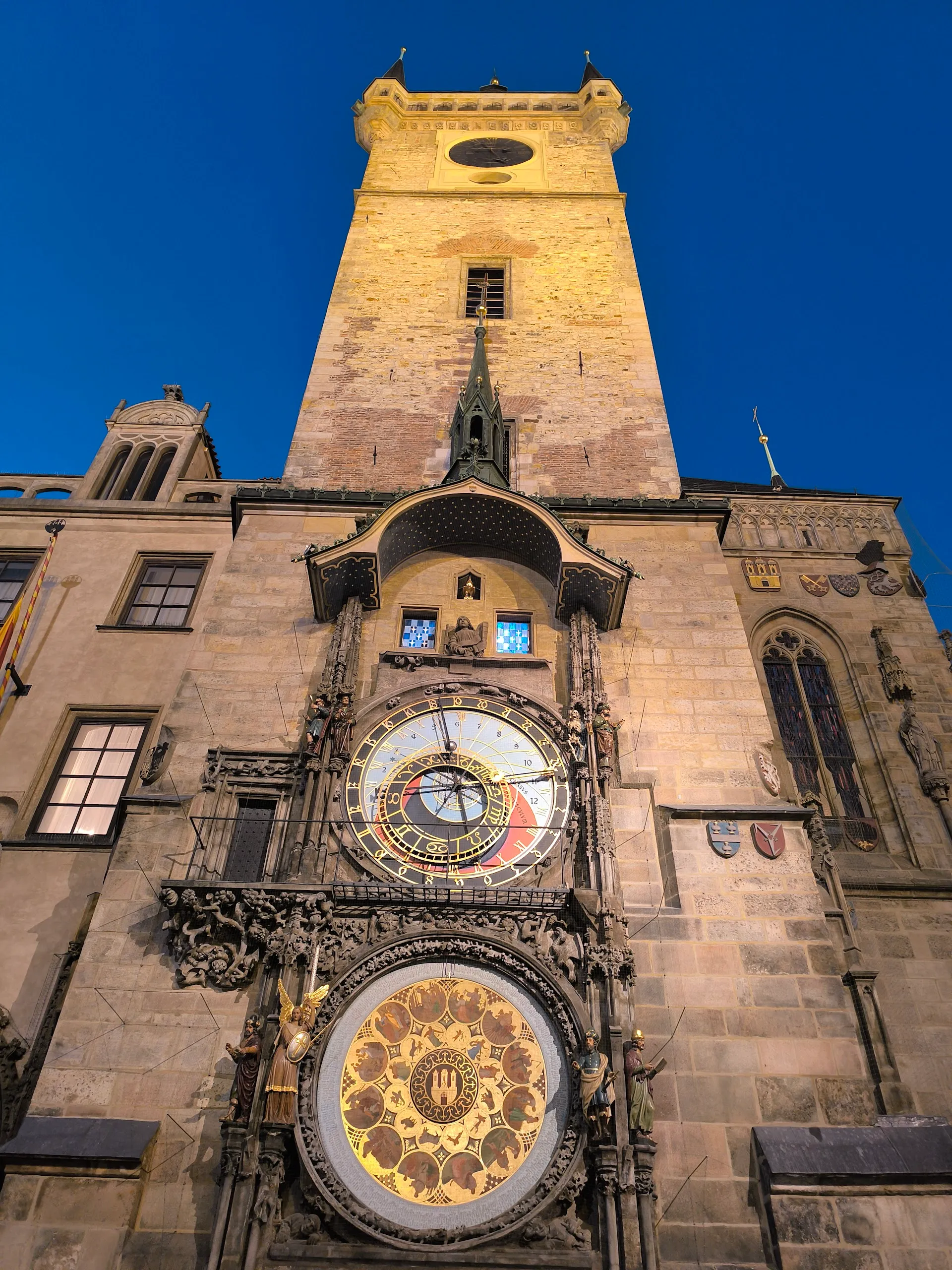
Prague Astronomical Clock & Old Town Hall (Staroměstský orloj)
Mounted on the Old Town Hall since 1410, this is the world's oldest astronomical clock still in operation, its dial working as a mechanical astrolabe that maps the sun, moon and zodiac. On the hour the 'Walk of the Apostles' parades figures past the upper windows while a skeleton tolls for Death, and the adjoining tower can be climbed for rooftop panoramas over the square.
Staré Město (Old Town Square), Prague 1
Must visit
Museum5.0
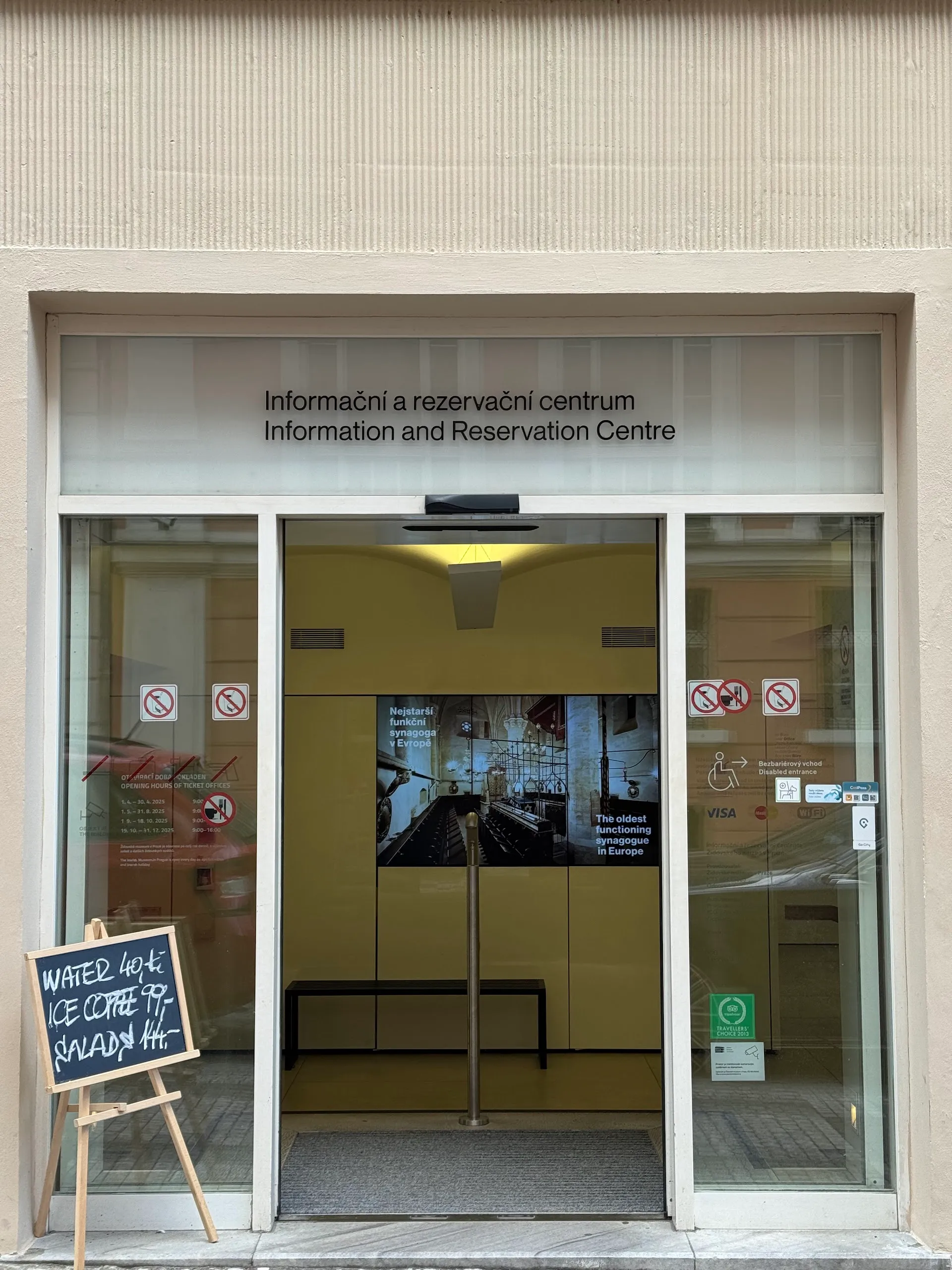
Jewish Museum in Prague (Židovské muzeum v Praze)
One of the world's oldest and most-visited Jewish museums, founded in 1906, it is not a single building but a cluster of historic synagogues and the haunting Old Jewish Cemetery in the Josefov quarter. A single combined route traces Bohemian and Moravian Jewish life, customs and the Holocaust.
Josefov (Jewish Quarter), Prague 1
Cafe4.0
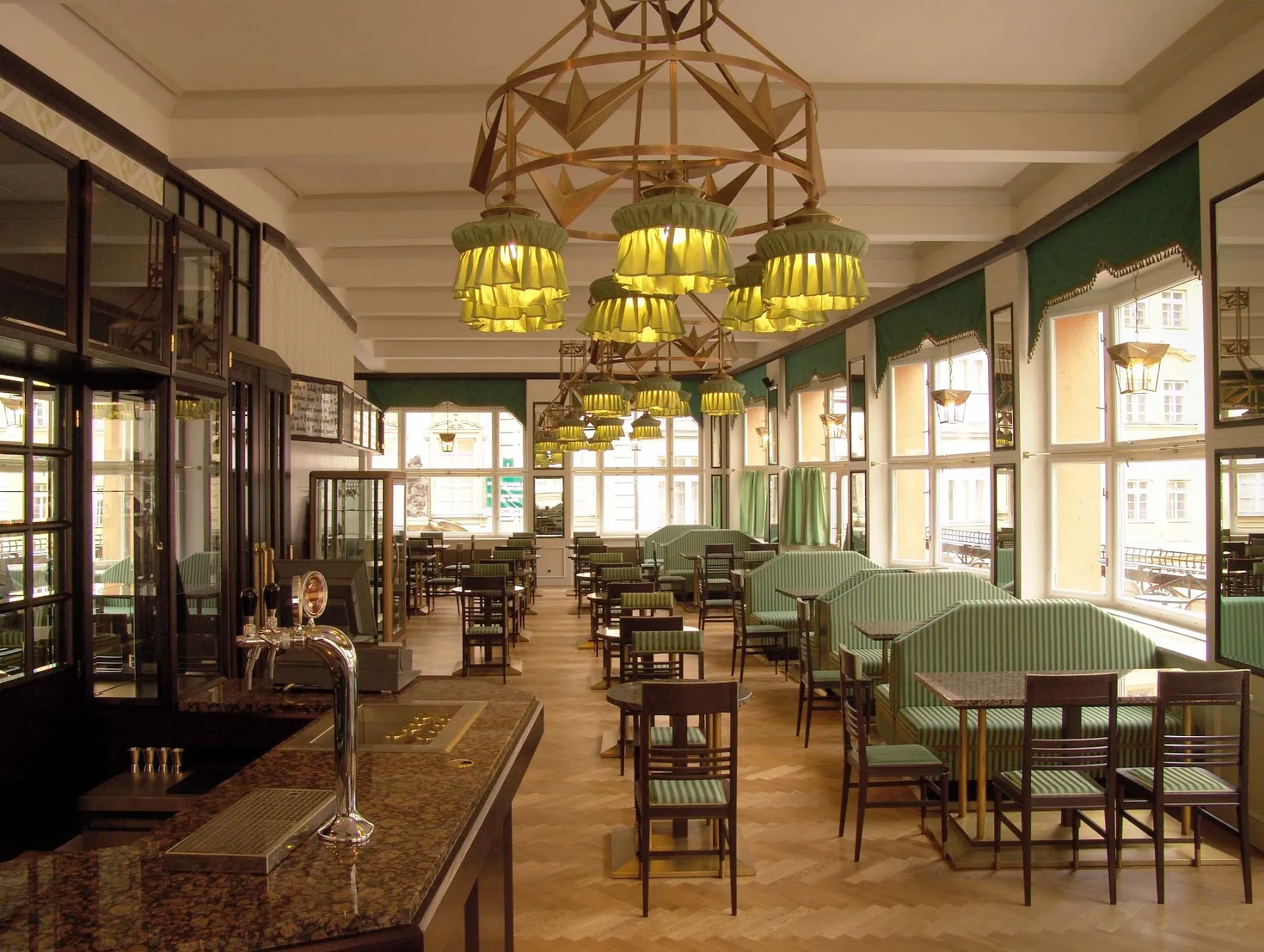
Grand Café Orient
Tucked on the first floor of Josef Gocar's House of the Black Madonna, this is the world's only fully Cubist café, where everything from the chandeliers to the coat hooks follows the angular style. Reconstructed in 2002-2003 from period photographs, it serves coffee, cocktails and Czech desserts beneath a balcony over Celetná street.
Staré Město (Old Town), Prague 1
Architecture
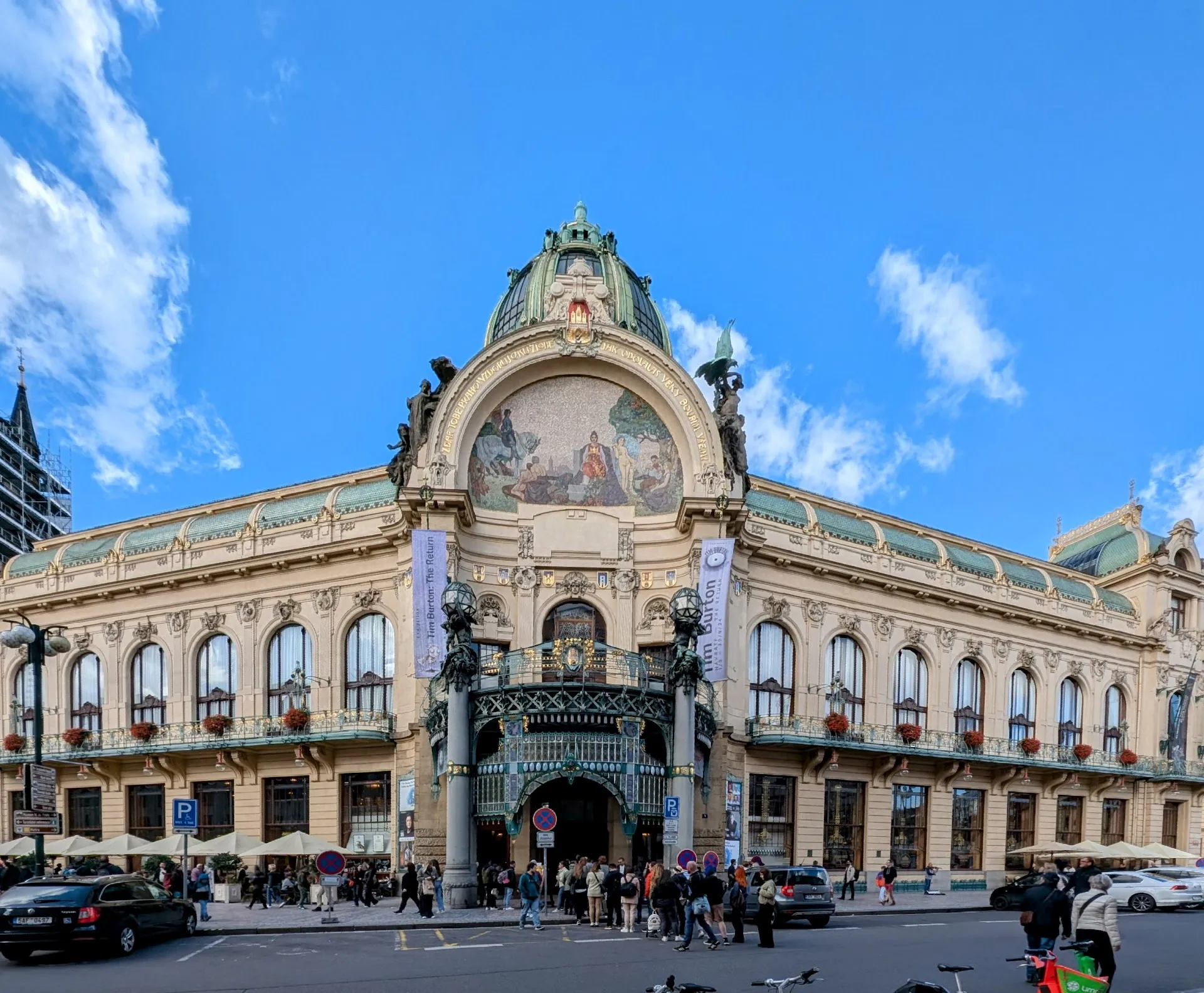
Municipal House (Obecní dům)
Prague's most lavish Art Nouveau building, raised between 1905 and 1912 next to the medieval Powder Tower by architects Osvald Polívka and Antonín Balšánek. Its interiors were decorated by leading Czech artists including Alfons Mucha, and it wraps the city's grandest concert auditorium, Smetana Hall, alongside cafés, restaurants and ceremonial salons. Czechoslovak independence was proclaimed here in 1918.
Náměstí Republiky, Staré Město (Old Town), Prague 1
Landmark
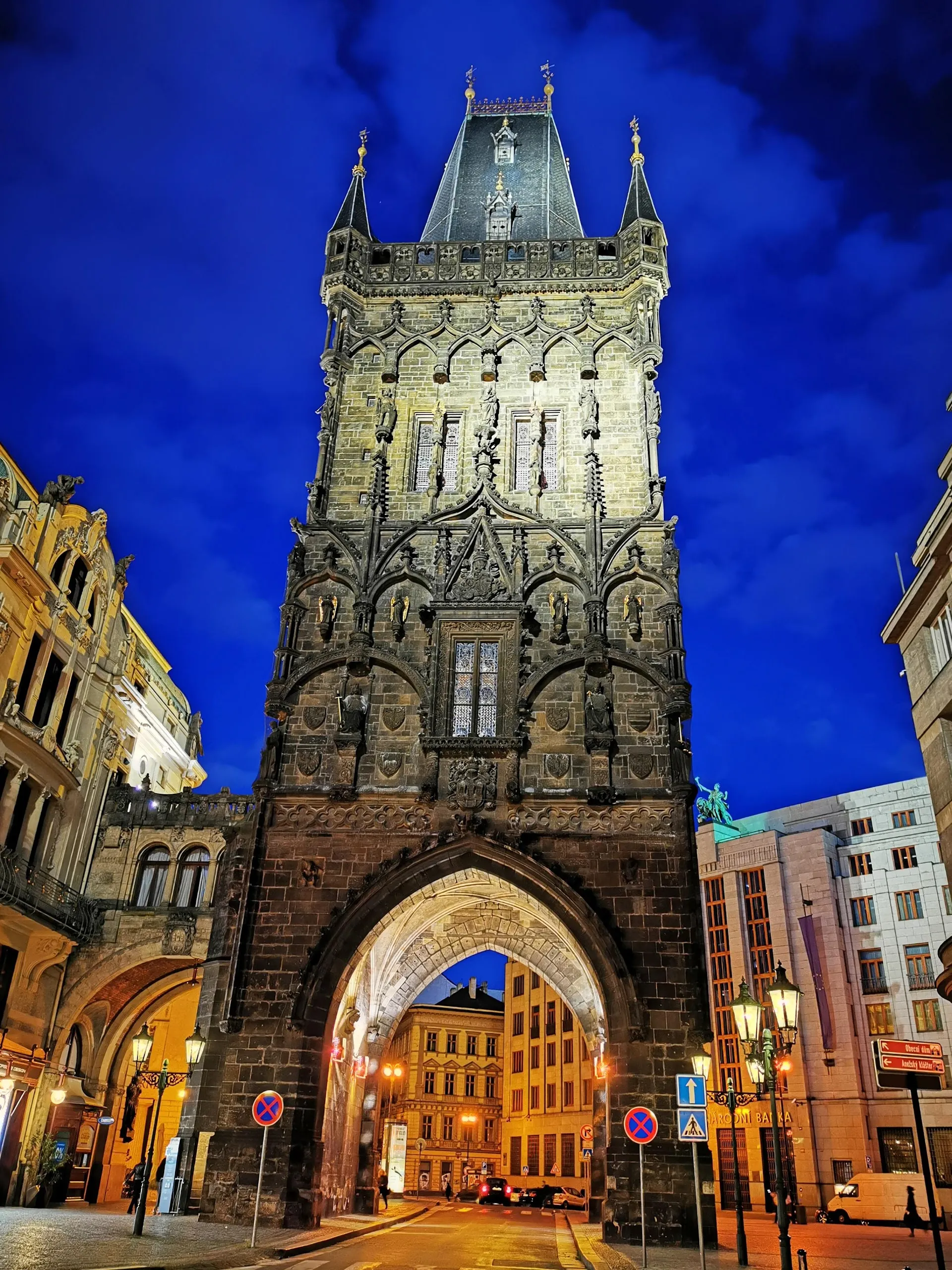
Powder Tower (Prašná brána)
A late-Gothic gate tower begun in 1475 as one of the Old Town's thirteen fortified entrances, later used to store gunpowder, which gave it its name, and restyled by Josef Mocker in the 1880s. It marks the start of the Royal Route once walked by kings to their coronation at Prague Castle, and a viewing terrace at 44 metres looks out over the boundary between the Old and New Towns.
Staré Město (Old Town), Prague 1
Landmark
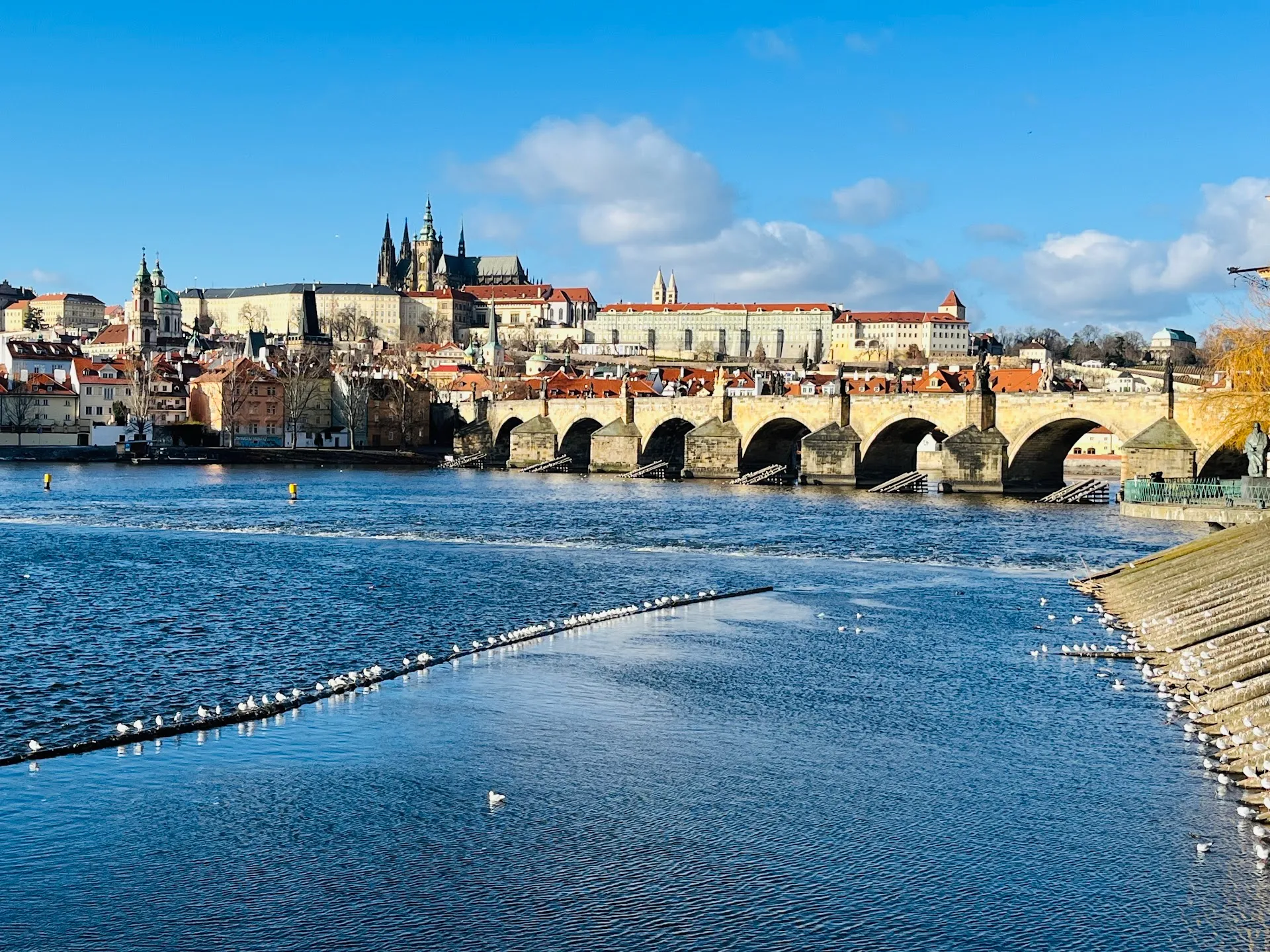
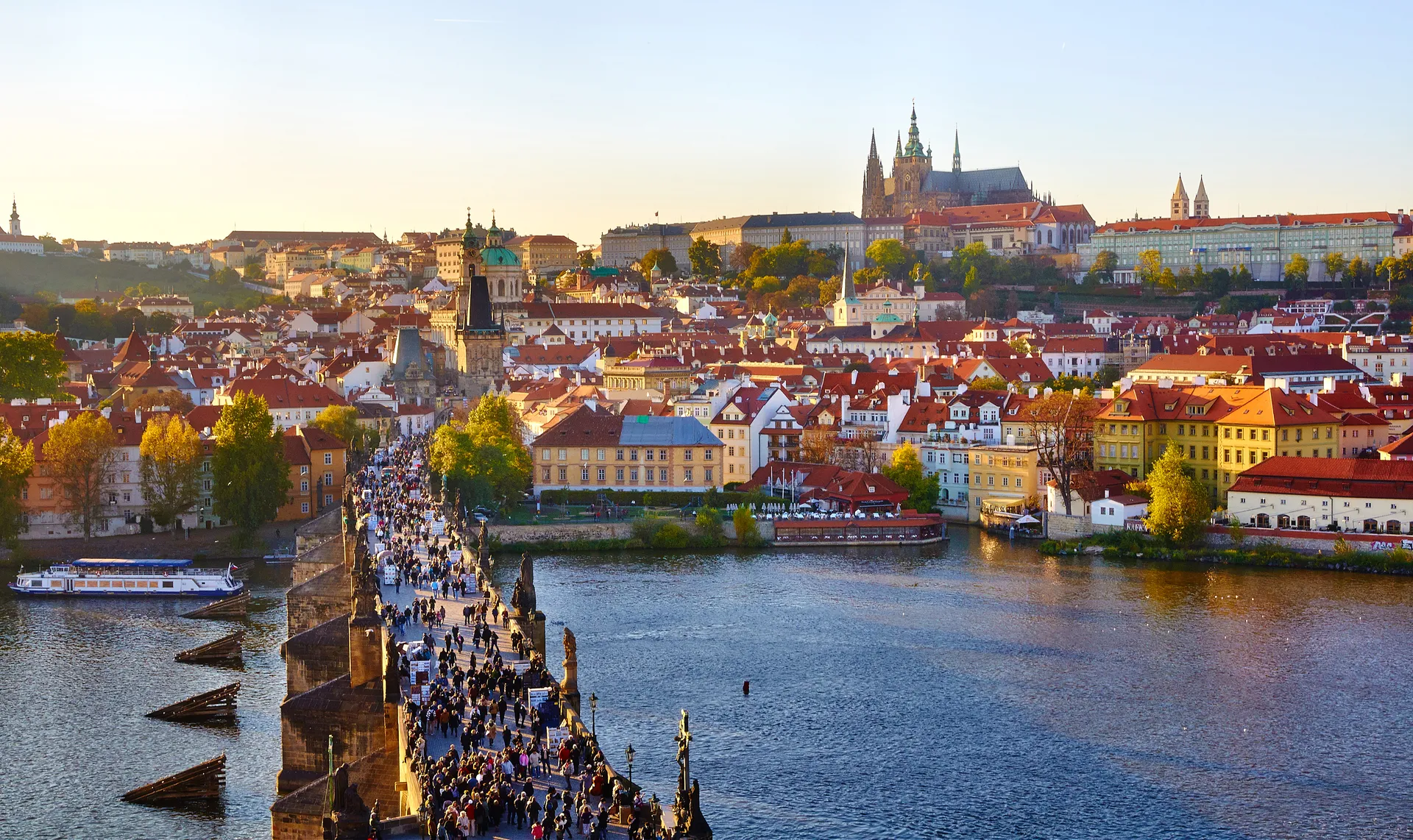
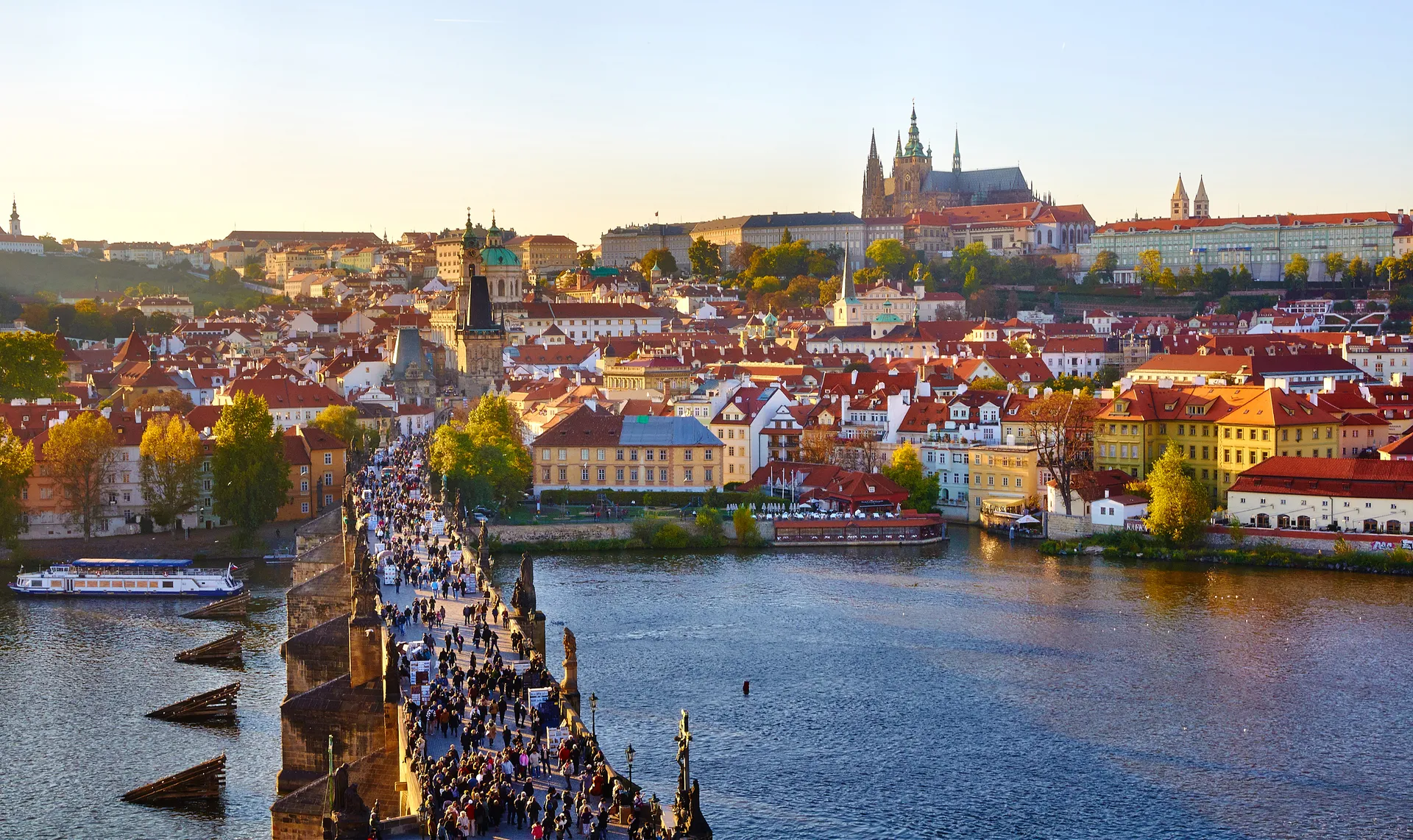
Charles Bridge (Karlův most)
A 516-metre Gothic stone bridge begun under Charles IV in 1357 and completed around 1402, famously lined with thirty mostly Baroque saint statues and guarded by a fortified tower at each end. For nearly five centuries it was the only fixed crossing of the Vltava, linking the Old Town with Malá Strana beneath the castle.
Connects Staré Město (Old Town) and Malá Strana (Lesser Town), Prague 1
Must visit
Restaurant5.0
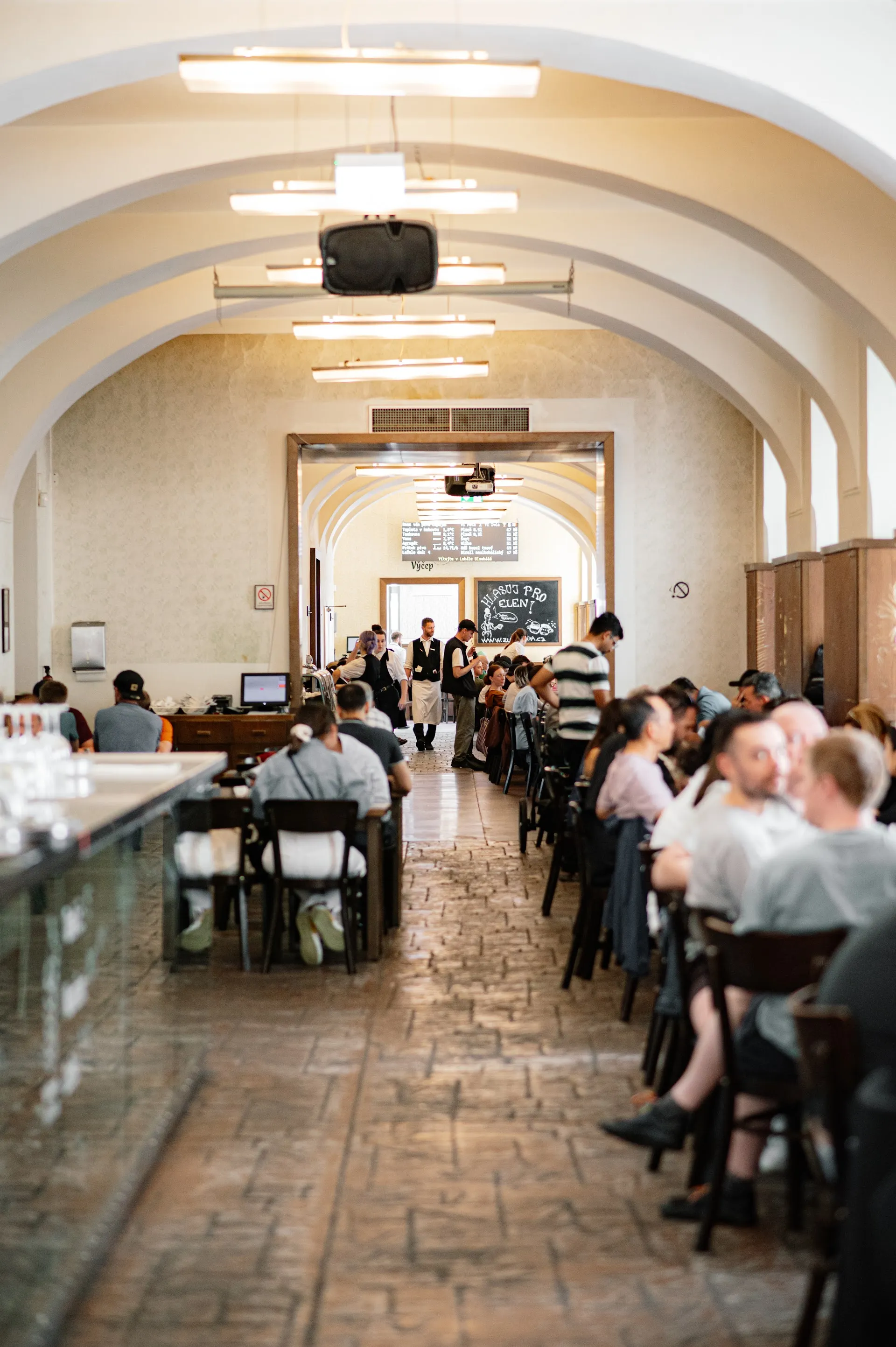
Lokál Dlouhááá
The original and longest of Prague's beloved Lokál pubs, this Ambiente-run beer hall pours tank-fresh Pilsner Urquell alongside a daily-changing roster of Czech classics like svíčková, goulash and schnitzel. Long communal tables and brisk, beer-savvy service make it a go-to for an honest, unpretentious Czech meal in the Old Town.
Staré Město (Old Town), Praha 1
Bar4.0
Black Angel's Bar
Set in a Gothic vaulted cellar beneath the U Prince hotel right on Old Town Square, this award-winning bar recreates a 1930s atmosphere and revives original recipes by Czechoslovak bartender Alois Krcha that were discovered during renovations. Expect classic and signature cocktails, occasional live music, and a candlelit, prohibition-era mood.
Staré Město (Old Town), Prague 1
Landmark
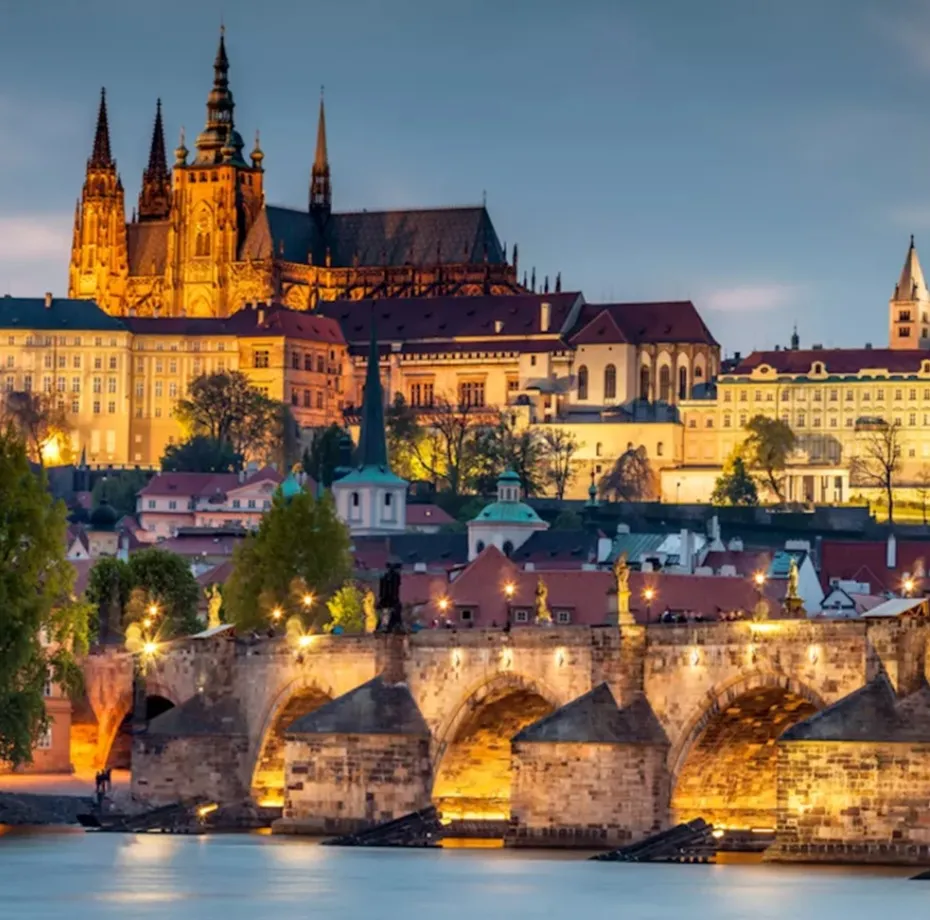
Prague Castle (Pražský hrad)
The largest coherent castle complex in the world, sprawling roughly 70,000 square metres along a ridge above the Vltava's west bank. Founded around 870, it has been the seat of Bohemian kings, Holy Roman emperors and now the Czech president, and encloses Gothic St. Vitus Cathedral, Romanesque St. George's Basilica, the Old Royal Palace and the cottages of Golden Lane.
Hradčany, Prague 1
Architecture
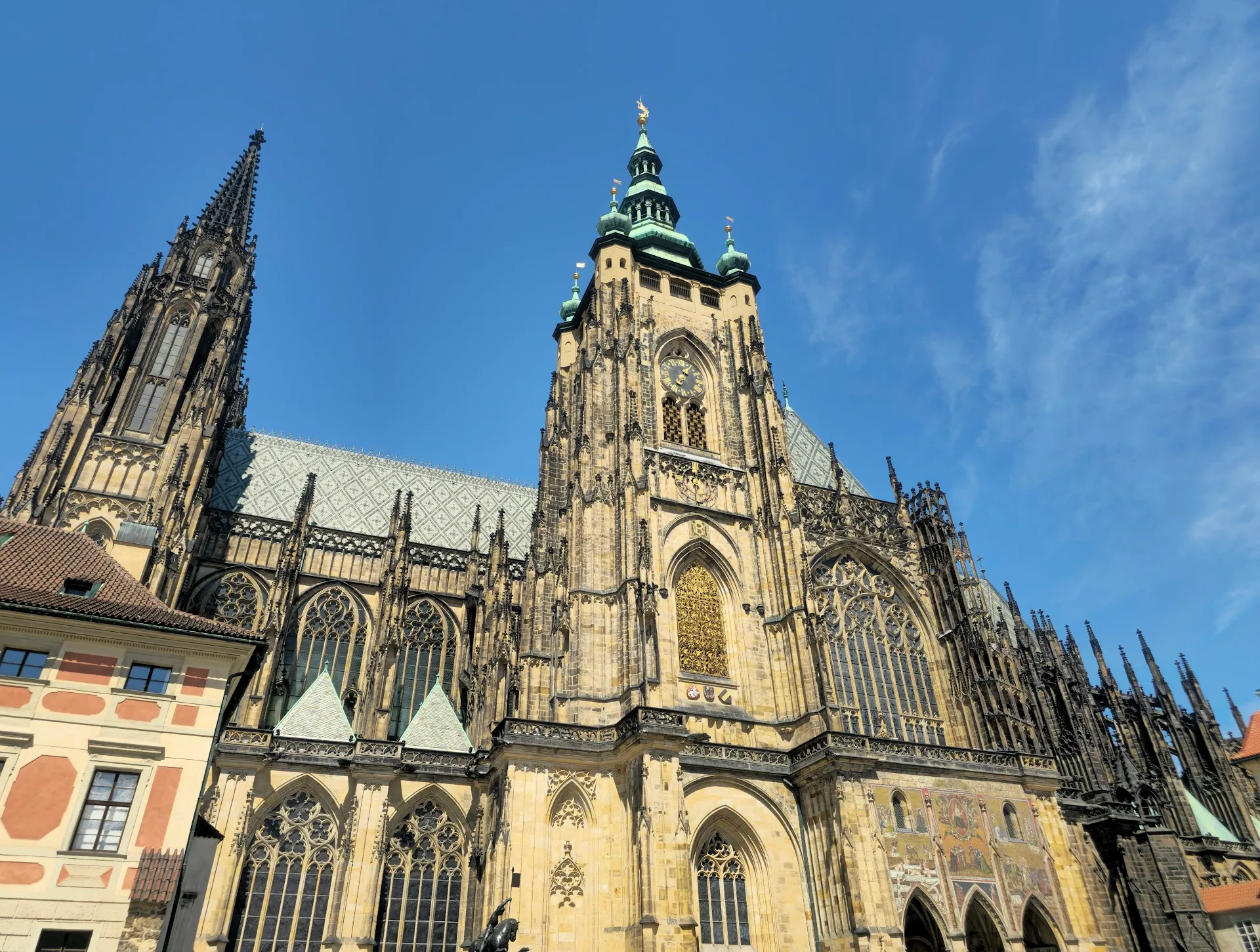
St. Vitus Cathedral (Katedrála svatého Víta)
The largest church in the country and the spiritual heart of Prague Castle, begun in 1344 under Charles IV and only completed in 1929. Its soaring Gothic nave, flying buttresses and stained glass — including a celebrated window designed by Alfons Mucha — rise above the tombs of Bohemian kings and the chamber holding the crown jewels. Early master builders Matthias of Arras and Peter Parler shaped its chancel and the St. Wenceslas Chapel.
Hradčany (Prague Castle), Prague 1
Restaurant5.0
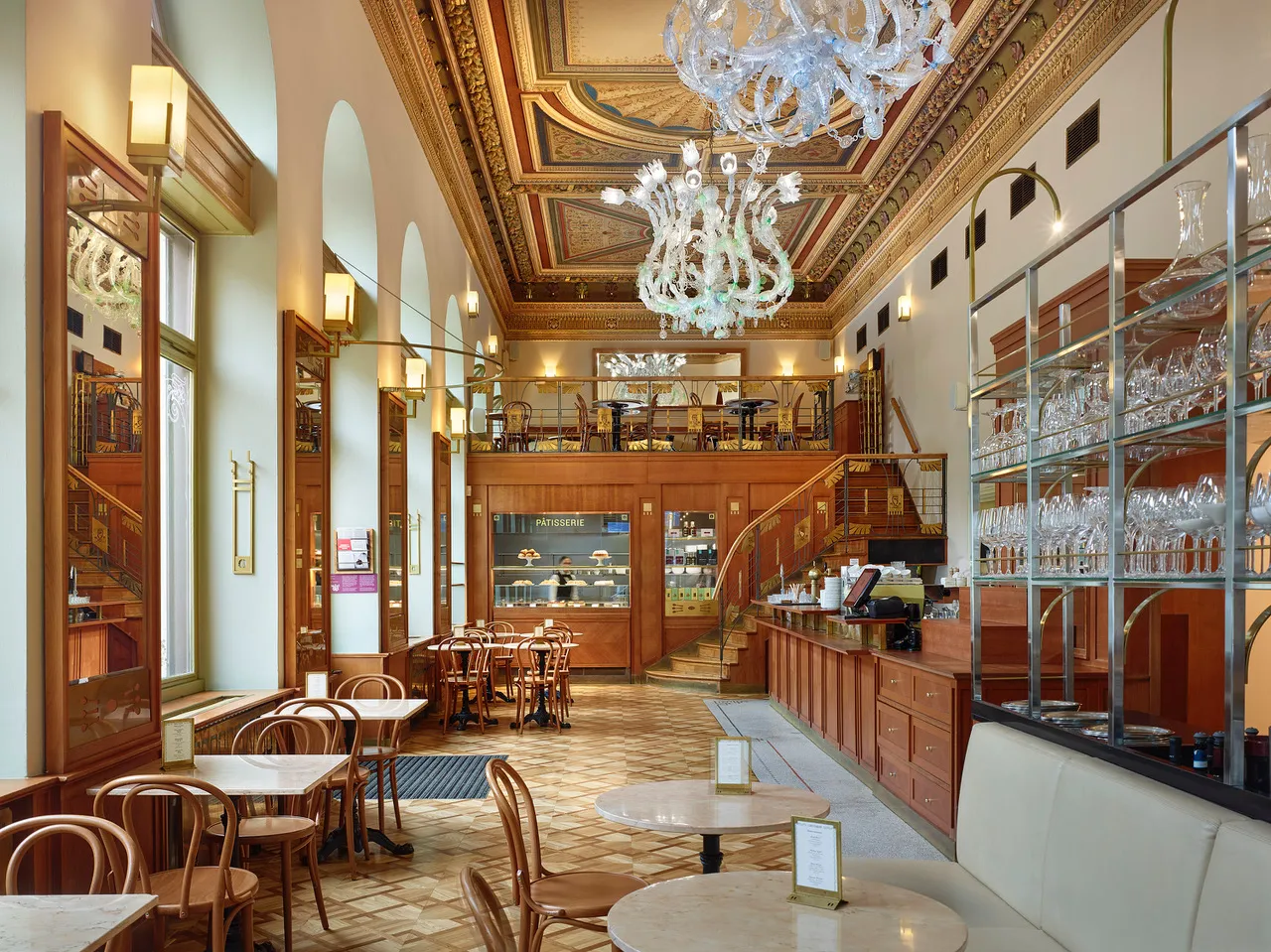
Café Savoy
A grand First-Republic café beneath a restored Neo-Renaissance ceiling, Savoy serves Viennese-style breakfasts, daily-baked pastries and a French-leaning dinner menu just across the river from the Lesser Town. Its all-day buzz and in-house bakery make it one of Prague's most popular brunch destinations.
Smíchov, Praha 5
Landmark
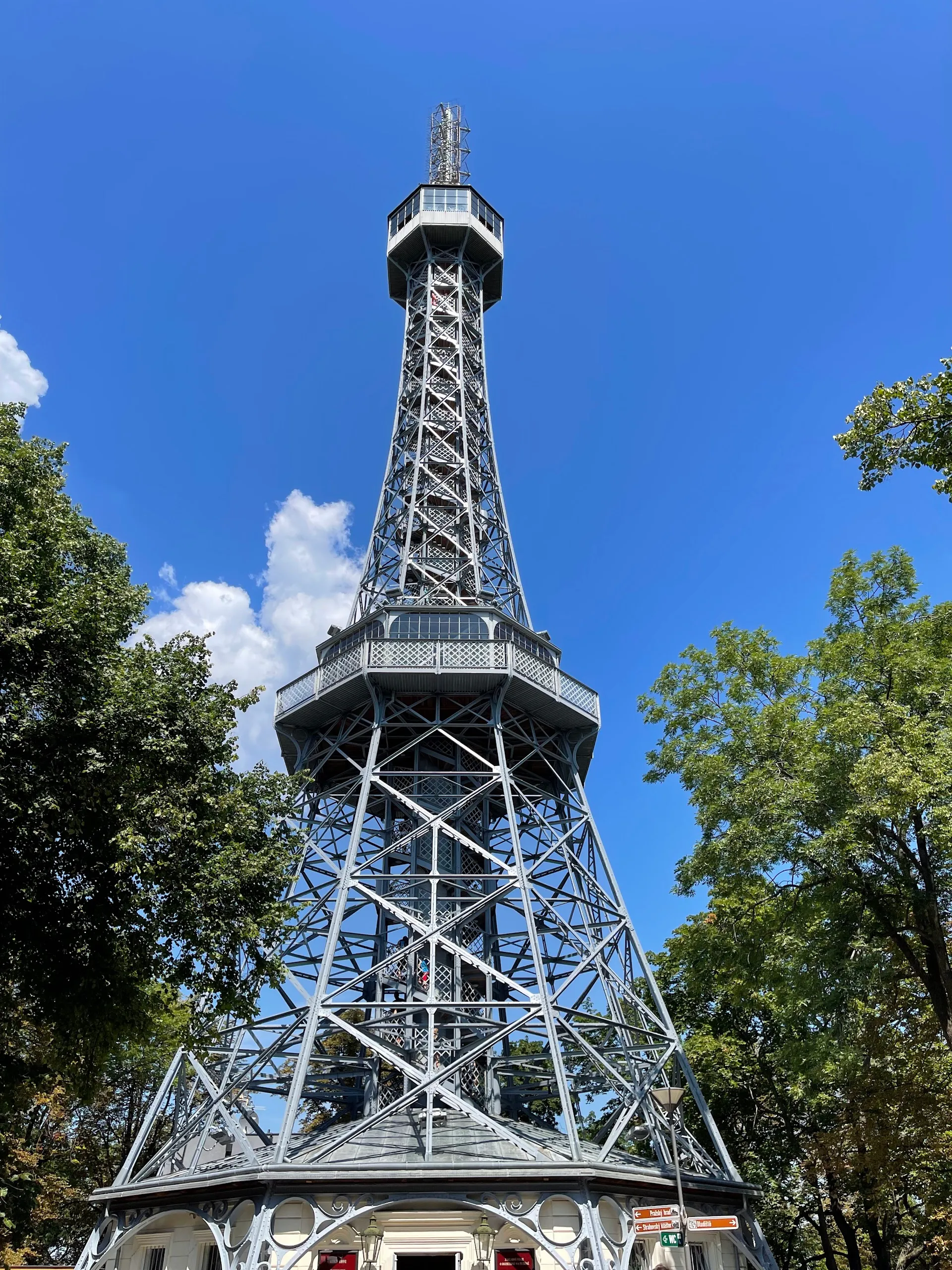
Petřín Lookout Tower (Petřínská rozhledna)
A 63.5-metre steel observation tower raised on Petřín Hill in just four months for Prague's 1891 Jubilee Exhibition, openly modelled on the Eiffel Tower with an octagonal frame. Because it stands atop the hill, its viewing gallery reaches an effective altitude over the city comparable to its Parisian inspiration, offering some of Prague's widest panoramas.
Petřín Hill, Malá Strana, Prague 1
Museum4.0
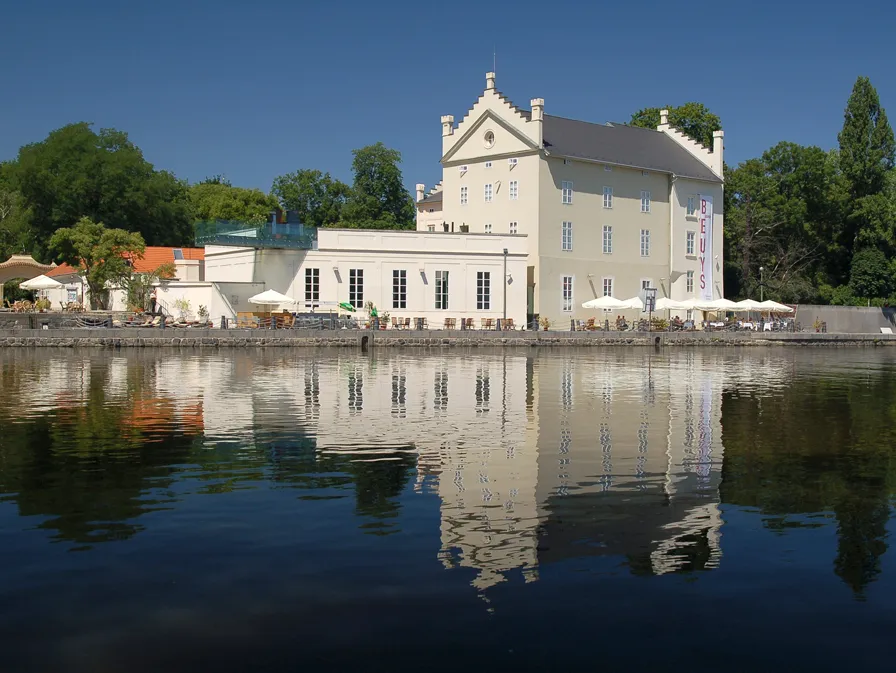
Museum Kampa
A refined modern-art museum set in the restored Sova's Mills on Kampa Island beside the Vltava, founded by collectors Jan and Meda Mládek. It holds the world's largest public collection of abstract pioneer František Kupka alongside Cubist sculptor Otto Gutfreund and other Central European modernists.
Malá Strana (Lesser Town), Prague 1 — Kampa Island
Restaurant4.0
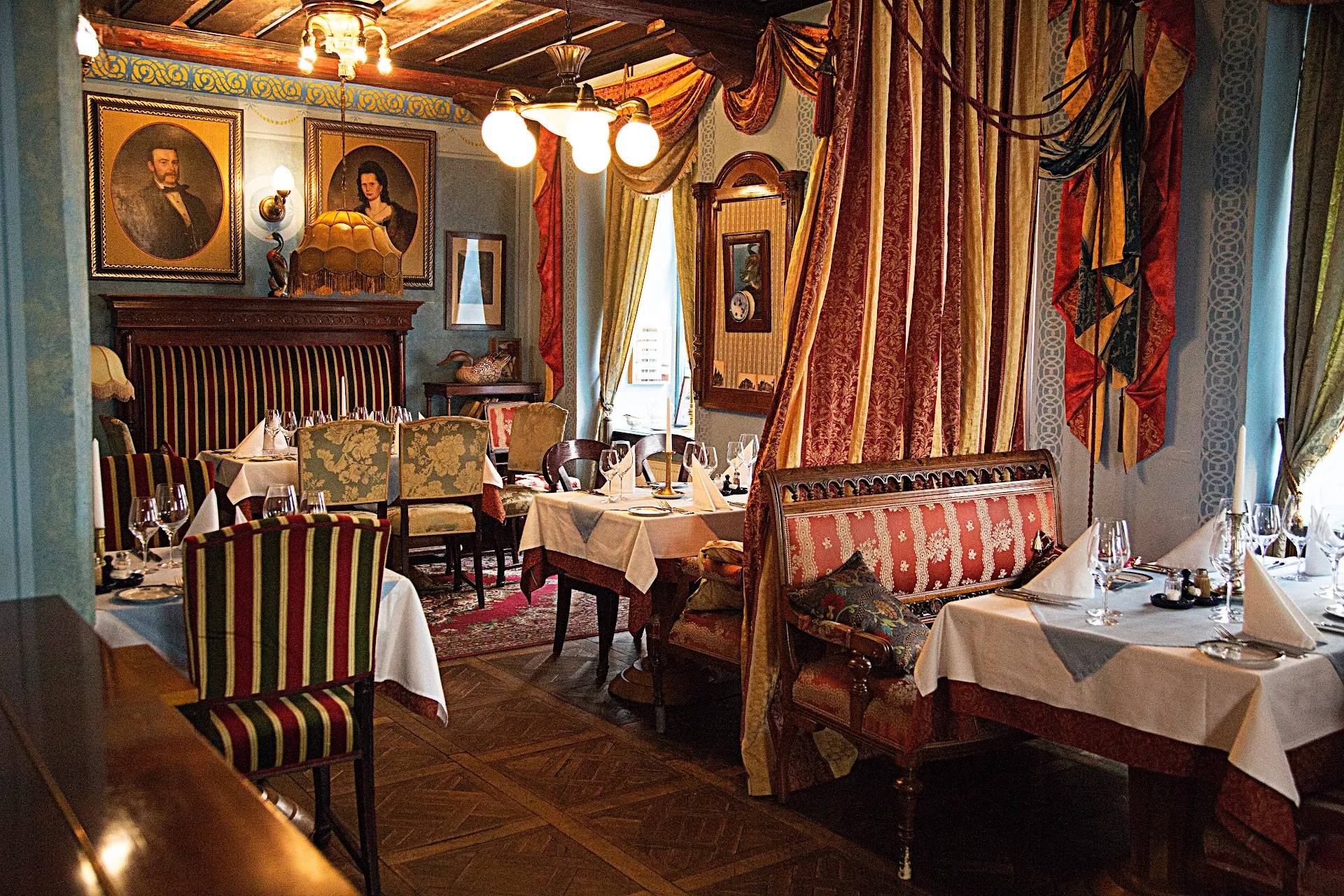
U Modré Kachničky
Tucked down a quiet Malá Strana lane, 'The Blue Duckling' is an old-world, salon-style restaurant specializing in duck and game served amid velvet, antiques and hand-painted walls. Roast duck with chestnut stuffing and venison are the kitchen's signatures.
Malá Strana (Lesser Town), Praha 1
Bar5.0
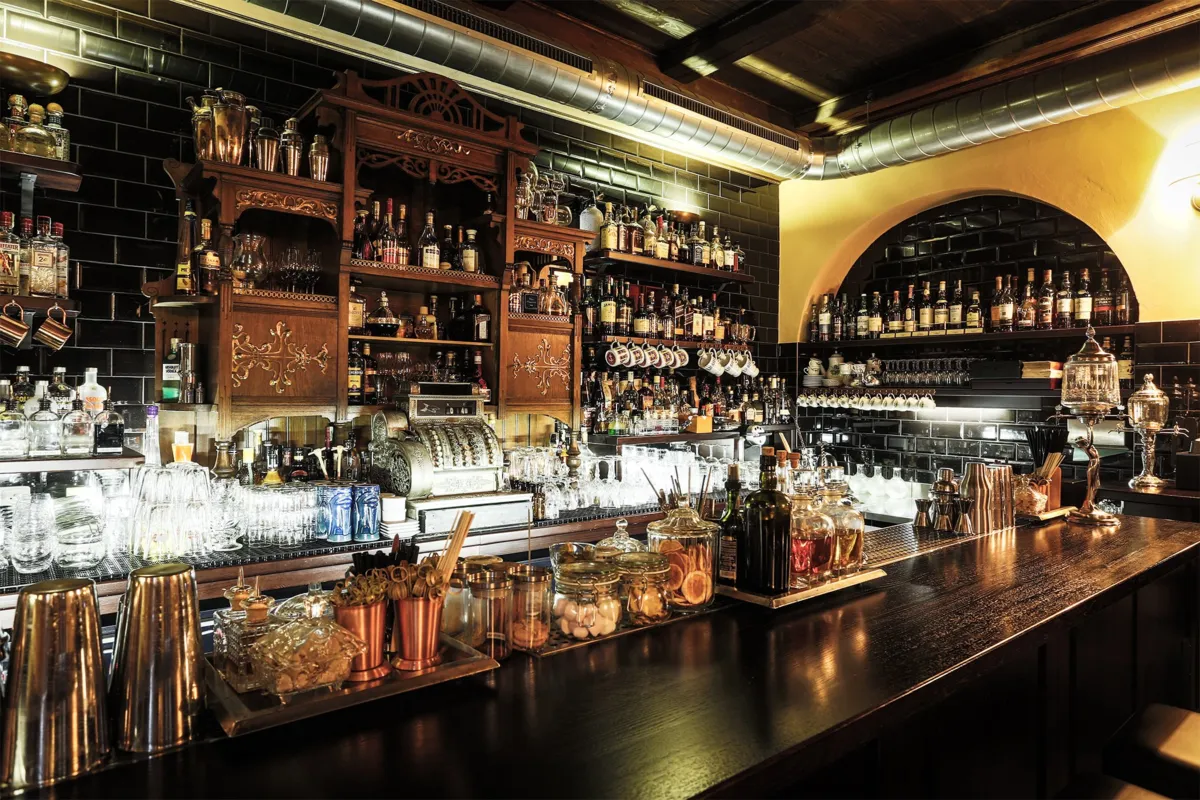
Hemingway Bar
An intimate, dimly lit cocktail bar near the river in the Old Town, themed around Ernest Hemingway's favourite drinks and stocked with over 200 rums and the Czech Republic's largest absinthe selection. Regularly ranked among the world's best bars, it is known for meticulous craft cocktails such as the Becher Butter Sour, and reservations are strongly recommended.
Staré Město (Old Town), Prague 1
Landmark
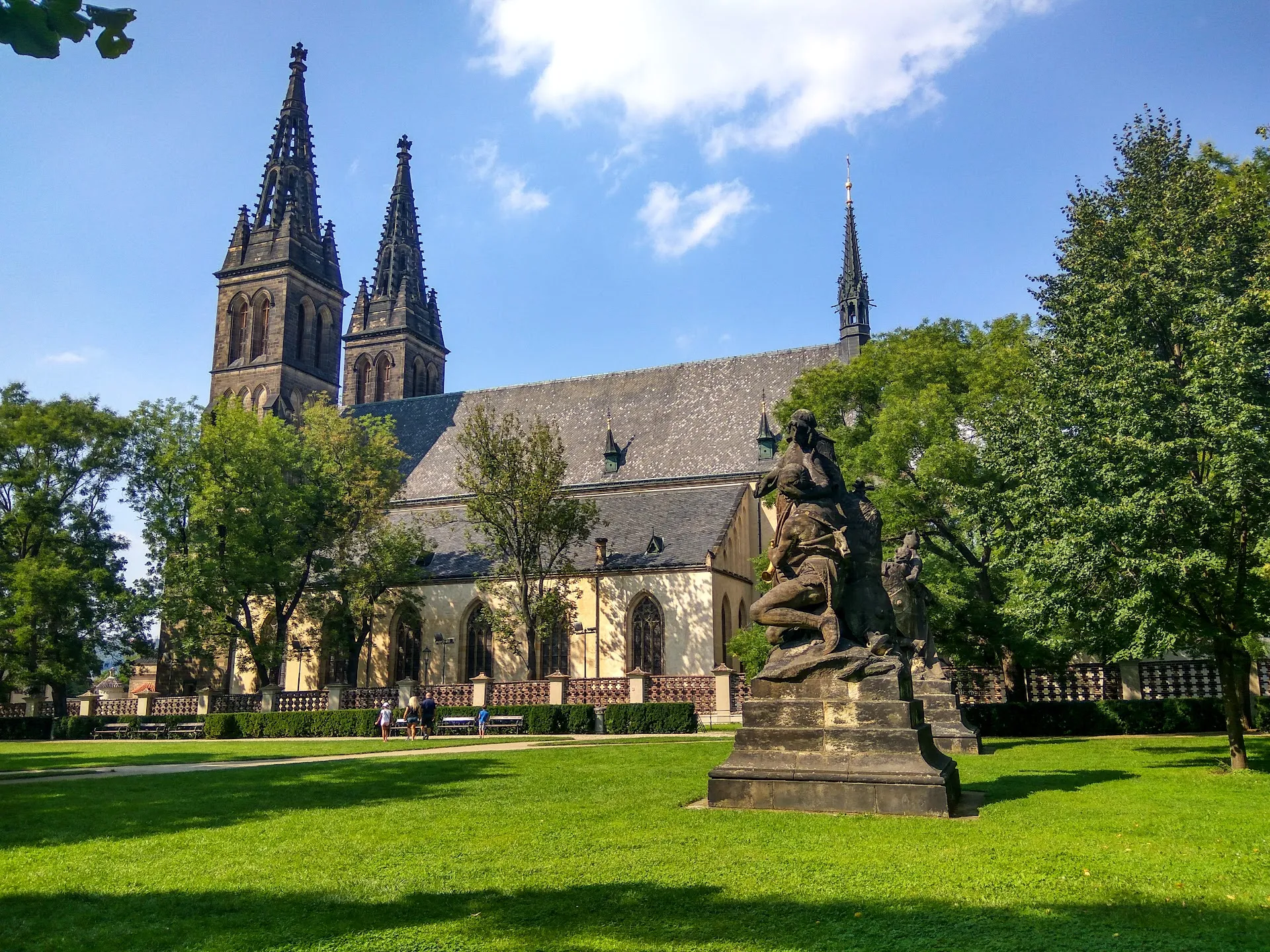
Vyšehrad
A 10th-century hilltop fortress on the Vltava's east bank, tied by legend to the mythical founding of Prague and briefly the seat of Bohemian rulers in the 11th century. Its ramparts now frame a quiet park favoured by locals, the neo-Gothic Basilica of St. Peter and St. Paul, the Romanesque Rotunda of St. Martin, and a national cemetery where Dvořák, Smetana and other Czech notables rest.
Vyšehrad, Prague 2
Landmark
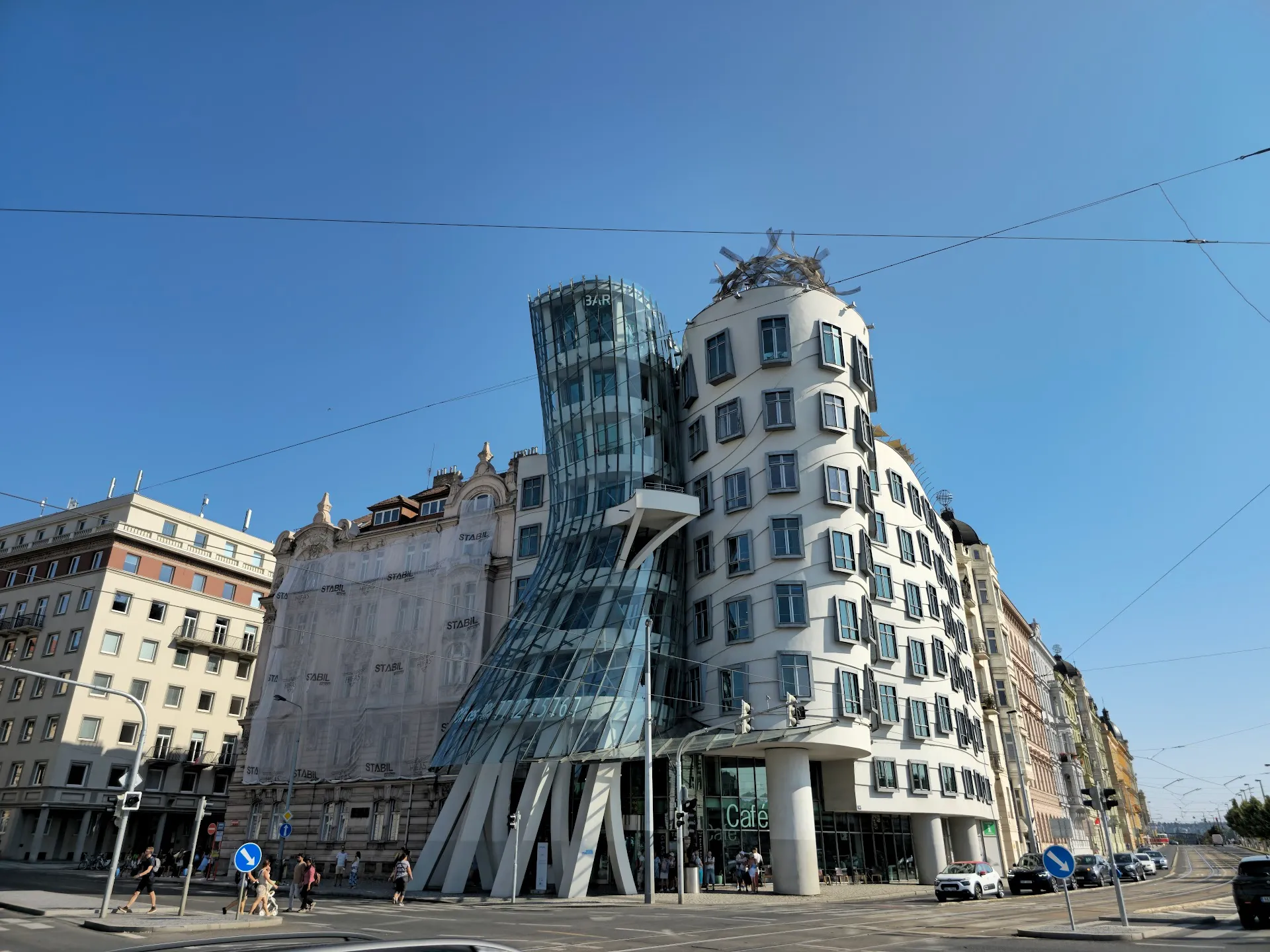
Dancing House (Tančící dům)
Completed in 1996 by Vlado Milunić with Frank Gehry, this deconstructivist office building leans a curving glass tower into a solid stone one, earning the nickname 'Ginger and Fred' after the dancing film duo. Its dynamic, off-kilter forms break sharply from the Art Nouveau riverfront, and a rooftop bar and gallery now crown the building.
Nové Město (New Town), Prague 2
Cafe4.0
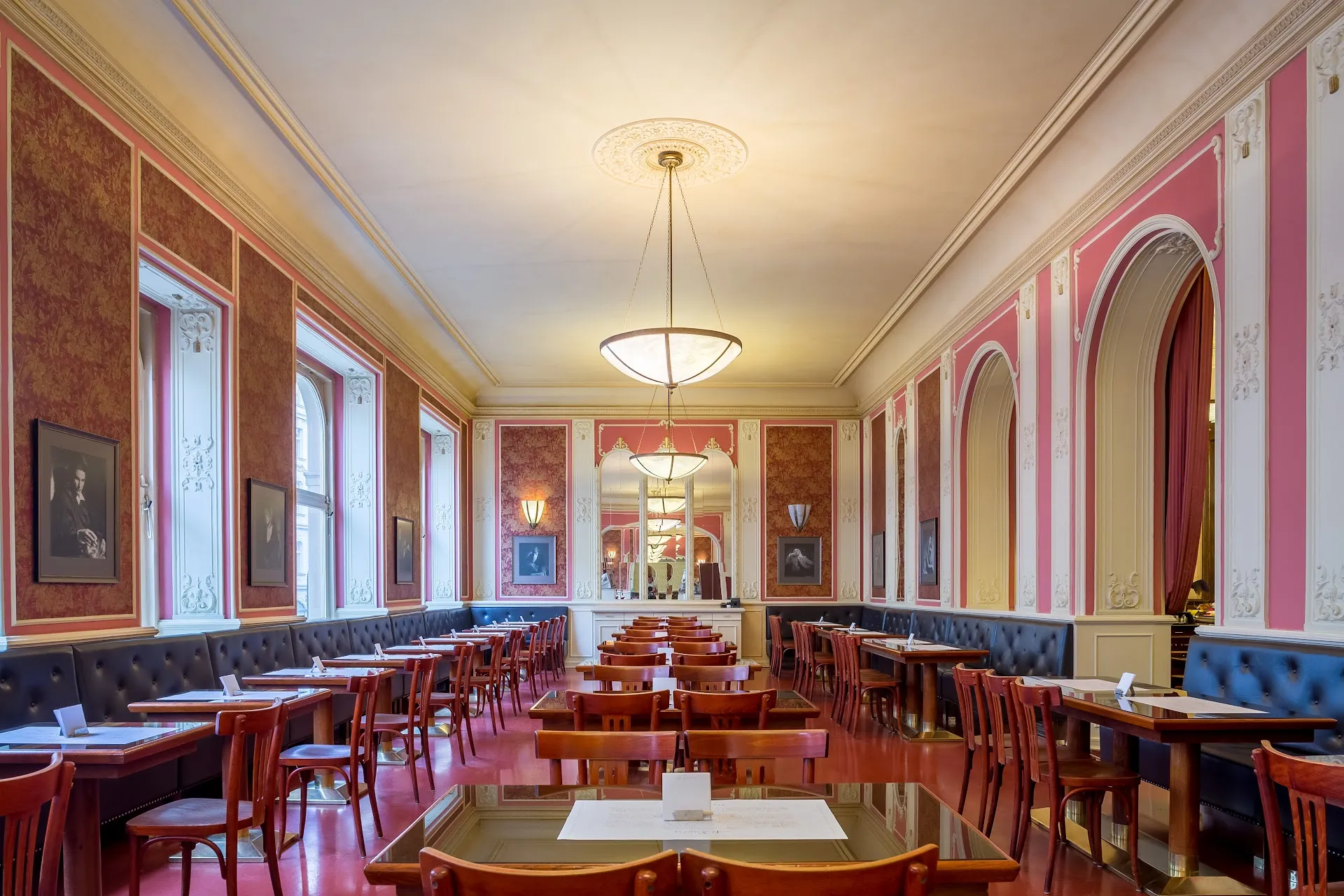
Café Louvre
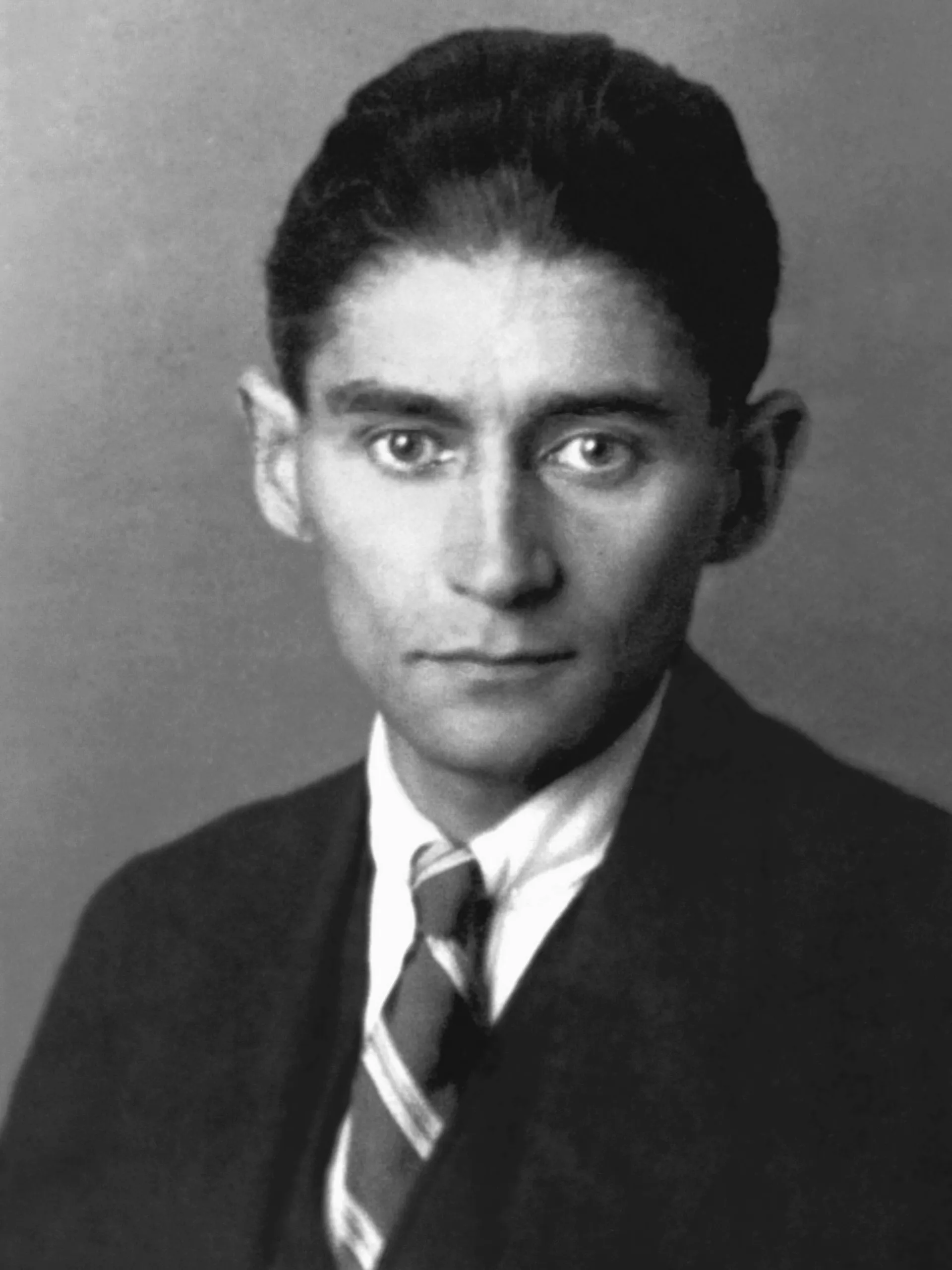
A grand Parisian-style café and billiard hall open since 1902, once frequented by Albert Einstein, Franz Kafka and Karel Capek. Its rosy-pink salons fill with a mix of locals and visitors from early morning, and the upstairs hall still keeps historic pool tables in play.
Nové Město (New Town), Prague 1
Museum4.0
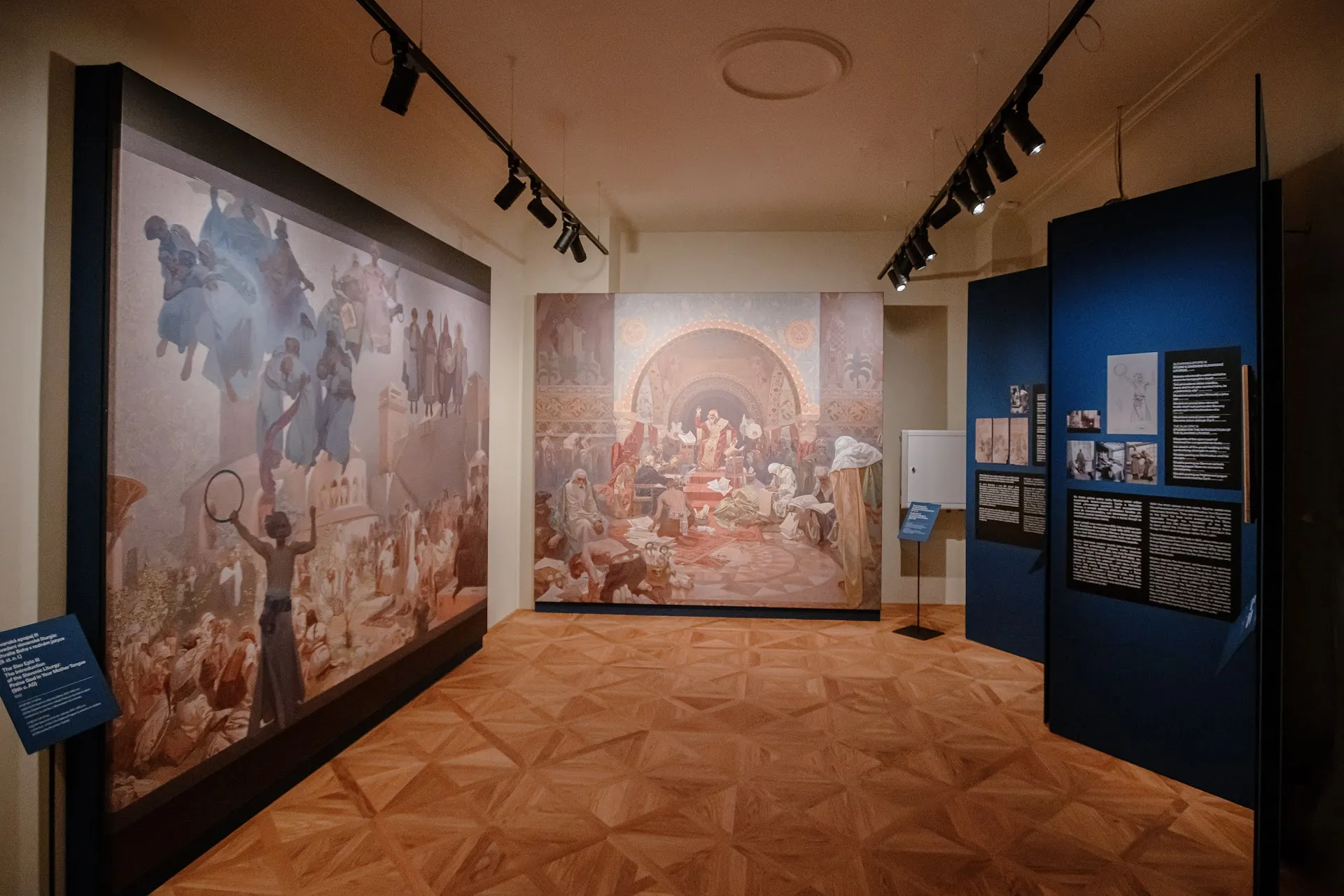
Mucha Museum
Opened in 1998 in the Baroque Kaunic Palace just off Wenceslas Square, this was the first museum in the world dedicated solely to Art Nouveau master Alfons Mucha. It shows around a hundred originals — posters, decorative panels, drawings and personal memorabilia — alongside a short film on the artist and his Slav Epic.
Nové Město (New Town), Prague 1
Museum4.0
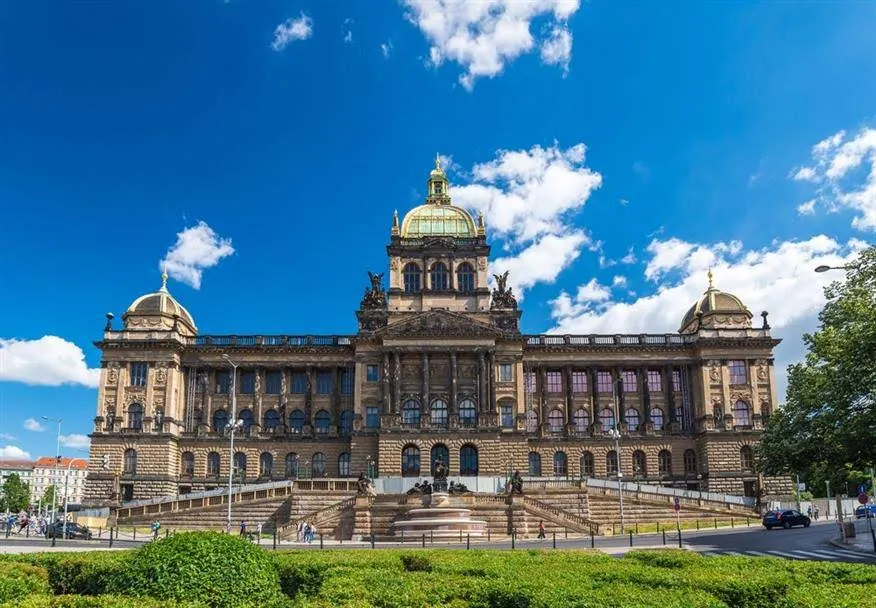
National Museum (Národní muzeum)
The Czech Republic's largest museum crowns the upper end of Wenceslas Square in a monumental Neo-Renaissance palace completed in 1891, with collections spanning mineralogy, paleontology, zoology, prehistory and Czech national history. After a long reconstruction it reopened linked by an underground passage to its modern New Building next door.
Nové Město (New Town), Prague 1
Park4.0
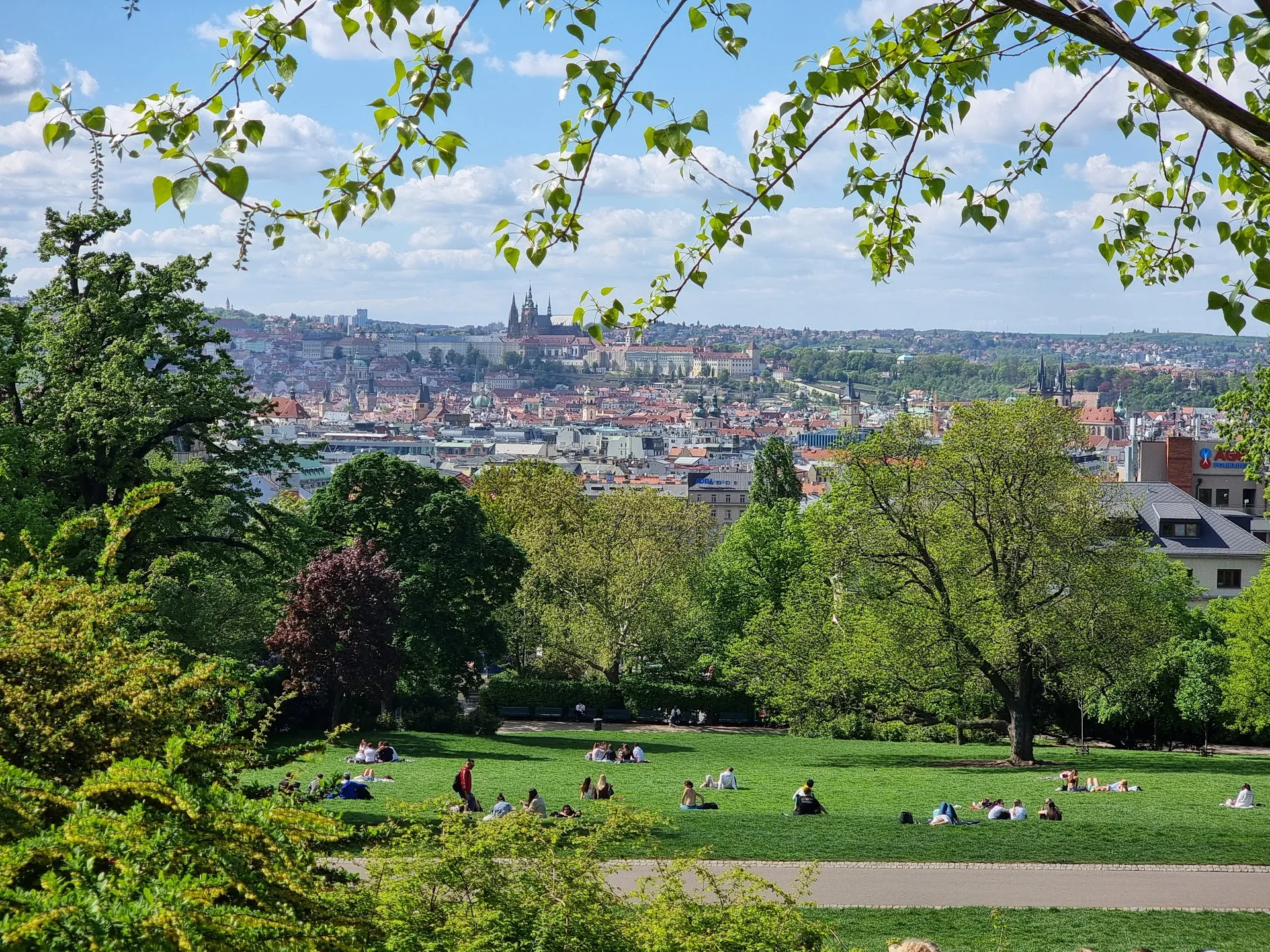
Riegrovy sady (Rieger Gardens)
An elegant 19th-century English-style garden in Vinohrady, Riegrovy sady draws locals to its open hillside lawns for sunbathing, dog-walking and sunsets that frame Prague Castle. Its lively beer garden makes it one of the city's most social warm-weather hangouts, affectionately nicknamed 'Riegrák.'
Vinohrady, Prague 2
Restaurant5.0
Field
Chef Radek Kašpárek's pared-back Old Town dining room turns Czech farm produce, foraged herbs and seasonal game into playful, precisely plated tasting menus. Holder of a Michelin star since 2016, Field is frequently cited as one of Europe's more accessibly priced starred restaurants.
Staré Město (Old Town), Praha 1
Bar4.0
AnonymouS Bar
A signless speakeasy off Michalská in the Old Town, themed around the Guy Fawkes mask and V for Vendetta, with masked bartenders and theatrical, hidden-menu cocktails. Drinks arrive in playful vessels such as tiny wooden birdhouses and infusion stands, making it one of Prague's most atmospheric cocktail experiences.
Staré Město (Old Town), Prague 1
Day by day
Day 1Prague
Old Town & the Jewish Quarter
09:00Landmark
Prague Astronomical Clock & Old Town Hall (Staroměstský orloj)
Start where Prague started, on Old Town Square beneath the 1410 Astronomical Clock — the world's oldest still ticking — and climb the Old Town Hall tower for your first sweep over the spires and red roofs.
Staré Město (Old Town Square), Prague 1
Tip: Arrive a few minutes before the hour for the parade of apostles, then take the lift up the tower to get your bearings.
Must visit
10:00Museum5.0
Jewish Museum in Prague (Židovské muzeum v Praze)
Step into Josefov, the former Jewish quarter, where one combined ticket links a cluster of historic synagogues and the deeply moving Old Jewish Cemetery, its headstones layered ten deep.
Josefov (Jewish Quarter), Prague 1
Tip: The Old-New Synagogue needs a separate ticket; the museum closes Saturdays and Jewish holidays, so plan around it.
12:30Cafe4.0
Grand Café Orient
Lunch in the world's only Cubist café, upstairs in the House of the Black Madonna, where the whole room follows Josef Gočár's angular 1912 design.
Staré Město (Old Town), Prague 1
Tip: Pair a Czech cake with your coffee and grab a balcony table over Celetná street.
14:00Architecture
Municipal House (Obecní dům)
See Prague's most opulent Art Nouveau interior at the Municipal House, decorated by Alfons Mucha and wrapped around the grand Smetana concert hall.
Náměstí Republiky, Staré Město (Old Town), Prague 1
Tip: The café is open to all; a guided tour or an evening concert gets you into the ceremonial halls.
15:00Landmark
Powder Tower (Prašná brána)
Climb the adjoining Powder Tower, a Gothic city gate marking the start of the Royal Route that coronation processions once followed to the castle.
Staré Město (Old Town), Prague 1
Tip: A quick 44-metre climb and a neat way to picture how the old town fits together.
16:30Landmark
Charles Bridge (Karlův most)
Walk down to the Charles Bridge, the 14th-century stone crossing lined with baroque saints, and cross toward the Lesser Town as the light turns gold.
Connects Staré Město (Old Town) and Malá Strana (Lesser Town), Prague 1
Tip: It's busiest at midday — come now or at dawn for the bridge nearly to yourself.
Must visit
19:30Restaurant5.0
Lokál Dlouhááá
Dinner at the original Lokál: tank-fresh Pilsner Urquell and proper Czech classics — svíčková, goulash, schnitzel — at long communal tables.
Staré Město (Old Town), Praha 1
Tip: It fills up; arrive before 19:00 or reserve, and order the unfiltered tank beer.
21:00Bar4.0
Black Angel's Bar
Optional nightcap in the Gothic cellar of Black Angel's, right on Old Town Square, where bartenders mix 1930s recipes by candlelight.
Staré Město (Old Town), Prague 1
Tip: The rooftop bar in the same building has the square's best view of the clock tower if you'd rather drink up high.
Day 2Prague
Prague Castle & the Lesser Town
09:00Landmark
Prague Castle (Pražský hrad)
Cross the river early to Prague Castle, the largest coherent castle complex in the world and the thousand-year seat of Bohemian kings and Czech presidents.
Hradčany, Prague 1
Tip: Clear security early and buy the 'Circuit' ticket; catch the changing of the guard at the gate on the hour.
10:30Architecture
St. Vitus Cathedral (Katedrála svatého Víta)
At its core soars St. Vitus Cathedral, six centuries in the building, with the royal tombs, the crown-jewel chamber and a luminous stained-glass window designed by Mucha.
Hradčany (Prague Castle), Prague 1
Tip: The entrance vestibule is free; the castle ticket gets you into the nave and St. Wenceslas Chapel.
12:30Restaurant5.0
Café Savoy
Head down to the river for lunch under the restored Neo-Renaissance ceiling of Café Savoy, a grand First-Republic café with its own bakery.
Smíchov, Praha 5
Tip: Reserve at weekends; save room for a větrník or the famous breakfast pastries.
14:00Landmark
Petřín Lookout Tower (Petřínská rozhledna)
Ride the funicular up Petřín Hill and climb its 1891 lookout tower — a scaled-down Eiffel — for some of the widest views over the city and castle.
Petřín Hill, Malá Strana, Prague 1
Tip: Your city transit ticket covers the funicular; the mirror maze beside the tower is fun with kids.
16:00Museum4.0
Museum Kampa
Come back down to Kampa Island for the Museum Kampa, a polished modern-art collection in a riverside mill, strong on the abstract pioneer František Kupka.
Malá Strana (Lesser Town), Prague 1 — Kampa Island
Tip: The terrace and David Černý's crawling 'Babies' sculptures outside are free to see.
19:30Restaurant4.0
U Modré Kachničky
Dinner down a quiet Malá Strana lane at 'The Blue Duckling', an old-world salon famous for roast duck and game amid antiques and velvet.
Malá Strana (Lesser Town), Praha 1
Tip: Book ahead; the duck with chestnut stuffing is the house signature.
21:00Bar5.0
Hemingway Bar
Finish across the river at the Hemingway Bar, a tiny, dim cocktail room ranked among the world's best, with hundreds of rums and a wall of absinthe.
Staré Město (Old Town), Prague 1
Tip: Reserve — it's small; try the Becher Butter Sour, built on Karlovy Vary's herbal Becherovka.
Day 3Prague
Vyšehrad, Mucha & local Prague
09:30Landmark
Vyšehrad
Begin on the peaceful hilltop of Vyšehrad, Prague's legendary first castle, with ramparts above the Vltava, a neo-Gothic basilica and the cemetery where Dvořák and Smetana lie.
Vyšehrad, Prague 2
Tip: Far quieter than the main castle; the riverside ramparts give a different view back over the city.
11:30Landmark
Dancing House (Tančící dům)
Walk the embankment to the Dancing House, the curving 'Ginger and Fred' tower by Gehry and Milunić that twists out of the Art Nouveau riverfront.
Nové Město (New Town), Prague 2
Tip: Go up to the rooftop bar for the view, or shoot it from the far bank.
12:30Cafe4.0
Café Louvre
Lunch at Café Louvre on Národní, a rosy grand café open since 1902 and once frequented by Einstein and Kafka, with billiards still upstairs.
Nové Město (New Town), Prague 1
Tip: The weekday lunch menu is good value; you can book a pool table.
14:00Museum4.0
Mucha Museum
Dive into Prague's Art Nouveau at the Mucha Museum — around a hundred originals by Alfons Mucha, from posters to panels and sketches — just off Wenceslas Square.
Nové Město (New Town), Prague 1
Tip: Compact and quick; the short film previews his epic Slav cycle.
15:30Museum4.0
National Museum (Národní muzeum)
Walk up Wenceslas Square — the stage of modern Czech history — to the monumental National Museum crowning its top, reopened after years of restoration.
Nové Město (New Town), Prague 1
Tip: Even the grand staircase and dome are worth a look; the square itself is where 1968 and 1989 played out.
17:00Park4.0
Riegrovy sady (Rieger Gardens)
Head into leafy Vinohrady for sunset at Riegrovy sady, the locals' hillside park and beer garden with Prague Castle silhouetted across the valley.
Vinohrady, Prague 2
Tip: Buy a beer at the garden kiosk (cash helps) and claim a spot on the grass.
19:30Restaurant5.0
Field
Mark your last night at Field, a Michelin-starred yet relaxed Old Town room turning Czech farm produce and game into playful tasting menus.
Staré Město (Old Town), Praha 1
Tip: One of Europe's more affordable starred tables — but book well ahead.
21:30Bar4.0
AnonymouS Bar
Toast Prague at the AnonymouS Bar, a signless speakeasy where masked bartenders serve theatrical, hidden-menu cocktails.
Staré Město (Old Town), Prague 1
Tip: Find the unmarked door on Michalská and reserve to be sure of a seat.
What it costs
Prague is one of Europe's better-value capitals. A comfortable mid-range three days runs roughly CZK 1,800–3,500 (about $80–150) per person per day excluding accommodation: many sights are inexpensive, a Prague Castle circuit ticket is around CZK 450, the Jewish Museum about CZK 600, and a classical concert or marionette show CZK 500–900. Hearty pub dinners with tank beer run CZK 300–500, while even a Michelin tasting menu is a relative bargain. A 24-hour public-transport pass is about CZK 120 and covers the metro, trams and the Petřín funicular.~CZK 1,800-3,500 / day mid-range (about $80-150) / day
Frequently asked questions
- Is three days enough for Prague?
- Three days comfortably covers Prague's essentials. This plan gives each day a clear focus: the Old Town and Jewish Quarter on day one, Prague Castle and the Lesser Town on day two, and Vyšehrad, the New Town and more local neighbourhoods on day three. The historic core is compact and walkable, with trams and the metro for the longer hops. With a fourth day, add a day trip to Kutná Hora or go deeper into a museum or two.
- How do I get around Prague?
- On foot for the centre, and with the excellent DPP network of metro, trams and buses for everything else. A 24- or 72-hour pass is cheap and covers the lot, including the Petřín funicular. From Václav Havel Airport, city bus 119 connects to metro line A at Nádraží Veleslavín, or the Airport Express bus runs to the main train station; both use standard tickets.
- Do I need to book Prague Castle in advance?
- You don't strictly need to, but buying a timed ticket online and arriving at opening saves a lot of queueing, especially in summer. The 'Circuit' ticket covers St. Vitus Cathedral, the Old Royal Palace, St. George's Basilica and Golden Lane. Security checks operate at the gates, so leave a little time, and note the cathedral is busiest late morning.
- What's the best day trip if I have extra time?
- Kutná Hora, an easy hour by train from Prague's main station. The medieval silver-mining town pairs the bone-decorated Sedlec Ossuary with the soaring Gothic Cathedral of St. Barbara, and makes a relaxed half- or full-day. It's also the natural first extension of our Grand Tour of Czechia itinerary if you want to see more of the country.
- When is the best time to visit Prague?
- Late spring to early autumn for long days and warm evenings; December for the Christmas markets on the Old Town Square. Summer is liveliest but busiest around the castle and Charles Bridge, so start the big sights early. Winter outside the holidays is quiet, cold and cheap, with the museums and the castle at their calmest.
Make this trip yours
Save this itinerary and customize it — dates, stops, budget and friends, all in one place.