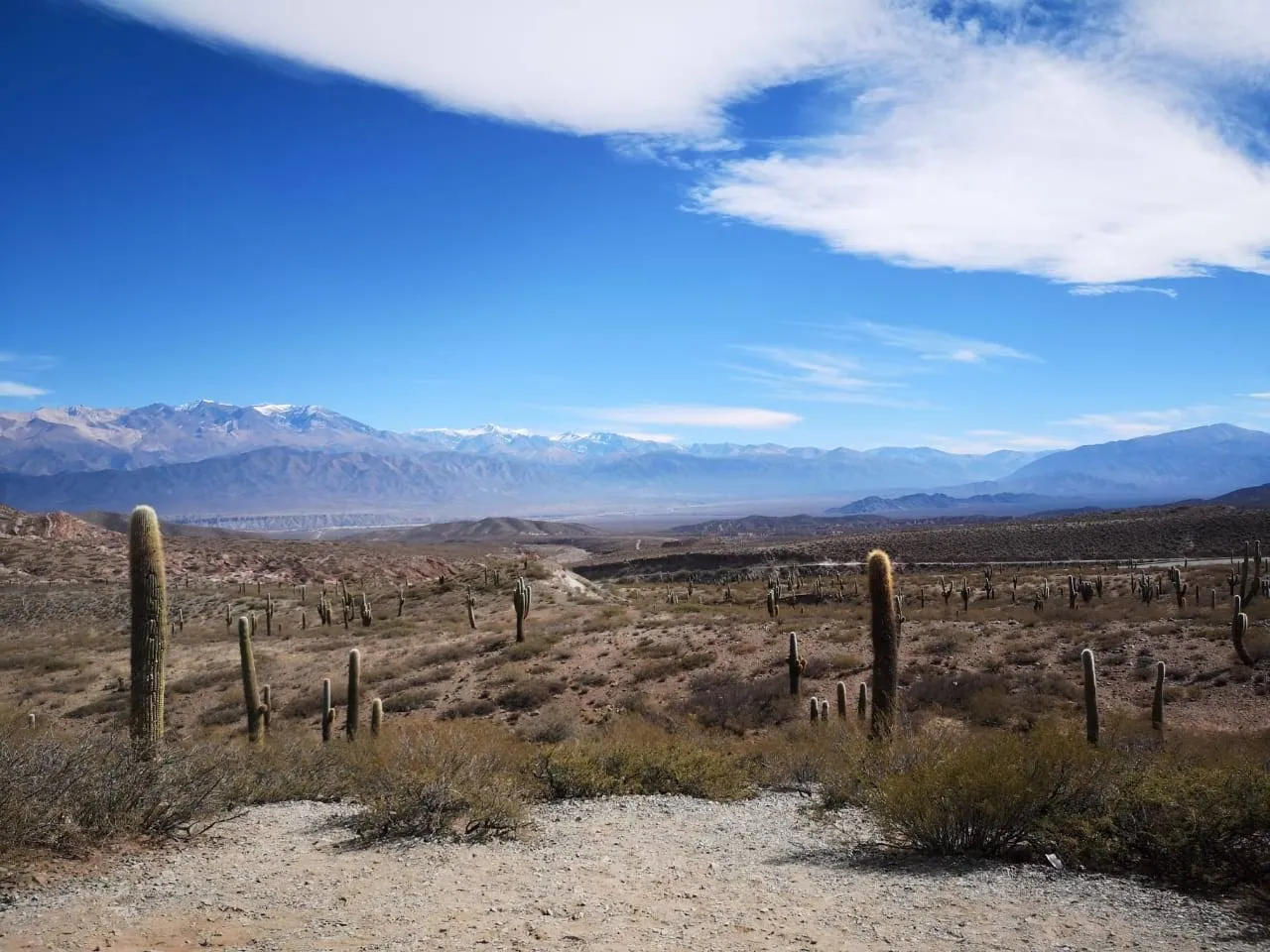
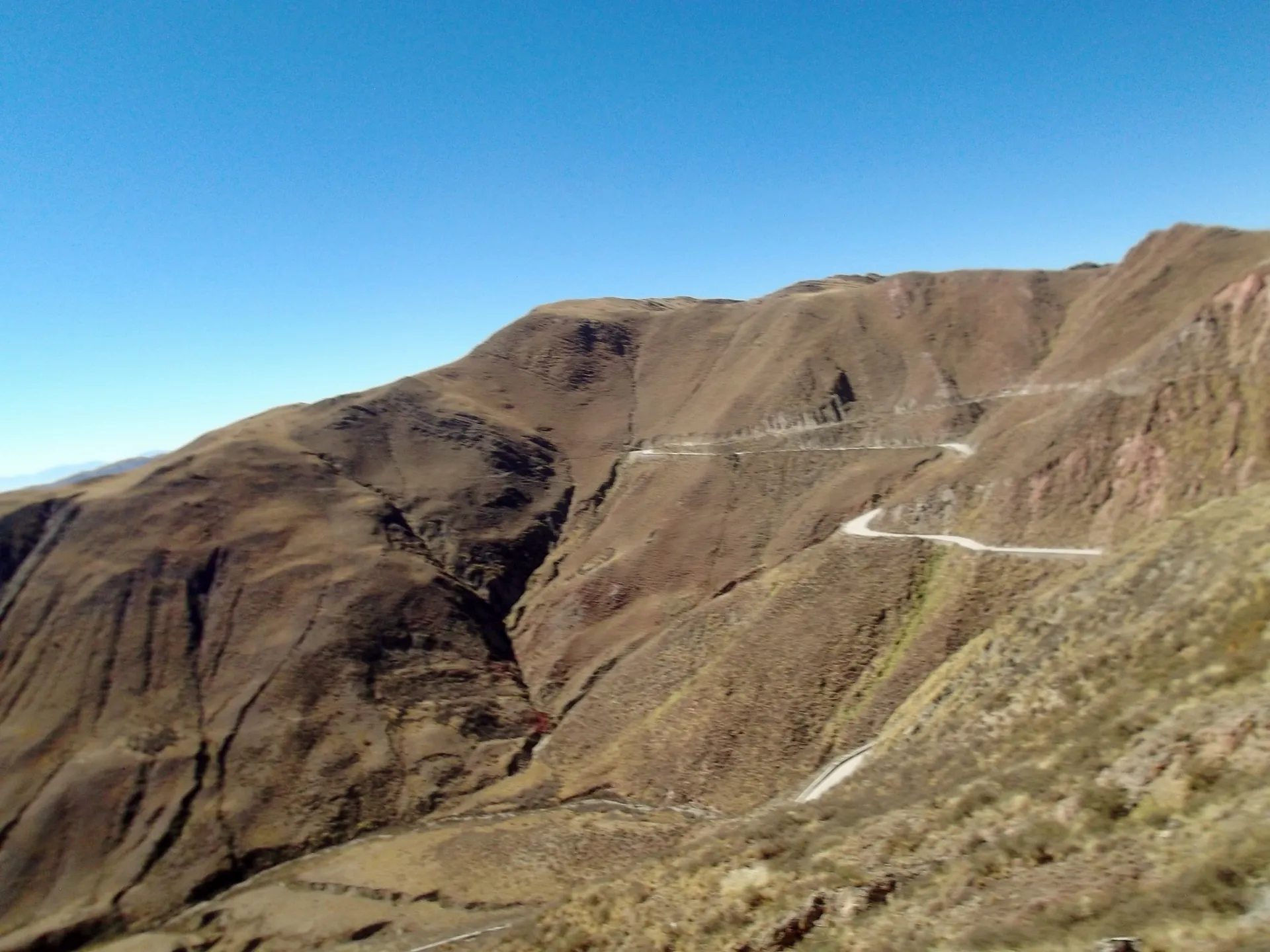
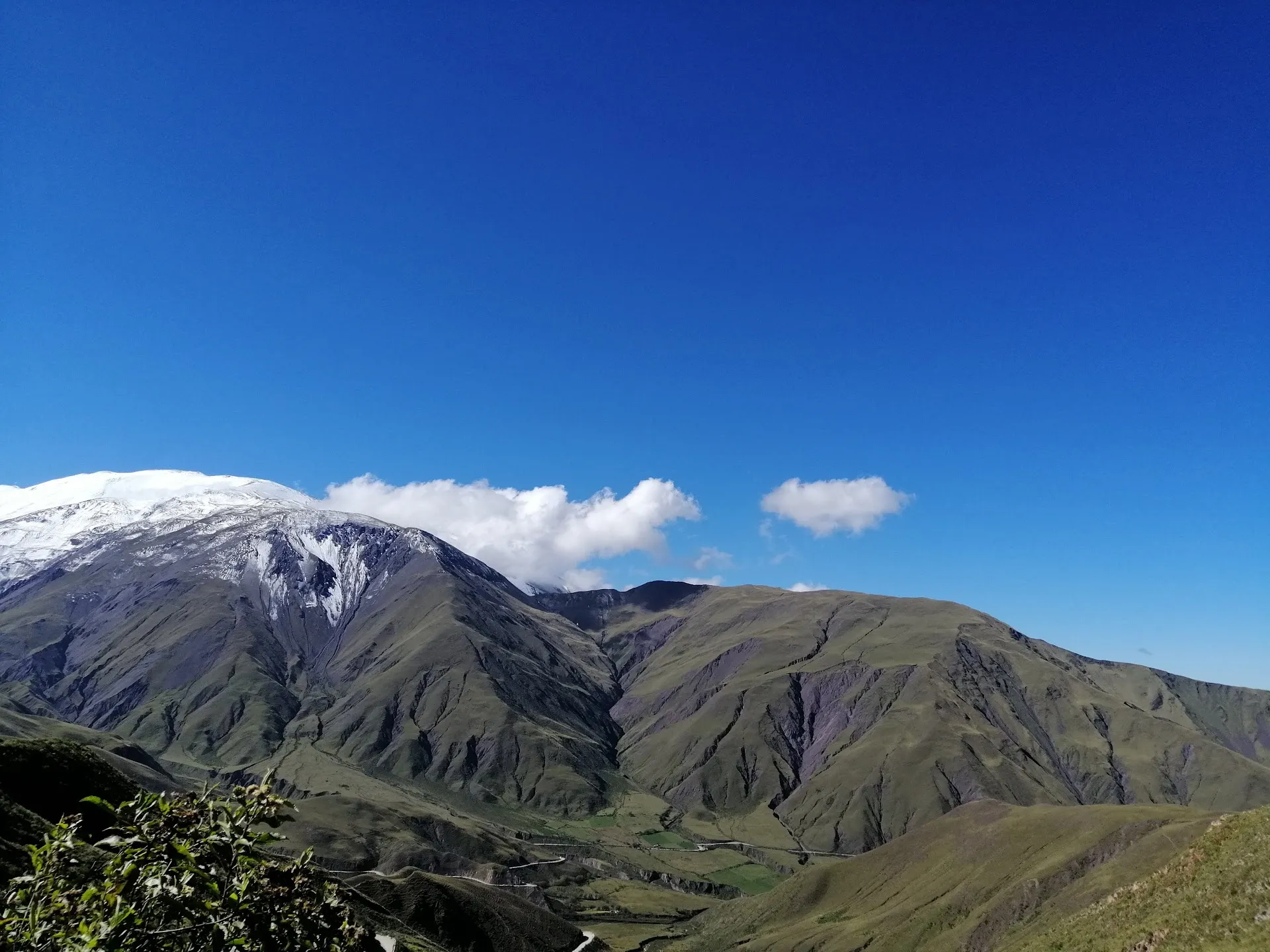
Cachi is a village of roughly 5,000 people, whitewashed and cobbled, set at 2,280 meters where the Valles Calchaquíes meet the eastern wall of the Andes. It has none of the polish of Salta city or the wine-country buzz of Cafayate two and a half hours south - what it has instead is a startlingly intact colonial core built from adobe and cardón cactus wood, a working weaving tradition still practiced on backstrap looms, and one of the most spectacular approach roads in Argentina. For many visitors, the drive in - the Cuesta del Obispo pass and the cactus forests of Parque Nacional Los Cardones - is as much the point of coming as the town itself.
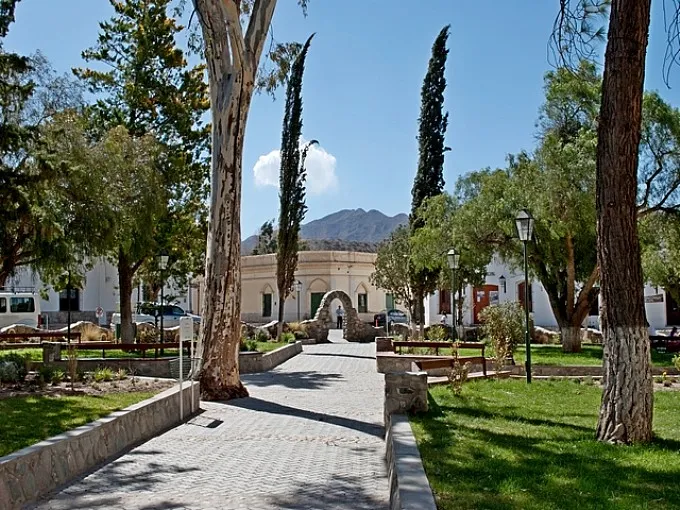
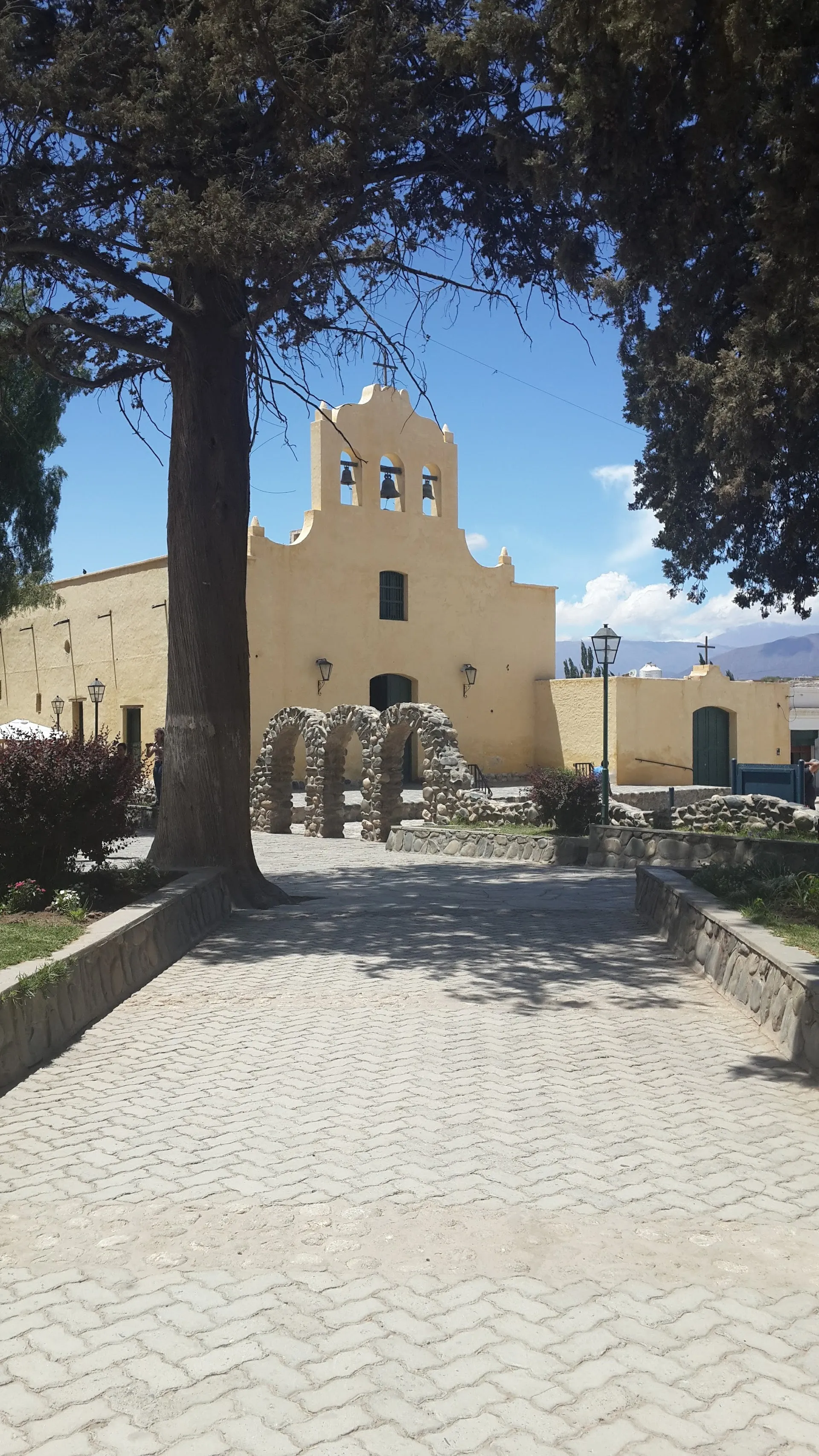
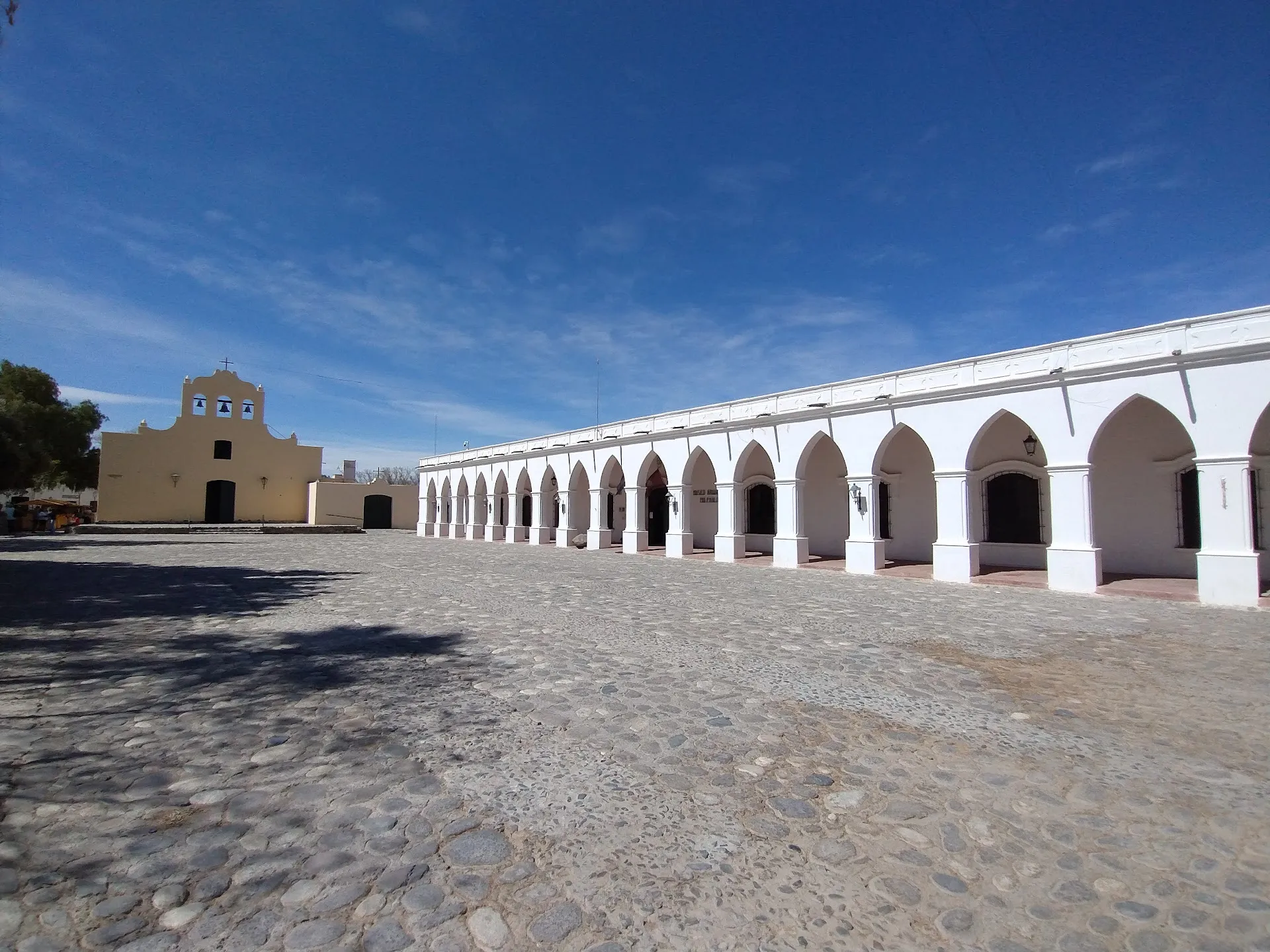
The heart of Cachi is Plaza 9 de Julio, a shaded square ringed by low adobe buildings with wrought-iron grilles and cardón-beam roofs. On one side stands Iglesia San José, a 17th-century church whose barrel-vault ceiling, altar and confessional are all carved from cactus wood rather than timber - a detail that marks Cachi's architecture as genuinely different from colonial towns elsewhere in Argentina. Directly across the plaza, the Museo Arqueológico Pío Pablo Díaz holds more than 5,000 pieces spanning some 10,000 years of Calchaquí Valley history, free to enter. A short walk south, Calle Bustamante runs through the old Pueblo Viejo quarter, its cobblestones and open acequias (irrigation channels) still watering backyard orchards behind whitewashed walls - this is Cachi at its most unhurried, and most photogenic away from the main square.
Cachi's other identity is textile weaving. Along the Camino de los Artesanos, the roughly 20-kilometer stretch of provincial road toward El Colte and Seclantás, more than 200 families still spin llama, sheep and vicuña wool on rustic looms and sell ponchos salteños, blankets and sashes directly from small adobe workshops - a living craft tradition rather than a souvenir stand.
Best time to visit
Cachi is high-desert Andean country, so it is dry and sunny almost all year, and 'best time' is really about temperature and road conditions rather than rain. April to November is the long dry season and the easiest window to visit: skies are clear, the Cuesta del Obispo and Recta del Tin Tin are in their best condition, and nights are cold but days are mild, especially May-June and September-October when temperatures are gentlest and the light on the cardón forests is at its sharpest.
December to March is the short wet season. Afternoon storms are common and can, in bad years, affect the gravel stretches of Ruta 40 or briefly close the Cuesta del Obispo, so check road conditions before driving in summer. Days are also hot at this altitude in full sun, though it cools quickly after dark. Whatever the month, mornings are calmest in the village itself - visit the plaza and church before the day-tour buses arrive from Salta around midday.
Budget
Cachi is inexpensive by the standards of Argentine tourist towns, largely because there is so little to spend money on: the museum is free, the church is free, the plaza and cemetery viewpoint cost nothing, and the Camino de los Artesanos sells direct from the weaver at fair prices. The real costs are transport (a rental car, remise or tour from Salta), a night or two in one of the town's small guesthouses, and simple regional meals - llama, cabrito or tamales - at the handful of spots around the plaza. A guided visit to Bodega Puna or a stay at La Merced del Alto pushes the day's spend up but remains modest next to Cafayate's bodega circuit.~USD 35-70 / day mid-range / day
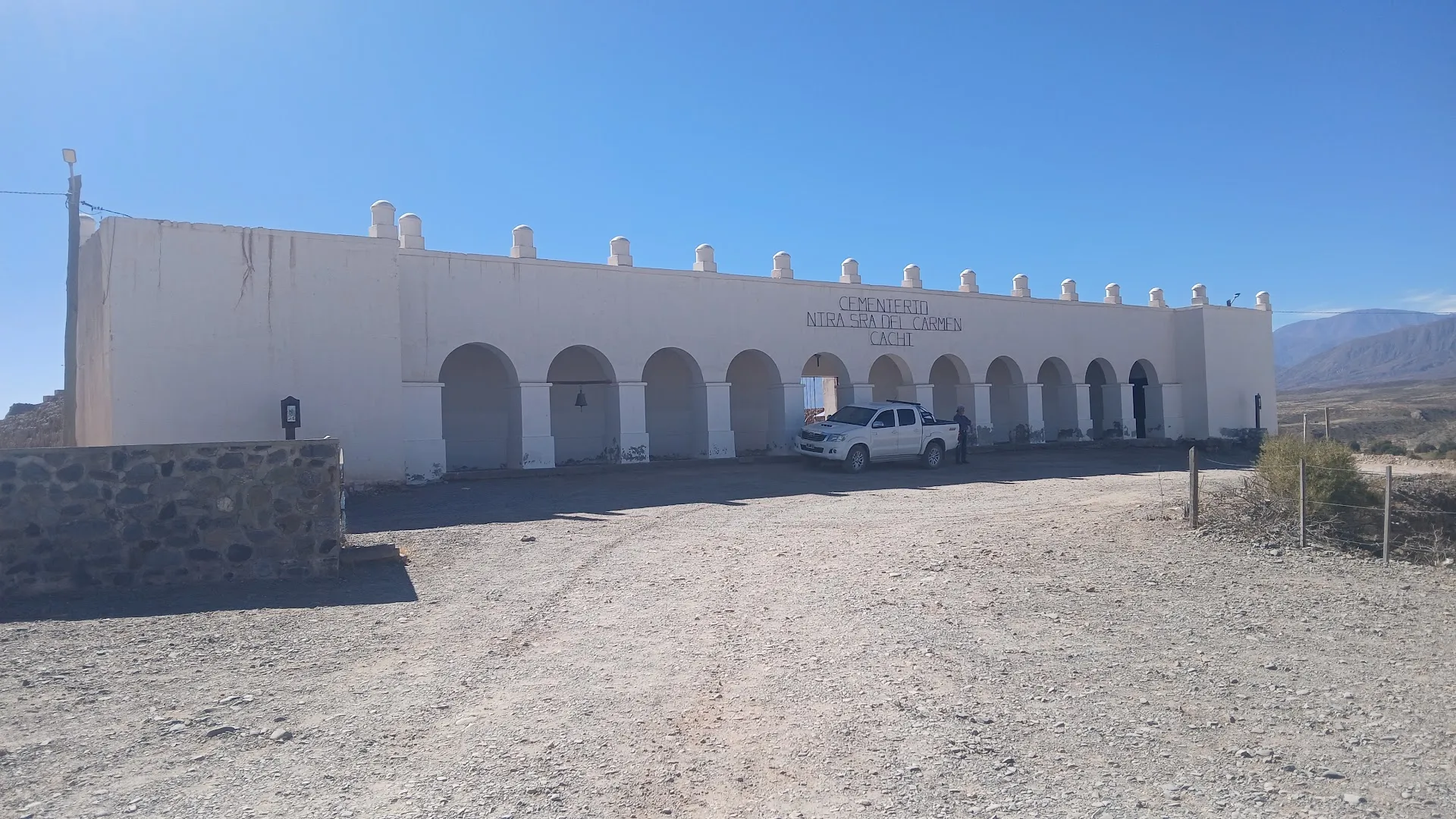
Getting around the town itself needs no transport at all: Cachi is small enough to walk end to end in twenty minutes, from the plaza up to the hillside cemetery, reputed to be Argentina's highest, whose whitewashed arched gallery doubles as the best sunset viewpoint over the valley. But the wider destination is bigger than the village footprint. The Cuesta del Obispo, the switchback pass that carries Ruta 33 up from Salta through the Quebrada de Escoipe, and the cardón-cactus wilderness of Parque Nacional Los Cardones that flanks it, are treated here as attractions in their own right, not just a way to arrive. South of town, the Recta del Tin Tin - a dead-straight stretch of Ruta 40 built along an old Inca road (Qhapaq Ñan) alignment - carries the same sense of scale toward Cafayate.
A half day is enough to see the plaza, church, museum and Pueblo Viejo at an easy pace; stay a full day or two and you can add the weaving road at El Colte, a farm excursion to the hamlet of Cachi Adentro, and the pre-Hispanic ruins of Las Pailas. Most visitors come from Salta on a long day trip or as a stop on the Salta-Cachi-Cafayate loop; basing yourself here for a night or two, though, buys unhurried mornings on the plaza before the tour vans arrive. Cachi is high, dry and quiet nearly year-round, with the shoulder months offering the clearest mountain light. Save the places that interest you below and drop them straight into a TripBox itinerary for your own Valles Calchaquíes route.
The best of Cachi
Curated places worth your time — tap a card for details or to save it.
Temple
Iglesia San José de Cachi
A colonial parish church begun in the second half of the 17th century as a private oratory for the Aramburu family, with thick whitewashed adobe walls set on a river-stone foundation. Its barrel-vault ceiling, altar, confessional and baptismal font are all carved from cardón cactus wood, and the building was declared a National Historic Monument in 1945 after repeated earthquake repairs.
Casco Histórico
Museum
Museo Arqueológico Pío Pablo Díaz
Housed in a colonial-style adobe mansion beside the main plaza, its arched recova (covered gallery) opens onto four rooms holding more than 5,000 archaeological pieces spanning roughly 10,000 years of Calchaquí Valley history. Founded in 1969 and named for local archaeologist Pío Pablo Díaz, it remains free to enter.
Casco Histórico
Park
Plaza 9 de Julio de Cachi
The town's leafy central square, framed on all sides by whitewashed adobe buildings with wrought-iron window grilles and cardón-wood roof beams, including the Iglesia San José and the archaeological museum. A stone cairn on the square recalls the ancestral meeting ground of the Chicoana people that predates the colonial layout.
Casco Histórico
Memorial
Cementerio de Cachi
Reputed to be Argentina's highest-altitude cemetery, it sits atop a hillside terrace reached by a short walk or drive north of the plaza. A whitewashed arched gallery (built around 1850) forms its facade, and the site doubles as a viewpoint over Cachi's rooftops and the Calchaquí valley below.
Mirador Norte
Shopping Area
Camino de los Artesanos (El Colte)
A roughly 20-kilometer stretch of Provincial Route 42 running between the El Colte area and Seclantás, spanning both the Cachi and Seclantás departments, where more than 200 weaving families work rustic looms in around twenty small adobe workshops. They hand-spin sheep, llama, and vicuña wool into the traditional red-and-black poncho salteño, along with tapestries, blankets, ruanas, and sashes, which visitors can watch being made and buy directly from the makers.
El Colte
Landmark
Parque Nacional Los Cardones
A 64,000-hectare national park straddling Provincial Route 33 as it climbs out of the Calchaquí Valley, dominated by forests of giant cardón cacti against the Cordillera Oriental. The park contains several of the short interpretive miradors along the road (Ojo del Cóndor, Secretos del Cardonal, Valle Encantado) as well as 70-million-year-old dinosaur tracks.
Departamento Cachi, Salta
Landmark
Piedra del Molino
At 3,348 m, this is the literal high point of the road up from Salta, where a huge granite millstone abandoned by an 18th-century ox-cart driver gives the place its name. The tiny Capilla San Rafael sits beside it, and the pullout offers a sweeping view back down the switchbacks of the Quebrada de Escoipe.
Departamento Cachi, Salta
Landmark
Valle Encantado
A mirador and picnic area at the foot of the Cuesta del Obispo where authorized guides lead moderate treks (roughly 2 hours, 4 km) into a narrow canyon with walls over 100 m high, passing rock art and frequent condor sightings before reaching El Maray in the Quebrada de Escoipe.
Departamento Cachi, Salta
Landmark
Cachi Adentro
A short drive (or mountain-bike ride) out of Cachi into a farming hamlet of adobe houses, irrigation ditches and orchards, with snowmelt streams forming small waterfalls as the road climbs and the Nevado de Cachi comes into view. A gentle uphill walk near the entrance leads to a sunset viewpoint over the illuminated town and peaks.
Departamento Cachi, Salta
Experience
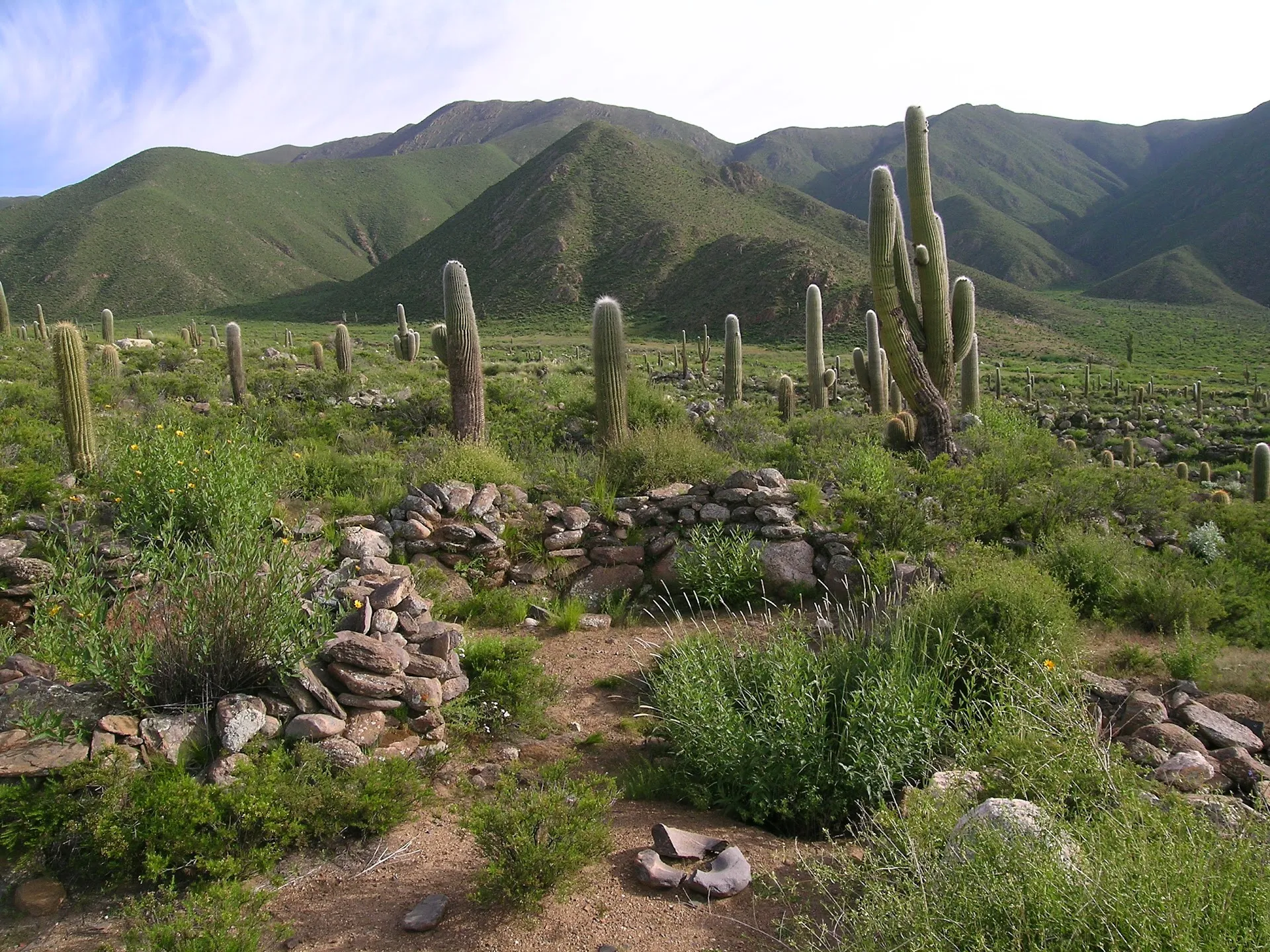
Ruinas de Las Pailas
The largest pre-Hispanic archaeological site in Salta, a farming settlement at roughly 3,000m in the Cachi Adentro valley with visible stone dwelling foundations, circular tombs, corrals and a network of irrigation canals that once watered an estimated 500 hectares of terraced fields. It can be walked independently, though a local guide helps make sense of the low stone walls and the old main street.
Half a day covers the colonial core comfortably; a full day adds the El Colte weaving road; stay two days if you want to add Cachi Adentro's ruins and wineries at an unhurried pace.
How do you get to Cachi from Salta?
By car or bus over the Cuesta del Obispo pass, about 157-160 km and roughly 3 hours via Ruta 68, 33 and 40 - mostly paved with one short gravel stretch. Day tours from Salta also run the route.
Is Cachi worth visiting compared to Cafayate?
They're different trips: Cafayate has wine-tourism infrastructure and more restaurants, while Cachi offers a quieter, more intact colonial streetscape, cactus-wood architecture and the Cuesta del Obispo approach. Many visitors do both on the Valles Calchaquíes loop.
Is Cachi expensive?
No - it's one of the cheaper stops in the Salta region. The museum, church and viewpoints are free, meals are simple and inexpensive, and the main costs are transport and a night or two of lodging.
What's the best time to visit Cachi?
The dry season, April to November, is easiest for road conditions and clear mountain views; May-June and September-October are the mildest, least-crowded months.
Is the drive to Cachi safe?
Yes for an attentive driver in a standard car in dry conditions - the Cuesta del Obispo's switchbacks are well-graded and mostly paved. Go slowly, watch for livestock on the road, and avoid driving right after heavy summer rain.
Ready to plan Cachi?
Turn this guide into a real trip — itinerary, map, budget and friends, all in one place.