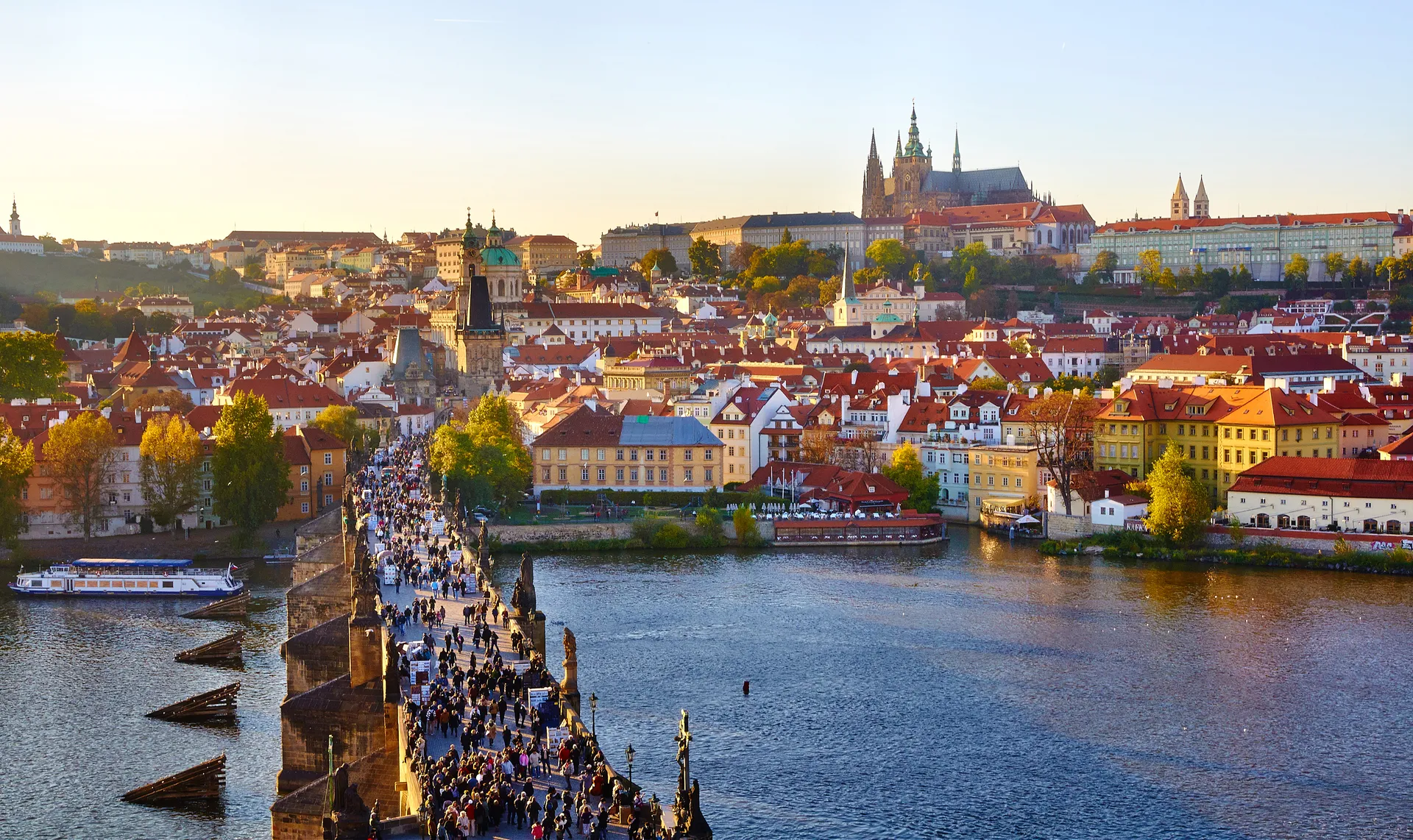
Prague is the kind of city that looks invented, a thousand years of Gothic spires, Baroque domes, and Art Nouveau facades stacked along a bend in the Vltava river and crowned by the largest castle complex on earth. The Czech capital was the seat of Holy Roman Emperor Charles IV in the 14th century, when he founded its university, laid the first stone of its great bridge, and remade a riverside town into one of Europe's imperial capitals. It earned the nickname 'the City of a Hundred Spires,' survived the 20th century with its medieval core almost untouched, and in 1989 threw off communism in the bloodless Velvet Revolution. The whole historic centre is a UNESCO World Heritage Site, and for visitors it offers an astonishing density of beauty inside a compact, walkable, and still surprisingly affordable city.
Most of what you have come to see clusters on either side of the river, linked by the Charles Bridge. On the east bank lies Staré Město (the Old Town), a tangle of medieval lanes opening onto the great square with its Astronomical Clock and the twin Gothic towers of the Týn Church. Folded inside it is Josefov, the old Jewish Quarter, with the most important cluster of Jewish monuments in Europe. South and east spreads Nové Město (the New Town), Charles IV's planned 14th-century city, organised around the broad sweep of Wenceslas Square.
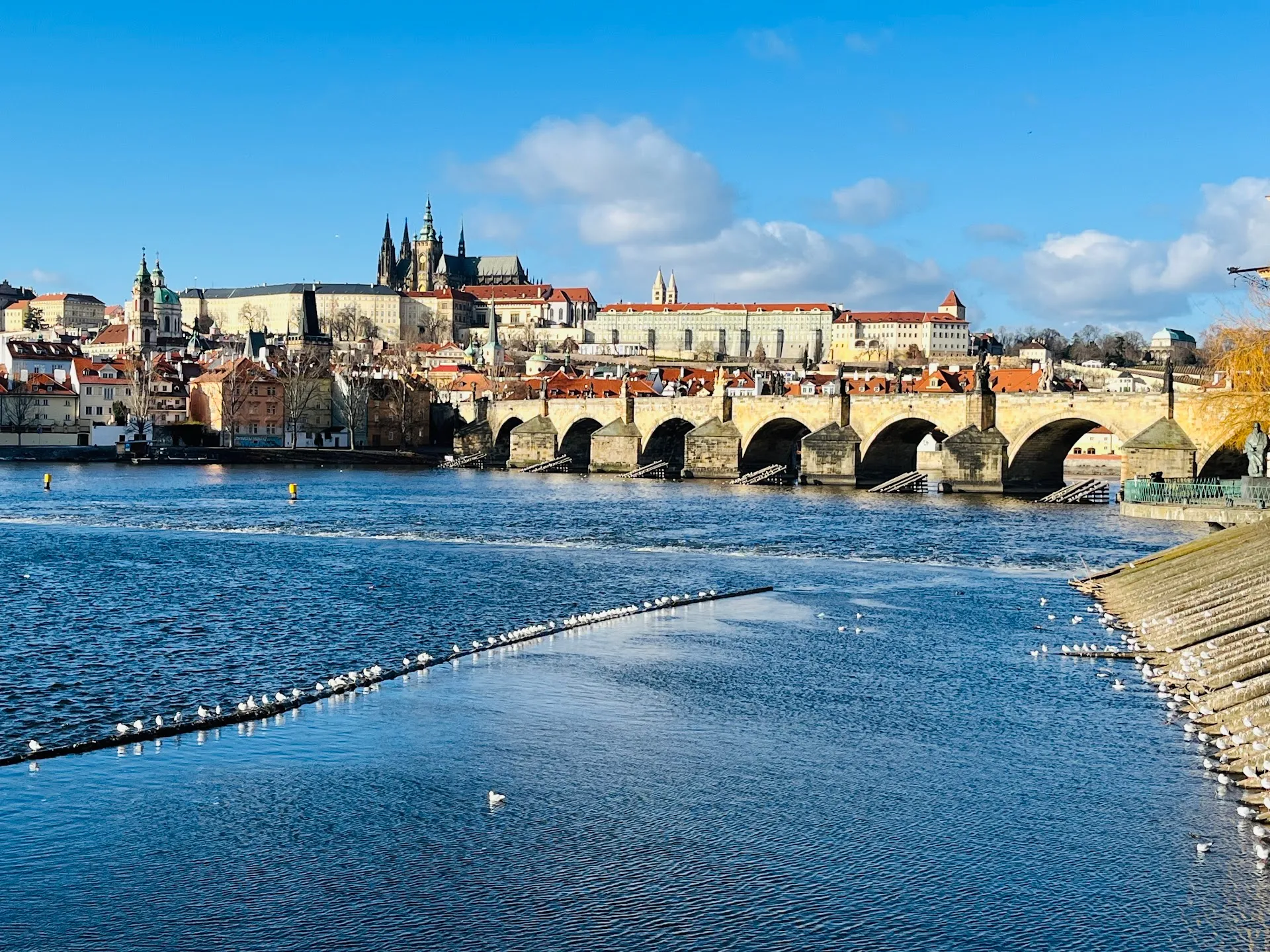
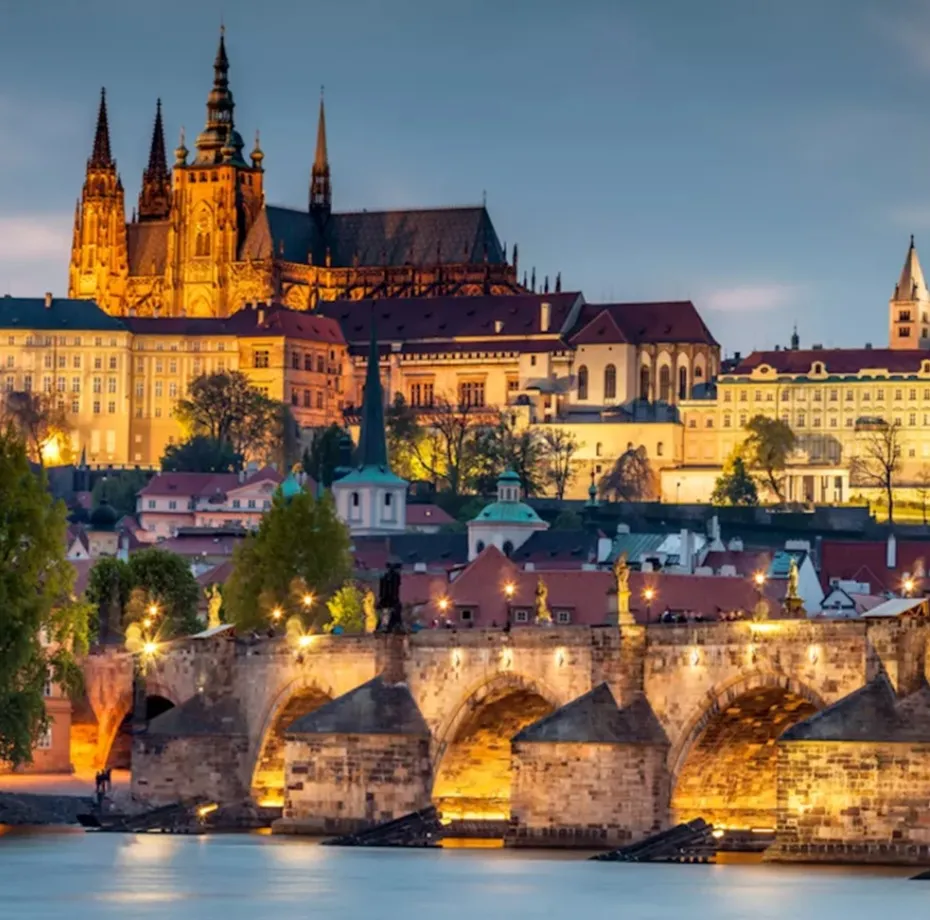
Across the bridge on the west bank, the Baroque palaces and red roofs of Malá Strana (the Lesser Town) climb toward Hradčany and the ramparts of Prague Castle, whose St. Vitus Cathedral dominates the skyline. Above it all rises the wooded hill of Petřín. Beyond the centre, the residential districts each have their own character: leafy, café-filled Vinohrady; gritty, pub-loving Žižkov with its rocket-like TV tower; industrial-turned-creative Holešovice and Karlín with their galleries and food halls; and the rocky fortress of Vyšehrad, tied to the mythical founding of the city, on its own bluff to the south. Group your days by district and you will spend your time wandering rather than commuting.
Best time to visit
Prague is a year-round city, but spring (April to June) and early autumn (September to October) are the sweet spots: mild temperatures, long light on the river, gardens in bloom or turning gold, and a full cultural calendar. May and early June bring the Prague Spring International Music Festival and the Fringe; October stages the after-dark Signal light festival. July and August are warm and lively but the most crowded, and some locals leave town.
December is special despite the cold, when Christmas markets glow on Old Town Square and Wenceslas Square with mulled wine, trdelník, and a giant tree, and the city dusts with snow. January and February are quiet, dark, and the cheapest months, ideal for museums, concerts, and cosy beer halls if you bundle up. See the best-time-to-visit guide for the full month-by-month picture.
Budget
Prague is one of Europe's best-value capitals, noticeably cheaper than Vienna, Paris, or the Alpine cities. A half-litre of excellent Czech lager runs about CZK 50-70 in a local pub (more in tourist traps), a hearty pub meal CZK 200-350, a specialty coffee around CZK 75, and a major attraction CZK 200-450. The best value of all is simply being here: Charles Bridge, the Old Town squares, the castle grounds and gardens, and the river views cost nothing, and a standing classical concert or a Cubist café are within easy reach of most budgets.~CZK 2,000-3,500 / day mid-range / day
Getting around could hardly be easier. Prague's integrated transport network, run by DPP, threads three colour-coded metro lines (A green, B yellow, C red) through a dense web of trams and buses, all covered by a single ticket or a 24/72-hour pass; the historic tram 22 is a sightseeing ride in its own right, climbing to the castle. The airport is a 35-minute bus-and-metro hop from the centre. Within the old town, distances are short and the streets are the attraction, so most of your time will be on foot, drifting between sights, beer halls, and the nearest café.
Two or three full days cover the headline sights, the castle, the bridge, the Old Town, and Vyšehrad, while four or five let you slow down, fold in the local neighbourhoods, and add the classic Kutná Hora day trip to the Bone Church. Prague is loveliest from April to June and in September and October, and magical (if cold and busy) during the December Christmas markets.
It remains one of Europe's best-value capitals: a half-litre of world-class Czech lager costs a couple of euros, hearty pub meals are cheap, and the grandest sights, the bridge, the squares, the castle grounds, the river views, are simply there for the walking. Use this guide to skim the day-by-day itineraries, browse the best things to do and the best places to eat, and save the spots that fit your trip; everything you save drops straight into a TripBox plan with dates, a map, and your travel companions.
The best of Prague
Curated places worth your time — tap a card for details or to save it.
The largest coherent castle complex in the world, sprawling roughly 70,000 square metres along a ridge above the Vltava's west bank. Founded around 870, it has been the seat of Bohemian kings, Holy Roman emperors and now the Czech president, and encloses Gothic St. Vitus Cathedral, Romanesque St. George's Basilica, the Old Royal Palace and the cottages of Golden Lane.
Hradčany, Prague 1
Landmark
Charles Bridge (Karlův most)
A 516-metre Gothic stone bridge begun under Charles IV in 1357 and completed around 1402, famously lined with thirty mostly Baroque saint statues and guarded by a fortified tower at each end. For nearly five centuries it was the only fixed crossing of the Vltava, linking the Old Town with Malá Strana beneath the castle.
Connects Staré Město (Old Town) and Malá Strana (Lesser Town), Prague 1
Landmark
Prague Astronomical Clock & Old Town Hall (Staroměstský orloj)
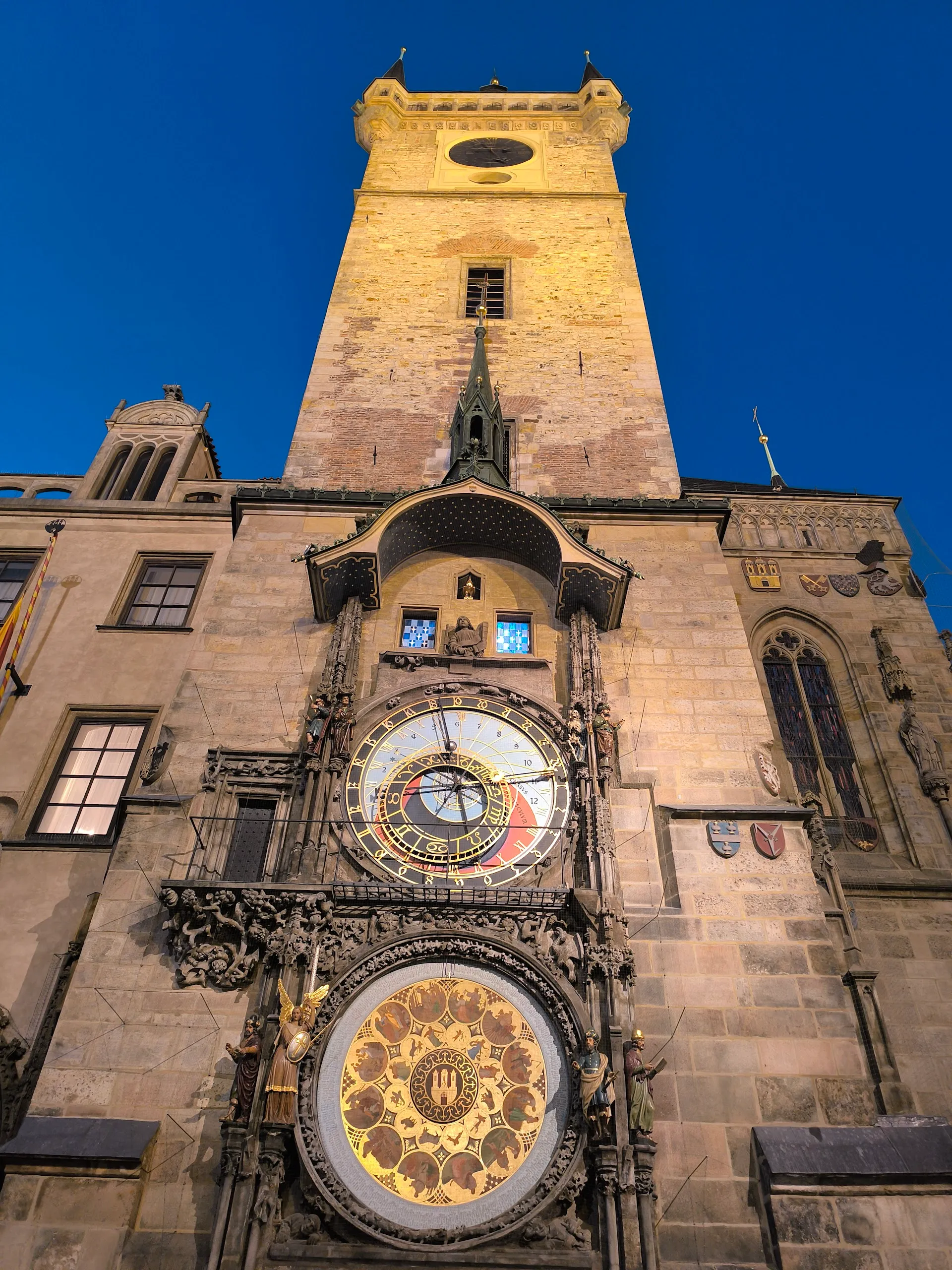
Mounted on the Old Town Hall since 1410, this is the world's oldest astronomical clock still in operation, its dial working as a mechanical astrolabe that maps the sun, moon and zodiac. On the hour the 'Walk of the Apostles' parades figures past the upper windows while a skeleton tolls for Death, and the adjoining tower can be climbed for rooftop panoramas over the square.
Staré Město (Old Town Square), Prague 1
Architecture
St. Vitus Cathedral (Katedrála svatého Víta)
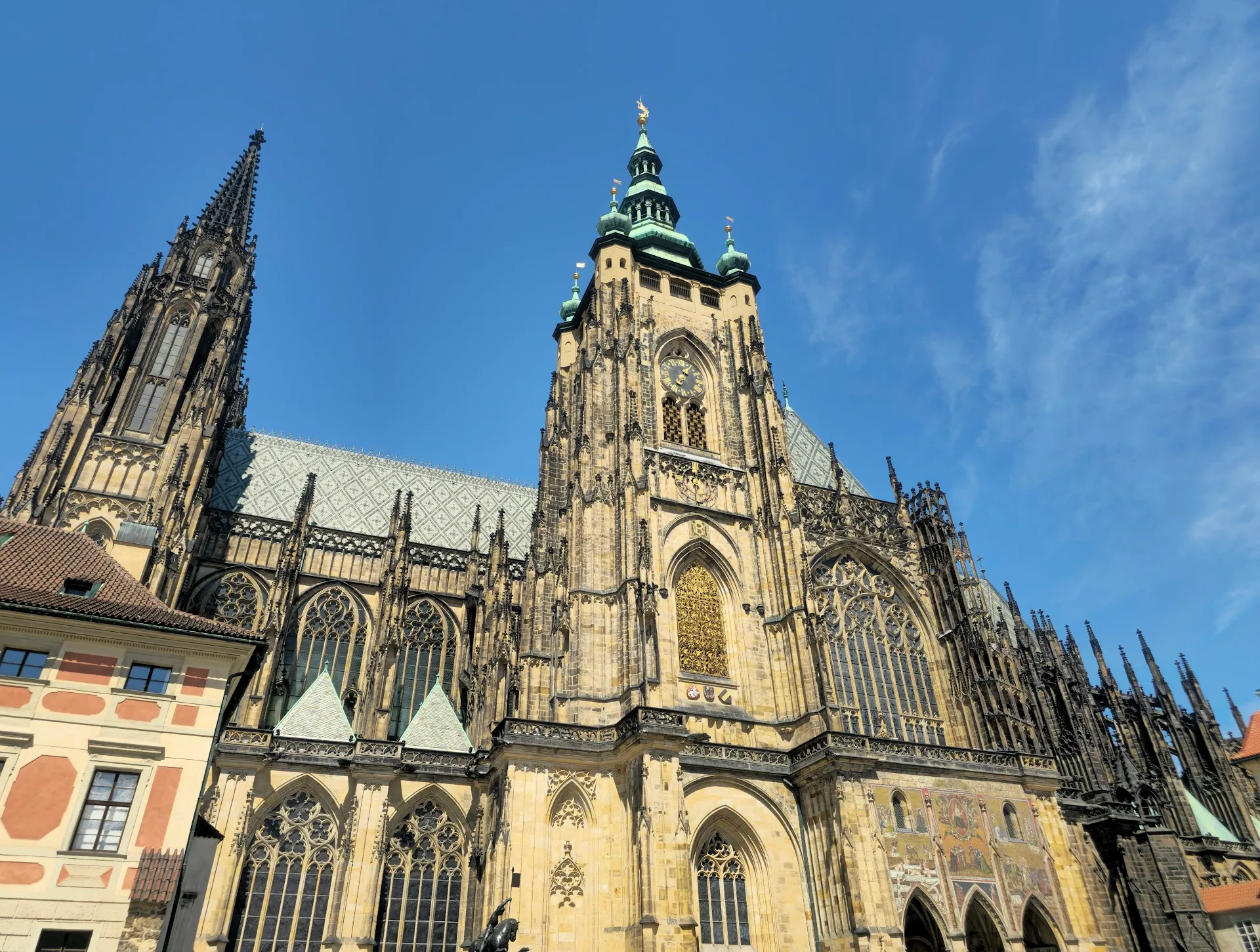
The largest church in the country and the spiritual heart of Prague Castle, begun in 1344 under Charles IV and only completed in 1929. Its soaring Gothic nave, flying buttresses and stained glass — including a celebrated window designed by Alfons Mucha — rise above the tombs of Bohemian kings and the chamber holding the crown jewels. Early master builders Matthias of Arras and Peter Parler shaped its chancel and the St. Wenceslas Chapel.
Hradčany (Prague Castle), Prague 1
Landmark
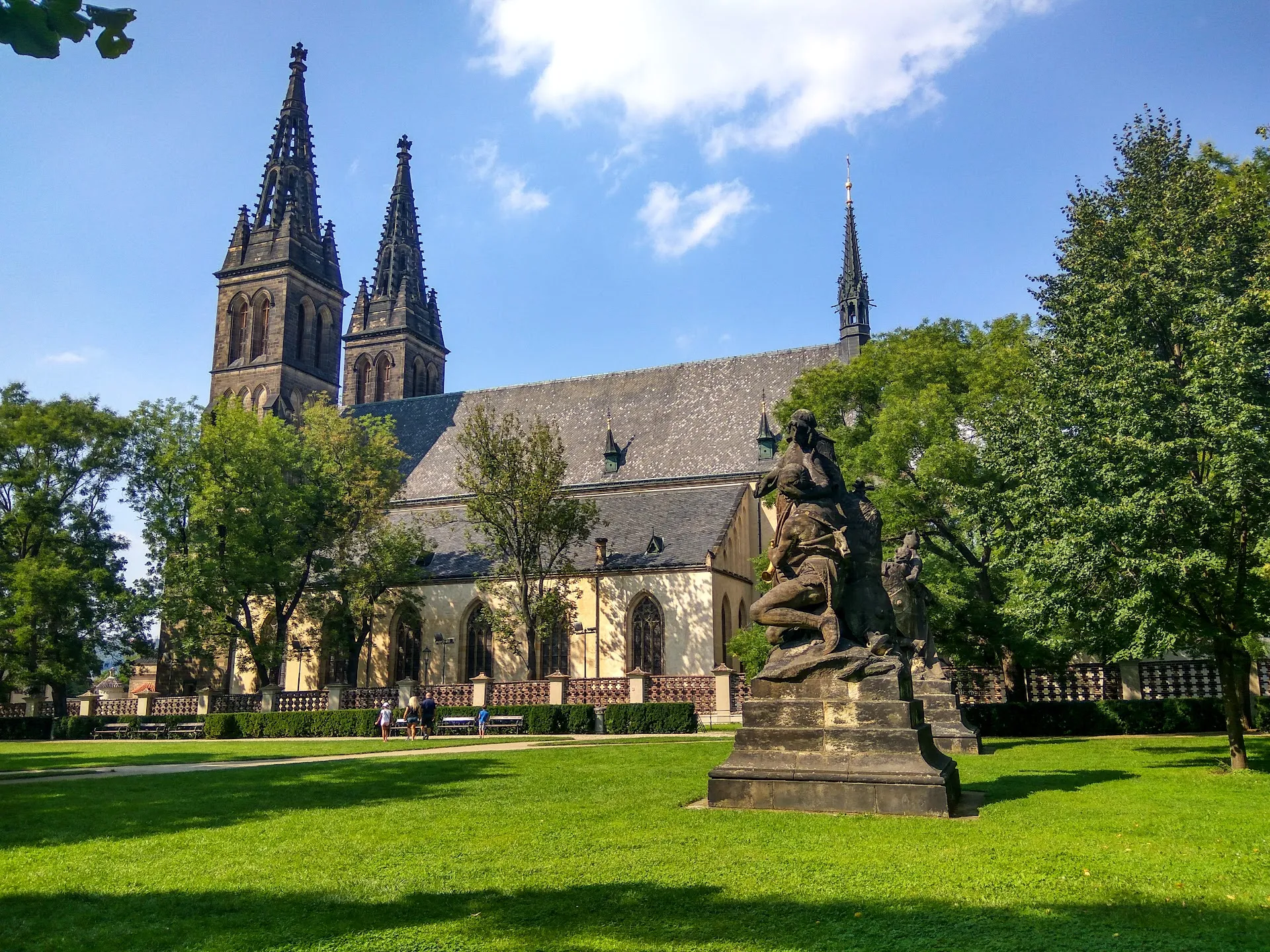
Vyšehrad
A 10th-century hilltop fortress on the Vltava's east bank, tied by legend to the mythical founding of Prague and briefly the seat of Bohemian rulers in the 11th century. Its ramparts now frame a quiet park favoured by locals, the neo-Gothic Basilica of St. Peter and St. Paul, the Romanesque Rotunda of St. Martin, and a national cemetery where Dvořák, Smetana and other Czech notables rest.
Vyšehrad, Prague 2
Landmark
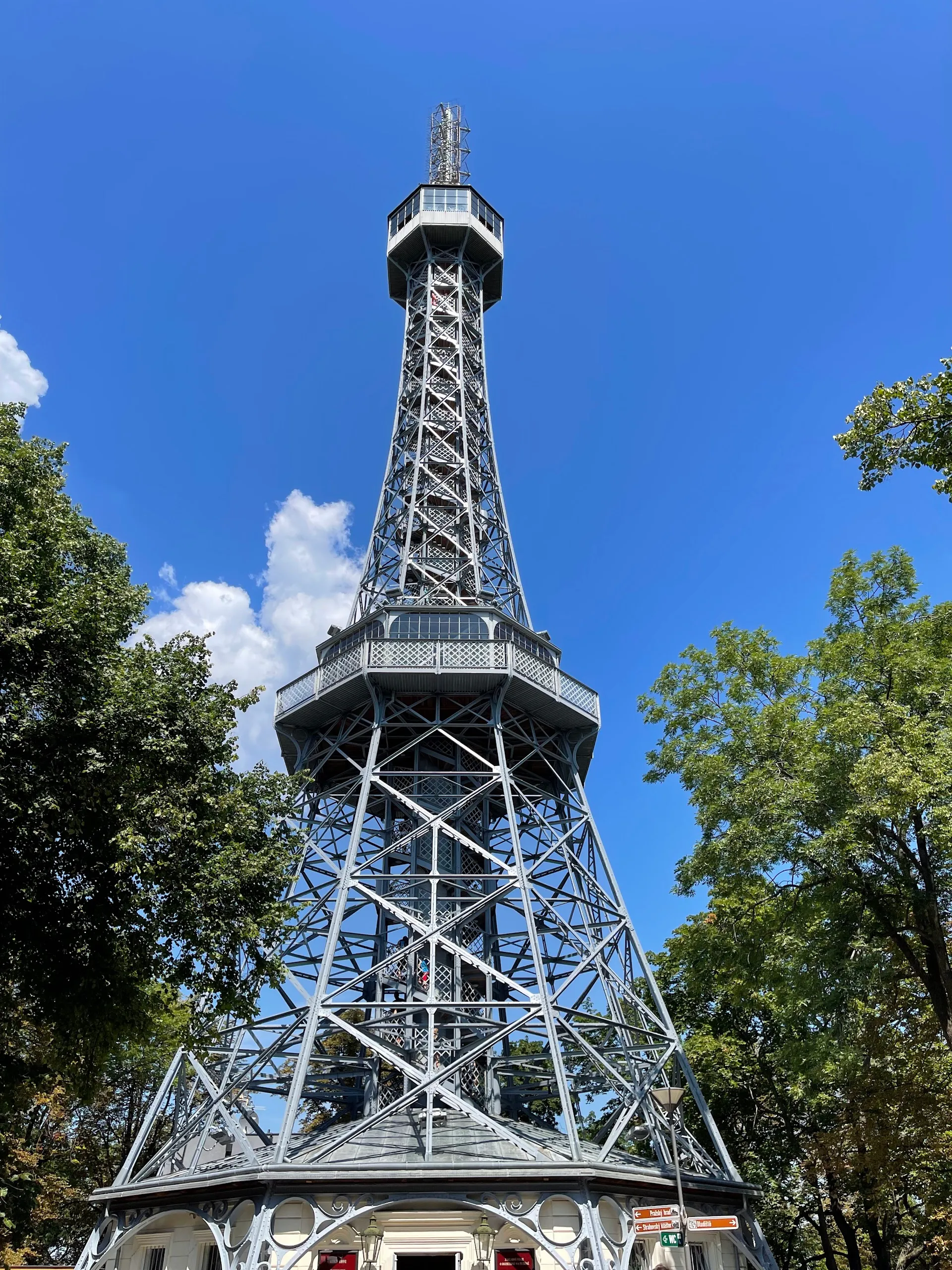
Petřín Lookout Tower (Petřínská rozhledna)
A 63.5-metre steel observation tower raised on Petřín Hill in just four months for Prague's 1891 Jubilee Exhibition, openly modelled on the Eiffel Tower with an octagonal frame. Because it stands atop the hill, its viewing gallery reaches an effective altitude over the city comparable to its Parisian inspiration, offering some of Prague's widest panoramas.
Petřín Hill, Malá Strana, Prague 1
Must visit
Museum5.0
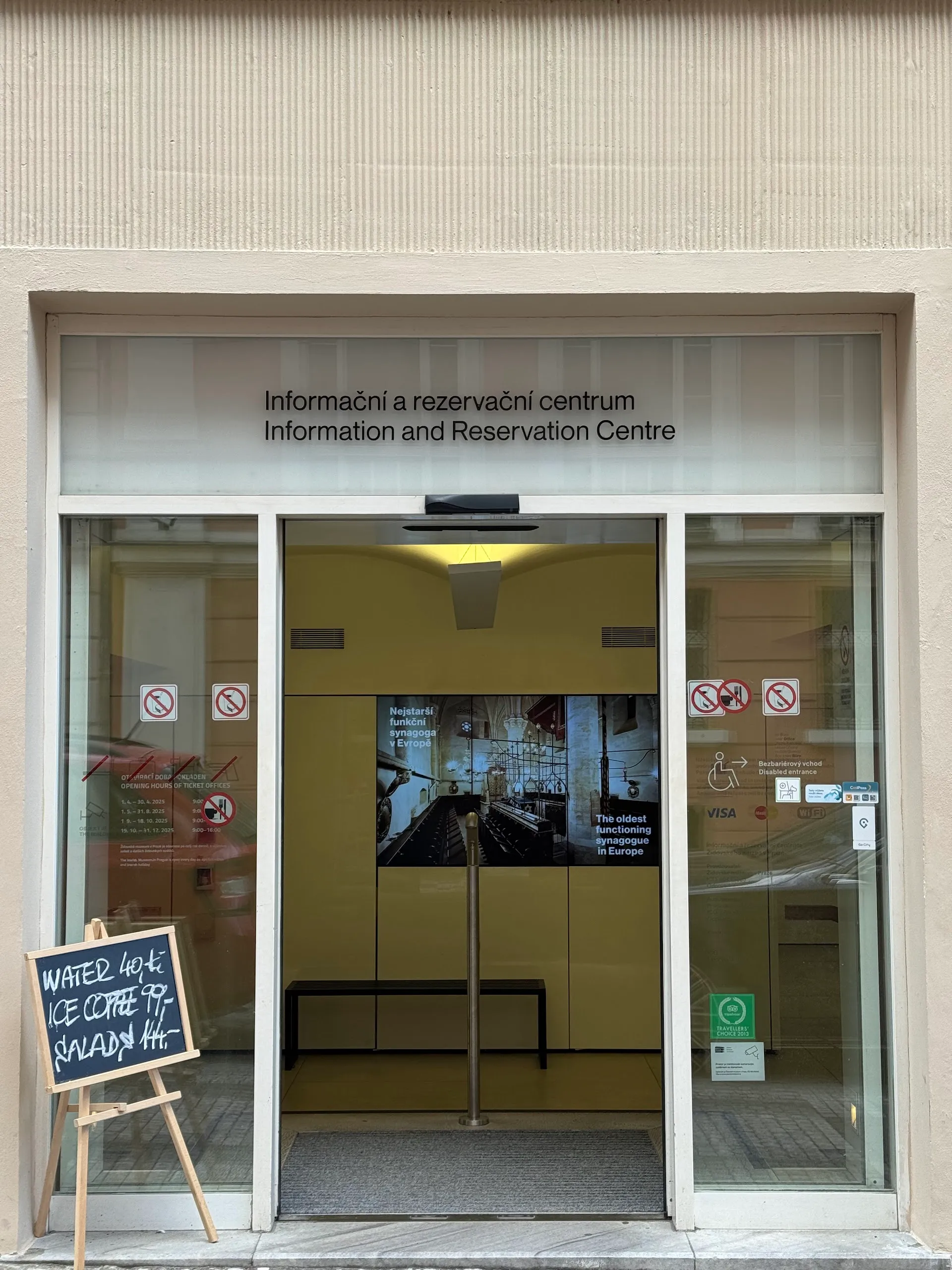
Jewish Museum in Prague (Židovské muzeum v Praze)
One of the world's oldest and most-visited Jewish museums, founded in 1906, it is not a single building but a cluster of historic synagogues and the haunting Old Jewish Cemetery in the Josefov quarter. A single combined route traces Bohemian and Moravian Jewish life, customs and the Holocaust.
Josefov (Jewish Quarter), Prague 1
Architecture
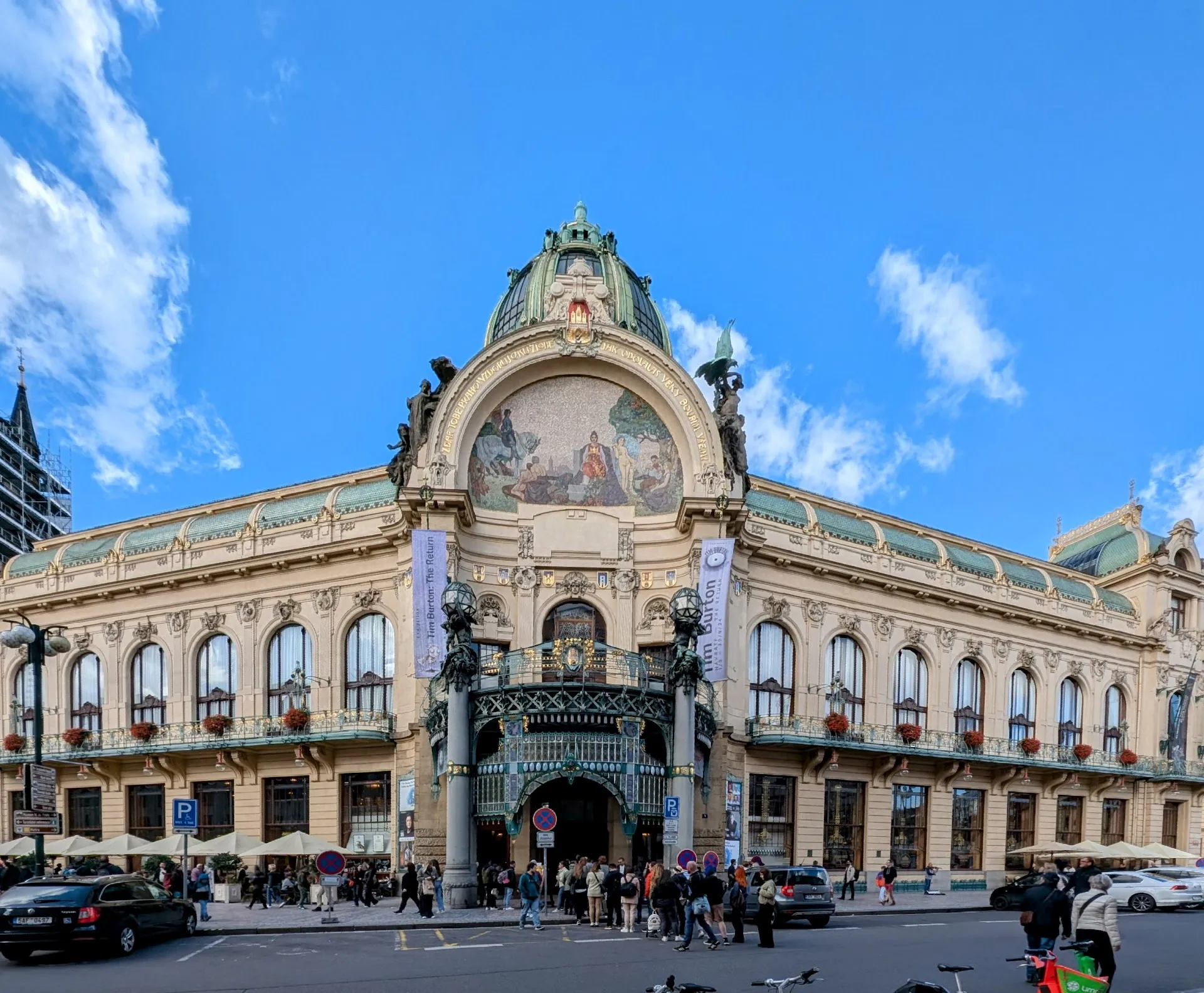
Municipal House (Obecní dům)
Prague's most lavish Art Nouveau building, raised between 1905 and 1912 next to the medieval Powder Tower by architects Osvald Polívka and Antonín Balšánek. Its interiors were decorated by leading Czech artists including Alfons Mucha, and it wraps the city's grandest concert auditorium, Smetana Hall, alongside cafés, restaurants and ceremonial salons. Czechoslovak independence was proclaimed here in 1918.
Náměstí Republiky, Staré Město (Old Town), Prague 1
Must visit
Restaurant5.0
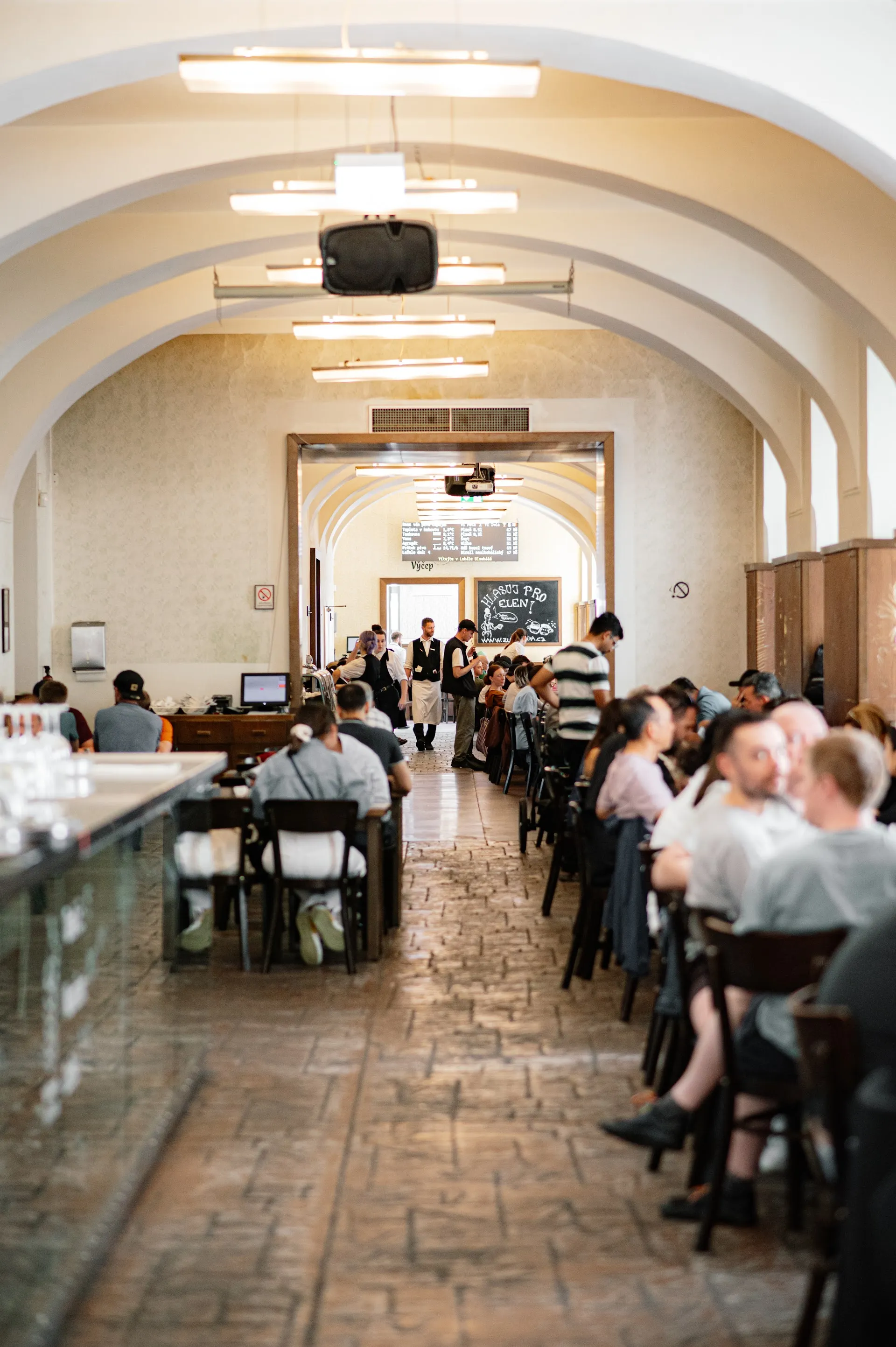
Lokál Dlouhááá
The original and longest of Prague's beloved Lokál pubs, this Ambiente-run beer hall pours tank-fresh Pilsner Urquell alongside a daily-changing roster of Czech classics like svíčková, goulash and schnitzel. Long communal tables and brisk, beer-savvy service make it a go-to for an honest, unpretentious Czech meal in the Old Town.
Staré Město (Old Town), Praha 1
Viewpoint
Letná Park & Metronome (Letenské sady)
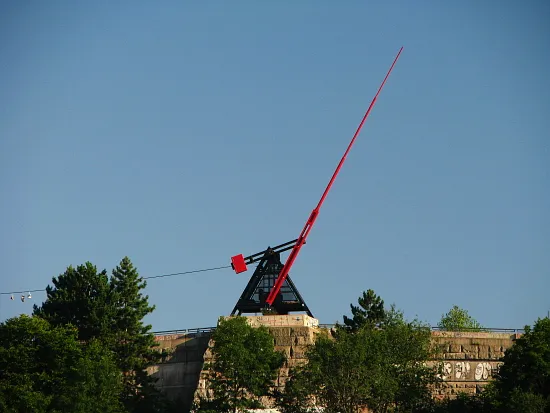
A leafy plateau on the high left bank of the Vltava, marked by the giant red Metronome that stands where a Stalin monument once loomed. Its terraces open onto a wide, elevated panorama across the river's bridges to the Old Town, and the adjoining beer garden by Letná Chateau is a beloved warm-weather hangout for Praguers.
Holešovice / Letná, Prague 7
Tours & experiences
Free walking tours and curated paid experiences — save or book in a tap.
TourFree
Old Town & Jewish Quarter Free Walking Tour
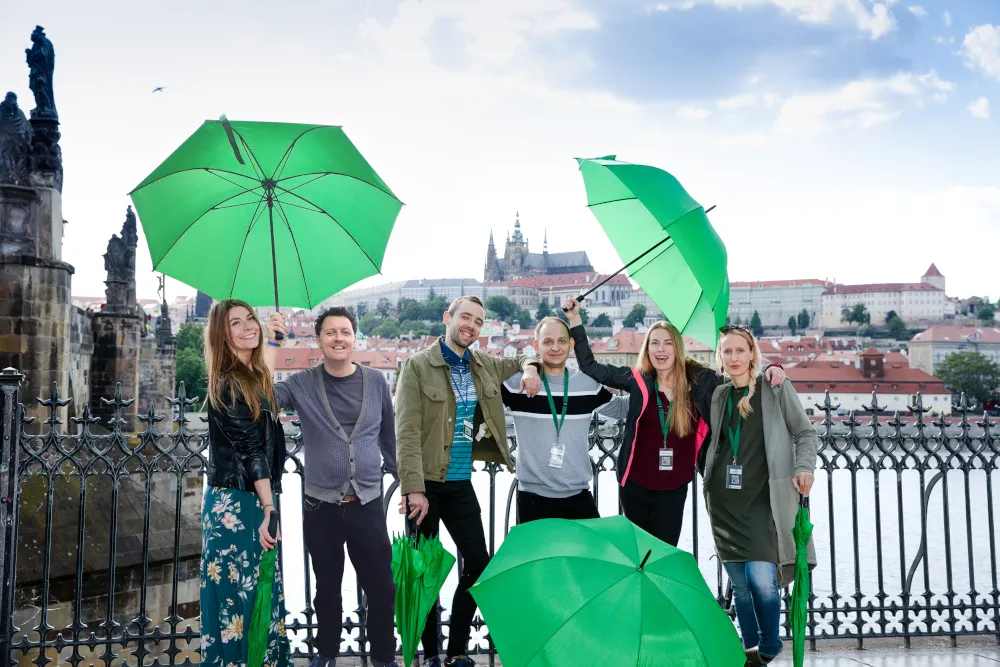
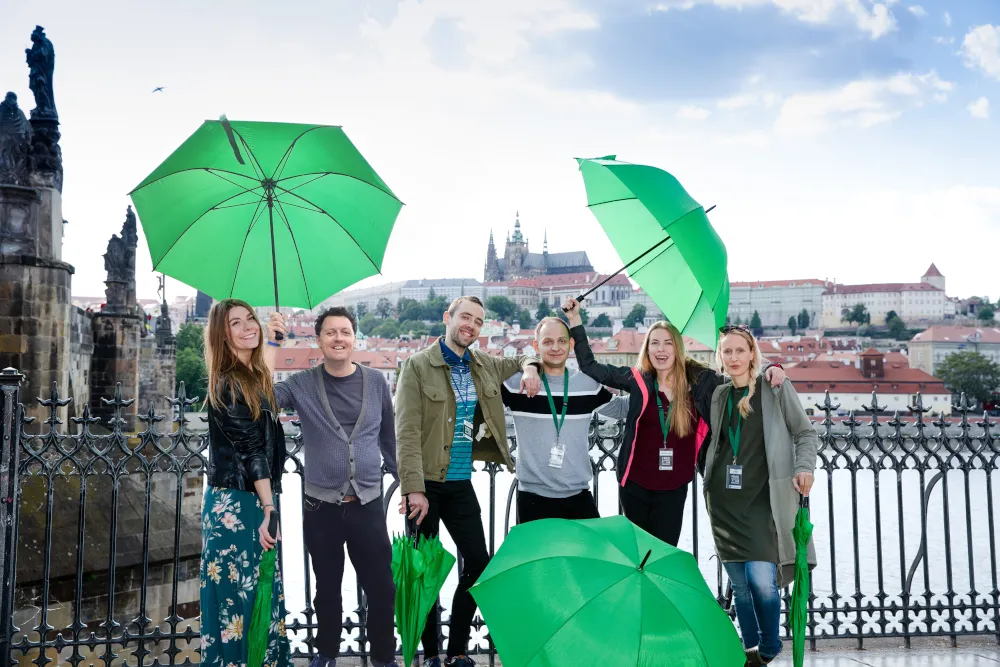
A donation-based introduction to historic Prague that loops through Old Town Square and the Astronomical Clock before entering Josefov, the former Jewish ghetto with its Old-New Synagogue and old cemetery. Several operators run daily departures led by local guides, making it a popular first-day orientation.
Staré Město (Old Town) & Josefov, Prague 1Approx. 2.5-3 hours
A guided walk through the world's largest ancient castle complex, taking in St. Vitus Cathedral, the Old Royal Palace, St. George's Basilica and the tiny houses of Golden Lane. Knowledgeable guides trace a thousand years of Czech history, from Bohemian kings to the modern presidency.
Hradčany, Prague 1Approx. 2-3 hours
Tourfrom EUR 16 per person
Vltava River Sightseeing Cruise (Prague Boats)
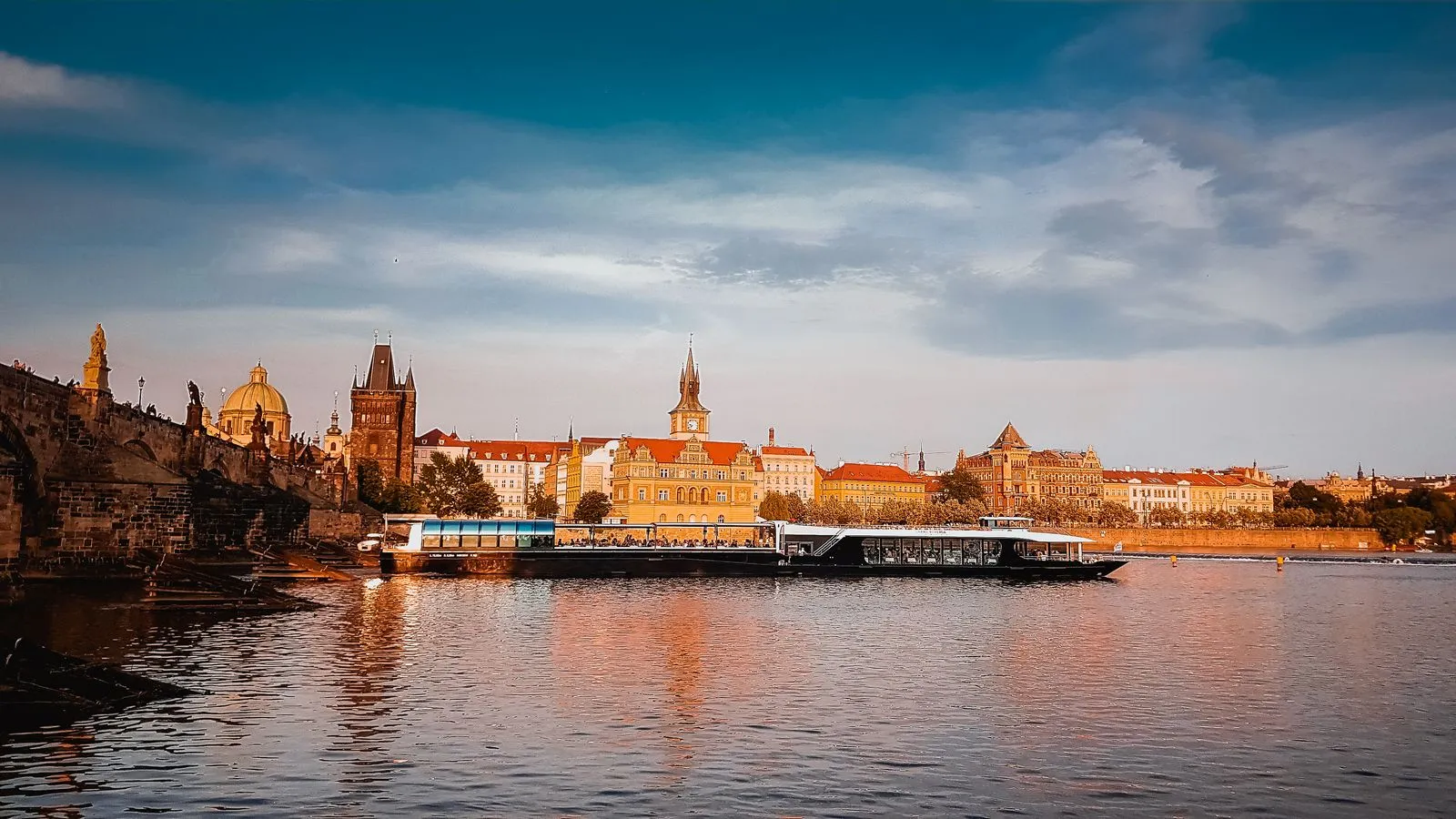
A relaxed cruise along the Vltava that glides under Charles Bridge and past the embankments, with classic views up to Prague Castle, Kampa Island and the National Theatre. Prague Boats runs near-silent electric vessels from the pier beside Čech Bridge, a short stroll from Old Town Square.
Staré Město (Old Town) embankment, Prague 1Approx. 50-60 minutes
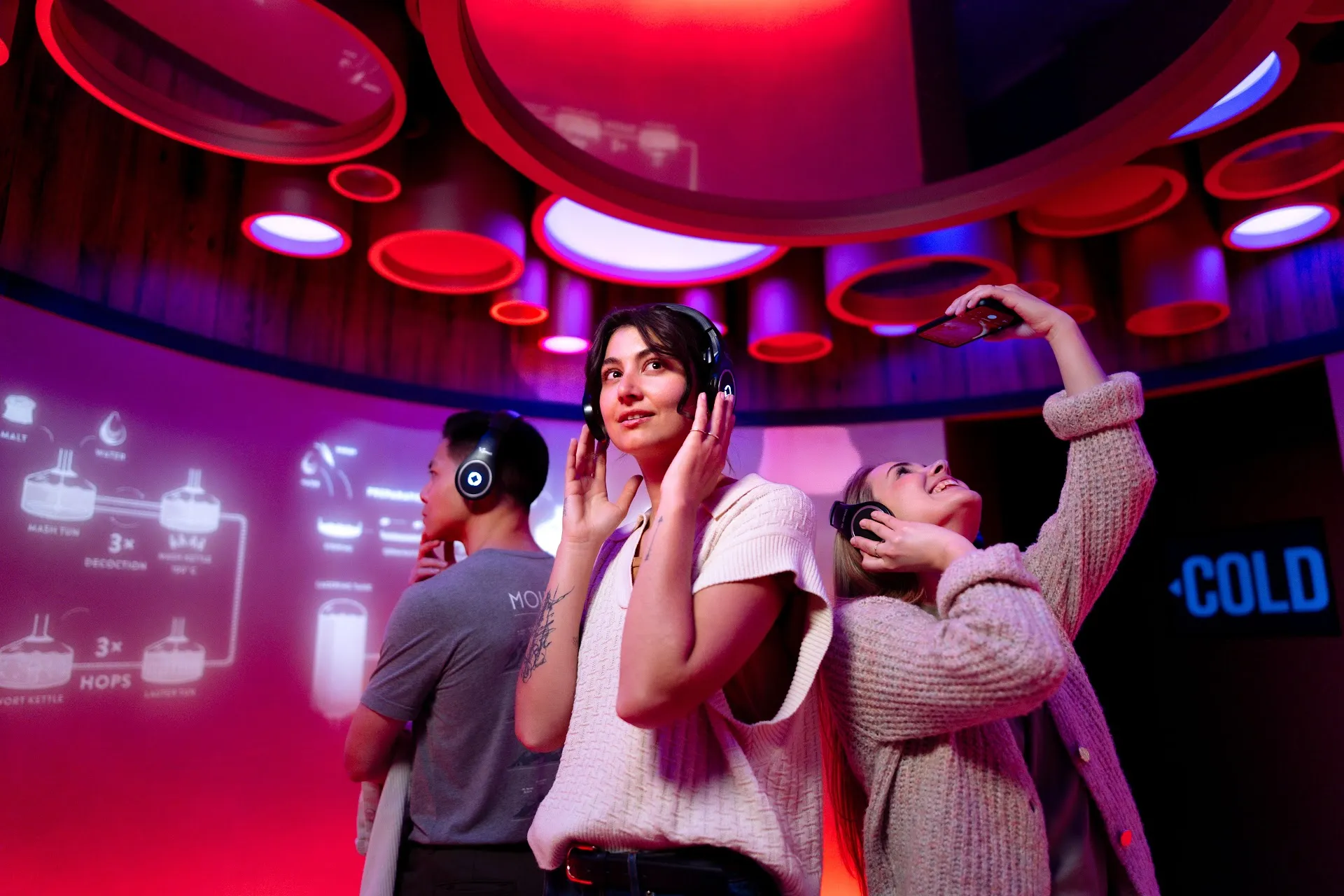
A multi-sensory exhibition in a 1902 former bank by Wenceslas Square that tells the story of the world's first golden lager through immersive rooms, a 360-degree game hall and guided tastings poured by trained tapsters. The visit ends in a beer hall with included pours and pointers on proper Czech serving technique.
Staré Město (Old Town), near Wenceslas Square, Prague 160-90 minutes
TourPaid guided tour (approx. 2.5 h); price varies by operator
Communism and Nuclear Bunker Tour
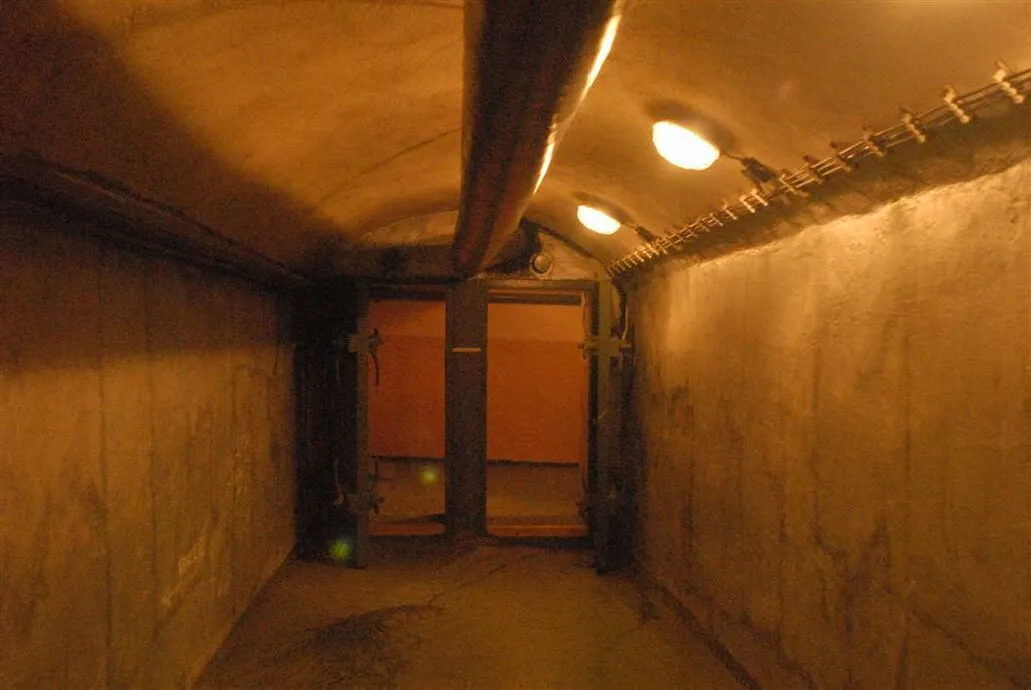
A walk through Prague's 20th-century scars - Wenceslas Square, the spot where student Jan Palach set himself alight, and former secret-police sites - that descends into a genuine 1950s nuclear fallout shelter now fitted out as a Cold War museum. Guides recount daily life under Czechoslovak communism and the Soviet occupation.
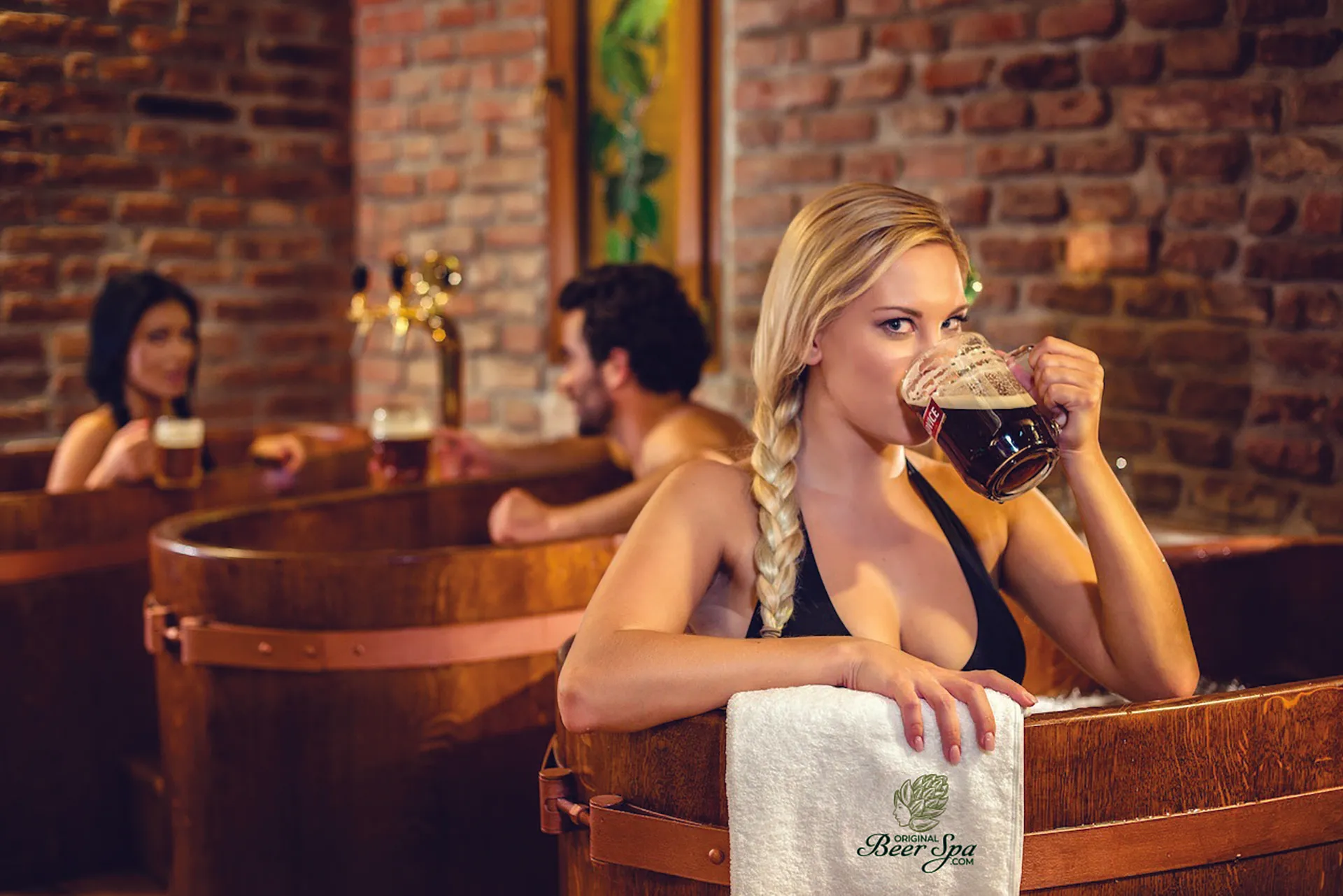
Soak in a hand-made wooden tub of warm water steeped in hops, malt and brewer's yeast while pouring yourself unlimited draught beer from a tap beside the bath. A quirky Prague wellness ritual, sessions finish with relaxation on a bed of warm wheat straw — a playful spin on Czech beer culture.
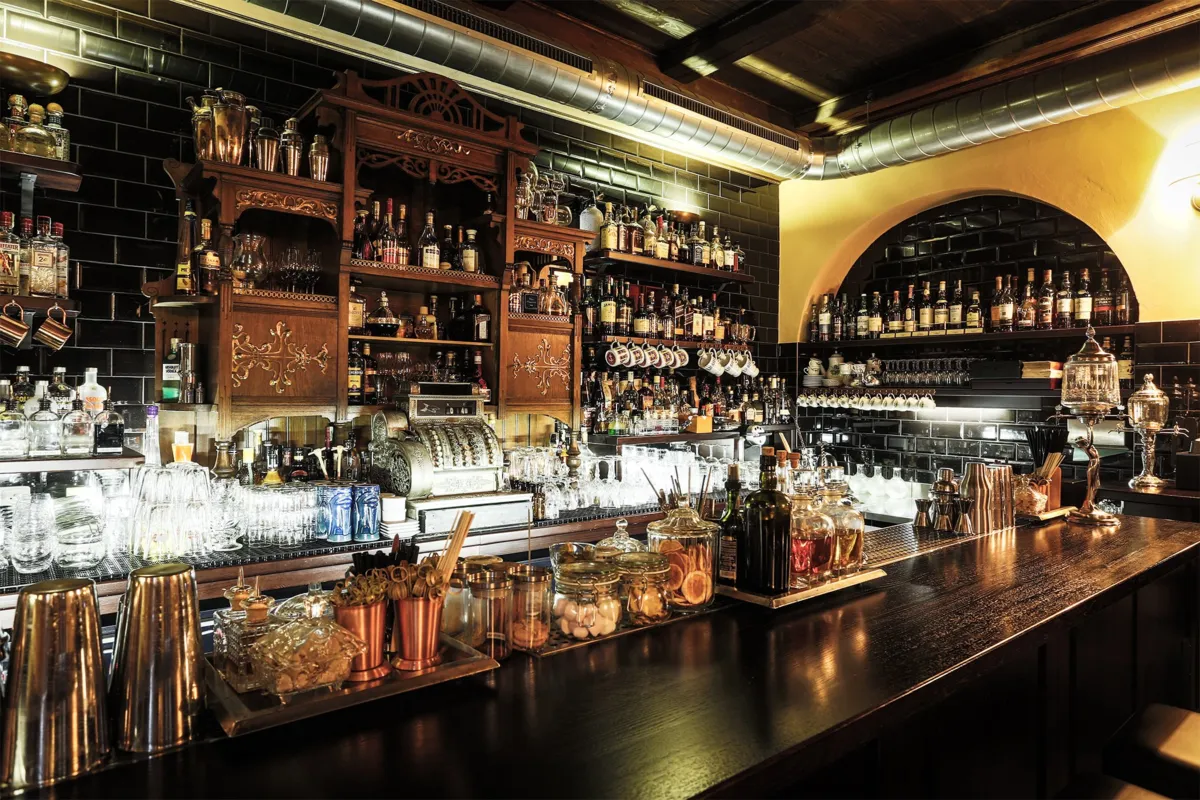
An intimate, dimly lit cocktail bar near the river in the Old Town, themed around Ernest Hemingway's favourite drinks and stocked with over 200 rums and the Czech Republic's largest absinthe selection. Regularly ranked among the world's best bars, it is known for meticulous craft cocktails such as the Becher Butter Sour, and reservations are strongly recommended.
Staré Město (Old Town), Prague 1
Bar4.0
AnonymouS Bar
A signless speakeasy off Michalská in the Old Town, themed around the Guy Fawkes mask and V for Vendetta, with masked bartenders and theatrical, hidden-menu cocktails. Drinks arrive in playful vessels such as tiny wooden birdhouses and infusion stands, making it one of Prague's most atmospheric cocktail experiences.
Staré Město (Old Town), Prague 1
Bar4.0
Black Angel's Bar
Set in a Gothic vaulted cellar beneath the U Prince hotel right on Old Town Square, this award-winning bar recreates a 1930s atmosphere and revives original recipes by Czechoslovak bartender Alois Krcha that were discovered during renovations. Expect classic and signature cocktails, occasional live music, and a candlelit, prohibition-era mood.
Staré Město (Old Town), Prague 1
Bar4.0
Veltlin
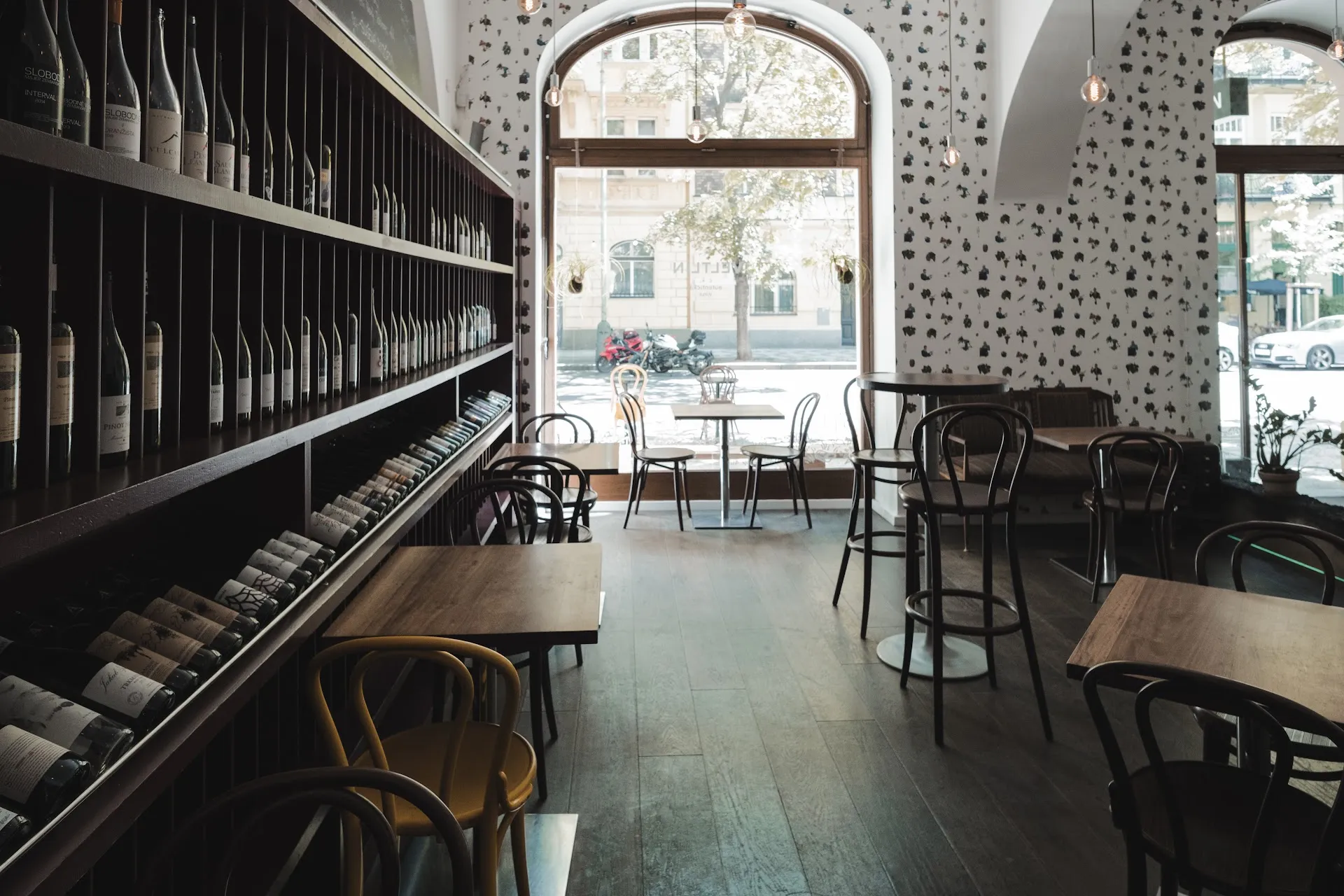
A small, devout natural-wine bar in foodie Karlín, led by oenophile-poet Bogdan Trojak, pouring authentic and low-intervention wines exclusively from the lands of the former Austro-Hungarian Empire. The daily-changing list spans Moravia, Bohemia, Austria, and neighbouring regions, served in an unfussy, conversation-friendly room.
Karlín, Prague 8
Bar4.0
Bukowski's Bar
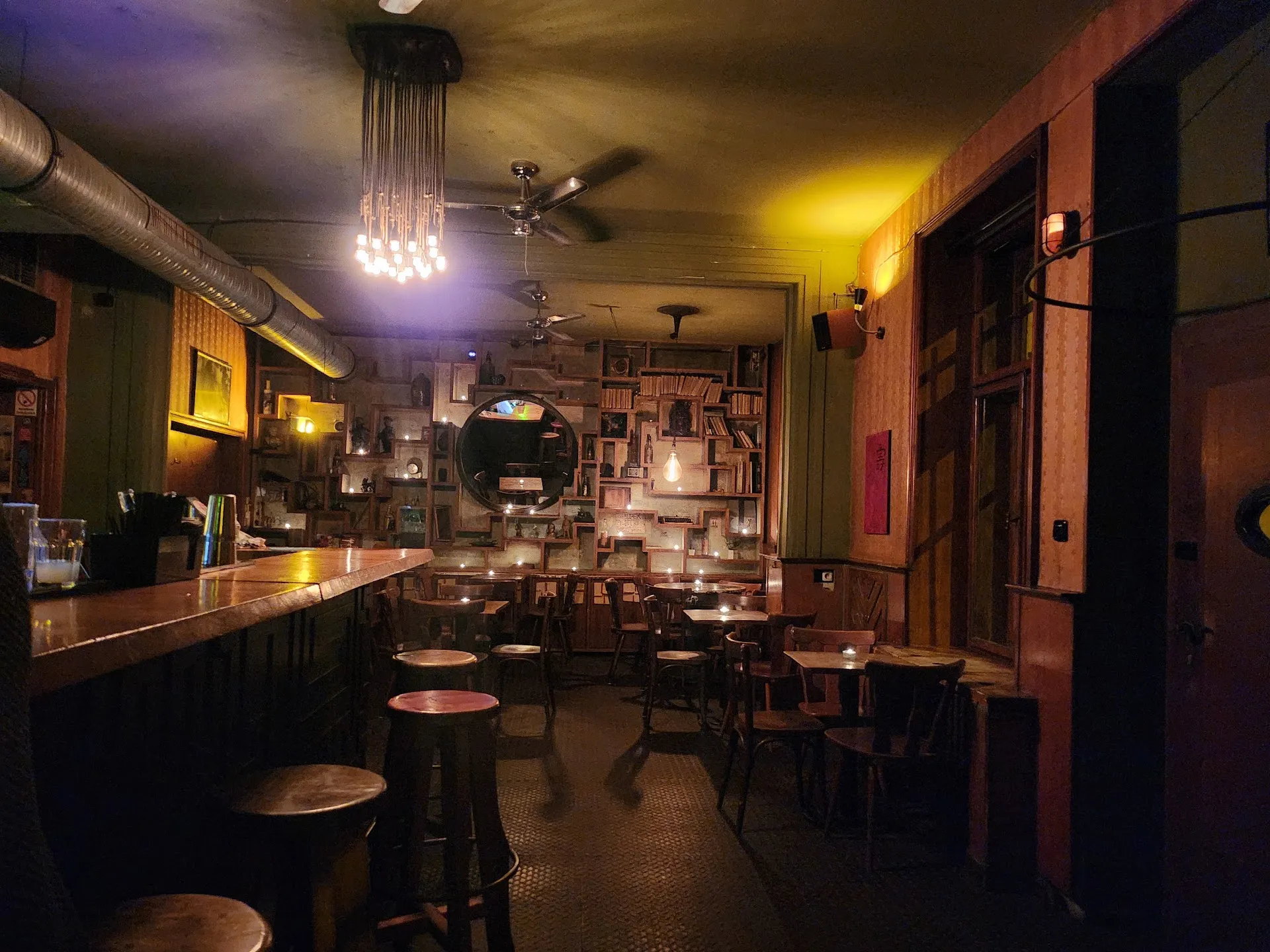
A dark, candlelit neighbourhood cocktail bar in bohemian Žižkov, named after writer Charles Bukowski and beloved by locals for well-made, reasonably priced drinks and a laid-back, slightly debauched vibe. Quirky touches include fold-down theatre seats and light fixtures built from bottles.
Žižkov, Prague 3
Bar4.0
Vinograf
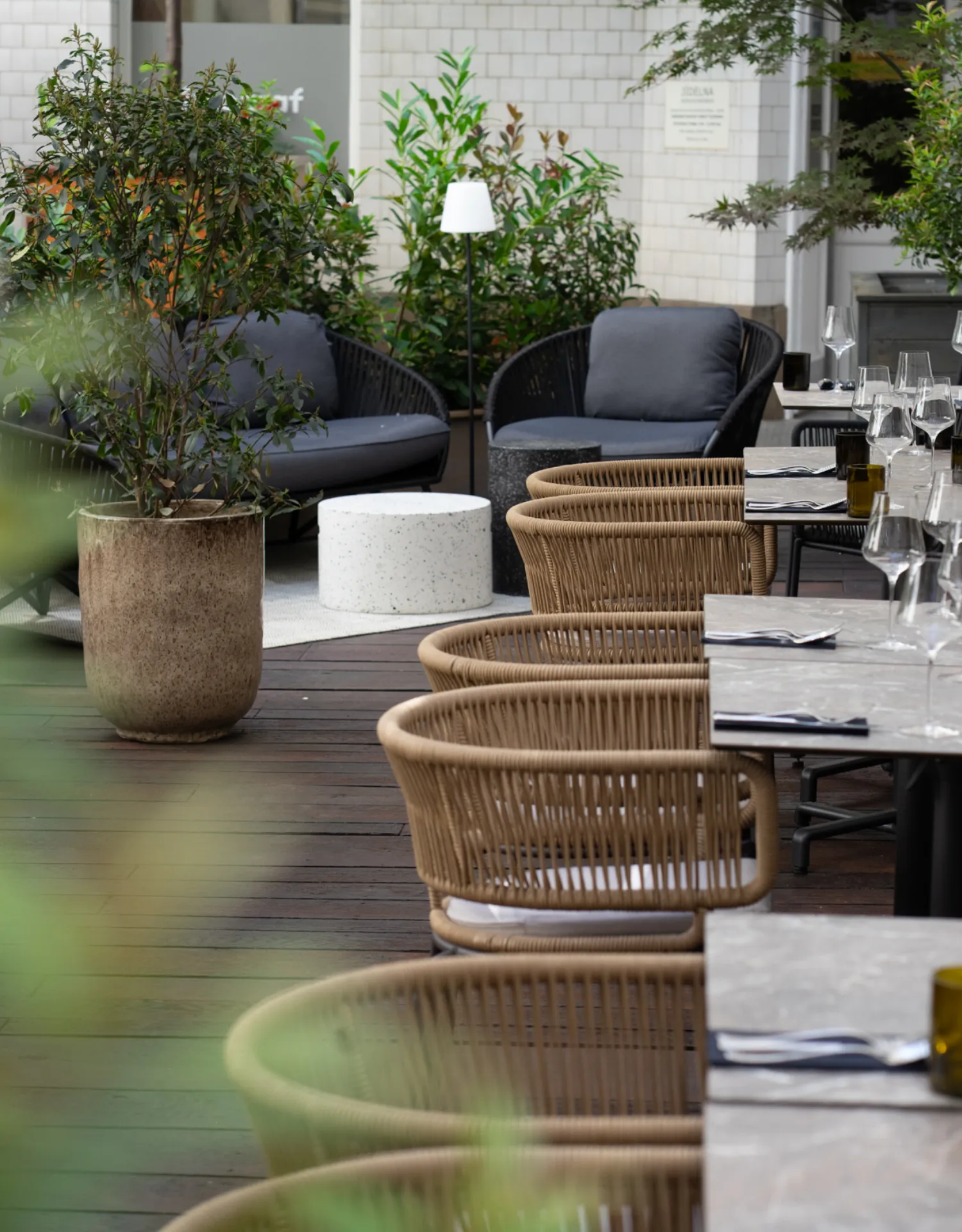
A relaxed New Town wine bar near Senovážné náměstí offering around 200 Czech and international wines by the glass and bottle, with knowledgeable staff and a kitchen of Mediterranean-leaning small plates. A reliable spot to explore Moravian wines, it has previously been named Best Wine Bar at the Czech Bar Awards.
Nové Město (New Town), Prague 1
Bar4.0
Cobra Bar
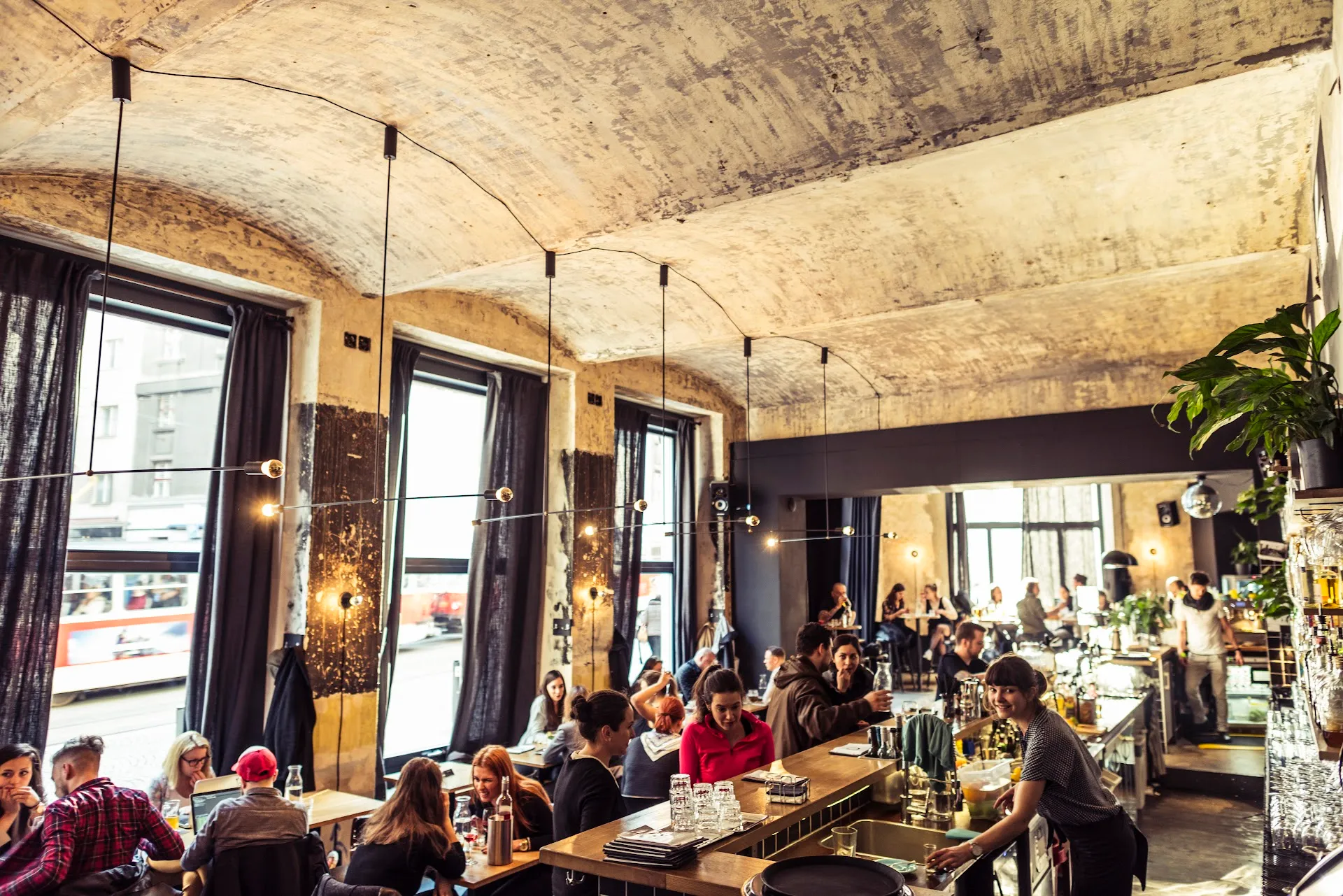
An industrial-chic all-day cafe and cocktail bar on Milady Horákové in the Letná/Holešovice area, drawing a mixed crowd of local twenty-somethings and expats. It pairs inventive cocktails and craft beer with good coffee and a small food menu, and turns into a DJ spot on weekends.
Holešovice (Letná), Prague 7
Club3.0
Karlovy Lázně
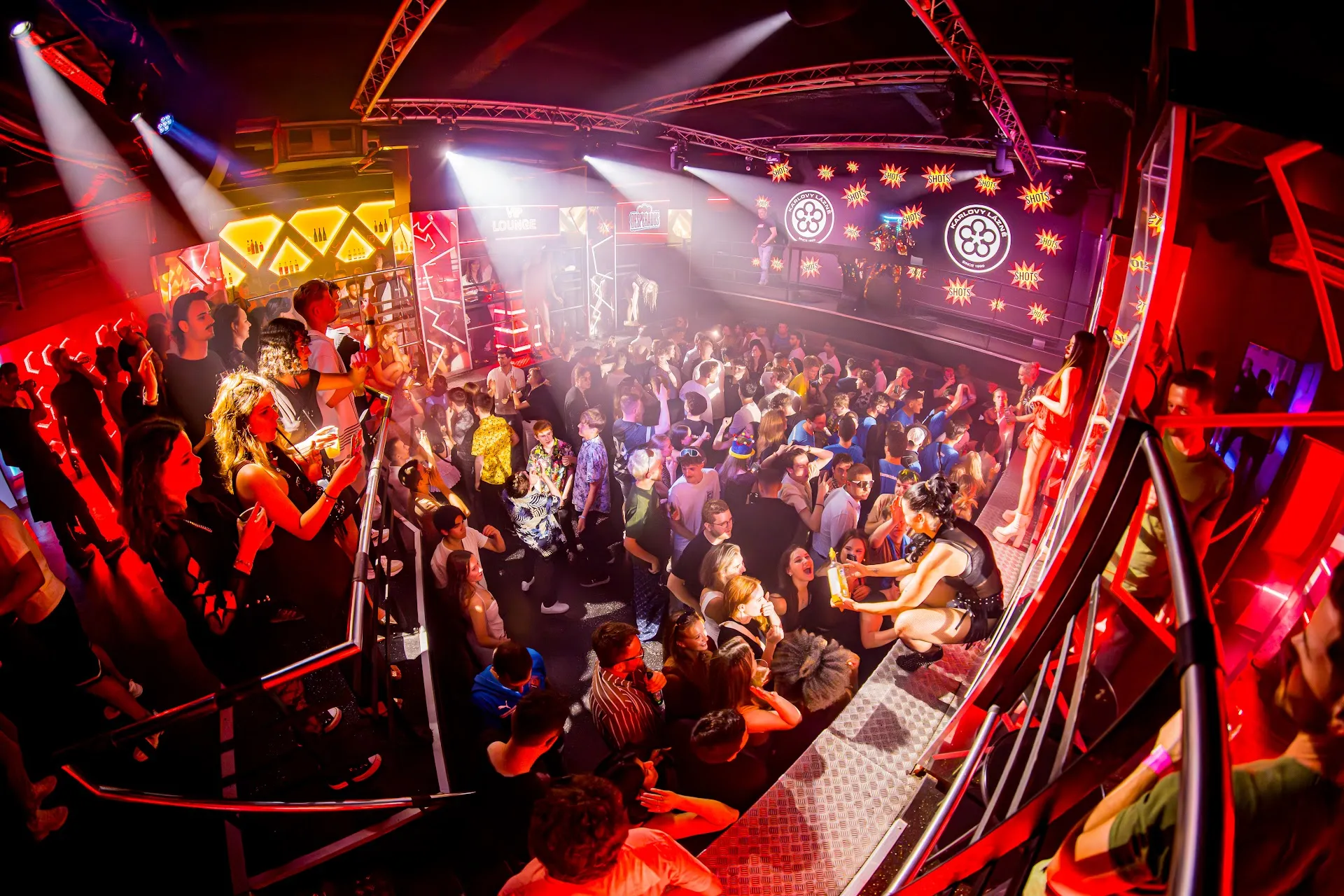
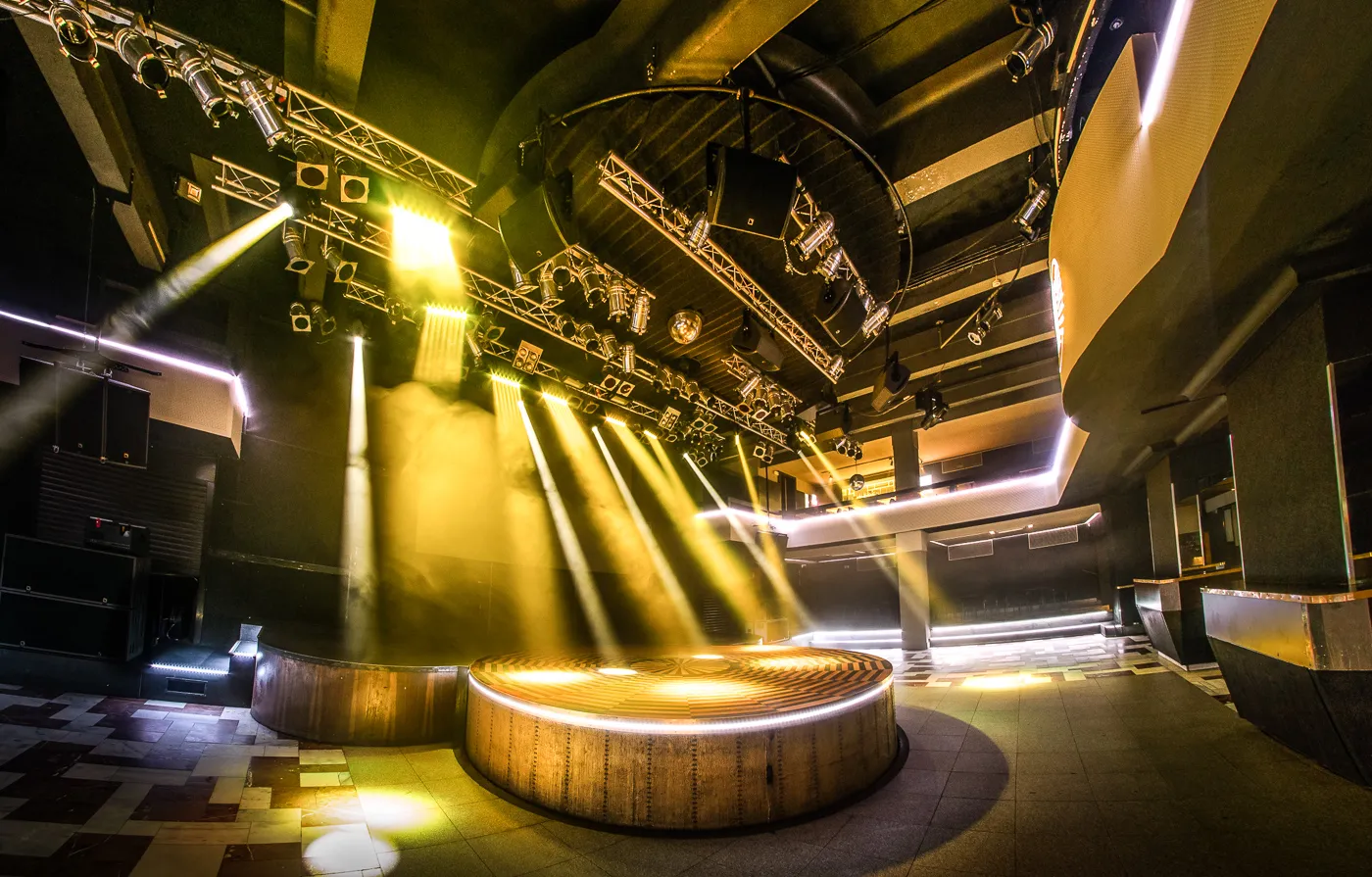
Marketed as the largest music club in Central Europe, Karlovy Lázně stacks five themed dance floors inside a former bathhouse right beside Charles Bridge, spanning EDM, mainstream pop, oldies and Latino. Its riverside setting and sheer scale make it one of Prague's most prominent and most touristed nightlife landmarks.
Staré Město (Old Town), Prague 1
Club4.0
Roxy
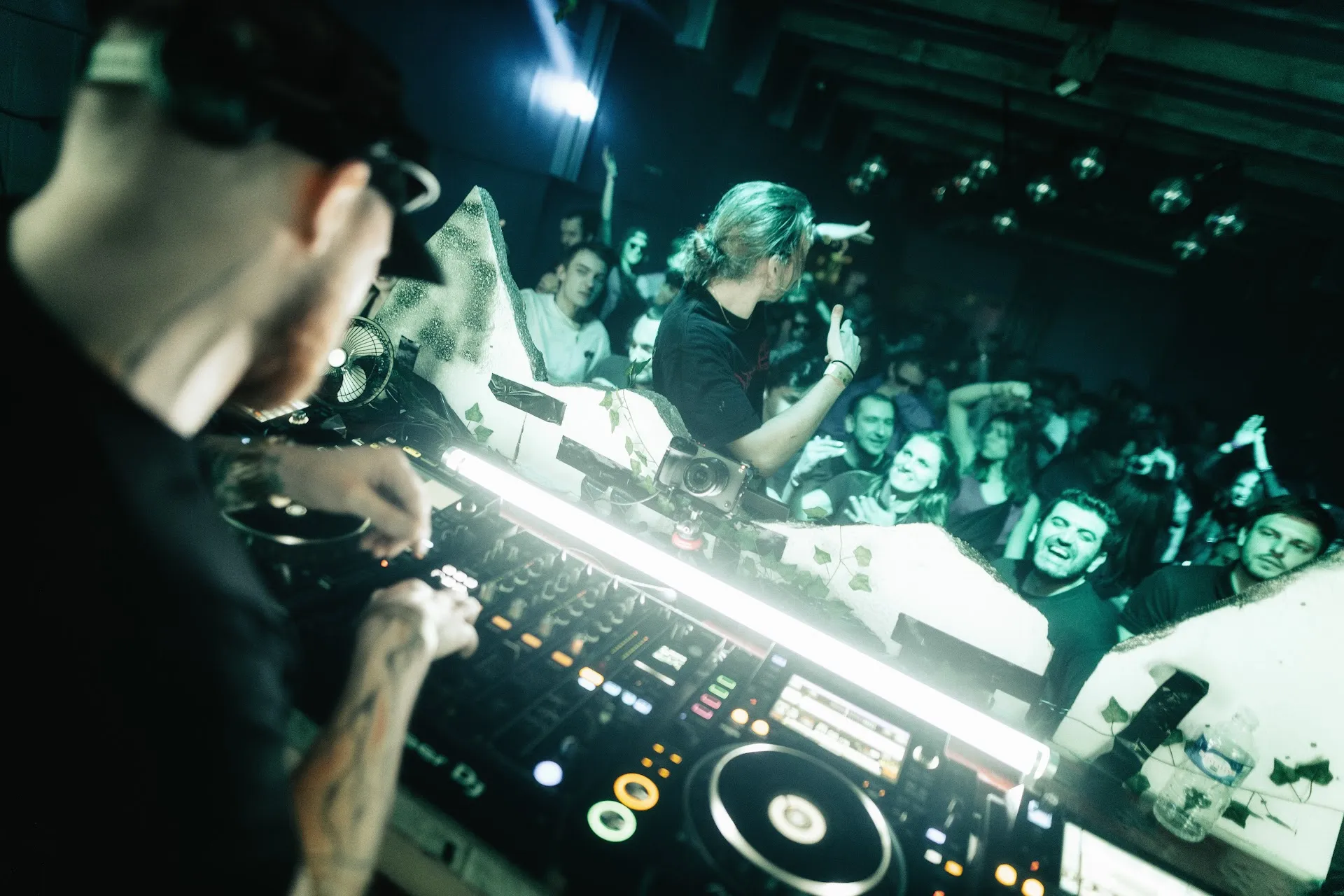
Set in a 1920s functionalist former cinema a few steps from Old Town Square, Roxy has anchored Prague's electronic scene since 1992 with techno, drum & bass, house and live alternative acts in its raw, high-ceilinged hall. Its warehouse feel and bold programming have long drawn comparisons to club institutions in Berlin and London.
Staré Město (Old Town), Prague 1
Club4.0
Cross Club
Cross Club fills a former Holešovice factory with a hand-built maze of pipes, gears and kinetic metal sculptures, creating one of Europe's most distinctive steampunk interiors. Alongside electronic and alternative music nights it runs a café, courtyard buffet and a busy cultural program, pulling in a mixed crowd of students, locals and travellers.
Holešovice, Prague 7
Club4.0
SaSaZu
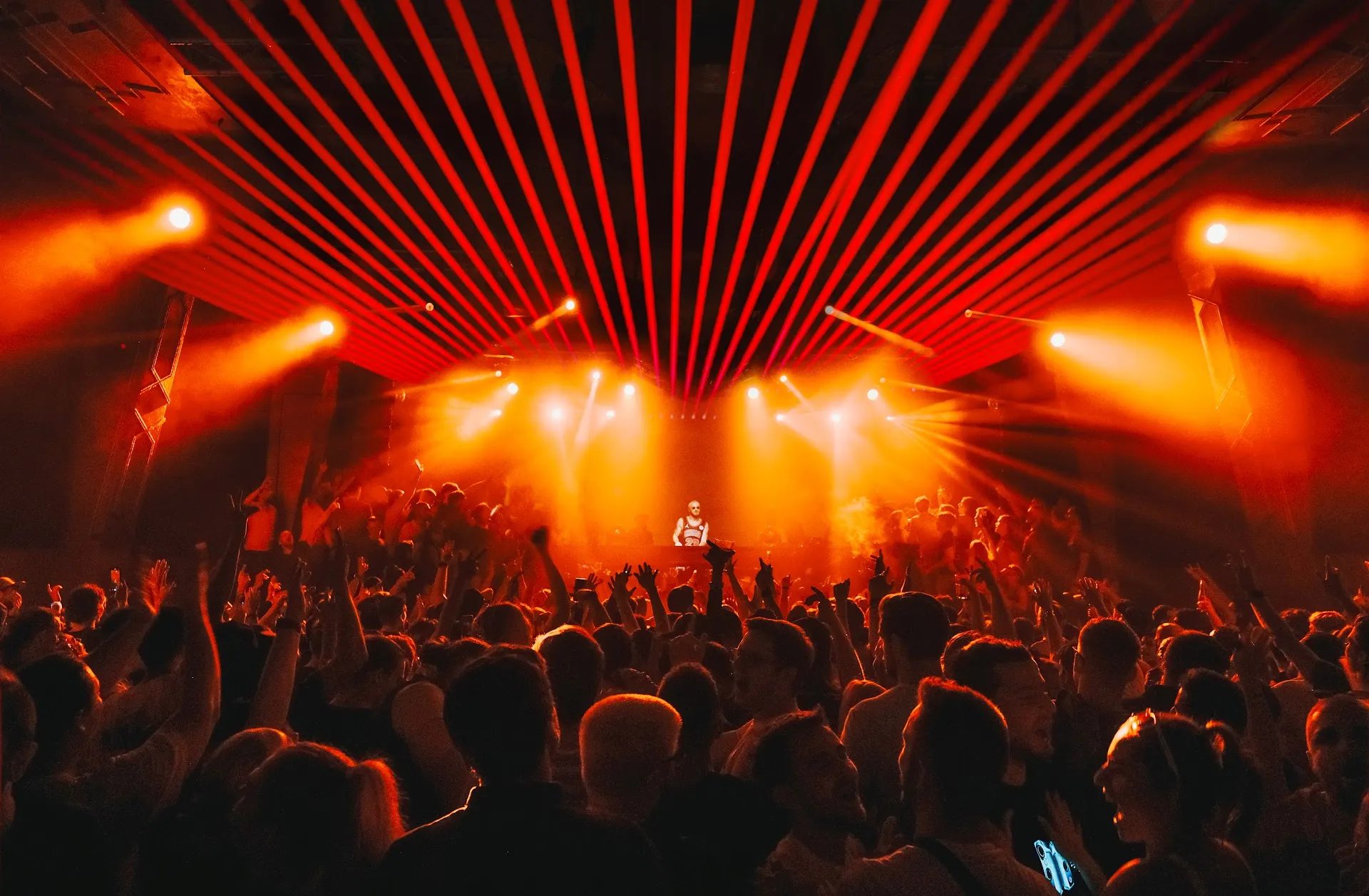
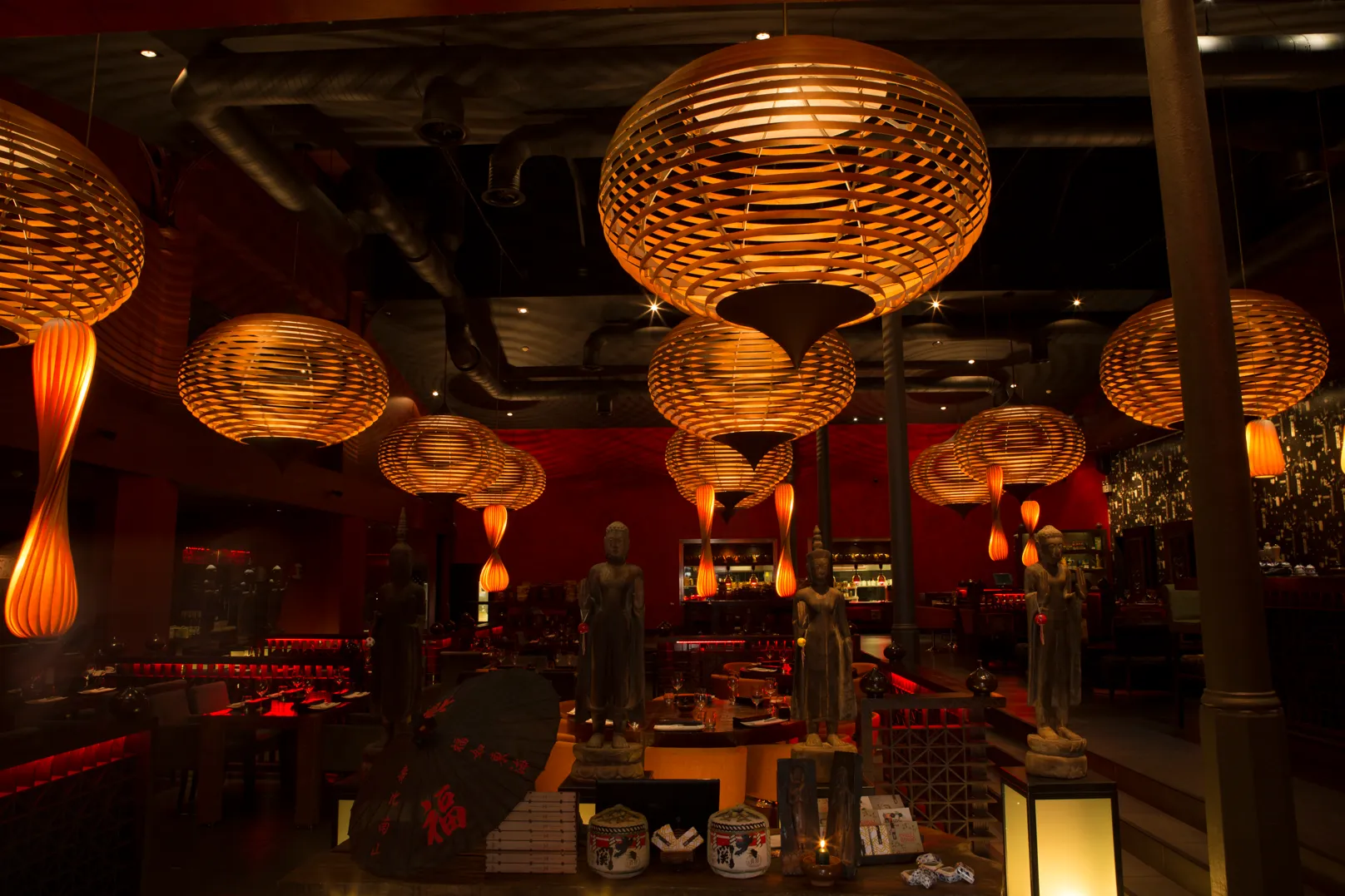
Housed in a converted warehouse at Prague's Holešovice market, SaSaZu pairs a 5,000 m² high-production club holding up to 2,500 people with an acclaimed Asian restaurant next door. Open since 2009, it is among the city's largest venues for big-name DJ sets and touring electronic and hip-hop acts.
Holešovice, Prague 7
Club4.0
Ankali
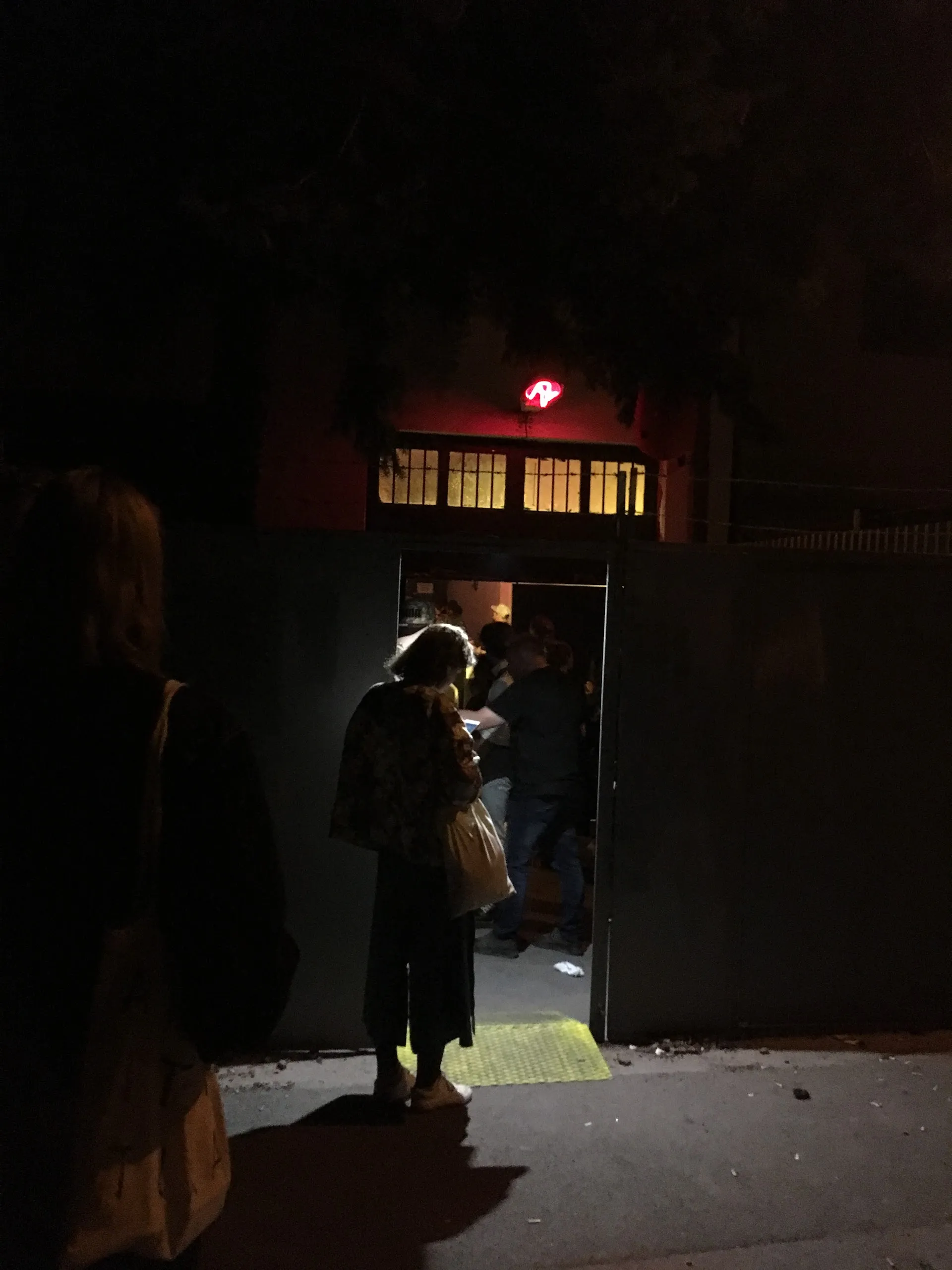
Built inside a former soap factory in residential Vršovice, Ankali is the engine room of Prague's contemporary underground, known for its heavyweight sound system, pared-back design and uncompromising techno and experimental bookings. Curated lineups of local and visiting DJs have earned it a 'little Berlin' reputation among the city's clubbers.
Vršovice, Prague 10
Club4.0
Lucerna Music Bar
Tucked inside the historic Lucerna passage in New Town, Lucerna Music Bar balances live concerts with its famous 80s & 90s Video Party, where retro hits and projected music videos fill the old hall every Friday and Saturday. Decades on, it remains as much a Prague institution as a club.
Nové Město (New Town), Prague 1
Vintage & thrift treasures in Prague
Secondhand gems, vintage clothing and flea-market finds.
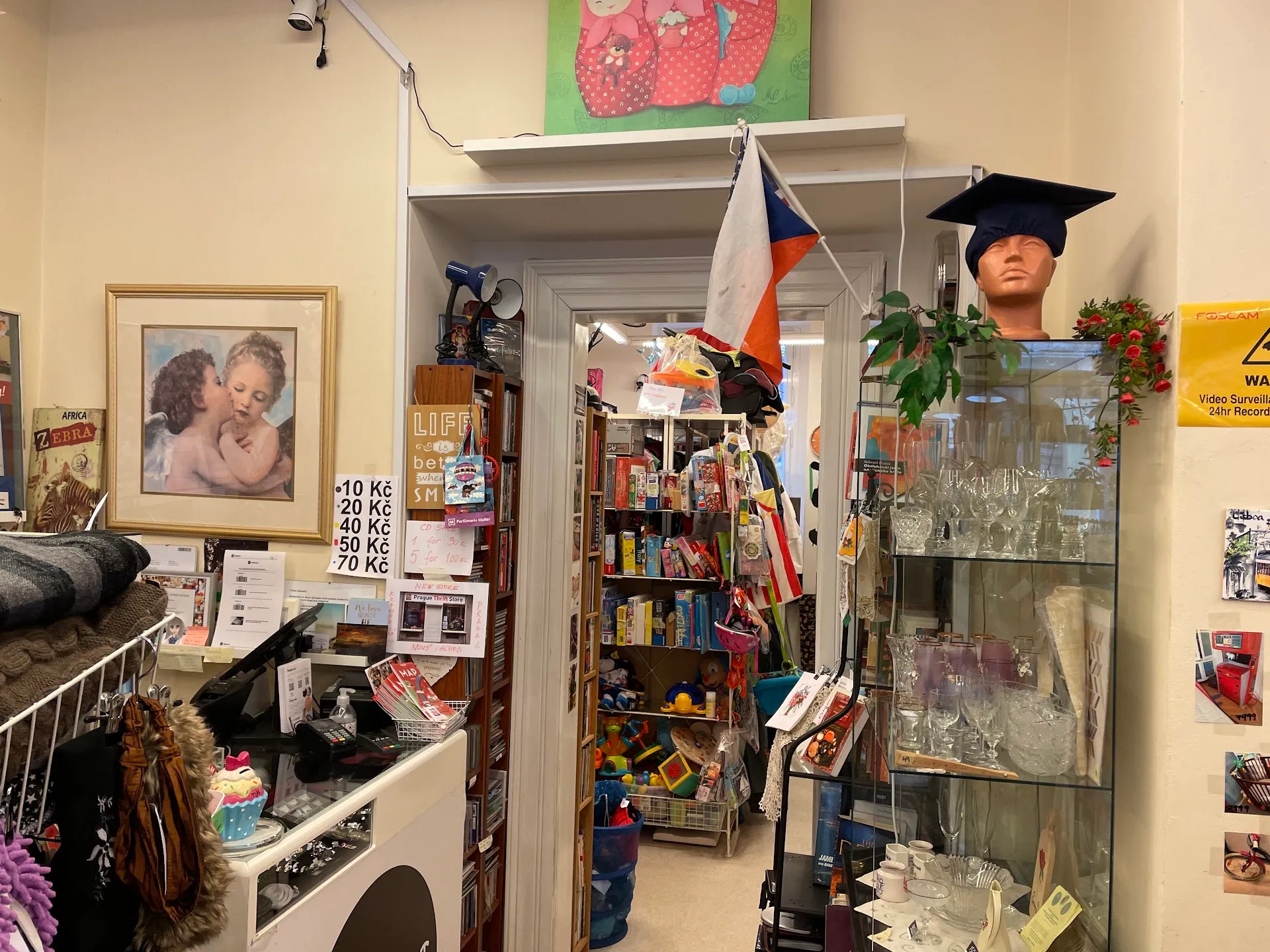
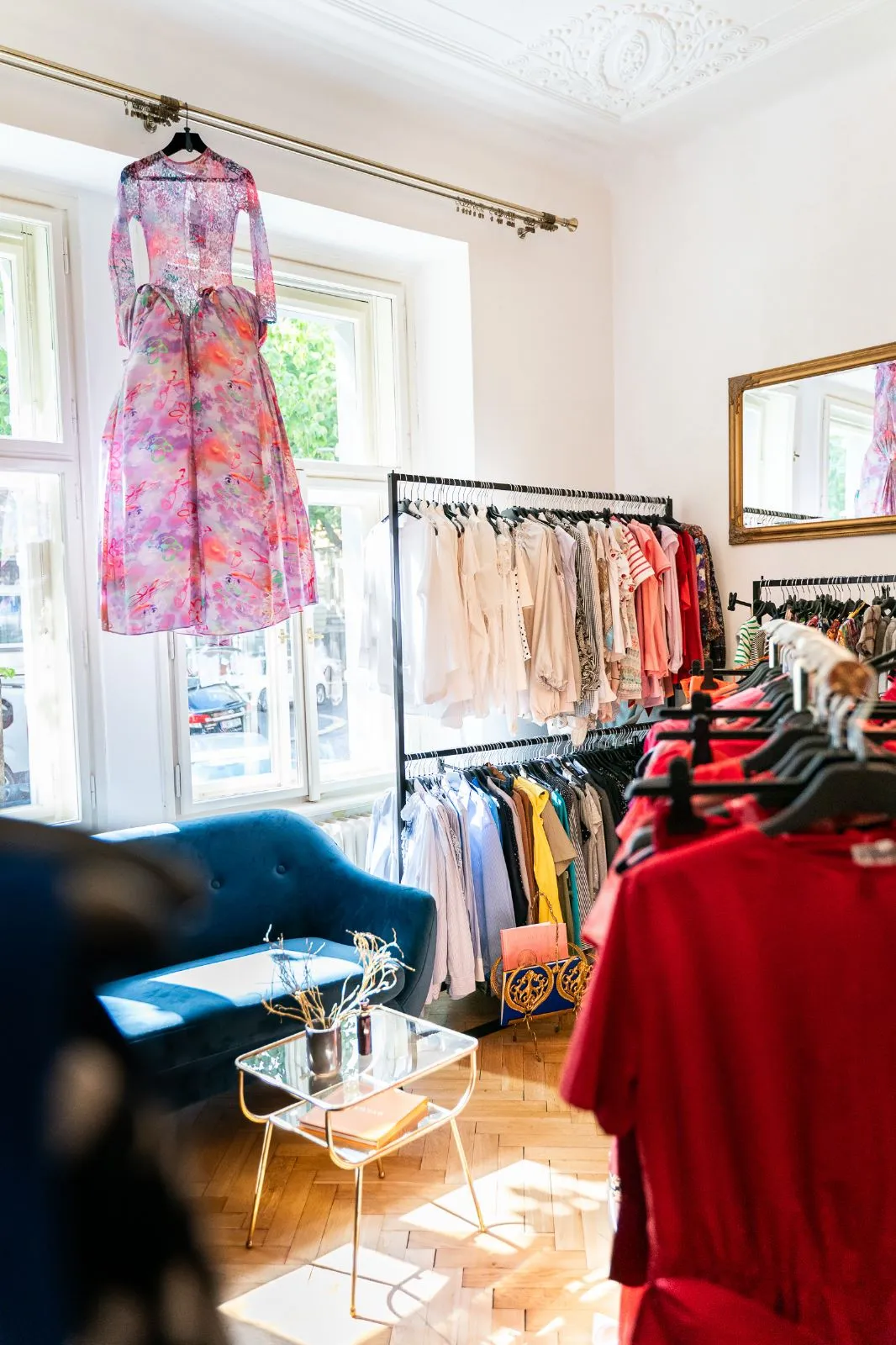
English-friendly thrift shop in the heart of Vinohrady with affordable second-hand and retro clothing for men and women; part of a small local chain with a second branch in Letná.
Vinohrady, Praha 2
Vintage Shop3.0
Tak trochu jiný sekáč (A Somewhat Different Thrift)
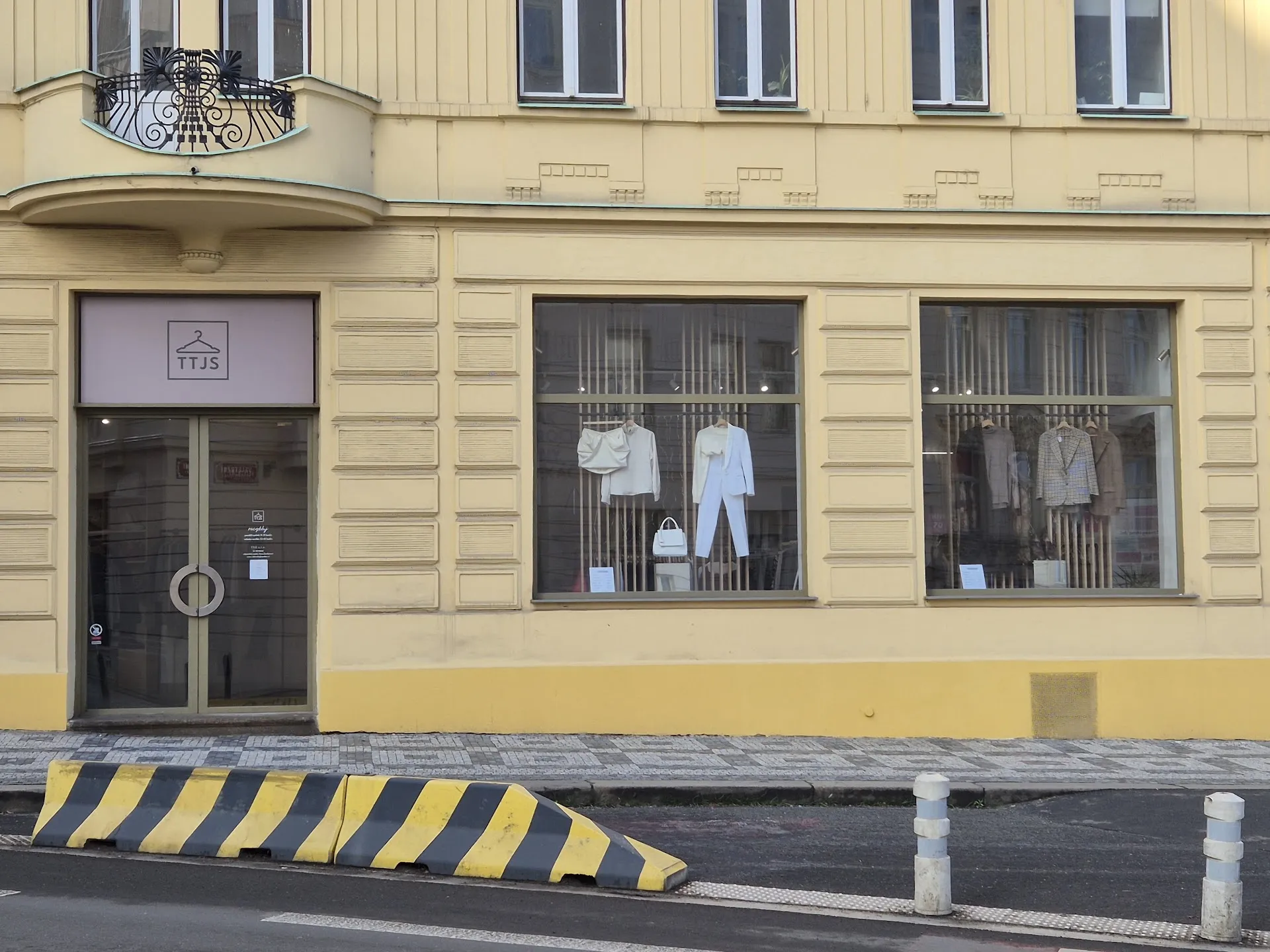
Curated second-hand shop on Korunní offering minimalist men's and women's pieces personally selected by trend, material and look.
Vinohrady, Praha 2
Vintage Shop5.0
Bohemian Retro Vintage
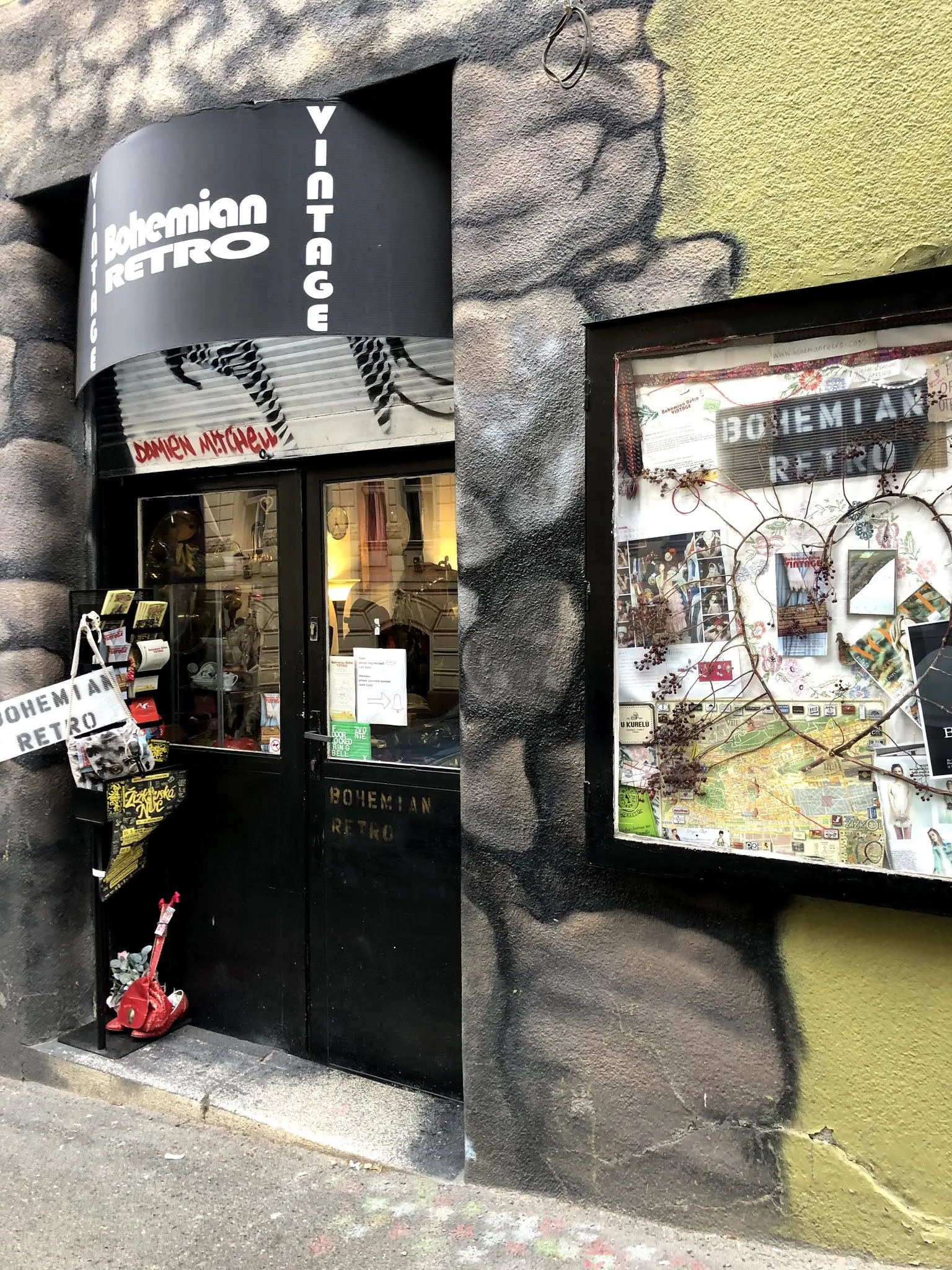
Vintage-clothing shop near Riegrovy sady specializing in Czechoslovak-era retro fashion — dresses, coats and accessories with a mid-century Central-European look.
Žižkov (Vinohrady border), Praha 3
Vintage Shop3.0
More Than Fashion
Luxury second-hand boutique mixing everyday labels with high-end designers such as Max Mara, Prada, Céline and Saint Laurent at a fraction of retail, with daily-refreshed stock.
Vinohrady, Praha 2
Vintage Shop4.0
MÓDNÍ MÁNIE Boutique
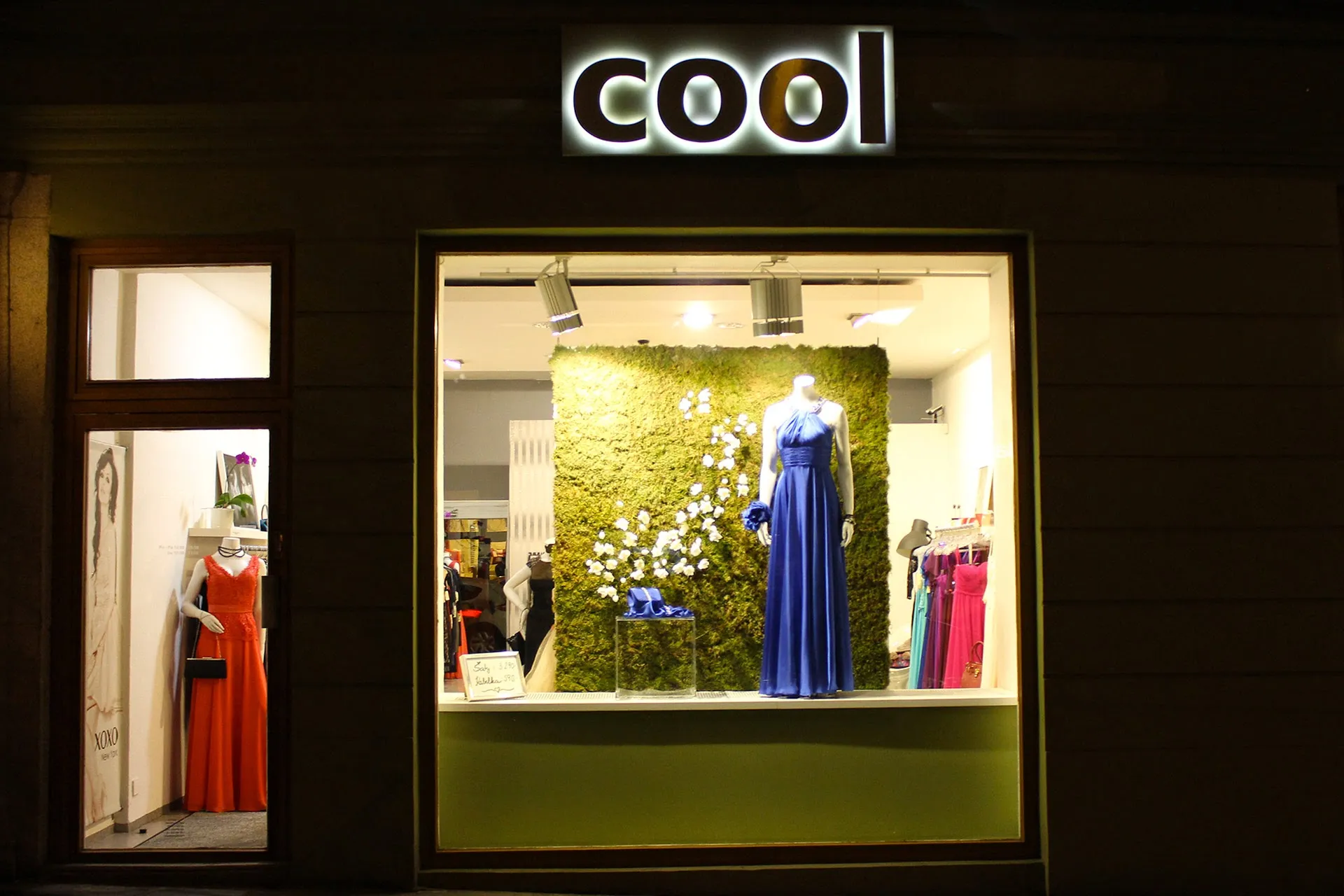
Designer second-hand boutique near náměstí Míru offering used and outlet women's clothing and accessories, with high-street brands alongside occasional label finds.
Vinohrady, Praha 2
Vintage Shop5.0
Antik Petit (Starožitnictví Antik Petit)
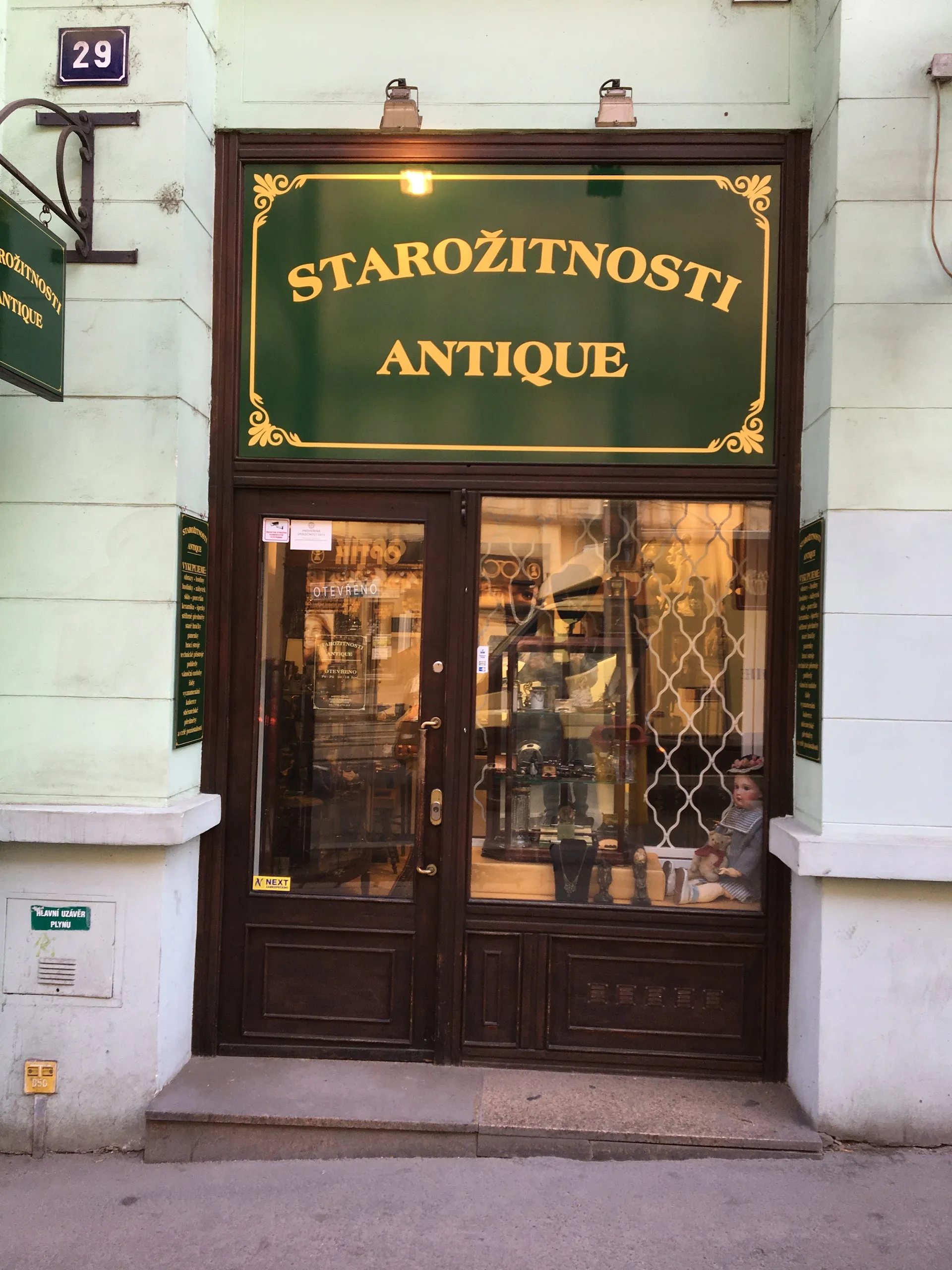
Antique-and-bric-a-brac shop off Vinohradská specializing in antique textiles — hand-embroidered tablecloths, blankets and bedspreads — alongside branded porcelain, glass, paintings and old toys.
Vinohrady, Praha 2
Vintage Shop4.0
Second Shot
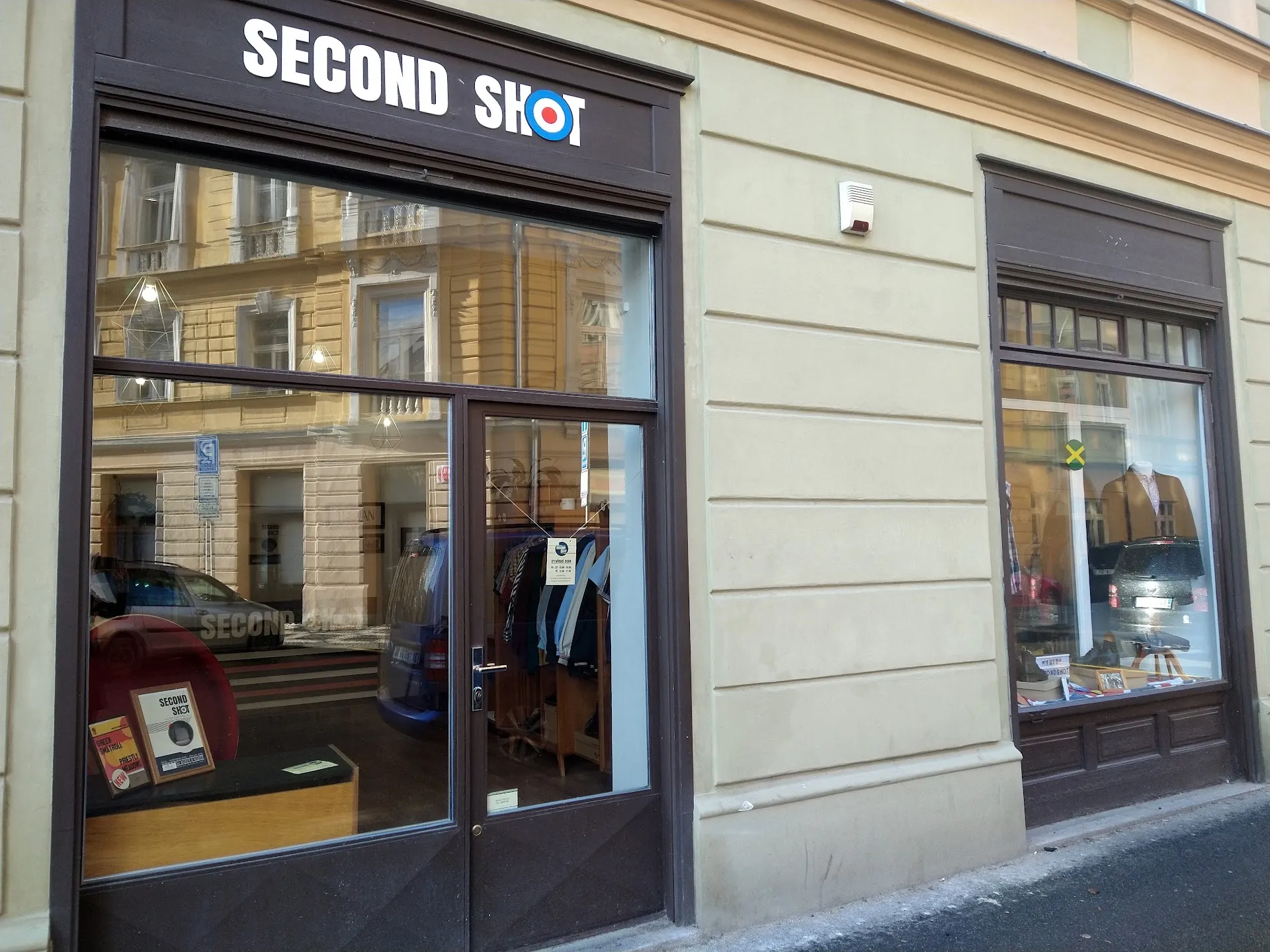
Niche shop devoted to 1960s British subculture fashion, mixing new, outlet and second-hand pieces from Fred Perry, Ben Sherman, Farah, Levi's and Original Penguin; also stocks ska, reggae and northern-soul vinyl and hosts vinyl-only music nights.
Žižkov, Praha 3
Vintage Shop3.0
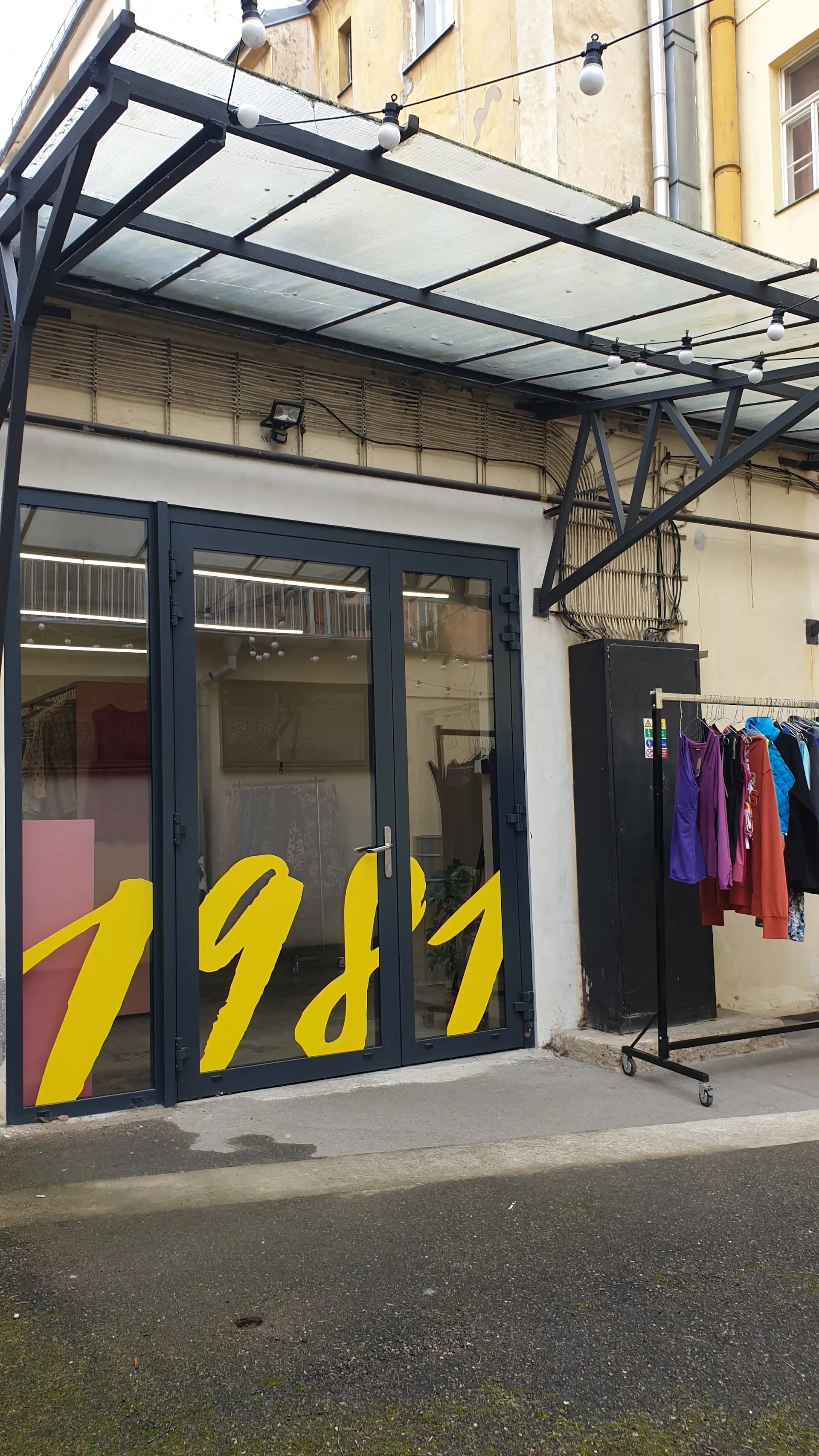
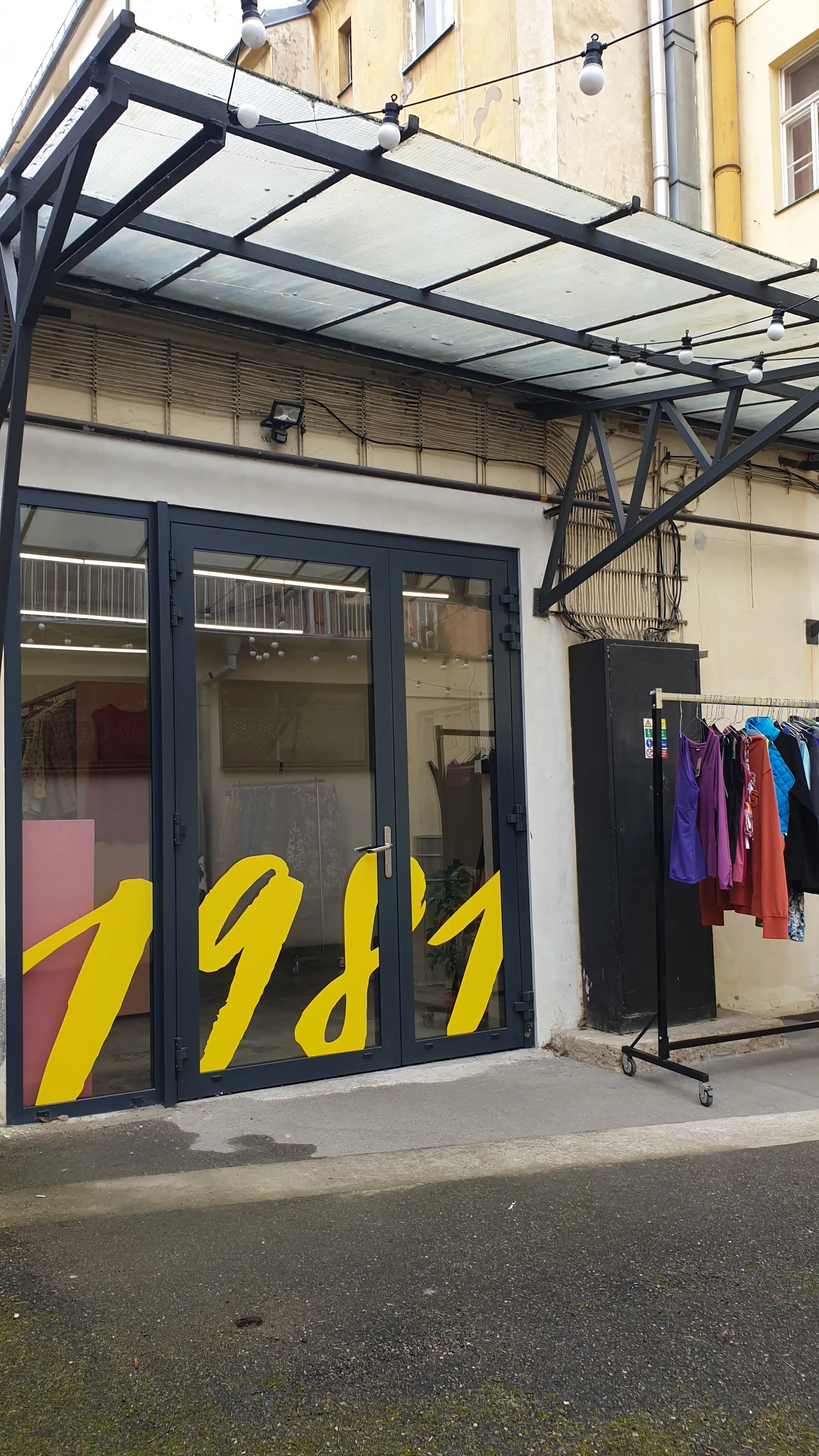
1981 Second hand
Sustainable second-hand and vintage label founded by David Homola and Barbora Vilišová as a reaction to fashion overproduction, blending an online store with a physical Žižkov space and recurring pop-up markets in an industrial railway-station setting.
Žižkov, Praha 3
Flea Market5.0
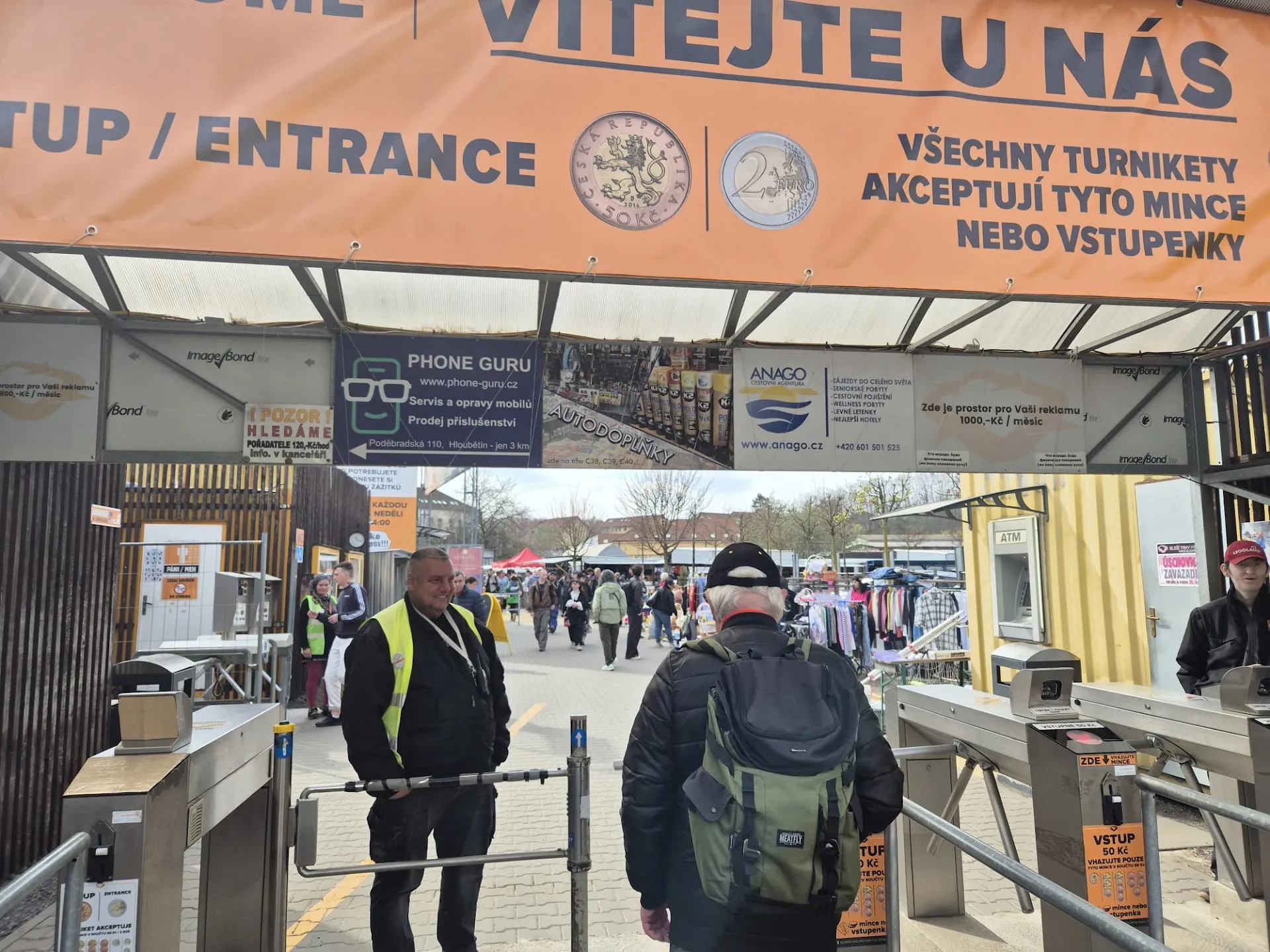
Pravý bleší trh (Nákladové nádraží Žižkov flea market)
Weekend flea market spread across the grounds of the former Žižkov freight railway station, where private sellers set up stalls of vintage and antique furniture, clothing, vinyl, books, electronics and collectibles in a raw industrial setting.
Žižkov, Praha 3
Vintage Shop4.0
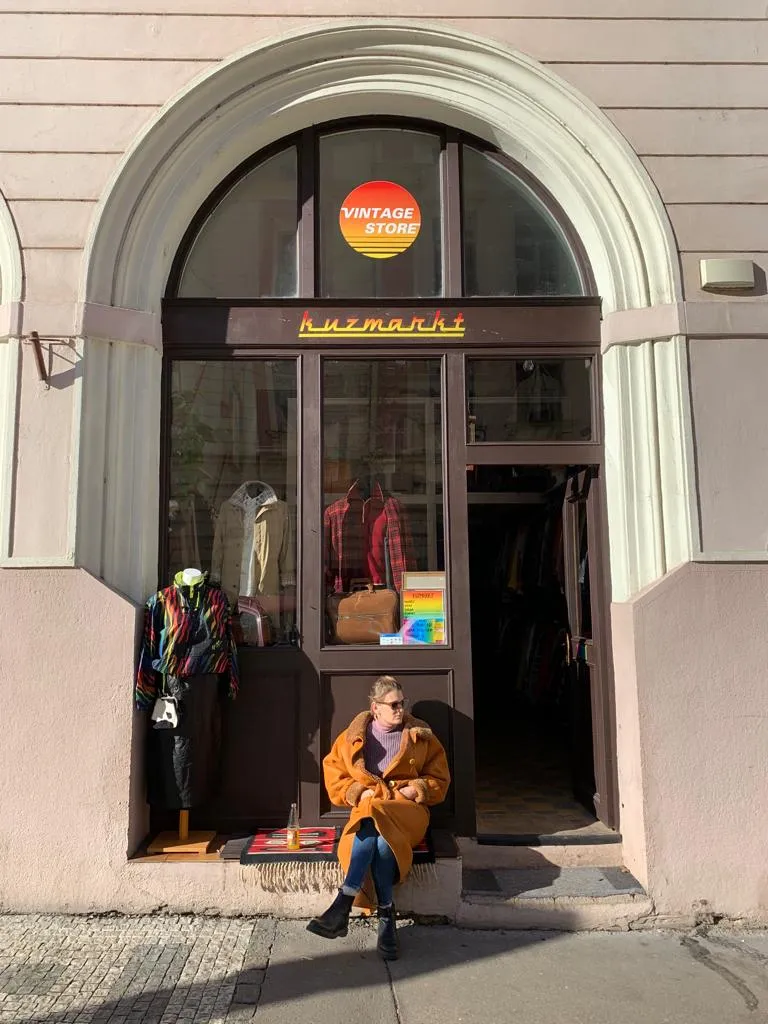
Kuzmarkt
A beloved Letná/Holešovice vintage store run by owner Kateřina, with a tightly curated selection of retro clothing, shoes, bags and accessories from the 1960s–1990s sourced from around the world. Second branch at Janovského 9.
Holešovice, Praha 7
Vintage Shop3.0
Malé černé (The Little Black One)
A vintage boutique operating since 2014 near Letná, specialising in carefully selected clothing and accessories in quality natural materials — wool, silk, cashmere and leather.
Holešovice, Praha 7
Vintage Shop4.0
Relish The Sound
An independent record store inside the Vnitroblock complex, opened December 2017. Stocks new and used vinyl across all genres including rare and collectible pressings.
Holešovice, Praha 7
Vintage Shop3.0
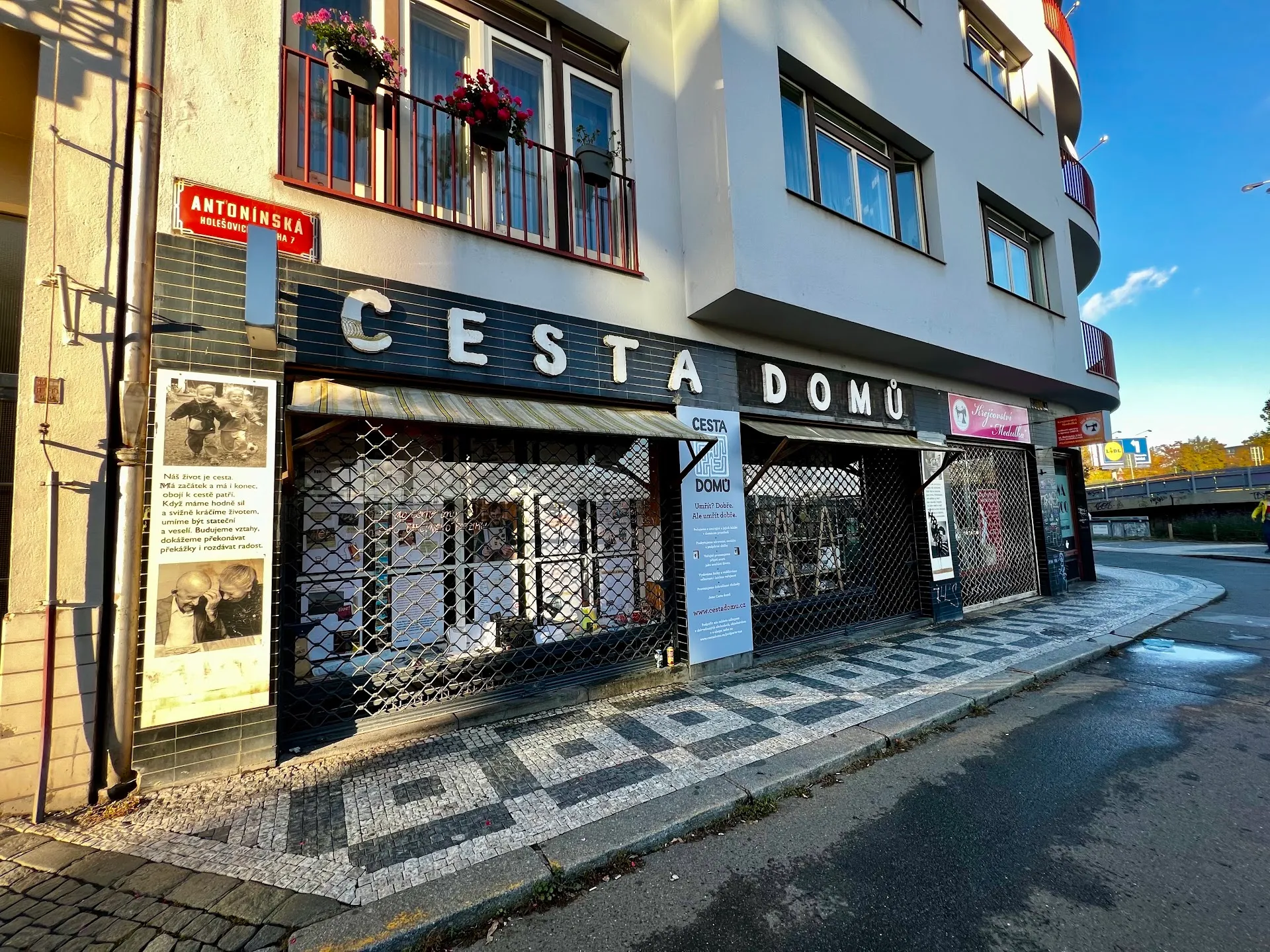
Dobročinný obchod Cesta domů (Cesta domů charity shop)
The original charity thrift shop of the Cesta domů hospice foundation, opened near Vltavská in 2009, selling donated second-hand clothing, kitchenware, jewellery, paintings and design stationery.
Holešovice, Praha 7
Flea Market4.0
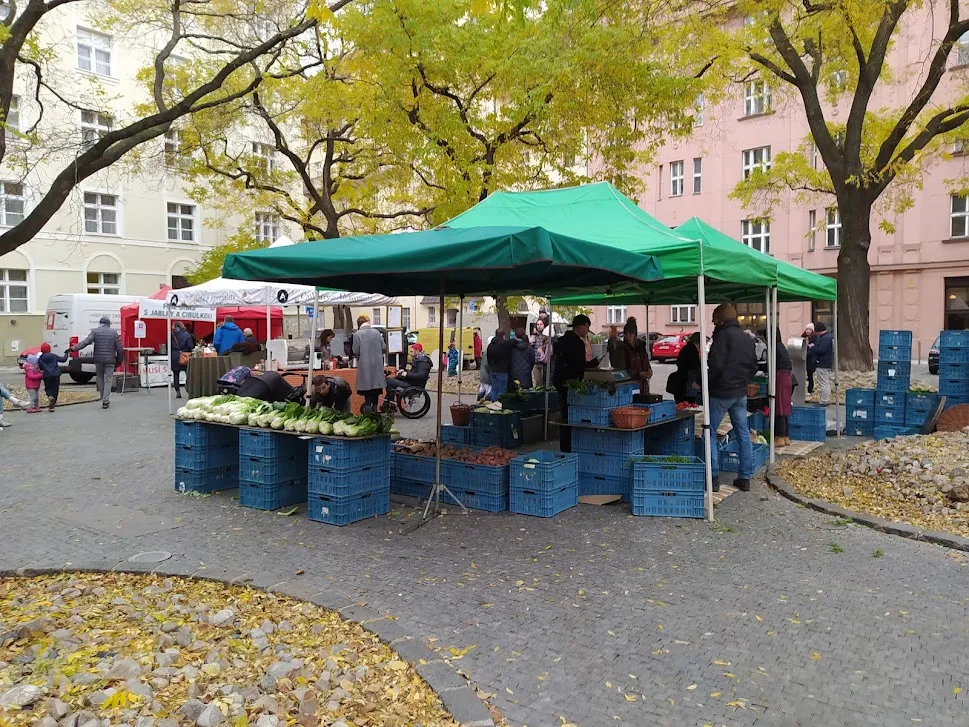
Bleší trh Heřmaňák (Heřmaňák Flea Market)
A community flea market held on the last Saturday of the month (March–October) on Řezáčovo náměstí, offering antiques, vinyl records, books, porcelain, fashion and small treasures.
Holešovice, Praha 7
Vintage Shop5.0
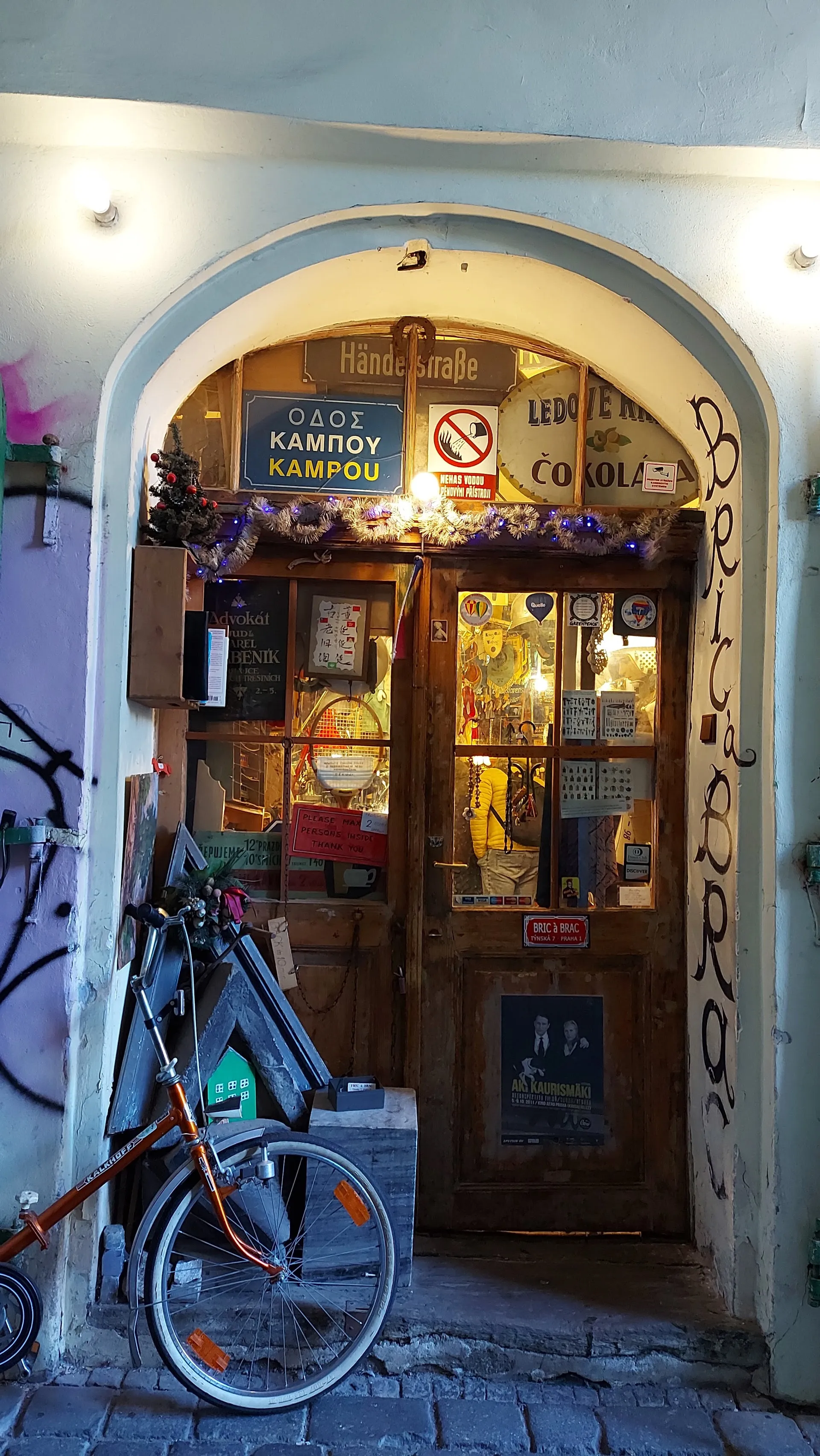
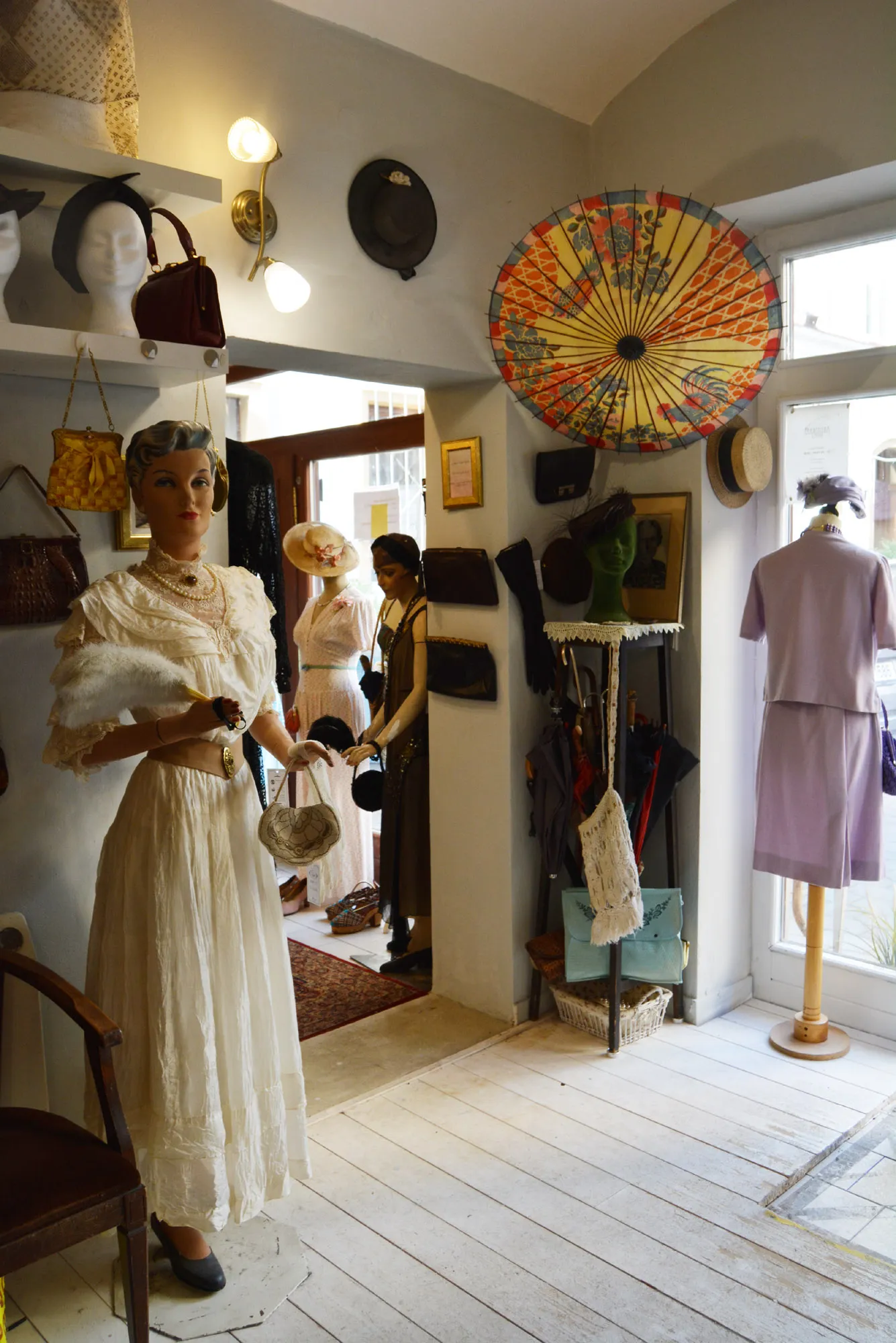
Bric a Brac (Bric à Brac Antiques)
A crammed, atmospheric bric-a-brac and antiques shop steps from Old Town Square, run for over two decades. It is actually two adjacent spaces under the Týn archway: one packed with small collectibles (old glassware, clocks, jewellery boxes, cameras, tins), the other a courtyard room for larger pieces like paintings, furniture and vintage bicycles.
Staré Město, Praha 1
Vintage Shop5.0
Lula Vintage Prague
A carefully curated vintage and pre-loved fashion boutique tucked up a staircase off Vodičkova, selected by Lucie Kratochvílová. Known for oversized blazers, suits, shirts and statement pieces styled after classic fashion icons, in a beautifully arranged, gallery-like space.
Nové Město, Praha 1
Vintage Shop5.0
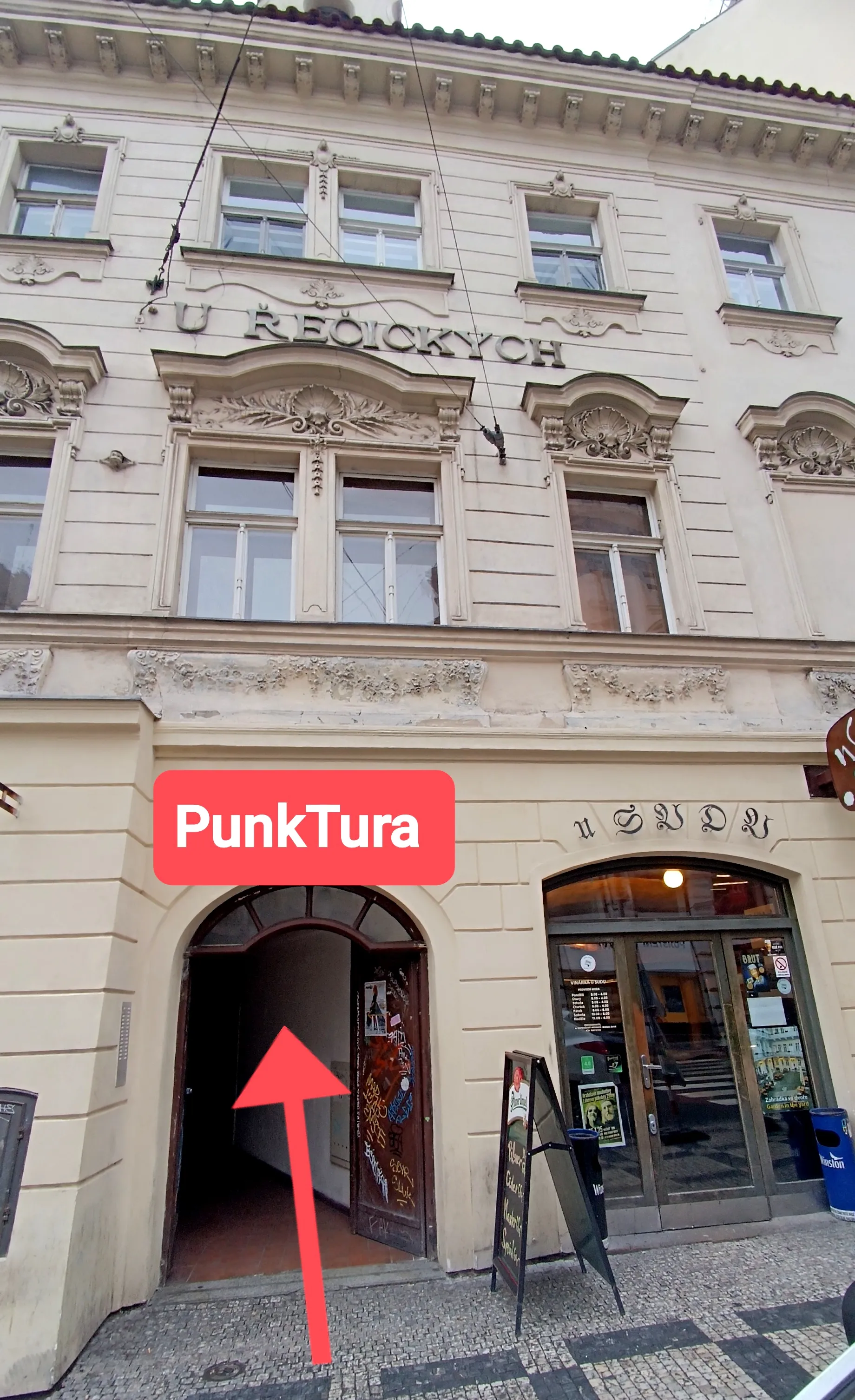
PunkTura
A hidden courtyard vintage and second-hand shop with a punk, retro and alternative bent ("Recycle or Die!"). It stocks reworked and recycled clothing, band tees, jackets, boots and accessories aimed at a subcultural, DIY-minded crowd.
Nové Město, Praha 1
Vintage Shop5.0
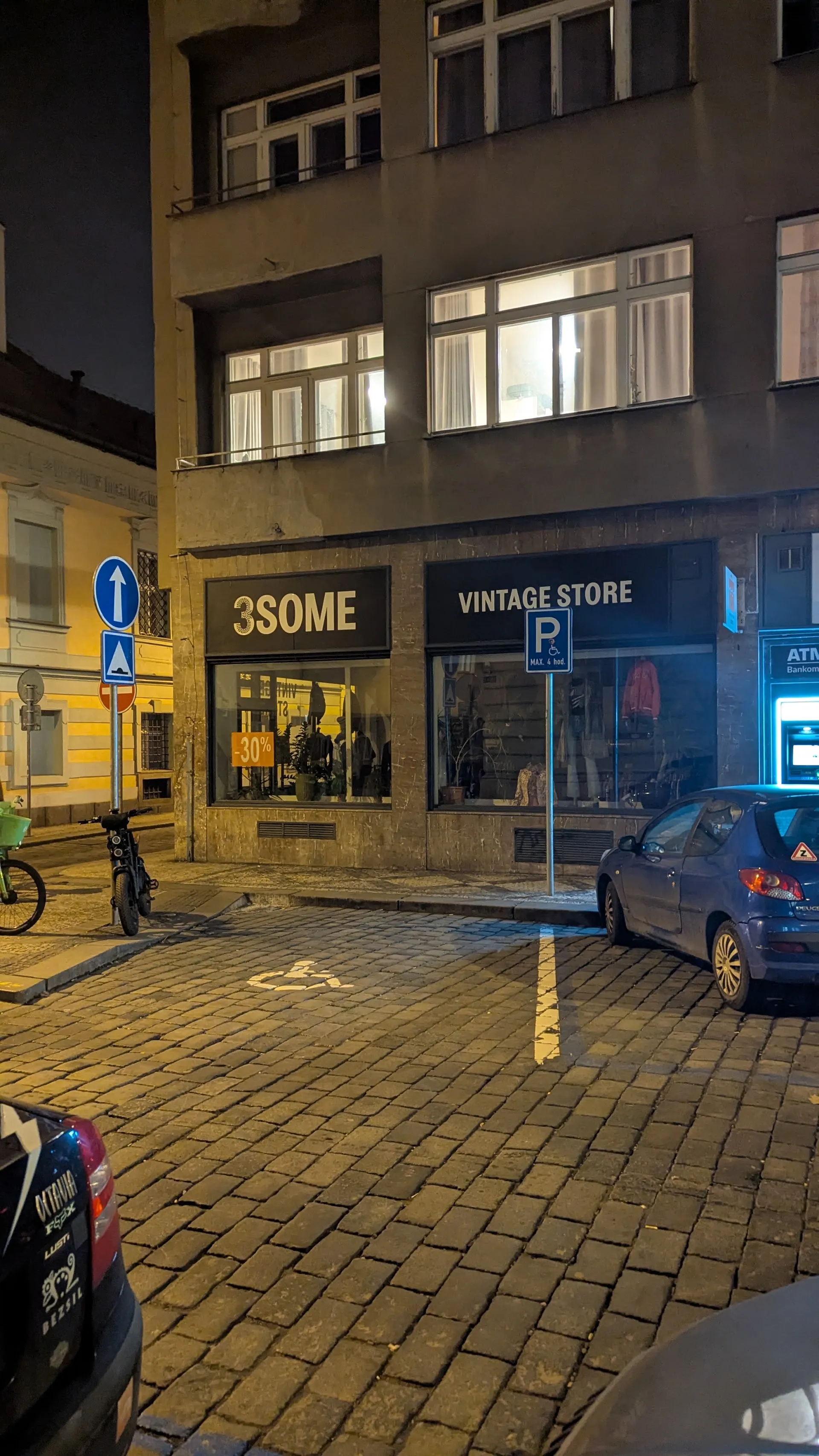
3SOME Vintage Store
One of Prague's largest and most popular vintage stores, offering an eclectic, densely packed mix of shirts, jackets, bags and accessories spanning several decades. A go-to spot for affordable thrifted "sekáč" finds and one-off wardrobe pieces near Národní. A second, larger 3SOME location sits nearby at Bartolomějská 13.
Nové Město, Praha 1
Vintage Shop5.0
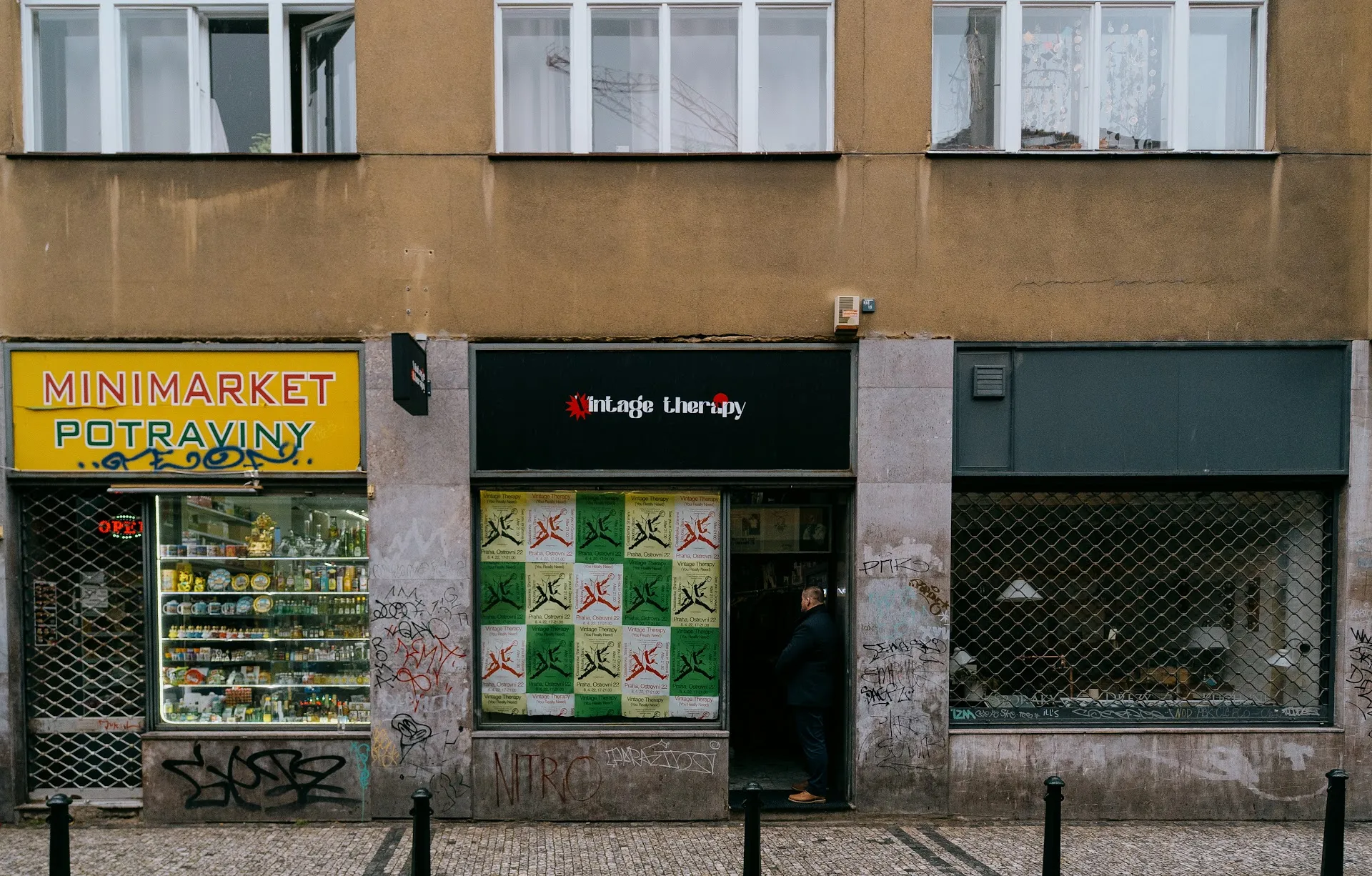
Vintage Therapy
A second-hand, vintage and designer shop combined with a DIY lab, sitting just two doors from 3SOME on Ostrovní. It mixes curated retro clothing and accessories with upcycling and customization, giving it a workshop-meets-boutique feel.
Nové Město, Praha 1
Vintage Shop5.0
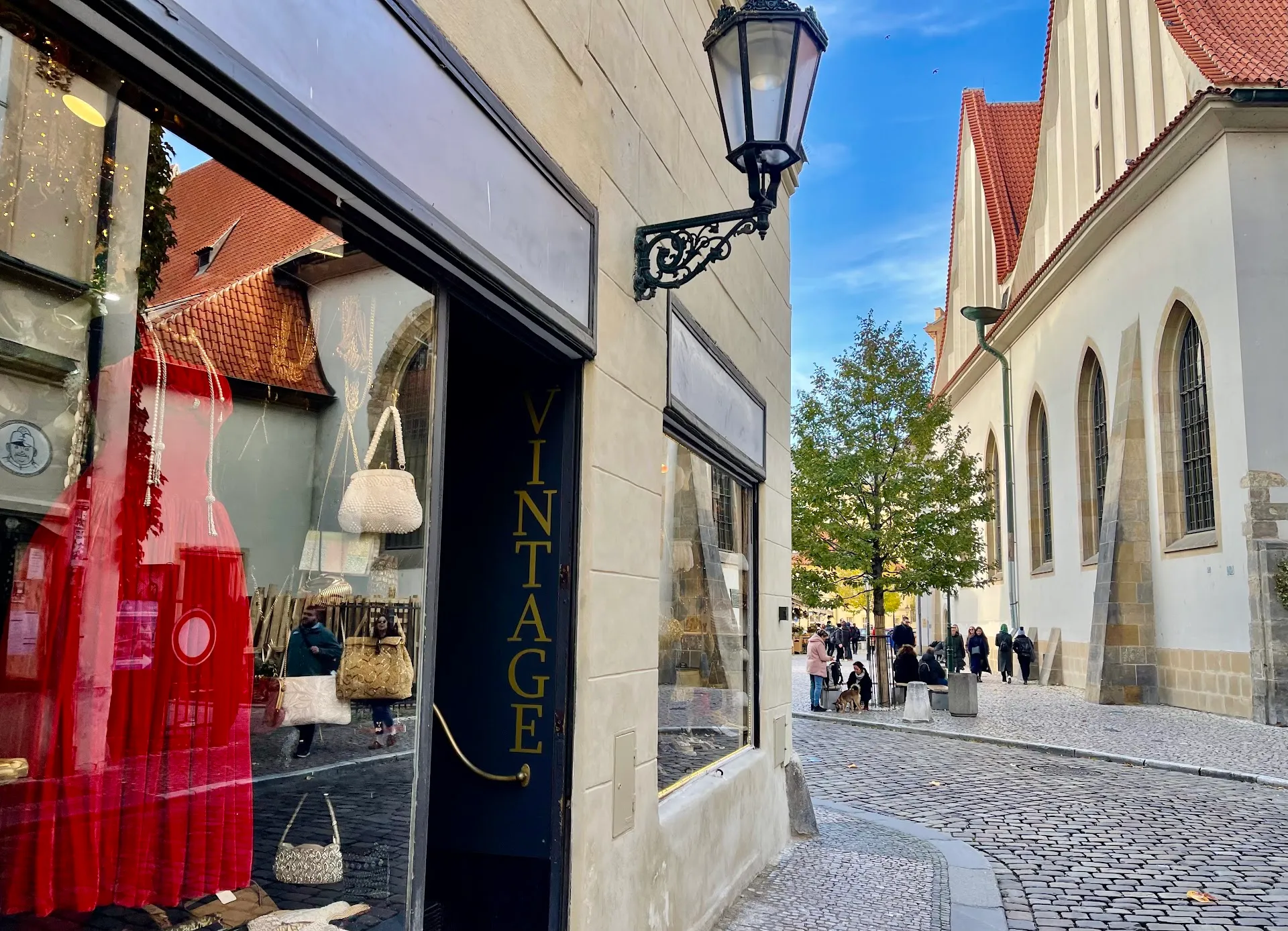
Vintage Coco Boutique
A small, style-focused vintage boutique on quiet Bethlehem Square, offering a hand-picked selection of retro womenswear, dresses, bags and accessories. More curated and fashion-led than a bulk thrift store, with an emphasis on standout individual pieces.
Staré Město, Praha 1
Vintage Shop3.0
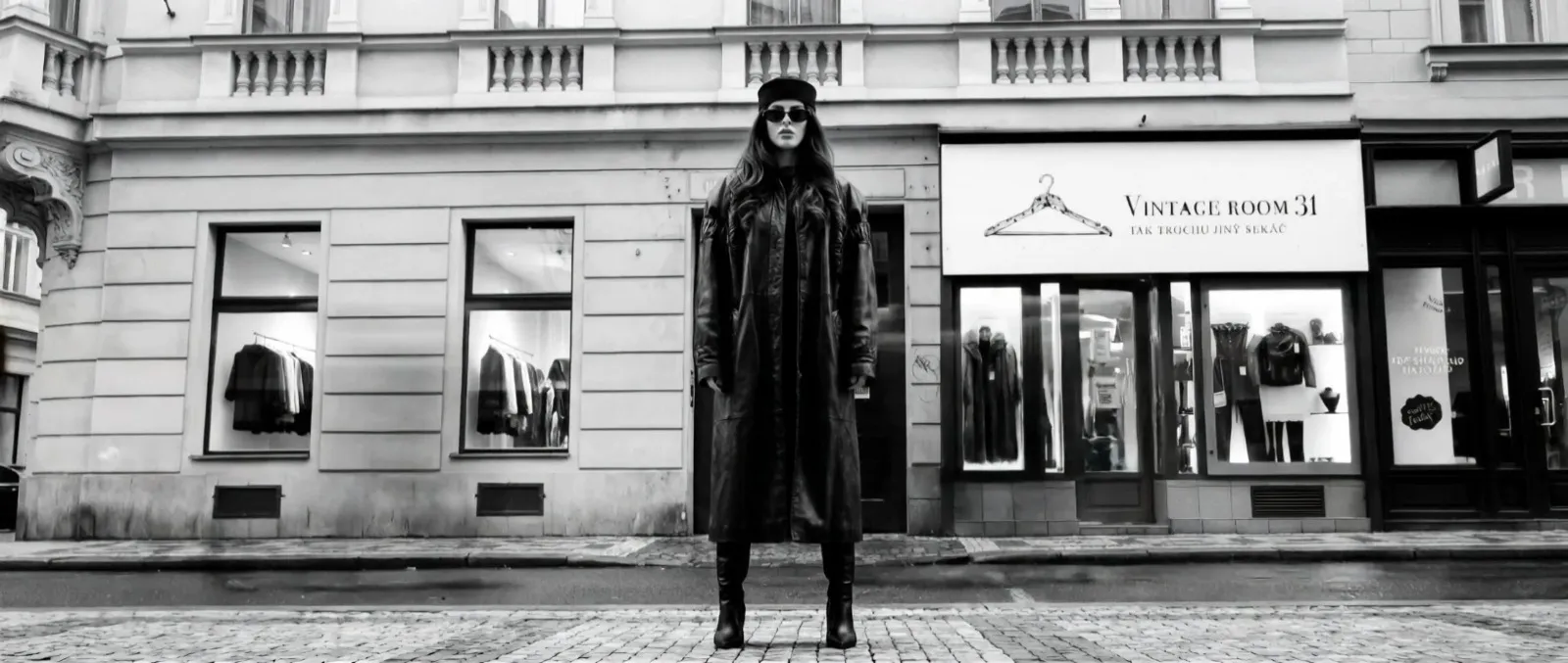
Vintage Room 31
Curated second-hand and vintage boutique two minutes from Anděl metro, specialising in hand-selected women's and men's pieces, leather jackets and accessories with a constantly rotating inventory. Staff offer styling advice and the shop accepts CZK, EUR and USD.
Smíchov, Praha 5
Vintage Shop3.0
1981 Secondhand
A cosy Nusle secondhand shop next to a cafe, well-stocked for hunting vintage blazers and shirts. Beyond curated used women's and men's clothing they run their own upcycled 'Reborn' collection.
Nusle, Praha 2
Vintage Shop5.0
Aristokrat Vintage
Established in 2012 in the Letná art district, this shop is run by a 1920s collector and specialises in original vintage and retro clothing (particularly beautiful dresses from the 1920s-1960s), accessories and stylish furniture with real provenance.
Holešovice, Praha 7
Flea Market5.0
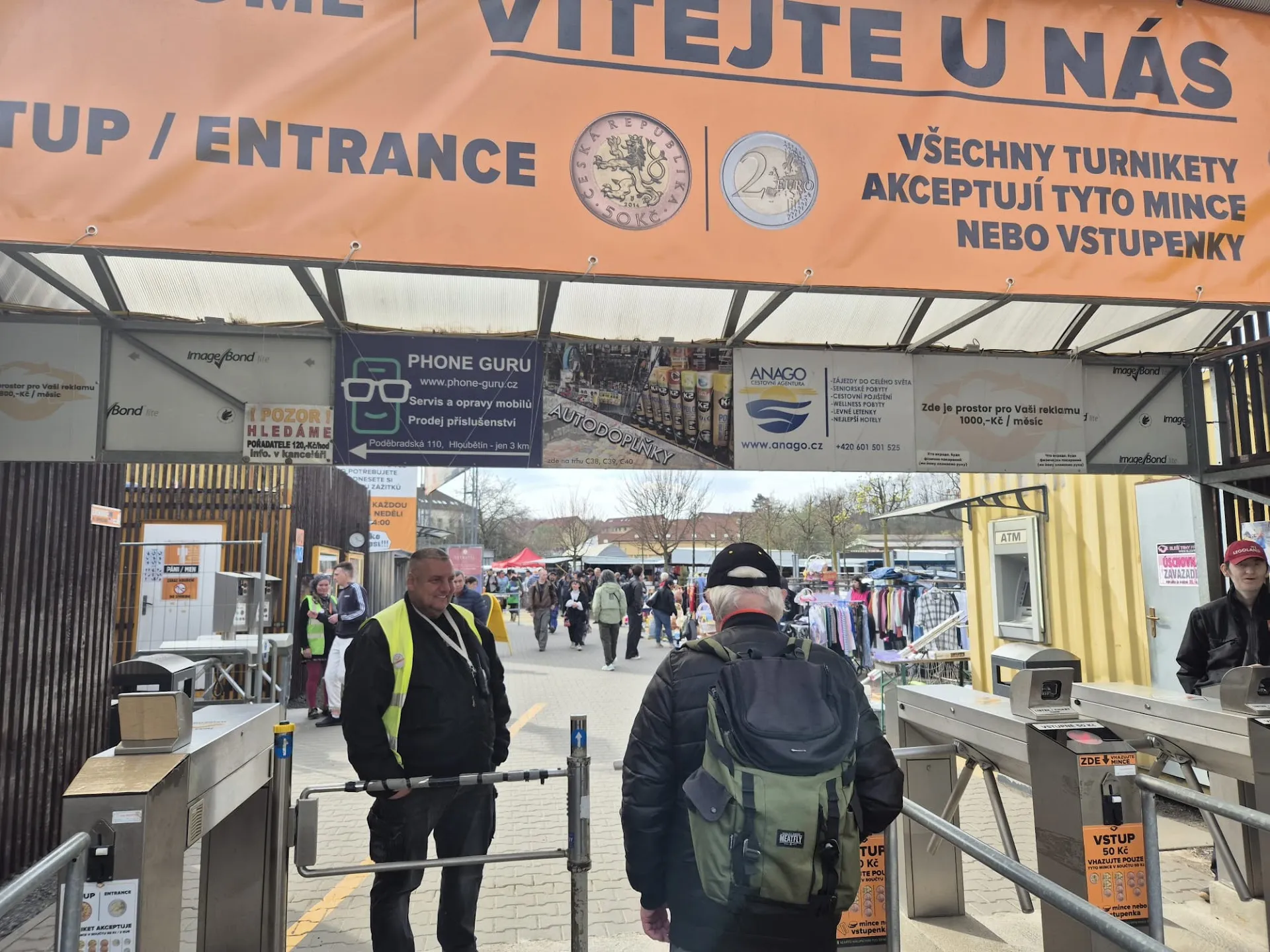
Blešı́ trhy Kolbenka (U Elektry)
Prague's biggest and longest-running weekend flea market, sprawling across roughly 50,000 m² of a former railway siding with hundreds of stalls selling second-hand clothes, tools, furniture, vinyl, Soviet-era bric-a-brac, coins and antiques. Still commonly called 'Kolbenka' after its former Kolbenova address.
Vysočany, Praha 9
Concept & design stores in Prague
Curated multi-brand lifestyle, fashion and design shops worth the detour.
Curated vintage-fashion concept store near náměstí Jiřího z Poděbrad selling vintage originals, second-hand designer pieces and archival solitaires by foreign designers, plus original jewelry and personal-shopping services.
Vinohrady, Praha 3
Concept Store5.0
Modernista Showroom Vinohrady
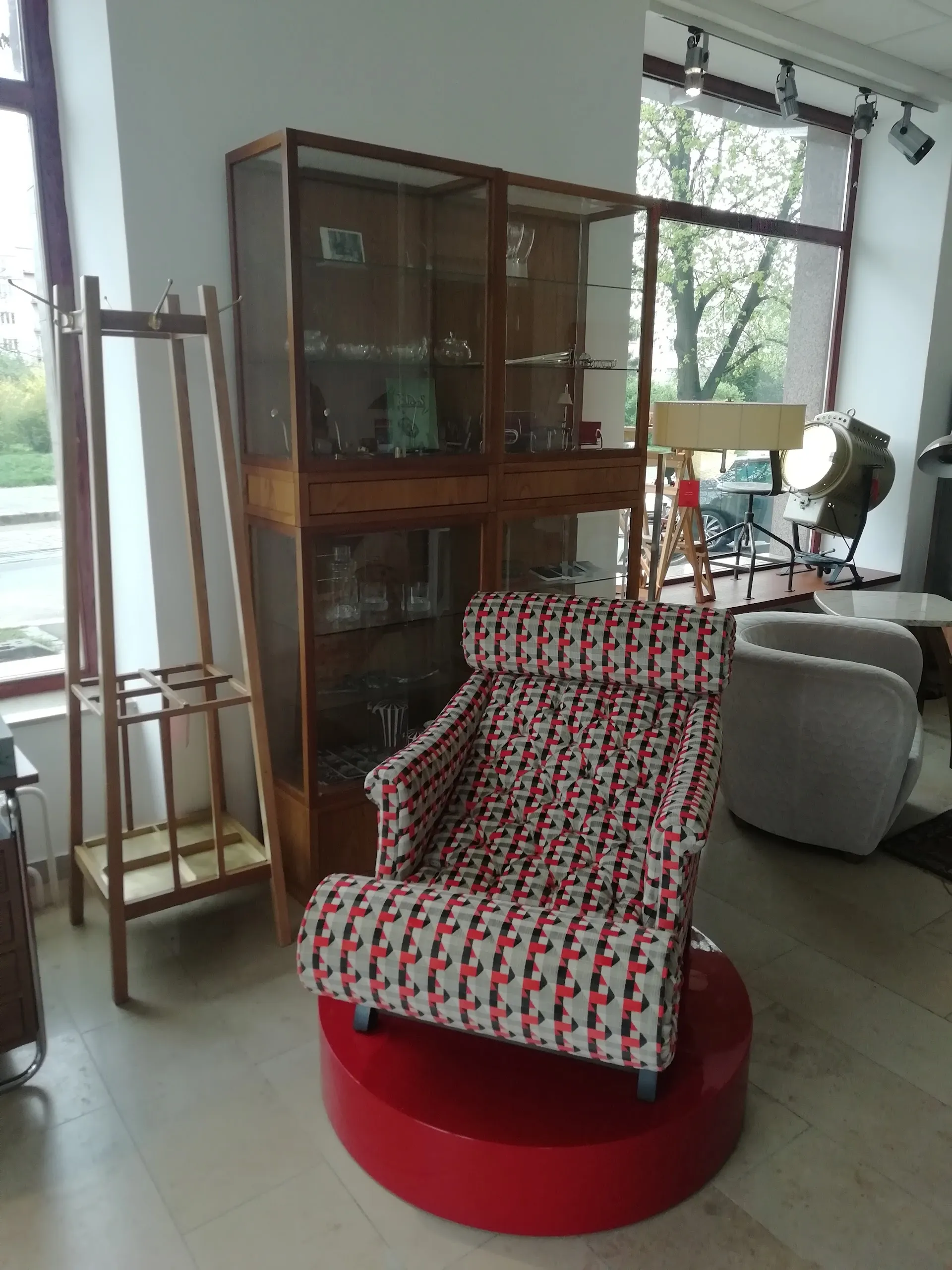
Design showroom presenting the best of Czech design from the past 100 years — furniture, lighting and accessories including reproductions of Jindřich Halabala and Adolf Loos works plus restored vintage originals.
Vinohrady, Praha 3
Concept Store5.0
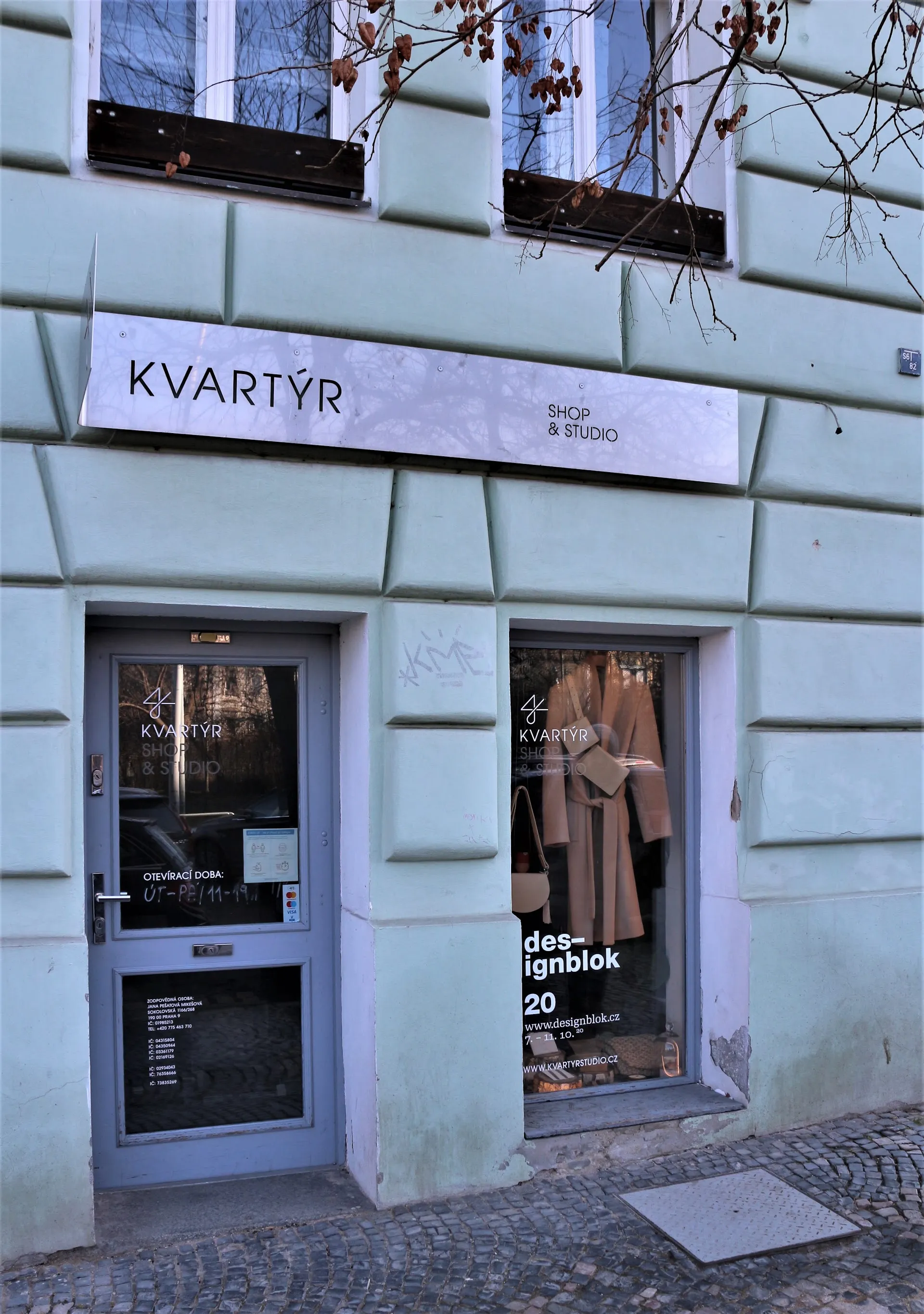
Kvartýr shop & studio
Shared shop-and-studio space showcasing contemporary Czech design — fashion, shoes, jewelry, interior accessories and a flower studio from independent local brands.
Vinohrady, Praha 3
Concept Store4.0
Vnitroblock
The flagship creative complex of Holešovice in a former factory, housing a designer showroom, sneaker shop, record store, independent Central-European fashion and design brands, a mini-cinema, and rotating events and design markets.
Holešovice, Praha 7
Concept Store4.0
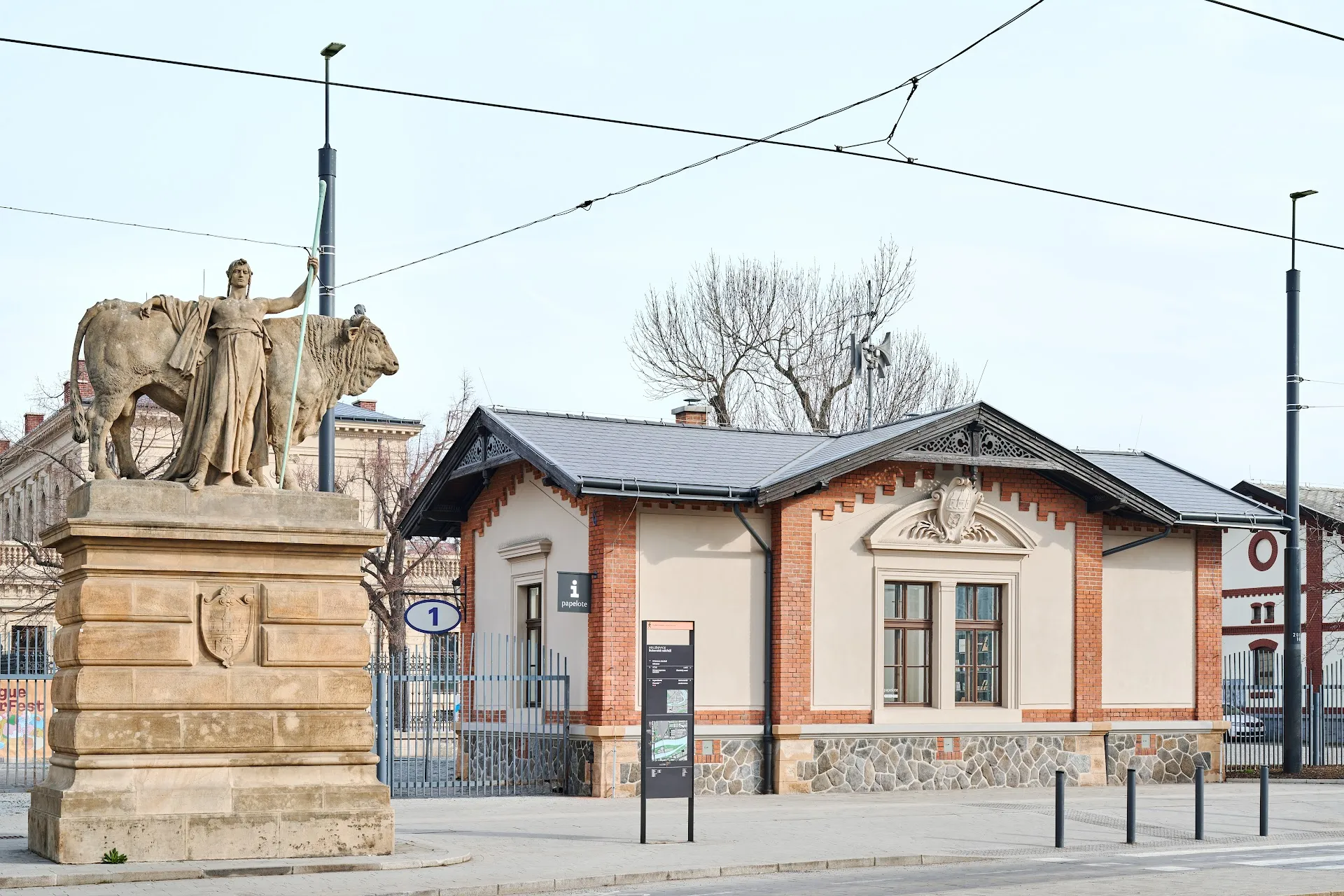
papelote
An original Czech design-stationery brand founded 2009, in a former gatehouse building on the riverfront near DOX/Bubny, selling locally made eco-friendly notebooks, diaries, photo albums, letter sets and wrapping paper.
Holešovice, Praha 7
Concept Store3.0
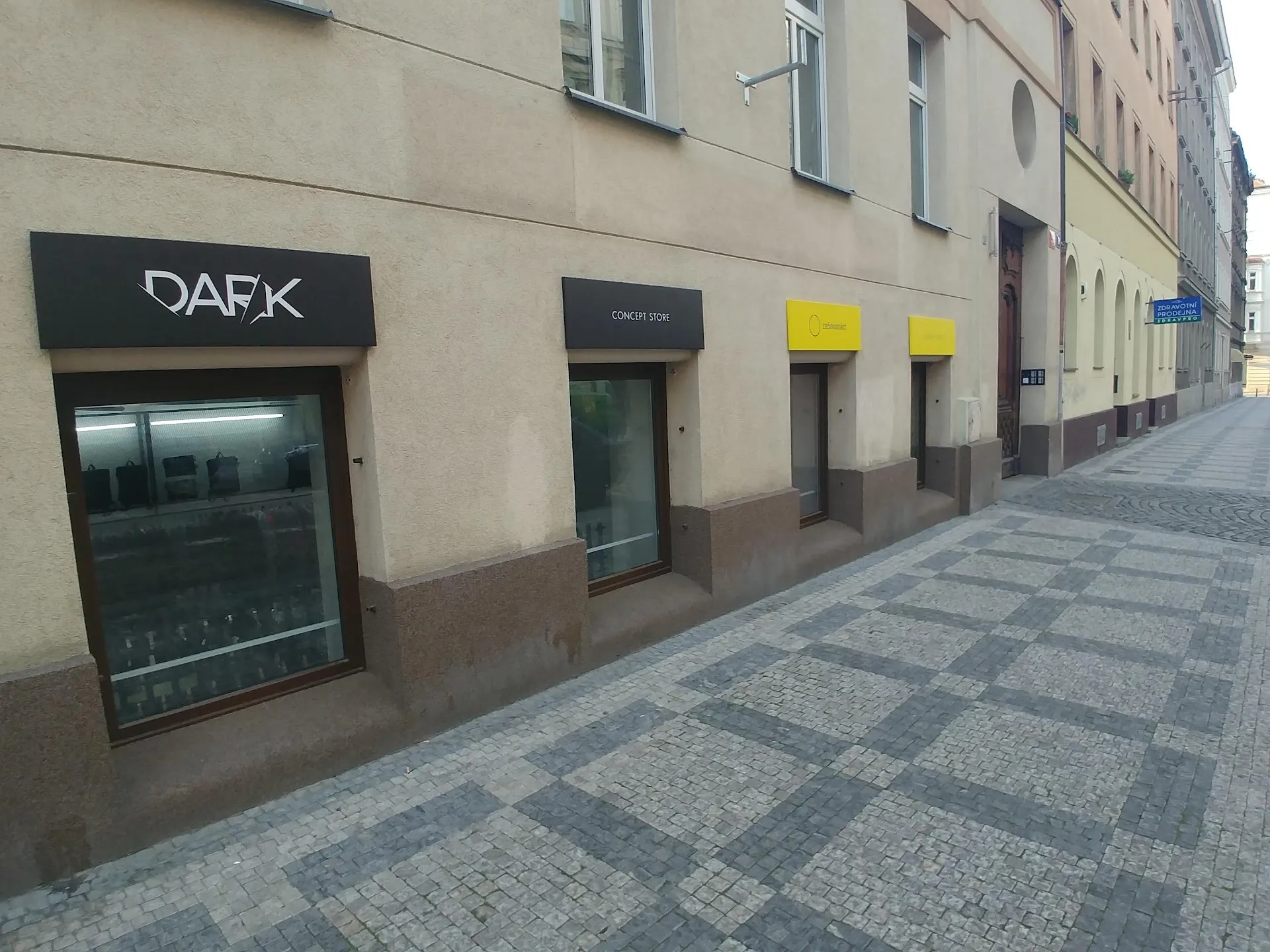
DARK / Concept Store
A multi-brand concept shop focused on Czech and Slovak streetwear and independent design labels. Physical store temporarily closed for reconstruction July–September 2026, reopening 19 Sept 2026; business and e-shop remain active.
Holešovice, Praha 7
Concept Store5.0
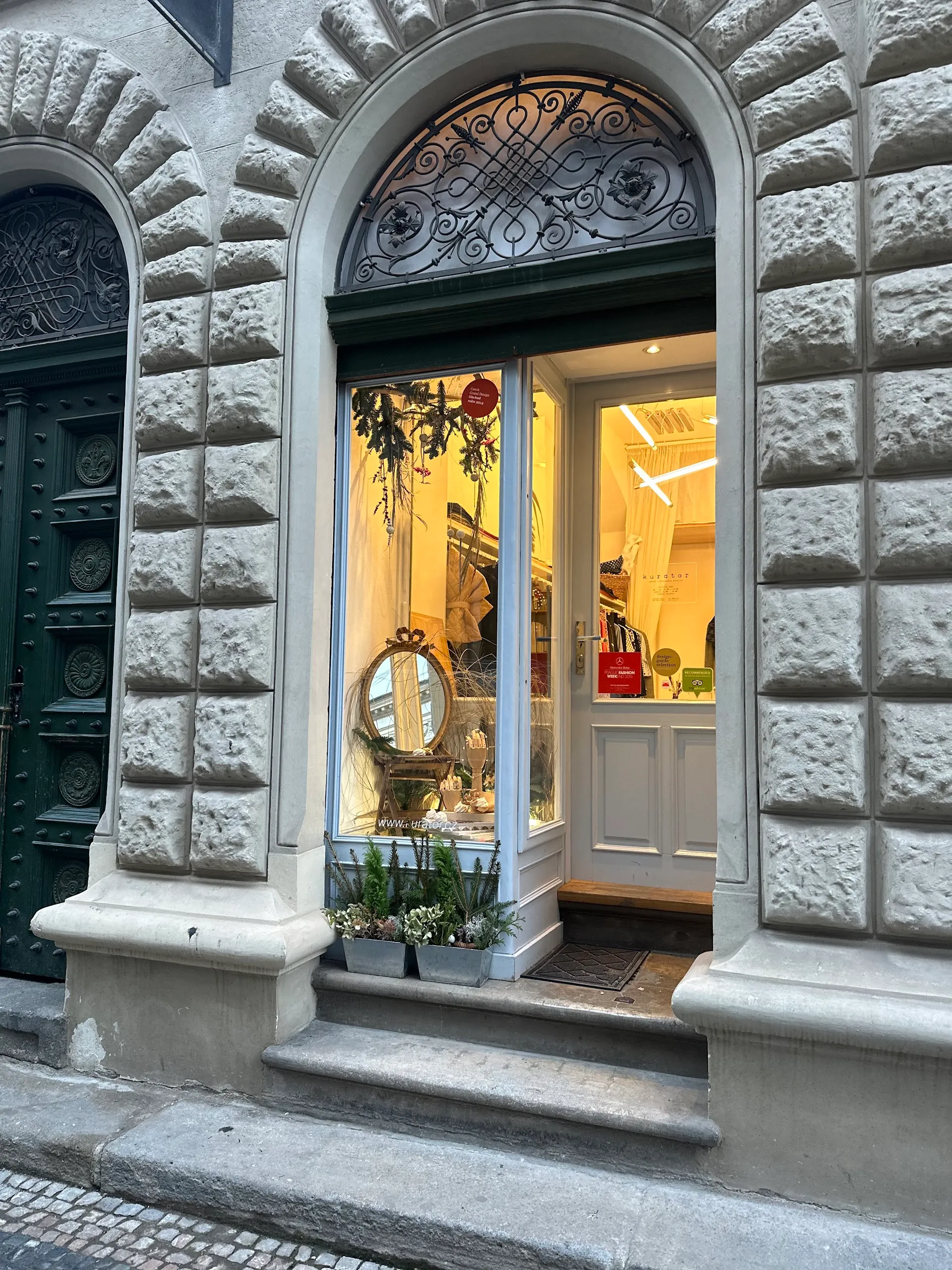
Kurator
An award-winning curated concept store and gallery near the National Theatre (Czech Grand Design "Best Shop" winner). It works as a rotating, themed exhibition-shop showcasing fashion, jewellery, accessories and stationery by young and interesting designers, predominantly Czech, with knowledgeable, personal service.
Staré Město, Praha 1
Concept Store5.0
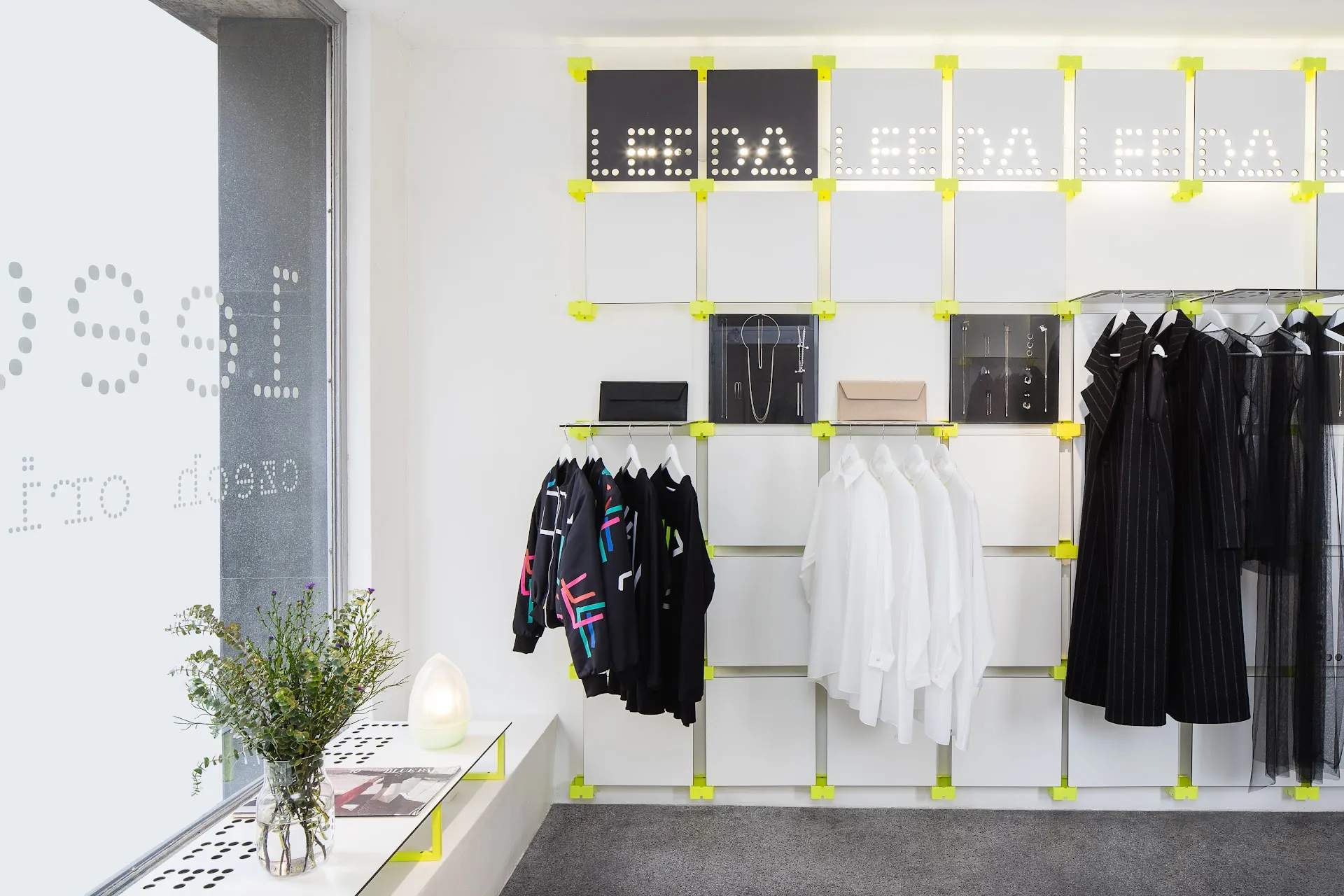
LEEDA
The flagship store of the independent Czech fashion label LEEDA by designer Lucie Kutálková, tucked away on Bartolomějská near the National Theatre. It offers limited, themed womenswear collections plus accessories and jewellery, all made in the Czech Republic with a focus on original prints, precise tailoring and sustainability; bespoke and dress-rental options are also available.
Staré Město, Praha 1
Concept Store5.0
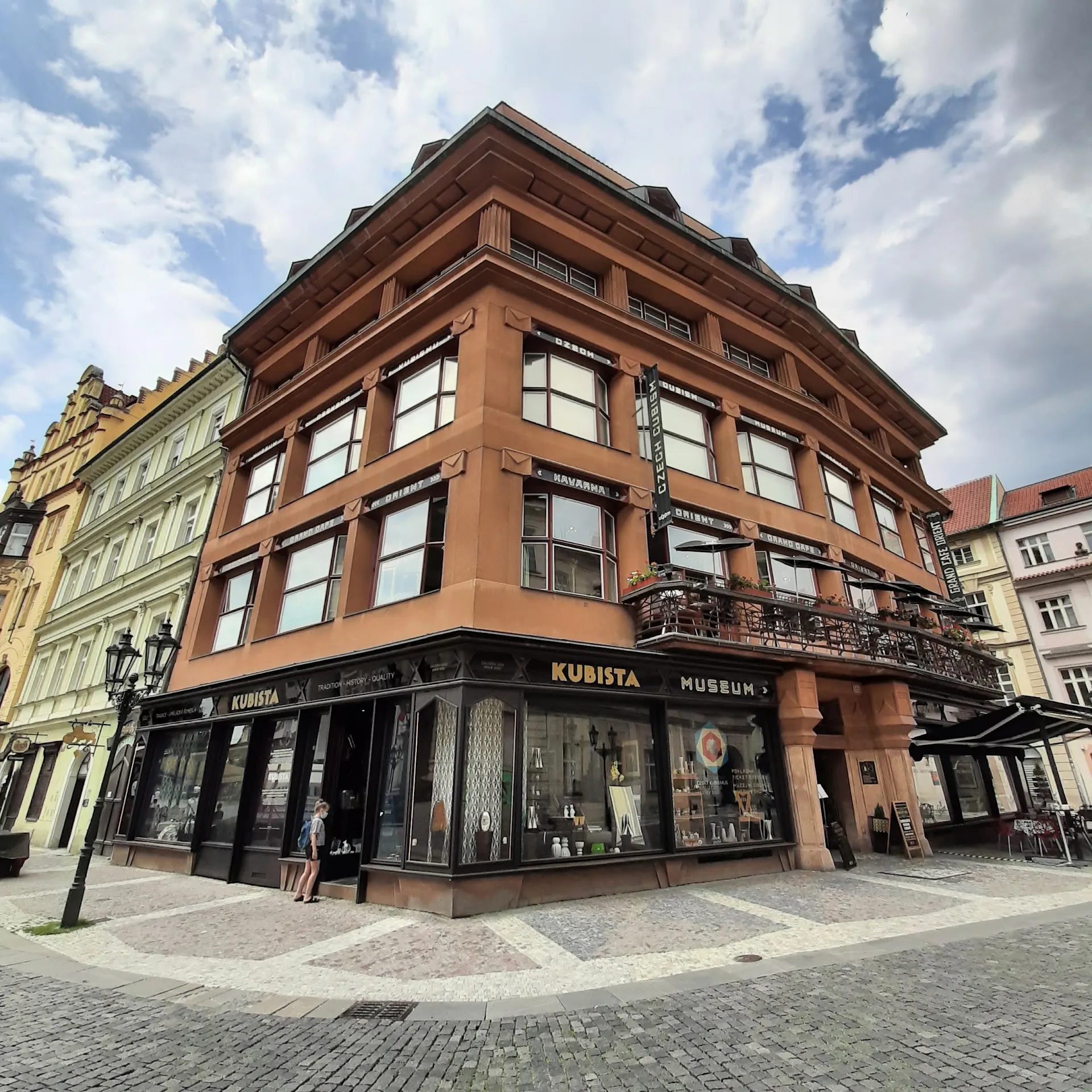
Kubista
A design shop on the ground floor of the cubist House at the Black Madonna specialising in original and replica Czech Cubist and Art Deco design — furniture, ceramics, porcelain, glassware and jewellery. It is the reference point for Czech cubist applied art in the city centre.
Staré Město, Praha 1
Concept Store5.0
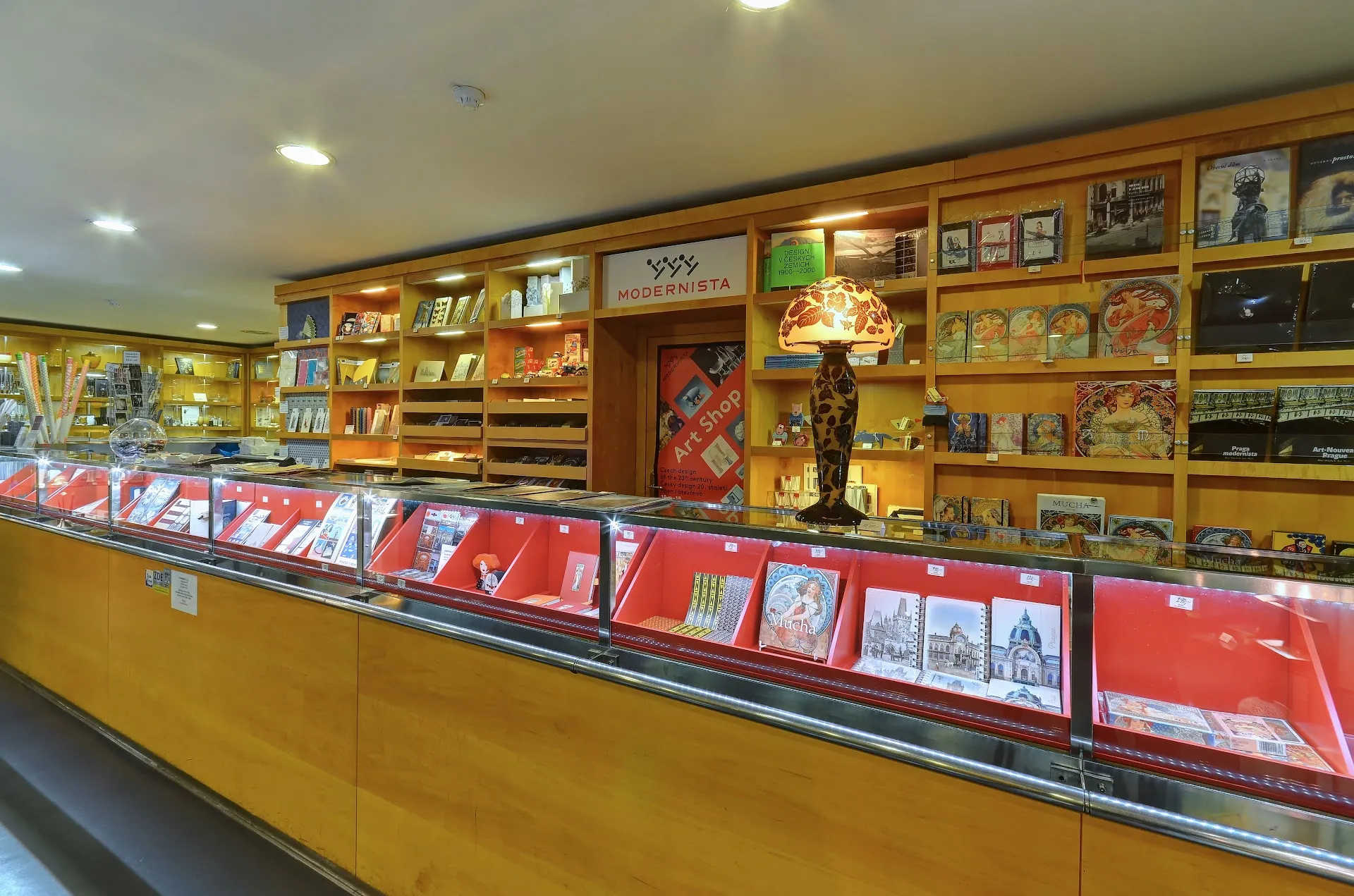
Modernista (Art Shop Obecní dům / Municipal House)
Modernista's design store inside the Art Nouveau Municipal House curates Czech design across eras — replicas of cubist pottery and applied art, functionalist pieces, plus porcelain, glass and jewellery by contemporary Czech designers.
Staré Město, Praha 1
Concept Store5.0
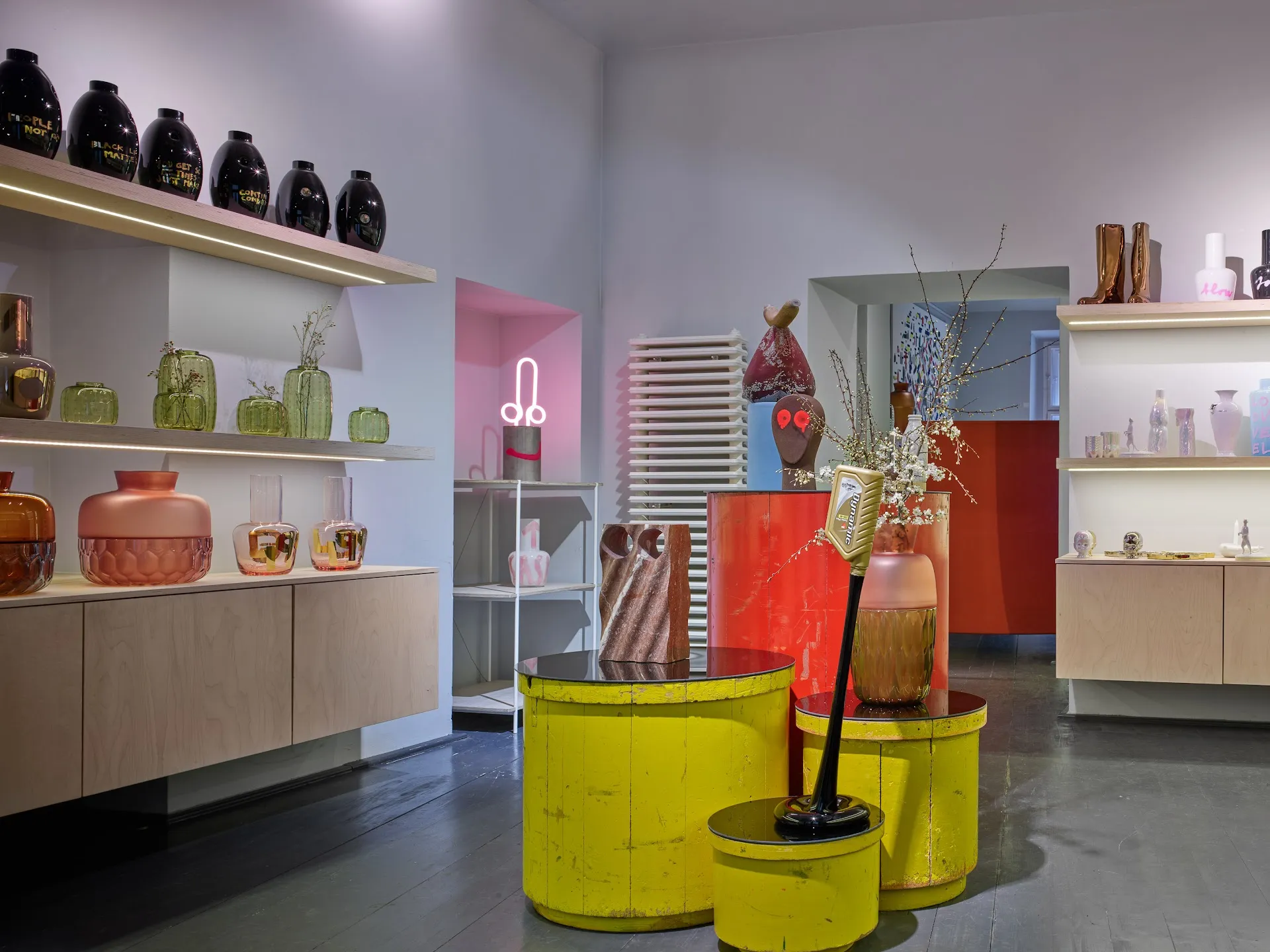
Qubus & Křehký
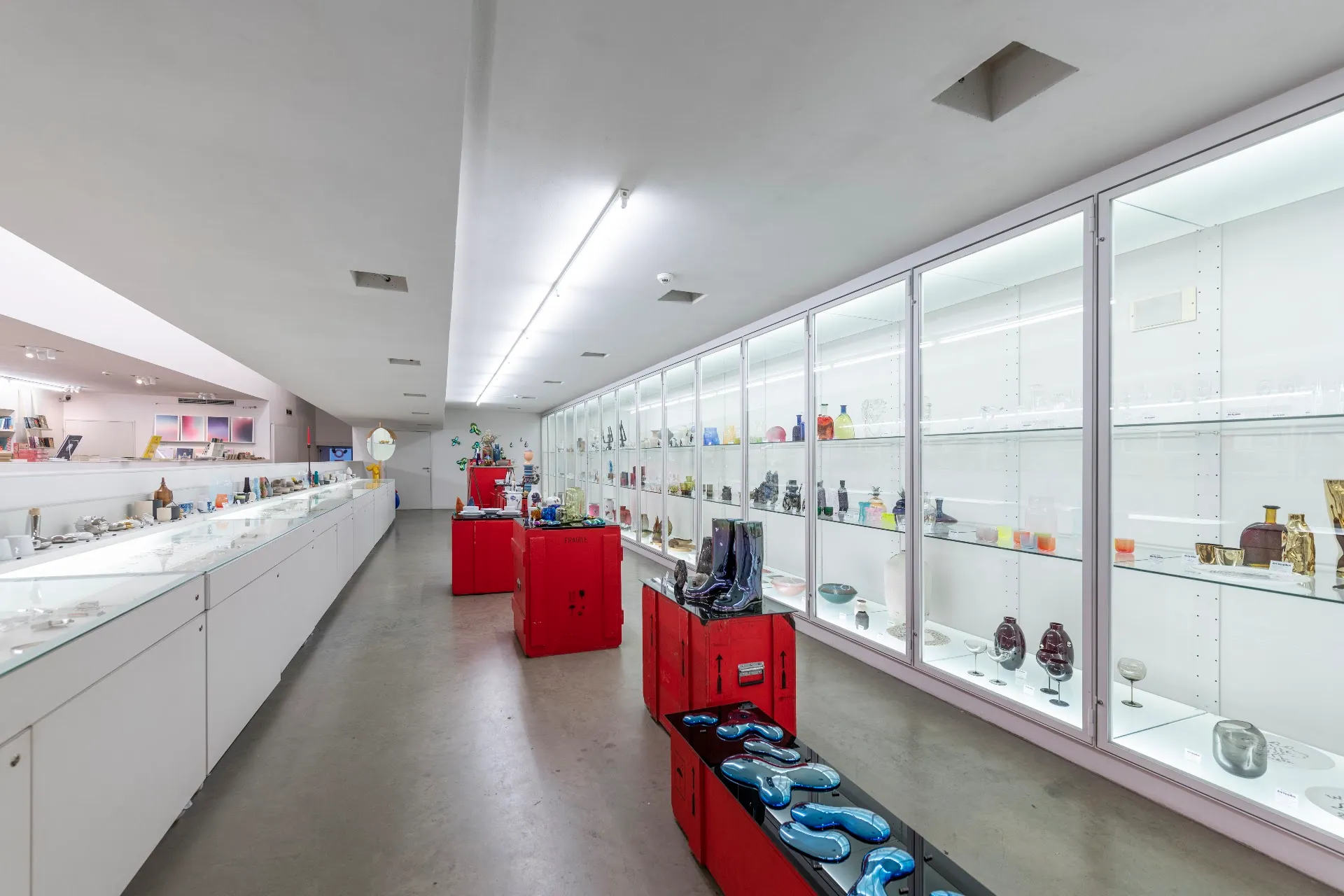
Founded in 2002 and often called the first design shop in the Czech Republic, Qubus is a design studio and store showcasing bold, often witty conceptual Czech objects, glass and homeware — sharing the space with the Křehký design label.
Staré Město, Praha 1
Concept Store5.0
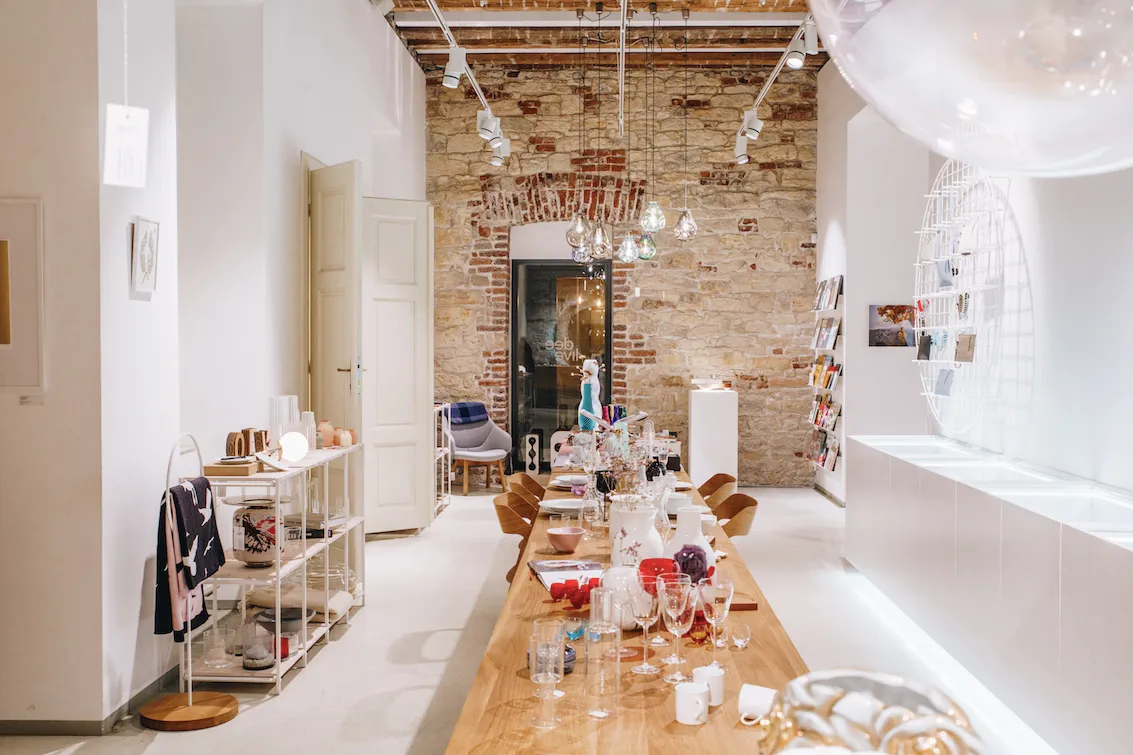
deelive design store
Billed as the largest Czech design store in Prague, deelive occupies the riverside SmetanaQ building and presents a curated selection of contemporary Czech design — glass, lighting, furniture and a dedicated fashion room from the country's best designers.
Staré Město, Praha 1
Concept Store5.0
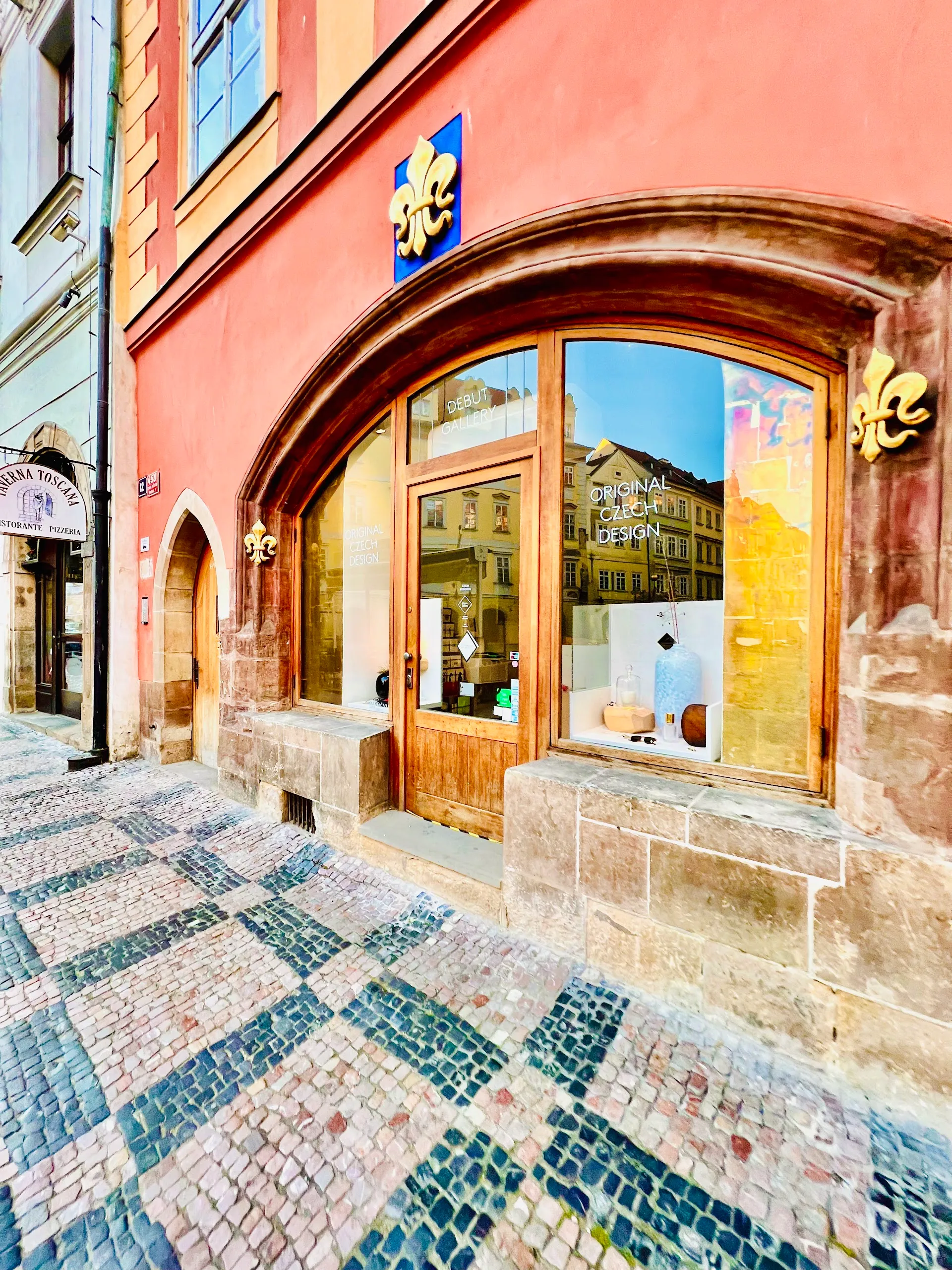
Debut Gallery
A concept boutique and gallery just off Old Town Square showcasing contemporary design by young and established Czech artists — jewellery, designer clothing and accessories, glass and decorative objets d'art.
Staré Město, Praha 1
Concept Store5.0
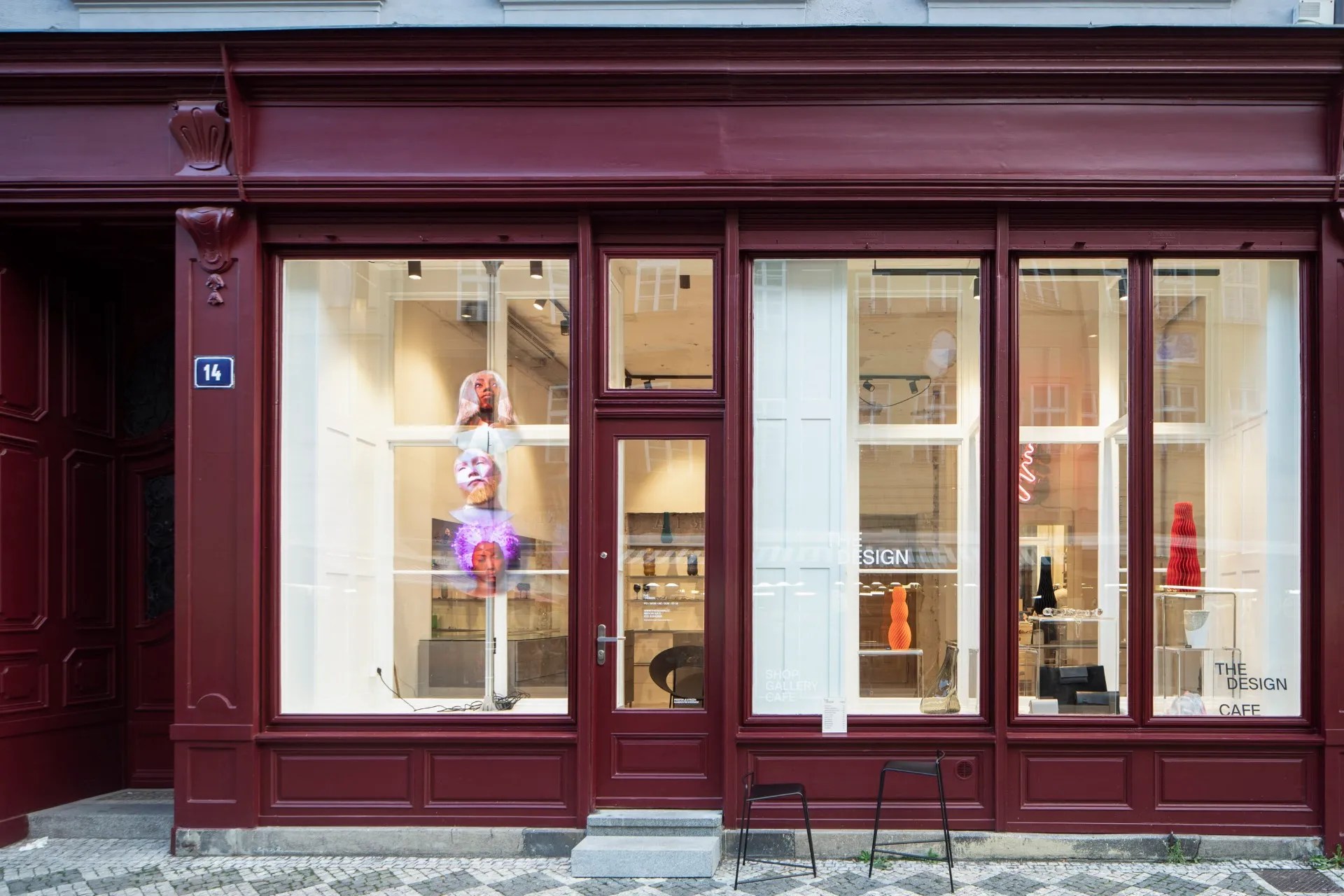
THE DESIGN
A concept store and contemporary art gallery set in a 120 m² former pharmacy in the historic centre, pairing a curated selection of design glass, ceramics, jewellery and collectibles by Czech and international designers with a café and garden.
Staré Město, Praha 1
Concept Store5.0
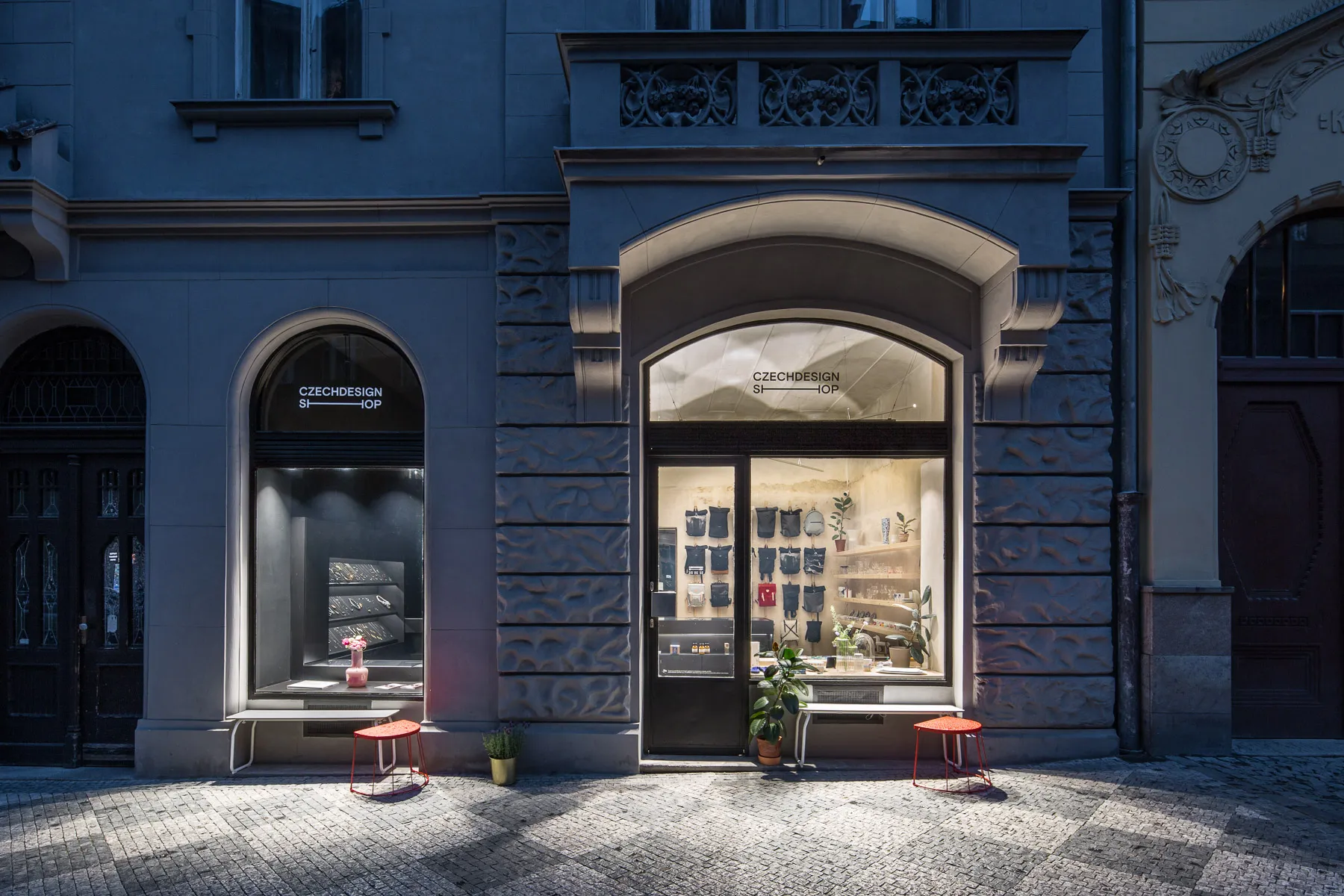
CZECHDESIGN Shop
The bricks-and-mortar shop of the CZECHDESIGN organisation, curating products from Czech designers — from established names like Rony Plesl and Maxim Velčovský to young talents — spanning jewellery, glass and porcelain, books, backpacks and natural cosmetics.
Nové Město, Praha 1
Concept Store3.0
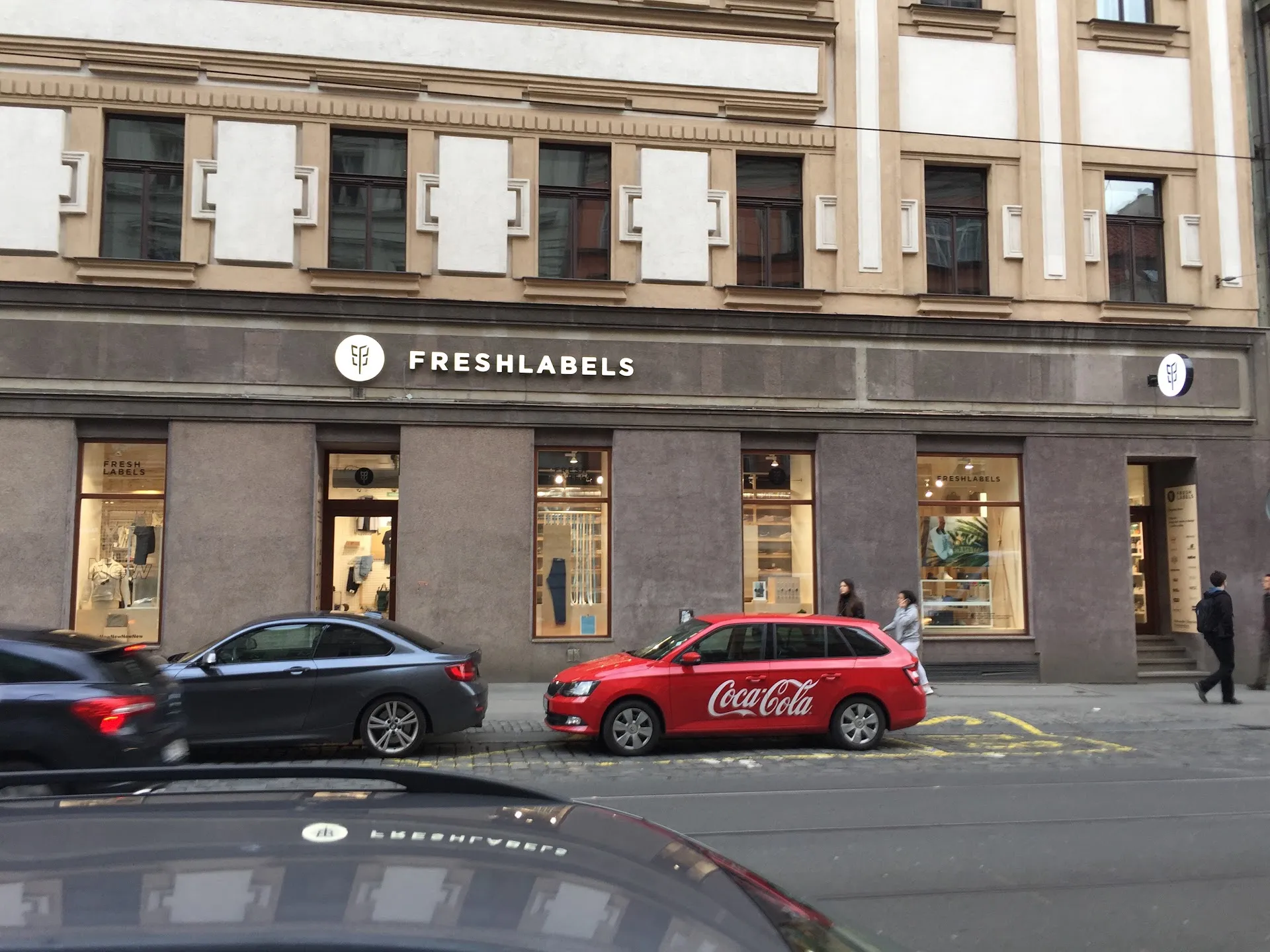
Freshlabels Flagship Store
The flagship of the Czech streetwear retailer Freshlabels, designed with deFORM studio, blending an urban-fashion concept space with Czech and international clothing, sneakers, accessories and design objects.
Nové Město, Praha 1
Concept Store5.0
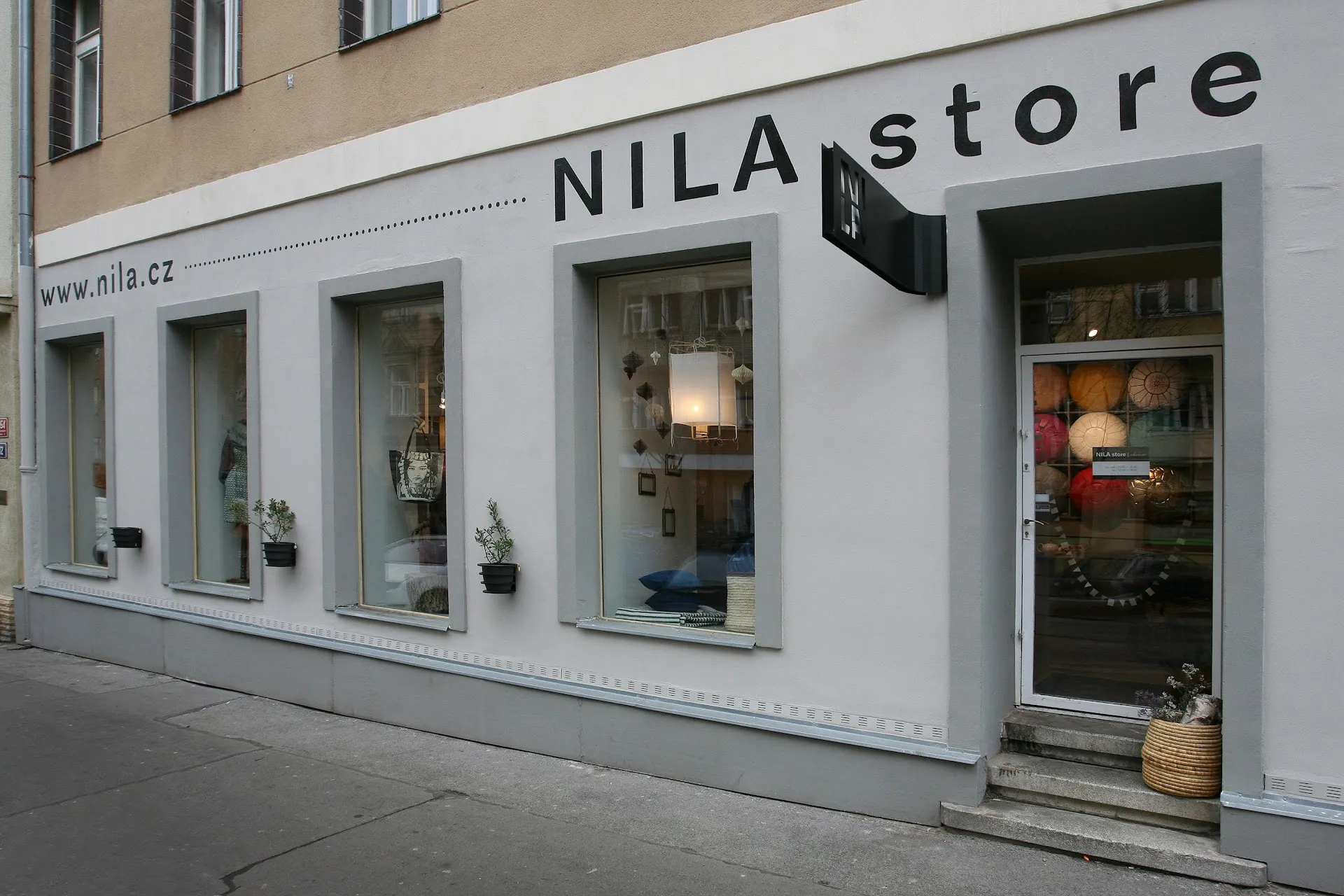
NILA store Vinohrady
Sustainable concept store curating 120+ Czech and international slow-fashion, jewellery, home-decor and organic-cosmetics brands under vegan and Fairtrade principles. Founded by Eva and Pavel Urban, it is the Vinohrady flagship of the NILA mini-chain (also in Karlín and Letná).
Vinohrady, Praha 3
Concept Store5.0
DOX by Qubus
Design shop on the mezzanine of the DOX Centre for Contemporary Art, an expanded branch of Qubus — the first design shop in the Czech Republic. Sells Czech glass, porcelain, jewellery and design objects; entry is always free.
Holešovice, Praha 7
Concept Store5.0
Charaktery Design Store
Letná design store, showroom and workshop presenting award-winning Czech designers across clothing, jewellery, eyewear, handbags, ceramics and cosmetics. Doubles as a meeting place and maker space for the local design community.
Letná (Holešovice), Praha 7
Concept Store5.0
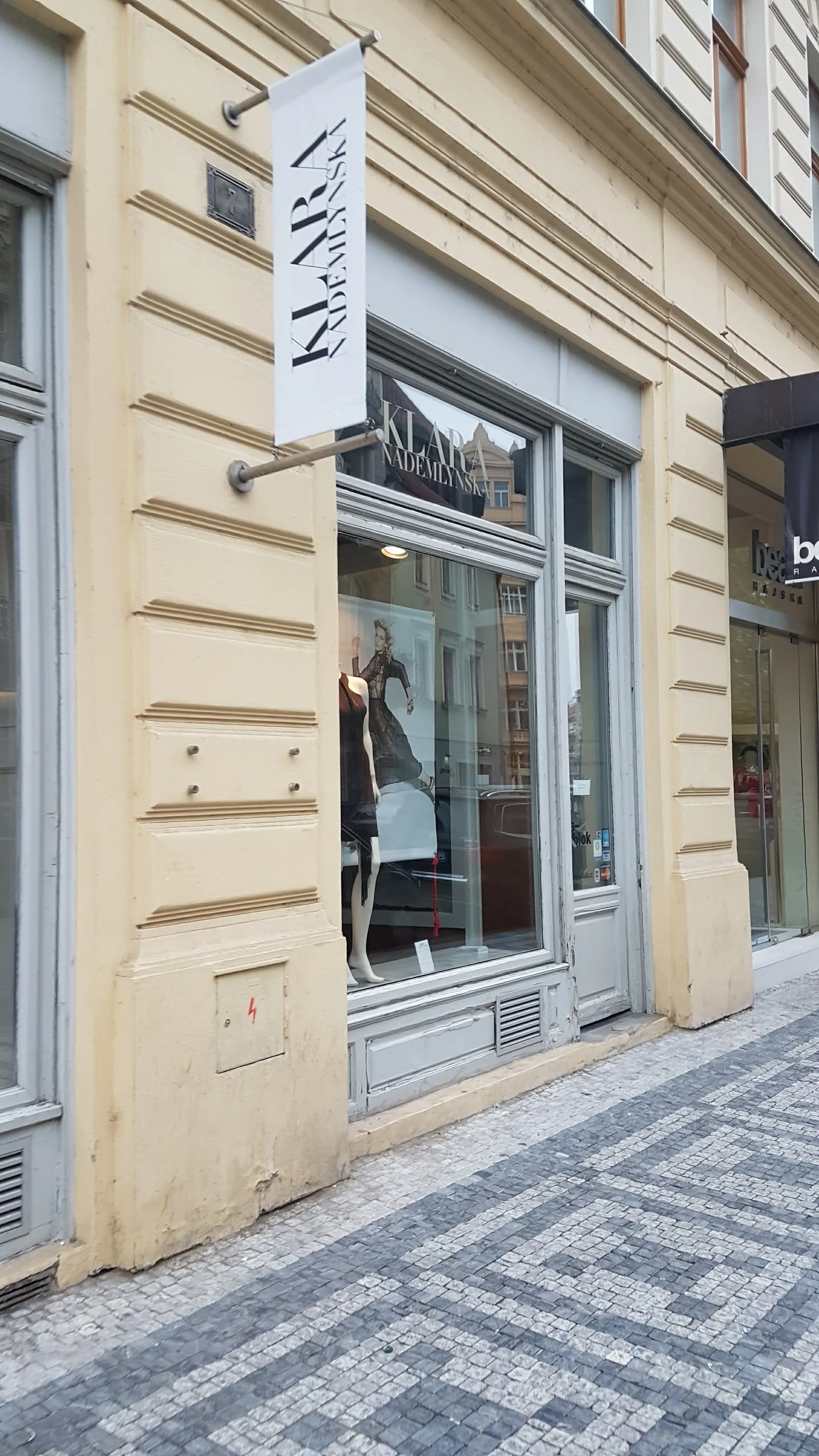
Boutique Klára Nademlýnská
Boutique of one of the Czech Republic's best-known independent fashion designers, offering luxury women's prêt-à-porter with an emphasis on quality materials, creative cuts and hand-sewn detailing. A long-running fixture of the Dlouhá fashion street.
Staré Město, Praha 1
Concept Store4.0
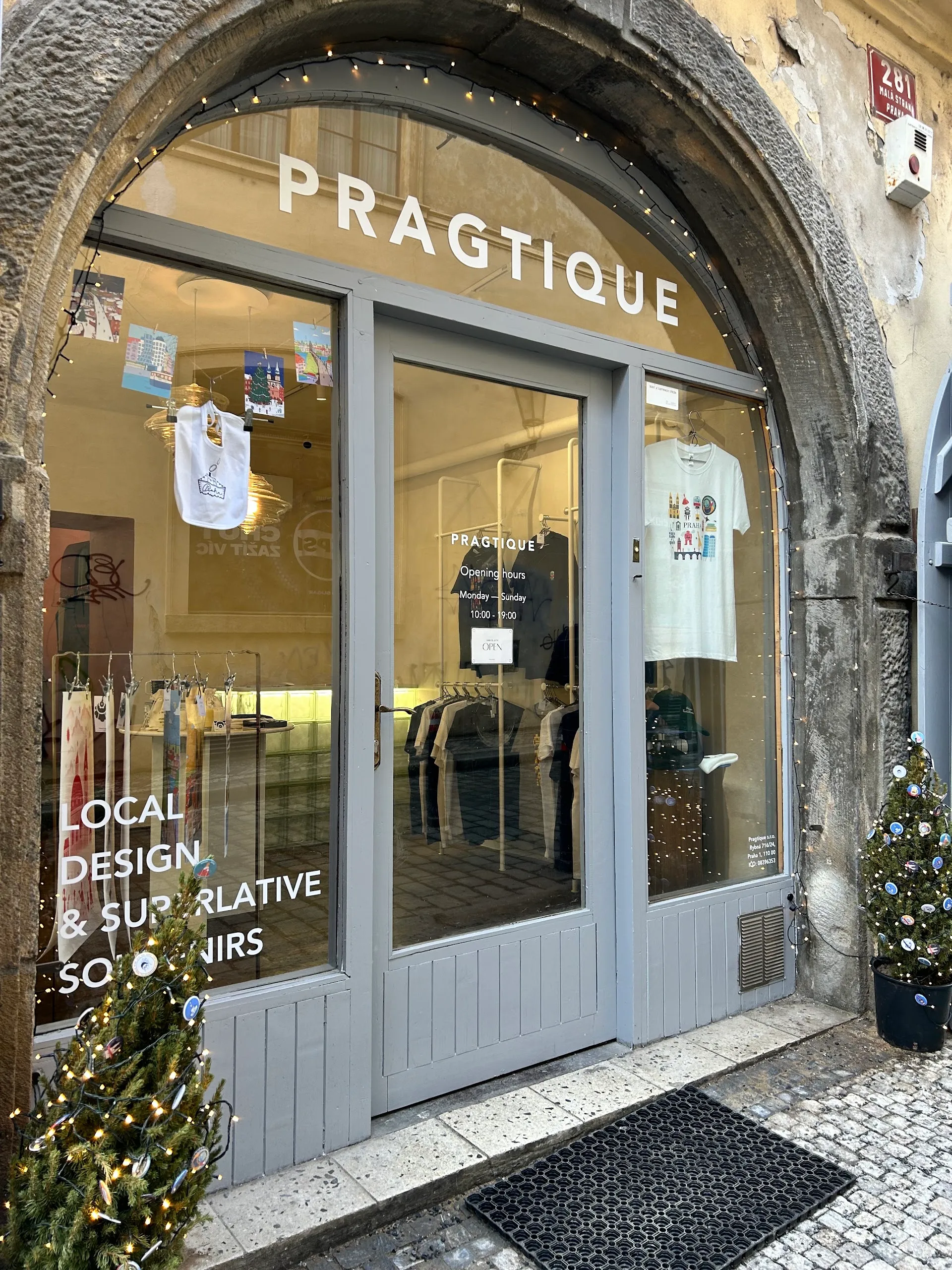
Pragtique
Small design-led concept store hidden in the Platýz passage off Národní třída, selling Prague-themed souvenirs, stationery, prints and porcelain designed exclusively by young Czech illustrators and artists. Nominated for the Czech Grand Design Award 2016.
Nové Město, Praha 1
Cafés worth the walk in Prague
Specialty coffee and neighborhood cafés worth crossing town for.
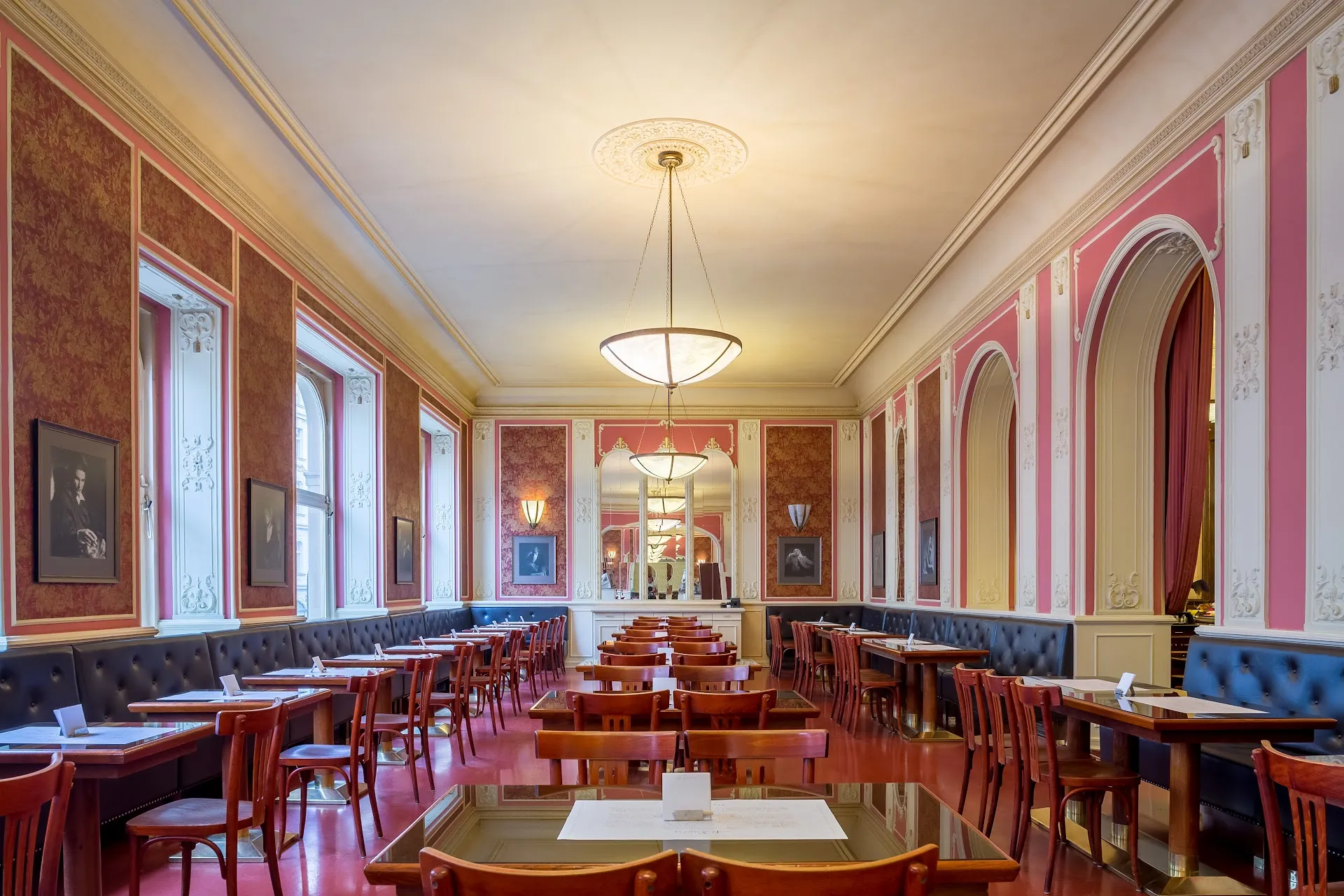
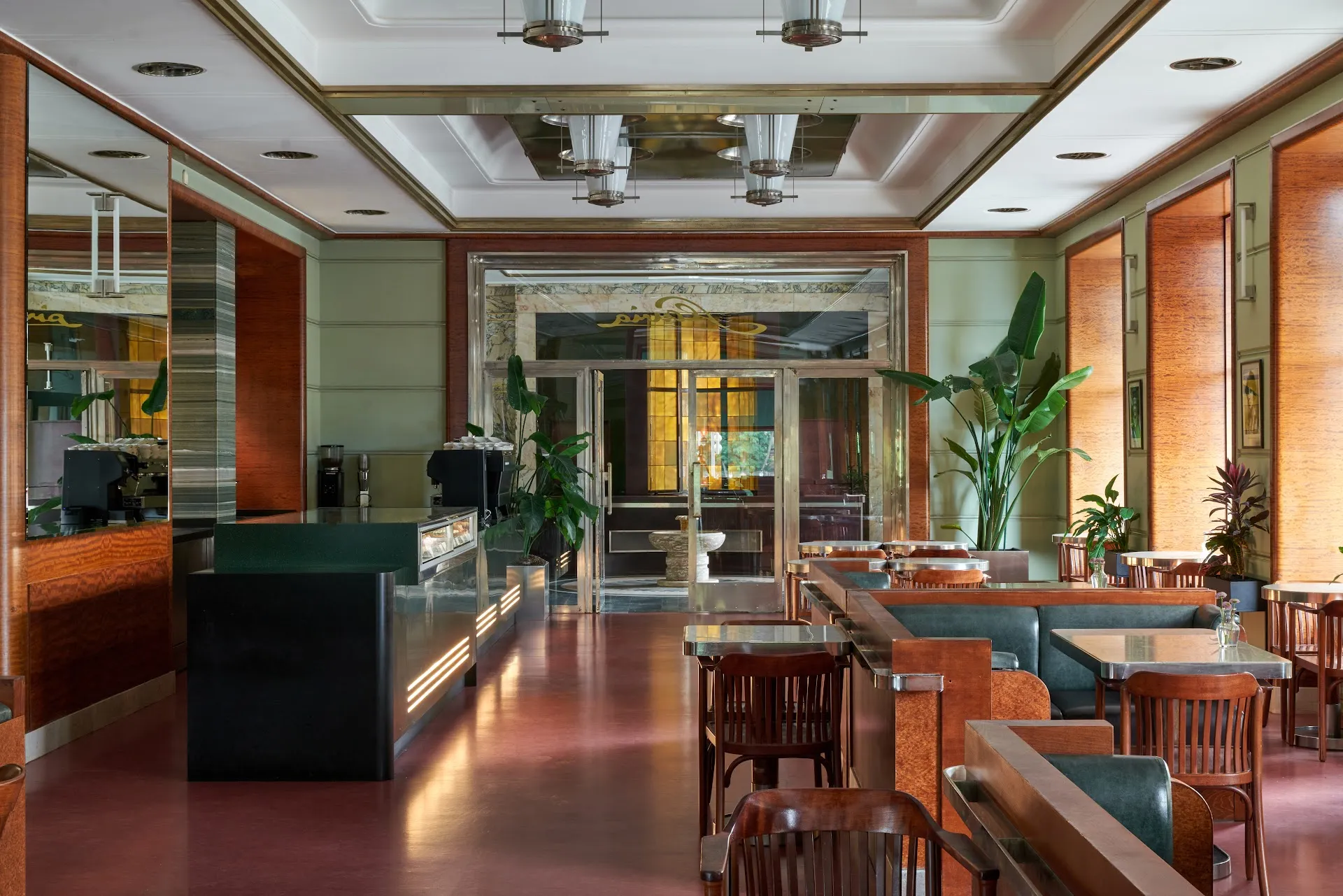
A grand Parisian-style café and billiard hall open since 1902, once frequented by Albert Einstein, Franz Kafka and Karel Capek. Its rosy-pink salons fill with a mix of locals and visitors from early morning, and the upstairs hall still keeps historic pool tables in play.
Nové Město (New Town), Prague 1
Cafe4.0
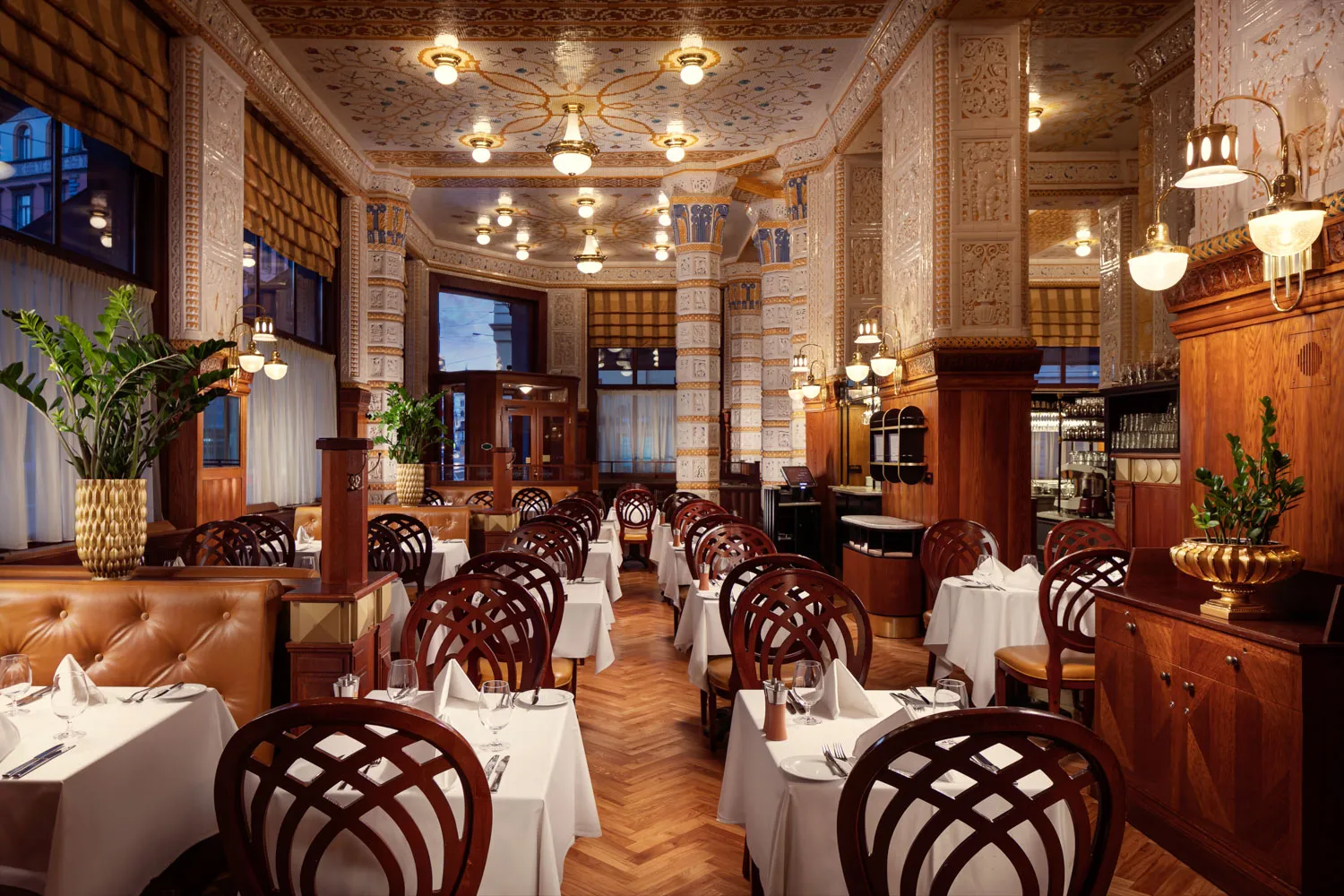
Café Imperial
An opulent 1914 café whose walls and ceiling are sheathed in original hand-decorated ceramic tiles blending Art Nouveau and Art Deco. Now overseen by celebrity chef Zdenek Pohlreich, it pairs the landmark interior with modern Czech cooking and earns a regular nod in the Michelin Guide.
Nové Město (New Town), Prague 1
Cafe4.0
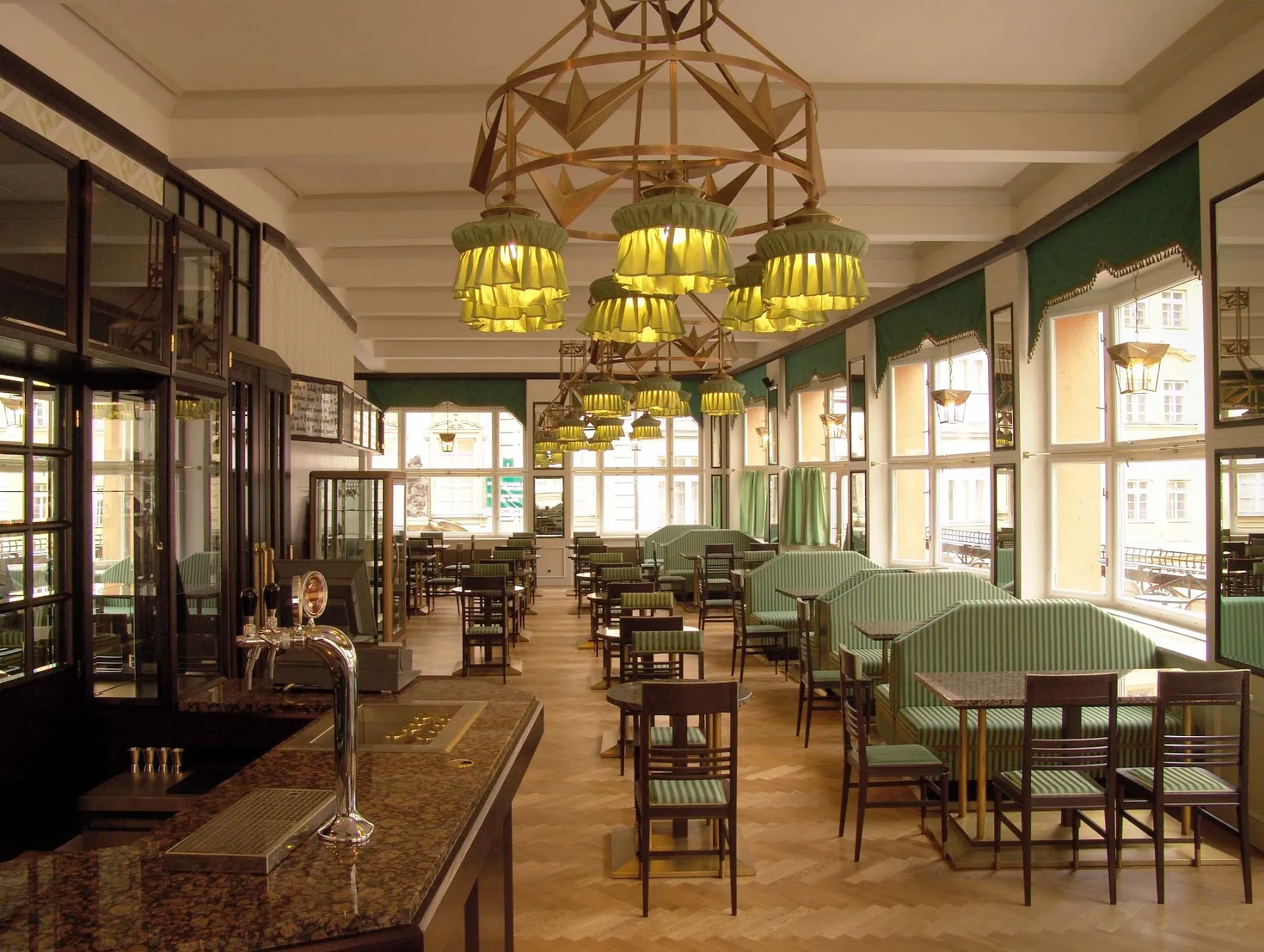
Grand Café Orient
Tucked on the first floor of Josef Gocar's House of the Black Madonna, this is the world's only fully Cubist café, where everything from the chandeliers to the coat hooks follows the angular style. Reconstructed in 2002-2003 from period photographs, it serves coffee, cocktails and Czech desserts beneath a balcony over Celetná street.
Staré Město (Old Town), Prague 1
Cafe4.0
Café Slavia
Prague's most storied café, open since 1884 across from the National Theatre, with Art Deco interiors and tall windows framing the Vltava, Charles Bridge and Prague Castle. A favorite haunt of writers and dissidents from Rainer Maria Rilke to Václav Havel, it still features a live pianist most evenings.
Staré Město (Old Town), Prague 1
Cafe4.0
Můj šálek kávy
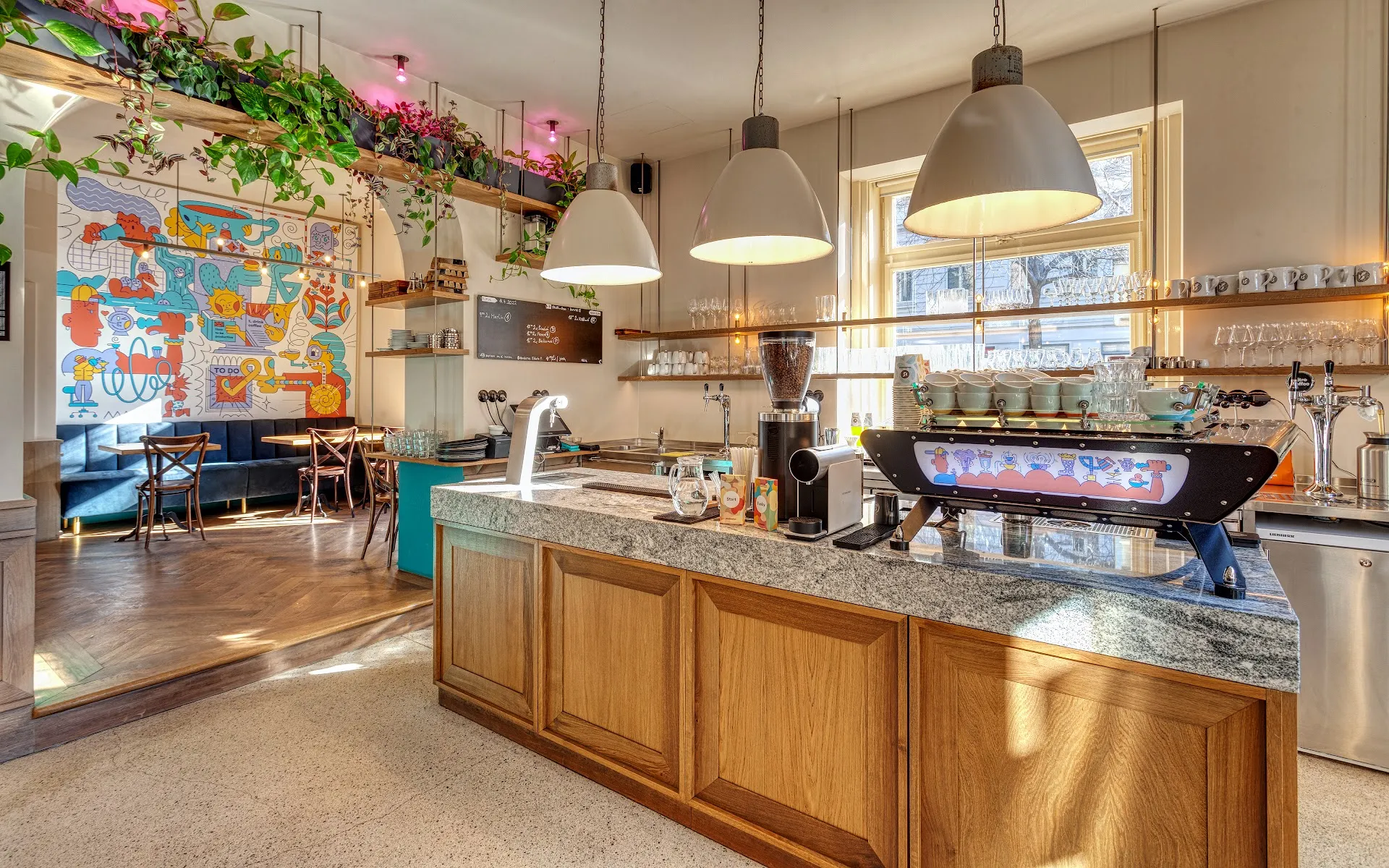
A cozy Karlín institution run by the Doubleshot roastery, pouring freshly roasted single-origin coffee alongside one of the neighborhood's best-loved brunches. The eclectic, laid-back room fills with locals on weekends for eggs, cakes and homemade ice cream.
Karlín, Prague 8
Cafe4.0
EMA Espresso Bar
A bright, minimalist espresso bar near Masaryk Station that helped define Prague's specialty-coffee wave, rotating beans from EMA's own and other European micro-roasters. Award-winning baristas back the coffee with homemade Czech buns, koláče and Linzer cookies.
Nové Město (New Town), Prague 1
Cafe4.0
Café Letka
A relaxed, shabby-chic neighborhood café off Letná square in Prague 7, serving specialty coffee from its sibling roaster Letec plus all-day brunch, baked goods and local craft beer. A genuine locals' hangout that shifts from morning coffee to evening drinks.
Letná (Holešovice), Prague 7
Walking routes in Prague
Ready-made routes, ordered stop by stop with a map — open in Google Maps or add the whole thing to a trip in one tap.
Daily budgets and typical prices to plan your spend.
Backpacker
CZK 1,200/ day
Mid-range
CZK 2,800/ day
Luxury
CZK 6,500/ day
Cheap meal
CZK 200
Restaurant meal
CZK 450
Coffee
CZK 75
Local beer
CZK 55
Transit ticket
CZK 40
Taxi (1km)
CZK 36
Cost index 52 (New York = 100).
When to go
Best time to visit
Late April to June and September to October are the sweet spots, with mild weather, long light over the river, and the city's gardens at their best. May and early June bring the Prague Spring International Music Festival and the Fringe, while October stages the Signal light festival. December is magical when the Christmas markets fill Old Town Square and Wenceslas Square, though it is cold and crowded. July and August are warm and lively but the most touristed; January and February are cold, quiet, and the cheapest months for museums and beer halls.
Crowds
High
PeakMay, June, September, December (Christmas markets)
ShoulderApril, October
QuietJanuary, February, November
Major events
Easter Markets (Velikonoční trhy)March/April
Prague Spring International Music FestivalMay
Prague Fringe FestivalMay/June
Bohemia Jazz FestJuly
Signal Festival (festival of light)October
Christmas Markets (Vánoční trhy)December
Weather by month
Average temperature and rainfall, to time your visit.
0°J
2°F
5°M
10°A
14°M
18°J
20°J
20°A
15°S
10°O
5°N
1°D
Good to know
Practical info before you go.
Tipping
Expected — Service is not included; round up or add about 10% in restaurants, cafes, and taxis. Hand the tip to the server and state the total you want to pay rather than leaving coins on the table, and tip in cash even when paying the bill by card.
Tap water
Safe to drink
Power
Type C/E · 230V
Safety
High — Prague is very safe for violent crime, but it is one of Europe's most touristed cities and petty theft is the real risk. Watch your bag and phone for pickpockets on Charles Bridge, in Old Town Square, on Wenceslas Square, and on the busy metro and tram lines (especially tram 22 and the night trams). Avoid unmarked taxis and dishonest street currency-exchange booths.
United States, Canada, United Kingdom, European Union, Australia, New Zealand
Local culture
Language
Czech
English
High
Dress code
Smart Casual
Useful phrases
Dobrý den
Hello / good day (formal)
Děkuji
Thank you
Prosím
Please / you're welcome
Promiňte
Excuse me / sorry
Mluvíte anglicky?
Do you speak English?
Pivo, prosím
A beer, please
Local customs
Greet shopkeepers and waiters with 'Dobrý den' when you enter and 'Na shledanou' when you leave; the polite formality is expected
Say 'Dobrou chuť' (enjoy your meal) before eating, and toast 'Na zdraví' with direct eye contact
Beer is the default drink and is ordered by the half-litre; in a traditional pub a fresh one arrives as your glass empties unless you place the beer mat on top of the glass to signal you are done
Remove your shoes when entering a Czech home
Keep your validated transit ticket for the whole journey - plain-clothes inspectors are common and the on-the-spot fine for fare-dodging is steep
Watch out for
Unmarked or 'pirate' taxis near Old Town Square, Wenceslas Square, and the airport overcharge wildly - use the Bolt or Uber apps, or call a licensed firm, and insist on the meter
Dishonest street currency-exchange booths advertise 'no commission' or a headline rate that applies only to large sums, then pay out far less - change money at an ATM or a reputable office and always decline 'dynamic currency conversion' (pay in CZK)
Bill-padding and inflated prices at tourist-trap restaurants around Old Town Square and Charles Bridge - check the menu prices and your bill, and beware items priced per 100g (fish, some mains, even beer)
Menus without prices, or with a separate inflated tourist menu - ask for the price before ordering and avoid places touting on the street
Shell-game and three-card-monte hustlers on Charles Bridge, and fake plain-clothes 'police' asking to inspect your wallet for counterfeit notes - never hand over your cash or documents
Three days is the sweet spot to see Prague Castle, Charles Bridge, the Old Town and Astronomical Clock, the Jewish Quarter, and Vyšehrad at a comfortable pace. With four or five days you can fold in the local neighbourhoods of Vinohrady, Žižkov, and Holešovice and add the classic Kutná Hora day trip to the Bone Church.
Is Prague expensive?
No - it is one of Europe's better-value capitals, cheaper than Vienna or Paris. A half-litre of Czech beer is about CZK 50-70 in a local pub, a pub meal CZK 200-350, and most attractions CZK 200-450. The headline sights - Charles Bridge, the squares, the castle grounds and gardens, and the river panoramas - are free.
What is the best area to stay in Prague?
First-timers do best in or near Staré Město (the Old Town) or the quieter Malá Strana below the castle, both within walking distance of the headline sights. For more character and better value, base yourself in leafy Vinohrady or buzzy Žižkov, a short tram or metro ride from the centre, where the bars and restaurants are cheaper and more local.
When is the best time to visit Prague?
April to June and September to October offer mild weather, long light, and lighter crowds than midsummer. December is magical for the Christmas markets but cold and busy, while January and February are the cheapest and quietest. July and August are warm and lively but the most touristed, so book ahead and start your sightseeing early.
Is Prague safe?
Very - violent crime is rare and Prague is one of Europe's safest capitals. The real risk is petty theft: keep an eye on your bag and phone for pickpockets on Charles Bridge, in Old Town Square, on Wenceslas Square, and on the busy metro and tram lines. Avoid unmarked taxis and street currency-exchange booths, both common tourist traps.
Do I need to speak Czech in Prague?
No. English is widely spoken in the centre's hotels, restaurants, shops, and attractions, and signage is often bilingual. A few polite Czech phrases - starting with 'Dobrý den' (hello) and 'Děkuji' (thank you) - are warmly appreciated but never required.
Ready to plan Prague?
Turn this guide into a real trip — itinerary, map, budget and friends, all in one place.