Hamburg is Germany's gateway to the world: a proud, water-laced Hanseatic port that has traded with the globe for more than 800 years and still moves much of the country's cargo through one of Europe's busiest harbours. Sitting where the Elbe widens toward the North Sea, it is a city of red-brick warehouses and glassy new quarters, of canals, cranes and copper church spires, where the salt tang of the harbour meets the gentility of villa-lined lakes. Hamburgers like to point out that their city has more bridges than Venice, Amsterdam and London combined — and the boast, improbably, holds up.
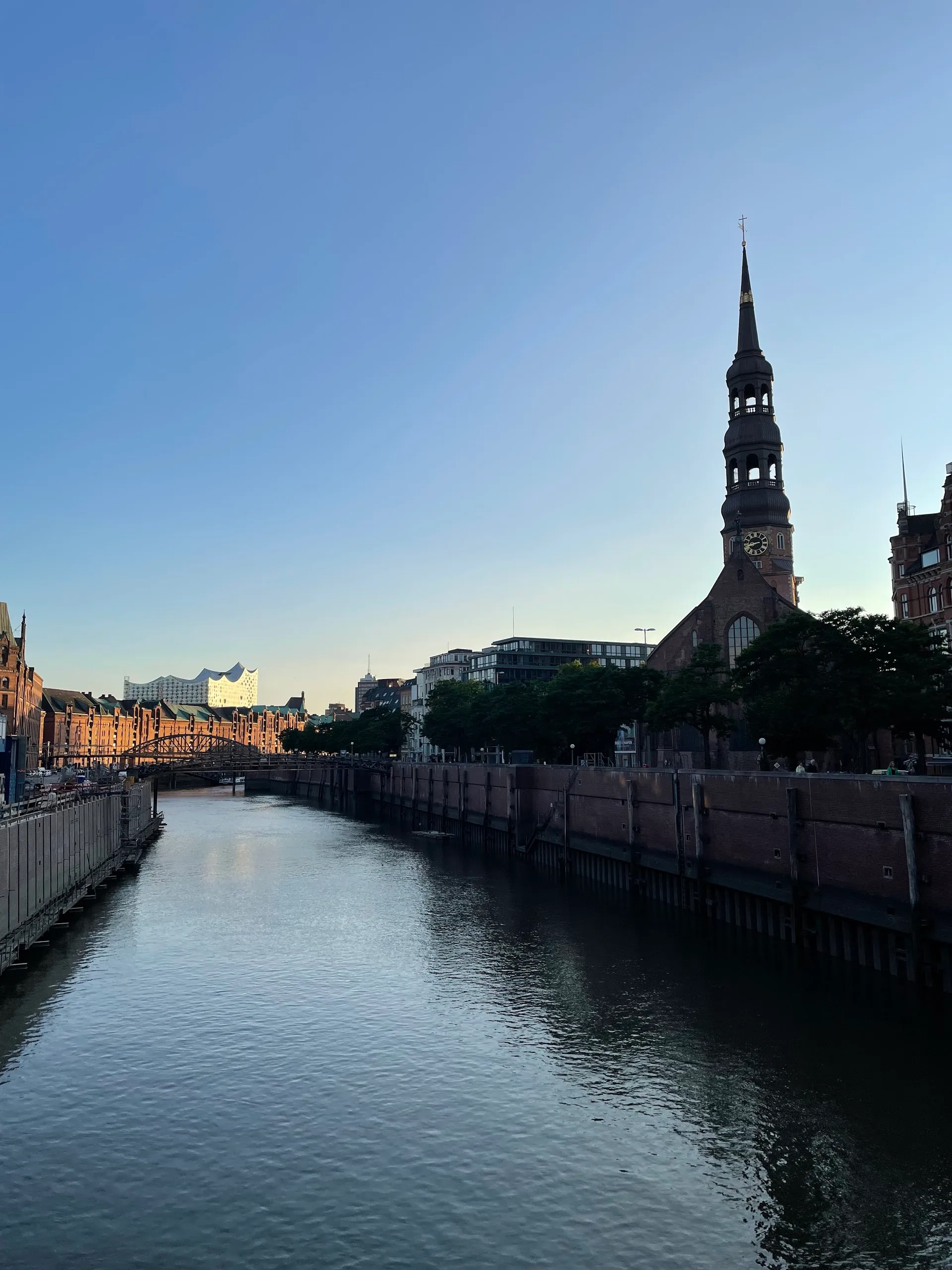
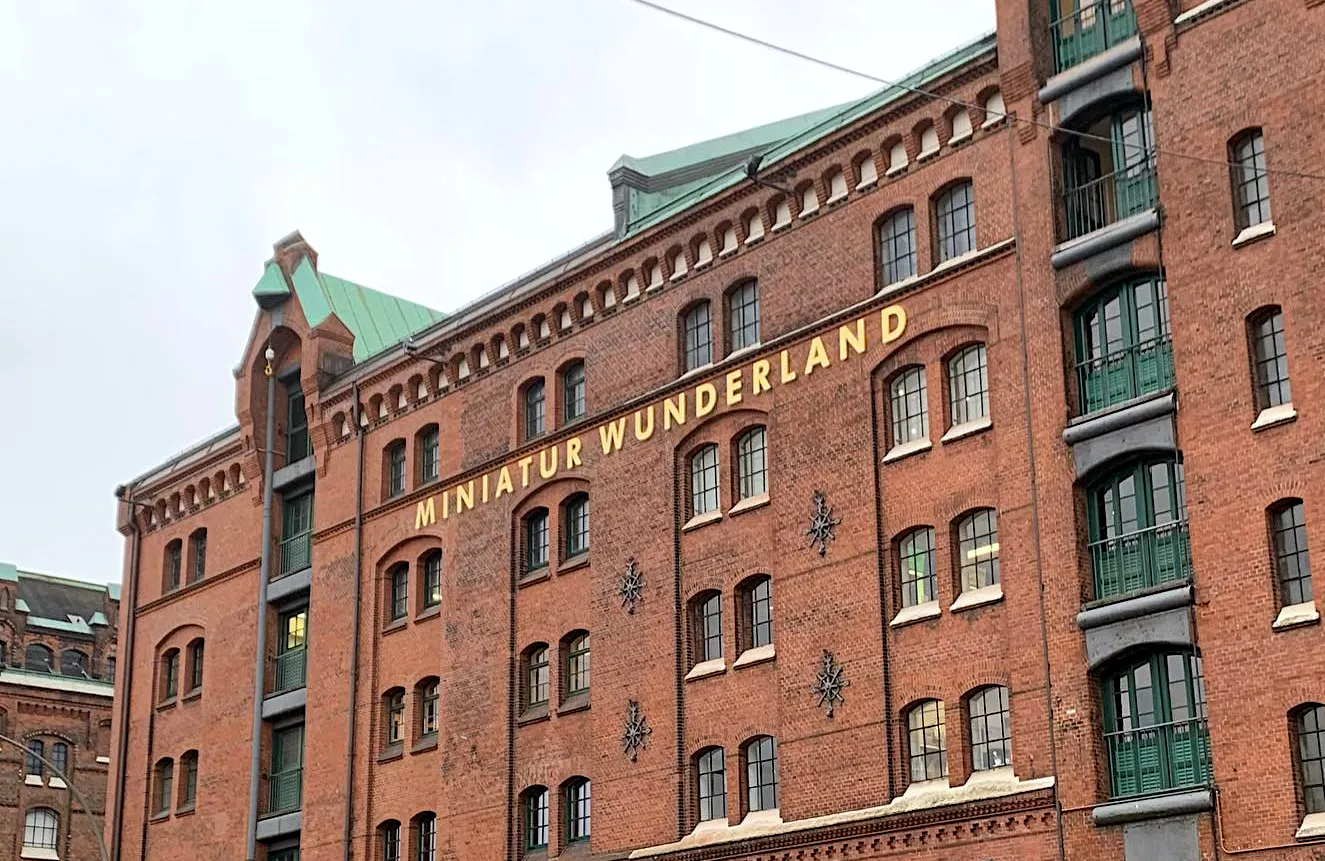
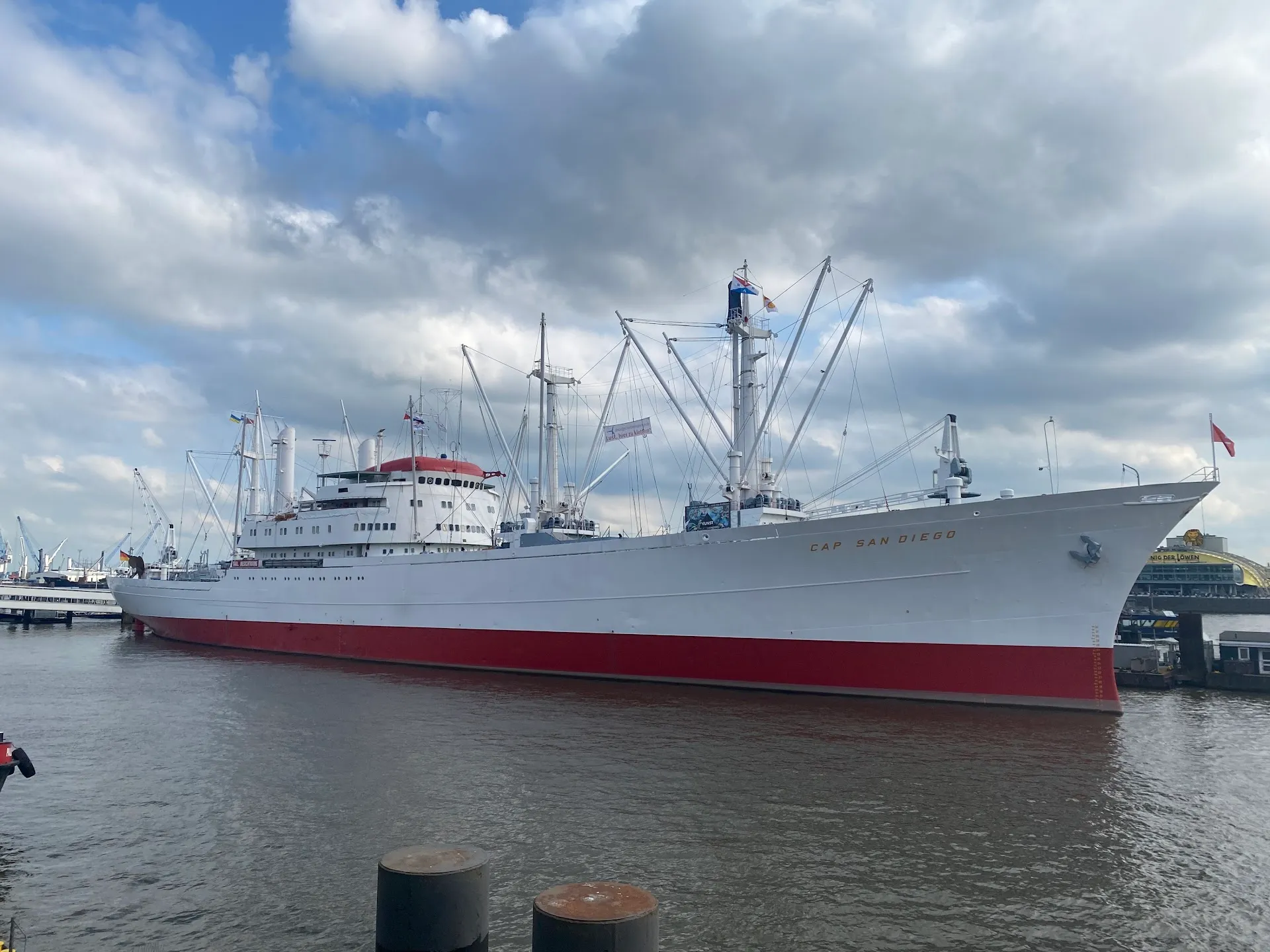
The emotional heart of the city is the harbour. From the St. Pauli Landungsbruecken piers you can watch container ships, ferries and tugs work the river, jump on a public HADAG harbour ferry for a cheap cruise, or slip beneath the water through the tiled Old Elbe Tunnel of 1911. Just upstream, the Speicherstadt — the world's largest unified warehouse district and a UNESCO World Heritage Site since 2015 — rises straight out of the canals on oak piles, its neo-Gothic gables mirrored in the Fleete. Inside its warehouses hide some of the city's best attractions, among them Miniatur Wunderland, the largest model railway on earth.
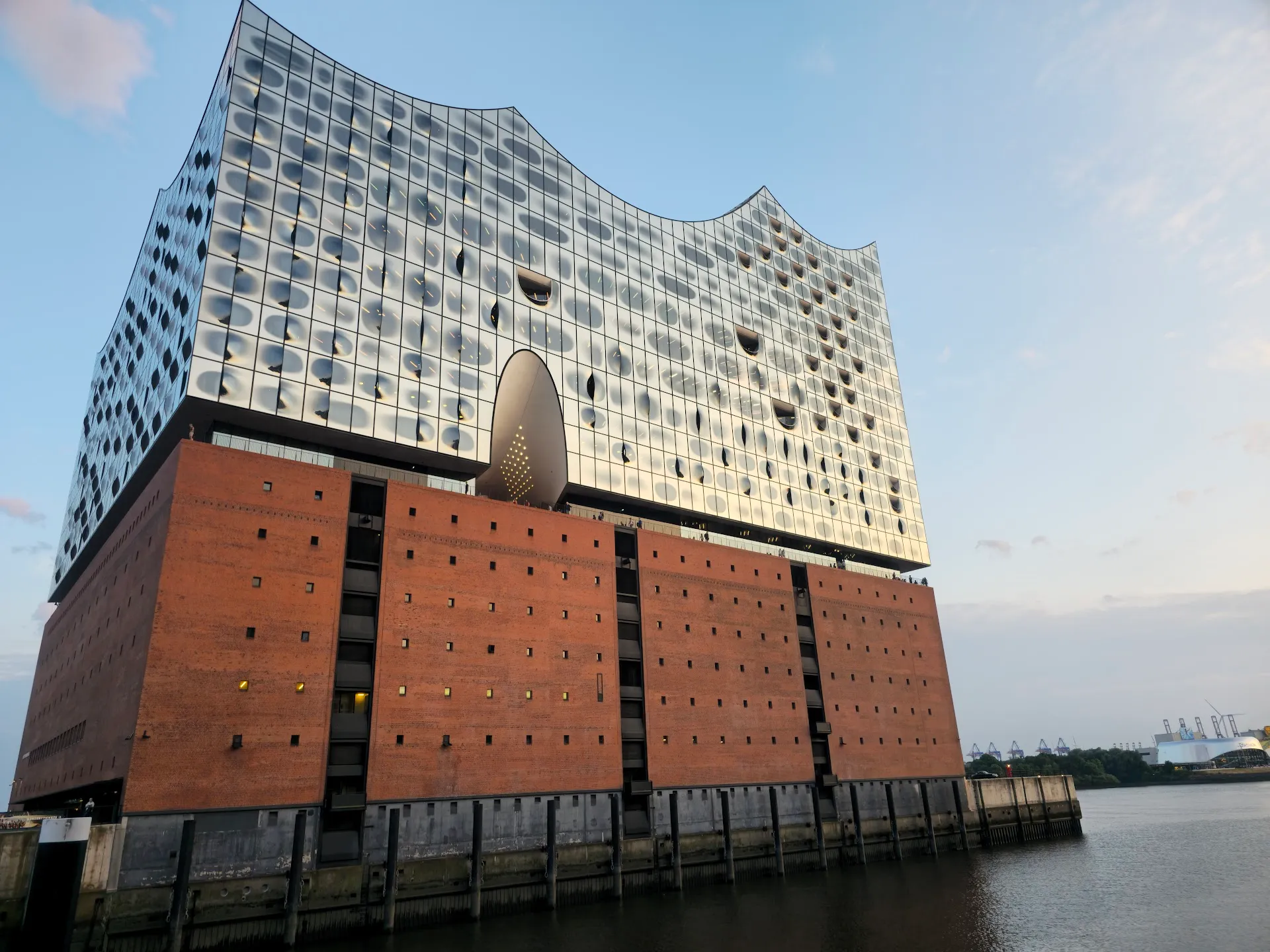
Next door, HafenCity is Europe's biggest inner-city regeneration project, a whole new district grafted onto the old docks and crowned by the Elbphilharmonie. Hamburg's defining 21st-century landmark, the 'Elphi' caps a 1960s cocoa warehouse with a wave of glass; even without a concert ticket you can ride the long curved escalator to the free public Plaza for a 360-degree sweep over the rooftops and the Elbe.
Step inland and Hamburg turns elegant. The twin Alster lakes — the city-centre Binnenalster and the broad Aussenalster — give the heart of town a startling expanse of open water, fringed by promenades, sailing boats and parks. The grand Rathaus presides over the Altstadt, the arcades of the Jungfernstieg line the lakeshore, and the green copper tower of St. Michael's Church — the Michel, the very symbol of Hamburg — offers the finest panorama in the city. Brick-expressionist landmarks such as the Chilehaus in the Kontorhausviertel, UNESCO-listed alongside the Speicherstadt, testify to the wealth of the old merchant city.
Best time to visit
Late spring through early autumn is the best window. **May, June and September** bring the longest, mildest days, harbour breezes and busy Alster promenades without the deepest summer crowds. **July and August** are the warmest (often 22-25C) and liveliest — ideal for ferry rides, lake sailing and open-air festivals — though Hamburg's maritime climate means a shower is never far away, so pack a waterproof layer in any season.
The calendar has a few dates worth timing for. The **Hamburger DOM**, northern Germany's biggest funfair, fills the Heiligengeistfeld three times a year (spring, summer and winter); the **Hafengeburtstag** (Port Anniversary) in early May is billed as the world's largest port festival; and the weeks before Christmas bring atmospheric markets, the prettiest strung along the canals of the Speicherstadt and across the Rathausmarkt. Winter (November to February) is cold, grey and often wet, but cheaper and rarely freezing, and the city's museums, music and snug harbourside bars come into their own.
Budget
Hamburg is a big city but kinder to the wallet than Munich. A bakery breakfast runs 4-7 euros, a Franzbroetchen pastry or a harbour Fischbroetchen (fish sandwich) just 3-6, a casual lunch 9-14 and a sit-down dinner 18-30; a half-litre of beer is about 4-5 euros. An HVV day ticket for the inner-city zone is roughly 8-9 euros, a harbour ferry costs the same as a bus on that ticket, and the headline experiences — the Speicherstadt, the Elbphilharmonie Plaza, the Landungsbruecken, the Alster lakeshore and the nave of the Michel — are free or close to it.~$85-190 USD / day
Then there is St. Pauli, home to the neon-lit Reeperbahn, Germany's most famous nightlife strip, where the Beatles cut their teeth in the early 1960s. By day it is a scruffy, creative quarter of music clubs, football passion and the legendary Sunday-morning Fischmarkt; by night it is loud, irreverent and gloriously itself — the perfect foil to the buttoned-up Hanseatic centre.
Hamburg is also a green, eminently liveable city of distinct neighbourhoods — hip Sternschanze, creative Altona and Ottensen, diverse St. Georg, leafy Rotherbaum — knitted together by an integrated HVV network of U-Bahn, S-Bahn, buses and harbour ferries. It rewards slow exploration on foot, by bike and, best of all, by boat.
Use this guide to skim the 3-day plan, open the things-to-do and where-to-eat lists, and save the places that fit your trip. Everything you save drops straight into a TripBox itinerary with dates, a map and your travel companions.
The best of Hamburg
Curated places worth your time — tap a card for details or to save it.
Hamburg's signature 21st-century landmark rises 108 metres over the harbour, crowning a converted 1960s cocoa warehouse with a wave-like glass crown. Beyond its three concert halls, a curving escalator carries visitors up to the public Plaza on the 8th floor for a 360-degree sweep across the city and the Elbe.
HafenCity
Landmark
Speicherstadt
The world's largest unified warehouse complex stretches for more than a kilometre of red-brick gables, little towers and loading hoists set on oak piles above a network of tidal canals. Built from the 1880s as a customs-free port zone, it earned UNESCO World Heritage status in 2015 and is at its most atmospheric when the facades are floodlit at night.
HafenCity
Museum
Miniatur Wunderland
Home to the world's largest model railway, this Speicherstadt attraction packs kilometres of track, tiny airports, and meticulously detailed miniature worlds spanning regions from Hamburg to America across several floors. Day-and-night lighting cycles and countless hidden moving scenes have made it Hamburg's single most-visited attraction.
Speicherstadt
Landmark
St. Pauli Landungsbruecken
Hamburg's floating landing stages stretch nearly 700 metres along the Elbe, their tuff-stone terminal flanked by two green-domed towers. A working ferry and excursion-boat hub since 1839, the quayside is the classic spot to watch container ships pass while eating a fish sandwich.
St. Pauli
Viewpoint
St. Michael's Church
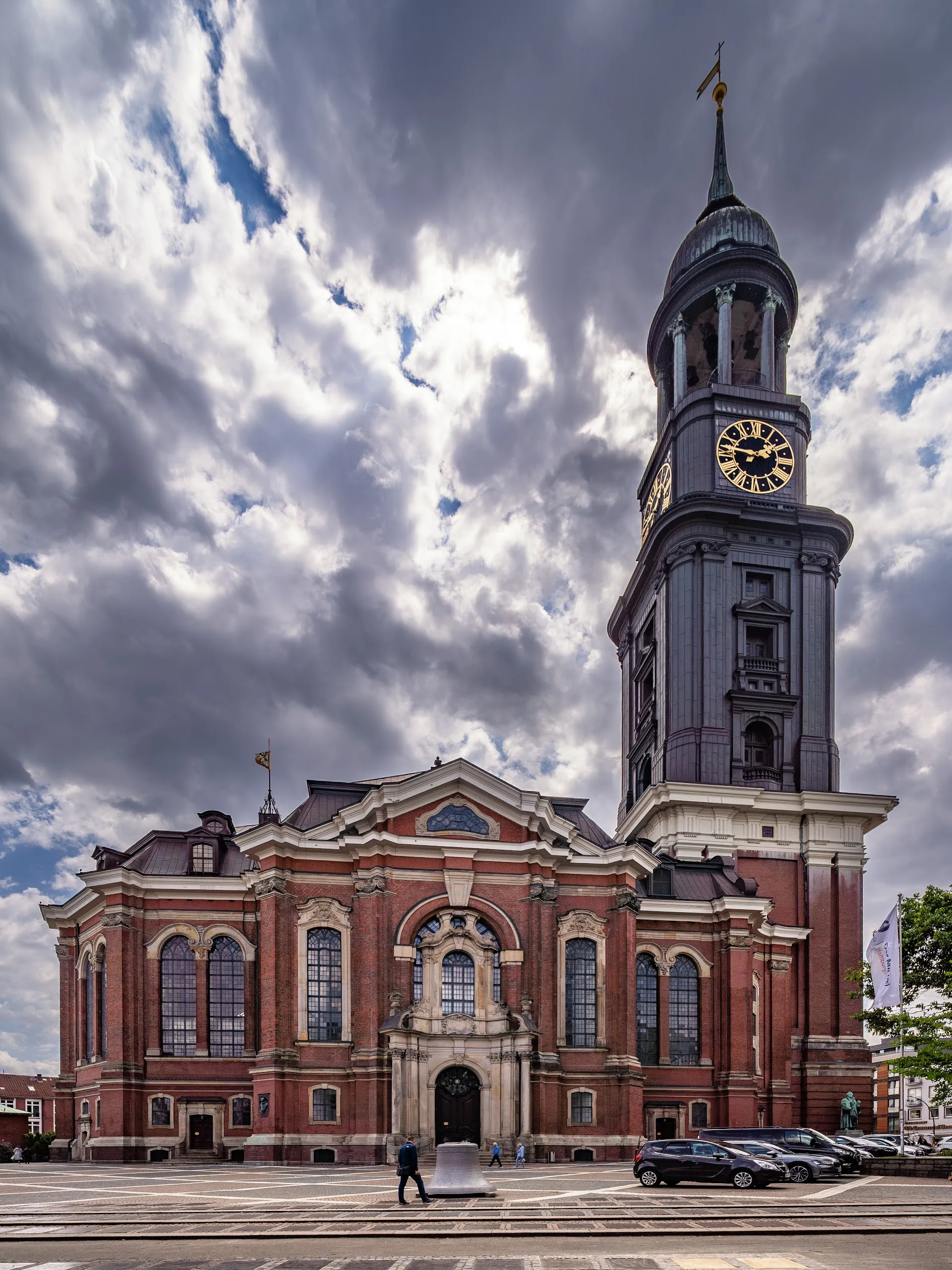
Hamburg's most beloved Baroque church, affectionately called the Michel, is crowned by a 132-metre copper spire that has guided ships up the Elbe for centuries. Visitors can ride or climb the tower for a panoramic harbour view, or descend into the crypt beneath the nave.
Neustadt
Architecture
Hamburg Rathaus
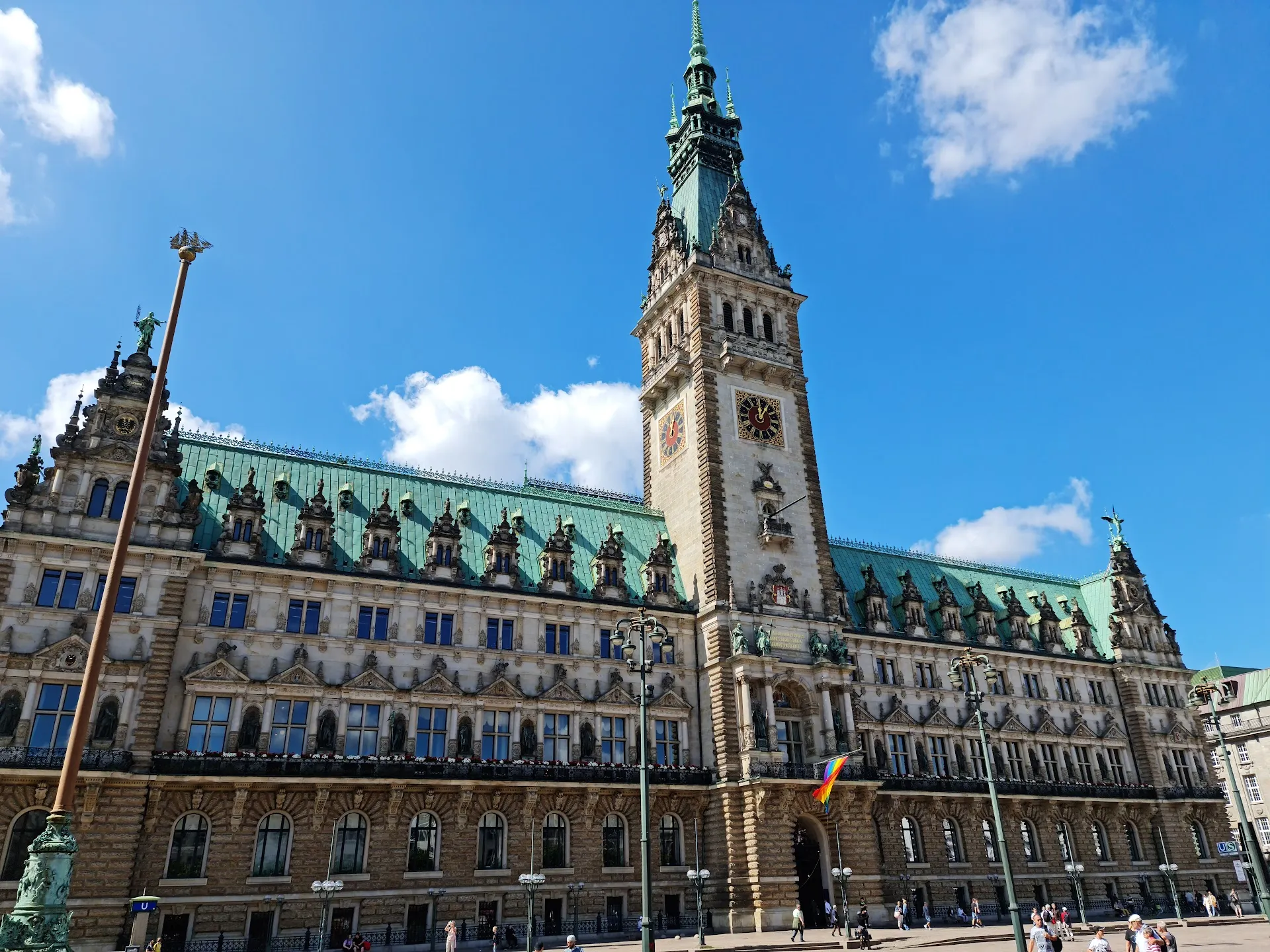
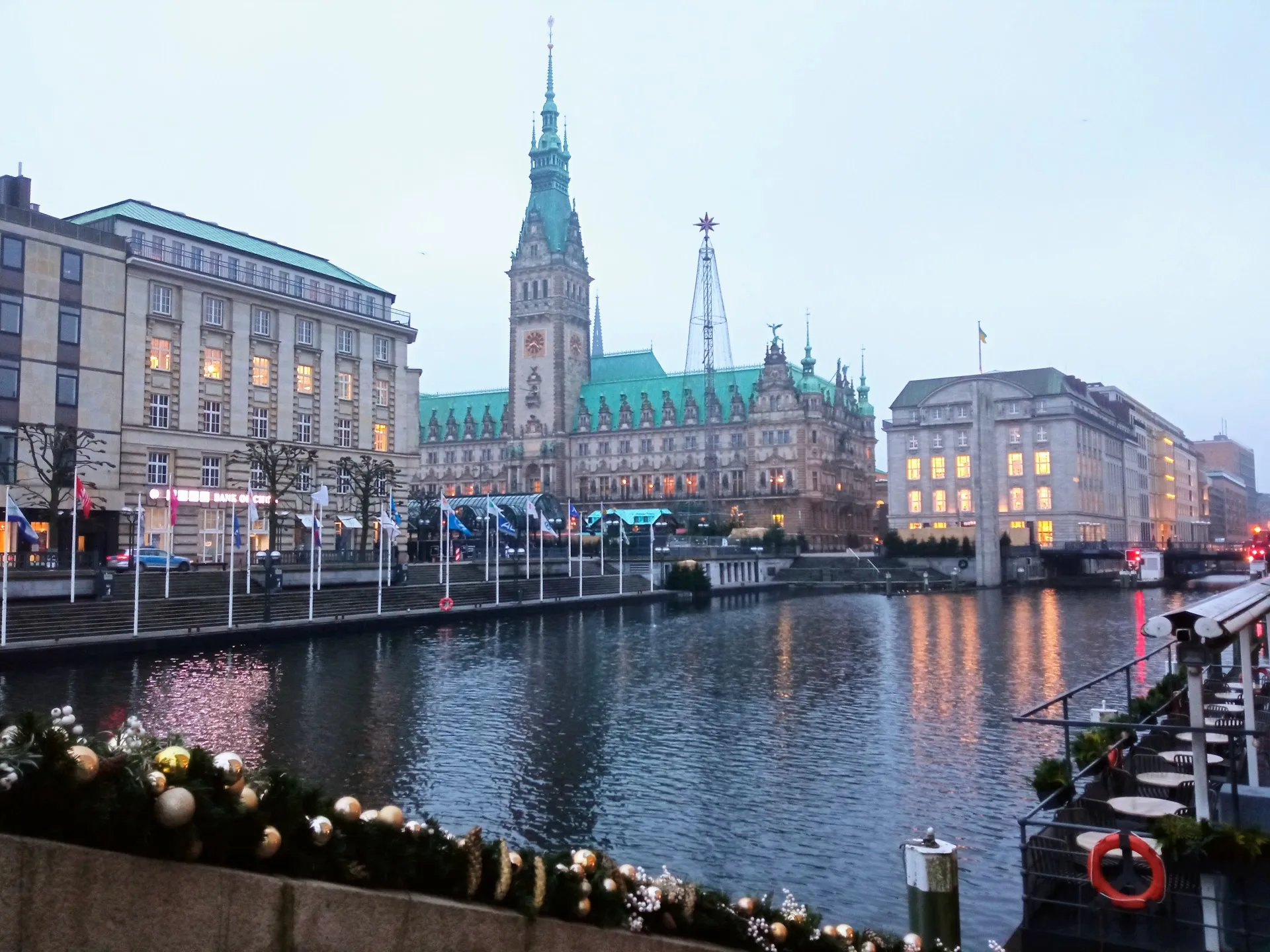
The seat of Hamburg's parliament and senate is a lavish Neo-Renaissance palace of 647 rooms, completed in 1897 atop thousands of oak piles. Its sandstone facade bristles with twenty imperial statues, while guided tours reveal the opulent ceremonial halls within.
Altstadt
Landmark
Jungfernstieg
Hamburg's grandest boulevard runs along the southern shore of the Binnenalster lake, lined with cafes, department stores and the historic Alsterpavillon. Laid out as a promenade for the city's well-to-do and asphalted in 1838 (a German first), it remains the social heart of the centre and a hub for Alster ferries.
Neustadt / Altstadt
Museum
Hamburger Kunsthalle
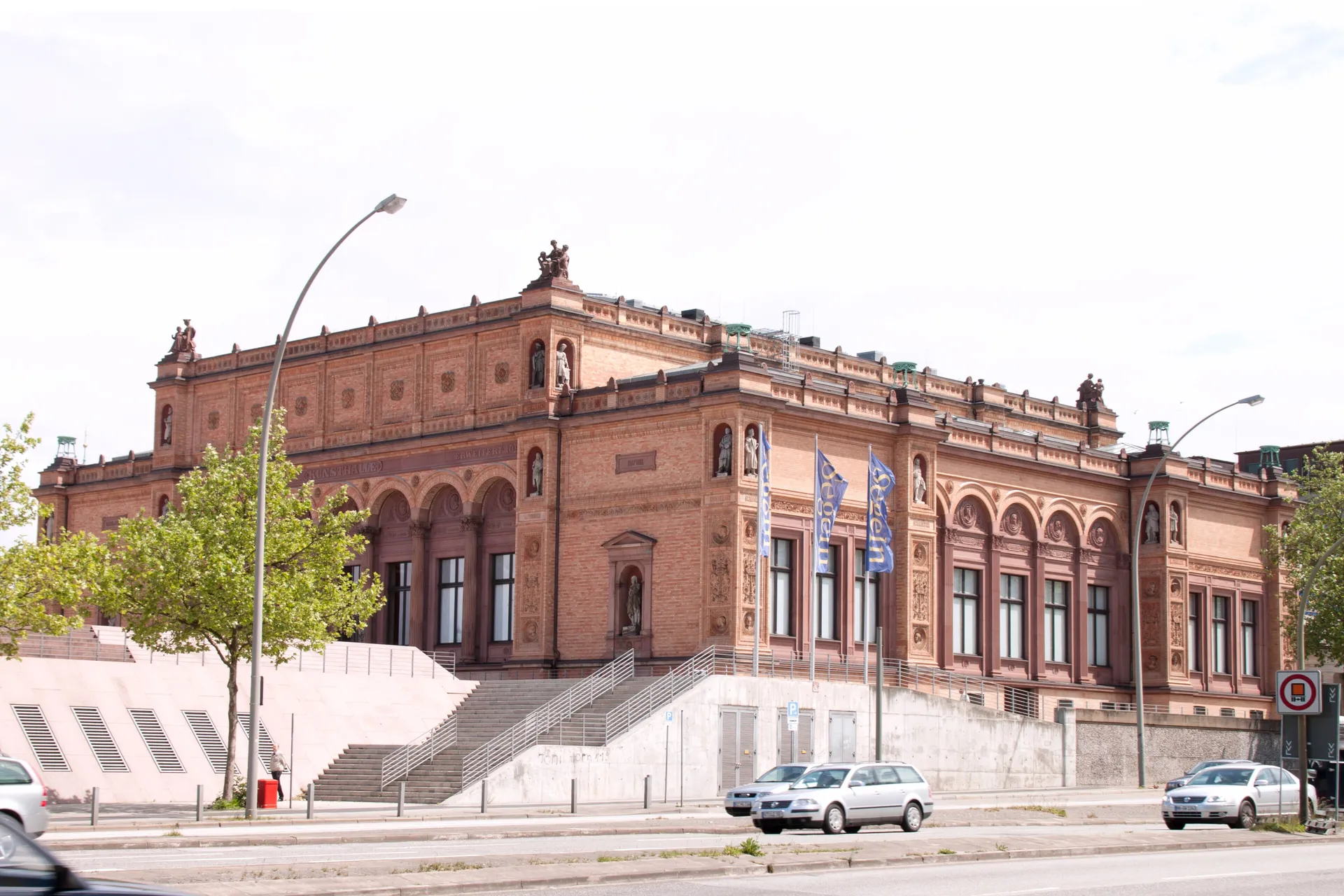
One of Germany's largest art museums, the Kunsthalle spans seven centuries from medieval altarpieces and Old Masters to 19th-century Romanticism (including Caspar David Friedrich) and a dedicated contemporary wing, the Galerie der Gegenwart. Its interconnected buildings sit in a landmark complex between the main station and the Alster lakes.
Altstadt
What it costs
Daily budgets and typical prices to plan your spend.
Backpacker
€65/ day
Mid-range
€150/ day
Luxury
€340/ day
Cheap meal
€12
Restaurant meal
€28
Coffee
€3.8
Local beer
€4.5
Transit ticket
€3.8
Taxi (1km)
€2.3
Cost index 73 (New York = 100).
When to go
Best time to visit
Summer (June to August) is Hamburg at its best: long days, harbour life, outdoor cafes around the Alster lakes, and the warmest, driest weather. May brings the huge Hafengeburtstag port festival, September the Reeperbahn Festival, and late November to December the Christmas markets. The maritime climate is changeable and wet year-round, so pack a rain jacket whatever the season.
Crowds
High
PeakJune, July, August
ShoulderMay, September, October
QuietJanuary, February, November
Major events
Hamburger DOM (Spring funfair)March
Hafengeburtstag (Port Anniversary Festival)May
Hamburger DOM (Summer funfair)July
Reeperbahn FestivalSeptember
Hamburger DOM (Winter funfair)November
Christmas MarketsDecember
Weather by month
Average temperature and rainfall, to time your visit.
2°J
2°F
5°M
9°A
13°M
16°J
18°J
18°A
15°S
10°O
6°N
3°D
Good to know
Practical info before you go.
Tipping
Appreciated — Tipping is appreciated but modest. Round up or add about 5-10% in restaurants, cafes, and taxis; tell the server the total amount you want to pay as you hand over the money rather than leaving coins on the table.
Tap water
Safe to drink
Power
Type C/F · 230V
Safety
High — Hamburg is a safe city overall. The main risks are pickpocketing around the Hauptbahnhof, on busy S-Bahn/U-Bahn lines, and in the Reeperbahn crowds. St. Pauli's Reeperbahn red-light and nightlife strip is lively but rowdy late at night - keep your wits about you and steer clear of the pushy bar and strip-club touts.
Emergency
112
Visa-free for
United States, Canada, United Kingdom, European Union, Australia, New Zealand
Local culture
Language
German
English
Very High
Dress code
Smart Casual
Useful phrases
Moin
Hello (northern German greeting, any time of day)
Danke
Thank you
Bitte
Please / you're welcome
Entschuldigung
Excuse me / sorry
Sprechen Sie Englisch?
Do you speak English?
Die Rechnung, bitte
The bill, please
Local customs
Buy and validate a valid HVV ticket before boarding - the system runs on trust with plain-clothes inspectors and on-the-spot fines for fare dodging
Greet people with 'Moin' - it works morning, noon, and night, and 'Moin Moin' is the friendly double
Northern Germans can seem reserved and direct at first, but it is politeness, not coldness; small talk is brief and punctuality matters
Sundays are quiet and most shops close (stock up Saturday); the early-morning Altona Fischmarkt is the lively exception
Return bottles and cans for the Pfand deposit at supermarket machines
Carry a rain jacket rather than just an umbrella - the harbour wind turns umbrellas inside out
Watch out for
Aggressive bar and strip-club touts on the Reeperbahn lure you in with a 'free' drink or show, then present a huge bill - decline, and never hand over a card to be kept behind a bar
Pickpockets work the Hauptbahnhof, crowded S-Bahn/U-Bahn, and the Reeperbahn at night
Some taxis take longer routes - insist on the meter or use a ride app; the S-Bahn/U-Bahn is faster across the centre
Fake 'ticket inspectors' and ATM 'helpers' near the Hauptbahnhof - real HVV inspectors carry ID, and never accept help at a cash machine
Useful links
Official resources and quick searches for Hamburg.
Two to three days cover the essentials. With three you can give a day each to the harbour and Speicherstadt, the historic centre and the Alster, and the Michel, St. Pauli and the maritime west — without rushing. A fourth day leaves room for more museums, a longer Alster boat trip or a side trip to Luebeck.
What is Hamburg famous for?
Its harbour above all — one of Europe's largest ports — along with the UNESCO-listed Speicherstadt warehouse district, the Elbphilharmonie concert hall, the Alster lakes, and the nightlife of the Reeperbahn in St. Pauli, where the Beatles got their start. It is also a city of canals, bridges and red-brick architecture.
Is the Elbphilharmonie free to visit?
The building's public viewing level, the Plaza on the 8th floor, is free, though at busy times you need a timed ticket (a small booking fee applies if you reserve ahead, or collect a same-day ticket on site). Concerts in the halls, and guided tours, are paid and often sell out well in advance.
What is the best way to get around Hamburg?
The integrated HVV network of U-Bahn, S-Bahn, buses and harbour ferries runs on a single ticket, and the centre is very walkable. The HADAG ferries on your normal transit ticket double as a budget harbour cruise, and the city is flat and excellent for cycling.
When is the best time to visit Hamburg?
May, June and September offer the best balance of mild, long days and lighter crowds, while July and August are warmest and busiest. December is cold and often wet but magical, with Christmas markets in the Speicherstadt and on the Rathausmarkt. Pack a waterproof layer whenever you come.
Ready to plan Hamburg?
Turn this guide into a real trip — itinerary, map, budget and friends, all in one place.