
Five days is the perfect first taste of Andalusia, and this route pairs its two greatest cities with a single short hop east. You'll spend three days in Seville — the Mudéjar Real Alcázar and the world's largest Gothic cathedral, the orange-tree lanes of Santa Cruz, tapas crawls through Triana and El Arenal, a cruise on the Guadalquivir and live flamenco after dark. Then it's about three hours on to Granada, cradled beneath the Sierra Nevada, for the incomparable Alhambra and Generalife, the whitewashed Albaicín, free tapas on Calle Navas, a sunset over the red fortress from San Nicolás and a cave zambra in Sacromonte. No car needed — the two cities link by frequent coach or fast train, so you travel light and let the Andalusian sun do the rest.
Andalusia in 5 Days: Seville and Granada
The route
- Seville3n
- Granada2n
Everywhere you'll go
Every stop on this itinerary — tap a card for details or to save it.
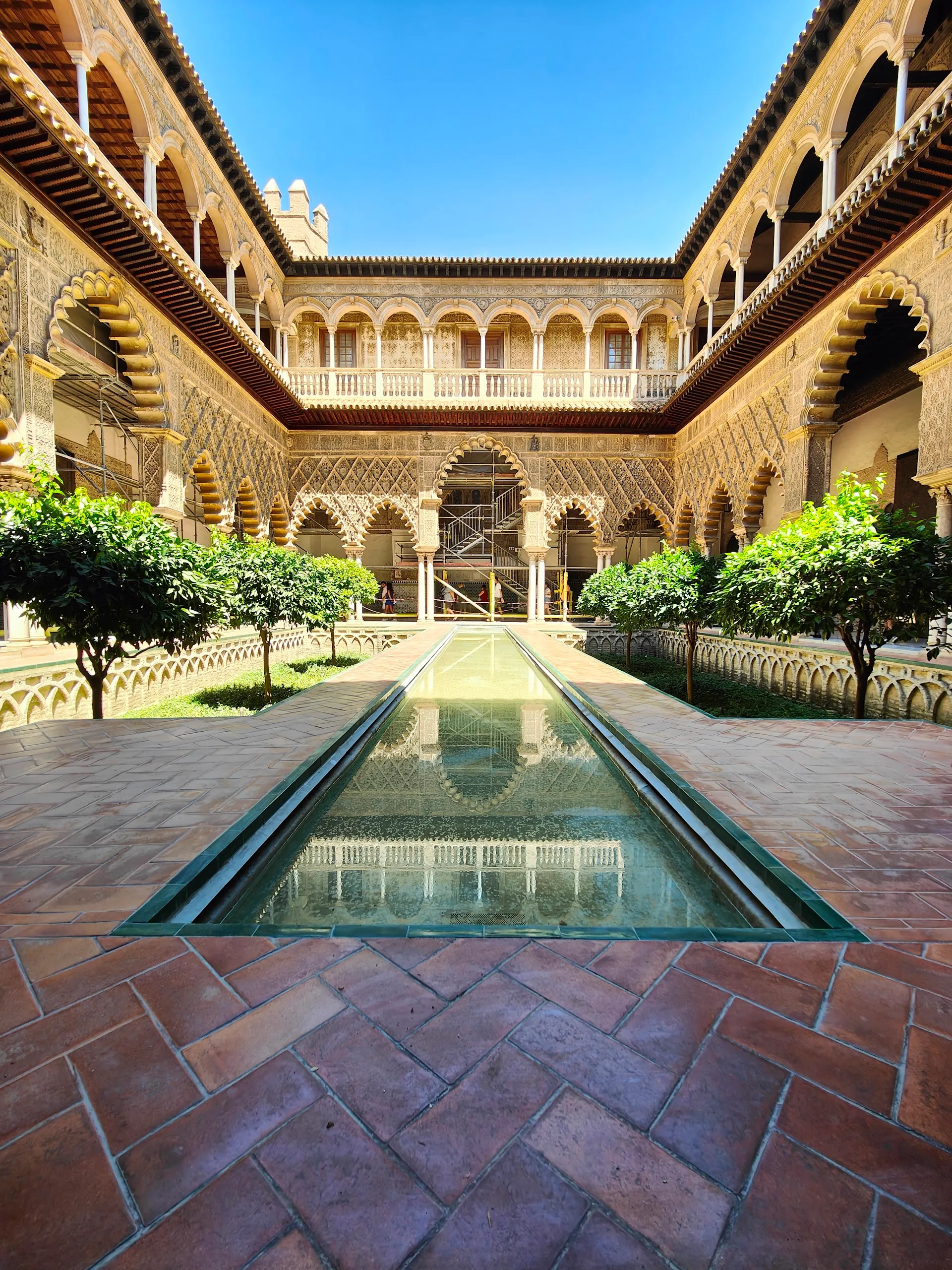
Real Alcázar of Seville
A breathtaking royal palace complex begun by Moorish rulers and expanded by Christian kings, the finest example of Mudéjar architecture in Spain. Its tiled courtyards, carved stucco, and lush gardens are unforgettable, and it doubled as Dorne in Game of Thrones.
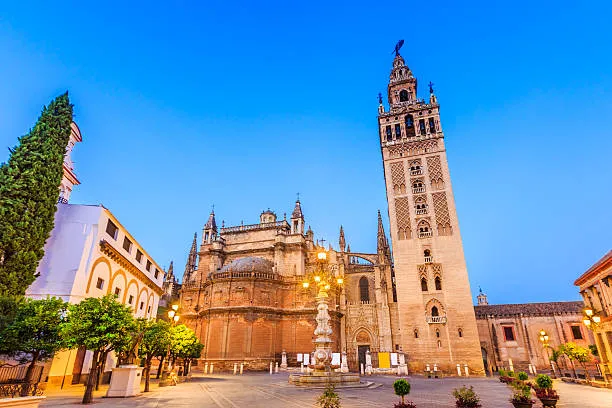
Seville Cathedral & La Giralda
The largest Gothic cathedral in the world, built over a former mosque and holding the tomb of Christopher Columbus. Its bell tower, La Giralda, is the converted Almohad minaret, climbed by a ramp for sweeping views over the old town.
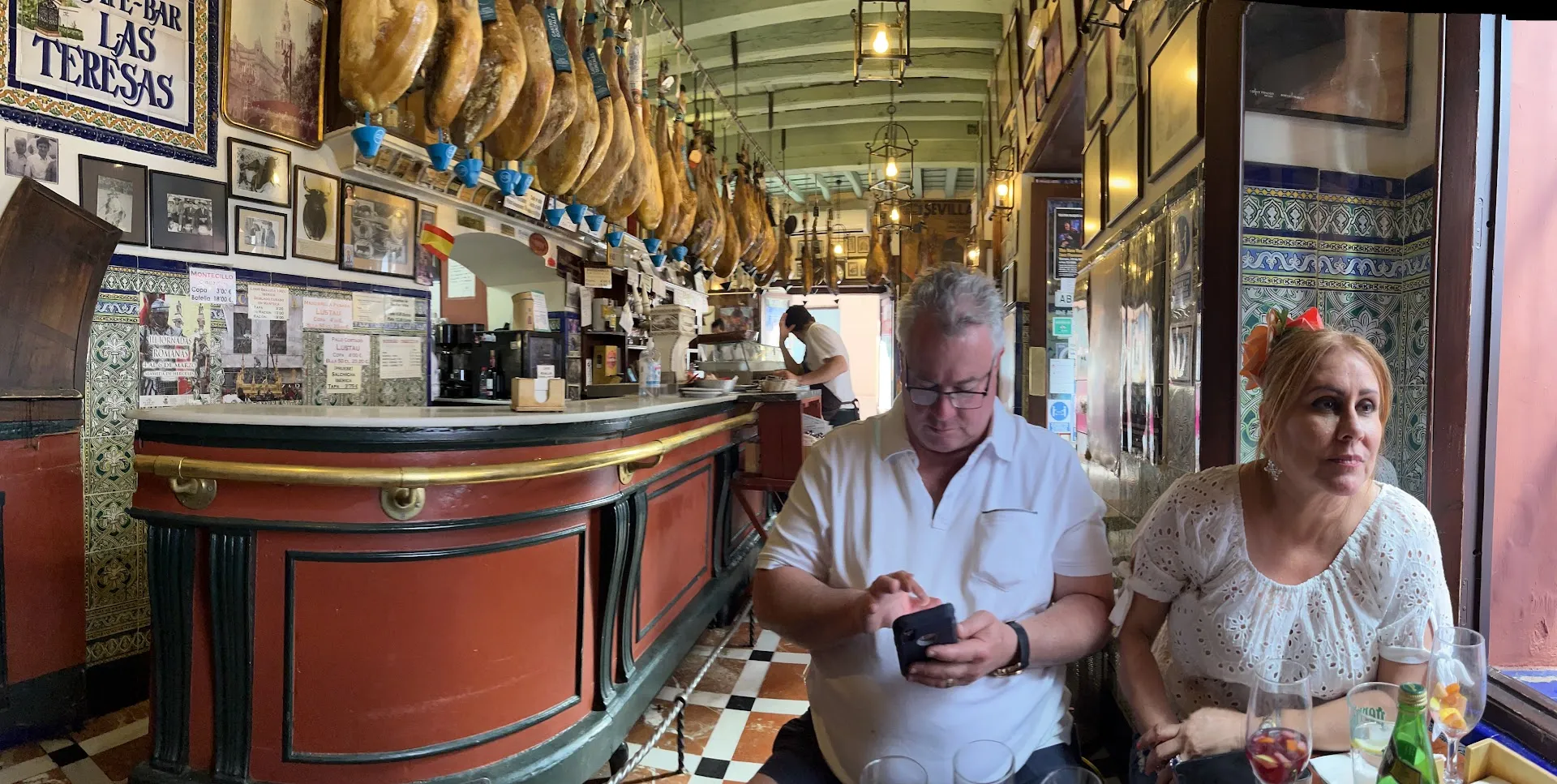
Las Teresas
A narrow 1870 tavern in the heart of Santa Cruz, its ceiling thick with Iberian hams and its walls covered in old bullfighting and Holy Week photos. A classic for a plate of jamón ibérico and a glass of manzanilla.
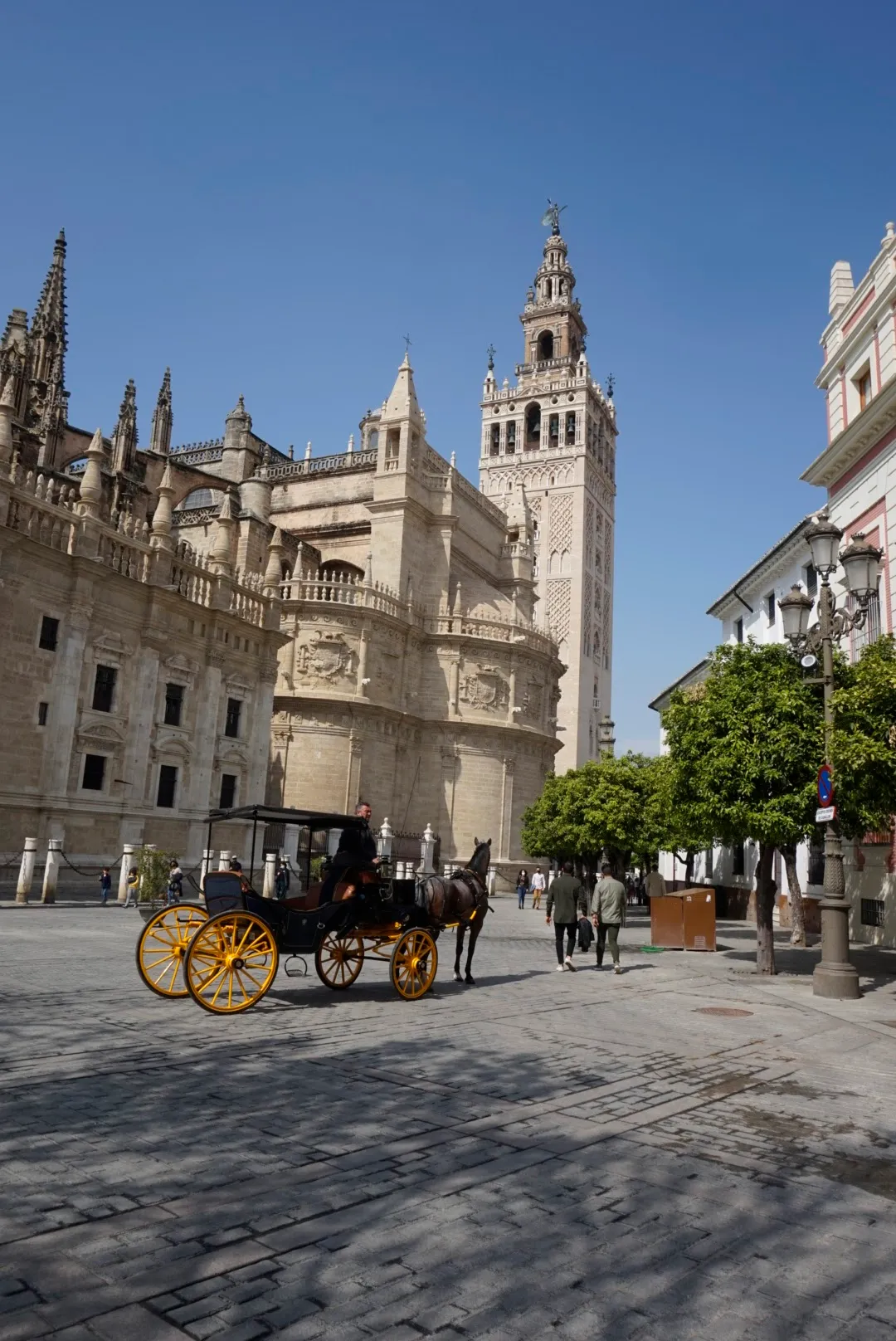
Barrio de Santa Cruz
The former medieval Jewish quarter, a labyrinth of whitewashed lanes, flower-filled patios, and tiny orange-tree squares pressed up against the Cathedral and Alcázar. The most atmospheric place in Seville simply to get lost.
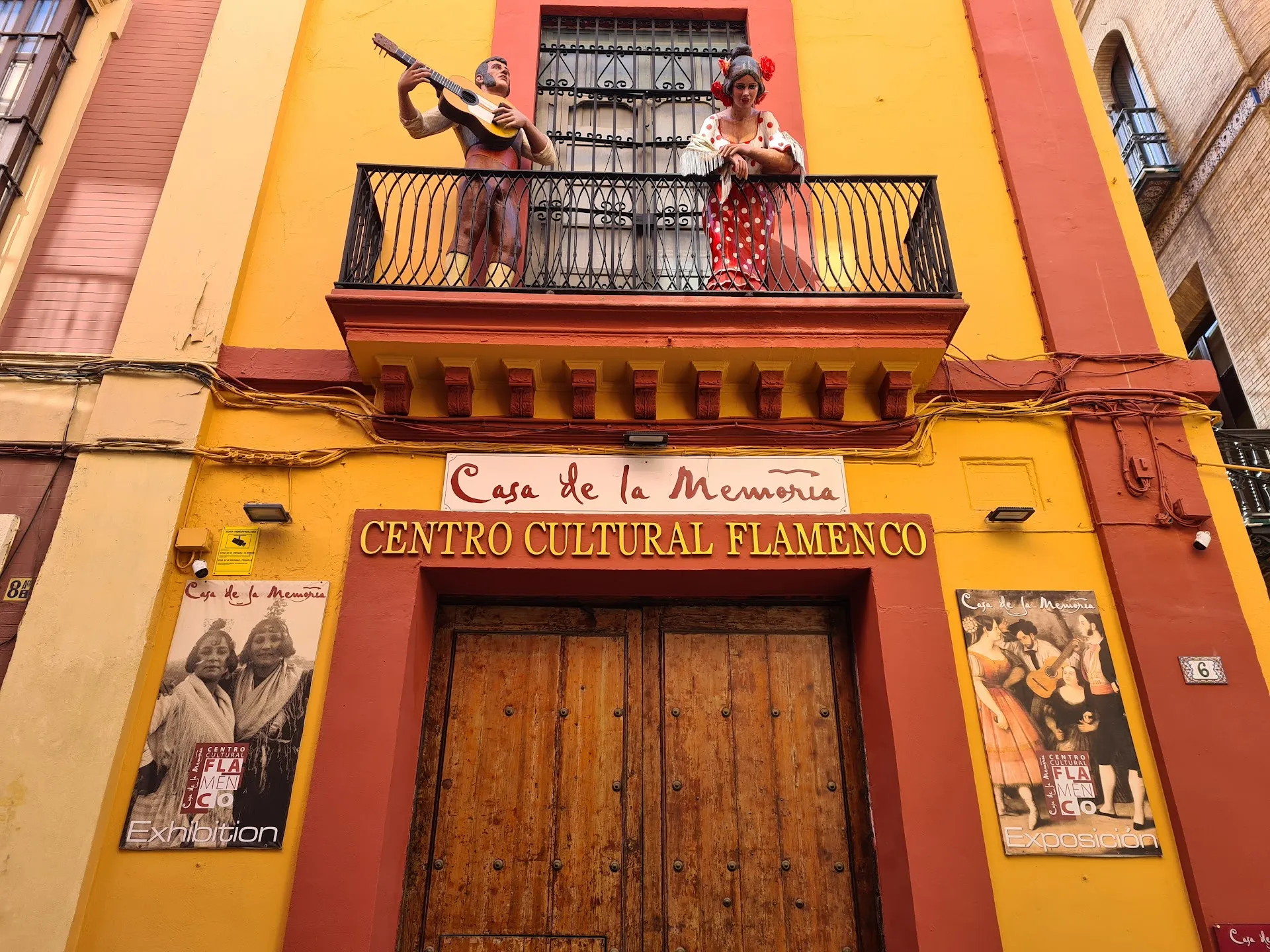
Casa de la Memoria
An intimate, ticketed flamenco venue set in the old stables of a Renaissance palace, seating around 85 for hour-long shows of serious cante, guitar, and dance. Widely rated the best place in Seville to hear pure flamenco.
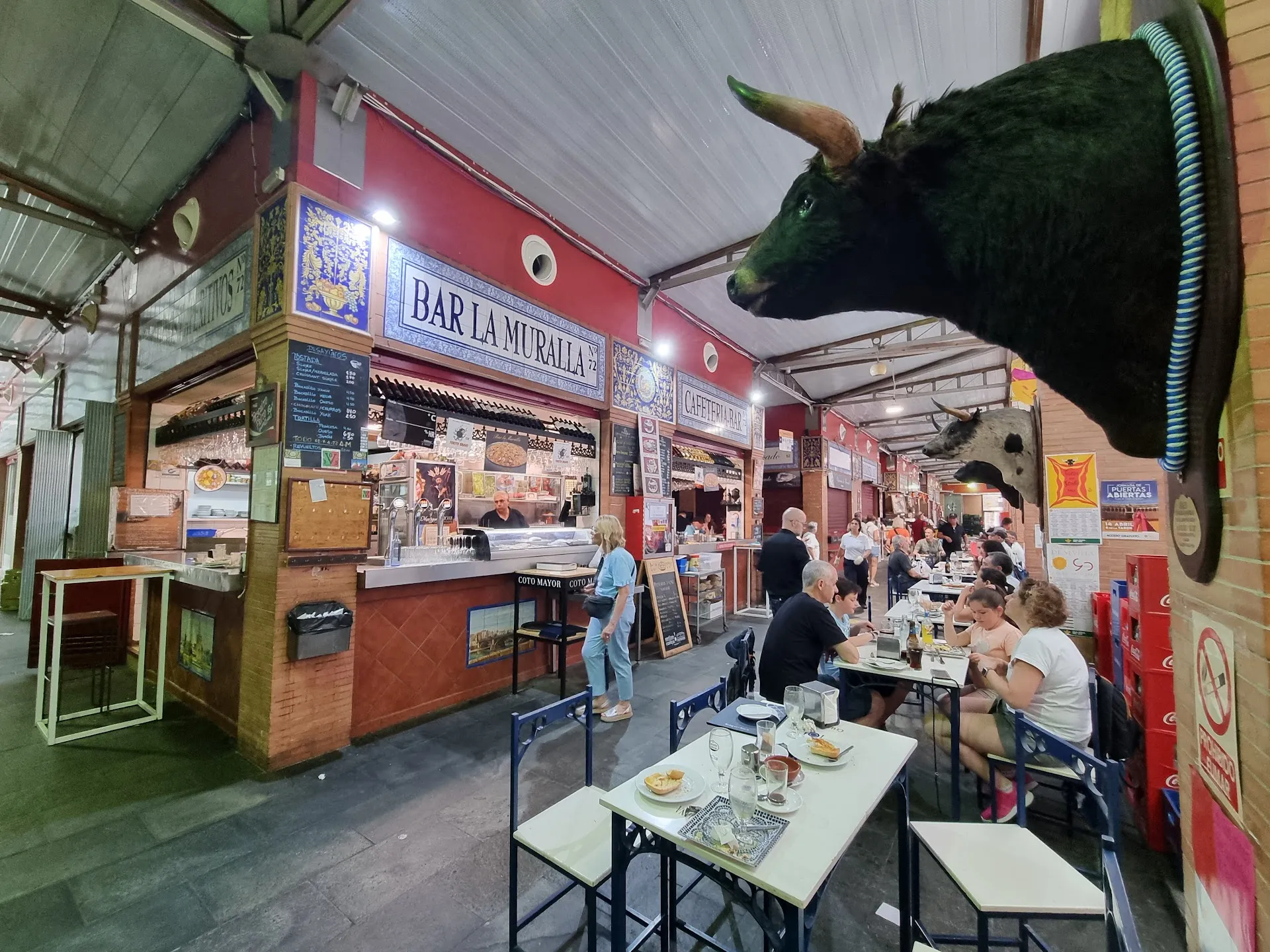
Mercado de Triana
Triana's historic covered market, built over the ruins of the Castillo de San Jorge at the foot of the Isabel II bridge. Produce and fish stalls share the hall with tapas counters, ceramics, and a cooking school.
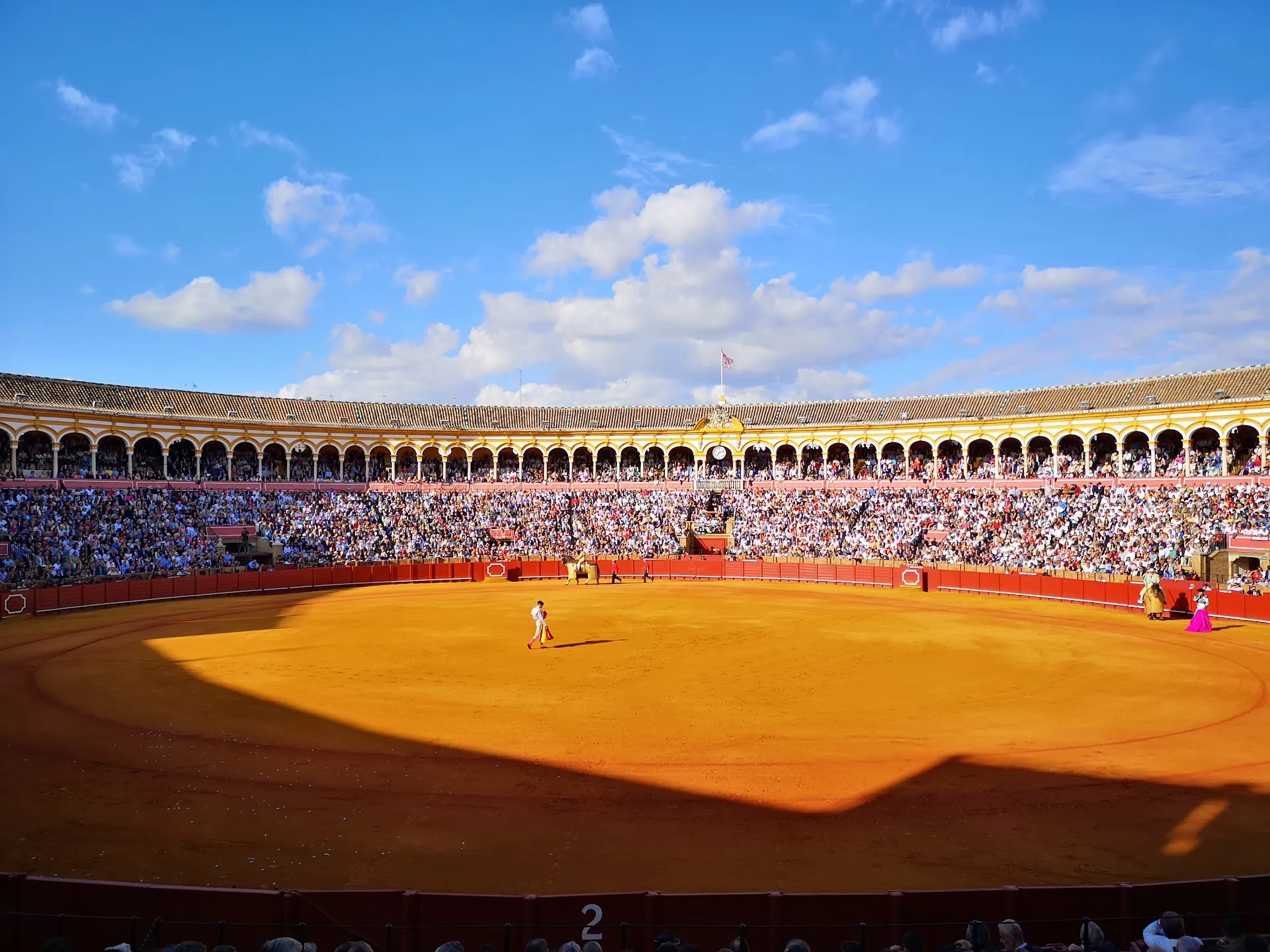
Plaza de Toros de la Maestranza
Spain's oldest and most beautiful bullring, a white-and-ochre Baroque arena begun in 1749. Guided tours take in the ring, the royal box, and the Museo Taurino, telling the story of a tradition central to Seville's identity.
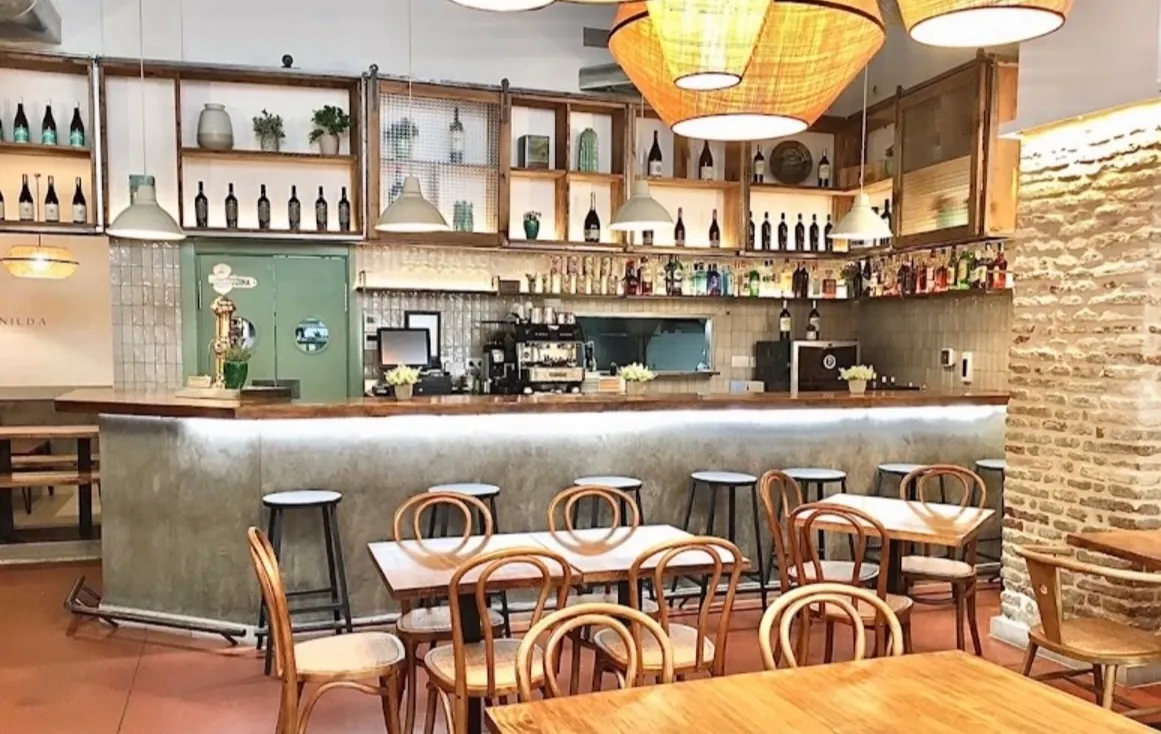
La Brunilda
A small, bright, hugely popular modern-tapas bar in El Arenal, turning out inventive Mediterranean plates like slow-cooked octopus and risotto. Arrive when it opens or be ready to queue.
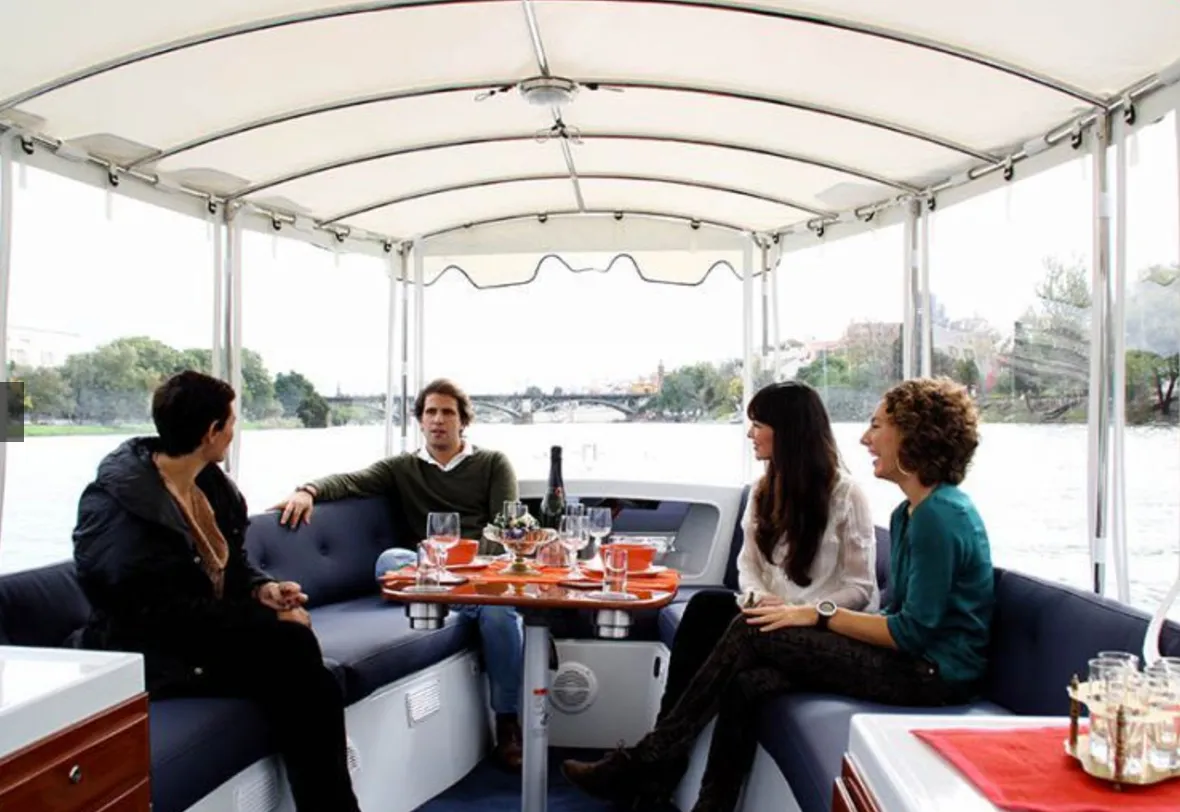
Guadalquivir River Sightseeing Cruise
A relaxed one-hour boat trip along the Guadalquivir, the river that once carried Seville's New World riches. Glide past the Torre del Oro, the Triana waterfront, the Isabel II bridge, and the Expo pavilions, with recorded commentary in several languages.
Calle Betis & the Triana Riverside
The row of colourful house-fronts and terrace bars lining the Triana bank of the river, looking straight across at the old town. The classic Seville sunset, with the Torre del Oro and Giralda glowing gold over the water.
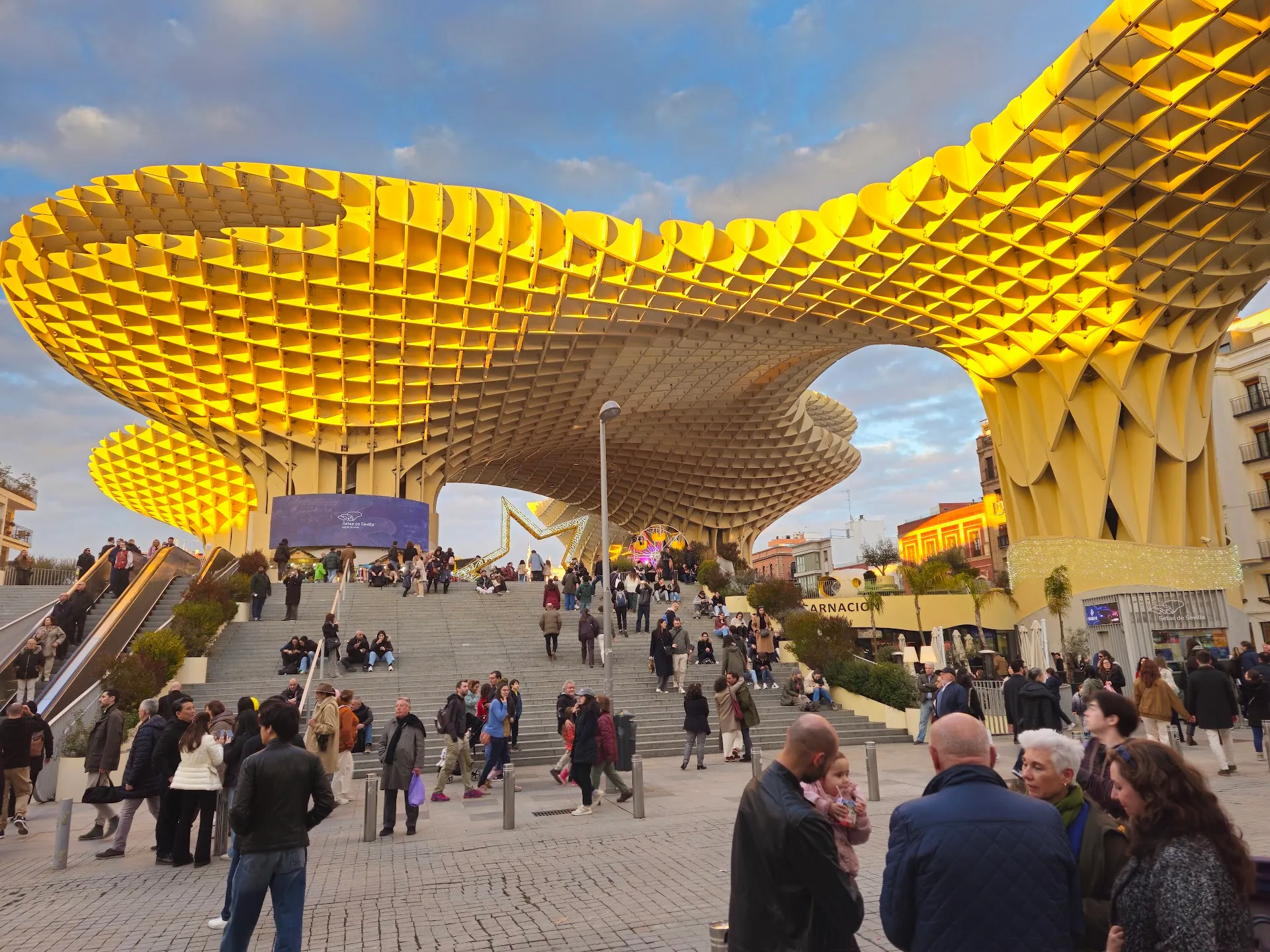
Metropol Parasol (Las Setas)
A vast undulating timber canopy nicknamed 'Las Setas' (the mushrooms), billed as the world's largest wooden structure. A lift carries you to a rooftop walkway with a 360-degree panorama over the old town's rooftops, the Giralda, and the hills beyond.
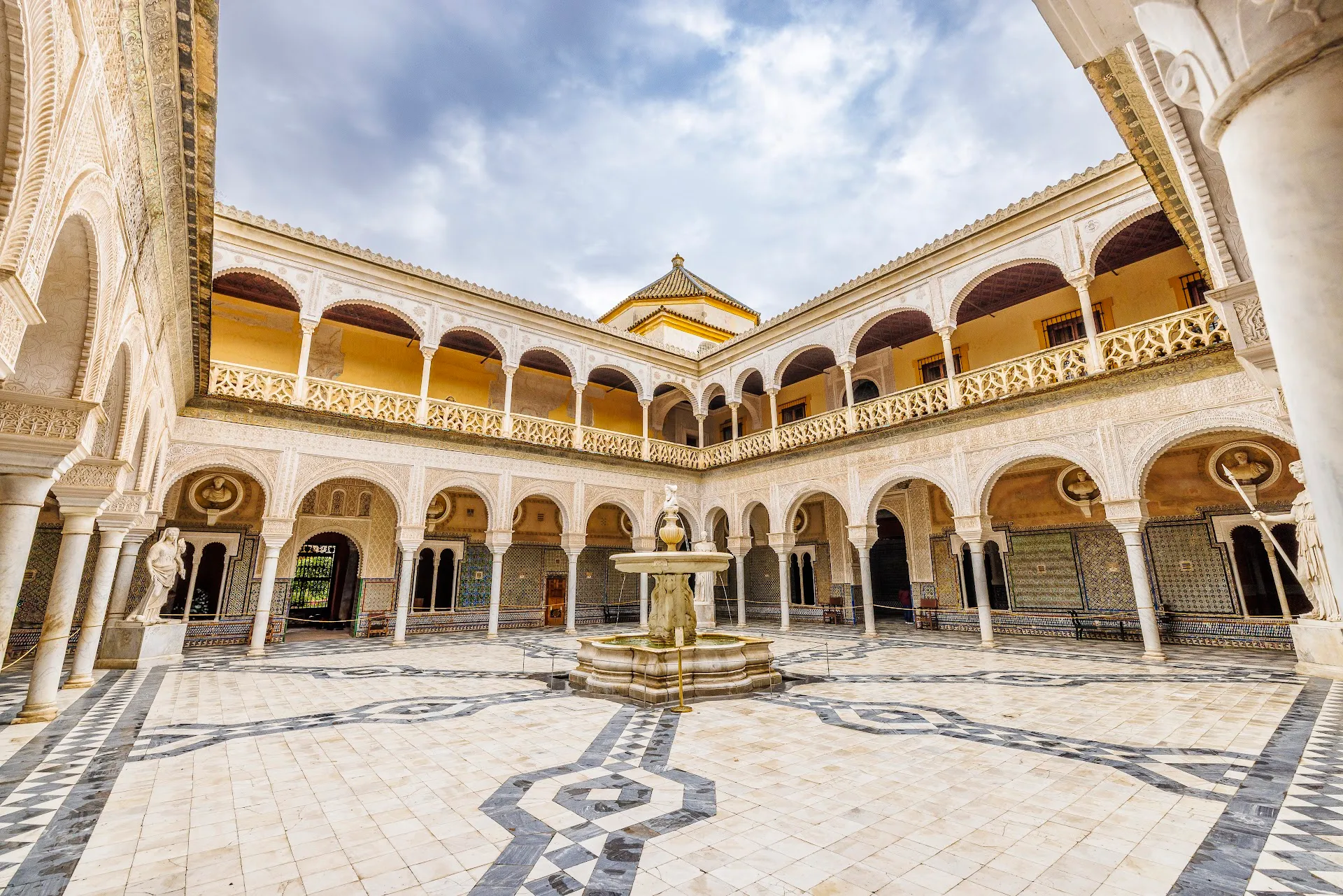
Casa de Pilatos
A sumptuous 16th-century Andalusian palace blending Mudéjar, Gothic, and Italian Renaissance styles, with a tiled central patio, classical sculpture, and serene gardens. Still owned by the Dukes of Medinaceli and far quieter than the Alcázar.
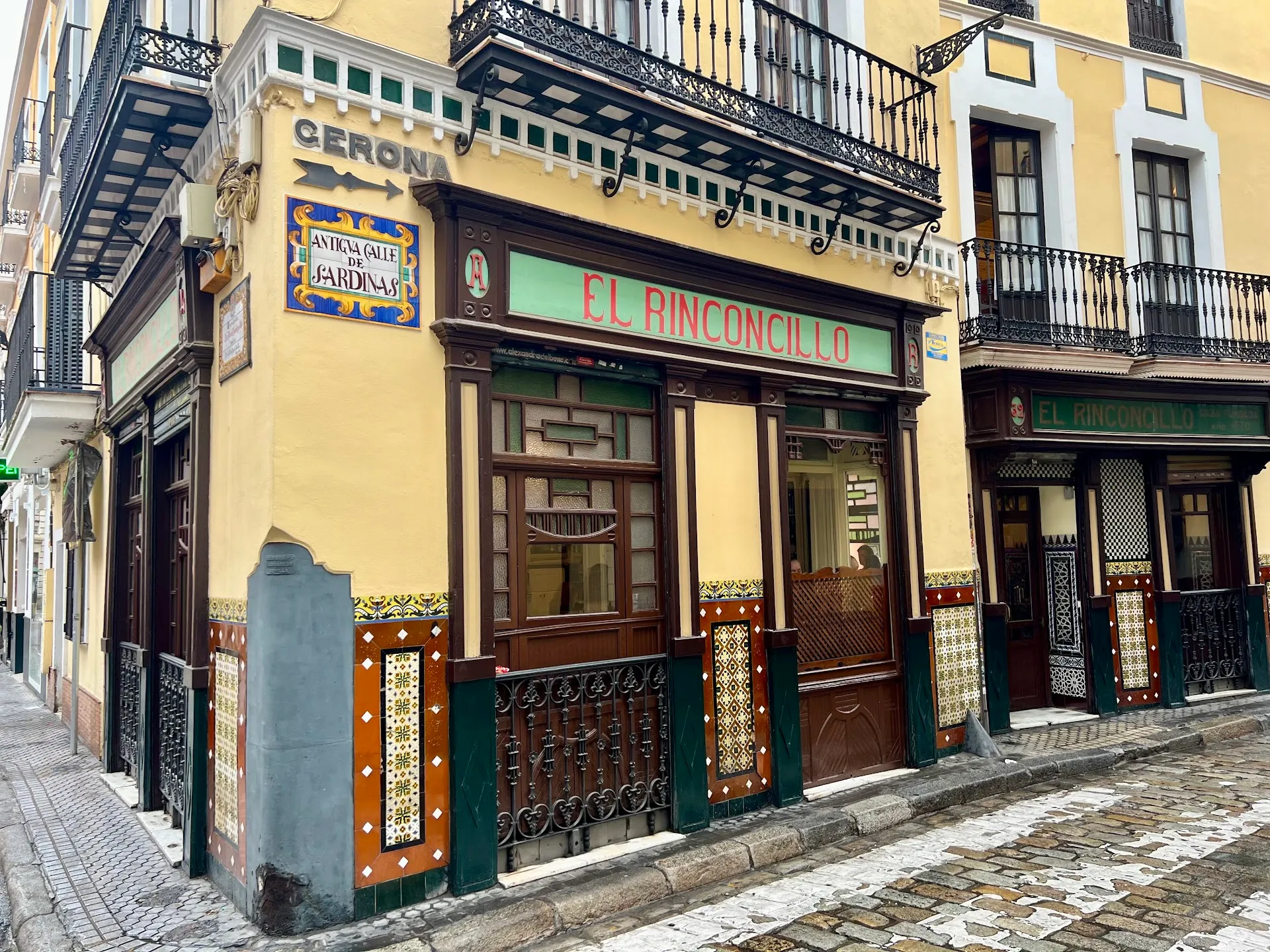
El Rinconcillo
Said to be the oldest tapas bar in Spain, serving since 1670 beneath hanging hams and hand-painted tiles. The waiters still chalk your tab on the wooden bar; order the spinach with chickpeas, croquetas, and a fino sherry.
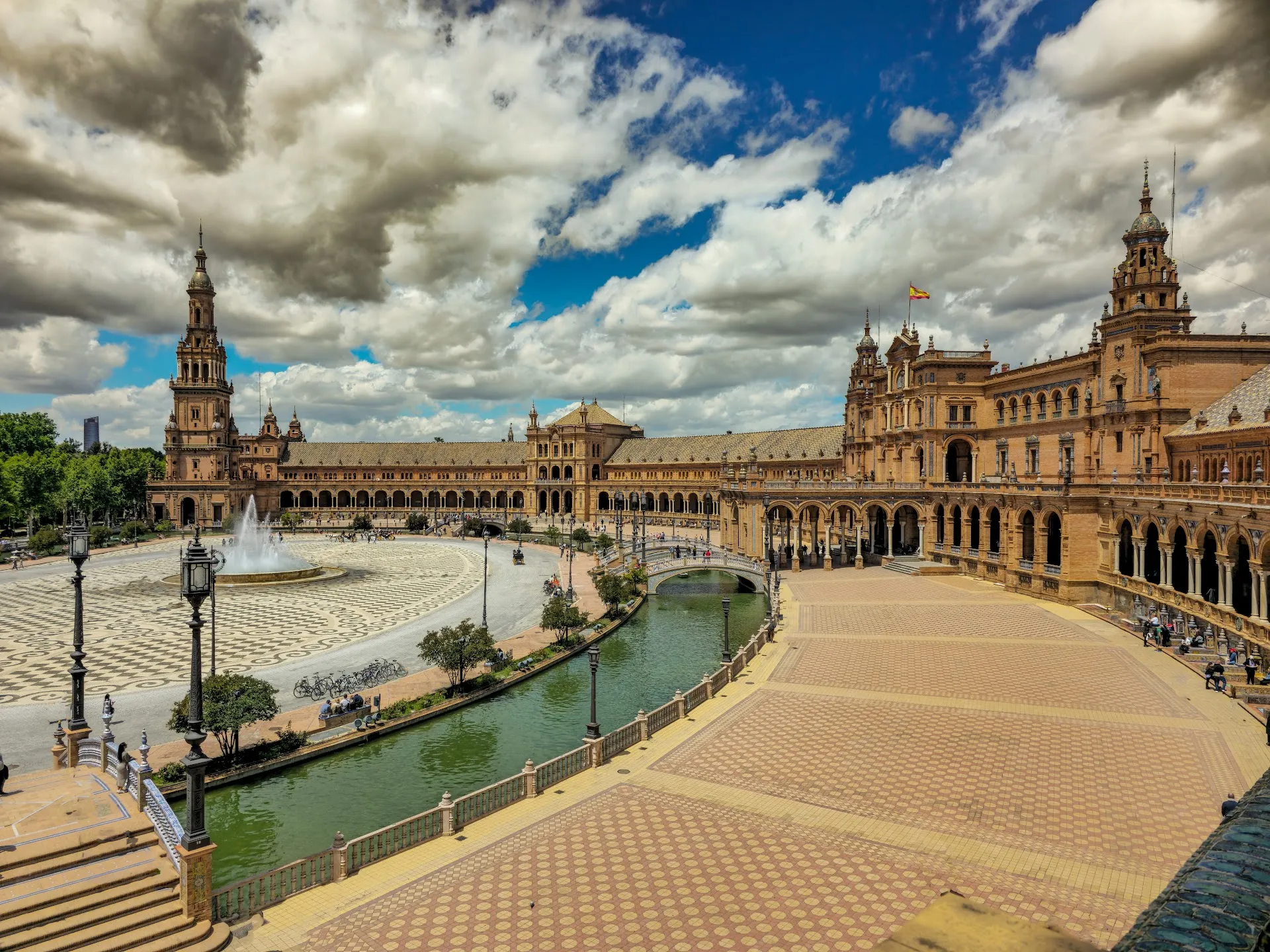
Plaza de España
A monumental semicircular plaza built for the 1929 Ibero-American Exposition, ringed by a tiled canal and bridges, with a glazed-ceramic alcove for each Spanish province. One of the most spectacular squares in Spain, and a Star Wars and Lawrence of Arabia filming location.
Parque de María Luisa
Seville's great green retreat along the river, redesigned in 1911 in a Moorish-paradise style of tiled fountains, shaded paths, and resident parakeets. It wraps around the Plaza de España and Plaza de América.
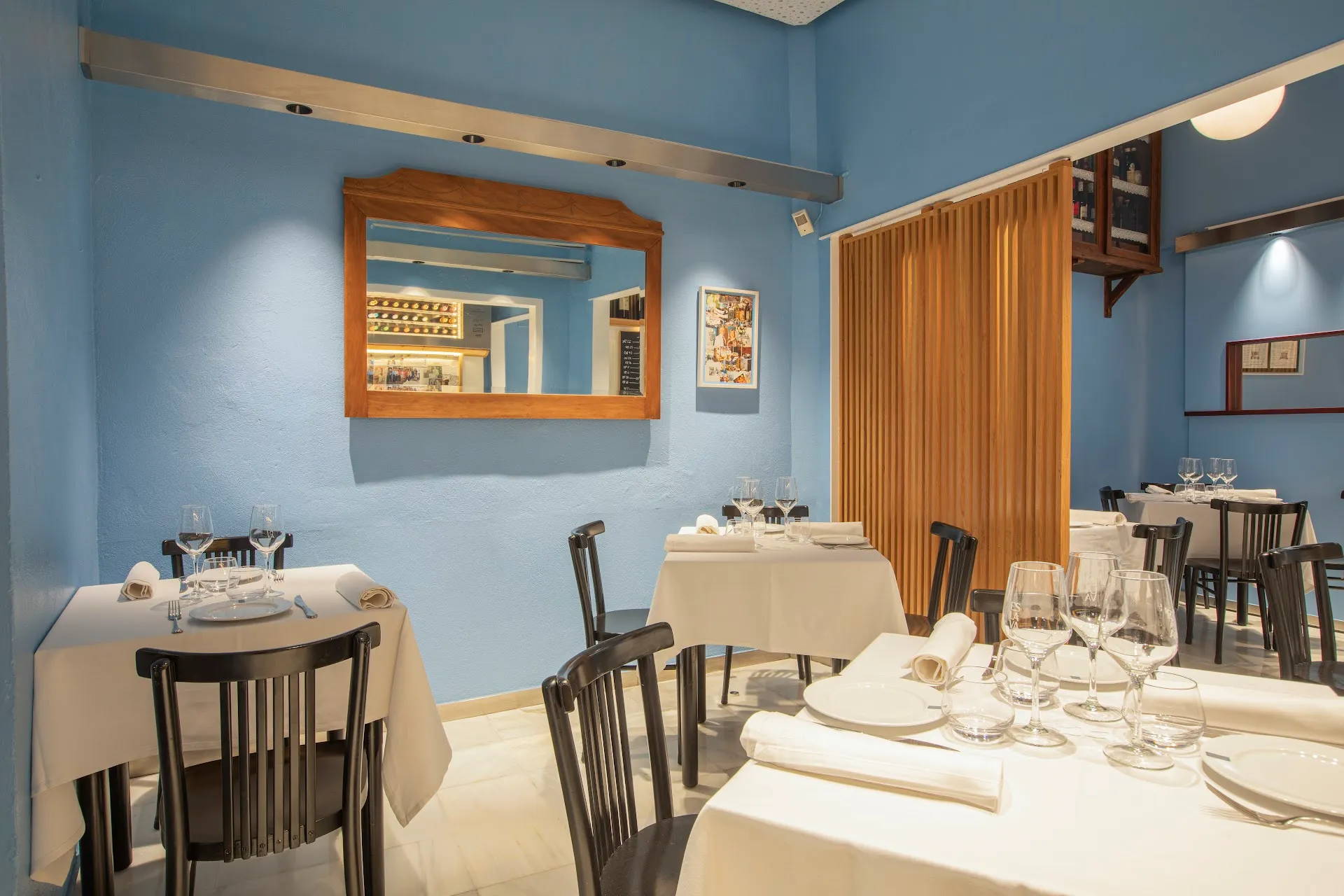
Espacio Eslava
The benchmark for modern Sevillano tapas, just off the Alameda. Famous for its slow-cooked pork rib glazed with honey and rosemary and its award-winning egg-on-mushroom-cake, both well worth the inevitable wait for a spot at the bar.
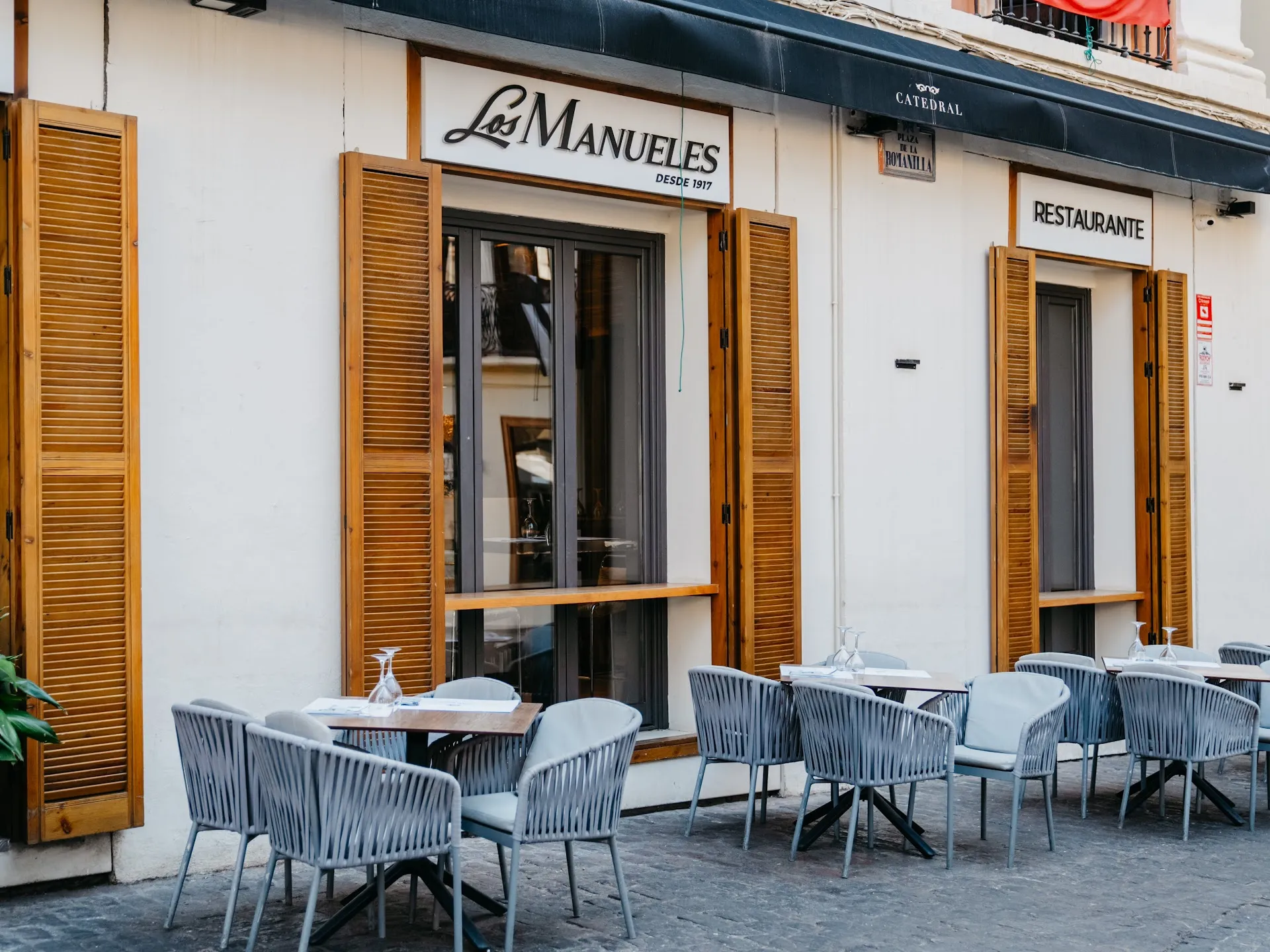
Los Manueles
A Granadan institution founded in 1917, once a haunt of bullfighters and flamenco singers, now run as a large flagship on Reyes Católicos. The kitchen serves traditional Granada cooking: tortilla del Sacromonte, croquetas, habas con jamón, and slow-cooked rabo de toro. Bustling and classic, a genuine heritage brand.
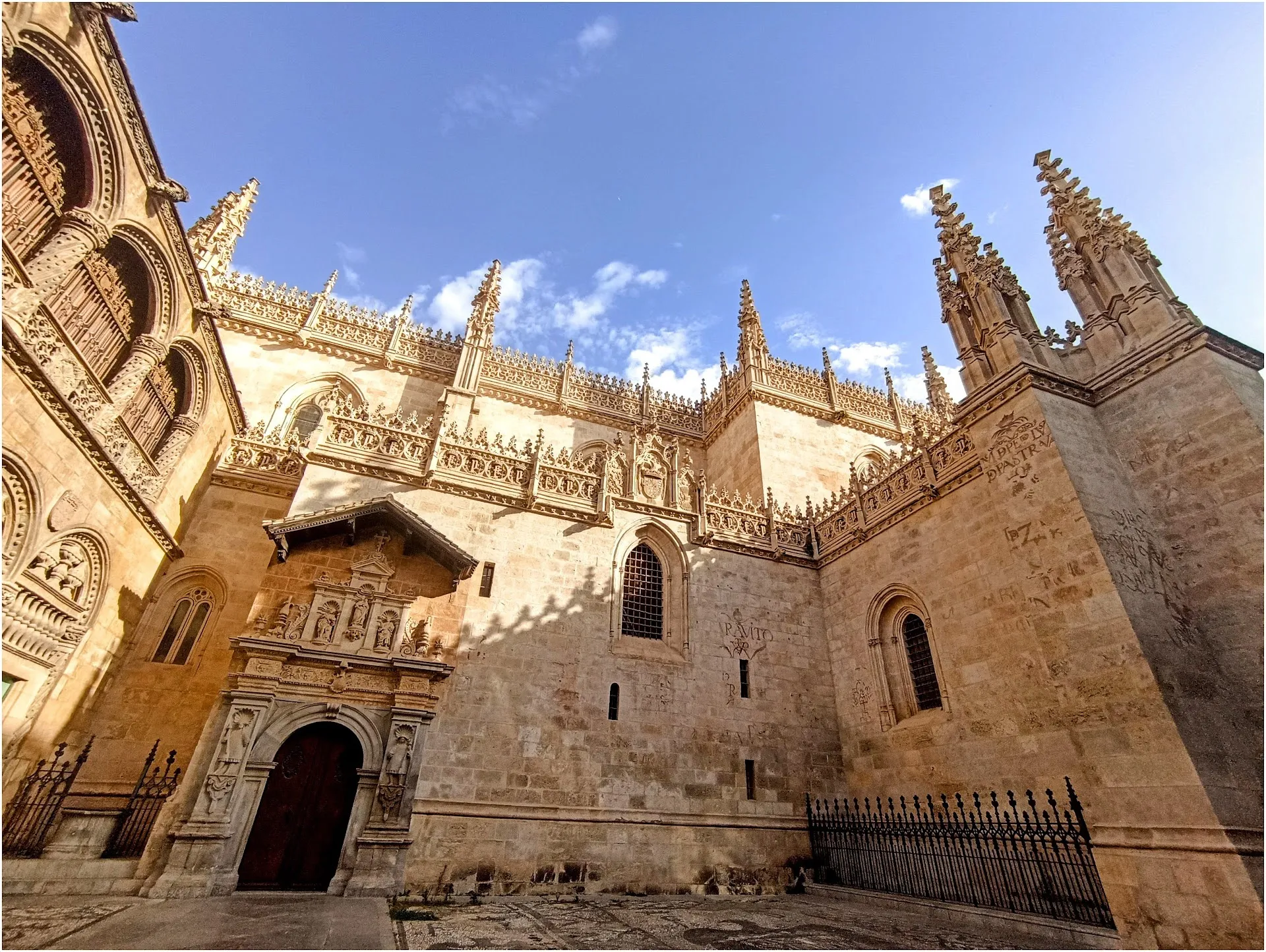
Royal Chapel (Capilla Real)
The Isabelline-Gothic mausoleum of the Catholic Monarchs, Isabella I of Castile and Ferdinand II of Aragon, who are entombed here alongside Joanna of Castile and Philip the Fair. Built between 1505 and 1517, it holds their carved marble sepulchres, a celebrated Renaissance reredos, and Isabella's personal art collection in the sacristy. It is one of Granada's most historically charged interiors.
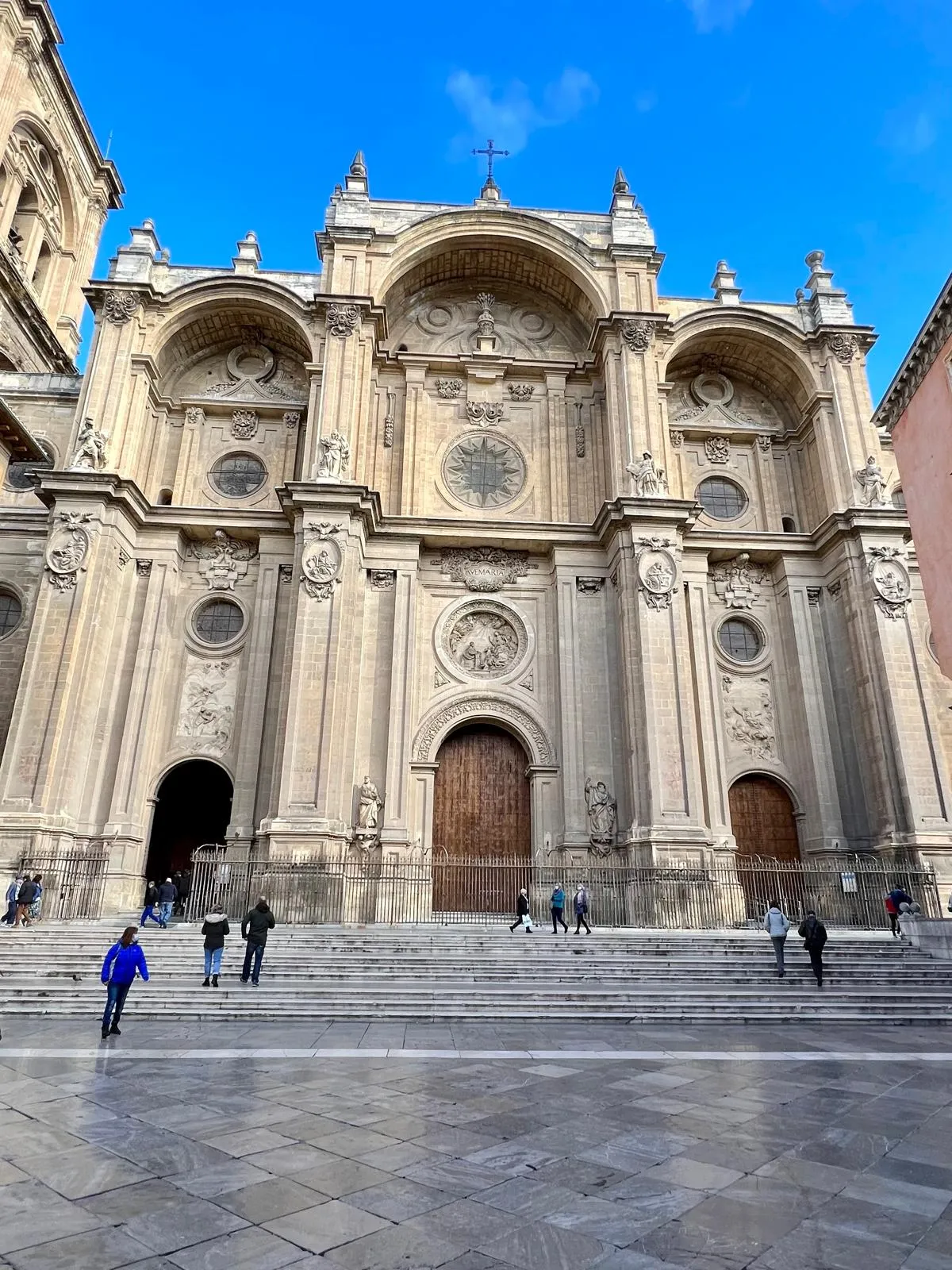
Granada Cathedral
The Cathedral of the Incarnation is a landmark of the Spanish Renaissance, begun in 1523 on Gothic foundations and largely shaped by the architect Diego de Siloé. Its luminous white interior, soaring round Capilla Mayor, and Alonso Cano's Baroque facade make it one of the most important Renaissance churches in Spain. It was built over the city's former main mosque after the 1492 Reconquest.
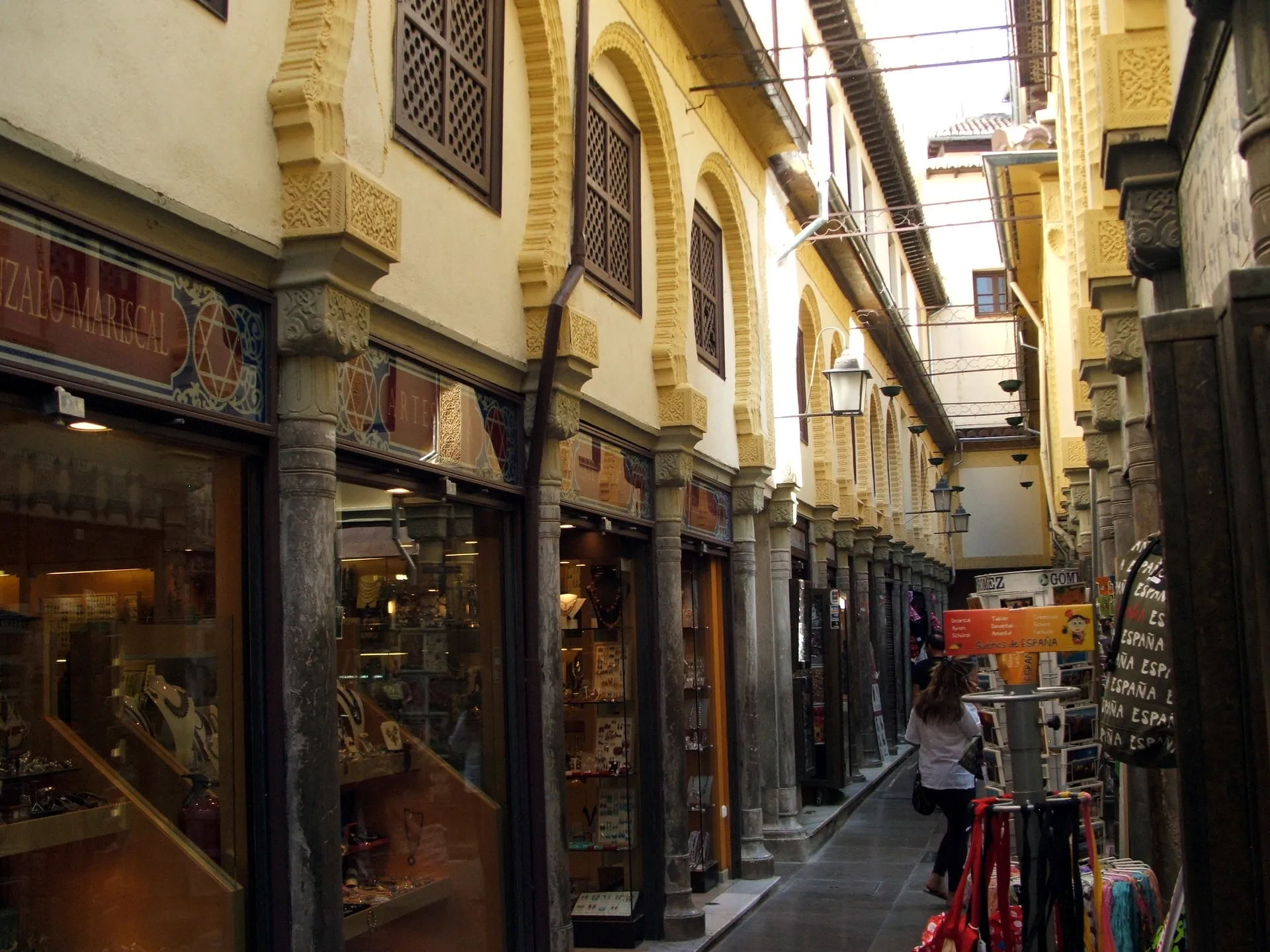
Alcaicería
A cluster of narrow market lanes on the site of Granada's former Nasrid silk bazaar, where silk, spices, and luxury goods were once traded under lock and key. The original burned in 1843 and was rebuilt smaller in a Neo-Moorish style of horseshoe arches and tiled storefronts. Today its stalls sell ceramics, lamps, leather, and souvenirs.
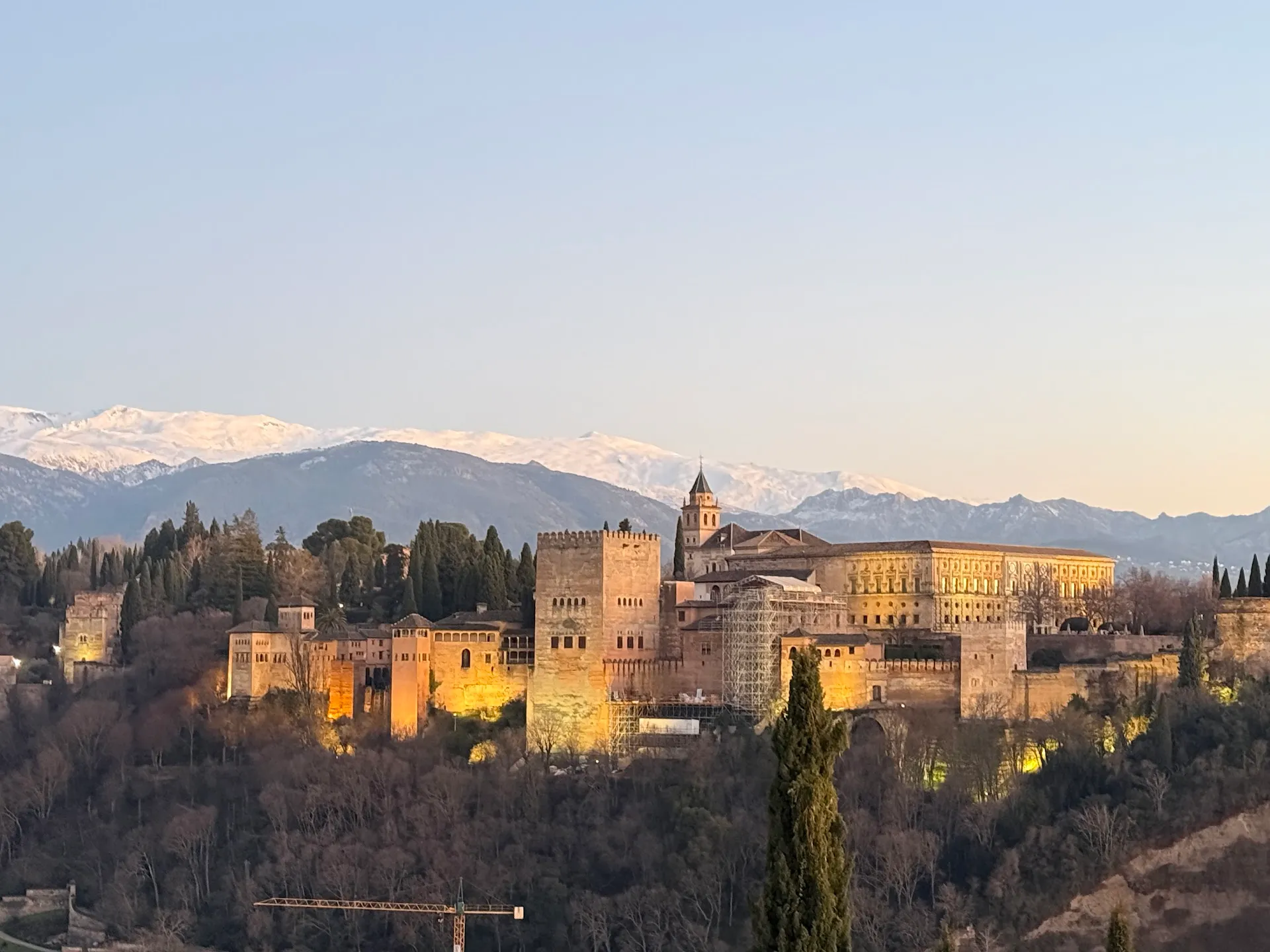
Mirador de San Nicolás
The terrace beside the 16th-century Church of San Nicolás is Granada's most famous viewpoint, looking straight across the Darro ravine to the full length of the Alhambra. Crowds, buskers, and guitar music gather here nightly to watch the walls catch the setting sun. The square sits at the top of the Albaicín's web of cobbled lanes.

Bar Los Diamantes
The original 1942 outpost of Granada's most famous fried-seafood bar, a cramped, deafening standing-room joint where you shout your order from the doorway. Every drink brings a generous free tapa of fried prawns, baby squid, or Sacromonte omelette. A rite of passage on the Calle Navas tapas crawl.
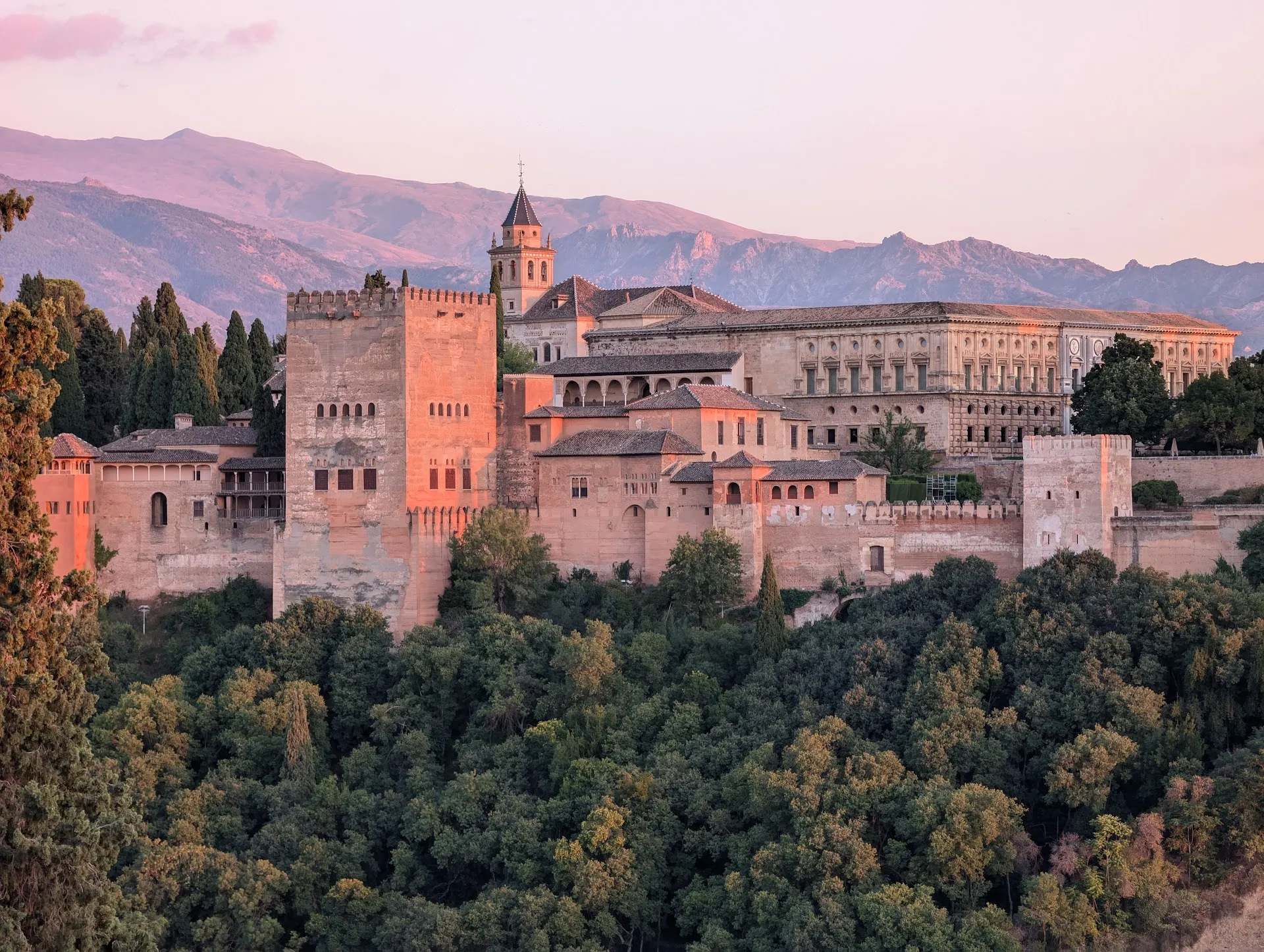
The Alhambra
A Nasrid-era palatine city and fortress begun in 1238, the only medieval Islamic palace complex of its scale to survive so well preserved. It clusters the Nasrid Palaces, the Alcazaba citadel, the Partal, and the Renaissance Palace of Charles V across a walled hilltop plateau. It is a UNESCO World Heritage Site and Spain's most-visited monument.
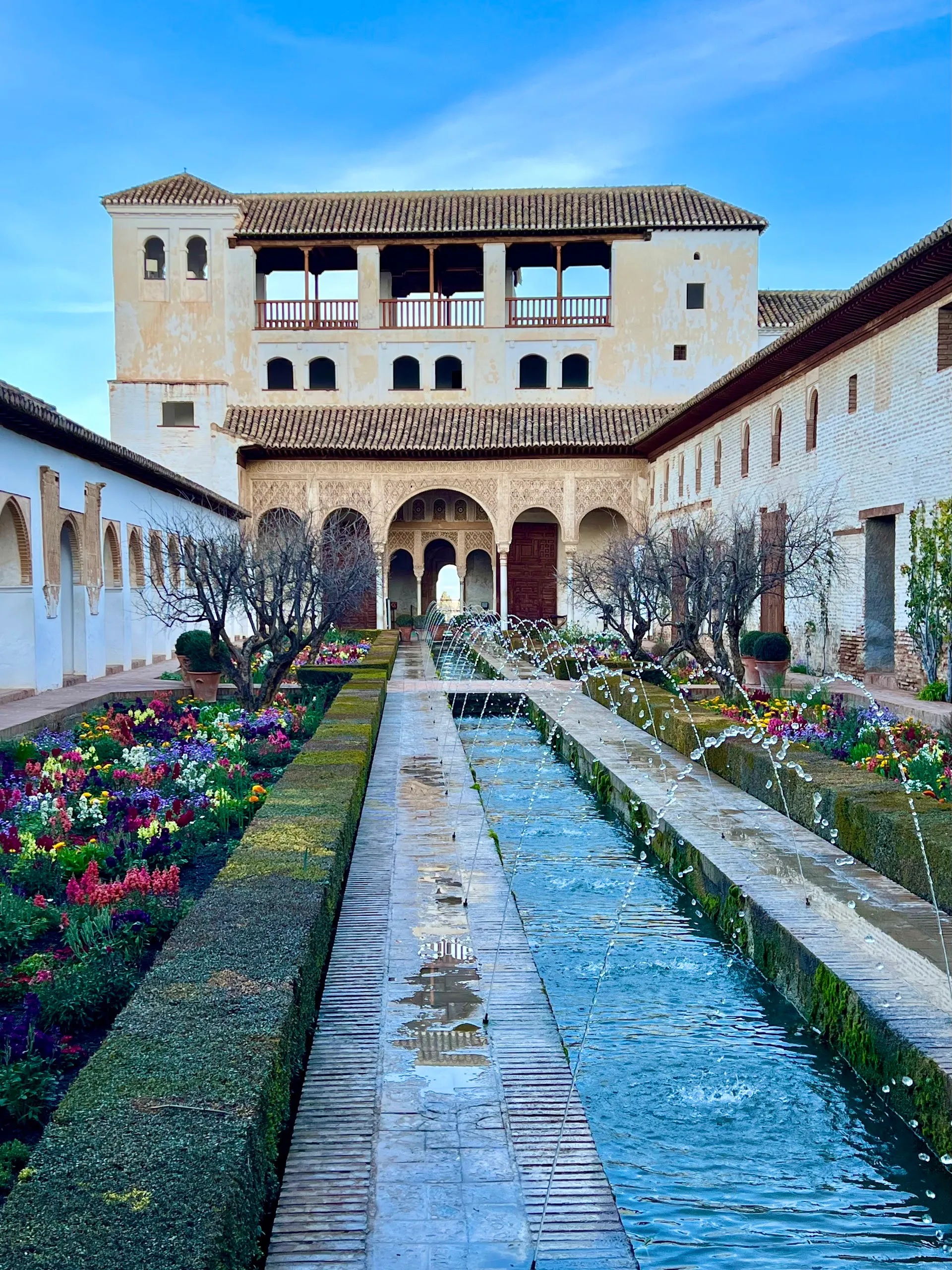
Generalife Gardens
The summer palace and country estate of the Nasrid emirs, a retreat of terraced gardens, fountains, and water channels just above the Alhambra. Its centrepiece, the Patio de la Acequia, is a long pool flanked by arcing water jets and clipped hedges. It is one of the oldest surviving Moorish gardens and part of the Alhambra's UNESCO inscription.
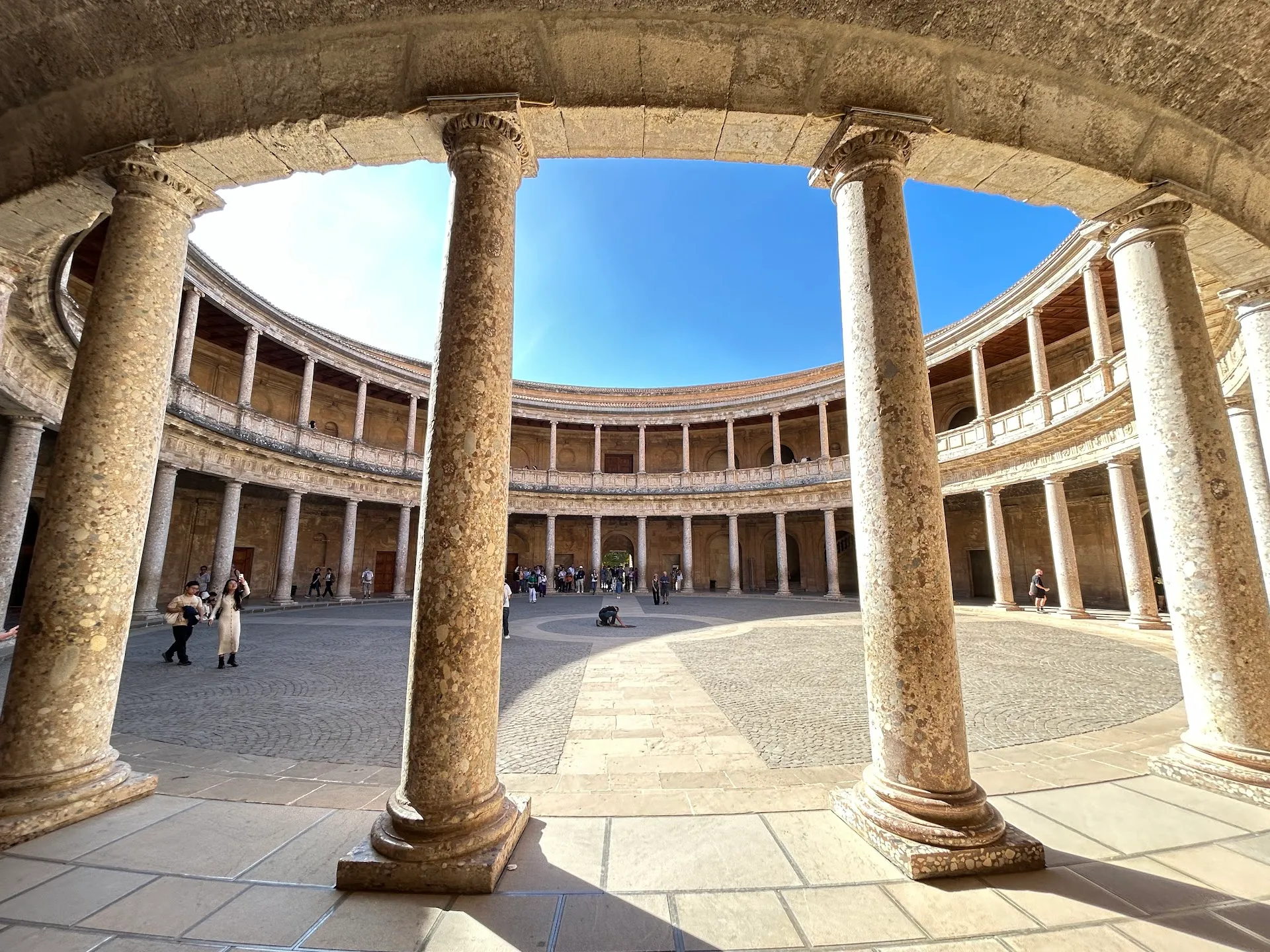
Palace of Charles V
A Renaissance palace commissioned by Emperor Charles V in 1527 and designed by Pedro Machuca, set incongruously among the Nasrid buildings of the Alhambra. Its hallmark is a perfectly circular two-storey colonnaded courtyard inside a square block, a pioneering High Renaissance design. It now houses the Alhambra Museum and the Fine Arts Museum of Granada.
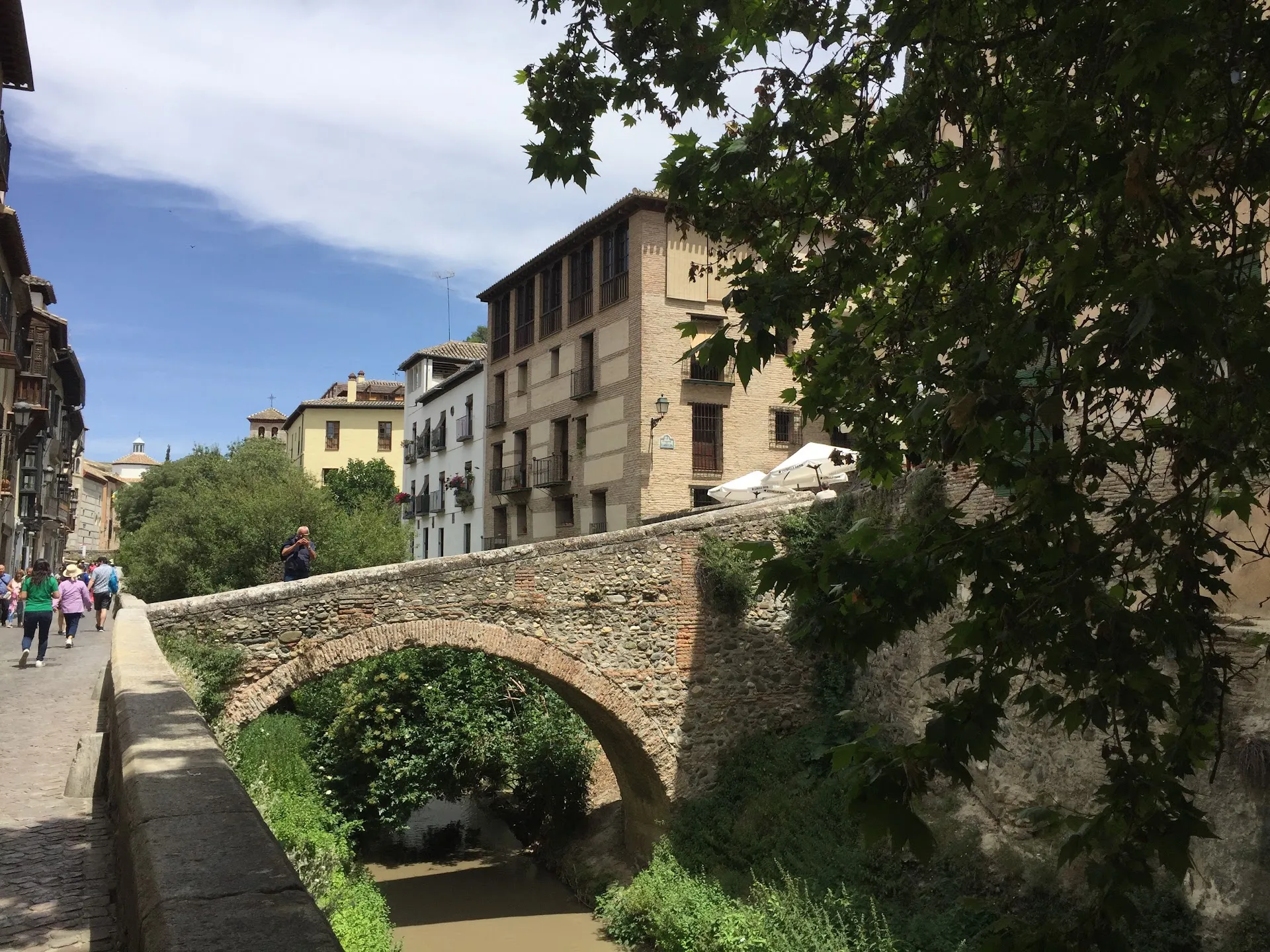
Carrera del Darro
A narrow cobbled medieval street running along the Darro river from Plaza Nueva toward the Paseo de los Tristes, widely called Granada's most beautiful walk. It is lined with Renaissance mansions, the 11th-century El Bañuelo Arab baths, and a pair of early bridges. Above it rise the walls of the Alhambra.
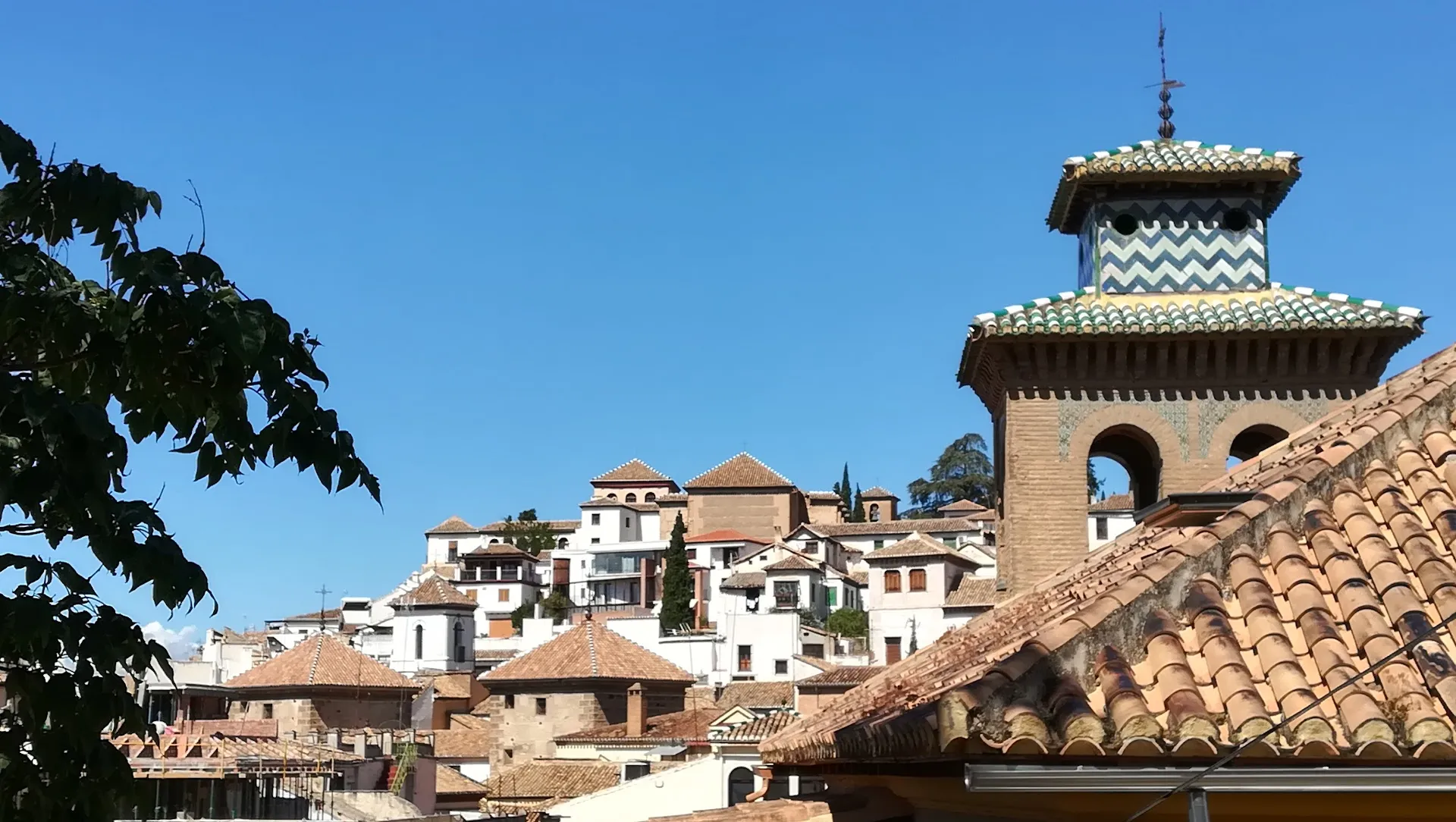
Albaicín
Granada's old Moorish quarter, a maze of steep cobbled streets, carmenes (walled villa-gardens), and whitewashed houses that preserve the medieval Muslim street plan. It was inscribed by UNESCO together with the Alhambra and Generalife. Plaza Larga, with its market stalls and the Arco de las Pesas gateway, is its everyday gathering point.
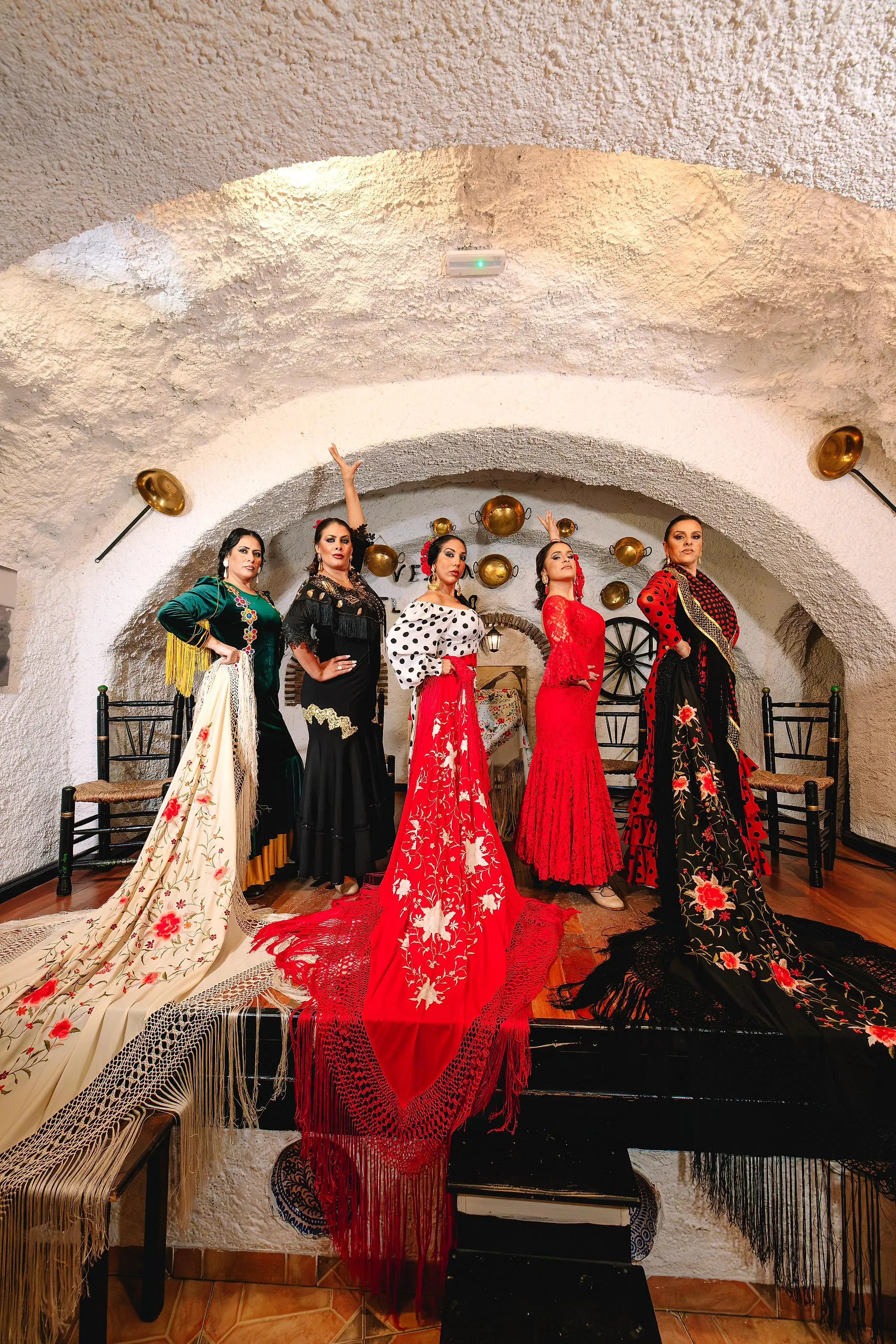
Sacromonte Cave Flamenco Show (Venta El Gallo)
A live flamenco performance staged inside a whitewashed Sacromonte cave, showcasing the zambra gitana, the rhythmic Romani dance style born in these very hillside caves. Roughly eight artists perform cante, guitar, and baile at close range, with an optional Andalusian dinner and a rooftop terrace facing the Alhambra. An authentic alternative to a polished theatre production.
Day by day
The great monuments & Barrio de Santa Cruz
Real Alcázar of Seville
Start at the Real Alcázar, the dazzling Mudéjar royal palace begun by Moorish rulers and expanded by Christian kings, where tiled courtyards and carved stucco open onto lush gardens (and Dorne, to Game of Thrones fans).
Tip: Book the first timed slot online to walk the Patio de las Doncellas before the crowds; save plenty of time for the gardens.
Seville Cathedral & La Giralda
Cross to Seville Cathedral, the largest Gothic church in the world, raised over a mosque and holding Columbus's tomb, then climb its bell tower, La Giralda, a converted Almohad minaret scaled by 35 gentle ramps.
Tip: Cover shoulders and knees to enter; the ramp up the Giralda is easier than it looks and the rooftop view is the reward.
13:30Las Teresas
Lunch in Santa Cruz at Las Teresas, an 1870 tavern hung thick with Iberian hams and old Holy Week photos, where a plate of jamón ibérico and a glass of manzanilla is the order.
Tip: Squeeze in at the marble bar or grab an outside table on the lane; touristy by location, but the quality holds up.
16:00Barrio de Santa Cruz
Spend the afternoon getting lost in the Barrio de Santa Cruz, the old Jewish quarter's labyrinth of whitewashed lanes, flower-filled patios and tiny orange-tree squares pressed against the Alcázar walls.
Tip: Skip the map and seek out Calle Agua, Plaza de Doña Elvira and the shady Jardines de Murillo; the charm is in getting lost.
Casa de la Memoria
End the day with pure flamenco at Casa de la Memoria, an intimate 85-seat venue in the old stables of a Renaissance palace, widely rated the best place in the city to hear serious cante, guitar and dance.
Tip: Shows sell out, so reserve online ahead; there's no food or drink, the focus is the performance, so eat tapas afterwards on nearby Calle Mateos Gago.
Triana, the bullring & sunset on the river
Mercado de Triana
Cross the river to Triana, the old potters' and sailors' quarter, and start in its covered market built over a medieval castle, where fish and produce stalls share the hall with tapas counters and ceramics.
Tip: The Castillo de San Jorge Inquisition-museum ruins sit free beneath the market; graze at an in-market bar for fresh fried fish.
12:00Plaza de Toros de la Maestranza
Back over the Isabel II bridge in El Arenal, tour the Plaza de Toros de la Maestranza, Spain's oldest and loveliest bullring, a white-and-ochre Baroque arena begun in 1749, taking in the ring, royal box and Museo Taurino.
Tip: Tours run roughly every 30 minutes in several languages; pair it with the riverside walk to the nearby Torre del Oro.
La Brunilda
Lunch at La Brunilda, a small, bright El Arenal favourite turning out inventive modern tapas — slow-cooked octopus, creamy risottos — that consistently rank among the best in Seville.
Tip: No reservations and tiny: arrive right at opening (13:00) or be ready to queue, the line moves.
17:30Guadalquivir River Sightseeing Cruise
Take a one-hour Guadalquivir river cruise from the pier beside the Torre del Oro, gliding past the gilded watchtower, the Triana waterfront and the Isabel II bridge on the river that once carried Seville's New World riches.
Tip: Go near sunset for the best light and sit on the open upper deck; buy at the Torre del Oro kiosk, no need to pre-book.
Book this tour19:30Calle Betis & the Triana Riverside
Finish on Calle Betis, the row of colourful house-fronts and terrace bars lining the Triana bank, for the classic Seville sunset with the Giralda and Torre del Oro glowing gold across the water.
Tip: Grab a riverside table or sit on the wall; stay on for dinner at a Triana classic like Bar Las Golondrinas, then the late-night bars along the strip.
Centro, Las Setas & the 1929 expo grandeur
10:00Metropol Parasol (Las Setas)
Ride the lift up Las Setas (the Metropol Parasol), the vast undulating timber canopy billed as the world's largest wooden structure, for a rooftop walkway with a 360-degree sweep over the old town's roofs to the Giralda and the hills.
Tip: The Mirador ticket is valid for two visits within 48 hours, so come back at blue hour; Roman ruins and a food market sit beneath.
Casa de Pilatos
Walk to the Casa de Pilatos, a sumptuous 16th-century palace blending Mudéjar, Gothic and Italian Renaissance, with an exquisitely tiled central patio and serene gardens — the finest noble house in Seville, and far quieter than the Alcázar.
Tip: Add the upper floor, still the Medinaceli family's home, for the painted ceilings if it's open.
El Rinconcillo
Lunch at El Rinconcillo, said to be the oldest tapas bar in Spain, pouring since 1670 beneath hanging hams and painted tiles, where the waiter still chalks your tab on the wooden bar.
Tip: Order the espinacas con garbanzos (spinach with chickpeas) and a fino sherry; go early, it gets packed at peak.
16:00Plaza de España
Cross to the Plaza de España, the breathtaking semicircular plaza built for the 1929 Ibero-American Exposition, ringed by a tiled canal and bridges with a glazed-ceramic alcove for every Spanish province (and a Star Wars cameo).
Tip: Rent a rowboat on the canal, find your home province's tiled bench, and shoot from the upper gallery for the wide view.
Parque de María Luisa
Wander straight into the Parque de María Luisa, Seville's great green retreat of tiled fountains, shaded paths and resident parakeets, laid out in a Moorish-paradise style around the plaza.
Tip: Rent a four-seat pedal cart by the Plaza de España; the park stays cool and shaded even in the summer heat.
Espacio Eslava
Mark your last Seville night at Espacio Eslava, the benchmark for modern Sevillano tapas just off the Alameda, famous for its honey-and-rosemary glazed pork rib and its award-winning egg-on-mushroom-cake.
Tip: No bar reservations — put your name down and wait with a drink; the costilla a la miel is the dish to order.
East to Granada: the Cathedral, the old town & a sunset Alhambra view
Los Manueles
Arrive in Granada and settle in over lunch at Los Manueles, a 1917 institution once haunted by bullfighters and flamenco singers, serving Granadino classics like tortilla del Sacromonte and slow-cooked rabo de toro.
Tip: It's a few steps from Plaza Nueva and Reyes Católicos — a handy first orientation point in the lower town.
15:30Royal Chapel (Capilla Real)
Begin at the Royal Chapel, the Isabelline-Gothic mausoleum of the Catholic Monarchs Isabella and Ferdinand, whose carved marble tombs rise above the plain lead coffins in the crypt, alongside Isabella's personal art collection.
Tip: Photography is banned inside, so just look; go down to the crypt, then pair it with the Cathedral next door on a combined ticket.
16:15Granada Cathedral
Step next door into Granada Cathedral, a luminous white landmark of the Spanish Renaissance begun in 1523 by Diego de Siloé, its soaring round Capilla Mayor and gilded high chapel raised over the city's former main mosque.
Tip: The scale reads best from the central crossing; the white stone and gilding glow in late-morning to midday light.
17:30Alcaicería
Thread through the Alcaicería, the lantern-strung lanes of Granada's old Nasrid silk bazaar, rebuilt in Neo-Moorish style of horseshoe arches and tiled storefronts, now selling ceramics, lamps and leather between the Cathedral and Plaza Bib-Rambla.
Tip: Prices are tourist-facing, so compare a few stalls; the alleys photograph best looking down their length toward an arch.
20:00Mirador de San Nicolás
Climb into the Albaicín for sunset at the Mirador de San Nicolás, Granada's most famous viewpoint, looking straight across the Darro ravine to the full length of the Alhambra glowing red-gold against the Sierra Nevada.
Tip: Arrive 30-45 minutes early for a spot at the front wall, mind your belongings in the crowd, and walk up through the teterías of Calle Calderería Nueva.
Bar Los Diamantes
Dive into Granada's free-tapas ritual on Calle Navas at Bar Los Diamantes, a deafening 1942 standing-room institution where every drink lands a generous plate of fried prawns, baby squid or Sacromonte omelette.
Tip: Shout your order from the doorway, come early to fit in, and bar-hop the rest of Calle Navas — each new drink brings another free tapa.
The Alhambra, the Albaicín & a Sacromonte cave
08:30The Alhambra
Give the morning to the Alhambra, the Nasrid palace-city begun in 1238 and the only medieval Islamic palace complex of its scale to survive so intact — the honeycombed Nasrid Palaces, the Court of the Lions and the Alcazaba citadel's tower-top views.
Tip: Enter the Nasrid Palaces at your fixed timed slot (booked weeks ahead) and take the first morning entry to photograph the Court of the Lions before the tour groups.
10:30Generalife Gardens
Walk to the Generalife, the Nasrid emirs' summer estate of terraced gardens, fountains and water channels, centred on the long reflecting pool of the Patio de la Acequia — one of the oldest surviving Moorish gardens.
Tip: It sits at the far end of the complex, so leave time to walk over; the rose and oleander beds peak in May and June.
12:00Palace of Charles V
On the way out, step into the Palace of Charles V, a 1527 High Renaissance block hiding a perfectly circular two-storey colonnaded courtyard, set incongruously among the Moorish buildings and now home to the Alhambra Museum.
Tip: The courtyard is free and needs no Nasrid ticket; stand at the exact centre of the ring for the cleanest shot, and test the acoustics under the colonnade.
14:30Carrera del Darro
Drop down for a late lunch and walk the Carrera del Darro, the narrow cobbled medieval street following the river from Plaza Nueva, lined with Renaissance mansions and the 11th-century El Bañuelo Arab baths, the Alhambra's walls rising above.
Tip: Shoot from the little stone bridges looking upriver with the Alhambra towers behind, and carry on to the Paseo de los Tristes.
17:30Albaicín
Lose the afternoon in the Albaicín, Granada's UNESCO-listed Moorish quarter of steep cobbled lanes, carmenes (walled villa-gardens) and whitewashed houses that still trace the medieval Muslim street plan, gathering at Plaza Larga and the Arco de las Pesas.
Tip: Pause for a mint tea in a Calderería Nueva tetería; the C31 and C32 minibuses from Plaza Nueva save the climb if your legs are done.
21:00Sacromonte Cave Flamenco Show (Venta El Gallo)
End in Sacromonte, the hillside of whitewashed cave-dwellings that birthed the zambra style of flamenco, with a live cave show at Venta El Gallo — cante, guitar and the rhythmic Romani baile at close range, the Alhambra floodlit across the valley.
Tip: Book ahead; the caves are tiny and sell out nightly. Wear flat shoes for the steep cobbles, or take a combo ticket with a transfer from the centre.
Book this tourGetting between stops
What it costs
Andalusia is solid mid-range value, with monument tickets the main spend. A comfortable day runs roughly €100-180 per person: figure the Real Alcázar at €15.50, the Seville Cathedral and Giralda at €12, and the Alhambra at about €18-19 (book ahead). Seville eats well from €3-6 tapas, while Granada still pours a free tapa with most drinks, so a tapeo dinner can cost little more than your beer or wine. The Seville–Granada coach is about €12-24 booked in advance, flamenco shows run €25-49, and an Arab-baths session from €38-44.~€100-180 / day mid-range (about $108-195) / day
Frequently asked questions
- How do I get from Seville to Granada?
- It's an easy half-day hop with no car needed. ALSA runs direct coaches from Seville's Plaza de Armas station to Granada's main bus station in about three hours, with a dozen-plus departures a day from around €12-24 if you book ahead. Renfe's high-speed Avant and AVE trains from Sevilla Santa Justa are faster, at roughly 2h30-3h, but run only about four times a day (from around €20-30). Book either online in advance for the best fare.
- Do I really need to book the Alhambra in advance?
- Yes — this is the one ticket you cannot leave to chance. The Alhambra is Spain's most-visited monument, and entry to the Nasrid Palaces is capped to a fixed half-hour timed slot that routinely sells out weeks ahead. Book the moment your dates are set on the official site (or take a guided skip-the-line tour), bring the ID that matches your booking, and aim for the first morning slot to see the Court of the Lions before the crowds.
- Is five days enough for Seville and Granada?
- Comfortably, for a first visit. Three days in Seville cover the Real Alcázar, the Cathedral and Giralda, Santa Cruz, Triana and the Plaza de España, with time for tapas and flamenco; two days in Granada are enough for the Alhambra and Generalife, the Albaicín, the Cathedral and Royal Chapel, and a Sacromonte cave show. The two cities sit about three hours apart, so you lose only half a day to the journey.
- How does Granada's free-tapas tradition work?
- Granada is one of the last Spanish cities where a free tapa still comes with every drink — and it often arrives chef's choice. Order a beer, wine or vermouth at a classic like Bar Los Diamantes or Bodegas Castañeda and a plate of fried fish, jamón or Sacromonte omelette appears for nothing, which turns a crawl along Calle Navas or Calle Elvira into a cheap, delicious dinner. Seville, by contrast, generally charges for its (often more elaborate) tapas.
- When is the best time to visit Andalusia?
- Spring (March-May) and autumn (September-October) are ideal — warm but not punishing, with Seville's orange blossom and jacaranda and the Generalife gardens at their best. High summer can top 40°C in Seville, so in July or August sightsee early and rest through the midday heat. Holy Week and Seville's April Feria are spectacular but crowded and expensive; winter is mild, quiet and the monuments are at their calmest.
- What if I have more time?
- From Seville, Córdoba and its great Mezquita-Catedral make a brilliant day trip, barely 45 minutes away by AVE; from Granada, the white villages of the Alpujarras in the Sierra Nevada foothills are a scenic full-day escape. Either slots neatly onto the end of this route, which works as the Andalusian leg of a longer Grand Tour of Spain.
Make this trip yours
Save this itinerary and customize it — dates, stops, budget and friends, all in one place.