
This ten-day route runs the length of Spain on its superb high-speed trains, linking four cities that each feel like a different country. You'll start with three days in Madrid — the Prado and Reina Sofía, the Habsburg squares of the old centre and late-night tapas in La Latina — then board the AVE south to Seville, where the Real Alcázar, the Giralda and Triana's flamenco bars wait under the Andalusian sun. From there it's east to Valencia for paella by the sea and Calatrava's futuristic City of Arts and Sciences, and finally up the Mediterranean coast to Barcelona and Gaudí's Sagrada Família, Park Güell and the Gothic Quarter. No car needed — just book your Renfe seats ahead and watch Spain roll past the window.
The Grand Tour of Spain: 10 Days from Madrid to Barcelona by Rail
10 days4 stopsFirst-time visitors who want Spain's headline cities — Madrid, Andalusia, the Mediterranean coast and Barcelona — linked by fast trains, no car required
The route
- Madrid3n
- Seville2n
- Valencia2n
- Barcelona2n
Everywhere you'll go
Every stop on this itinerary — tap a card for details or to save it.
Landmark
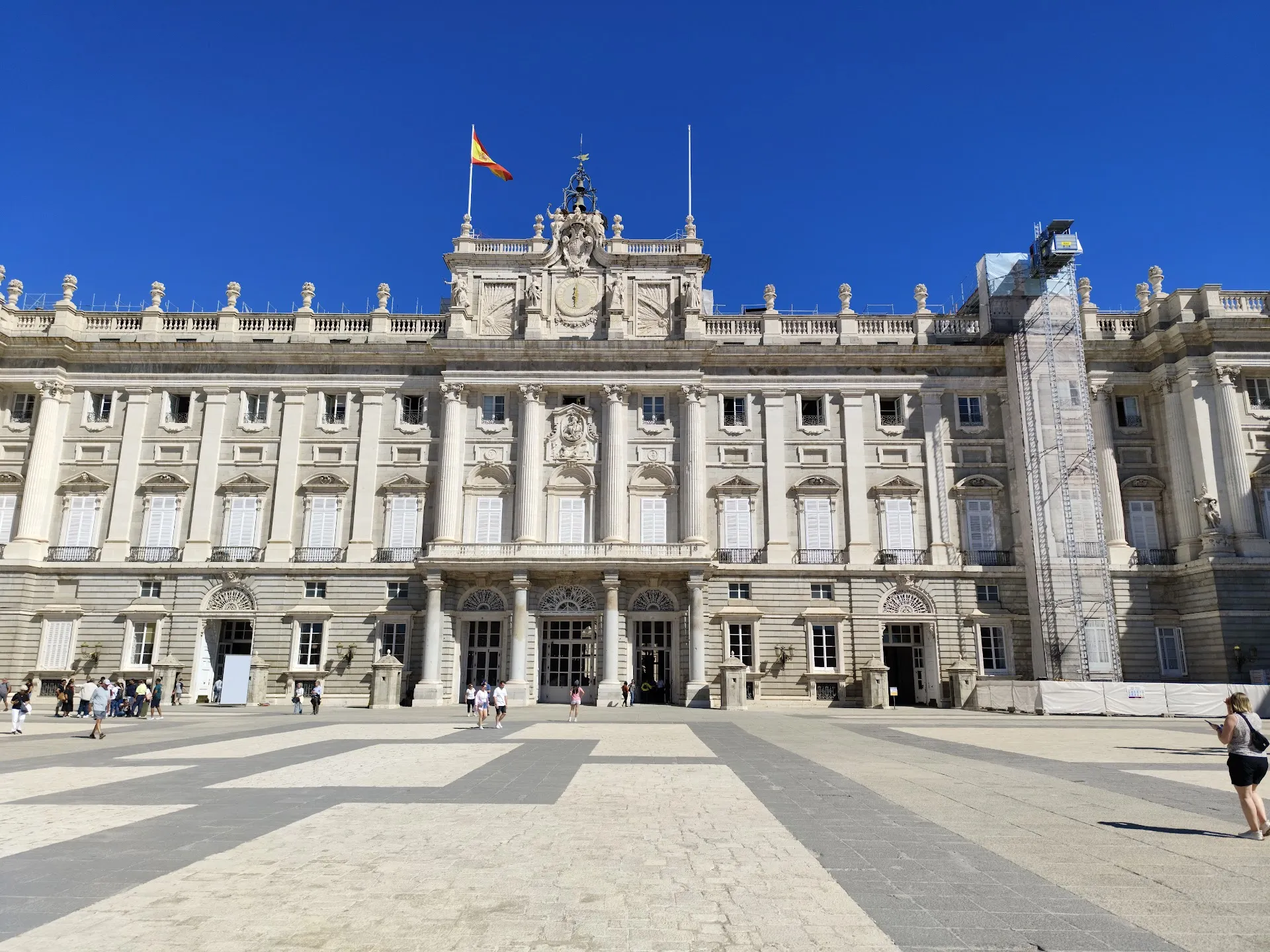
Royal Palace of Madrid (Palacio Real)
The largest functioning royal palace in Western Europe, completed in 1755 on the ruins of the old Habsburg Alcázar that burned in 1734. Although it remains the Spanish Crown's official residence, the royal family lives elsewhere, so its more than 3,000 rooms of Baroque and Neoclassical splendour are used for state ceremonies and opened to visitors.
Palacio, Centro
Landmark
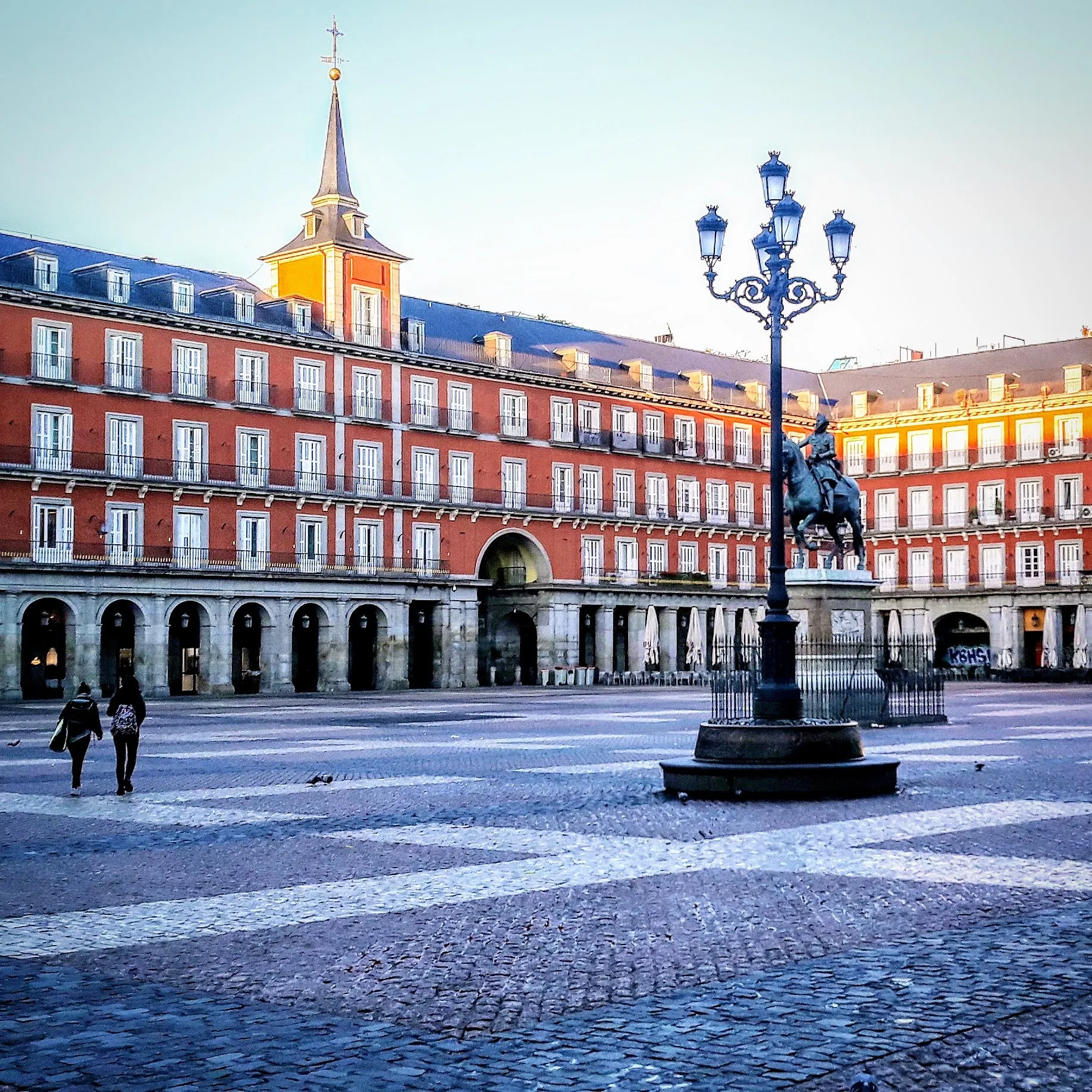
Plaza Mayor
The grand arcaded square that forms the monumental heart of Habsburg Madrid, completed in 1619 under Philip III and rebuilt by Juan de Villanueva after an 18th-century fire. Enclosed by uniform residential blocks with 237 balconies, it centres on a bronze equestrian statue of Philip III and the fresco-covered Casa de la Panadería.
Sol, Centro
Must visit
Market
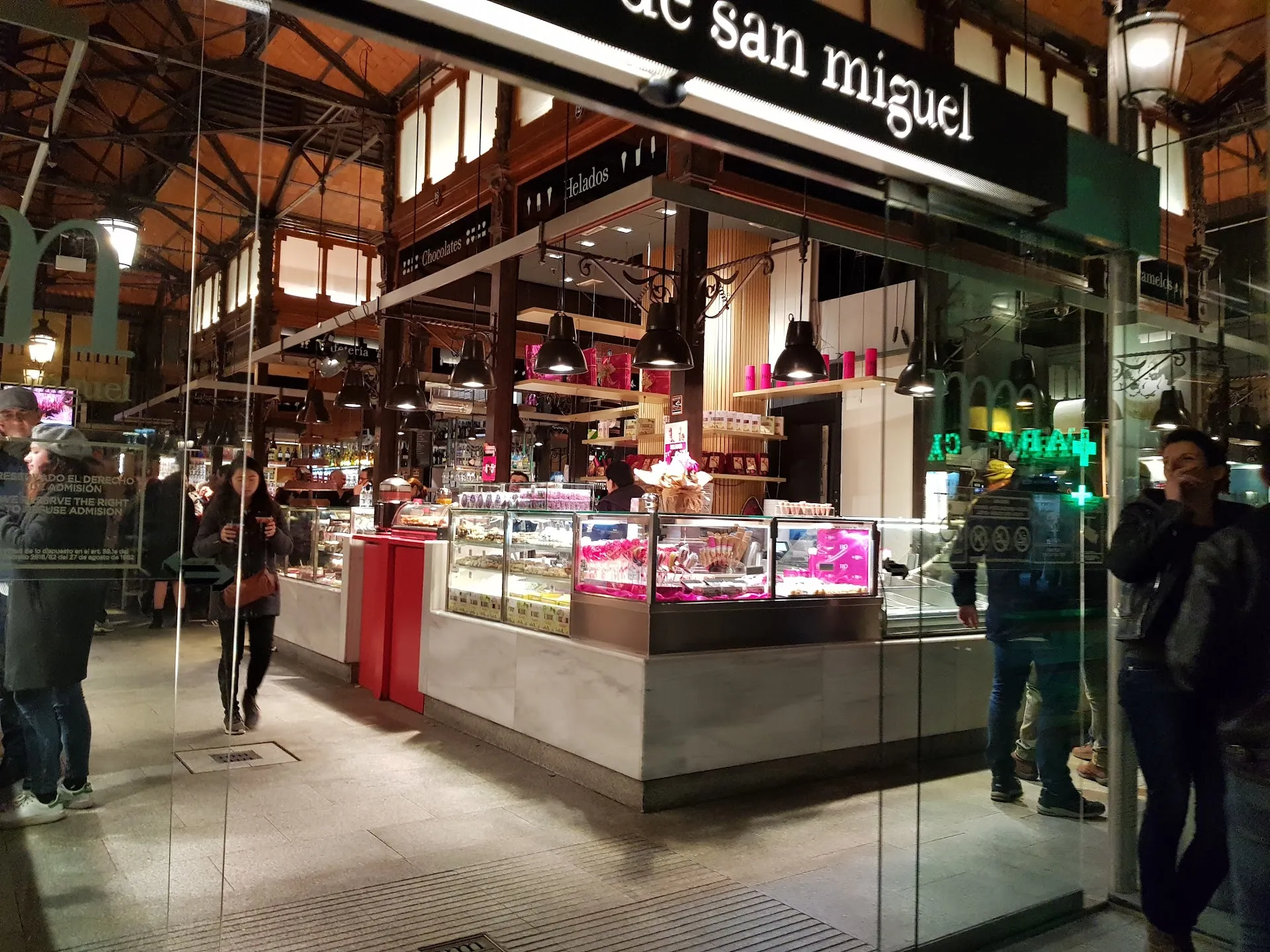
Mercado de San Miguel
A 1916 cast-iron-and-glass market beside Plaza Mayor that reopened in 2009 as Madrid's first gourmet food hall. Around 30 stands serve Spanish specialties from Galician seafood to Iberian ham, artisan cheeses, vermouth and oysters, eaten standing at shared counters. It is the city's most-visited market, unabashedly touristy but architecturally and gastronomically iconic.
Centro (Madrid de los Austrias)
Landmark
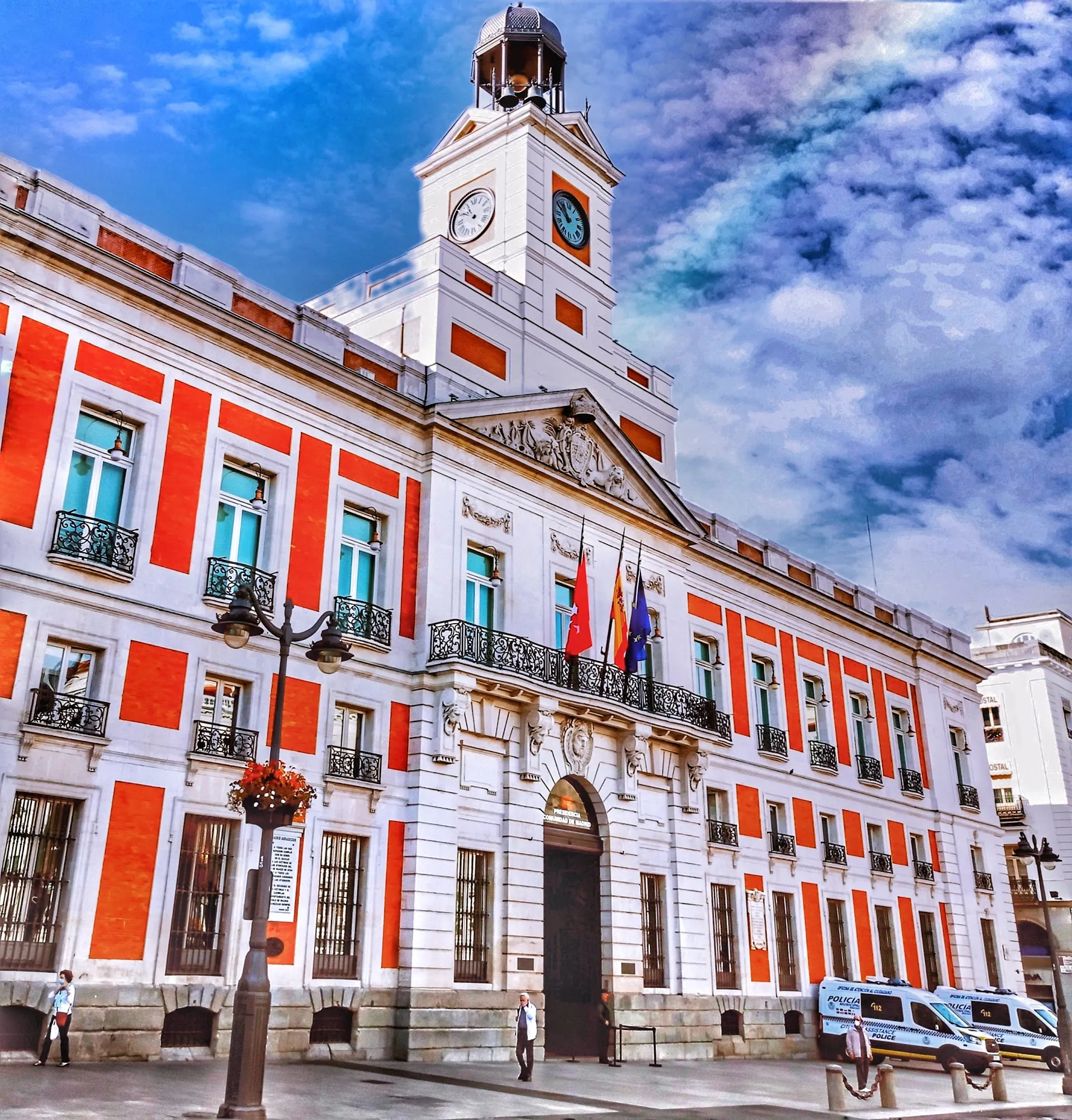
Puerta del Sol
Madrid's bustling central plaza and the symbolic centre of Spain, home to Kilometre Zero—the origin point of the country's six radial highways—and the bronze bear-and-strawberry-tree statue (El Oso y el Madroño) that is the city's emblem. Its clock chimes in the Spanish New Year before millions on television, and the historic Tío Pepe neon sign has presided over the square since 1936.
Sol, Centro
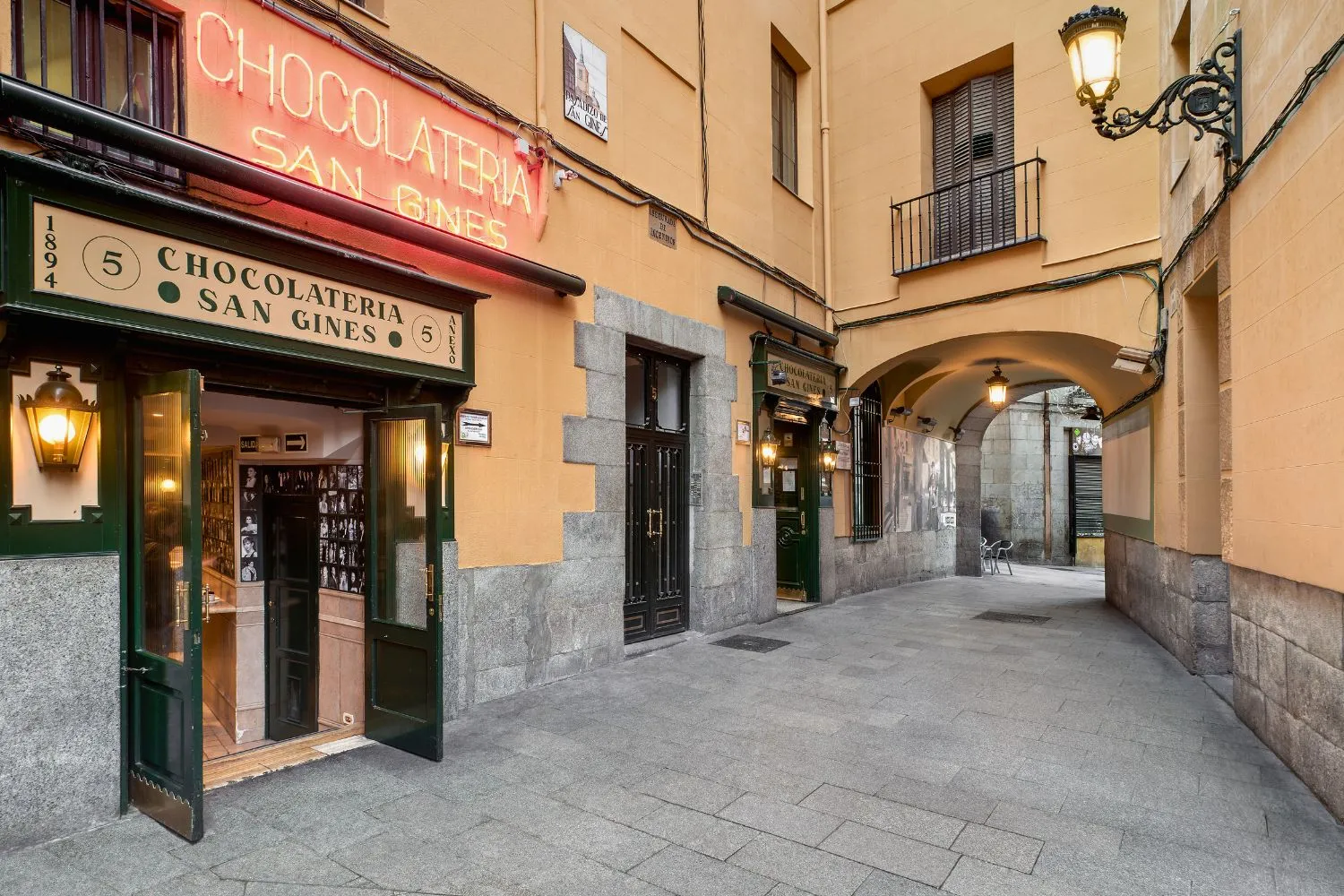
FoodInexpensive; classic chocolate con churros roughly €5–6
Chocolatería San Ginés
Open since 1894 in a green-and-marble hideaway off a passage beside the San Ginés church, this is Madrid's most famous spot for chocolate con churros — thick hot chocolate for dunking crisp fried churros and porras. Open around the clock, it is a ritual stop for theatre-goers and revellers ending a night out.
Centro (passage between Puerta del Sol and Ópera)
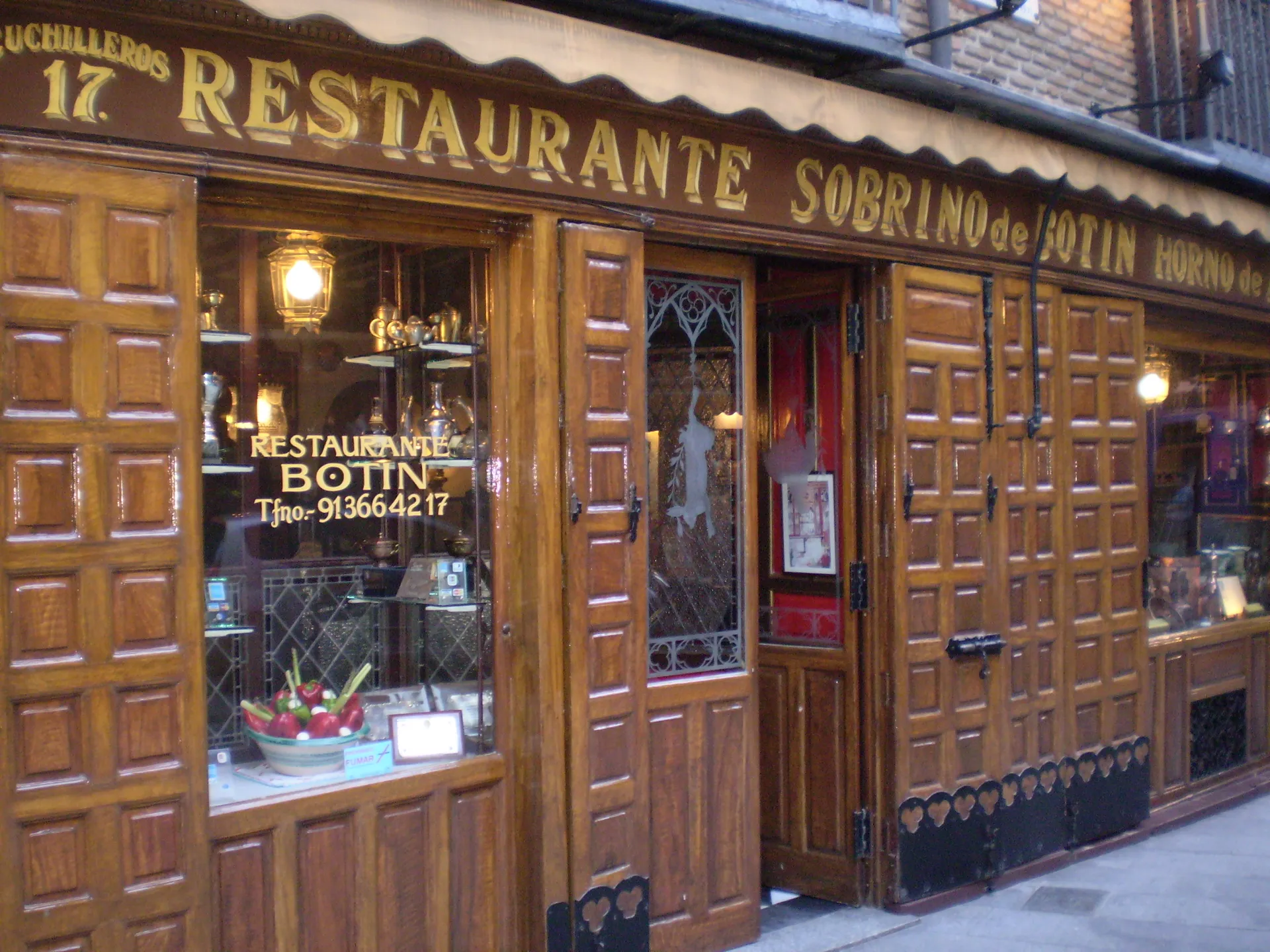
Restaurant
Sobrino de Botín
Operating since 1725 and recognized by Guinness World Records as the world's oldest restaurant, Botin roasts cochinillo (suckling pig) and lamb in the same wood-fired cast-iron oven it has used for centuries. The warren of tiled, beamed dining rooms just off Plaza Mayor was a Hemingway haunt and closes his novel 'The Sun Also Rises'.
Centro (Barrio de los Austrias, near Plaza Mayor)
Must visit
Museum
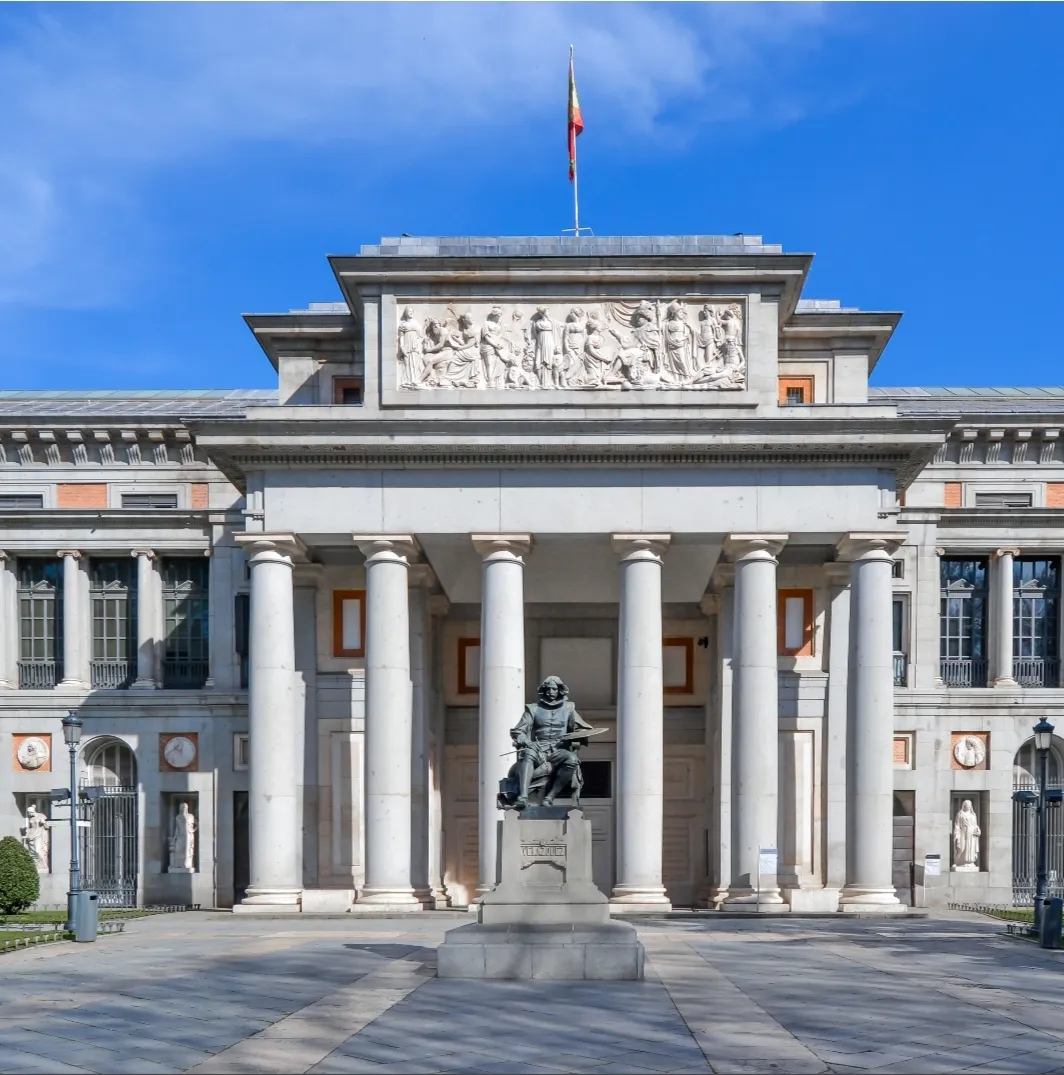
Museo Nacional del Prado
Spain's flagship national gallery and the southern anchor of the city's 'Golden Triangle of Art,' built around the former Spanish royal collection. It holds the world's deepest concentration of Velázquez, Goya and El Greco, shown alongside Bosch, Titian and Rubens.
Jerónimos (Retiro)
Must visit
Park
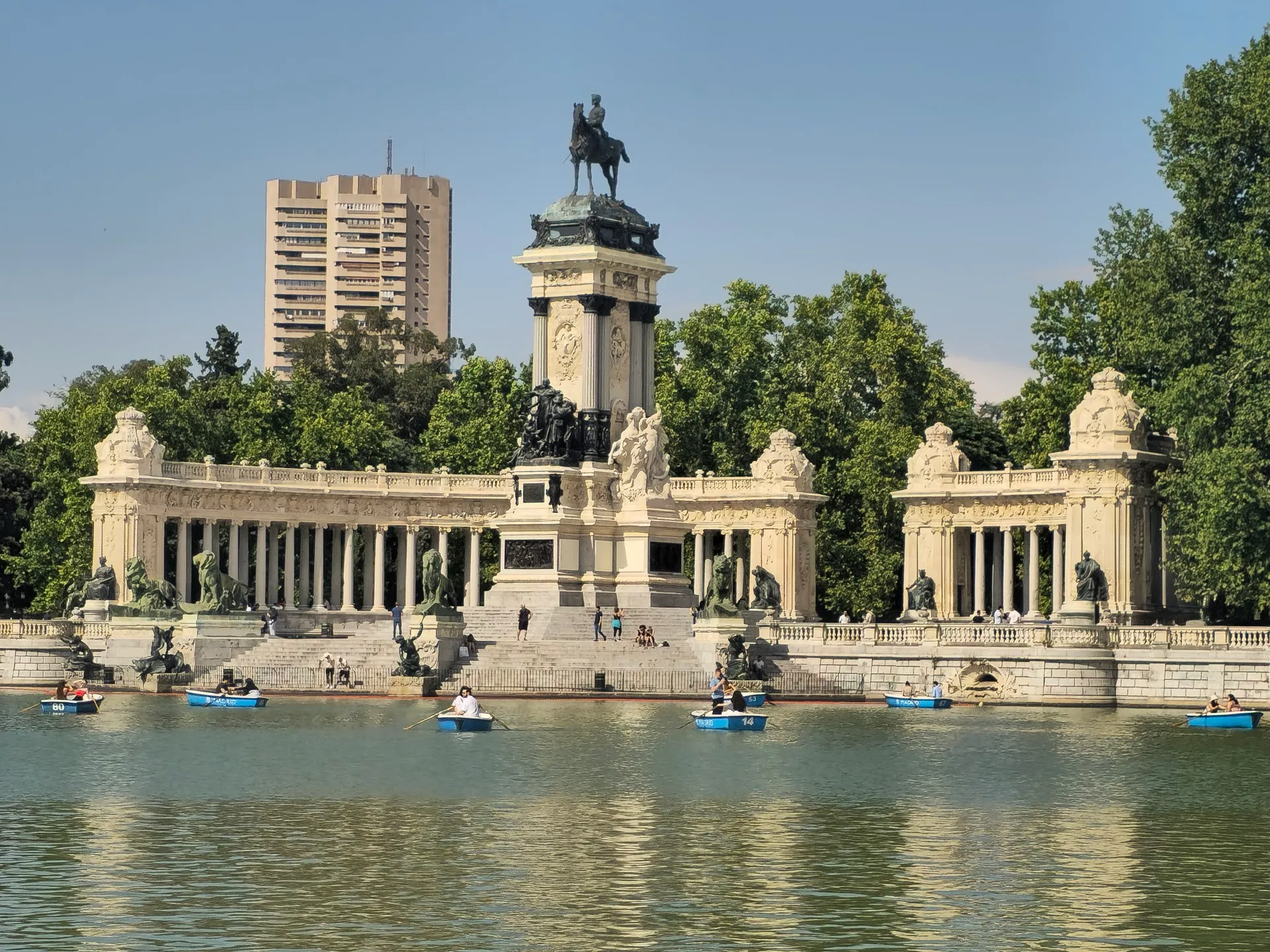
Parque del Retiro
Once a royal retreat, this 125-hectare park became the green heart of central Madrid when it opened to the public in the 19th century and now forms part of the UNESCO-listed 'Landscape of Light.' Its rowing lake beneath the colonnaded monument to Alfonso XII, the glass-and-iron Crystal Palace, and the Rosaleda rose garden are perennial favourites.
Retiro
Must visit
Restaurant
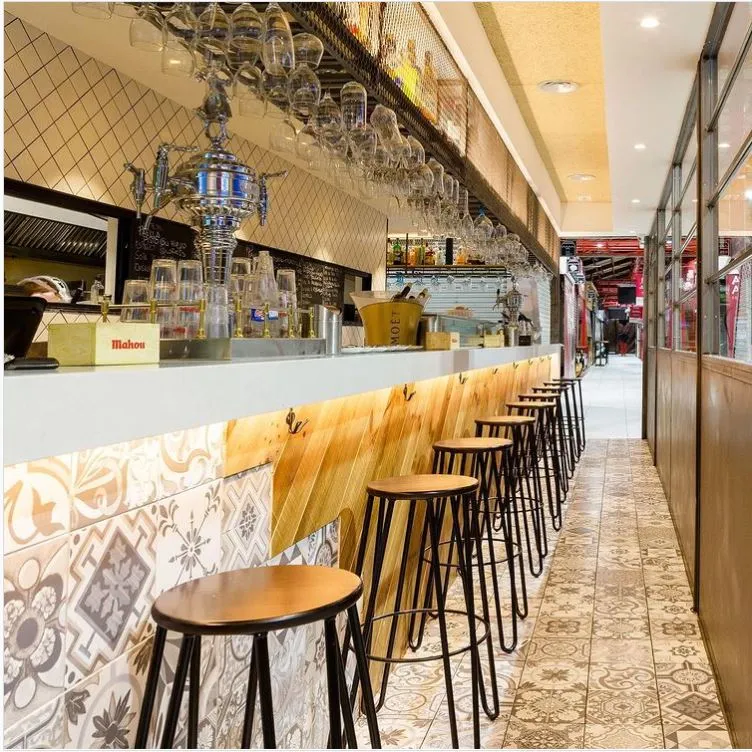
Casa Dani
A no-frills counter and dining room inside the Mercado de la Paz in the Salamanca district, Casa Dani has served home-style Madrid cooking since 1991 and is repeatedly cited for one of the city's best tortillas de patatas, winning a Spanish national tortilla title in 2019. Expect queues from locals at lunch.
Salamanca
Must visit
Museum
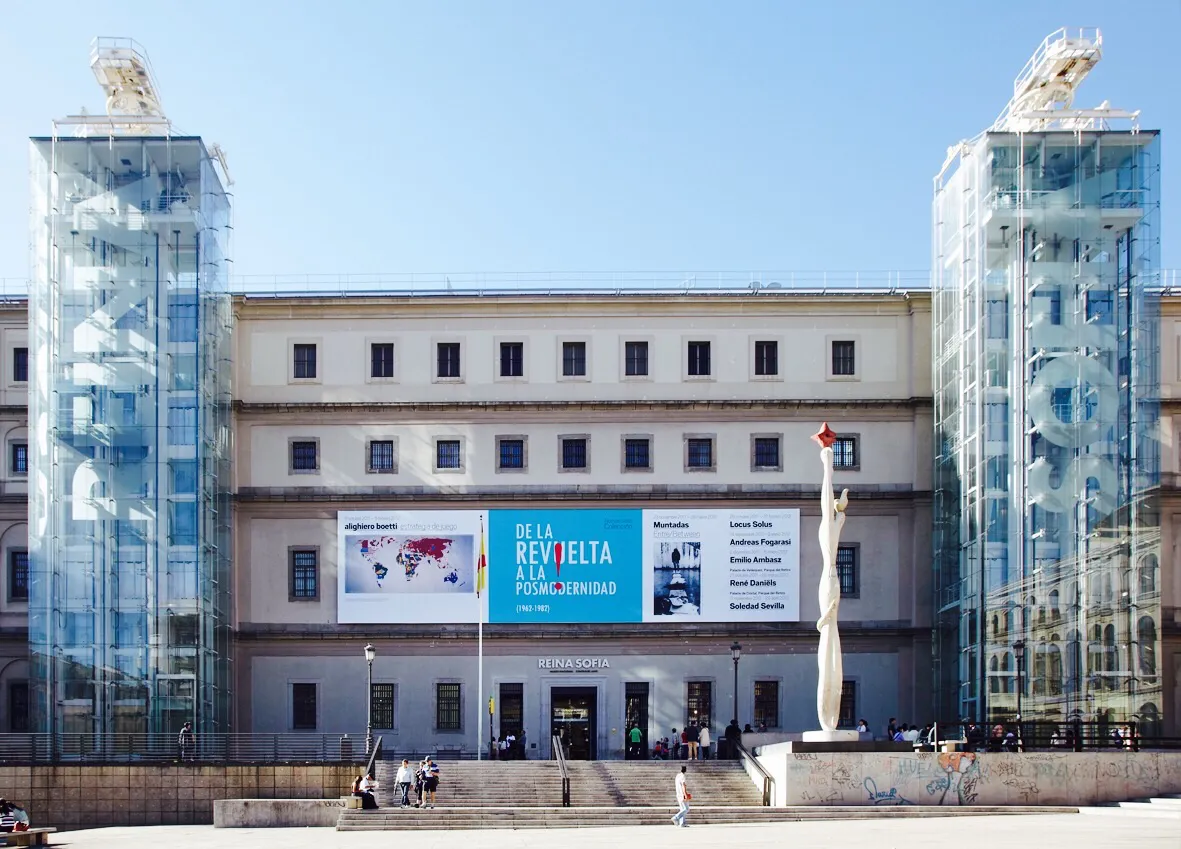
Museo Nacional Centro de Arte Reina Sofía
Spain's national museum of modern and contemporary art, set in a converted 18th-century hospital expanded by Jean Nouvel's red-glass wing. Its centrepiece is Picasso's monumental anti-war canvas 'Guernica,' surrounded by landmark works from Dalí, Miró and the European avant-garde.
Atocha (Centro)
Viewpoint
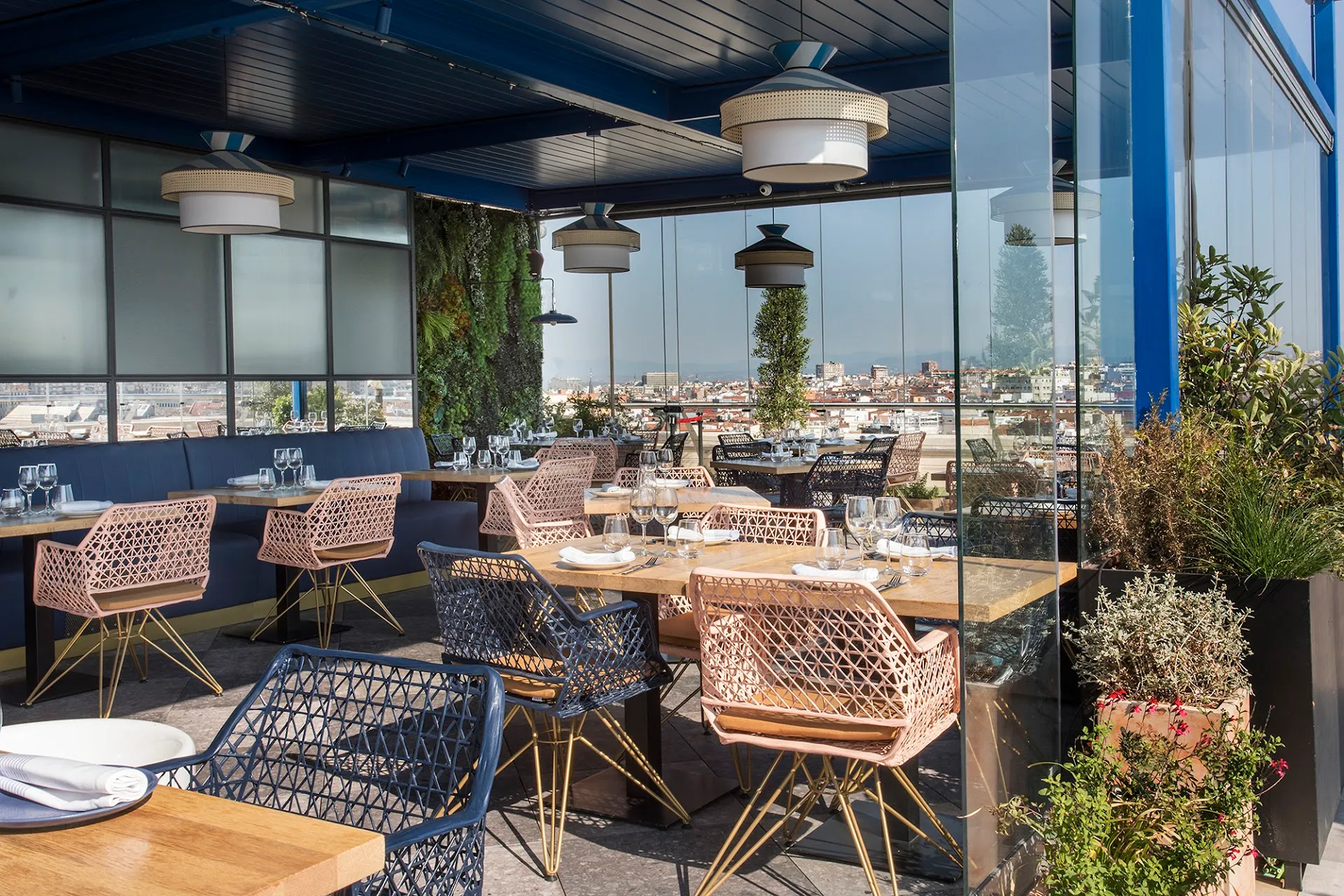
Azotea del Círculo de Bellas Artes
The terrace crowning Antonio Palacios's 1926 Círculo de Bellas Artes is one of Madrid's classic rooftop vantage points, reached by a glass lift and topped by a bar-restaurant. Its open-air deck offers a near-360-degree sweep over Gran Vía, the Metrópolis dome and the city-centre rooftops, and is especially busy at golden hour.
Centro (Cortes)
Bar
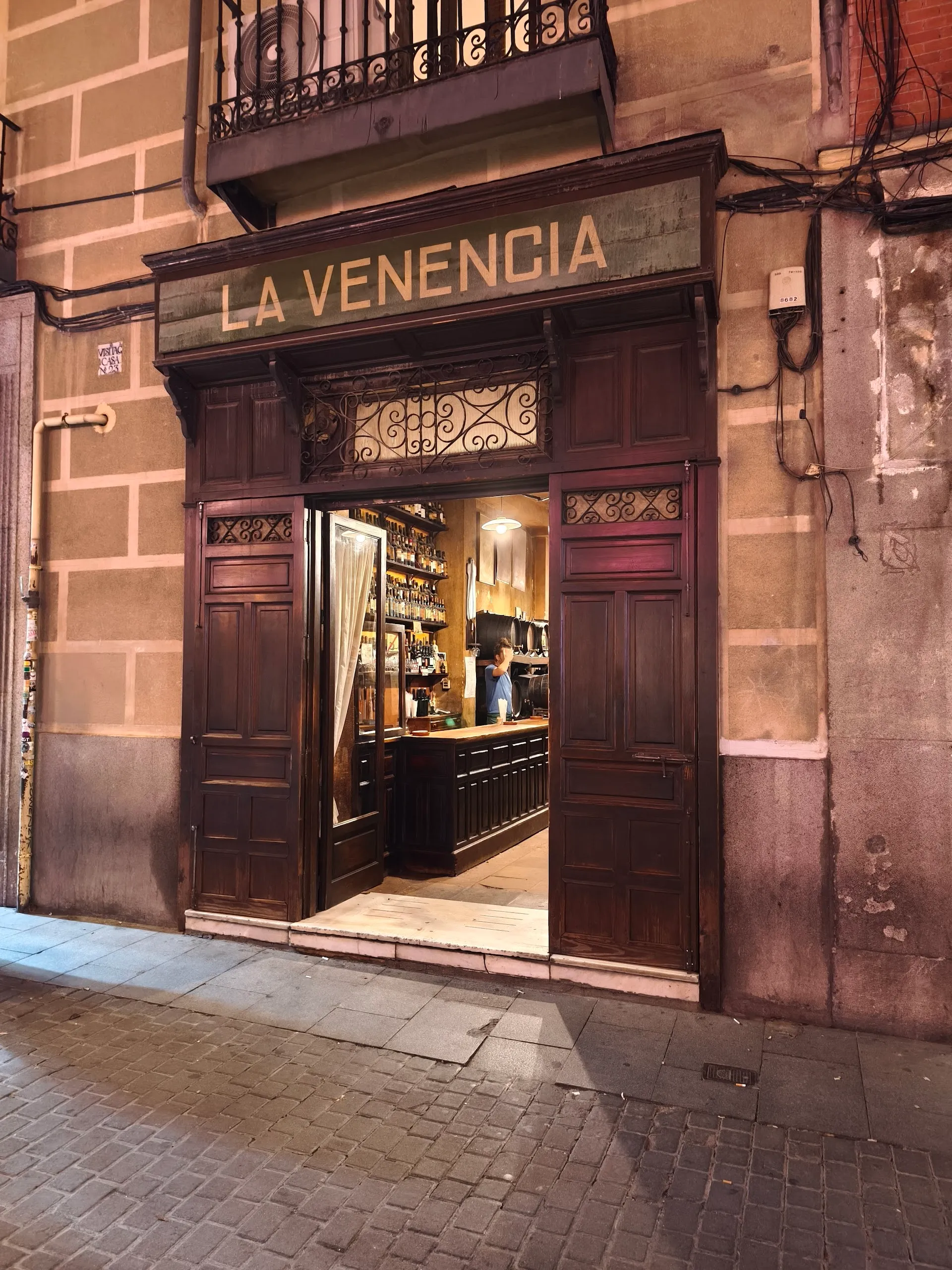
La Venencia
A gloriously time-frozen sherry bar in the Barrio de las Letras, pouring only Andalusian sherries straight from the barrel since 1922, with tabs still chalked on the worn wooden counter. Its house rules are part of the charm: no photos and no tipping, traditions said to date to its years as a Republican haunt during the Civil War.
Barrio de las Letras (Centro)
Must visit
Market
El Rastro
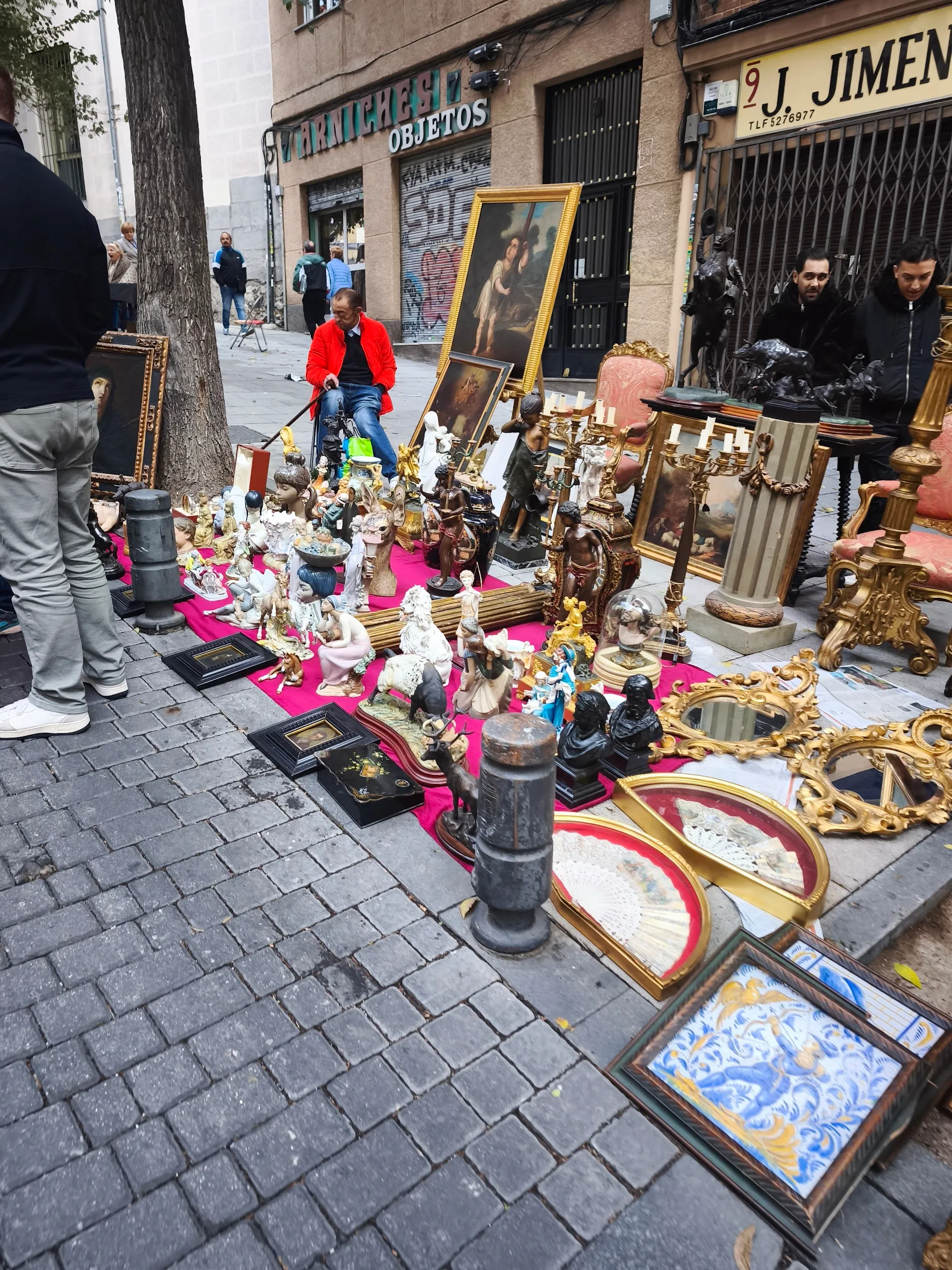
Madrid's legendary open-air flea market, sprawling down Ribera de Curtidores from Plaza de Cascorro every Sunday and public holiday morning. Up to 3,500 stalls hawk antiques, vintage clothing, books, vinyl, crafts and bric-a-brac, while the bars of La Latina spill over for post-browse vermouth. Arrive before 10am to beat the midday crush.
Centro (La Latina / Embajadores)
TourVaries by operator; small-group guided tapas-and-wine walks (several taverns, multiple tapas + drinks). No single fixed price verified — thi
La Latina & Cava Baja Tapas Tour
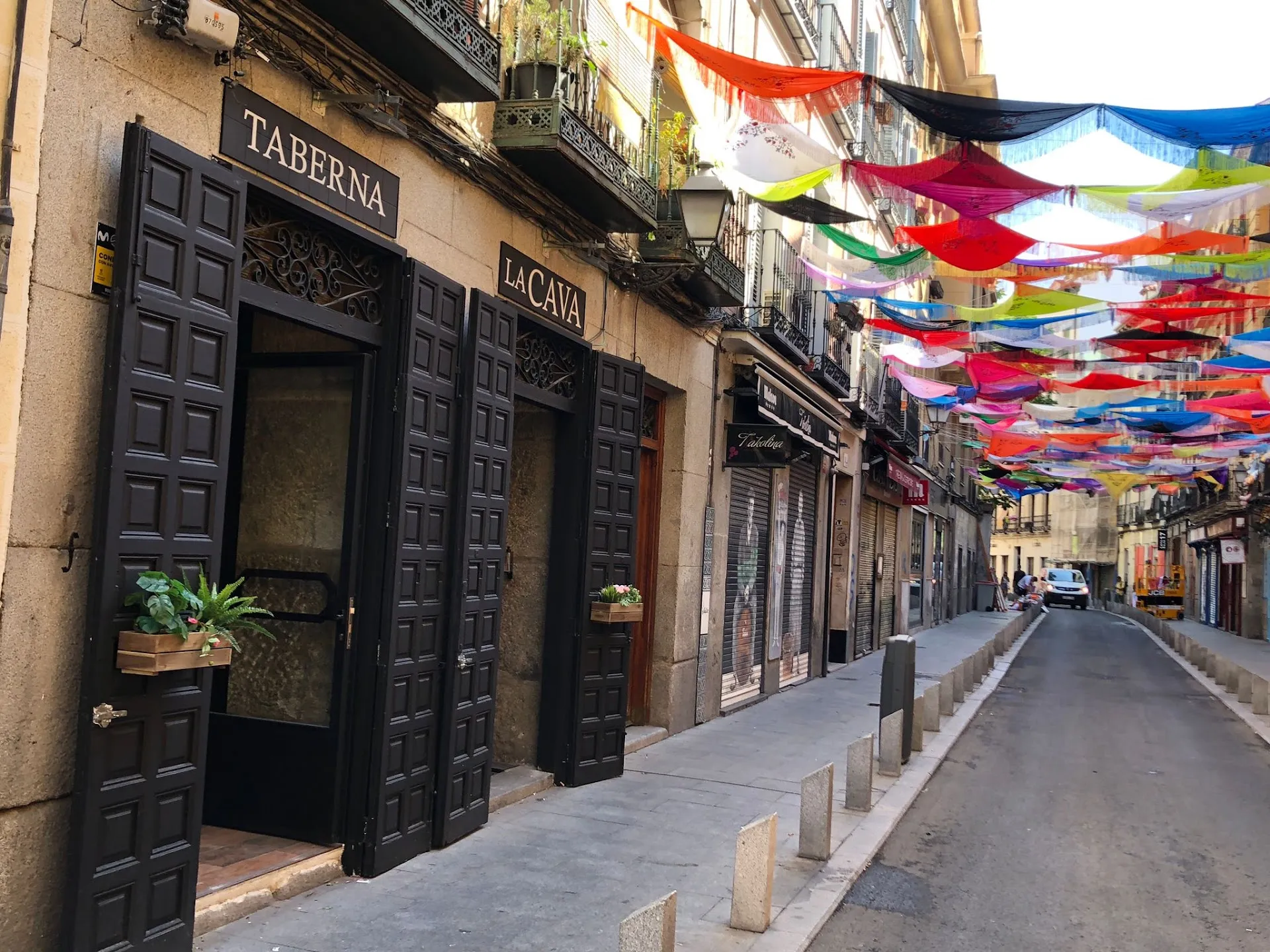
Small-group walking food tour through La Latina's medieval lanes and its legendary tapas street, Calle Cava Baja, where a local guide leads between historic taverns to sample tortilla, croquetas, jamón ibérico and vermouth. ~2.5-3h, often passing San Miguel Market and Plaza Mayor.
Centro (La Latina)
Restaurant
Casa Lucio
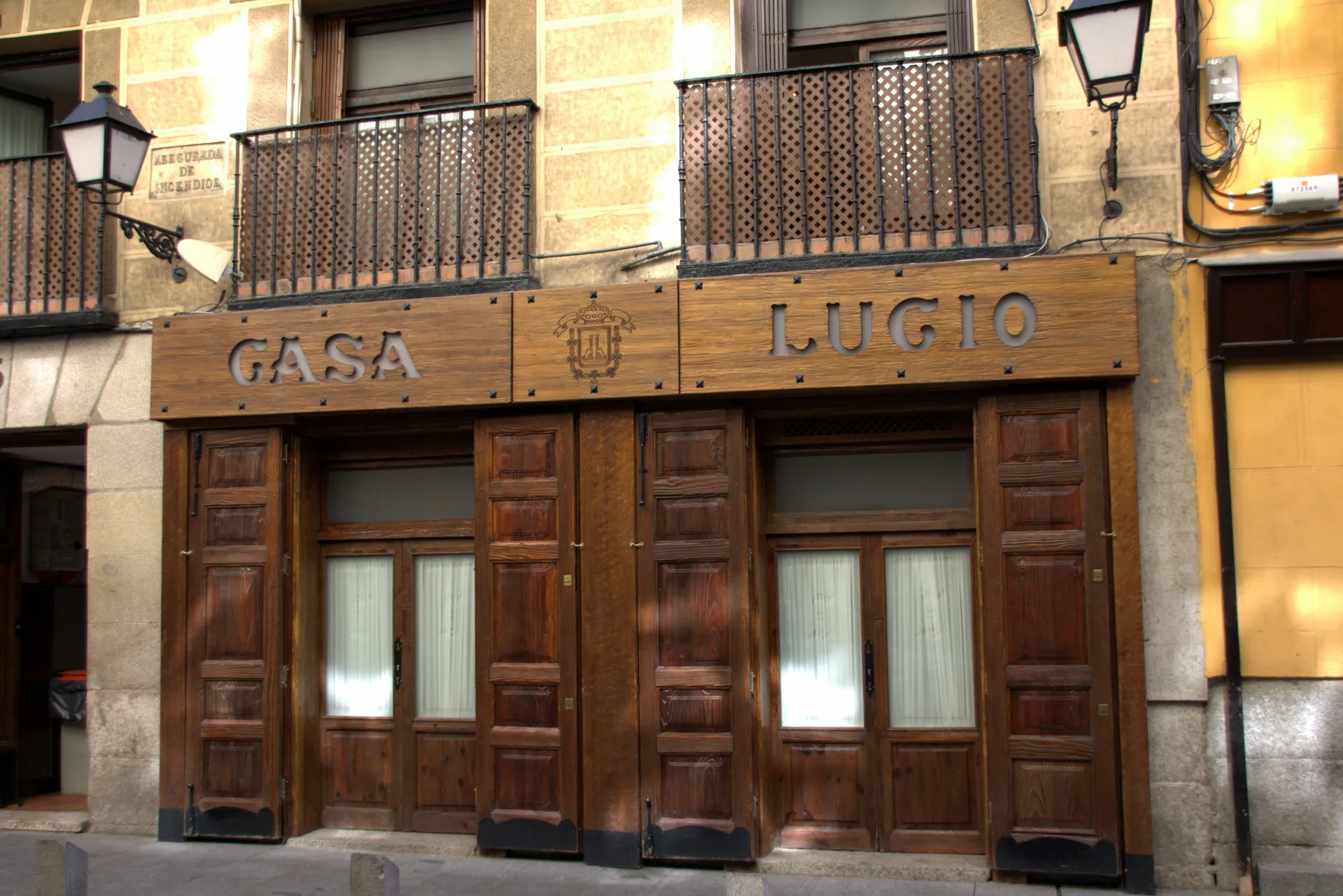
A La Latina institution on the tapas-lined Cava Baja, open since 1974 and beloved for its huevos rotos - eggs fried in olive oil and broken over crisp potatoes. The wood-panelled rooms have long drawn Spanish royalty, politicians and celebrities alongside locals.
Centro (La Latina)
Landmark
Temple of Debod (Templo de Debod)
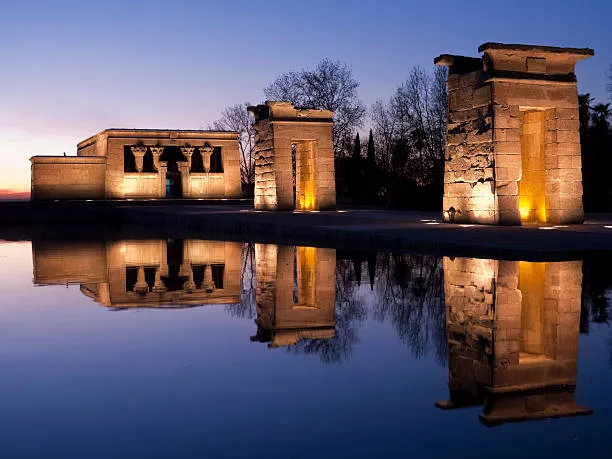
A genuine 2nd-century-BC Egyptian temple dedicated to Amun and Isis that Egypt gifted to Spain in 1968 and that was rebuilt block by block on a hill in Madrid's Parque del Oeste. Surrounded by reflecting pools, it is one of the city's most beloved free attractions and a classic local spot for watching the sunset.
Parque del Oeste (Princesa)
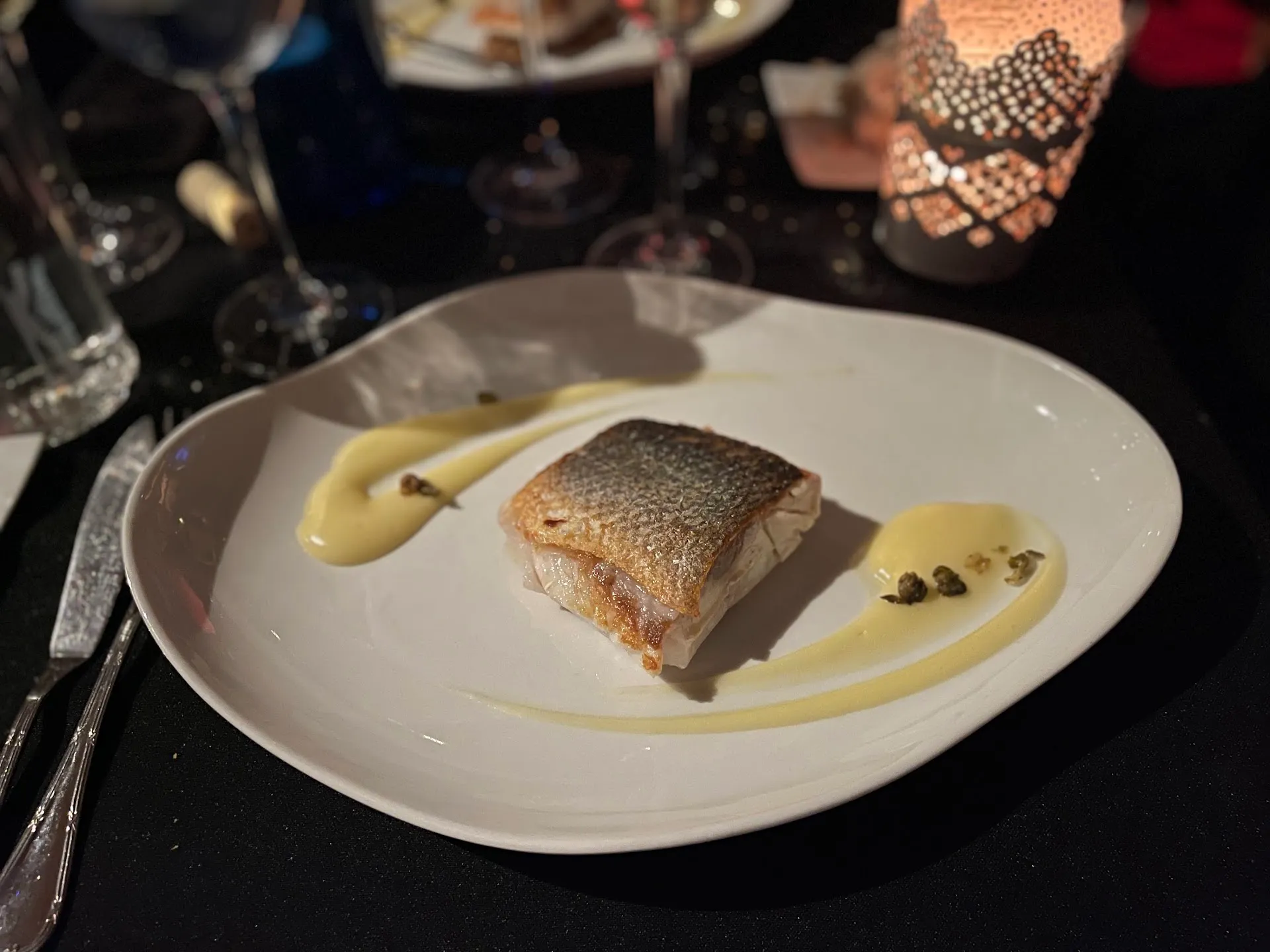
TourReservation required; show-only from ~€95.90 (dinner not included) per the official tickets page; dinner-and-show packages also offered. ~70
Flamenco Show at Corral de la Morería
Live flamenco at the renowned tablao founded in 1956 near the Royal Palace, where award-winning dancers and musicians perform shows of ~70 minutes. The only restaurant-with-show to hold a Michelin star, with optional dinner packages.
Centro (Palacio / La Latina)
Bar
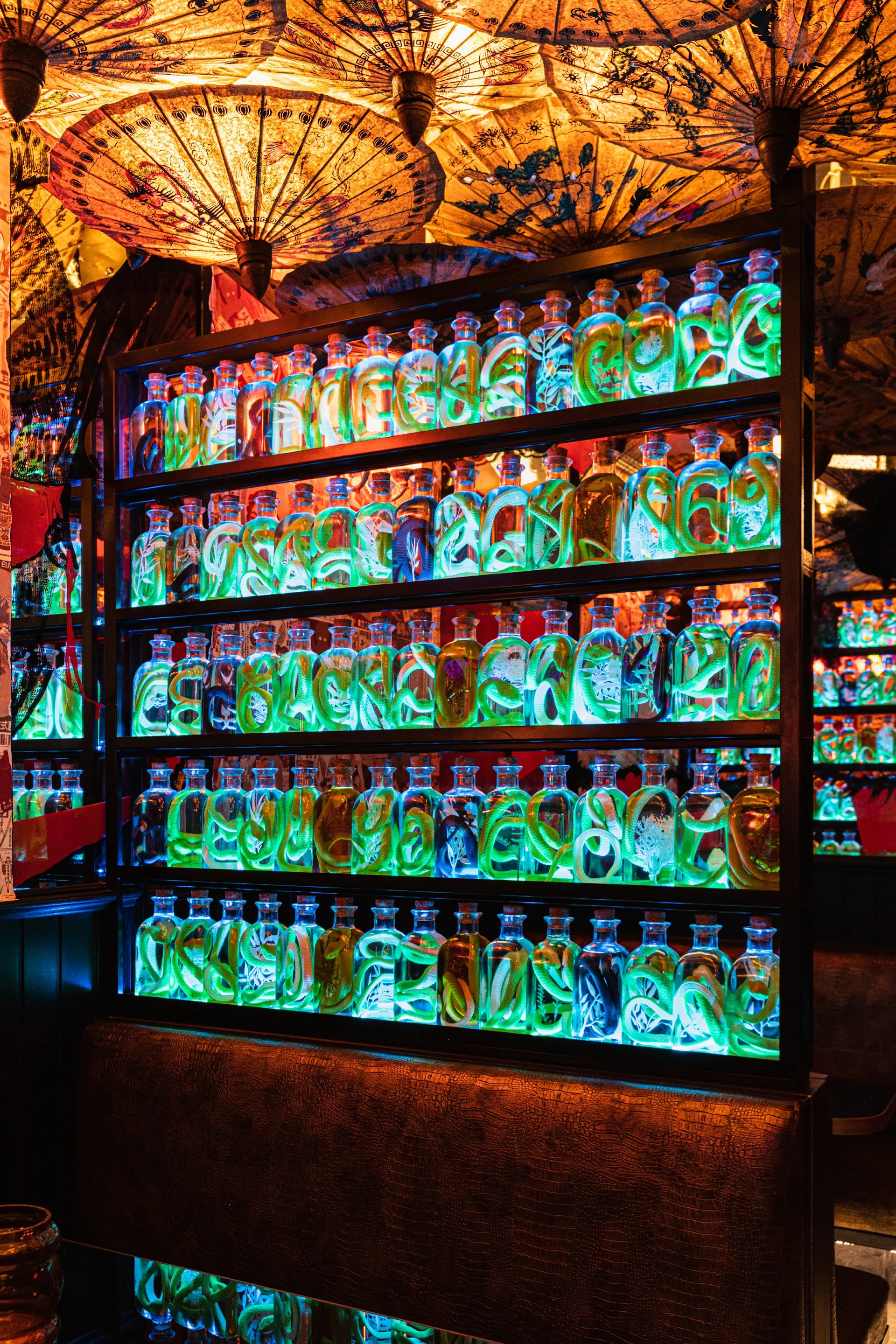
Salmon Guru
Argentine bartender Diego Cabrera's playful, comic-book-styled cocktail bar is a perennial on The World's 50 Best Bars list, celebrated for theatrical, boldly flavored signature drinks. Behind an unassuming Echegaray facade, the multi-room space ranges from a neon-lit main bar to a hidden back room.
Barrio de las Letras (Centro)
Bar4.0
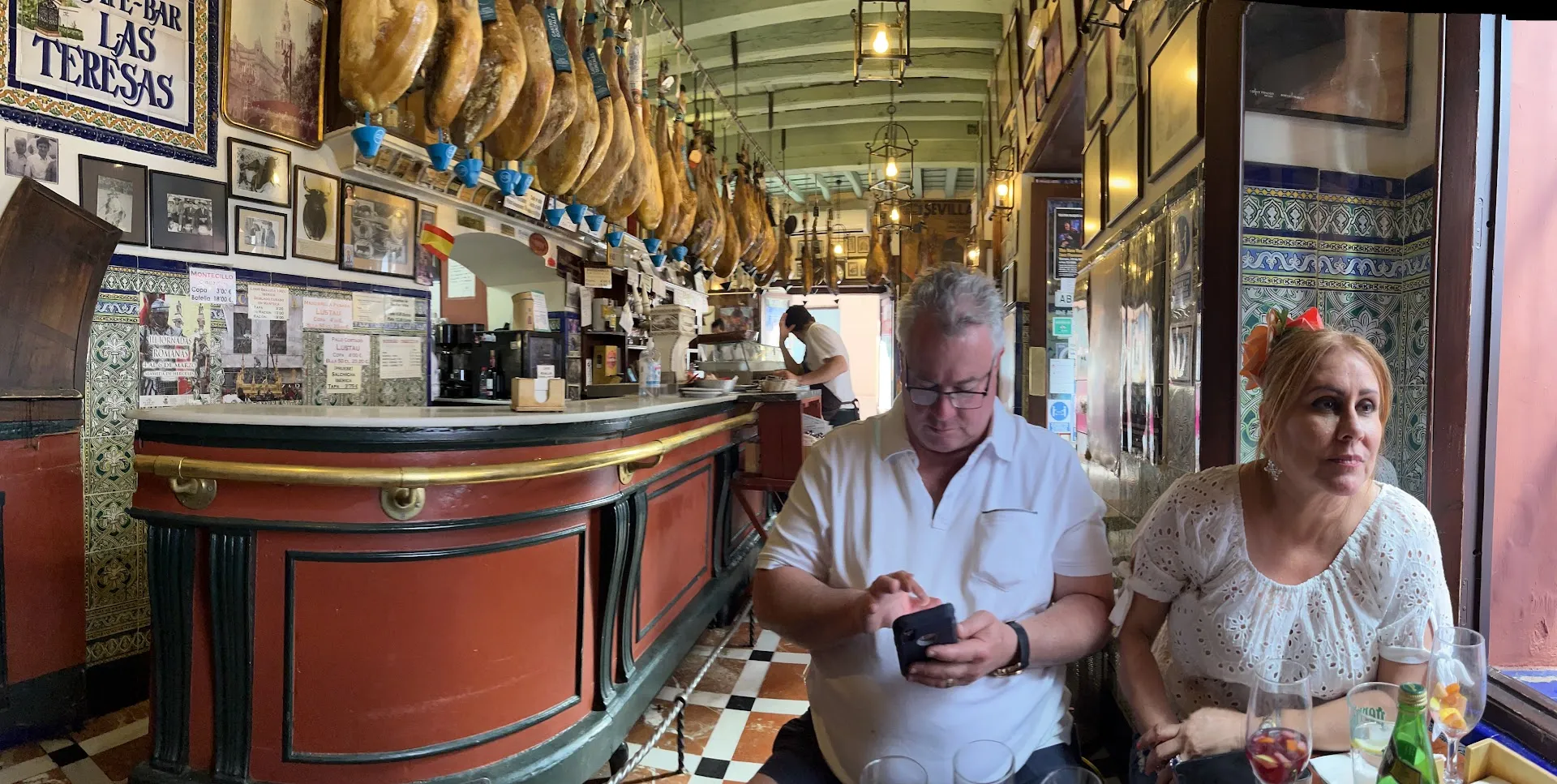
Las Teresas
A narrow 1870 tavern in the heart of Santa Cruz, its ceiling thick with Iberian hams and its walls covered in old bullfighting and Holy Week photos. A classic for a plate of jamón ibérico and a glass of manzanilla.
Barrio de Santa Cruz
Street
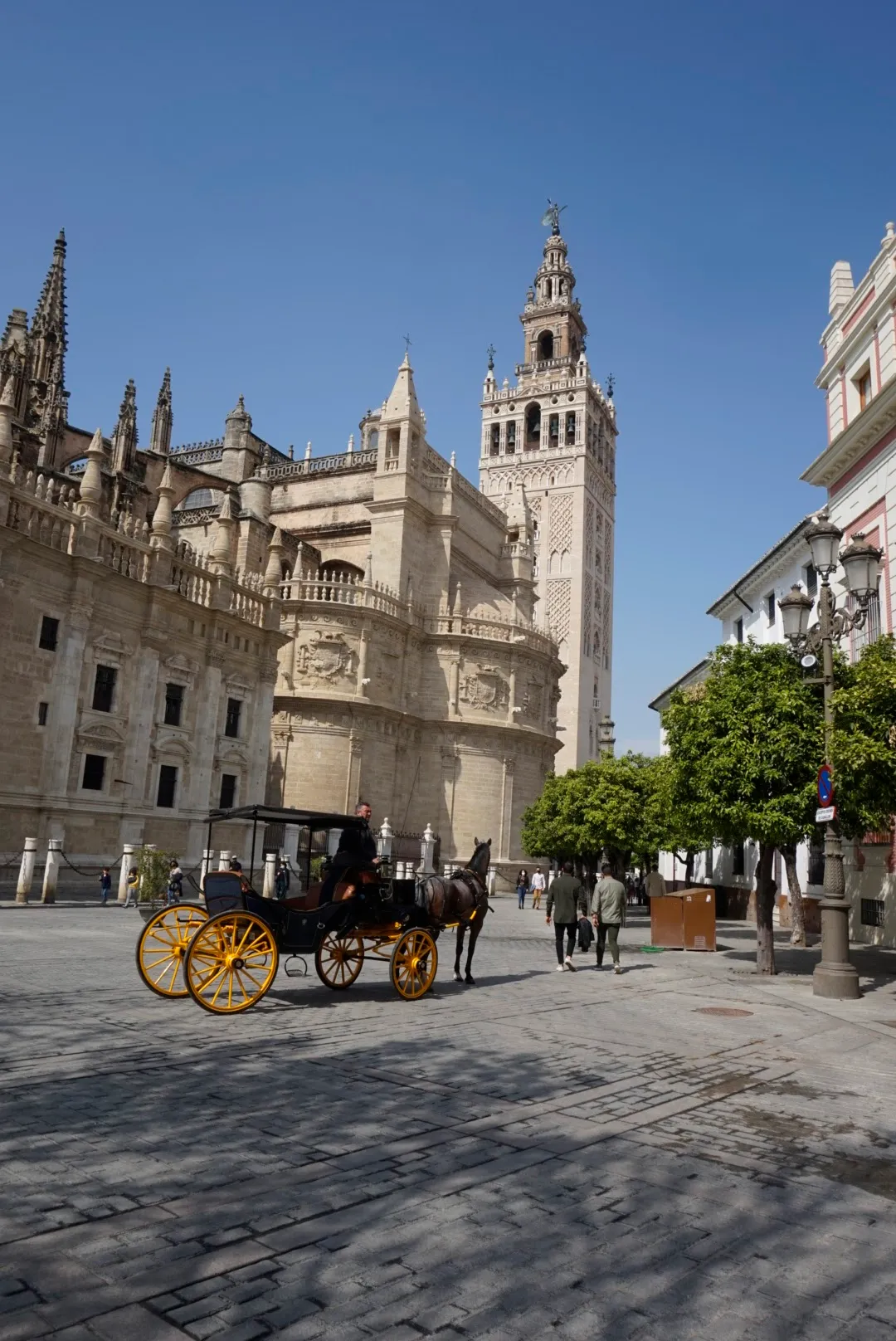
Barrio de Santa Cruz
The former medieval Jewish quarter, a labyrinth of whitewashed lanes, flower-filled patios, and tiny orange-tree squares pressed up against the Cathedral and Alcázar. The most atmospheric place in Seville simply to get lost.
Old town, east of the Cathedral
Viewpoint
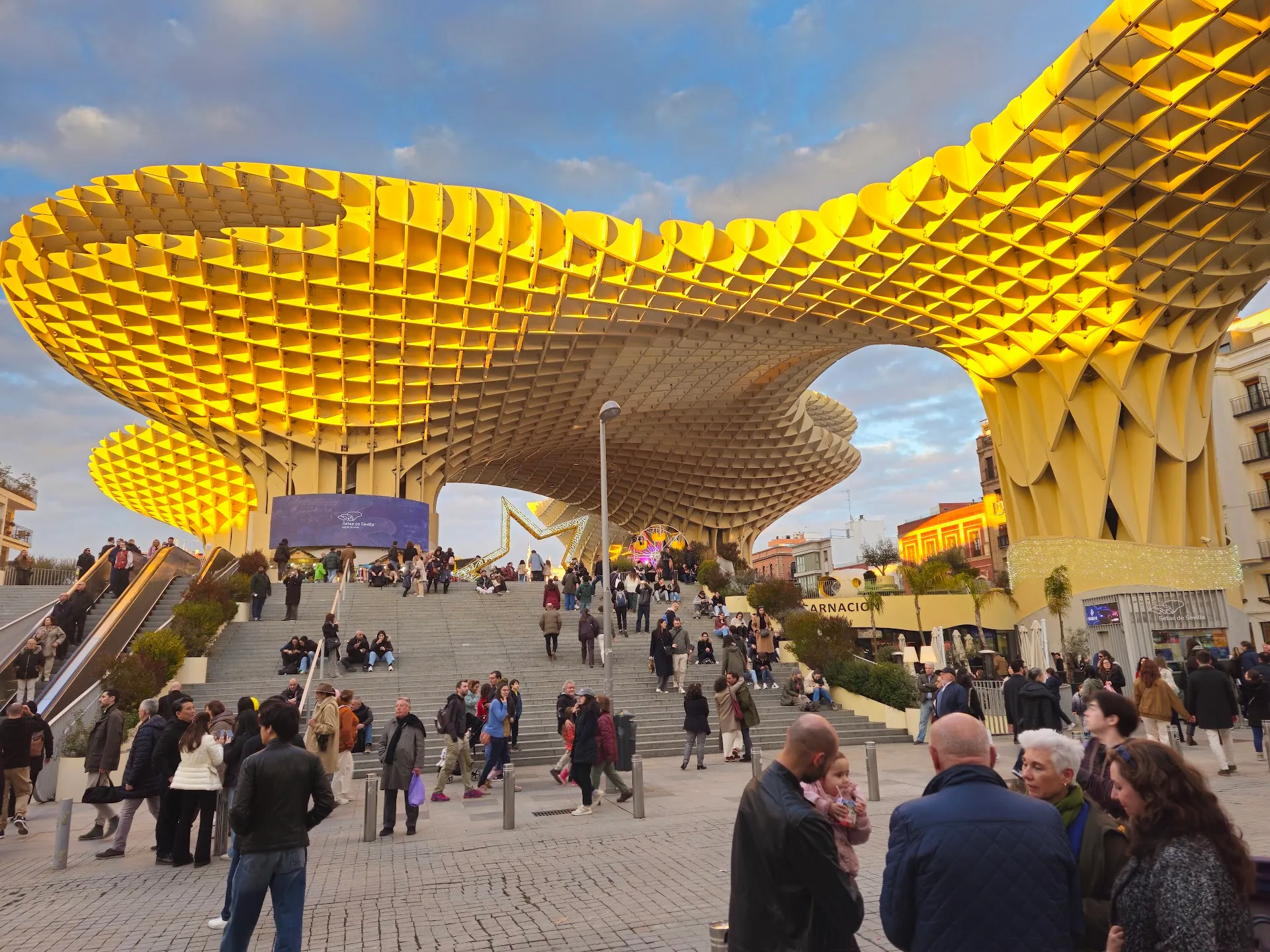
Metropol Parasol (Las Setas)
A vast undulating timber canopy nicknamed 'Las Setas' (the mushrooms), billed as the world's largest wooden structure. A lift carries you to a rooftop walkway with a 360-degree panorama over the old town's rooftops, the Giralda, and the hills beyond.
Plaza de la Encarnación, El Centro
Must visit
Bar5.0
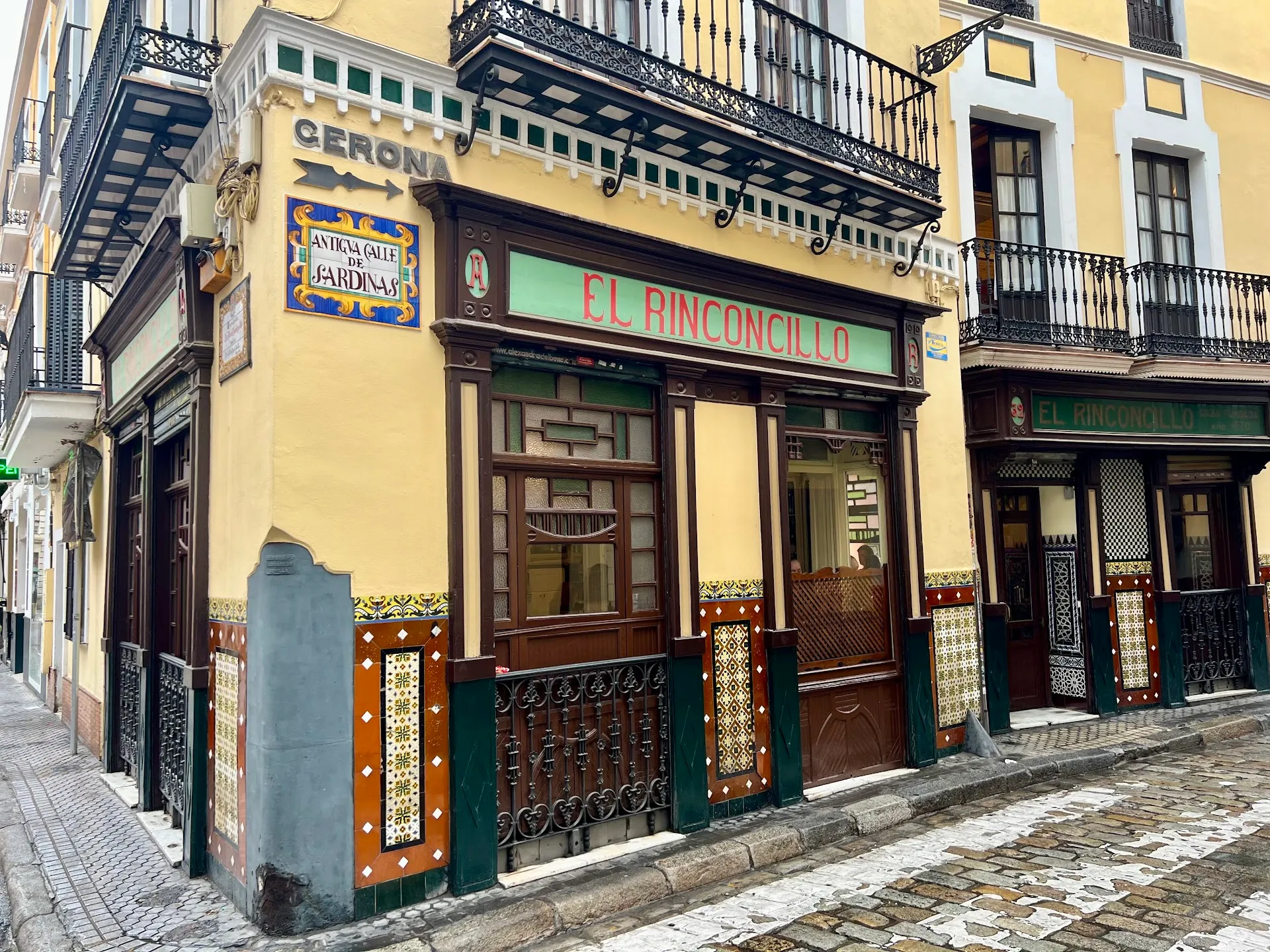
El Rinconcillo
Said to be the oldest tapas bar in Spain, serving since 1670 beneath hanging hams and hand-painted tiles. The waiters still chalk your tab on the wooden bar; order the spinach with chickpeas, croquetas, and a fino sherry.
Alfalfa / Santa Catalina
Must visit
Jazz5.0
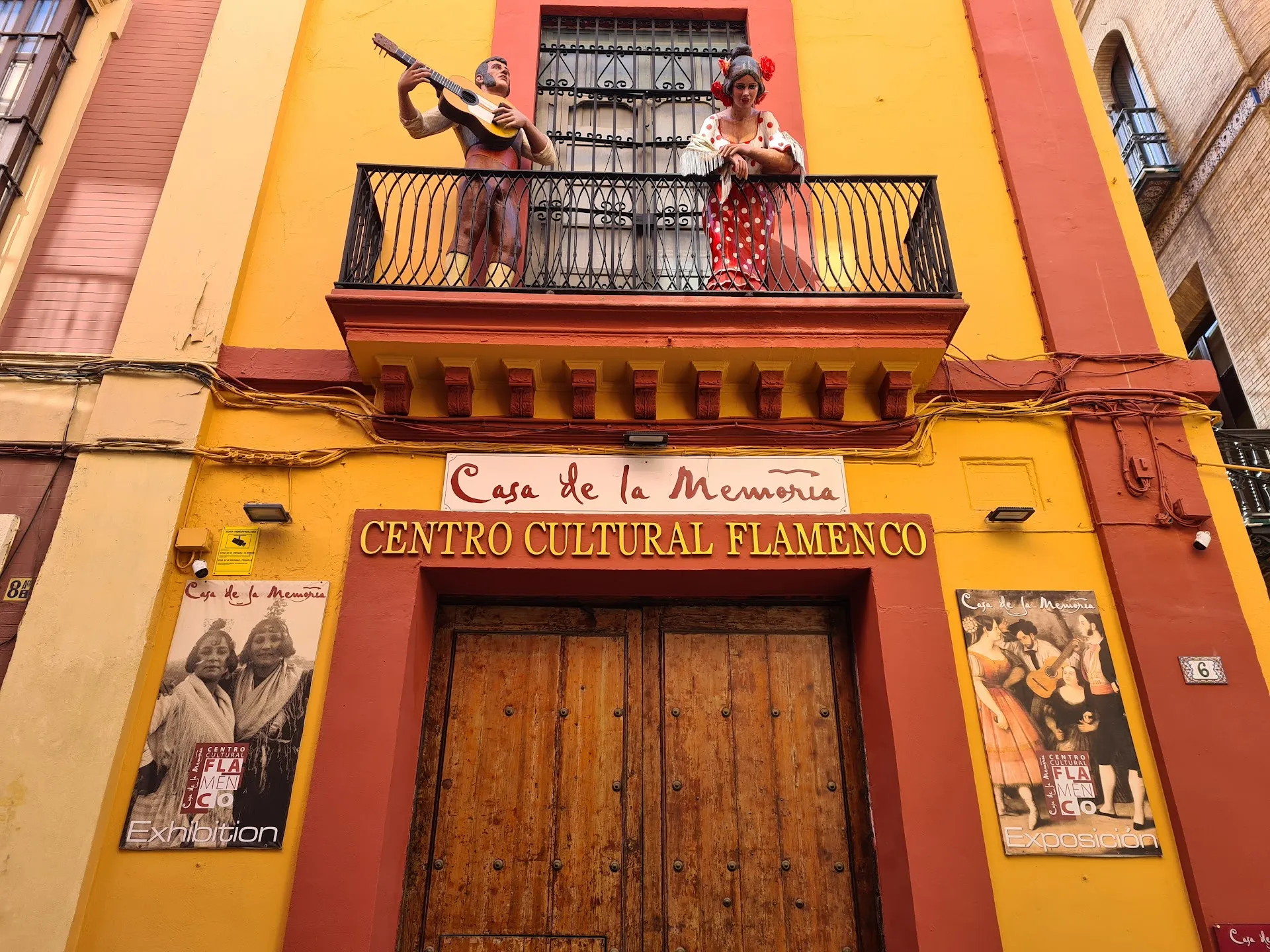
Casa de la Memoria
An intimate, ticketed flamenco venue set in the old stables of a Renaissance palace, seating around 85 for hour-long shows of serious cante, guitar, and dance. Widely rated the best place in Seville to hear pure flamenco.
El Centro
Must visit
Castle5.0
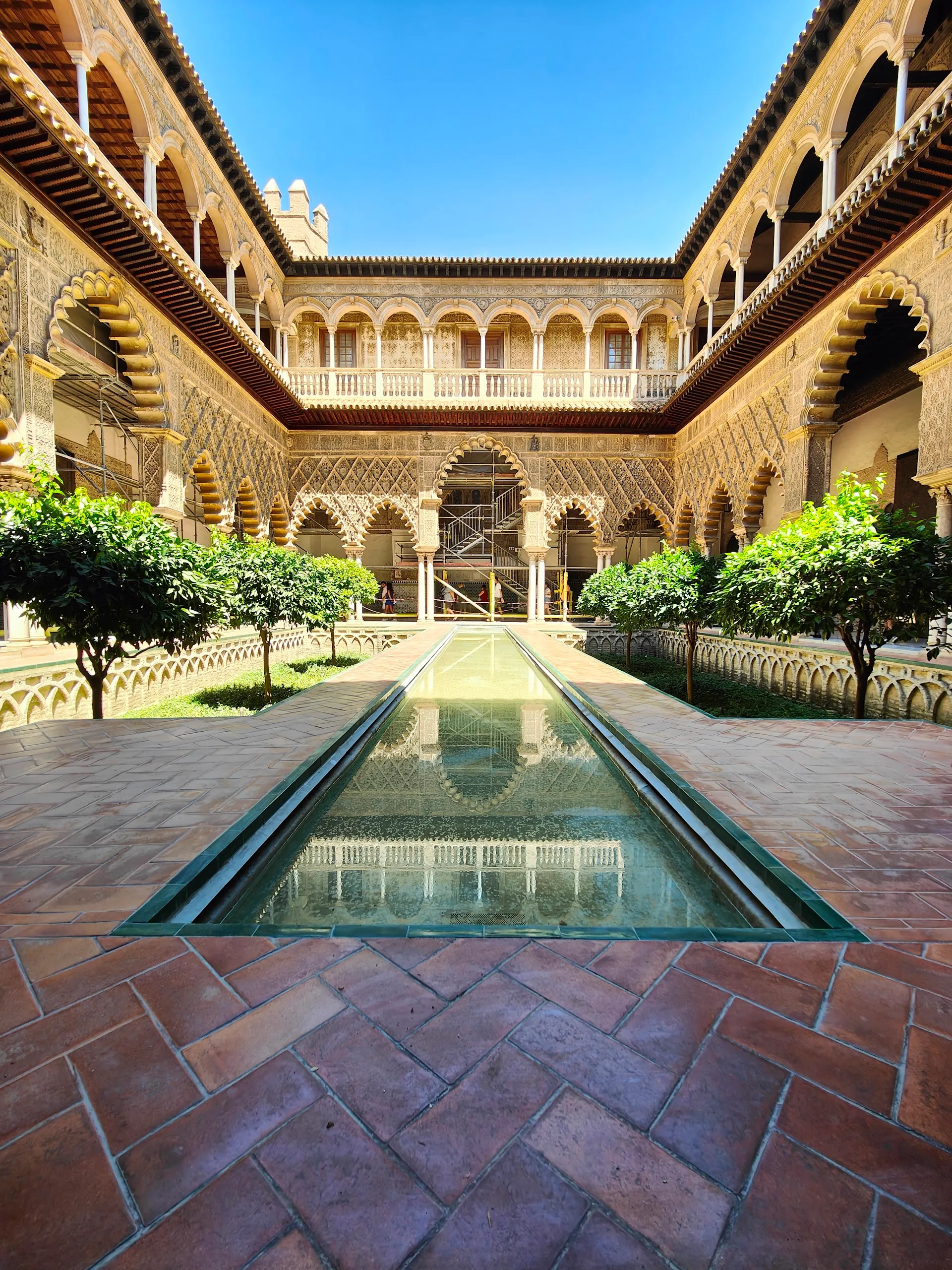
Real Alcázar of Seville
A breathtaking royal palace complex begun by Moorish rulers and expanded by Christian kings, the finest example of Mudéjar architecture in Spain. Its tiled courtyards, carved stucco, and lush gardens are unforgettable, and it doubled as Dorne in Game of Thrones.
Barrio de Santa Cruz
Must visit
Temple5.0
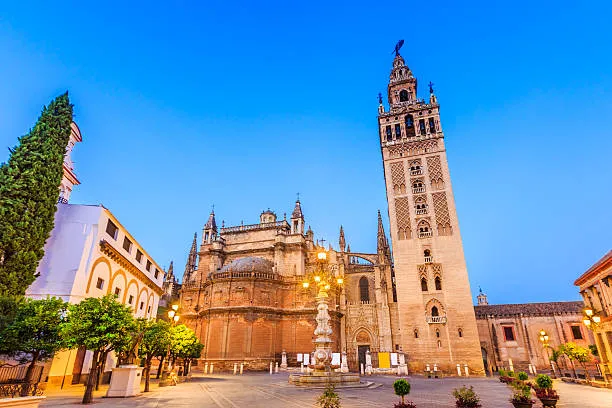
Seville Cathedral & La Giralda
The largest Gothic cathedral in the world, built over a former mosque and holding the tomb of Christopher Columbus. Its bell tower, La Giralda, is the converted Almohad minaret, climbed by a ramp for sweeping views over the old town.
Barrio de Santa Cruz
Must visit
Bar4.0
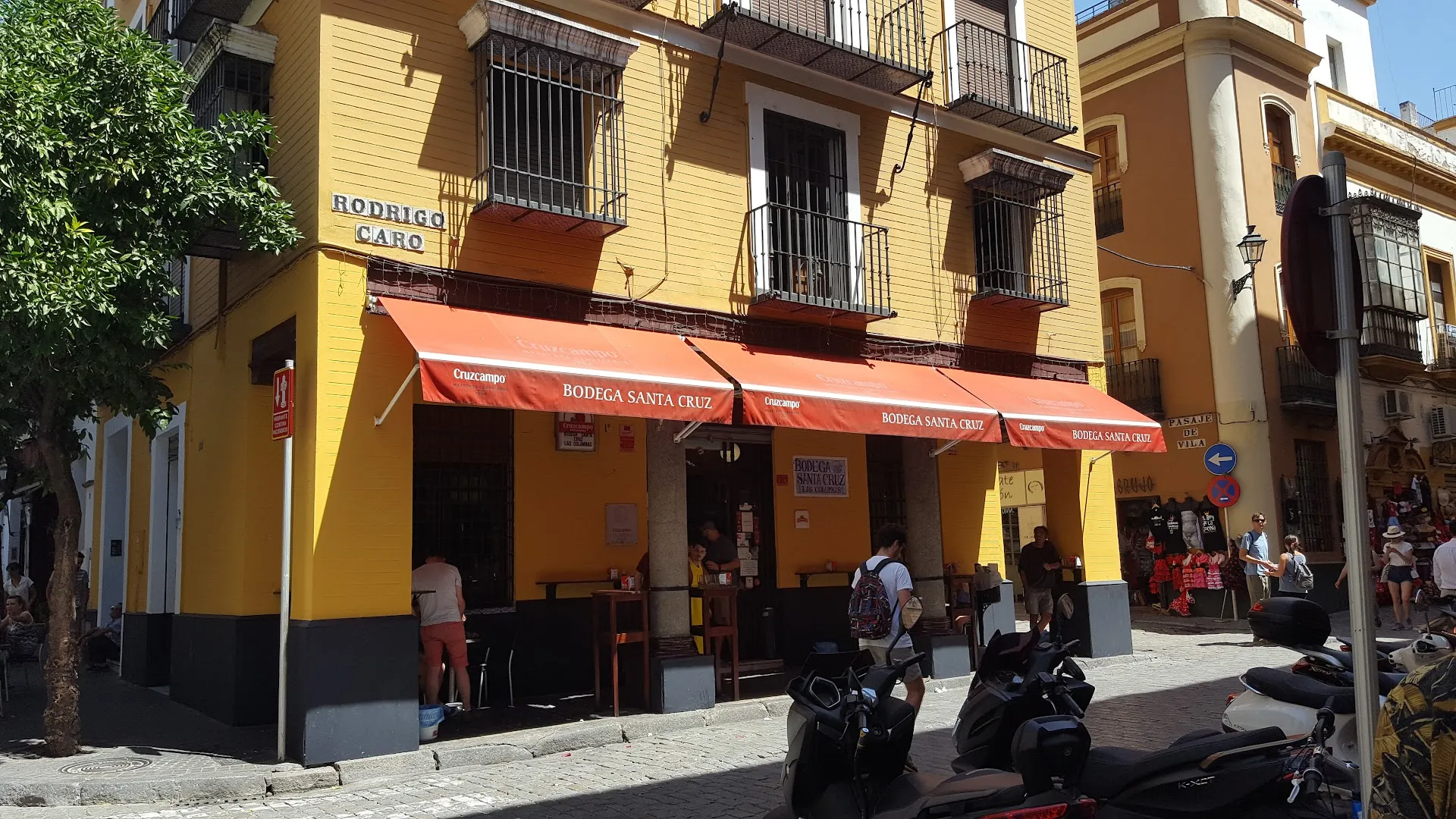
Bodega Santa Cruz (Las Columnas)
A loud, packed, cash-cheap institution at the foot of Calle Mateos Gago, where the crowd spills into the street with montaditos and beers. The pringá sandwich and cazón en adobo (marinated fried dogfish) are the orders to make.
Barrio de Santa Cruz
Landmark
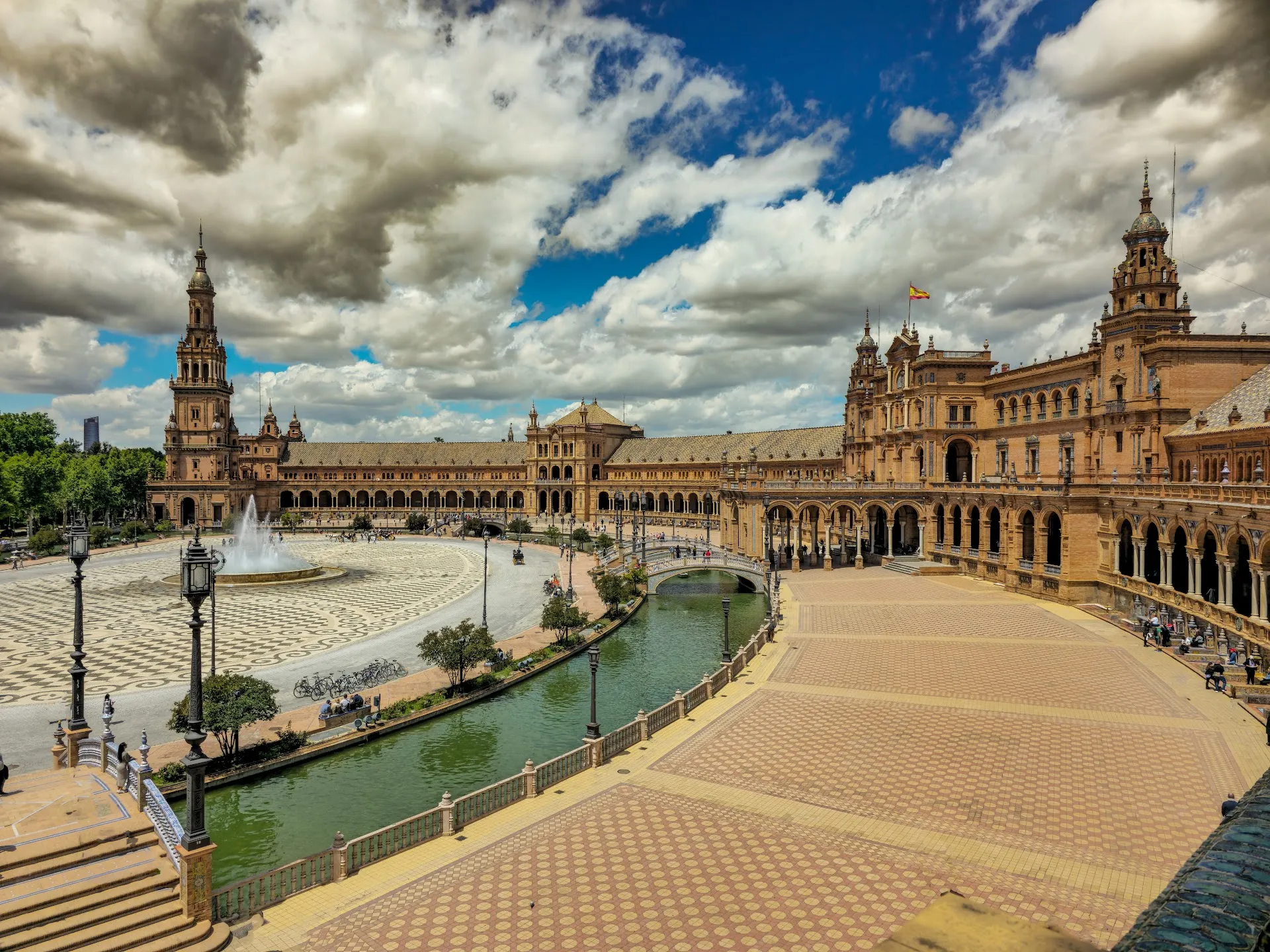
Plaza de España
A monumental semicircular plaza built for the 1929 Ibero-American Exposition, ringed by a tiled canal and bridges, with a glazed-ceramic alcove for each Spanish province. One of the most spectacular squares in Spain, and a Star Wars and Lawrence of Arabia filming location.
Parque de María Luisa
Sunset Spot
Calle Betis & the Triana Riverside
The row of colourful house-fronts and terrace bars lining the Triana bank of the river, looking straight across at the old town. The classic Seville sunset, with the Torre del Oro and Giralda glowing gold over the water.
Triana, west bank of the Guadalquivir
Must visit
Bar5.0
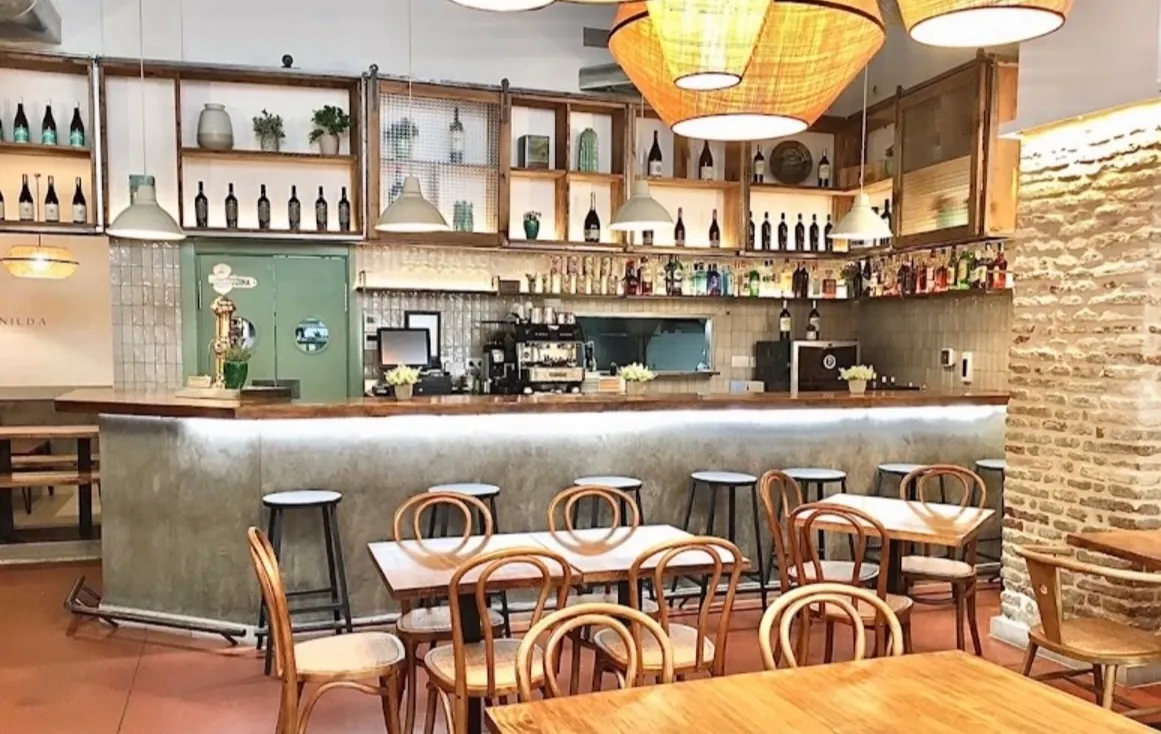
La Brunilda
A small, bright, hugely popular modern-tapas bar in El Arenal, turning out inventive Mediterranean plates like slow-cooked octopus and risotto. Arrive when it opens or be ready to queue.
El Arenal
Landmark
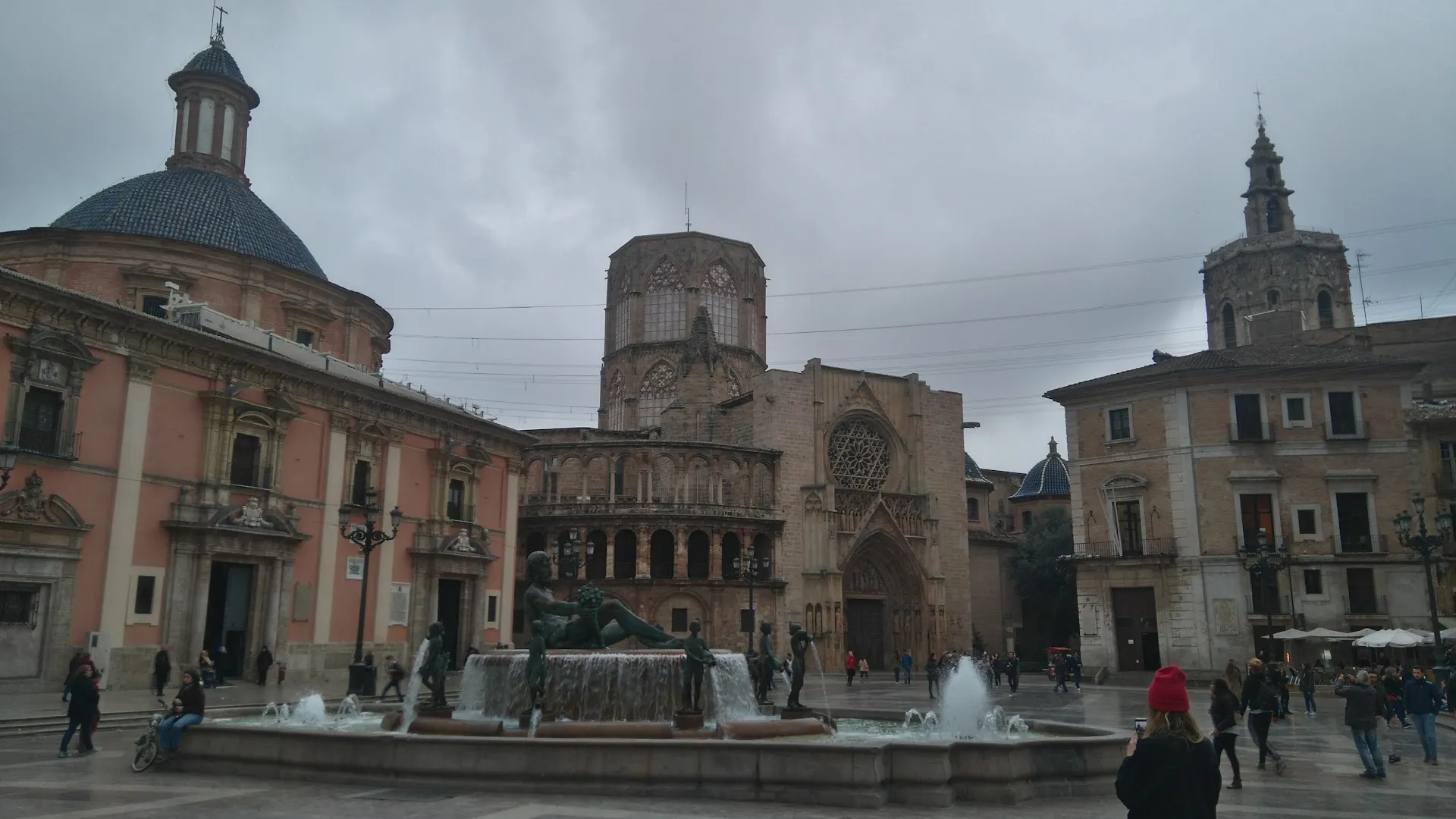
Plaza de la Virgen
The graceful, café-ringed square at the historic core of the city, framed by the cathedral apse, the Basílica de la Mare de Déu, and the Turia fountain at its centre. A favourite gathering place for an evening drink and a hub of Valencian civic and religious life.
Ciutat Vella, beside the cathedral
Architecture
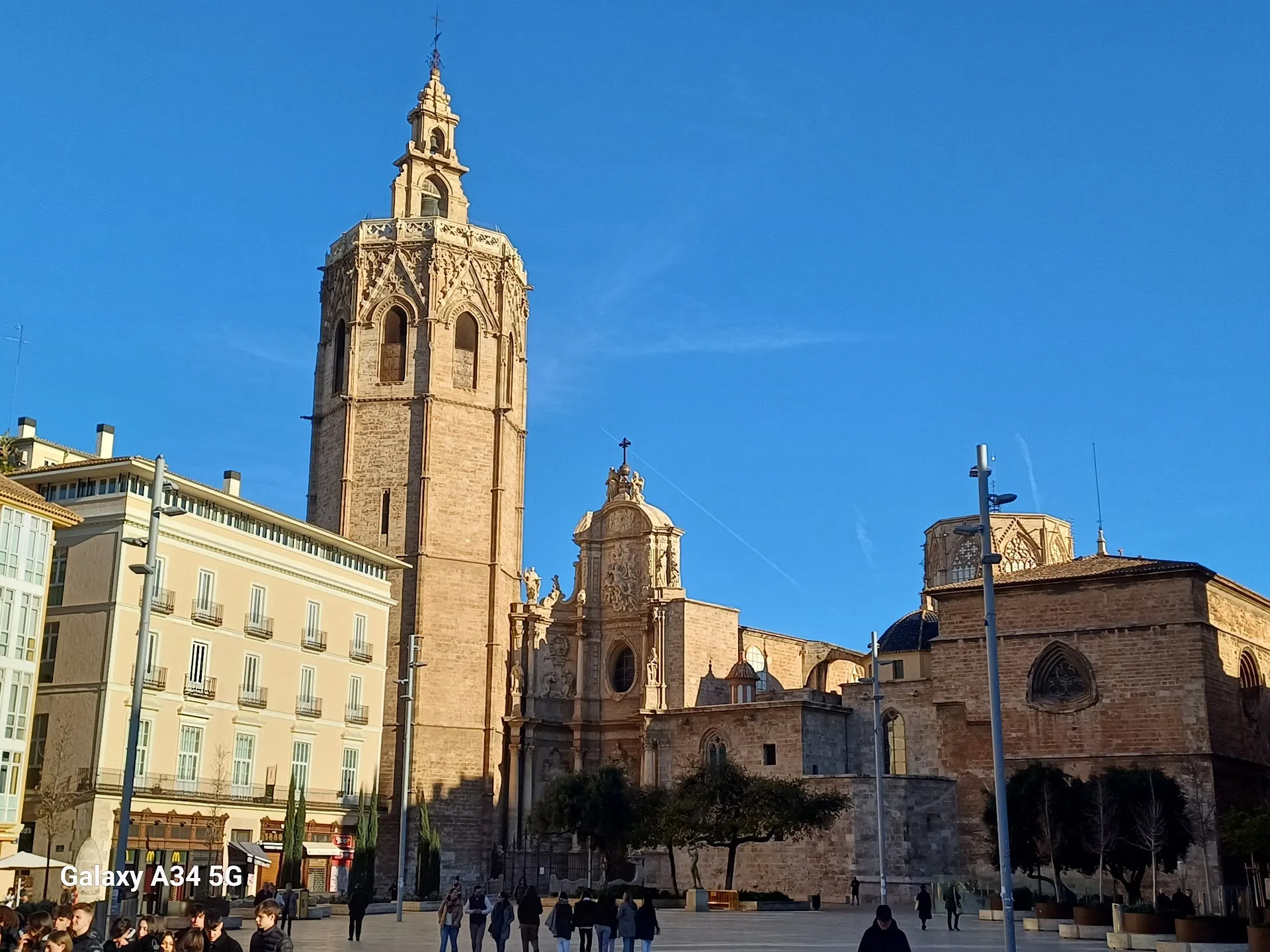
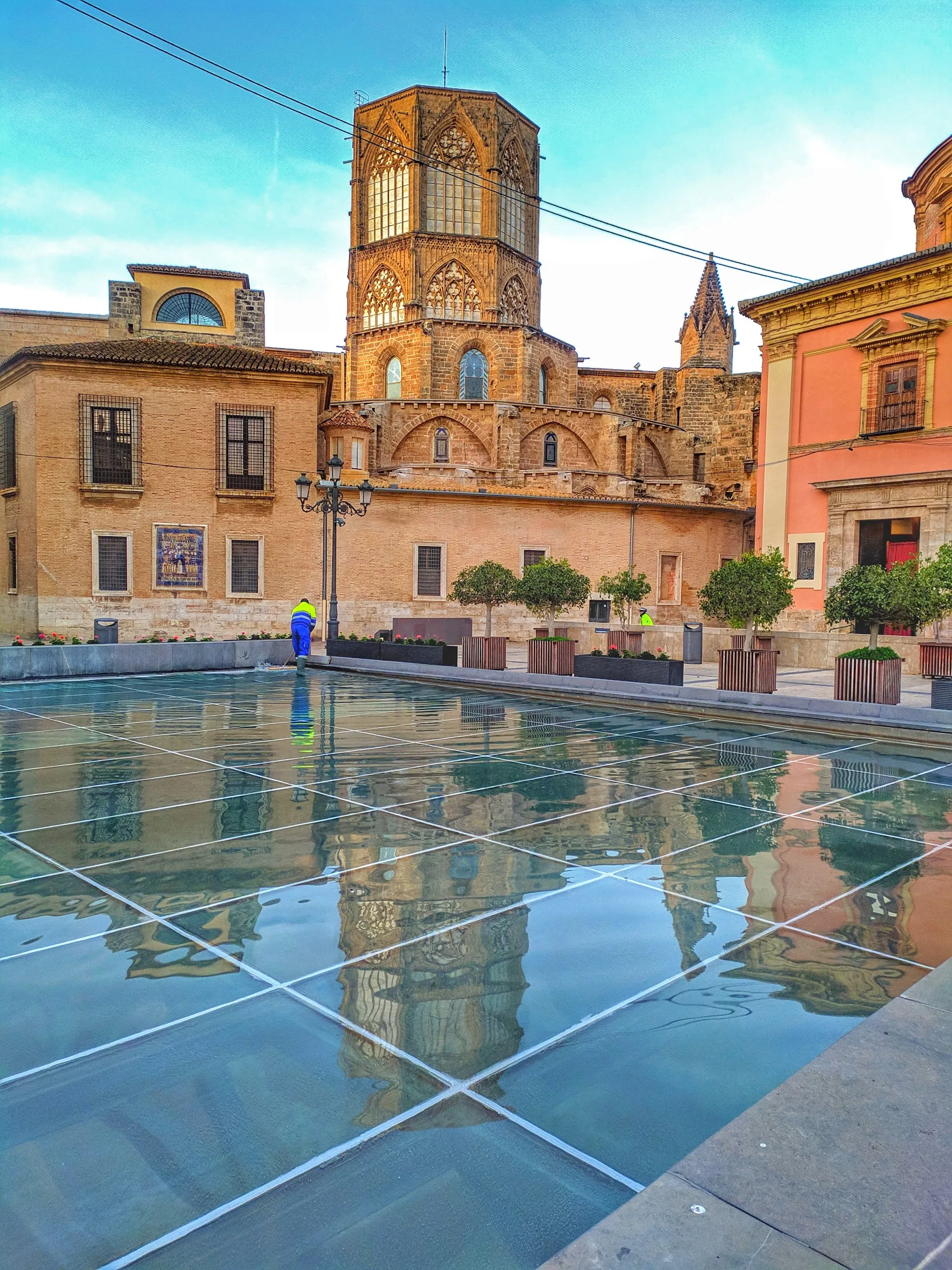
Valencia Cathedral & El Miguelete
Valencia's cathedral blends Romanesque, Gothic, and Baroque styles and claims to hold the Holy Chalice, revered by some as the Holy Grail. Its octagonal Gothic bell tower, El Miguelete (El Micalet), can be climbed via a tight spiral staircase for one of the best panoramas over the old city's rooftops.
Plaça de la Reina / Plaça de la Mare de Déu, Ciutat Vella
Architecture
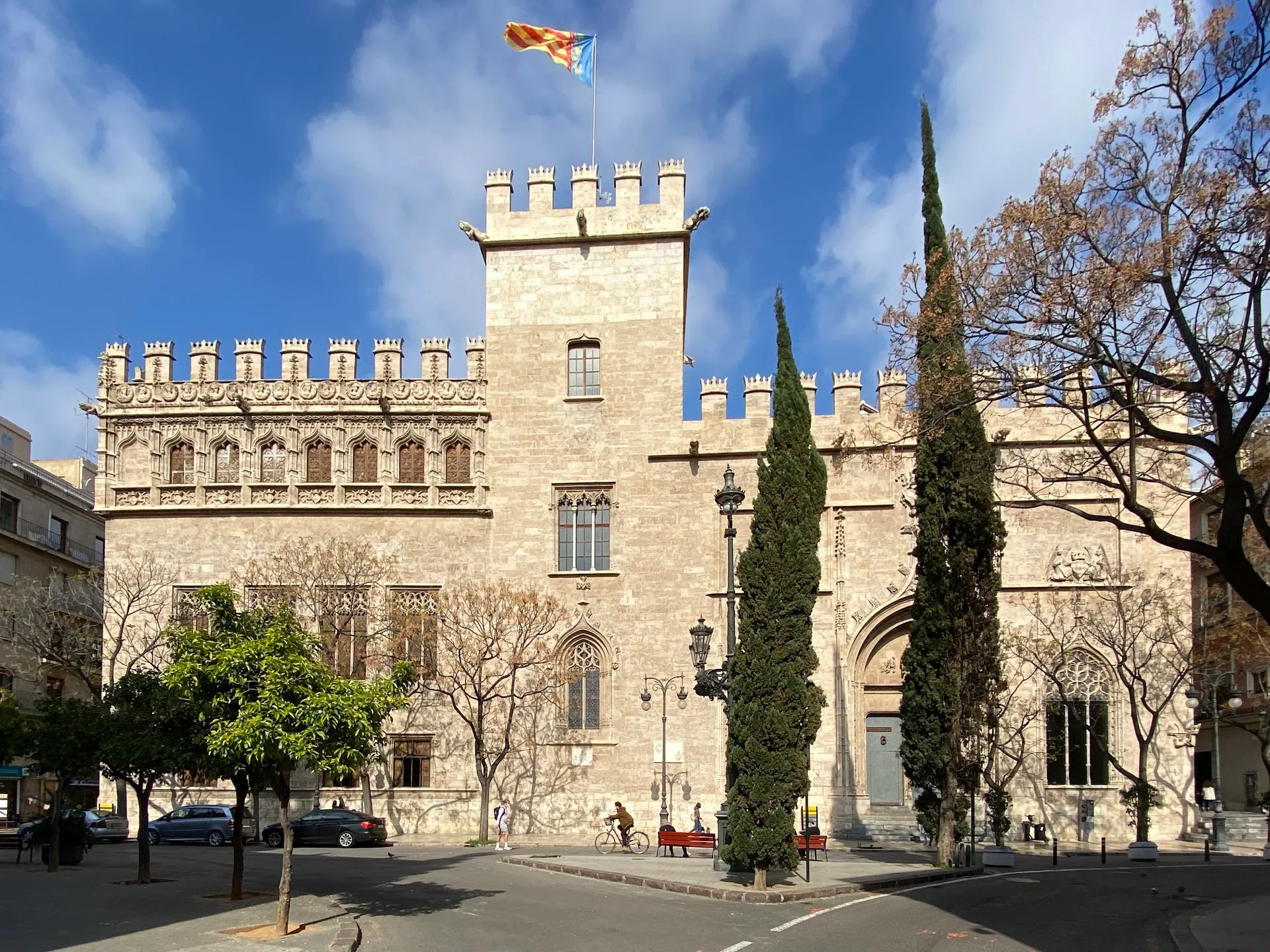
La Lonja de la Seda (Silk Exchange)
A UNESCO World Heritage masterpiece of civil Gothic architecture, built between 1482 and 1548 as a silk and commodities exchange. Its great Hall of Columns, with palm-like twisted stone pillars soaring to a vaulted ceiling, evokes the wealth of Valencia's mercantile golden age.
Carrer de la Llotja, opposite the Central Market
Street
Barrio del Carmen (El Carme)
The atmospheric medieval heart of Valencia, a tangle of narrow lanes, plazas, and crumbling facades draped in some of Spain's best street art. By day it's all bohemian cafés, boutiques, and history; by night it becomes the city's liveliest area for tapas, bars, and live music.
Northwest of the old centre, between the medieval towers
Restaurant4.0
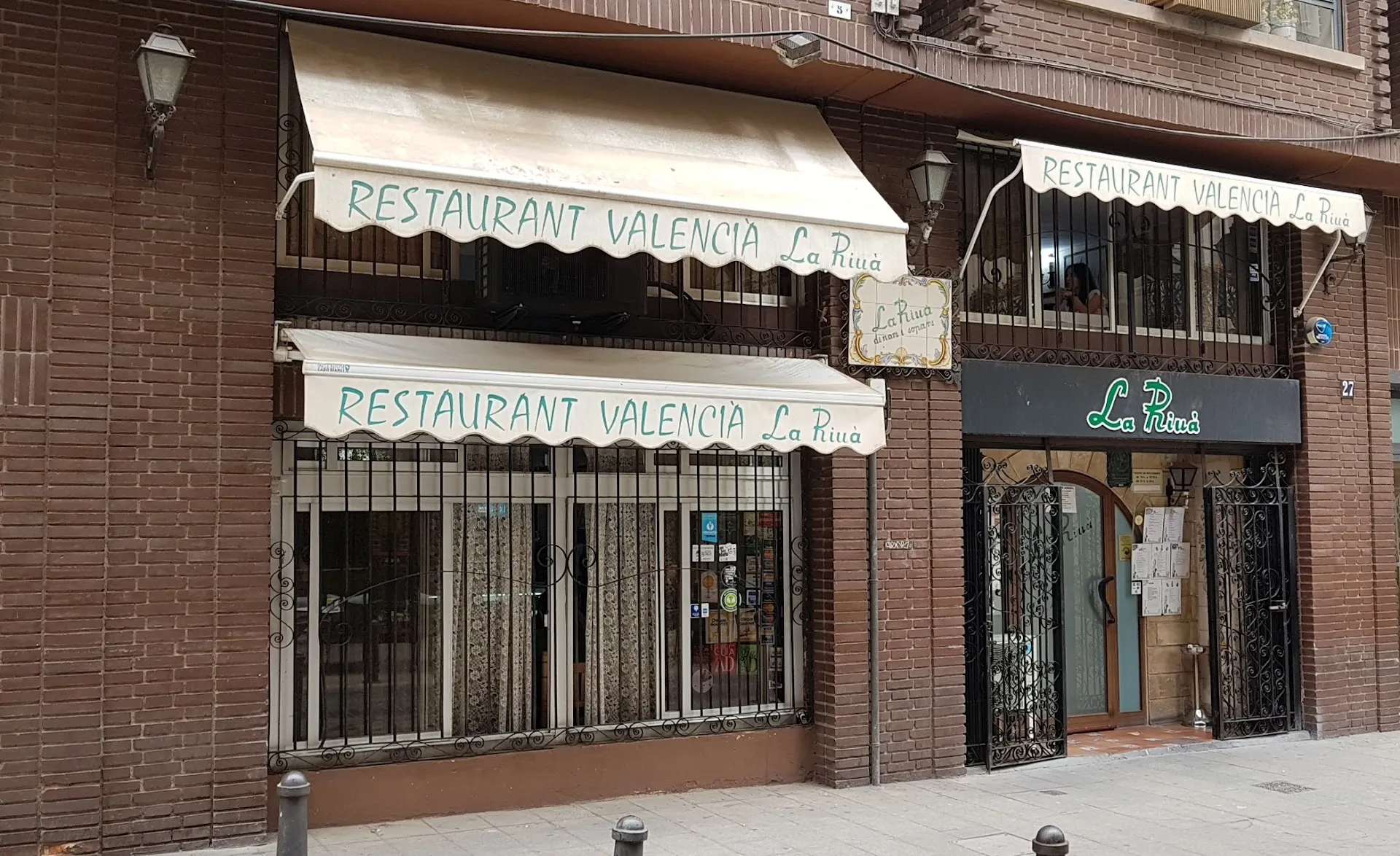
La Riuà
A characterful traditional Valencian restaurant near Plaça de la Reina, its walls lined with hand-painted ceramic tiles. A long-standing favourite for all i pebre (eel stew), rice dishes, and classic local cooking.
Ciutat Vella
Must visit
Market5.0
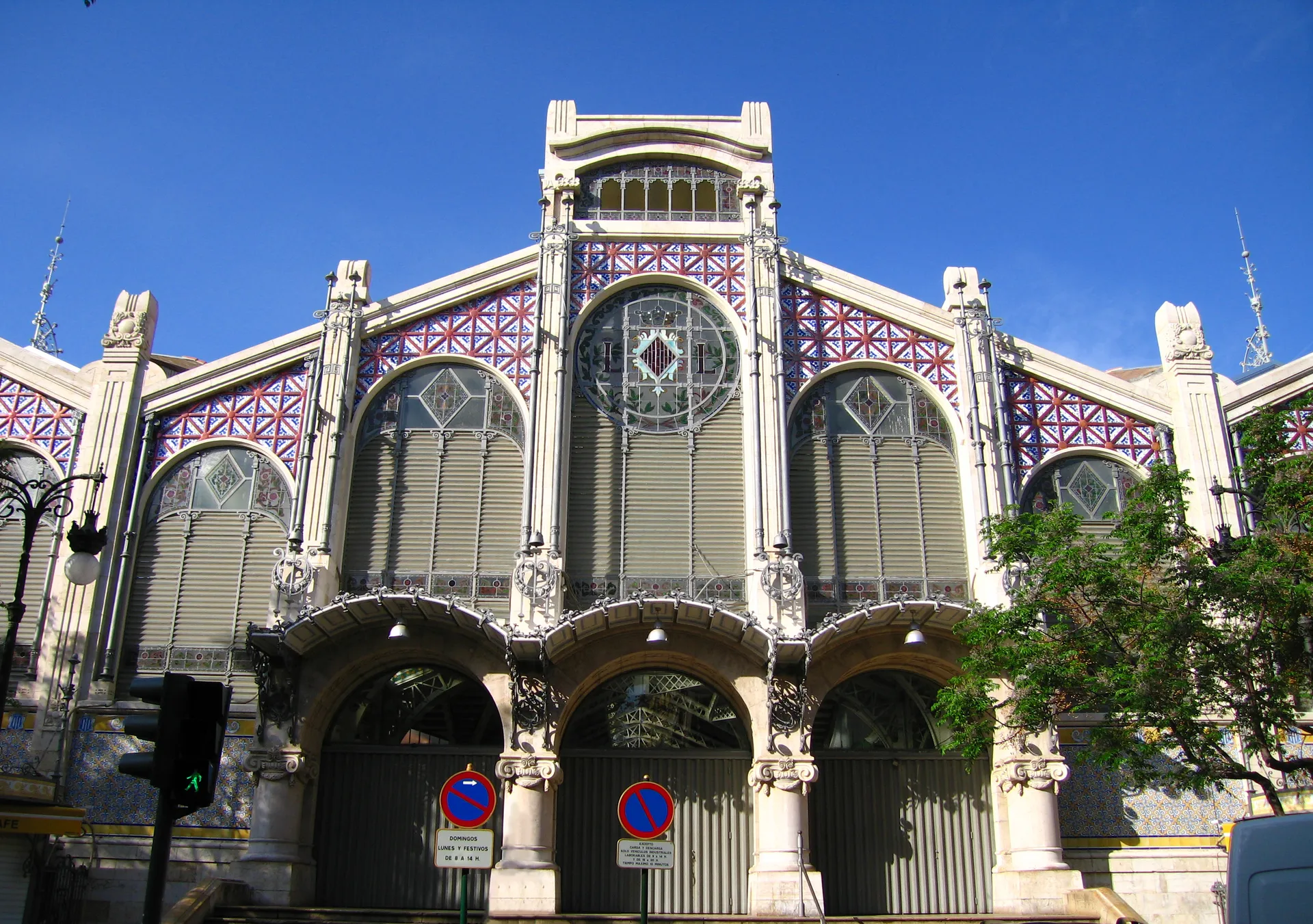
Mercat Central (Central Market)
One of the largest fresh-food markets in Europe, housed in a dazzling 1928 Modernista hall of iron, glass, and tiled domes opposite the Lonja. Nearly a thousand stalls sell produce, seafood, jamón, and local specialties beneath stained-glass light.
Ciutat Vella
Nature
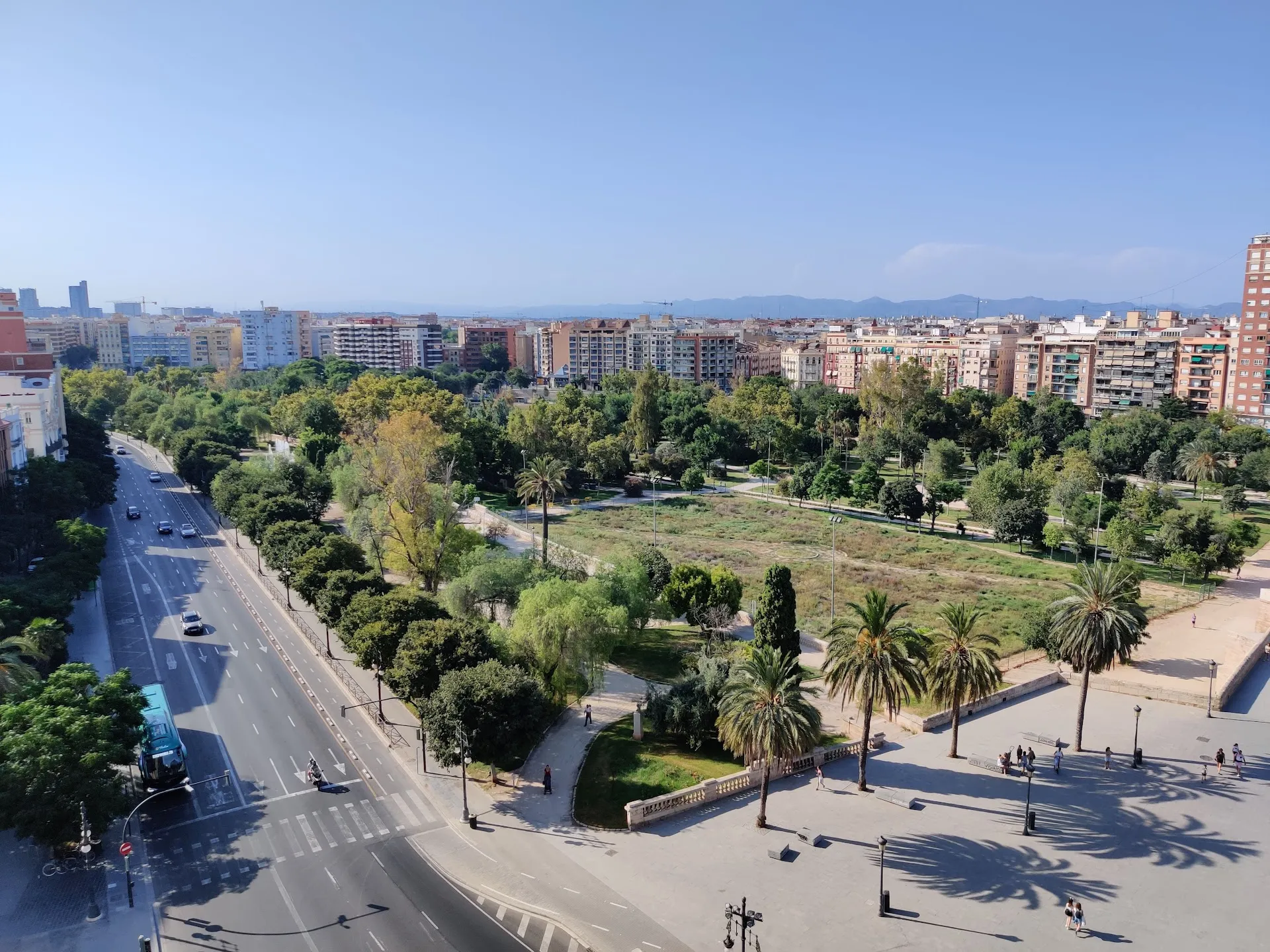
Turia Gardens (Jardí del Túria)
A nine-kilometre ribbon of green laid out along the drained bed of the river Turia, which was diverted after the 1957 flood. Now the city's beloved playground of lawns, orange trees, fountains, sports courts, and bike paths, it links the historic centre to the City of Arts and Sciences and is best explored on foot or by bike.
The former Turia riverbed, curving through the city
Architecture
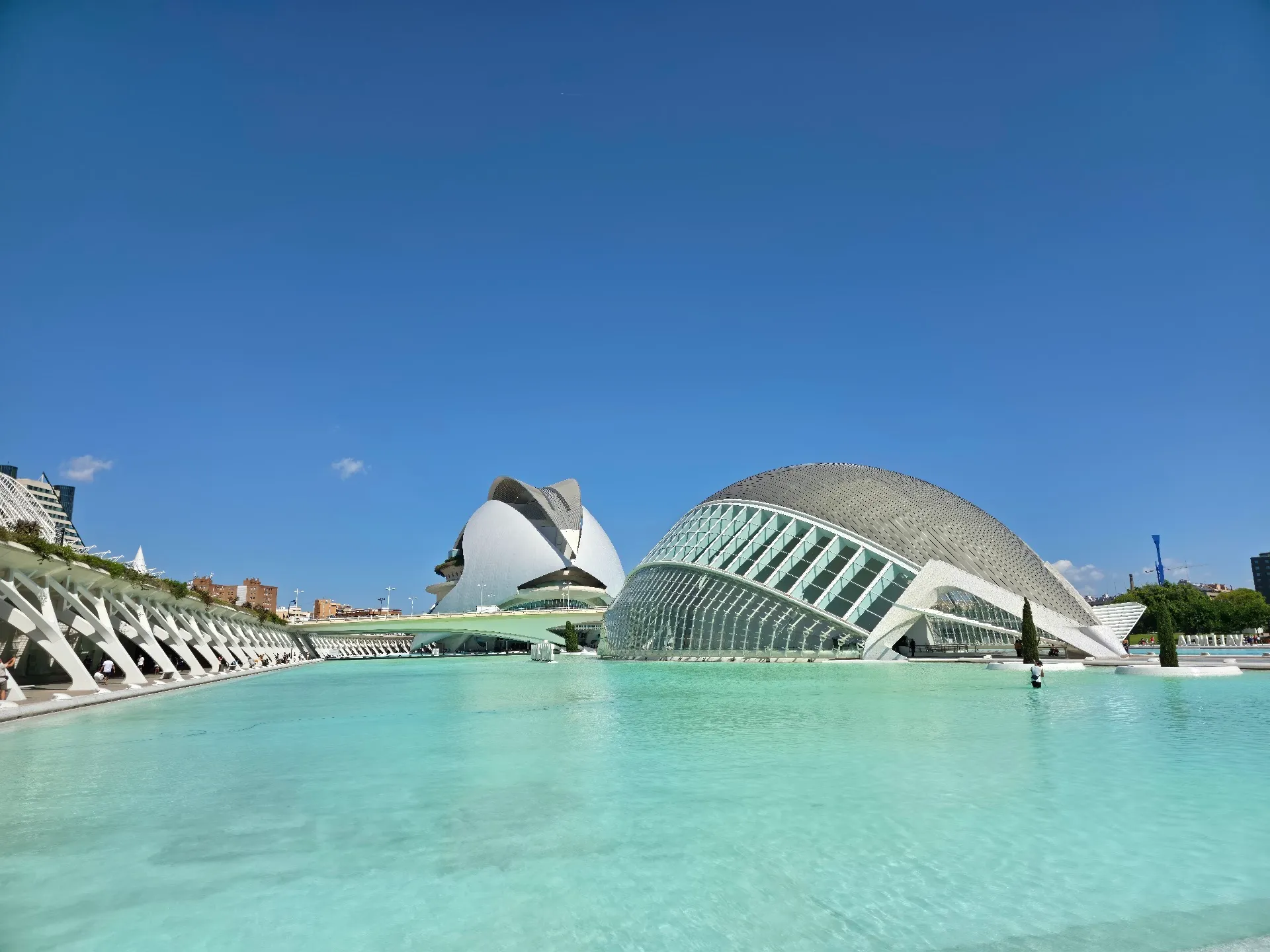
City of Arts and Sciences
Santiago Calatrava's gleaming white complex of futuristic buildings rising from turquoise reflecting pools at the seaward end of the old riverbed. It gathers the Hemisfèric planetarium, the Príncipe Felipe science museum, the Oceanogràfic aquarium, and the Palau de les Arts opera house, and is Valencia's defining modern landmark.
Quatre Carreres, southern end of the Turia Gardens
Restaurant4.0
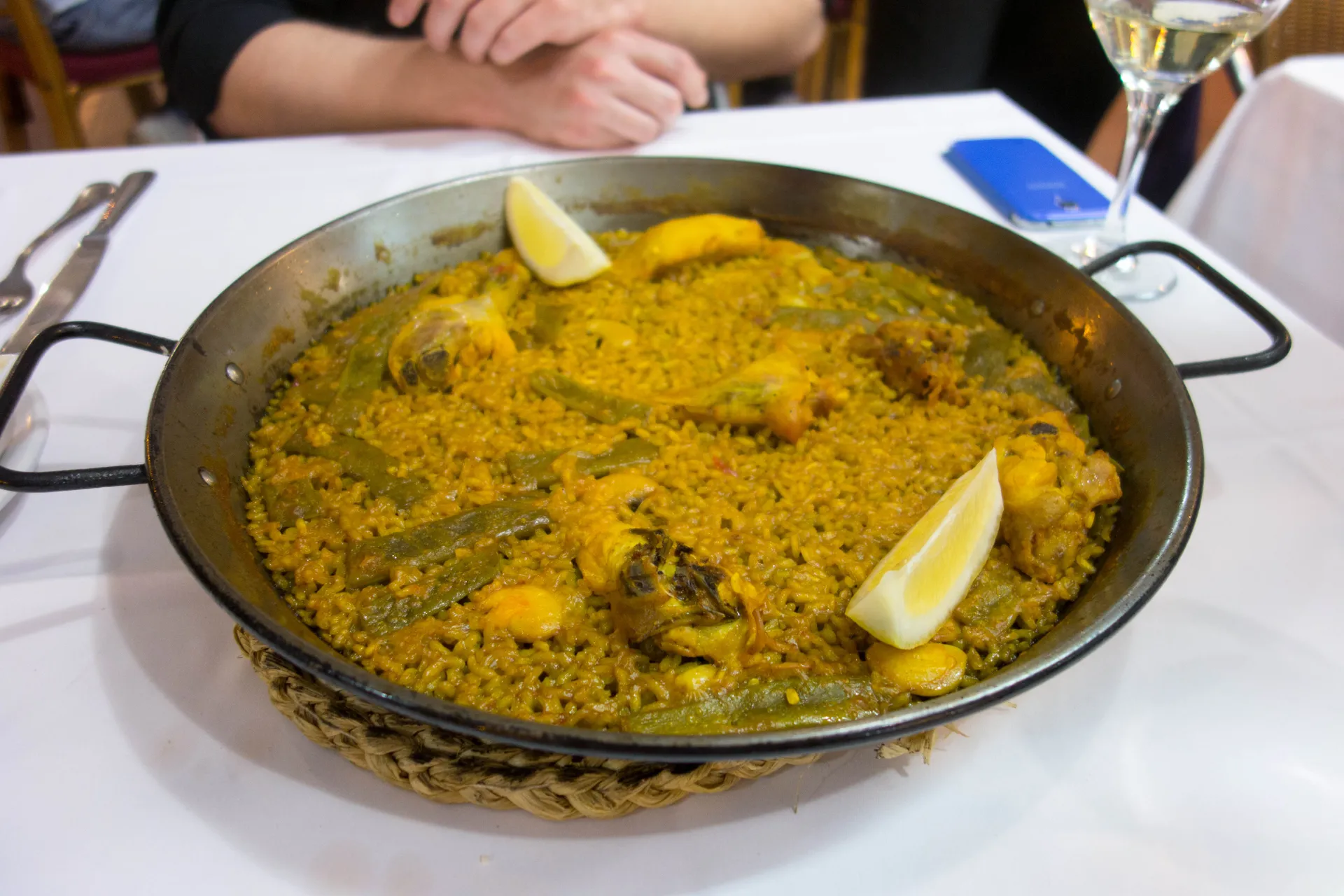
La Pepica
A famous Malvarrosa seafront restaurant open since 1898, once frequented by Hemingway and Spanish royalty. The dining room opens onto the promenade and the kitchen turns out classic rices, paellas, and seafood right by the sand.
Cabanyal-Canyamelar
Nature
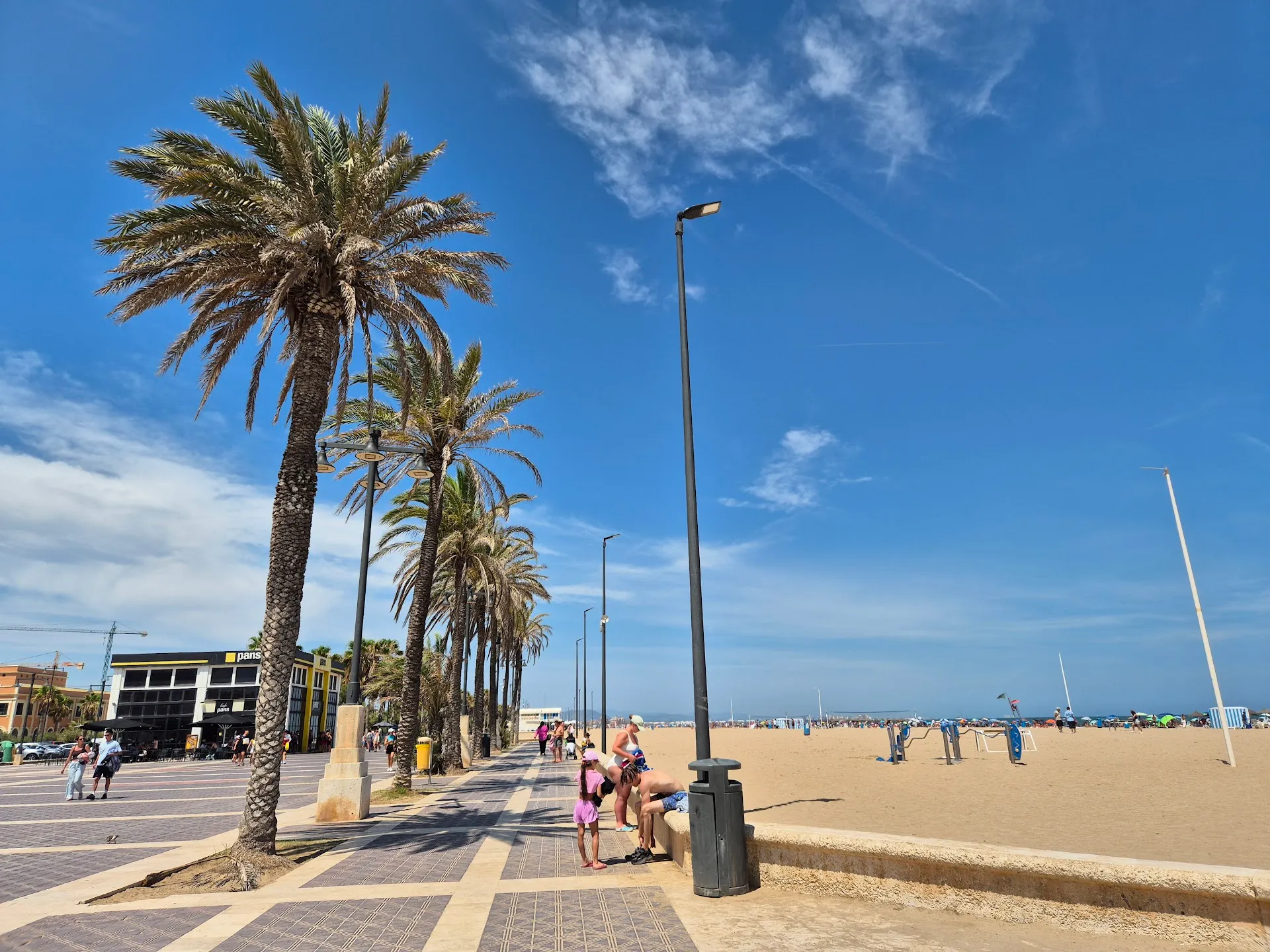
Malvarrosa Beach (Platja de la Malva-rosa)
Valencia's broad, golden city beach, backed by a wide palm-lined promenade and a string of seafood restaurants and chiringuitos. Generously sized and easy to reach from the centre, it's ideal for a swim, a paella by the sea, or a long sunset walk.
Seafront, east of the centre via tram or bus
Must visit
Bar5.0
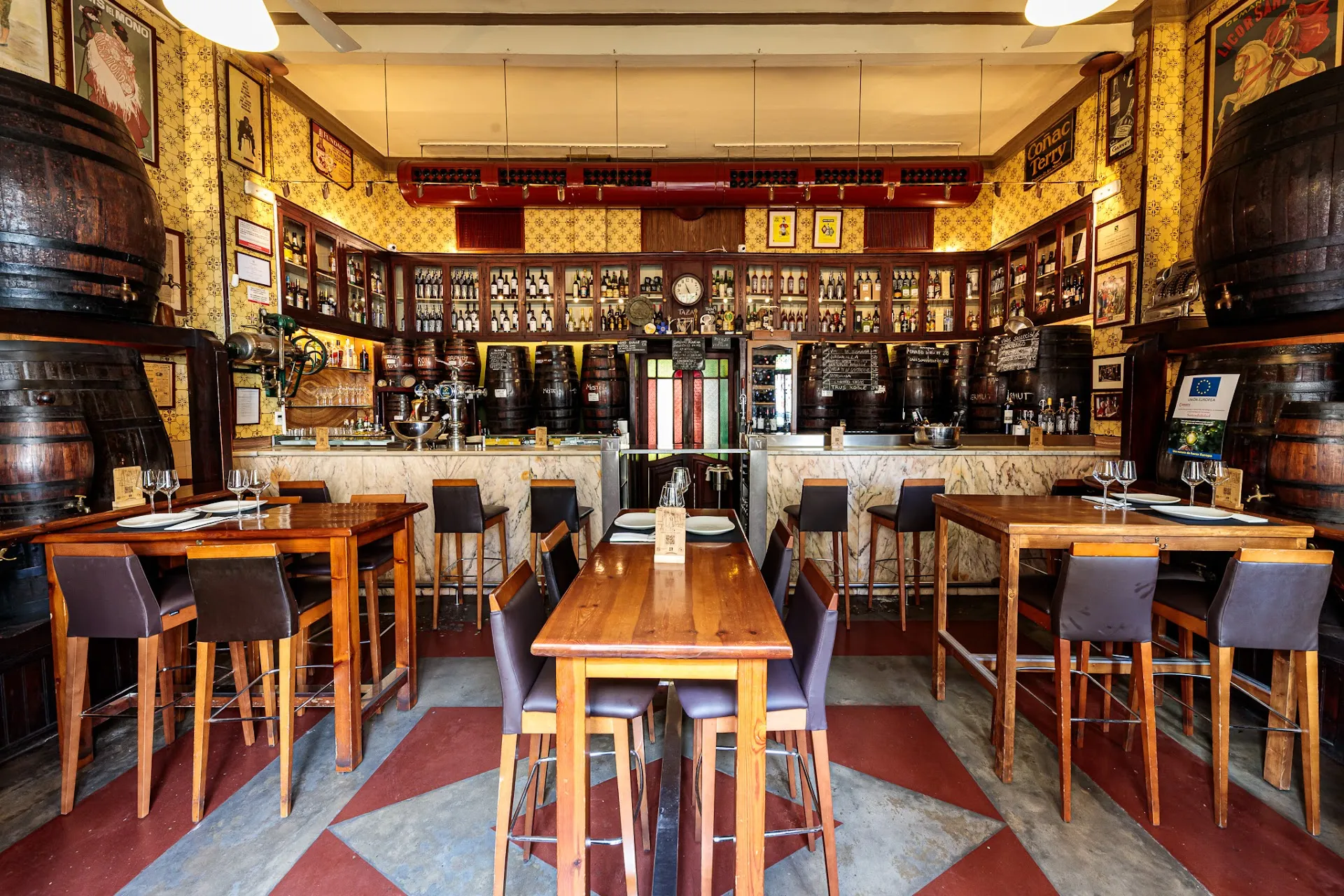
Casa Montaña
A historic bodega founded in 1836 in the seaside Cabanyal quarter, lined with old wine barrels and serving exceptional traditional tapas with a deep wine and sherry list. One of the city's most atmospheric places to eat and drink.
Cabanyal-Canyamelar
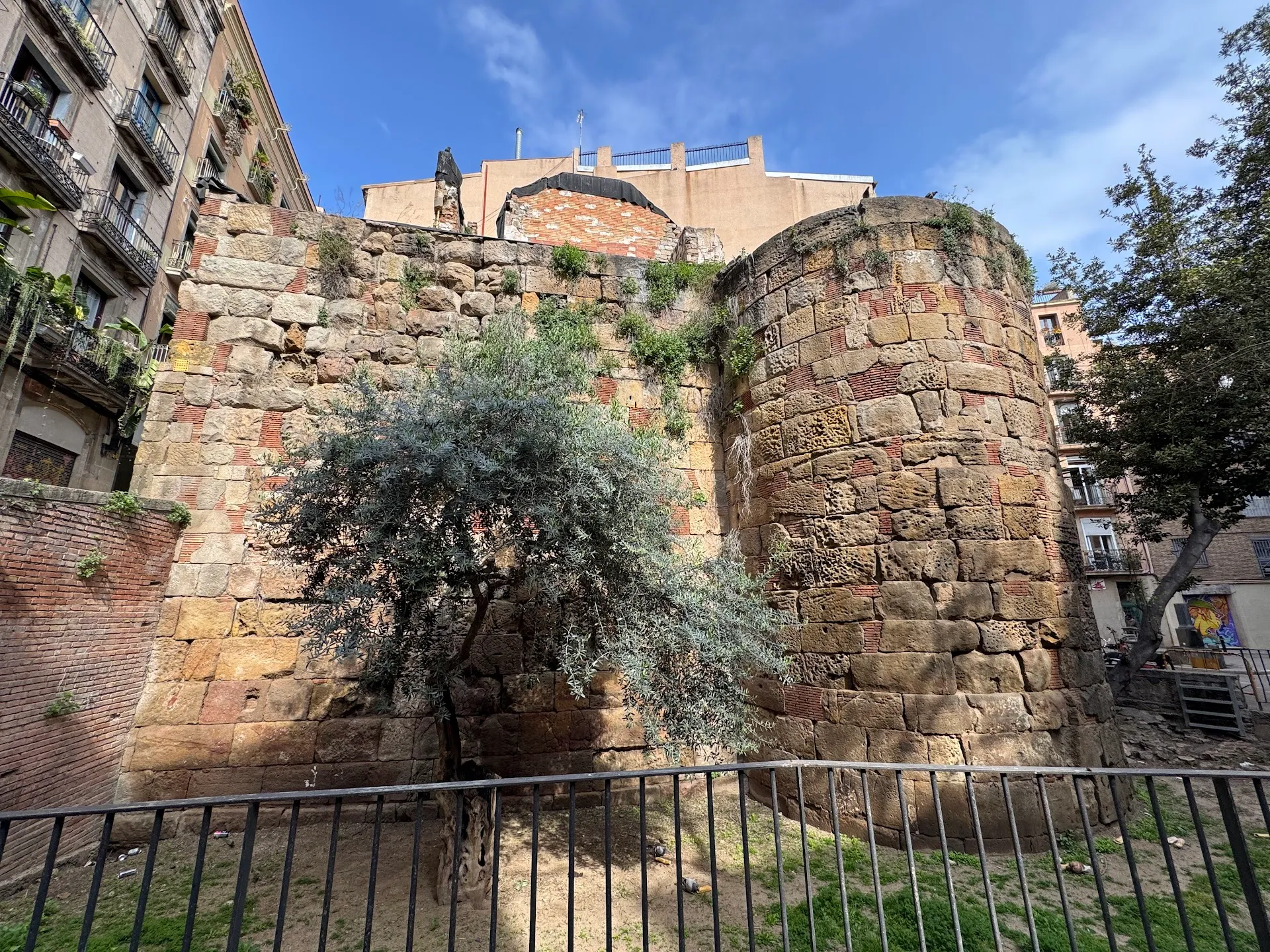
Street
Barri Gòtic Medieval Streets
The labyrinth of narrow medieval lanes, hidden squares, and Roman remains at the heart of the old city. Atmospheric, photogenic, and endlessly wanderable.
Barri Gòtic
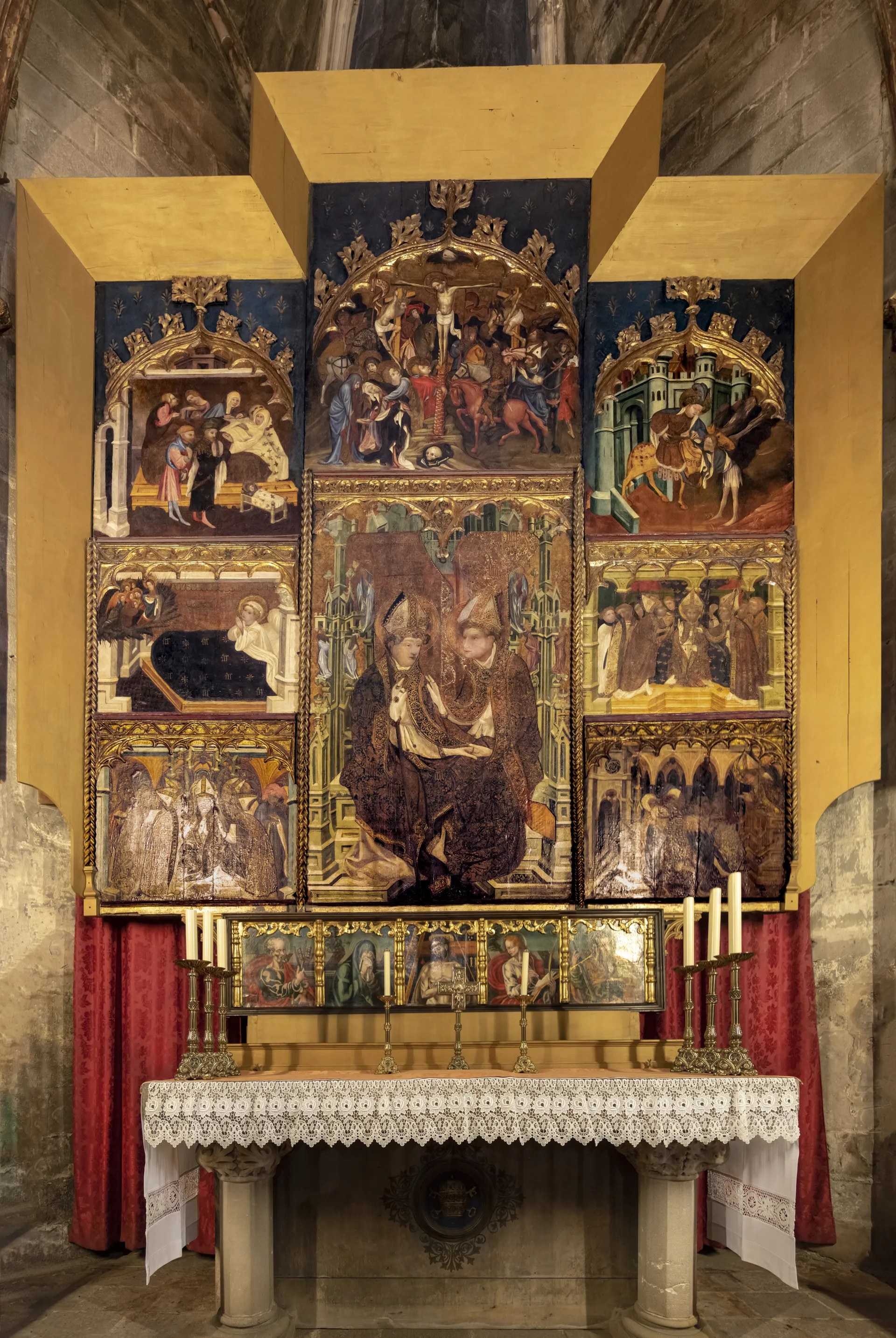
Temple4.0
Barcelona Cathedral
The soaring Gothic cathedral at the heart of the old city, with a cloister home to thirteen white geese, a serene rooftop, and an atmospheric, gargoyle-studded exterior in the medieval Barri Gòtic.
Barri Gòtic
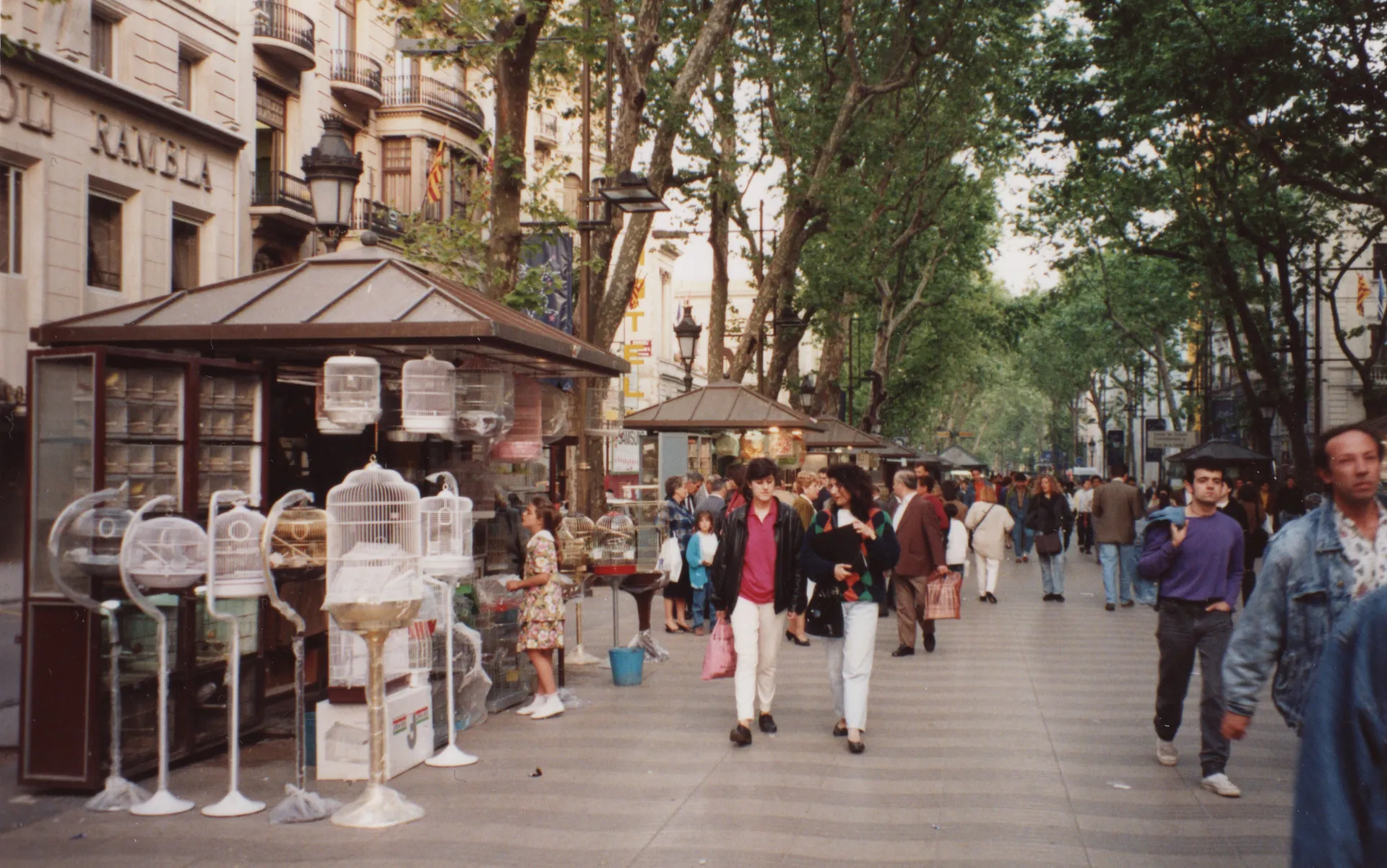
Street
La Rambla
Barcelona's famous tree-lined pedestrian boulevard running from Plaça Catalunya to the old port, lined with flower stalls, street performers, and the Boqueria market. Touristy but iconic, mind your pockets.
Ciutat Vella
Must visit
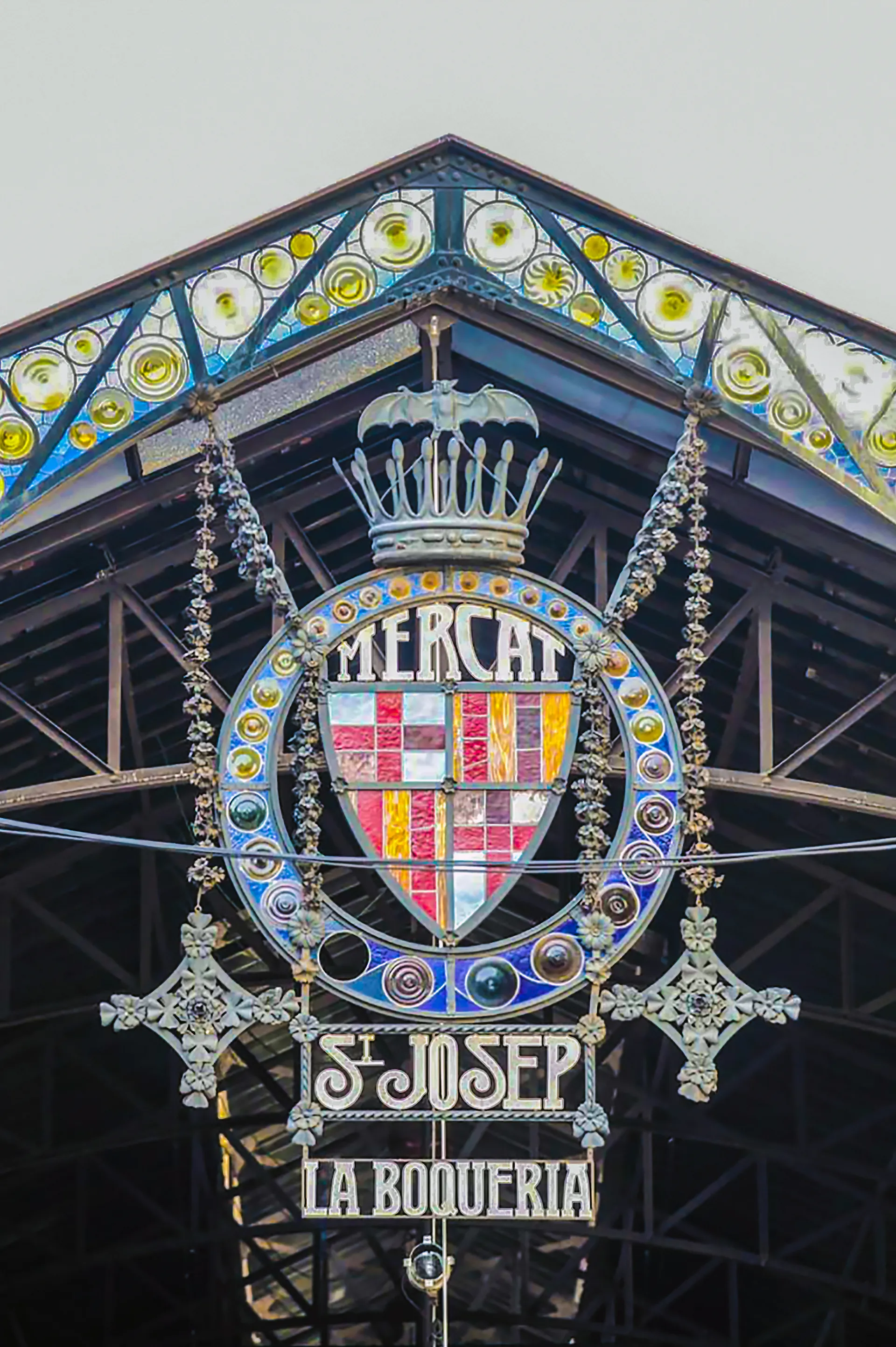
Market5.0
Mercat de la Boqueria
Barcelona's legendary food market just off La Rambla: a riot of jamón, seafood, fruit, and tapas counters under a Modernista iron roof. Come hungry, eat at a stool bar, and go early before the crush.
El Raval
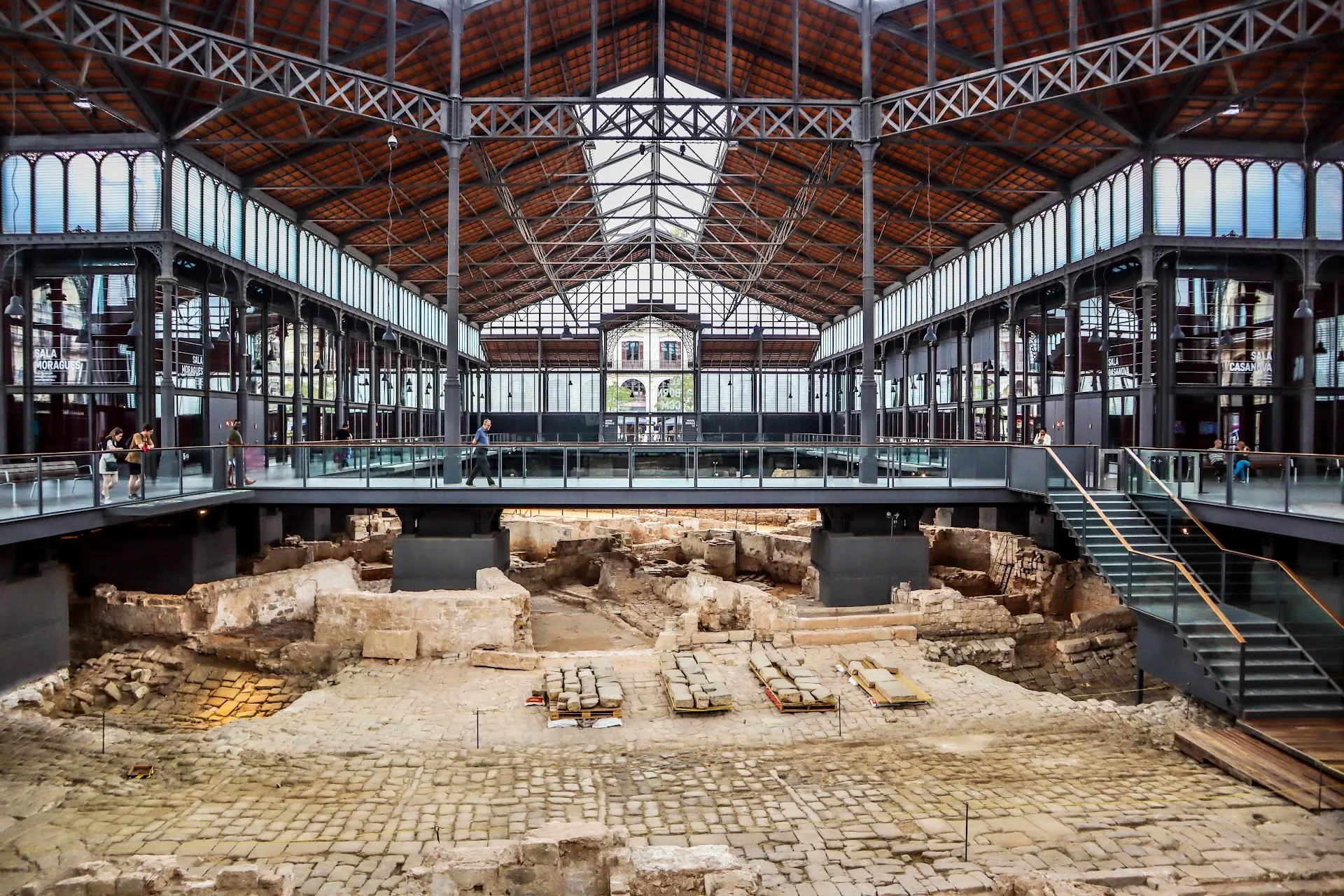
Street
El Born Quarter
A chic medieval quarter of boutiques, tapas bars, and the Santa Maria del Mar basilica, livelier and trendier than the Gothic Quarter next door.
El Born
Must visit
Temple5.0
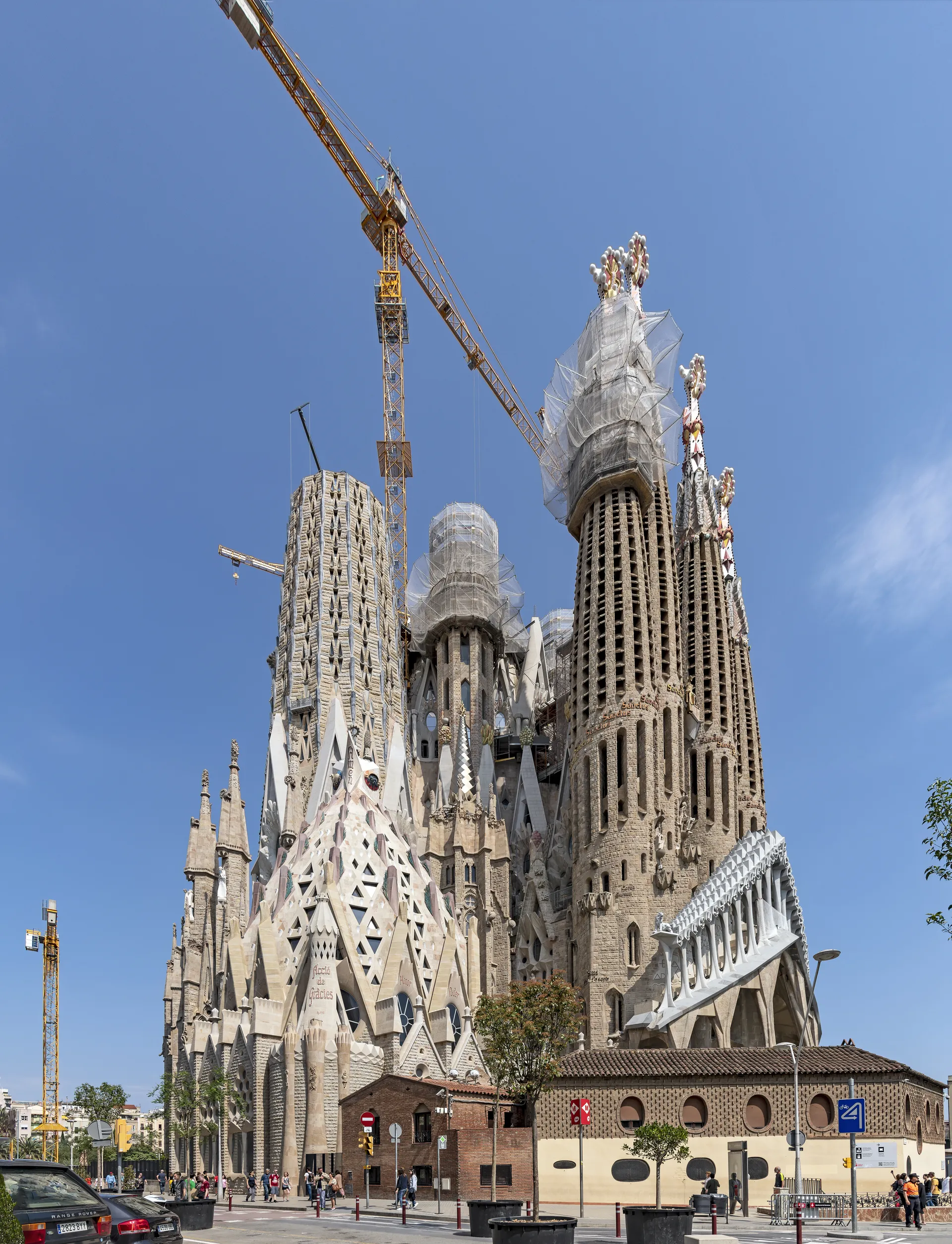
Sagrada Família
Gaudí's unfinished masterpiece and Barcelona's defining symbol: a soaring basilica of organic stone forms and kaleidoscopic stained glass, under construction since 1882. The interior, where light floods through coloured glass onto tree-like columns, is one of the most breathtaking spaces in Europe.
Eixample
Museum5.0
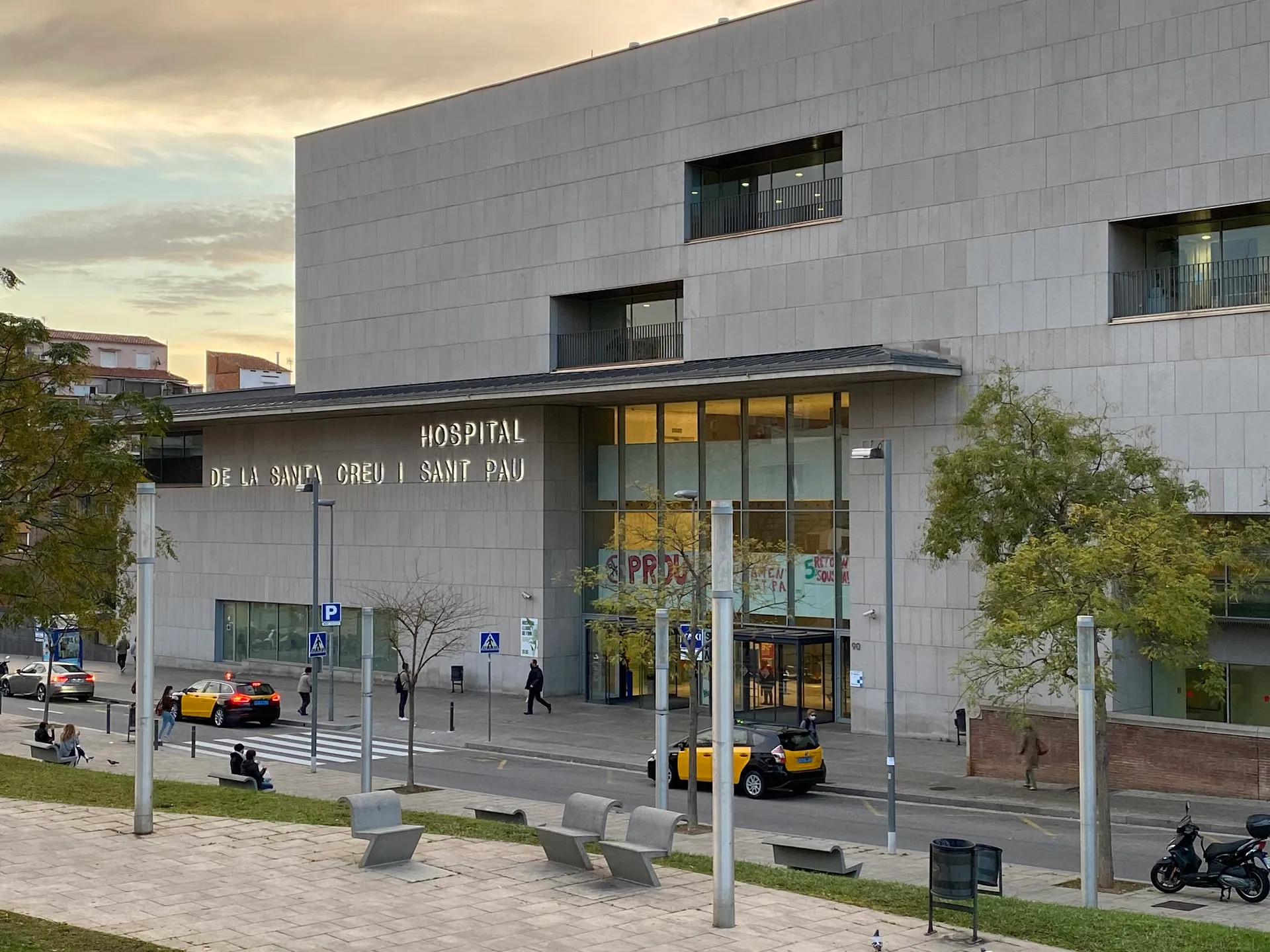
Hospital de Sant Pau
The world's largest Art Nouveau site: a dazzling former hospital complex by Domènech i Montaner, with mosaic-clad pavilions in a garden setting. A UNESCO gem a short walk from the Sagrada Família.
Eixample
Must visit
Museum5.0
Casa Batlló
Gaudí's most dazzling townhouse on the Passeig de Gràcia, with a bone-like facade, scaled roof, and an interior that flows like the sea. A masterclass in Catalan Modernisme, now an immersive museum.
Eixample
Must visit
Park5.0
Park Güell
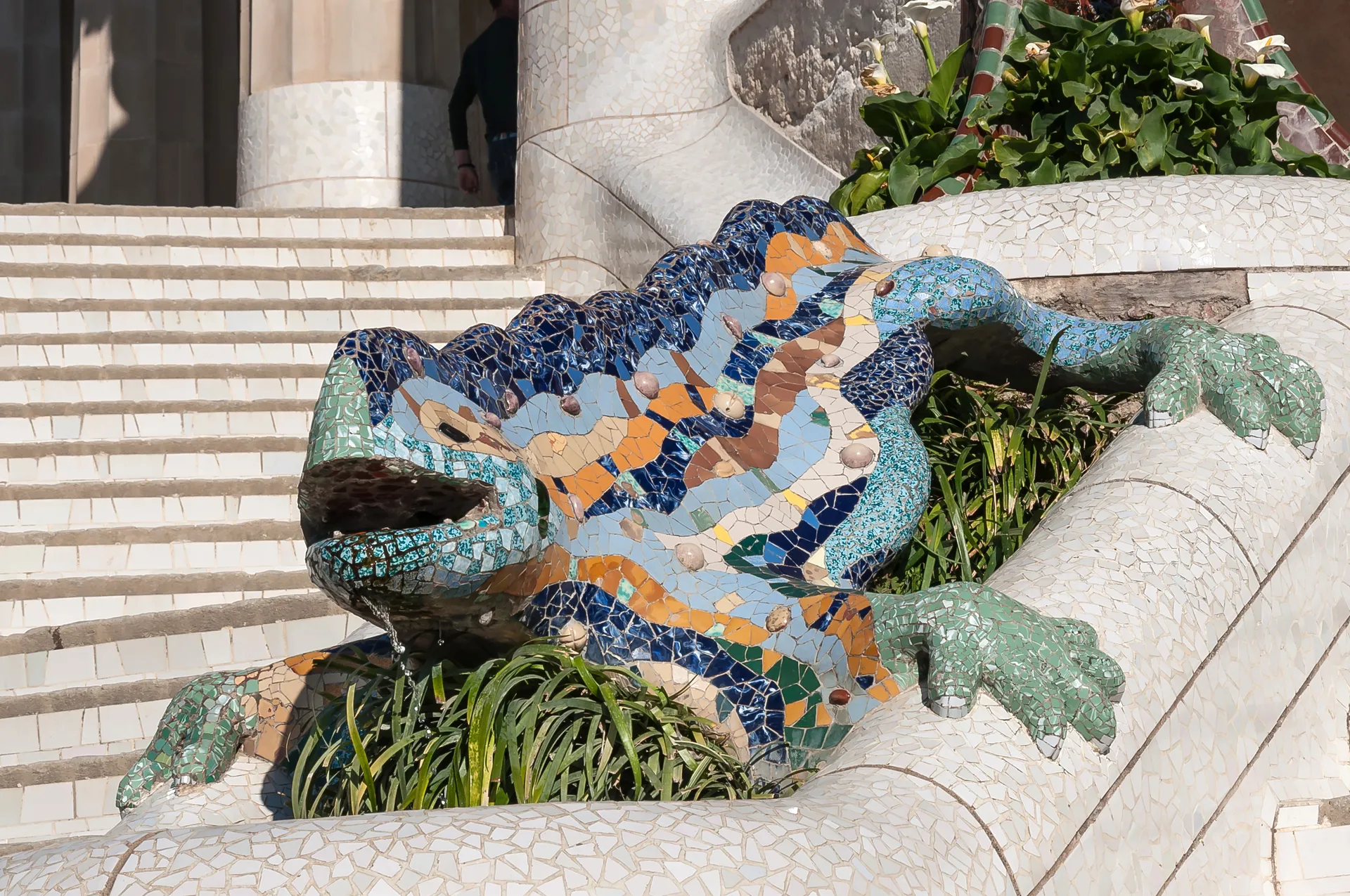
Gaudí's whimsical hillside park of mosaic-tiled terraces, serpentine benches, and fairy-tale pavilions, with sweeping views over the city to the sea. The Monumental Zone with the famous tiled salamander requires a timed ticket; the surrounding park is free.
Gràcia
Viewpoint
Bunkers del Carmel
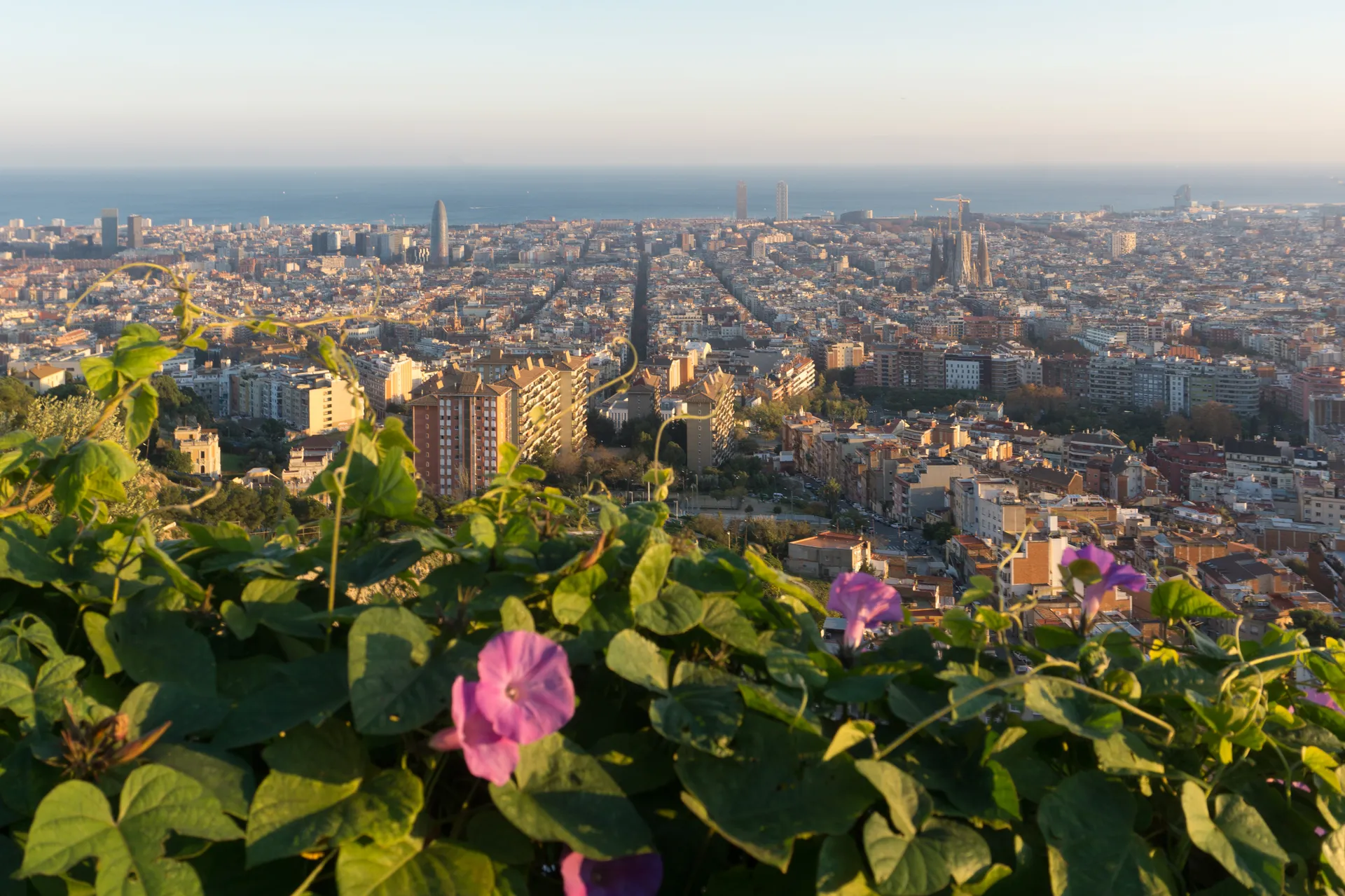
Civil-war anti-aircraft bunkers atop Turó de la Rovira offering the best 360-degree view in Barcelona, from the Sagrada Família to the sea. A local favourite for sunset.
El Carmel
Food€65-89
Barcelona Tapas & Wine Tour
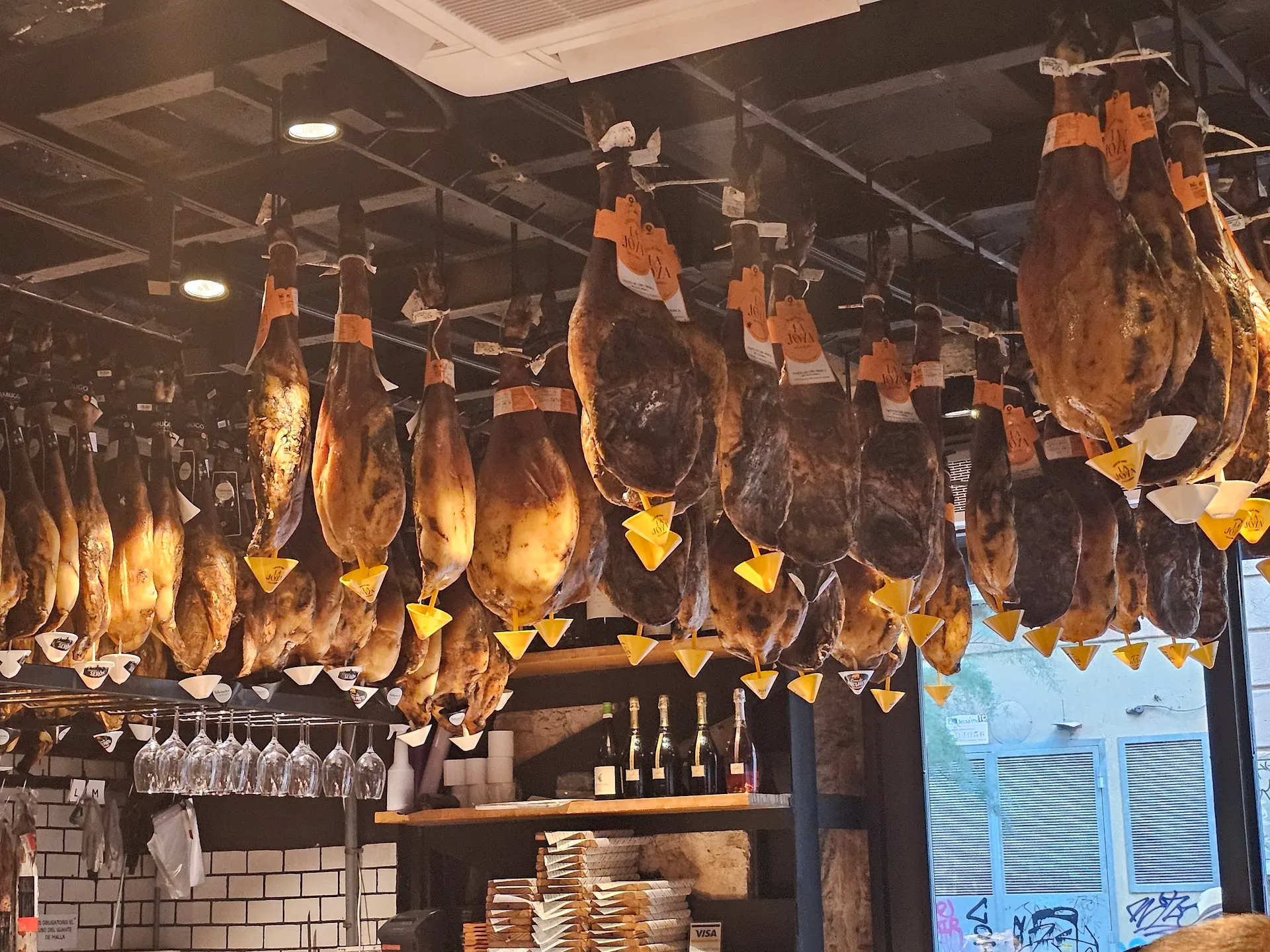
A small-group crawl through the old city's best tapas bars and bodegas, sampling jamón, pan con tomate, seafood, and Catalan wines and cava, with the stories behind each dish.
El Born / Gòtic3-3.5 hours
Book this tour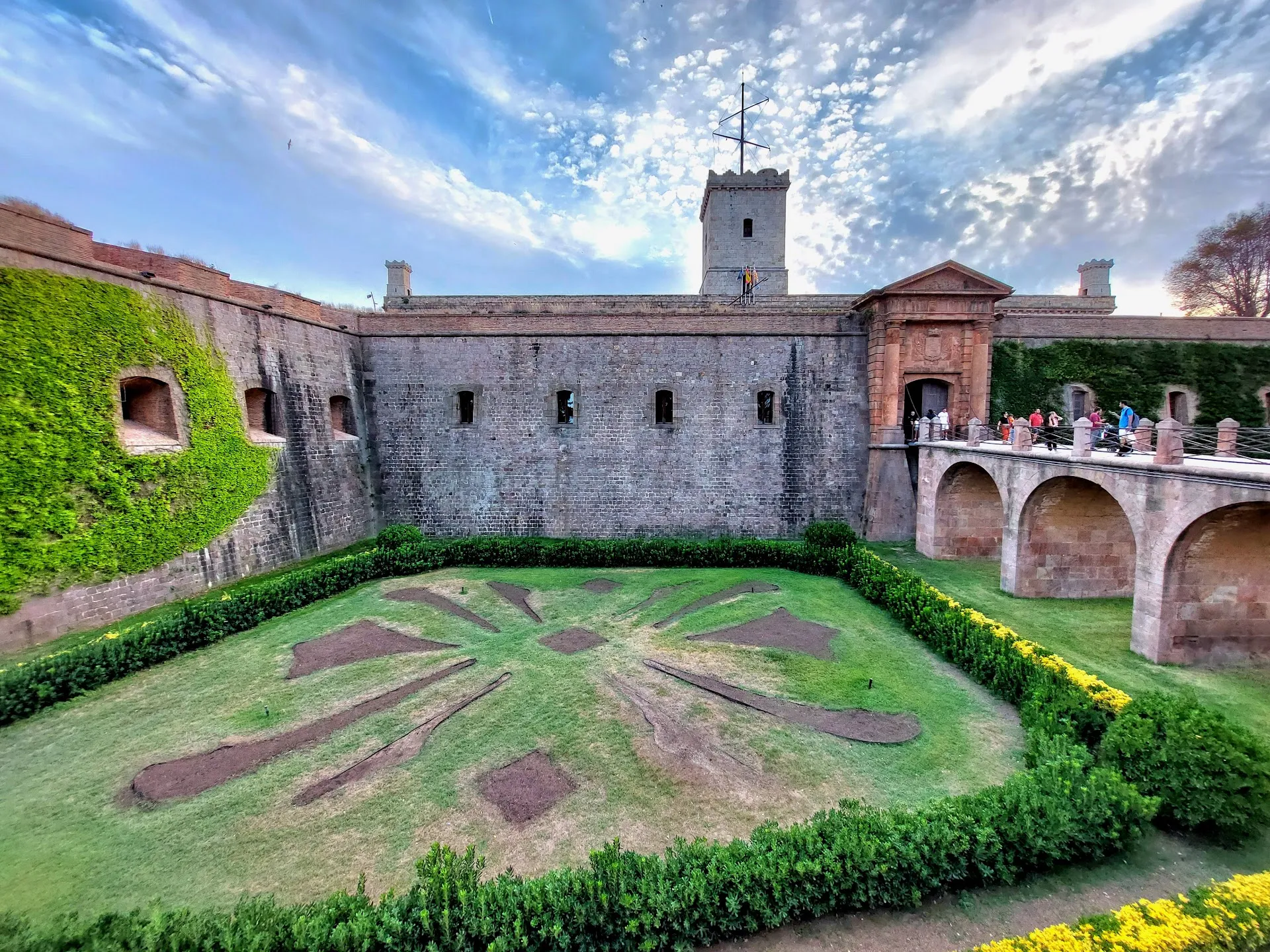
Castle4.0
Montjuïc Castle
A 17th-century fortress crowning Montjuïc hill, with cannon-lined ramparts and panoramic views over the port and city. Reach it by the scenic cable car for the best arrival.
Montjuïc
Museum4.0
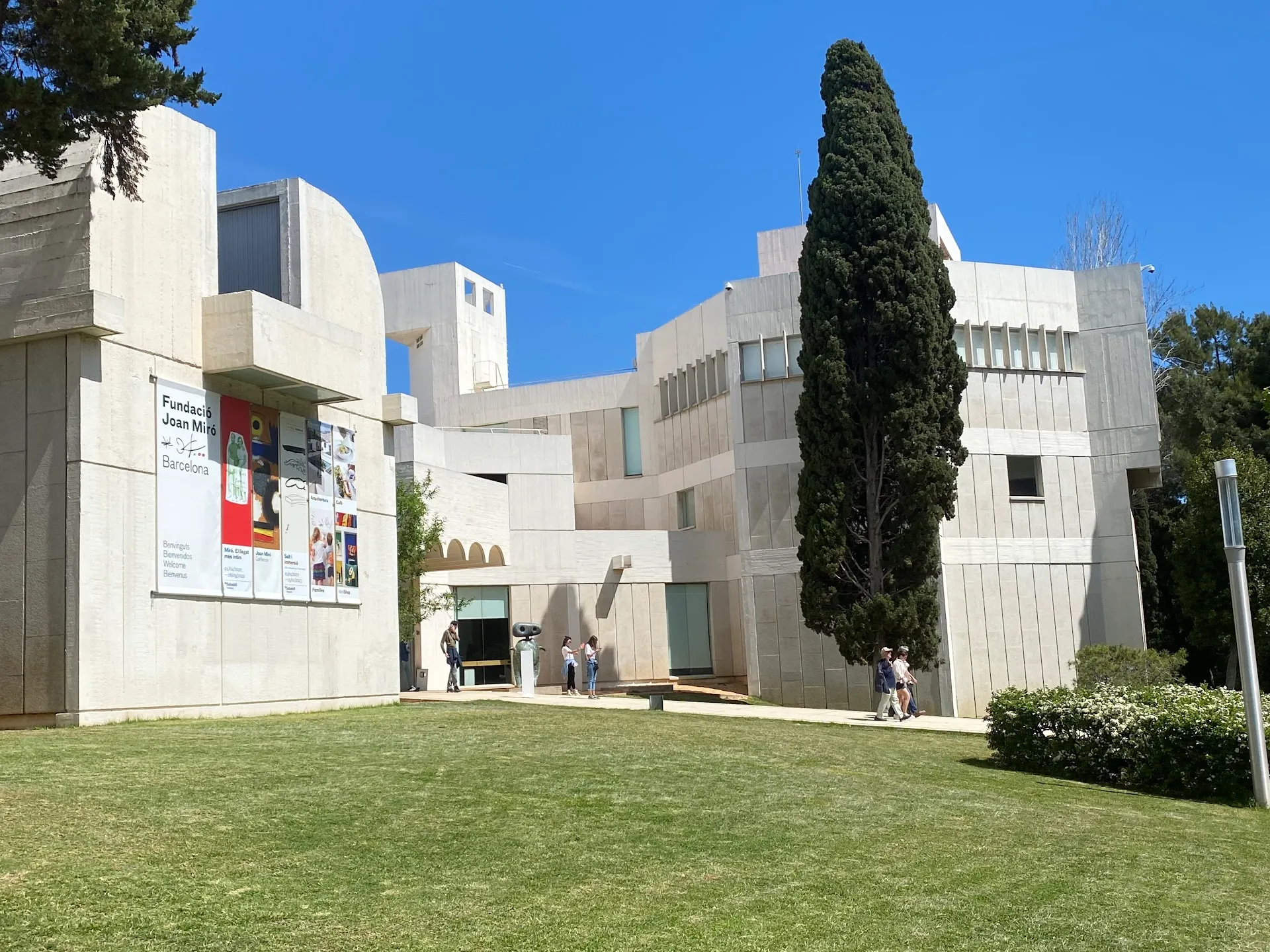
Fundació Joan Miró
A light-filled modernist building on Montjuïc housing the world's foremost collection of Joan Miró's playful, primary-coloured paintings, sculptures, and tapestries, with a sculpture roof terrace.
Montjuïc
Scenic Spot4.0
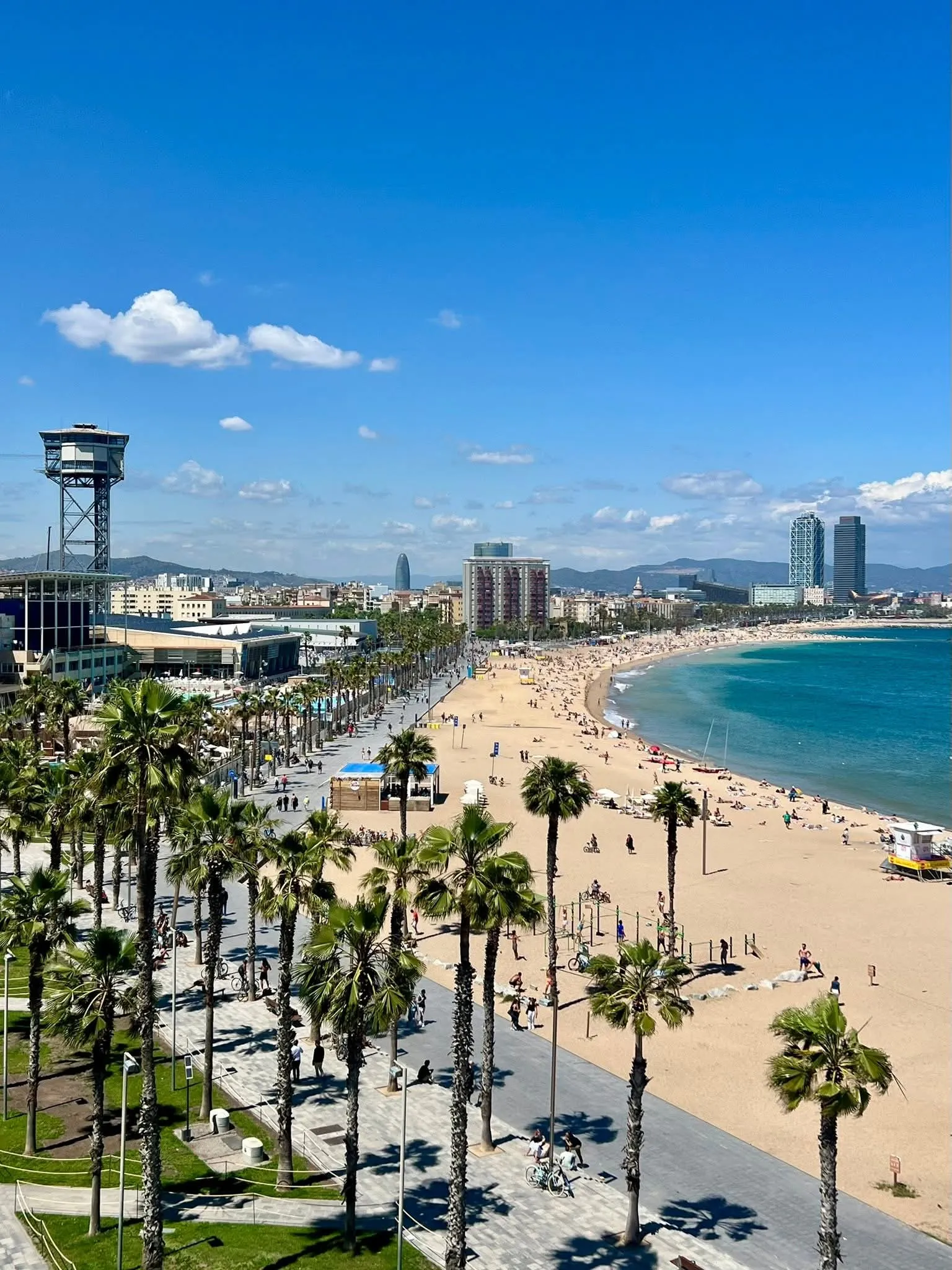
Barceloneta Beach
The city's most famous and central beach, a wide arc of golden sand backed by seafood restaurants (chiringuitos) and a buzzing boardwalk. Great for a swim, a paella, or a sunset stroll.
Barceloneta
Architecture
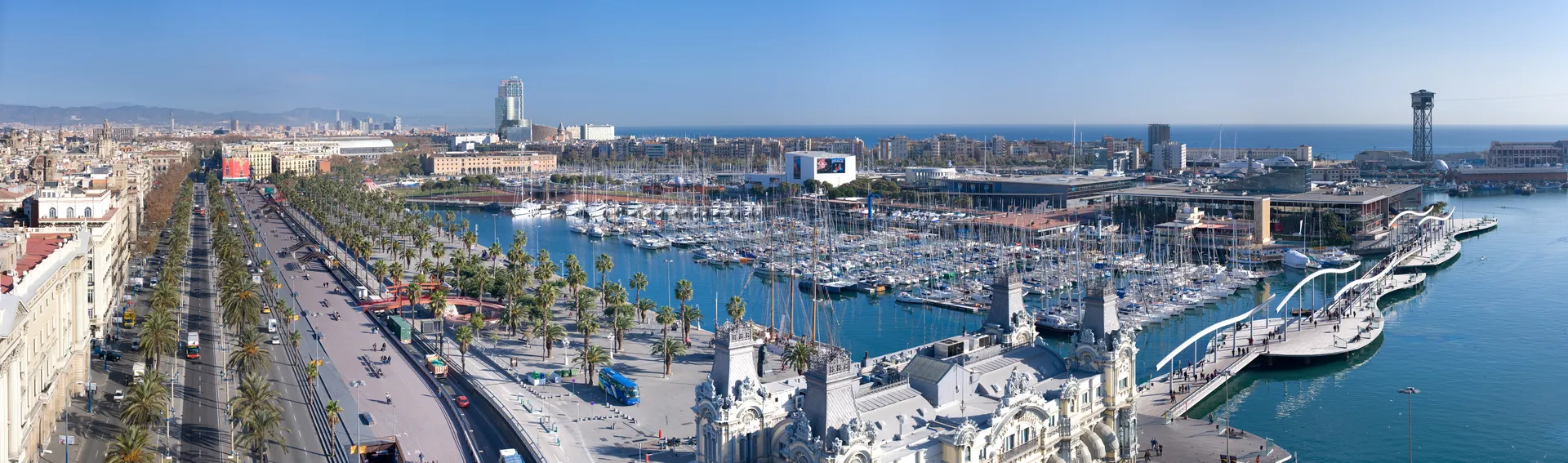
Port Vell & Rambla de Mar
The revitalised old harbour with a wave-shaped wooden footbridge, marina, and waterfront promenade linking the old city to the sea. Pleasant for a seaside stroll.
Port Vell
Day by day
Day 1Madrid
Habsburg Madrid: the Royal Palace & the old centre
09:30Landmark
Royal Palace of Madrid (Palacio Real)
Begin at the Palacio Real, the largest royal palace in Western Europe by floor area — a 3,400-room baroque colossus the king no longer lives in but still uses for state ceremonies. Tour the throne room, the porcelain room and the royal armoury.
Palacio, Centro
Tip: Book online and arrive at opening; the ceremonial changing of the guard takes place on Wednesdays and Saturdays.
11:30Landmark
Plaza Mayor
Walk into the perfectly enclosed Plaza Mayor, the arcaded 17th-century square that has staged coronations, markets and even bullfights, ringed now by frescoed facades and pavement cafés.
Sol, Centro
Tip: Slip out through the Arco de Cuchilleros to reach the steep old lanes and the cava taverns just below the square.
Must visit
12:30Market
Mercado de San Miguel
Lunch a few steps away at the Mercado de San Miguel, a restored 1916 wrought-iron market turned buzzing temple of tapas — jamón, croquetas, oysters and vermouth on tap.
Centro (Madrid de los Austrias)
Tip: It's standing-room and pricey per bite, so graze a few stalls rather than filling up at one.
16:00Landmark
Puerta del Sol
Cross to the Puerta del Sol, the busy half-moon plaza that is literally Kilometre Zero of Spain's roads, home to the bear-and-strawberry-tree statue and the clock that rings in the New Year.
Sol, Centro
Tip: Find the Kilómetro Cero plaque set in the pavement outside the old Casa de Correos.
17:30FoodInexpensive; classic chocolate con churros roughly €5–6
Chocolatería San Ginés
Duck down an alley to Chocolatería San Ginés, which has been turning out churros and thick drinking chocolate around the clock since 1894.
Centro (passage between Puerta del Sol and Ópera)
Tip: Order a ración of churros (or fatter porras) with a cup of chocolate to dip — it's a snack, not dessert, so save room for dinner.
21:00Restaurant
Sobrino de Botín
Dinner at Sobrino de Botín, recognised by Guinness as the world's oldest restaurant (1725), where the wood-fired oven roasts the cochinillo (suckling pig) and lamb it has been famous for since Goya supposedly washed dishes here.
Centro (Barrio de los Austrias, near Plaza Mayor)
Tip: Reserve well ahead and come for the cochinillo asado; ask for a table down in the old brick cellar.
Day 2Madrid
The Paseo del Arte & the Retiro
Must visit
09:30Museum
Museo Nacional del Prado
Open the day at the Prado, one of the world's great galleries, hung with Velázquez's Las Meninas, Goya's black paintings and Bosch's Garden of Earthly Delights.
Jerónimos (Retiro)
Tip: It's vast — pick a handful of masterpieces rather than every room; the last two hours are free but very crowded.
Must visit
12:00Park
Parque del Retiro
Stroll into the Retiro, Madrid's elegant former royal gardens, to row a boat on the lake and find the glass-and-iron Crystal Palace and the rose garden.
Retiro
Tip: The Puerta de Alcalá, the great neoclassical gate, stands right at the park's northwest corner — photograph it on your way in.
Must visit
14:00Restaurant
Casa Dani
Lunch at Casa Dani inside the Mercado de la Paz, an unpretentious local institution whose tortilla de patata regularly wins polls for the best in Madrid.
Salamanca
Tip: Order the tortilla poco hecha (runny in the middle) and go early — the bargain menú del día sells out fast at midday.
Must visit
16:30Museum
Museo Nacional Centro de Arte Reina Sofía
Spend the afternoon at the Reina Sofía, Spain's museum of modern art, built around Picasso's vast anti-war Guernica and strong on Dalí and Miró.
Atocha (Centro)
Tip: Guernica hangs in Room 206; the glass lifts on the facade give a free view back over the city.
19:30Viewpoint
Azotea del Círculo de Bellas Artes
Ride up to the Azotea del Círculo de Bellas Artes, the rooftop terrace with arguably Madrid's finest panorama, for a drink as the sun drops behind the Gran Vía.
Centro (Cortes)
Tip: There's a small fee for the lift up; come about 30 minutes before sunset to claim a rail-side table.
21:00Bar
La Venencia
Nightcap at La Venencia, a gloriously frozen-in-time sherry bar where only sherry is served, the prices are still chalked on the wooden counter and photos are famously forbidden.
Barrio de las Letras (Centro)
Tip: Order a manzanilla or amontillado with a plate of mojama; it's cash only, and don't tip — house tradition.
Day 3Madrid
Local Madrid: La Latina, Templo de Debod & flamenco
Must visit
10:00Market
El Rastro
If it's Sunday, dive into El Rastro, Madrid's sprawling open-air flea market tumbling down from La Latina since the 1700s — antiques, vinyl, leather and good-natured crowds.
Centro (La Latina / Embajadores)
Tip: It runs Sunday and holiday mornings only; midweek, swap in the Thyssen-Bornemisza museum instead and keep the rest of the day's plan.
12:00TourVaries by operator; small-group guided tapas-and-wine walks (several taverns, multiple tapas + drinks). No single fixed price verified — thi
La Latina & Cava Baja Tapas Tour
Graze your way along Cava Baja and the lanes of La Latina, the city's densest tapas barrio, hopping bar to bar for a caña and a different small plate at each.
Centro (La Latina)
Tip: Sunday after El Rastro is the classic time for this crawl; pace yourself — one tapa, one drink, then move on.
14:00Restaurant
Casa Lucio
Sit down at Casa Lucio on Cava Baja for the dish that made it famous — huevos rotos, fried eggs broken over potatoes and jamón — beloved by royals and film stars alike.
Centro (La Latina)
Tip: Reserve ahead; the huevos estrellados are the order, simple as they sound.
17:30Landmark
Temple of Debod (Templo de Debod)
Walk west to the Templo de Debod, a genuine 2nd-century-BC Egyptian temple gifted to Spain and reassembled on a hill, where the stone glows and mirrors in its pool at sunset.
Parque del Oeste (Princesa)
Tip: This is Madrid's prime sunset spot — arrive early for a place on the western terrace overlooking the Casa de Campo.
20:30TourReservation required; show-only from ~€95.90 (dinner not included) per the official tickets page; dinner-and-show packages also offered. ~70
Flamenco Show at Corral de la Morería
See flamenco at Corral de la Morería, the world's most famous tablao, where the dancing is fierce and intimate and the kitchen even holds a Michelin star.
Centro (Palacio / La Latina)
Tip: Book the show-only bar seats if you're watching the budget, or a dinner table for the full evening — either way reserve ahead.
22:30Bar
Salmon Guru
Finish the Madrid leg at Salmon Guru, a wildly creative, comic-book-bright cocktail bar that regularly lands on the World's 50 Best Bars list.
Barrio de las Letras (Centro)
Tip: Try the Chipotle Chillón; it's small and popular, so reserve or arrive right when it opens.
Day 4Seville
AVE south to Seville: Santa Cruz & first tapas
14:00Bar4.0
Las Teresas
Step off the AVE and straight into the Barrio de Santa Cruz for lunch at Las Teresas, a 19th-century tiled tavern hung with hams, for jamón ibérico and a cold fino.
Barrio de Santa Cruz
Tip: Eat standing at the bar like the locals; the espinacas con garbanzos (spinach and chickpeas) is a Sevillano classic.
16:00Street
Barrio de Santa Cruz
Lose yourself in the Barrio de Santa Cruz, the old Jewish quarter's maze of whitewashed lanes, orange trees, hidden plazas and flower-filled patios pressed against the cathedral walls.
Old town, east of the Cathedral
Tip: Seek out the tiny Plaza de Santa Cruz and Plaza de Doña Elvira; this is a place made for getting lost, so don't over-plan it.
18:30Viewpoint
Metropol Parasol (Las Setas)
Climb the Setas de Sevilla (Metropol Parasol), the giant undulating timber canopy billed as the world's largest wooden structure, for a walkway stroll above the rooftops at golden hour.
Plaza de la Encarnación, El Centro
Tip: The ticket includes a drink at the top; sunset slots are the most popular, so go up a little before.
Must visit
20:30Bar5.0
El Rinconcillo
Dinner at El Rinconcillo, founded in 1670 and reckoned the oldest bar in Seville, where waiters still chalk your running tab on the wooden counter in front of you.
Alfalfa / Santa Catalina
Tip: Squeeze in for the croquetas and pavía de bacalao; it fills fast, so come early or be ready to stand.
Must visit
22:30Jazz5.0
Casa de la Memoria
End the night at Casa de la Memoria, an intimate courtyard tablao that stages some of the city's purest, most stripped-back flamenco.
El Centro
Tip: Seats are unreserved and limited — book online and arrive 20 minutes early for a front-row spot.
Day 5Seville
Alcázar, Cathedral, Plaza de España & Triana
Must visit
09:00Castle5.0
Real Alcázar of Seville
Be first into the Real Alcázar, the oldest royal palace still in use in Europe — a dazzle of Mudéjar plasterwork, tiled courtyards and sunken gardens that doubled as Dorne in Game of Thrones.
Barrio de Santa Cruz
Tip: Book the timed entry online; pay the small extra for the Cuarto Real Alto royal apartments upstairs if you can.
Must visit
11:30Temple5.0
Seville Cathedral & La Giralda
Cross to the Catedral de Sevilla, the largest Gothic cathedral on earth and home to Columbus's tomb, then ramp up the Giralda — its bell tower and former minaret — for views over the old town.
Barrio de Santa Cruz
Tip: The Giralda is climbed by 35 gentle ramps rather than stairs (built for a rider on horseback); one ticket covers both.
Must visit
13:30Bar4.0
Bodega Santa Cruz (Las Columnas)
Lunch shoulder-to-shoulder at Bodega Santa Cruz 'Las Columnas', a perpetually packed tapas bar by the cathedral where your tab is chalked on the counter.
Barrio de Santa Cruz
Tip: Order the montadito de pringá; take your plate and beer out to the street corner with everyone else.
16:30Landmark
Plaza de España
Spend the afternoon at the Plaza de España, the breathtaking semicircular palace of brick, tile and bridges built for the 1929 expo, fronted by a canal you can row.
Parque de María Luisa
Tip: Find your favourite Spanish province among the tiled alcoves; it sits inside the leafy Parque de María Luisa, lovely for a shaded stroll.
19:00Sunset Spot
Calle Betis & the Triana Riverside
Cross the river at dusk to Triana and walk Calle Betis, the colourful waterfront lined with bars facing the floodlit Torre del Oro and cathedral.
Triana, west bank of the Guadalquivir
Tip: Grab a riverside terrace for a drink as the lights come on — the classic postcard view of Seville is from this bank.
Must visit
21:00Bar5.0
La Brunilda
Dinner at La Brunilda, a small, modern tapas favourite turning out inventive plates that go well beyond the fried-fish classics.
El Arenal
Tip: They take few bookings — arrive at opening (around 20:30) or expect a wait; the slow-cooked beef cheek is a standout.
Day 6Valencia
Train east to Valencia: the old town
15:30Landmark
Plaza de la Virgen
Arrive in Valencia and find your bearings on the Plaza de la Virgen, the city's loveliest square, ringed by the cathedral and basilica and centred on the reclining 'Turia' fountain on the site of the old Roman forum.
Ciutat Vella, beside the cathedral
Tip: On Thursdays at noon the Water Tribunal — Europe's oldest court of justice — still meets at the cathedral's Apostles' Door.
16:00Architecture
Valencia Cathedral & El Miguelete
Step into Valencia Cathedral to see the agate cup it claims is the Holy Grail, then climb El Miguelete, the octagonal bell tower, for a rooftop panorama of the tiled old town.
Plaça de la Reina / Plaça de la Mare de Déu, Ciutat Vella
Tip: It's 207 steps up the Miguelete's spiral; the cathedral and tower are ticketed separately.
17:30Architecture
La Lonja de la Seda (Silk Exchange)
Visit La Lonja de la Seda, the UNESCO-listed Silk Exchange whose Gothic hall of spiralling palm-like columns is one of the finest civic buildings of Europe's golden age of trade.
Carrer de la Llotja, opposite the Central Market
Tip: Don't miss the carved (and cheekily rude) gargoyles around the exterior; entry is free on Sundays.
18:30Street
Barrio del Carmen (El Carme)
Wander into El Carme as the evening cools — the medieval and bohemian heart of Valencia, all crumbling palaces, street art, tiny squares and busy bars.
Northwest of the old centre, between the medieval towers
Tip: Pass through the great Torres de Serranos, one of the surviving gates of the city's vanished medieval walls.
21:00Restaurant4.0
La Riuà
Dinner at La Riuà, a tile-lined Valencian institution since 1982 and a fine place for proper paella and local rice dishes done the traditional way.
Ciutat Vella
Tip: Authentic paella is really a lunch dish, but La Riuà serves rices in the evening too; the all i pebre (eel stew) is a local specialty.
Day 7Valencia
City of Arts, the Turia & the beach
Must visit
09:30Market5.0
Mercat Central (Central Market)
Start at the Mercat Central, a soaring modernista hall of 1928 and one of Europe's largest fresh-food markets, glittering with tiles and stacked with fish, jamón and mountains of produce.
Ciutat Vella
Tip: Grab a coffee at the bar counters; the market winds down by mid-afternoon, so come in the morning.
11:00Nature
Turia Gardens (Jardí del Túria)
Walk or cycle a stretch of the Jardí del Túria, the nine-kilometre ribbon of park laid out in the old riverbed after the great flood of 1957 diverted the river around the city.
The former Turia riverbed, curving through the city
Tip: Renting a bike is the best way to cover it; the giant Gulliver playground halfway along is a fun stop with kids.
12:00Architecture
City of Arts and Sciences
Emerge at the Ciutat de les Arts i les Ciències, Santiago Calatrava's gleaming white sci-fi complex of opera house, planetarium and museum rising from turquoise pools — Valencia's defining modern image.
Quatre Carreres, southern end of the Turia Gardens
Tip: Even without going inside, the reflecting pools and walkways are free to roam and best photographed in the late-afternoon light.
14:30Restaurant4.0
La Pepica
Lunch on the Malvarrosa seafront at La Pepica, the historic beachfront restaurant where Hemingway, Orson Welles and Spanish royalty came for paella cooked over a wood fire.
Cabanyal-Canyamelar
Tip: Paella is priced per person and takes time — order it for the table and start with seafood while it cooks.
16:30Nature
Malvarrosa Beach (Platja de la Malva-rosa)
Walk off lunch along the broad golden sands of Platja de la Malva-rosa, then into the neighbouring fishermen's quarter of El Cabanyal with its tiled, candy-coloured houses.
Seafront, east of the centre via tram or bus
Tip: The palm-lined Paseo Marítimo promenade is made for a slow stroll; the sea is calm and swimmable from late spring.
Must visit
20:30Bar5.0
Casa Montaña
Dinner back in El Cabanyal at Casa Montaña, an atmospheric 1836 bodega famous for its barrel wines and its exemplary tapas.
Cabanyal-Canyamelar
Tip: Put yourself in the staff's hands for the tapas selection; reserve, as it's deservedly popular.
Day 8Barcelona
Up the coast to Barcelona: the Gothic Quarter & La Rambla
15:30Street
Barri Gòtic Medieval Streets
Arrive in Barcelona and plunge into the Barri Gòtic, the atmospheric tangle of medieval lanes, hidden squares and Roman remains at the city's core.
Barri Gòtic
Tip: Look for the surviving Roman columns of the Temple of Augustus, tucked inside a courtyard on Carrer del Paradís.
16:30Temple4.0
Barcelona Cathedral
Visit the Catedral de Barcelona, the city's soaring Gothic seat (not to be confused with the Sagrada Família), with a quiet palm-shaded cloister kept by thirteen white geese.
Barri Gòtic
Tip: Climb to the roof terrace for a close-up of the spires and a view over the old town; modest dress is required to enter.
17:30Street
La Rambla
Walk down La Rambla, the famous tree-lined promenade slicing from Plaça Catalunya to the sea — a river of buskers, flower stalls and a Joan Miró mosaic underfoot.
Ciutat Vella
Tip: Step off into the arcaded Plaça Reial for a drink, and keep a hand on your bag — this is prime pickpocket territory.
Must visit
18:30Market5.0
Mercat de la Boqueria
Dip into the Mercat de la Boqueria just off La Rambla, a cathedral of food under a modernista iron roof — pinchos, jamón, fruit cups and tiny seafood bars.
El Raval
Tip: The bar stools at Pinotxo or El Quim are the way to eat here; skip the touristy front stalls and head deeper in.
21:00Street
El Born Quarter
Dinner and drinks in El Born, the buzzing medieval quarter of designer boutiques and tapas bars set around the great basilica of Santa Maria del Mar.
El Born
Tip: The nearby Museu Picasso (free Thursday evenings and the first Sunday of the month) is a quick add if you still have energy.
Day 9Barcelona
Gaudí: Sagrada Família, the Eixample & Park Güell
Must visit
09:00Temple5.0
Sagrada Família
Devote the morning to the Sagrada Família, Gaudí's still-unfinished basilica begun in 1882 — a forest of stone columns lit by kaleidoscopic stained glass, unlike any church on earth.
Eixample
Tip: Book a timed ticket weeks ahead; add the tower lift for the close-up views, and go early for the morning light through the eastern windows.
11:00Museum5.0
Hospital de Sant Pau
Walk up the avenue to the Recinte Modernista de Sant Pau, Domènech i Montaner's dazzling former hospital and the world's largest Art Nouveau site, all mosaic, brick and stained glass.
Eixample
Tip: Far quieter than the Gaudí houses and a short, scenic walk straight up from the Sagrada Família.
Must visit
13:00Museum5.0
Casa Batlló
Down on Passeig de Gràcia, tour Casa Batlló, Gaudí's shimmering 'house of bones' with its scaled roof, skeletal balconies and ocean-blue tiled light well.
Eixample
Tip: Casa Milà (La Pedrera), Gaudí's wave-fronted apartment block, is a five-minute walk up the same street — easy to pair if you have time.
Must visit
16:00Park5.0
Park Güell
Spend the afternoon at Park Güell, Gaudí's whimsical hillside park of mosaic serpentine benches, gingerbread gatehouses and the famous trencadís lizard, with the city laid out below.
Gràcia
Tip: The Monumental Zone needs a timed ticket; the surrounding park is free and still gives wonderful views without a queue.
18:30Viewpoint
Bunkers del Carmel
Climb to the Bunkers del Carmel, a Civil War anti-aircraft battery on a bare hilltop that is now the city's favourite 360-degree sunset viewpoint.
El Carmel
Tip: Bring something to drink and a layer; it's a stiff walk or a short bus up, and it gets busy (and breezy) at golden hour.
21:00Food€65-89
Barcelona Tapas & Wine Tour
Round off the day with a tapas crawl through the old town, hopping between bars for pan amb tomàquet, anchovies, vermouth and Catalan small plates.
El Born / Gòtic3-3.5 hours
Tip: Barcelona dines late — 9pm is normal; let the route lead you from bar to bar rather than committing to one table.
Book this tourDay 10Barcelona
Montjuïc, the waterfront & farewell
09:30Castle4.0
Montjuïc Castle
On your last morning ride the cable car up Montjuïc to its 17th-century castle, with sweeping views over the port, the city and the sea.
Montjuïc
Tip: The Telefèric de Montjuïc is the scenic way up; the hill's terraced gardens make an easy walk back down.
11:00Museum4.0
Fundació Joan Miró
Drop into the Fundació Joan Miró, the airy white gallery designed by Josep Lluís Sert that holds the largest collection of the Catalan artist's bold, playful work.
Montjuïc
Tip: The rooftop sculpture terrace is a highlight; it's an easy stroll from the castle down through the Montjuïc gardens.
13:00Scenic Spot4.0
Barceloneta Beach
Come down to the Barceloneta for a final seafood lunch and a last look at the Mediterranean along the city beach.
Barceloneta
Tip: The old fishermen's quarter just behind the sand has better-value, less touristy seafood than the beachfront terraces.
15:00Architecture
Port Vell & Rambla de Mar
Finish with a slow walk around Port Vell and across the wave-shaped Rambla de Mar footbridge before heading for the airport.
Port Vell
Tip: The airport is a 35-minute Aerobús or train ride from the centre — leave at least 2.5 hours before an international flight.
Getting between stops
What it costs
Spain is mid-priced for Western Europe and rewards advance planning. A comfortable mid-range trip — three- and four-star hotels, restaurant meals with wine, the major monument tickets and a flamenco show — runs roughly €120–200 (about $130–215) per person per day, plus around €120 total for the three inter-city train legs if you book advance Renfe fares. Madrid and Seville eat cheaply on tapas; Barcelona is the priciest stop, so budget a little more there.~€120-200 / day mid-range (about $130-215) / day
Frequently asked questions
- Do I need a car for this Spain itinerary?
- No — the whole route runs on Spain's excellent high-speed trains. Renfe's AVE links Madrid and Seville in about 2h30, and the Euromed (or a faster AVE) runs Valencia to Barcelona in around 3h. Trains drop you in the centre of each city, where everything on this plan is walkable or a short metro ride away. The only weak link is Seville to Valencia (see below).
- How do I get from Seville to Valencia?
- This is the one awkward connection in the trip. There is a single direct Renfe train each day (about 4h20), so book it early. If its departure time doesn't work, you can connect via Madrid by AVE (about 5h all in) or — fastest of all — take a direct Vueling or Ryanair flight, which takes about 1h15. Day 6's plan starts in the mid-afternoon to suit any of these options.
- Is the Alhambra or Granada included?
- No. This Grand Tour links Madrid, Seville, Valencia and Barcelona, so it does not pass through Granada and you won't need an Alhambra ticket. If the Alhambra is a must, look at our Andalusia trip pairing Seville and Granada, which you could tack on after the Seville leg.
- How many days should I spend in each city?
- This route gives Madrid three nights (enough for the big museums, the old centre and a local day), and two nights each in Seville, Valencia and Barcelona — the minimum for a satisfying first visit to each. If you have extra time, add a night in Barcelona for Montjuïc and the Picasso Museum at a gentler pace, or a Madrid day trip to Toledo.
- Can I do this trip in reverse, starting in Barcelona?
- Yes. The route works just as well Barcelona → Valencia → Seville → Madrid; both cities are major international gateways with frequent flights. Most travellers start in Madrid because it's the most central hub and the AVE network fans out from there, but flying into Barcelona and ending in Madrid is equally easy.
Make this trip yours
Save this itinerary and customize it — dates, stops, budget and friends, all in one place.