
Three days is the perfect first taste of Madrid — long enough to feel the Spanish capital swing from royal grandeur to all-night tapas without rushing. This itinerary gives each day a clear focus. Day one explores Habsburg Madrid: the Royal Palace, the Almudena Cathedral, arcaded Plaza Mayor, the San Miguel food hall and a sunset over La Latina before cocido on the Cava Baja. Day two is the Paseo del Arte and El Retiro — the Prado, a rowboat on the lake, the Reina Sofía's Guernica and a flamenco finale. Day three turns local: the Bernabéu, the Salamanca district, a Gran Vía rooftop and the Temple of Debod at golden hour. Almost everything links on foot or by Madrid's fast, cheap metro.
Madrid: The Perfect 3 Days for First-Timers
3 days1 stopsFirst-time visitors who want Madrid's essential art, royal history, food and nightlife in a focused long weekend
The route
- Madrid3n
Everywhere you'll go
Every stop on this itinerary — tap a card for details or to save it.
Landmark
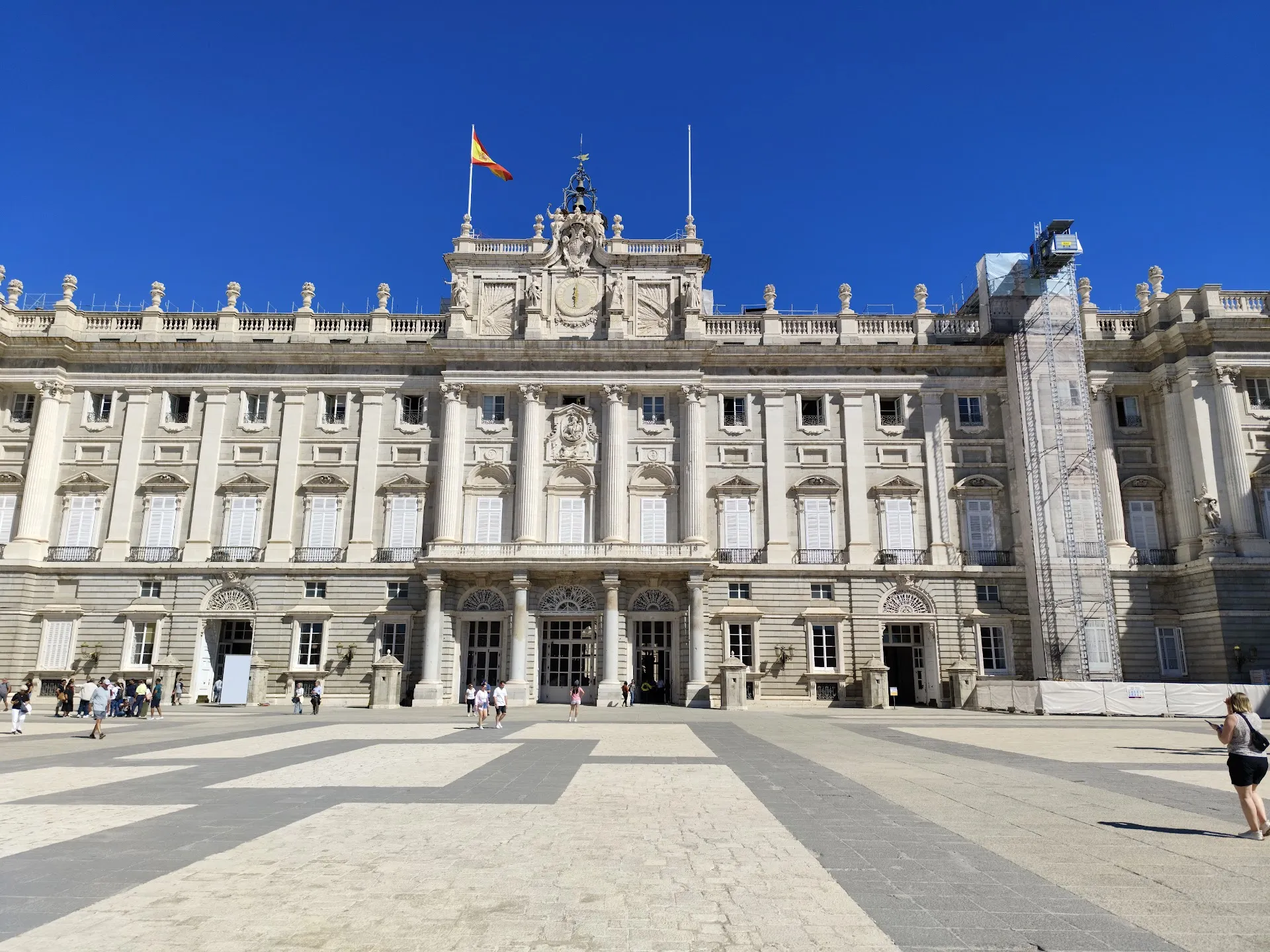
Royal Palace of Madrid (Palacio Real)
The largest functioning royal palace in Western Europe, completed in 1755 on the ruins of the old Habsburg Alcázar that burned in 1734. Although it remains the Spanish Crown's official residence, the royal family lives elsewhere, so its more than 3,000 rooms of Baroque and Neoclassical splendour are used for state ceremonies and opened to visitors.
Palacio, Centro
Landmark
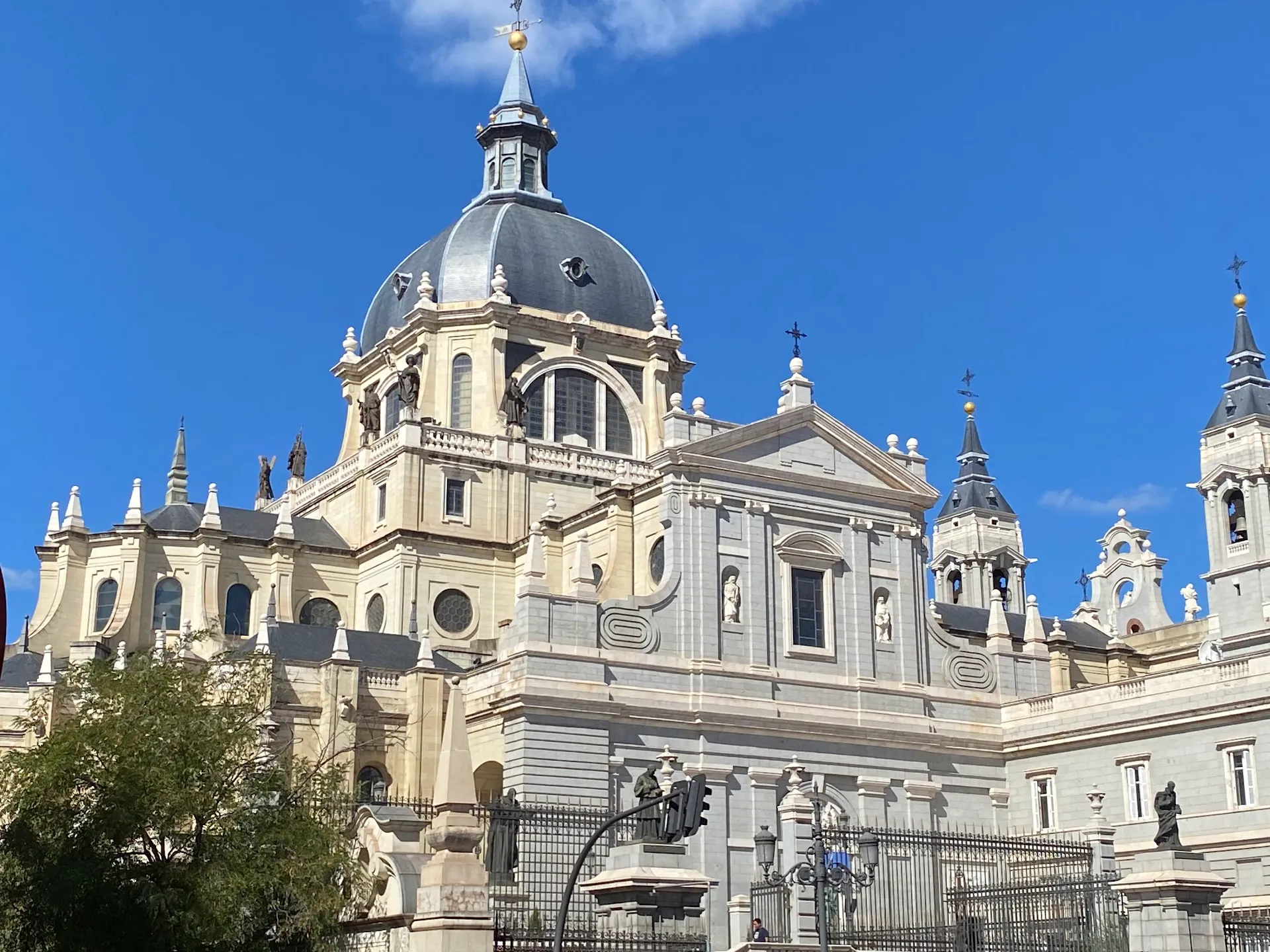
Almudena Cathedral (Catedral de la Almudena)
Madrid's Roman Catholic cathedral, facing the Royal Palace across Calle de Bailén, built over more than a century (1883-1993) and finally consecrated by Pope John Paul II in 1993. Its unusual blend of a Neoclassical exterior, a Neo-Gothic nave, and a vividly modern pop-style painted ceiling sets it apart from every other Spanish cathedral.
Palacio, Centro
Landmark
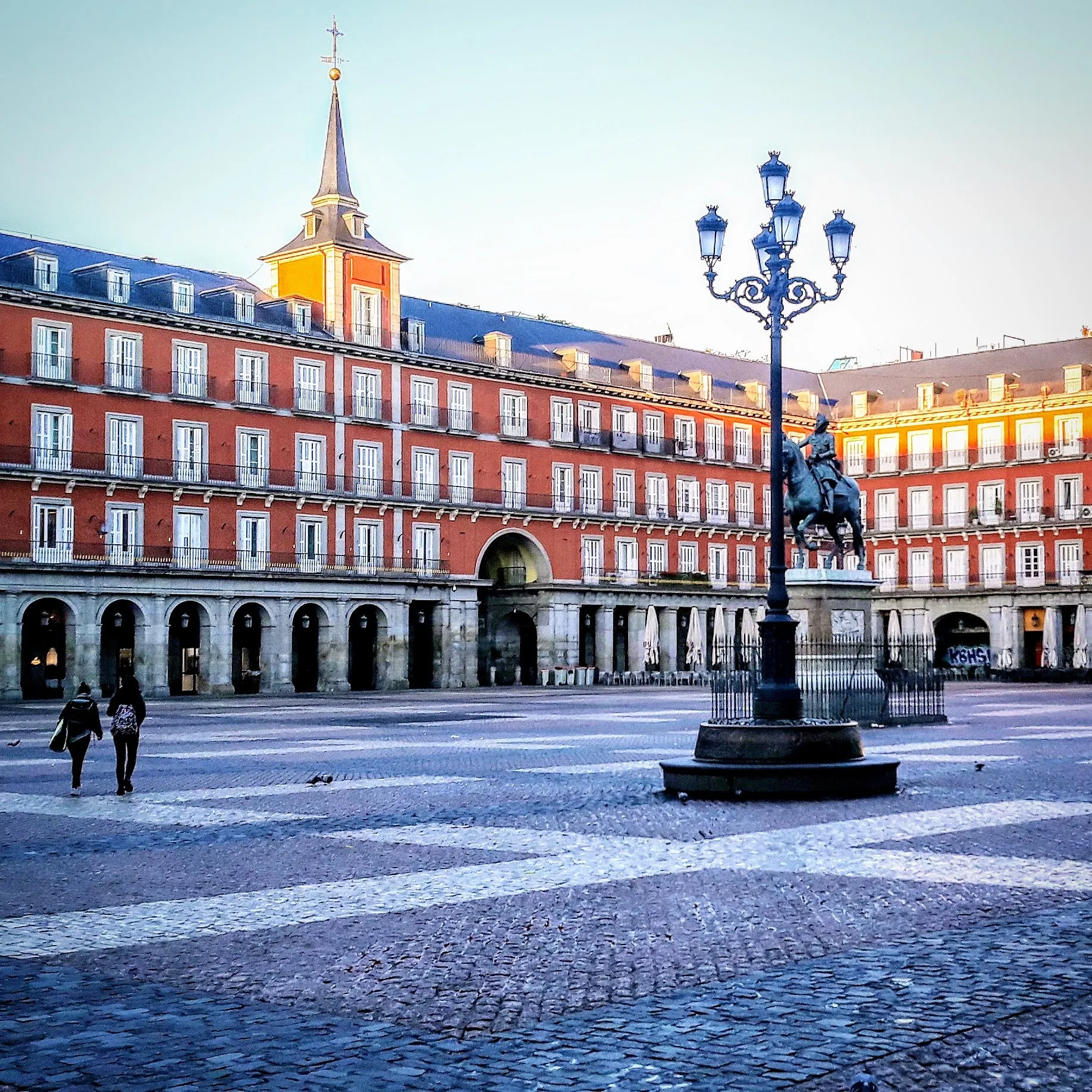
Plaza Mayor
The grand arcaded square that forms the monumental heart of Habsburg Madrid, completed in 1619 under Philip III and rebuilt by Juan de Villanueva after an 18th-century fire. Enclosed by uniform residential blocks with 237 balconies, it centres on a bronze equestrian statue of Philip III and the fresco-covered Casa de la Panadería.
Sol, Centro
Must visit
Market
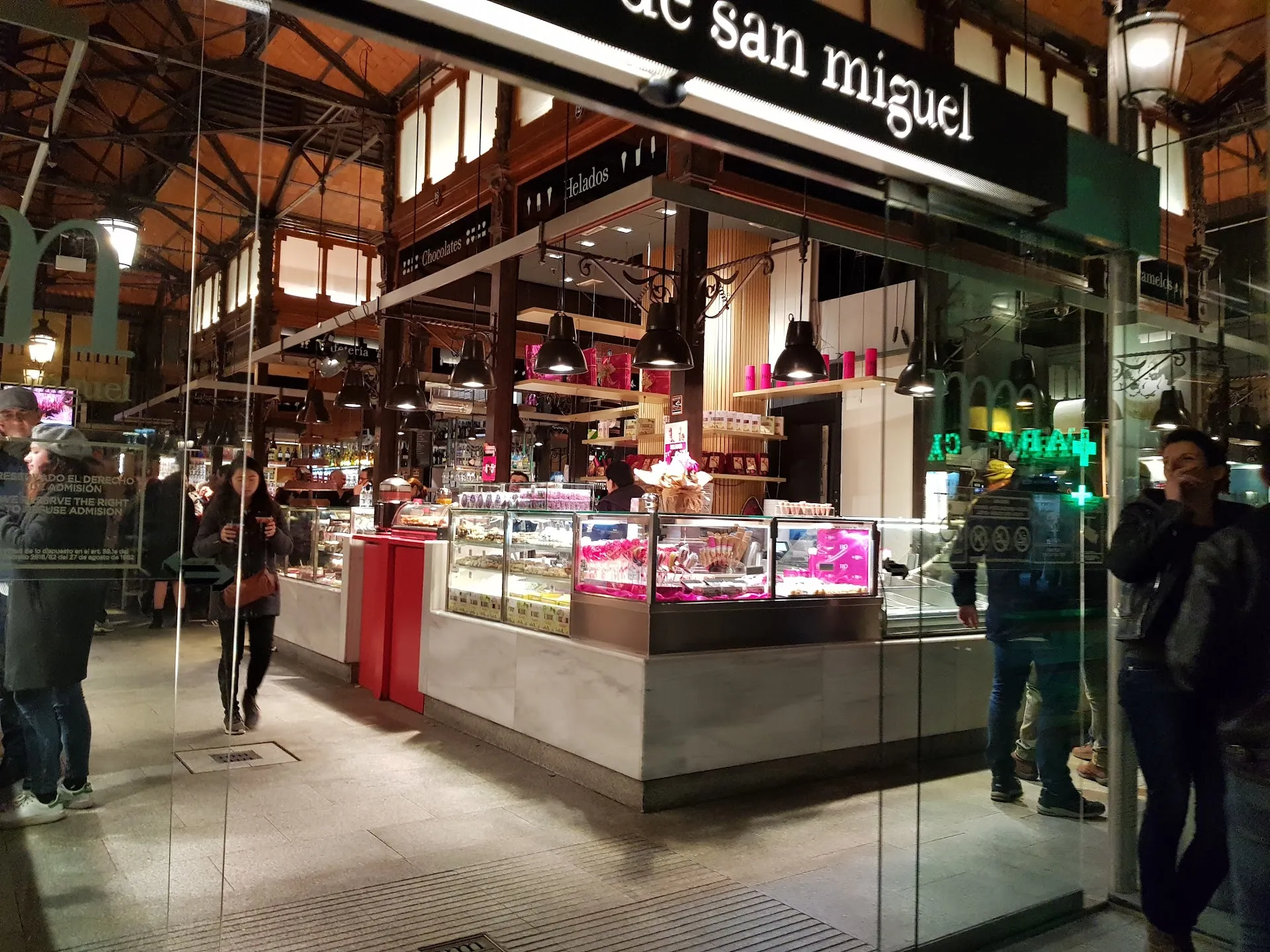
Mercado de San Miguel
A 1916 cast-iron-and-glass market beside Plaza Mayor that reopened in 2009 as Madrid's first gourmet food hall. Around 30 stands serve Spanish specialties from Galician seafood to Iberian ham, artisan cheeses, vermouth and oysters, eaten standing at shared counters. It is the city's most-visited market, unabashedly touristy but architecturally and gastronomically iconic.
Centro (Madrid de los Austrias)
Viewpoint
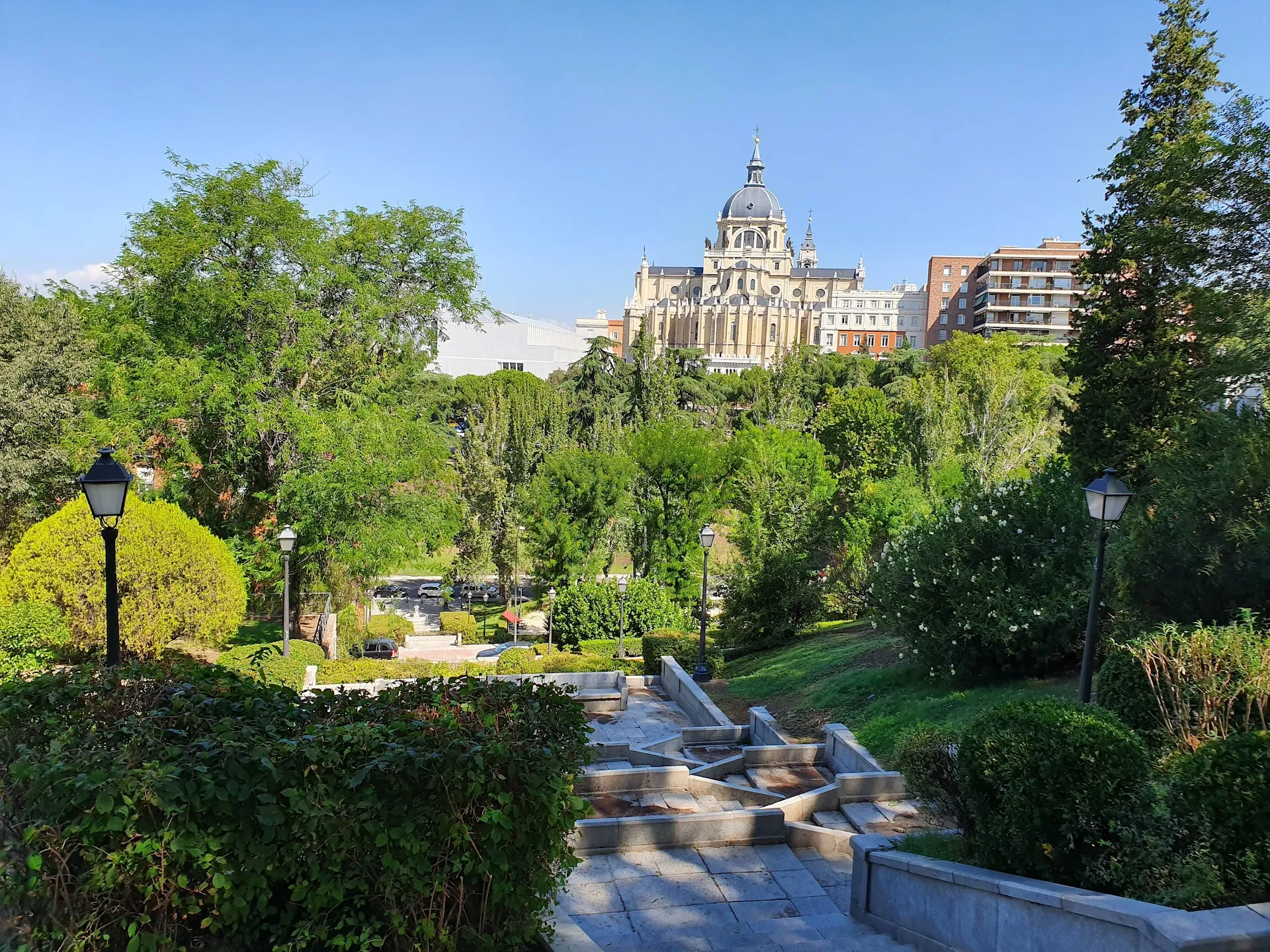
Jardines de las Vistillas
A leafy, terraced garden perched on old Madrid's western edge, traditionally a castizo gathering place during the San Isidro and La Paloma fiestas. Its open terraces look out over the Almudena Cathedral, the viaduct and the Manzanares valley toward the Casa de Campo, making it a relaxed, free sunset alternative to the busier miradores.
Centro (Palacio / La Latina)
Restaurant
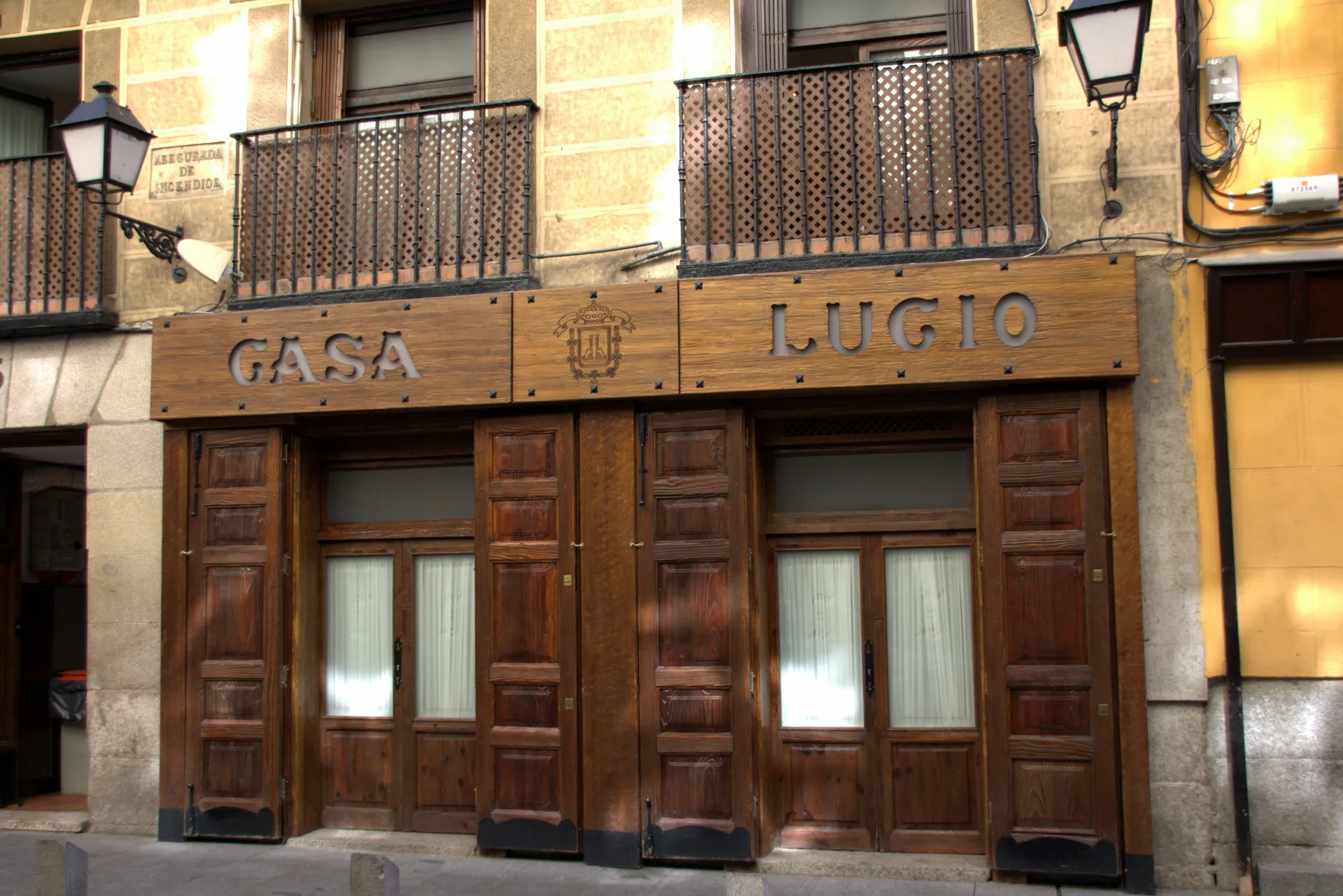
Casa Lucio
A La Latina institution on the tapas-lined Cava Baja, open since 1974 and beloved for its huevos rotos - eggs fried in olive oil and broken over crisp potatoes. The wood-panelled rooms have long drawn Spanish royalty, politicians and celebrities alongside locals.
Centro (La Latina)
Must visit
Museum
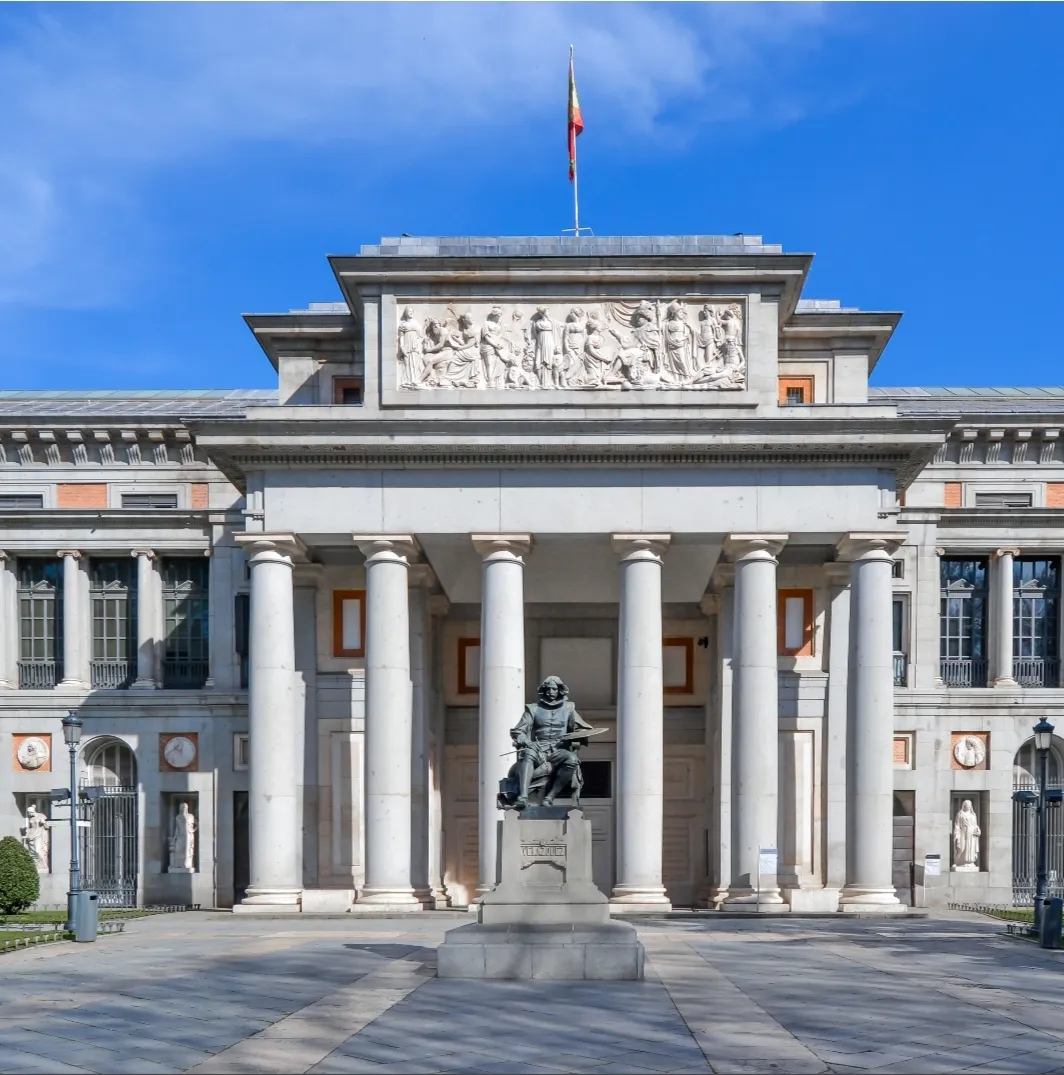
Museo Nacional del Prado
Spain's flagship national gallery and the southern anchor of the city's 'Golden Triangle of Art,' built around the former Spanish royal collection. It holds the world's deepest concentration of Velázquez, Goya and El Greco, shown alongside Bosch, Titian and Rubens.
Jerónimos (Retiro)
Must visit
Restaurant
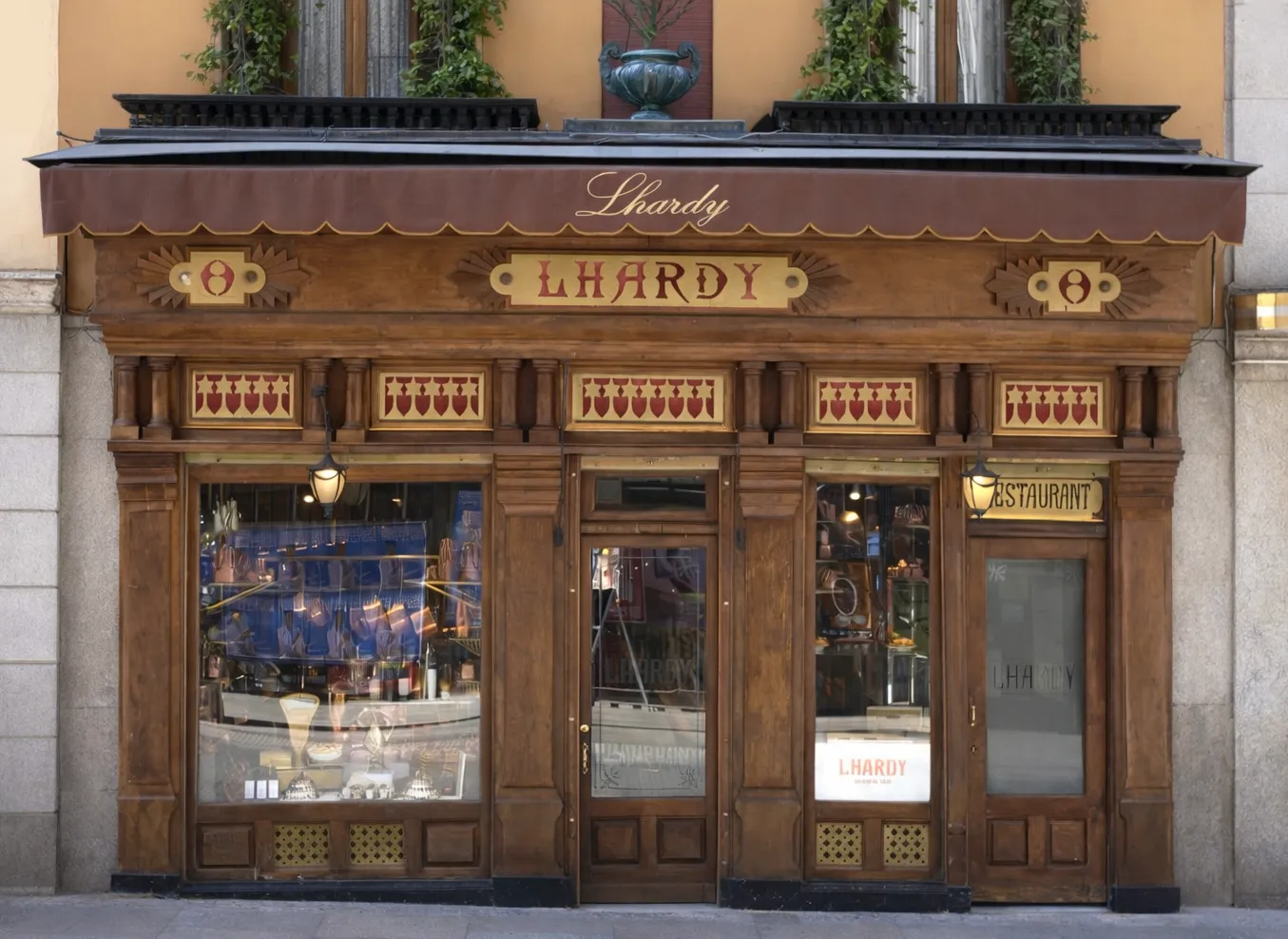
Lhardy
Founded in 1839, this gilded Belle Epoque landmark on Carrera de San Jeronimo pairs a ground-floor delicatessen - where regulars self-serve consomme from silver samovars - with formal upstairs dining rooms. Cocido madrileno and game classics anchor its old-Madrid menu.
Centro (Barrio de las Cortes / Letras)
Must visit
Park
Parque del Retiro
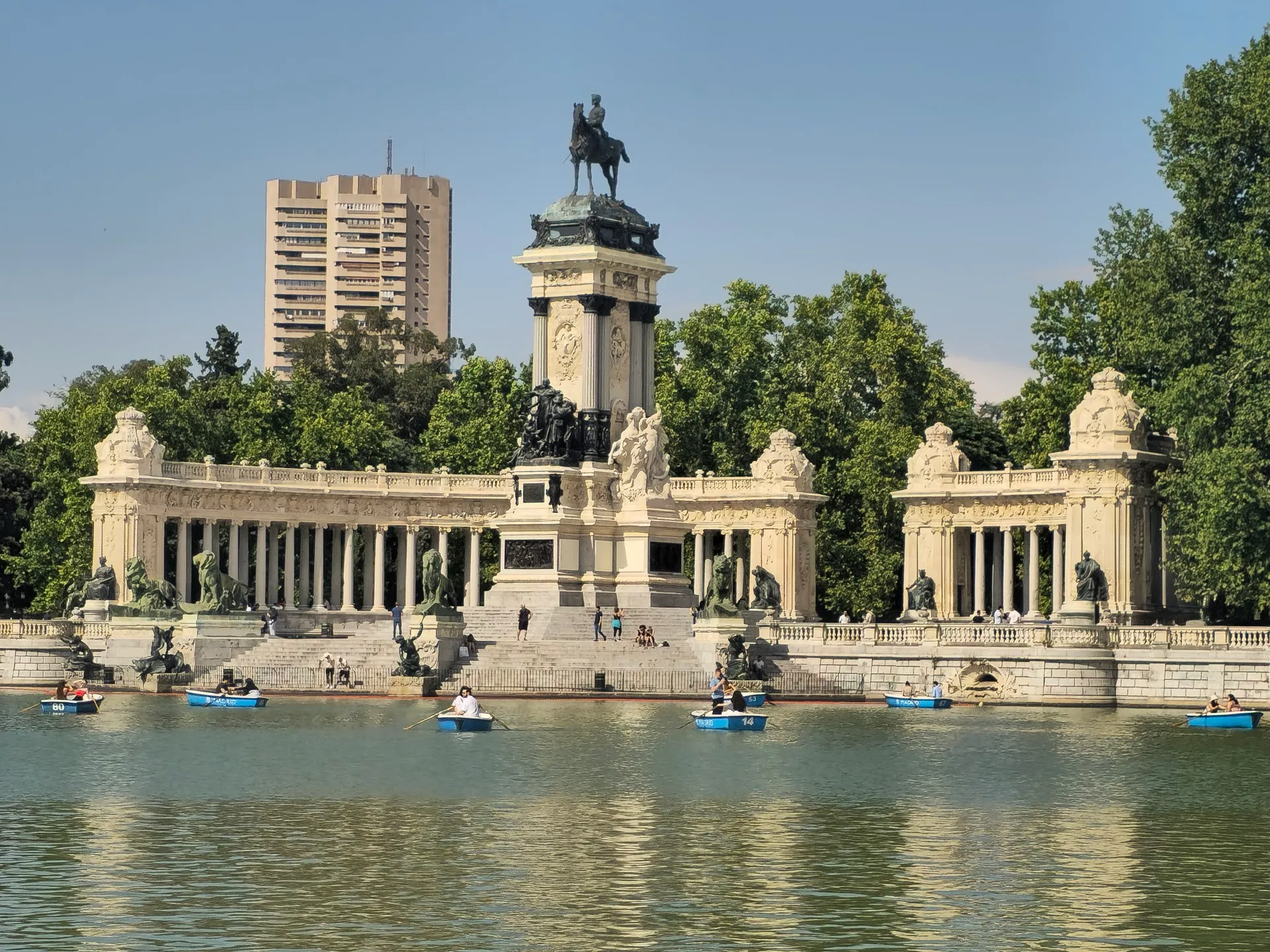
Once a royal retreat, this 125-hectare park became the green heart of central Madrid when it opened to the public in the 19th century and now forms part of the UNESCO-listed 'Landscape of Light.' Its rowing lake beneath the colonnaded monument to Alfonso XII, the glass-and-iron Crystal Palace, and the Rosaleda rose garden are perennial favourites.
Retiro
Experience
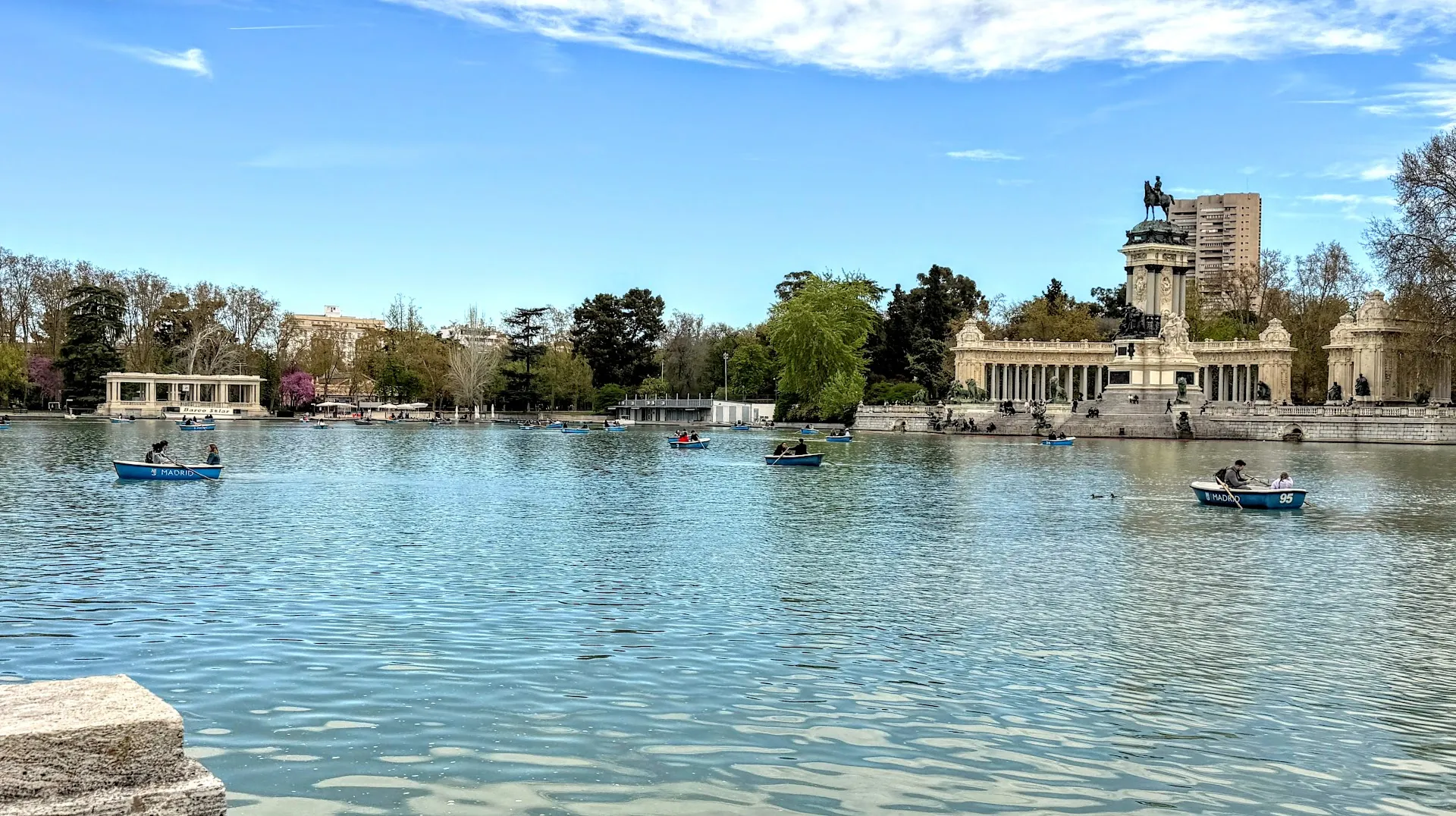
Rowing a boat on the Estanque Grande del Retiro
Renting a rowboat on the grand rectangular lake at the heart of Retiro Park is a quintessential Madrid weekend pastime, with the colonnaded Alfonso XII monument rising as a backdrop. Boats seat up to four people and are hired in 45-minute turns from the lakeside jetty, where queues build on sunny afternoons.
Retiro
Must visit
Museum
Museo Nacional Centro de Arte Reina Sofía
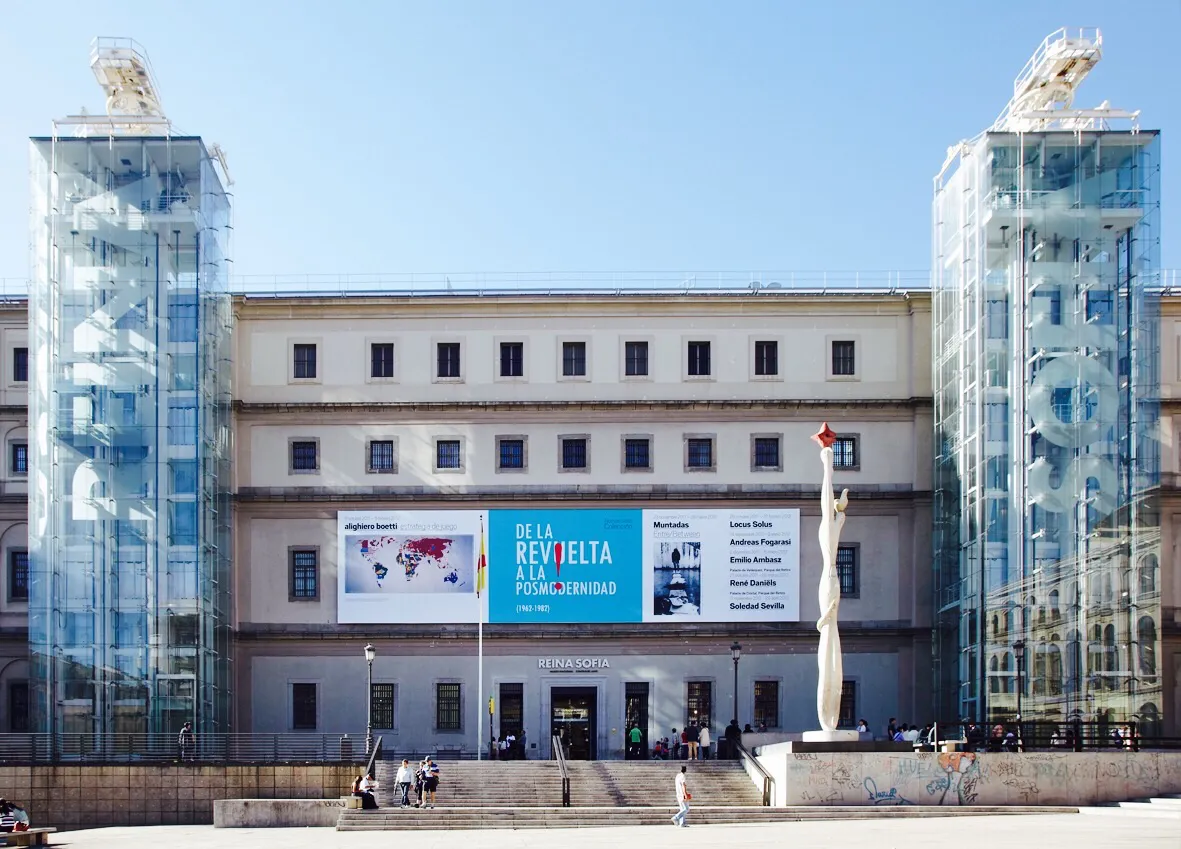
Spain's national museum of modern and contemporary art, set in a converted 18th-century hospital expanded by Jean Nouvel's red-glass wing. Its centrepiece is Picasso's monumental anti-war canvas 'Guernica,' surrounded by landmark works from Dalí, Miró and the European avant-garde.
Atocha (Centro)
TourReservation required; show-only from ~€95.90 (dinner not included) per the official tickets page; dinner-and-show packages also offered. ~70
Flamenco Show at Corral de la Morería
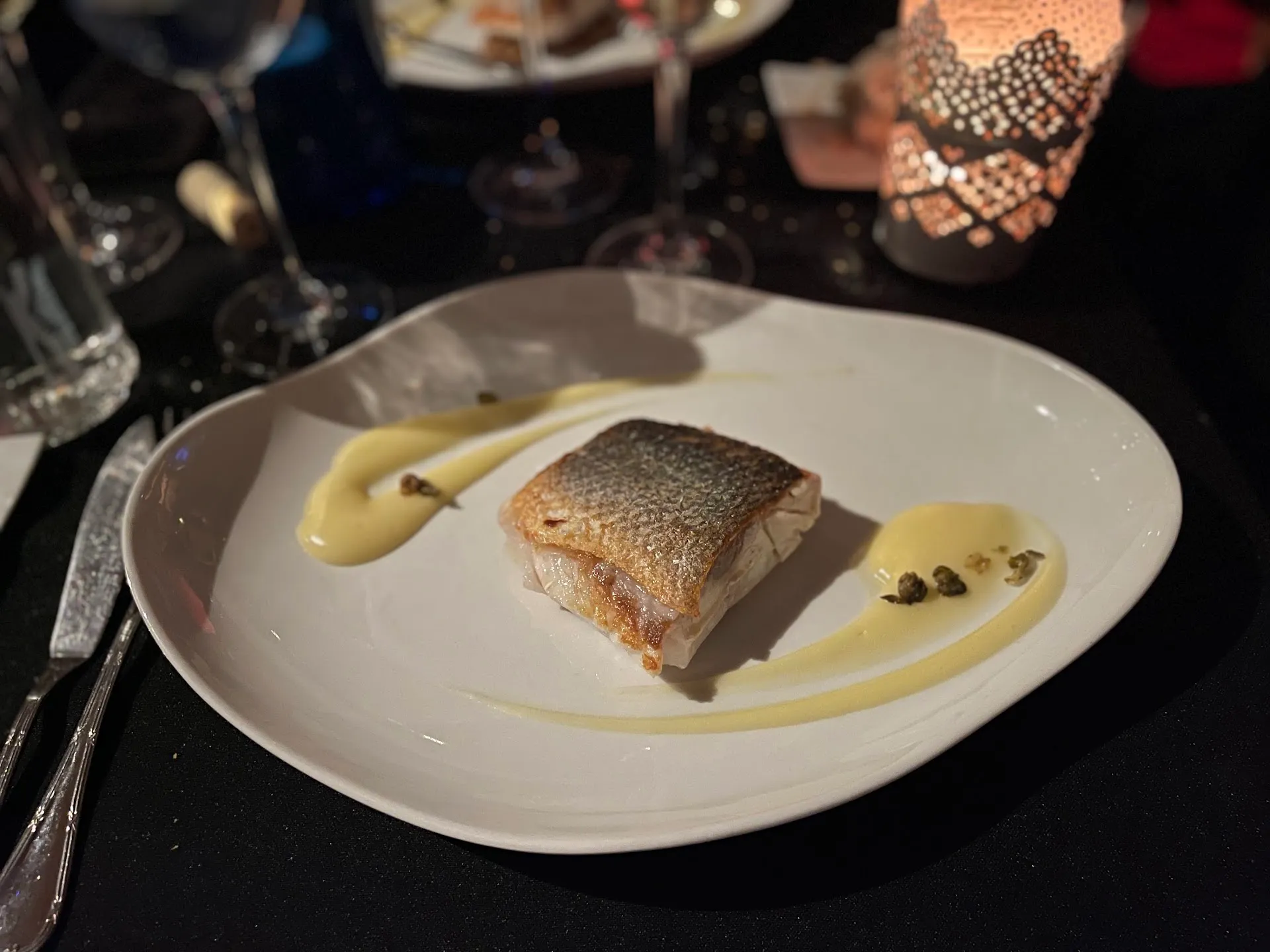
Live flamenco at the renowned tablao founded in 1956 near the Royal Palace, where award-winning dancers and musicians perform shows of ~70 minutes. The only restaurant-with-show to hold a Michelin star, with optional dinner packages.
Centro (Palacio / La Latina)
TourClassic Tour from €37 online (€40 box office); Classic Flexible from €44; Guided Tour from €56; Madridista members get discounts.
Santiago Bernabéu Stadium Tour
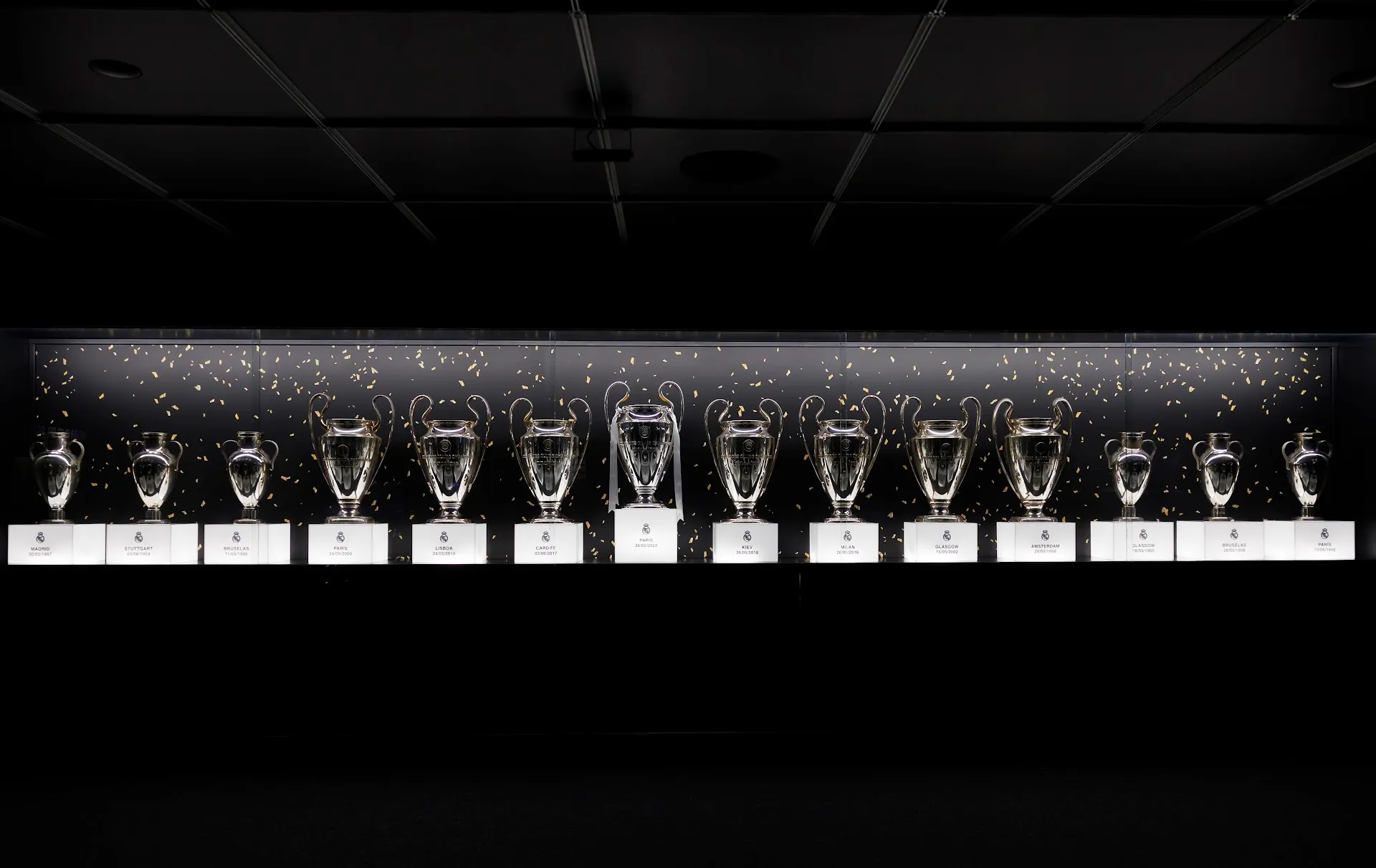
Self-guided walk through Real Madrid's renovated Santiago Bernabéu — trophy room, panoramic pitch views from the stands, the players' tunnel and dressing rooms (non-match days) and an interactive club museum. One of Madrid's most-visited paid attractions.
Chamartín (Castellana)
Must visit
Restaurant
Casa Dani
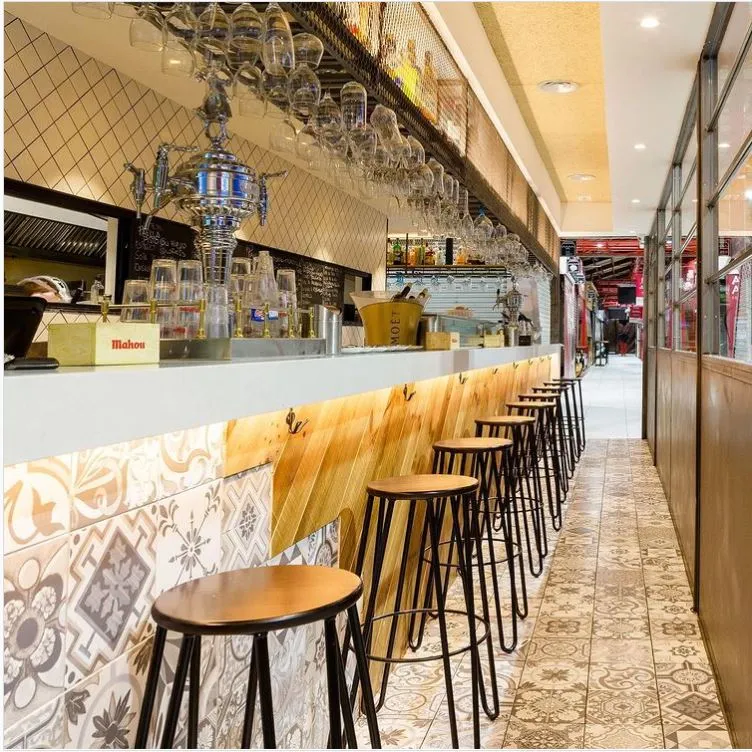
A no-frills counter and dining room inside the Mercado de la Paz in the Salamanca district, Casa Dani has served home-style Madrid cooking since 1991 and is repeatedly cited for one of the city's best tortillas de patatas, winning a Spanish national tortilla title in 2019. Expect queues from locals at lunch.
Salamanca
Landmark
Puerta de Alcalá
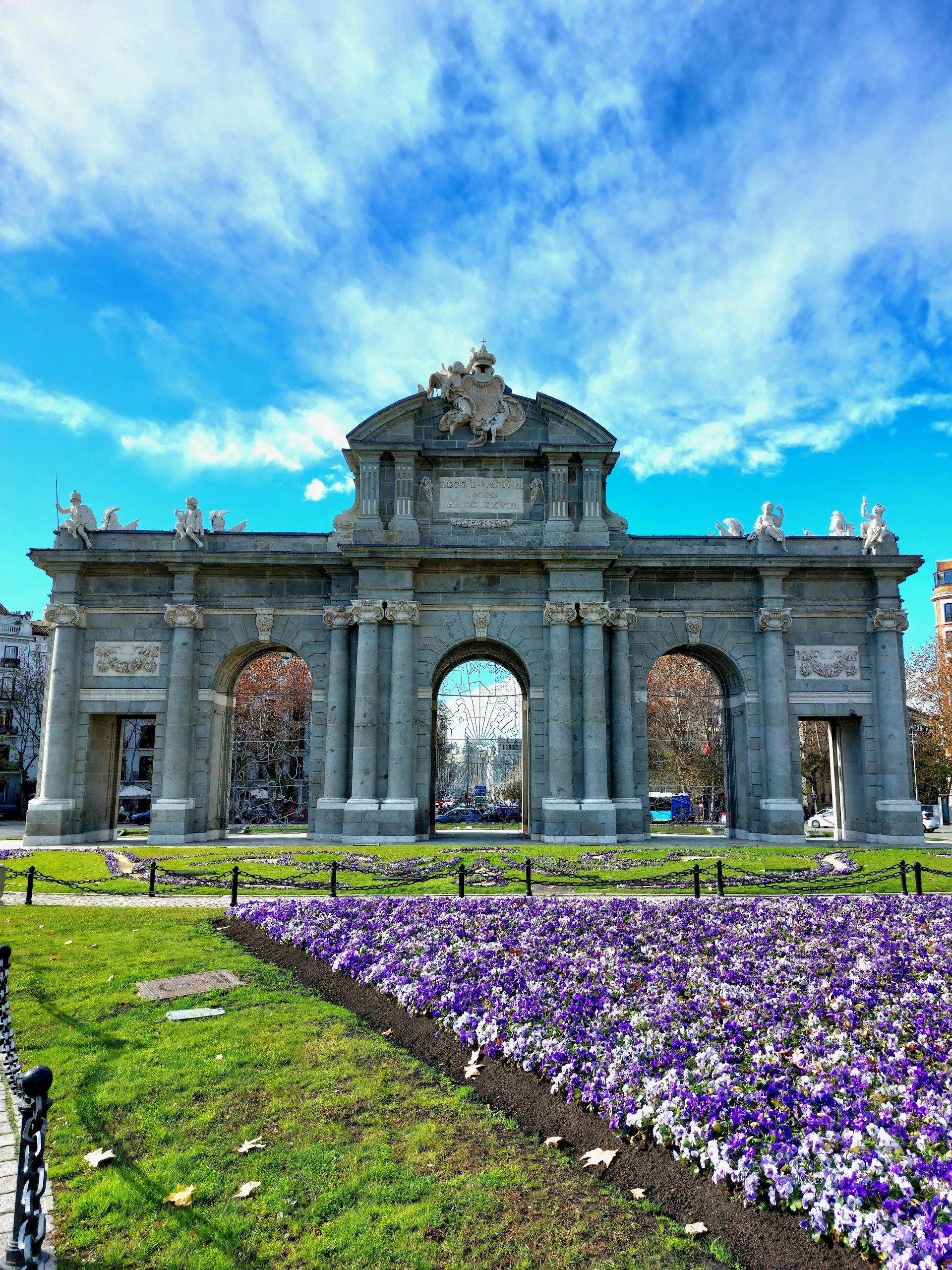
A granite neoclassical triumphal gate designed by Francesco Sabatini and inaugurated in 1778 for Charles III, marking a former main entrance to the walled city. Standing on a roundabout beside the Retiro Park, its five arches and crowning sculptures make it one of Madrid's defining icons—predating both the Brandenburg Gate and the Arc de Triomphe.
Retiro (Plaza de la Independencia)
Viewpoint
Azotea del Círculo de Bellas Artes
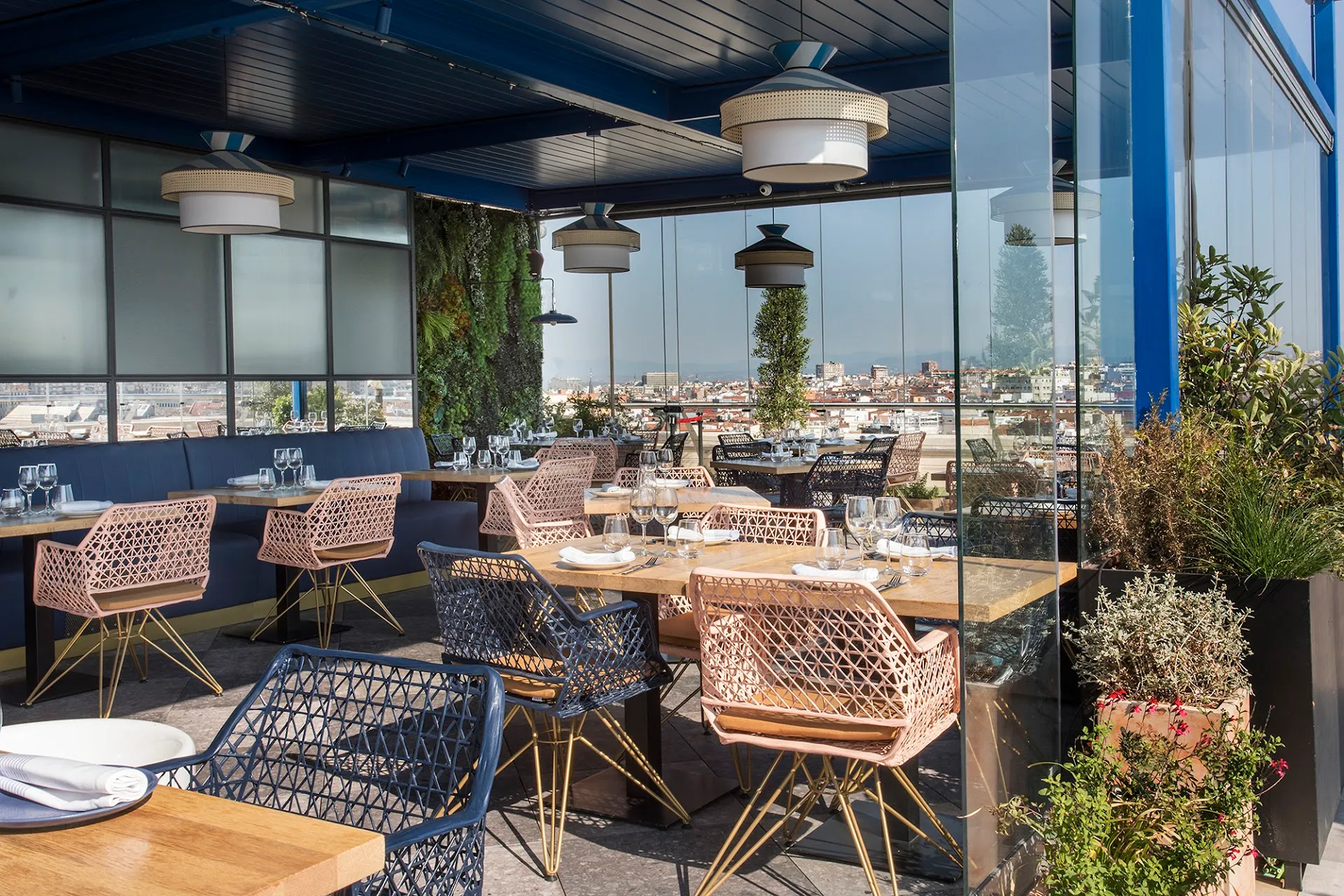
The terrace crowning Antonio Palacios's 1926 Círculo de Bellas Artes is one of Madrid's classic rooftop vantage points, reached by a glass lift and topped by a bar-restaurant. Its open-air deck offers a near-360-degree sweep over Gran Vía, the Metrópolis dome and the city-centre rooftops, and is especially busy at golden hour.
Centro (Cortes)
Viewpoint
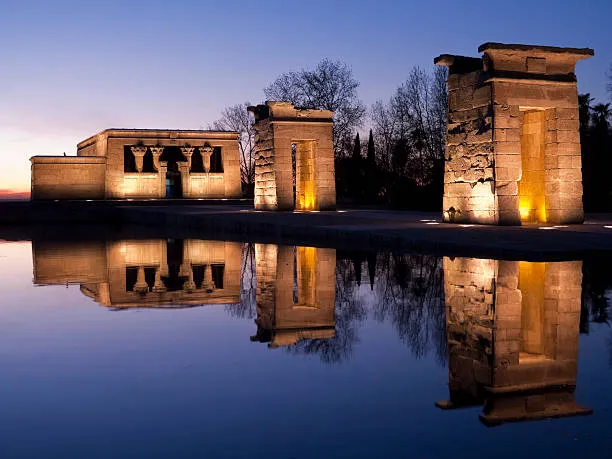
Templo de Debod
A genuine 2nd-century-BC Egyptian temple, gifted by Egypt and reassembled on a low rise in the Parque de la Montaña, that doubles as Madrid's most celebrated free sunset spot. From the surrounding terraces the sun sinks behind the Casa de Campo and mirrors in the temple's reflecting pools, drawing crowds on most clear evenings.
Moncloa-Aravaca (Parque de la Montaña, by Plaza de España)
Restaurant
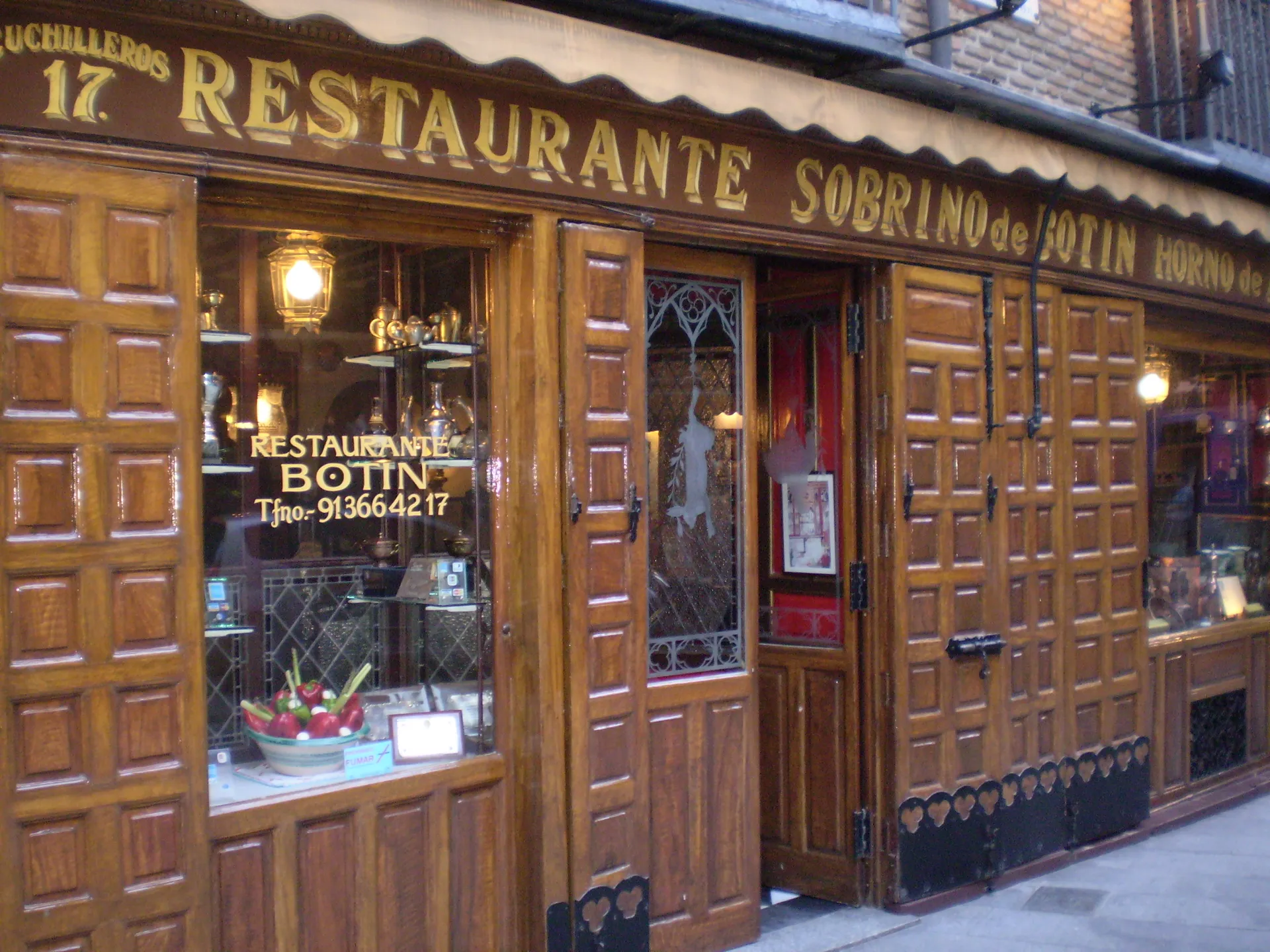
Sobrino de Botín
Operating since 1725 and recognized by Guinness World Records as the world's oldest restaurant, Botin roasts cochinillo (suckling pig) and lamb in the same wood-fired cast-iron oven it has used for centuries. The warren of tiled, beamed dining rooms just off Plaza Mayor was a Hemingway haunt and closes his novel 'The Sun Also Rises'.
Centro (Barrio de los Austrias, near Plaza Mayor)
Day by day
Day 1Madrid
Habsburg Madrid: the Palace, Plaza Mayor & La Latina
09:30Landmark
Royal Palace of Madrid (Palacio Real)
Begin at the Palacio Real, the largest functioning royal palace in Western Europe, completed in 1755 over the ruins of the old Habsburg Alcázar that burned in 1734. The Crown still uses its 3,000-plus Baroque and Neoclassical rooms for state ceremonies, and most are open to visitors.
Palacio, Centro
Tip: Buy a timed ticket online and arrive at opening to beat the queues; check ahead, as the palace occasionally closes for state events.
11:15Landmark
Almudena Cathedral (Catedral de la Almudena)
Cross Calle de Bailén to the Almudena Cathedral, which faces the palace and took over a century to build (1883-1993). Its mix of a Neoclassical shell, a Neo-Gothic nave and a vividly modern painted ceiling sets it apart from every other Spanish cathedral.
Palacio, Centro
Tip: Entry to the nave is by donation; the dome museum (Mon-Sat mornings) adds rooftop views, and the cathedral closes to sightseers during services.
12:15Landmark
Plaza Mayor
Walk into Plaza Mayor, the grand arcaded square at the monumental heart of Habsburg Madrid, finished in 1619 under Philip III. Uniform balconied blocks enclose his bronze equestrian statue and the frescoed Casa de la Panadería.
Sol, Centro
Tip: Skip the overpriced terrace cafés on the square itself and duck out under the arches toward Calle de Cuchilleros.
Must visit
13:15Market
Mercado de San Miguel
Lunch a step away at the Mercado de San Miguel, a 1916 cast-iron-and-glass hall that reopened in 2009 as Madrid's first gourmet food market. Around thirty stands serve Galician seafood, Iberian ham, cheeses, oysters and vermouth at shared counters.
Centro (Madrid de los Austrias)
Tip: It's deliberately touristy and prices run high — graze a few stalls standing up rather than settling in for a full meal, and go early to dodge the midday crush.
18:45Viewpoint
Jardines de las Vistillas
End the day at the Jardines de las Vistillas, a terraced garden on old Madrid's western edge and a traditional castizo gathering spot during the city's fiestas. Its open terraces look over the Almudena, the viaduct and the Manzanares valley toward the Casa de Campo.
Centro (Palacio / La Latina)
Tip: Grab a drink at the garden kiosk and settle in for golden hour — it's a free, quieter alternative to the busier rooftop miradores.
20:45Restaurant
Casa Lucio
Dinner on the tapas-lined Cava Baja at Casa Lucio, a La Latina institution open since 1974 and beloved for its huevos rotos — eggs fried in olive oil and broken over crisp potatoes. The wood-panelled rooms have long drawn royalty, politicians and locals alike.
Centro (La Latina)
Tip: Book ahead, order the huevos rotos, and make a night of it along the surrounding Cava Baja bar street.
Day 2Madrid
Paseo del Arte & El Retiro
Must visit
09:30Museum
Museo Nacional del Prado
Start at the Prado, Spain's flagship national gallery and the southern anchor of the city's 'Golden Triangle of Art,' built around the former royal collection. It holds the world's deepest concentration of Velázquez, Goya and El Greco, shown alongside Bosch, Titian and Rubens.
Jerónimos (Retiro)
Tip: Pre-book a timed ticket and go at opening; if you plan to see all three Golden-Triangle museums, the Paseo del Arte combined pass (Prado + Thyssen + Reina Sofía, €32) saves money.
Must visit
12:30Restaurant
Lhardy
Lunch nearby at Lhardy, a gilded Belle Époque landmark on Carrera de San Jerónimo founded in 1839. Regulars self-serve consommé from silver samovars in the ground-floor delicatessen, while the formal upstairs rooms plate cocido madrileño and old-Madrid game classics.
Centro (Barrio de las Cortes / Letras)
Tip: The downstairs deli is the relaxed, affordable way in; reserve upstairs if you want the full white-tablecloth experience.
Must visit
14:00Park
Parque del Retiro
Walk off lunch in El Retiro, the 125-hectare former royal garden that opened to the public in the 19th century and now forms part of the UNESCO-listed 'Landscape of Light.' Seek out the glass-and-iron Crystal Palace and the Rosaleda rose garden.
Retiro
Tip: Enter near the Puerta de Alcalá; the park is free and at its loveliest in late-afternoon light.
15:00Experience
Rowing a boat on the Estanque Grande del Retiro
Hire a rowboat on the Estanque Grande, the park's grand rectangular lake beneath the colonnaded monument to Alfonso XII. Boats seat up to four and are rented in 45-minute turns from the lakeside jetty — a quintessential Madrid weekend pastime.
Retiro
Tip: Queues build on sunny afternoons; bring small cash and go on a weekday if you can.
Must visit
17:30Museum
Museo Nacional Centro de Arte Reina Sofía
Cross to the Atocha end of the Paseo del Arte for the Reina Sofía, Spain's national museum of modern and contemporary art in a converted 18th-century hospital with a red-glass Nouvel wing. Its centrepiece is Picasso's monumental anti-war canvas 'Guernica,' among works by Dalí and Miró.
Atocha (Centro)
Tip: It's closed Tuesdays, and admission is free Mon and Wed-Sat from 19:00 — time your visit to that window if it suits.
21:00TourReservation required; show-only from ~€95.90 (dinner not included) per the official tickets page; dinner-and-show packages also offered. ~70
Flamenco Show at Corral de la Morería
Finish with flamenco at Corral de la Morería near the Royal Palace, the renowned tablao founded in 1956 where award-winning dancers and musicians perform shows of about 70 minutes. It is the only restaurant-with-show to hold a Michelin star, with optional dinner packages.
Centro (Palacio / La Latina)
Tip: Reserve ahead and pick a seating (a 21:30 show runs in the evenings); the show-only ticket is the budget option if you'd rather eat elsewhere.
Day 3Madrid
Local Madrid: the Bernabéu, Gran Vía & a Debod sunset
09:30TourClassic Tour from €37 online (€40 box office); Classic Flexible from €44; Guided Tour from €56; Madridista members get discounts.
Santiago Bernabéu Stadium Tour
Begin north at the Santiago Bernabéu, where a self-guided tour of Real Madrid's renovated stadium takes in the trophy room, the players' tunnel and dressing rooms, panoramic pitch views from the stands and an interactive club museum.
Chamartín (Castellana)
Tip: Book a timed slot online (from around €37, cheaper than the box office); access is reduced on match days, so check the fixture list first.
Must visit
12:30Restaurant
Casa Dani
Head to Salamanca for lunch at Casa Dani, a no-frills counter inside the Mercado de la Paz serving home-style Madrid cooking since 1991. It is repeatedly cited for one of the city's best tortillas de patatas and even won a Spanish national tortilla title in 2019.
Salamanca
Tip: Come hungry and a little early — locals queue at lunch — and order the tortilla, sold by the portion or whole.
14:30Landmark
Puerta de Alcalá
Stroll south to the Puerta de Alcalá, a granite neoclassical triumphal gate inaugurated in 1778 for Charles III on a former main entrance to the walled city. Its five arches and crowning sculptures predate both the Brandenburg Gate and the Arc de Triomphe.
Retiro (Plaza de la Independencia)
Tip: It sits on a busy roundabout beside the Retiro; cross to the park side for the cleanest photo, and circle back after dark when it's floodlit.
16:30Viewpoint
Azotea del Círculo de Bellas Artes
Ride the glass lift to the Azotea del Círculo de Bellas Artes, the terrace crowning Antonio Palacios's 1926 building. Its open-air deck delivers a near-360-degree sweep over Gran Vía, the Metrópolis dome and the city-centre rooftops.
Centro (Cortes)
Tip: There's a small admission for the terrace, which doubles as a bar-restaurant — settle in with a drink before the golden-hour crowd arrives.
19:30Viewpoint
Templo de Debod
Make for the Templo de Debod for sunset, a genuine 2nd-century-BC Egyptian temple gifted by Egypt and reassembled on a rise in the Parque de la Montaña. From the terraces the sun sinks behind the Casa de Campo and mirrors in the temple's reflecting pools.
Moncloa-Aravaca (Parque de la Montaña, by Plaza de España)
Tip: It's Madrid's most celebrated free sunset; arrive early to claim a spot on clear evenings, and note the temple interior closes Mondays.
21:00Restaurant
Sobrino de Botín
Toast your last night at Sobrino de Botín near Plaza Mayor, recognised by Guinness World Records as the world's oldest restaurant, operating since 1725. It roasts cochinillo and lamb in the same wood-fired oven it has used for centuries, in tiled, beamed rooms that once drew Hemingway.
Centro (Barrio de los Austrias, near Plaza Mayor)
Tip: Reserve well ahead, order the cochinillo asado, and ask for a table in the atmospheric brick-vaulted cellar.
What it costs
Madrid is mid-priced for a Western European capital, and many of its best moments are cheap or free. Reckon on roughly €70-150 per person per day excluding accommodation. The big-ticket museums are the main spend: the Prado is €15, the Reina Sofía €12 and the Thyssen €14, while the Paseo del Arte combined pass covering all three is €32, and each has free evening windows. The Royal Palace runs about €12-14, a Santiago Bernabéu stadium tour from €37, and a flamenco show at Corral de la Morería from around €96. Tapas and cañas are inexpensive, a full cocido madrileño runs €30-45, and sunset spots like the Temple of Debod and Las Vistillas cost little or nothing. A 10-trip Metrobús ticket or a tourist travel pass covers the fast, cheap metro.~€70-150 / day mid-range (about $75-160), excluding accommodation / day
Frequently asked questions
- Is three days enough for Madrid?
- Three days comfortably covers Madrid's essentials. This plan gives each day a clear focus: Habsburg Madrid and La Latina on day one, the Paseo del Arte and El Retiro on day two, and local Madrid — the Bernabéu, Salamanca and a Temple of Debod sunset — on day three. The centre is compact and walkable, with a fast, cheap metro for the longer hops. With a fourth day, add a day trip to Toledo or go deeper into the Thyssen and the Salamanca district.
- How do I get around Madrid?
- On foot for the historic centre, and with the excellent metro for everything else — it's fast, cheap and reaches every corner of the city, including the Bernabéu and Chamberí. A 10-trip Metrobús ticket or a tourist travel pass is the best value. From Adolfo Suárez Madrid–Barajas airport, Metro line 8 connects to the centre, or the Airport Express bus runs to Atocha around the clock.
- Do I need to book the museums and the Royal Palace in advance?
- It's strongly recommended in high season. Pre-booking timed tickets for the Prado, the Reina Sofía and the Royal Palace saves long queues, and the Royal Palace can close at short notice for state events. If you want to see all three Golden-Triangle museums, the Paseo del Arte combined pass is the cheapest route; note that the Reina Sofía is closed Tuesdays and that several museums have free evening windows.
- What's the best day trip from Madrid?
- Toledo, the UNESCO-listed 'City of Three Cultures,' is the classic choice for a full day. Its walled old town pairs a soaring Gothic cathedral with El Greco's masterpieces amid intertwined Christian, Jewish and Muslim monuments. Guided full-day coach tours depart central Madrid, and it's the natural first extension of our Grand Tour of Spain itinerary if you want to see more of the country.
- When is the best time to visit Madrid?
- Spring and early autumn are ideal, with warm days and long terrace evenings. Summer is very hot and the city empties as locals escape the heat, but rooftop bars and late nights come into their own and the museums are quieter. Winter is cool and bright, with fewer crowds and festive lights along Gran Vía. Whenever you come, start the big sights early and save sunsets for the Temple of Debod or Las Vistillas.
Make this trip yours
Save this itinerary and customize it — dates, stops, budget and friends, all in one place.