
This is the classic first-timer route through Italy, paced so a single trip feels rich rather than rushed. You spend three nights in Rome for ancient ruins, baroque squares, and Vatican art; three in Florence to walk the cradle of the Renaissance and slip into the Tuscan hills; then two final nights in Venice, a city of canals, light, and lagoon islands. Every leg runs on Italy's fast Frecciarossa high-speed trains, so you travel city-center to city-center in two hours or less without ever needing a car. Each day below is time-blocked around real places, with practical tips on when to arrive, what to book ahead, and what to skip. It is built for spring or autumn, when the light is golden and the crowds thin.
Italy in 10 Days: Rome, Florence & Venice
10 days3 stopsFirst-time visitors who want Italy's three great cities at a comfortable pace
The route
- Rome3n
- Florence3n
- Venice2n
Everywhere you'll go
Every stop on this itinerary — tap a card for details or to save it.
Must visit
Memorial4.8
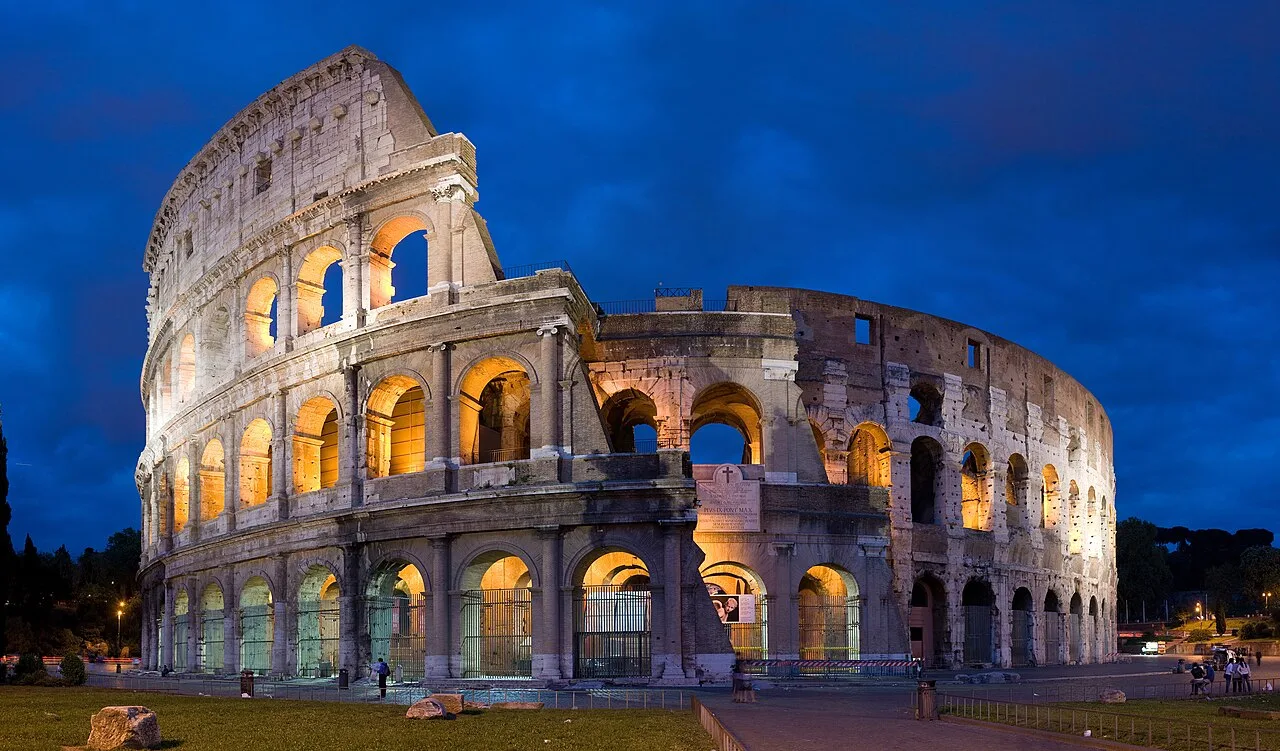
Colosseum
The iconic 2,000-year-old amphitheatre that once hosted gladiatorial combat. Book timed entry tickets well in advance for underground and upper tier access.
Centro Storico
Memorial4.7
Roman Forum
Sprawling ruins of ancient Rome's political and social center. Triumphal arches, temples, and basilicas spanning 1,000 years of history.
Centro Storico
Restaurant4.3
Tonnarello
Bustling Trastevere trattoria with outdoor seating on a charming cobblestone piazza. Classic Roman pasta dishes in generous portions.
Trastevere
Scenic Spot4.6
Trastevere
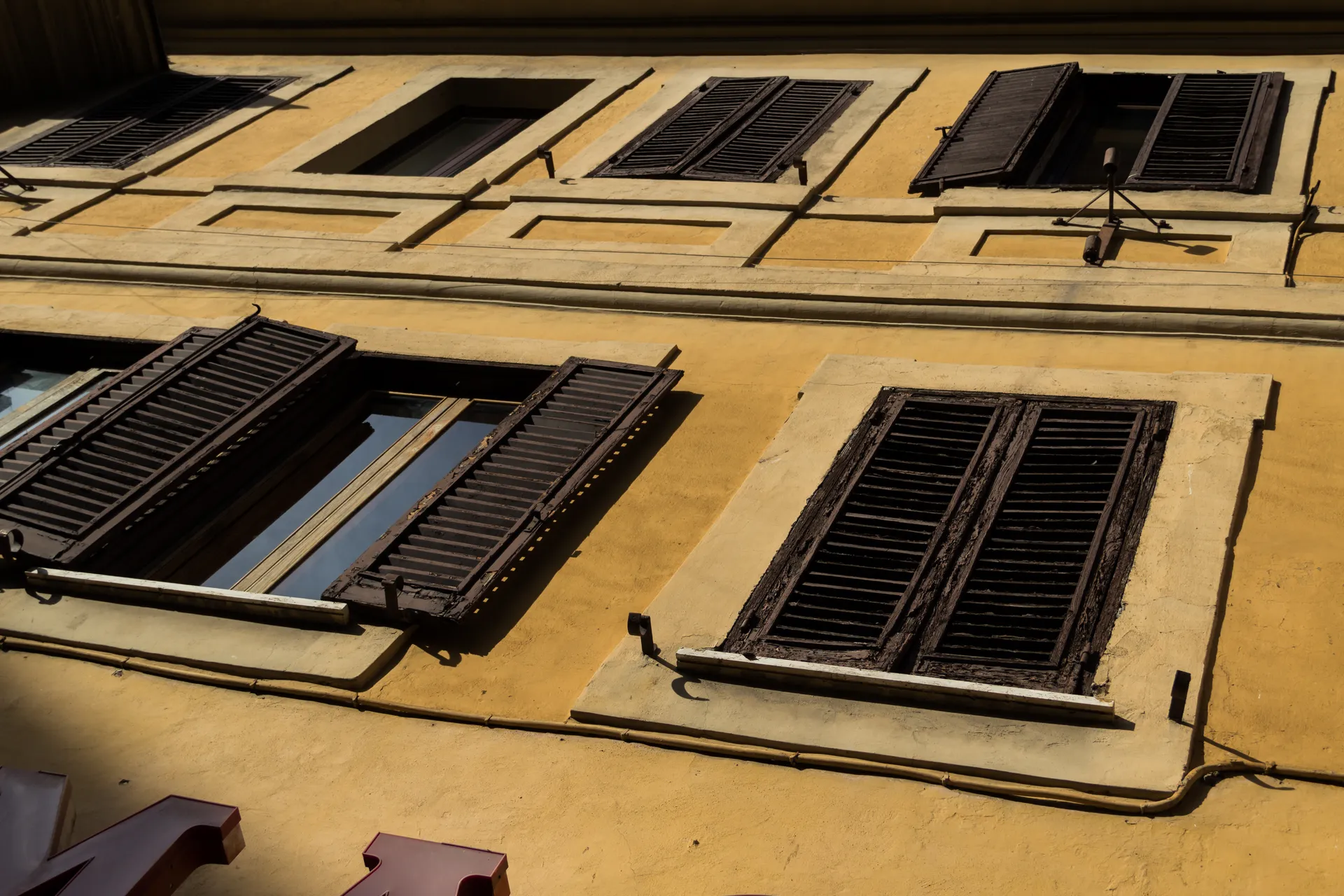
Rome's most atmospheric neighborhood with ivy-covered ochre buildings, cobblestone lanes, and an unbeatable concentration of trattorias and bars.
Trastevere
Museum4.7
Vatican Museums
One of the world's greatest art collections culminating in Michelangelo's Sistine Chapel ceiling. Book skip-the-line tickets.
Vatican City
Must visit
Restaurant4.7
Pizzarium
Gabriele Bonci's famous pizza al taglio shop near the Vatican. Crispy, airy crust with creative seasonal toppings. Worth the queue.
Prati
Memorial4.9
Pantheon
Perfectly preserved 2,000-year-old Roman temple with the world's largest unreinforced concrete dome. The oculus floods the interior with light.
Centro Storico
Scenic Spot4.5
Piazza Navona
Baroque masterpiece of a piazza built on the footprint of a Roman stadium. Bernini's Fountain of the Four Rivers anchors the center.
Centro Storico
Scenic Spot4.6
Trevi Fountain
Baroque masterpiece and Rome's most famous fountain. Toss a coin over your shoulder to ensure a return to the Eternal City. Visit at dawn to avoid crowds.
Trevi
Landmark
Spanish Steps Morning
The 135 sweeping travertine steps connecting Piazza di Spagna to the Trinita dei Monti church above. The baroque staircase is one of Rome's most elegant public spaces. The Fontana della Barcaccia (sinking boat fountain) by Bernini sits at the base. In spring, hundreds of potted azaleas transform the steps into a cascade of pink.
Trevi/Spagna area, Rome
Museum4.8
Borghese Gallery
Intimate museum housing Bernini sculptures, Caravaggio paintings, and Raphael works. Timed 2-hour slots; book weeks ahead.
Villa Borghese
Sunset Spot
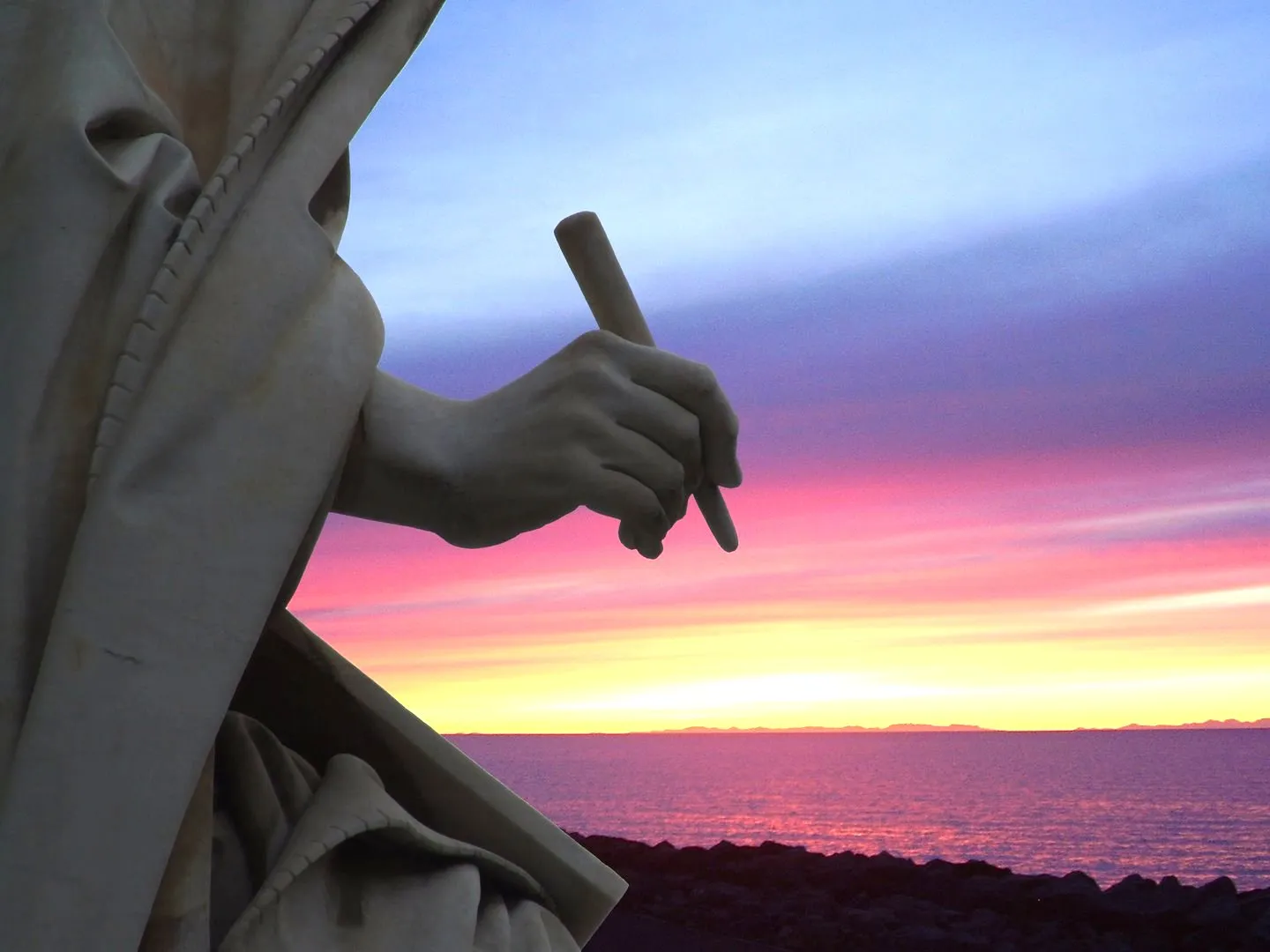
Pincio Terrace Sunset
An elevated terrace at the edge of Villa Borghese gardens offering a sweeping westward panorama over Piazza del Popolo to St. Peter's dome and the Janiculum Hill. One of Rome's most beloved sunset viewpoints. The terrace is framed by balustrades, statues, and umbrella pines that create classic Roman foreground elements.
Villa Borghese, Rome
Must visit
Museum4.9
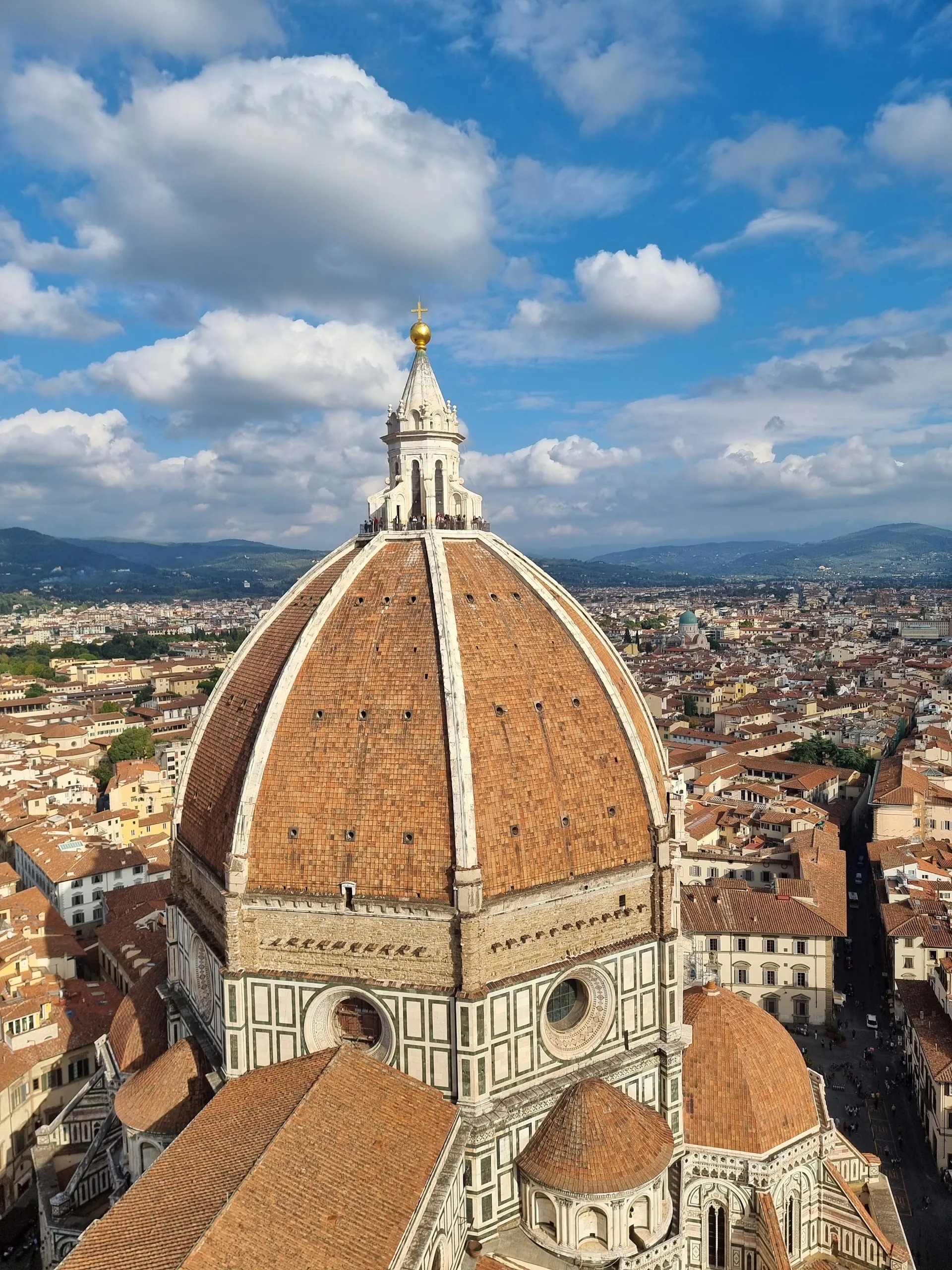
Duomo & Brunelleschi's Dome
Florence's iconic cathedral crowned by Brunelleschi's engineering marvel — the largest masonry dome ever built. Climb 463 steps between the inner and outer shells for breathtaking city views.
Centro Storico
Must visit
Restaurant4.6
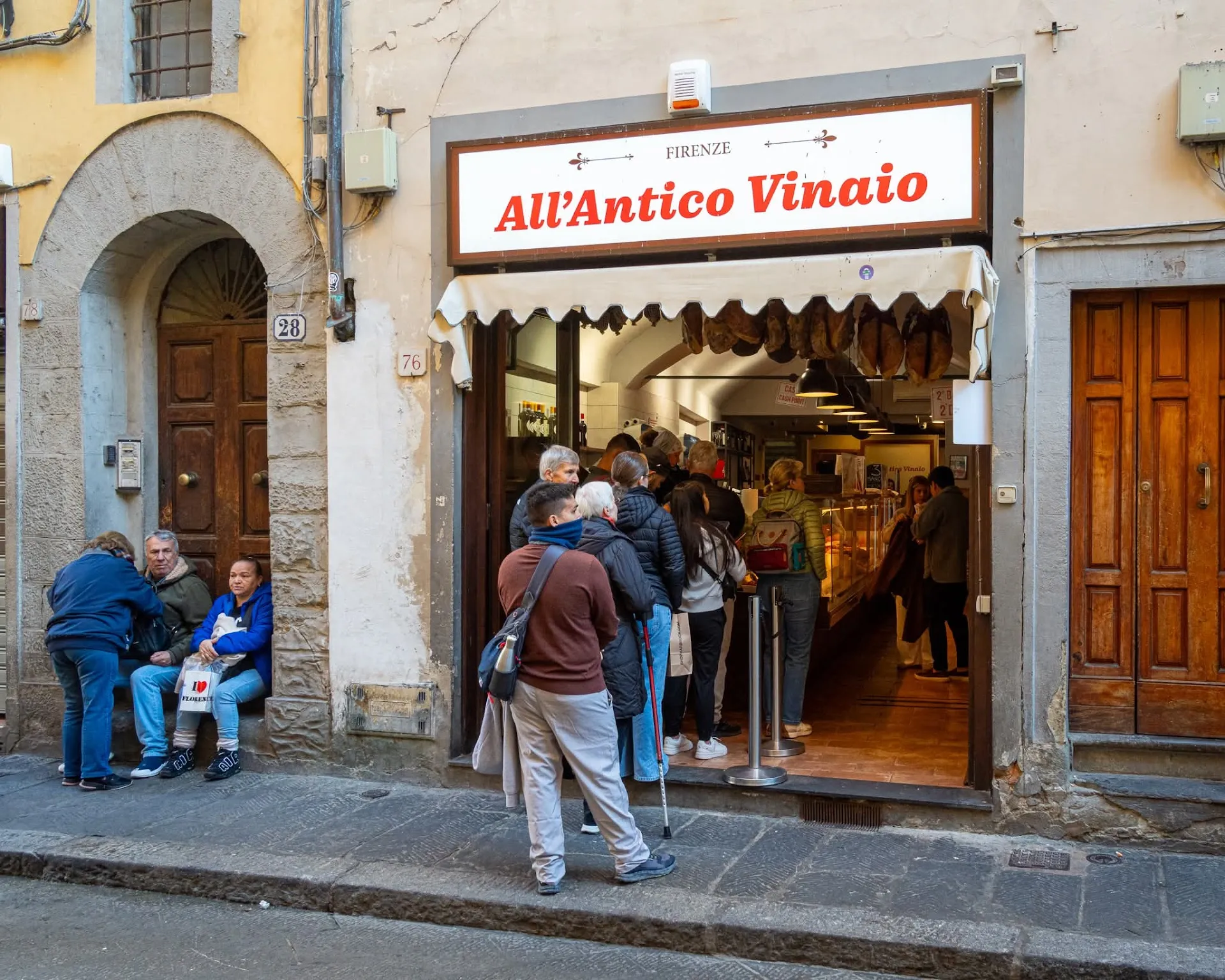
All'Antico Vinaio
Legendary panini shop with perpetual queues stretching down the block. Overflowing schiacciata sandwiches with premium cured meats and truffle cream that justify every minute of waiting.
Centro Storico
Must visit
Scenic Spot5.0
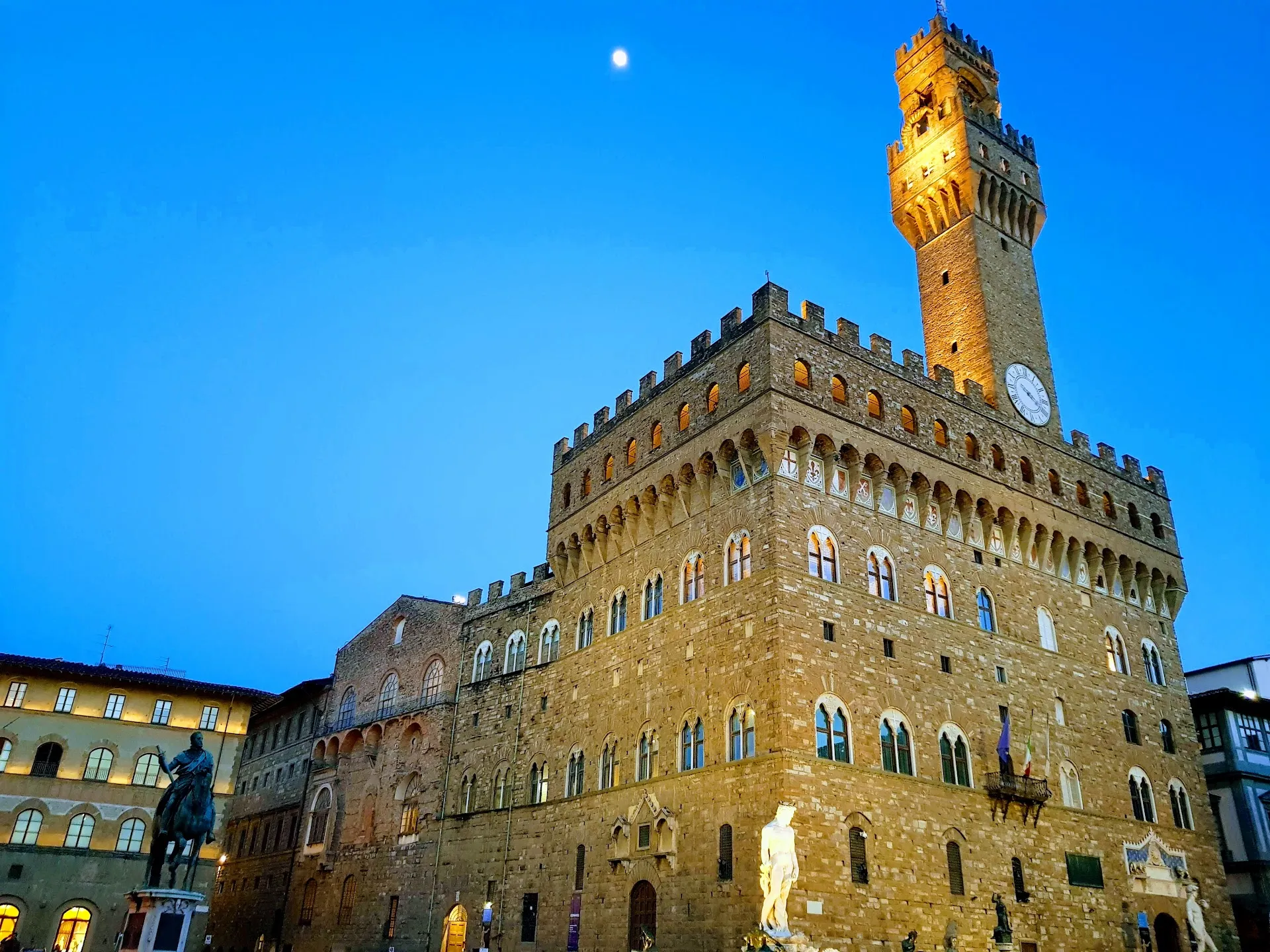
Piazza della Signoria Open-Air Gallery
Florence's political heart and an open-air sculpture museum that rivals any indoor gallery. The L-shaped piazza is anchored by the crenellated Palazzo Vecchio and the Loggia dei Lanzi, a 14th-century arcade sheltering masterpieces including Cellini's bronze Perseus and Giambologna's Rape of the Sabines. A replica of Michelangelo's David stands where the original once guarded the entrance to the palazzo. Neptune's Fountain and the Marzocco lion complete the sculptural ensemble.
Centro Storico
Photography
Ponte Vecchio at Golden Hour
Florence's medieval bridge of goldsmiths, lined with overhanging shops since the 14th century, transforms at golden hour into a warm-toned jewel suspended over the Arno. Shoot from Ponte Santa Trinita for the classic frontal composition, or from the Lungarno embankment for reflections in the water. The Vasari Corridor running above the shops adds a distinctive silhouette.
Ponte Santa Trinita or Lungarno embankment
Must visit
Museum4.8
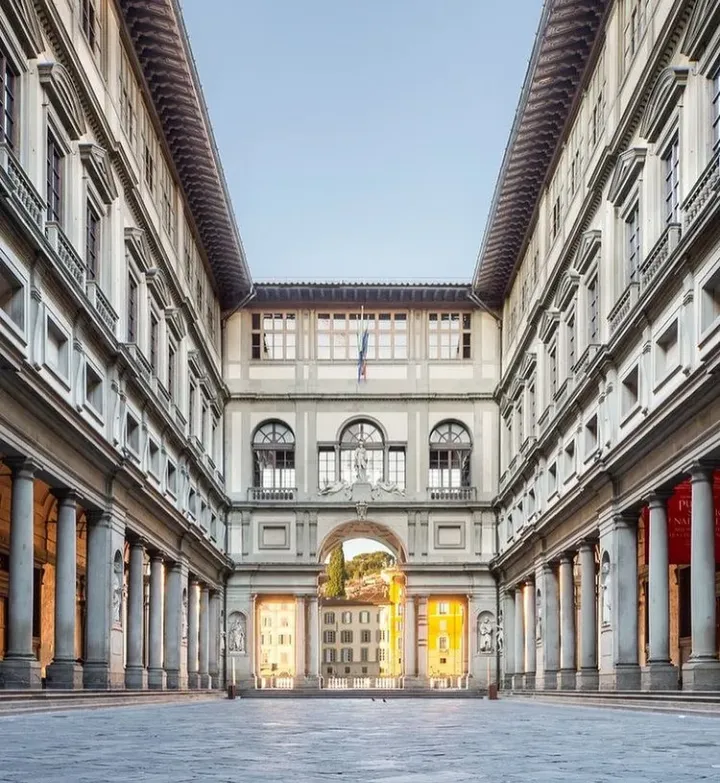
Uffizi Gallery
One of the world's greatest art museums, housing Botticelli's Birth of Venus and Primavera, works by Leonardo, Raphael, and Caravaggio in a Vasari-designed palazzo overlooking the Arno.
Centro Storico
Restaurant4.3
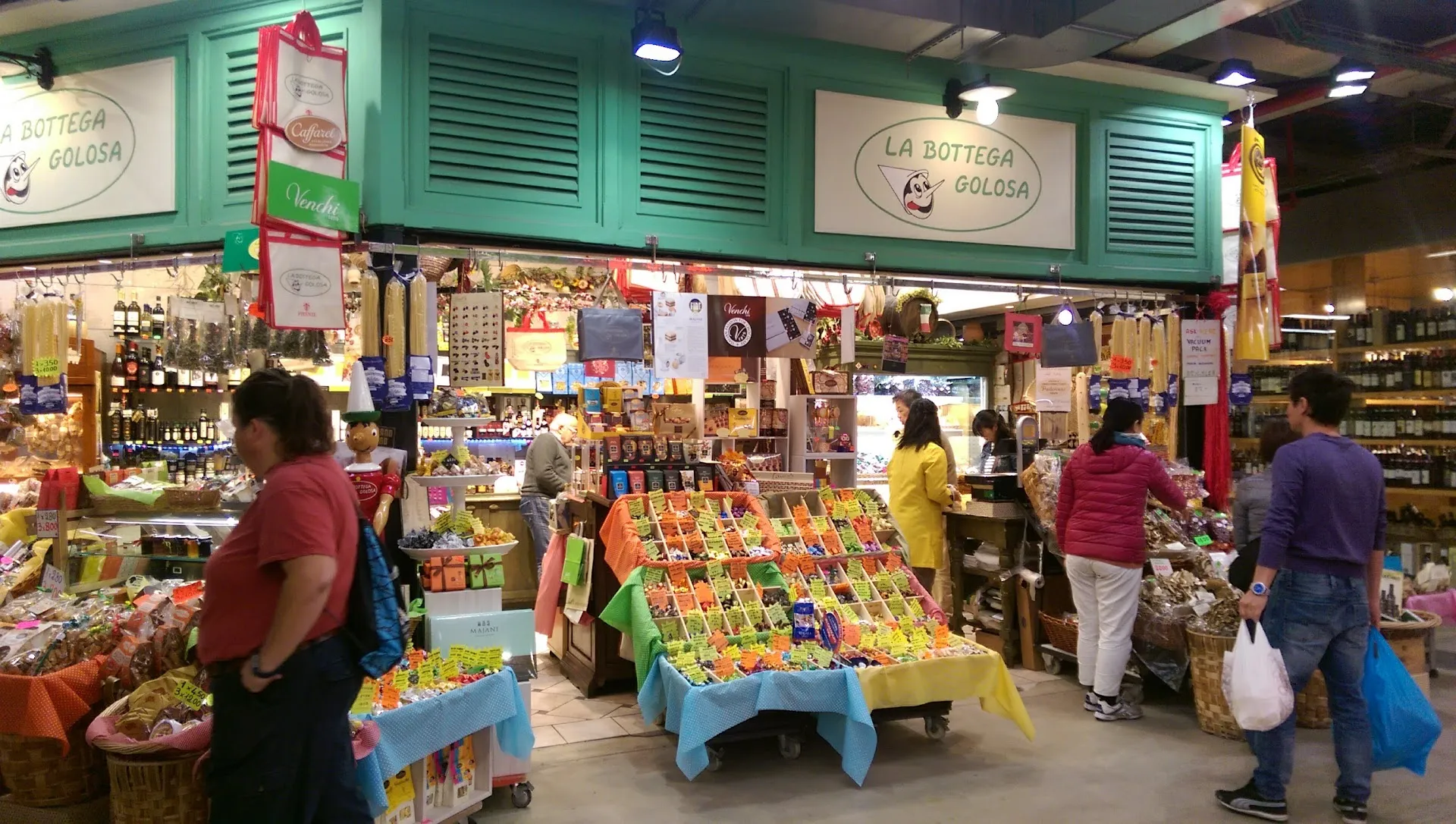
Mercato Centrale Food Hall
Upstairs food hall in the historic San Lorenzo market building with artisan stalls serving lampredotto, fresh pasta, Chianina beef, and gelato under a stunning 19th-century iron-and-glass roof.
San Lorenzo
Must visit
Museum4.7
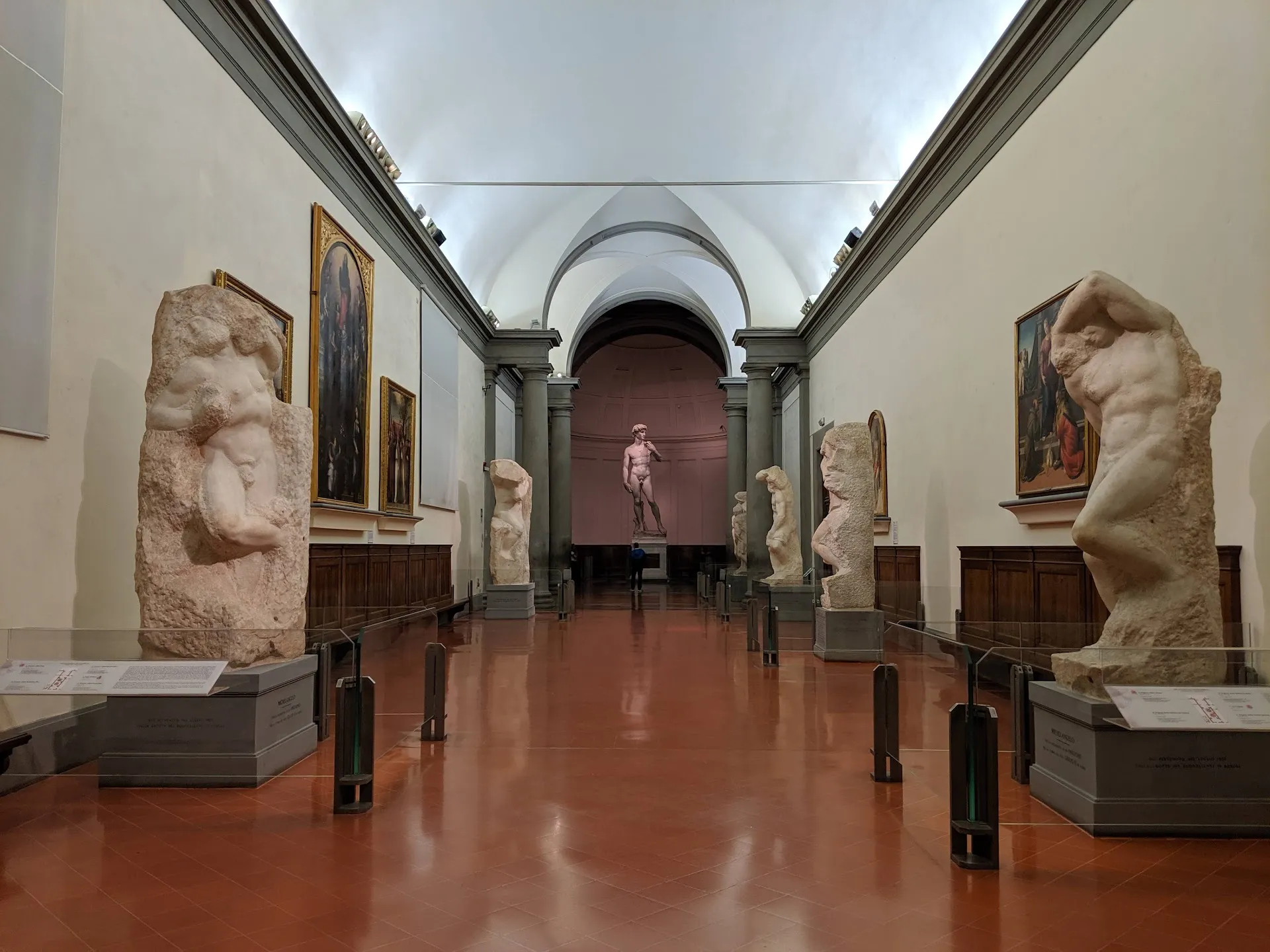
Galleria dell'Accademia
Home to Michelangelo's David — a 5-meter marble masterpiece that must be seen in person to comprehend. The museum also houses his unfinished Prisoners emerging hauntingly from raw stone.
San Marco
Outdoor
Piazzale Michelangelo Sunset
Climb to the iconic terrace above the Arno for the definitive Florence panorama — the Duomo, Palazzo Vecchio, and Ponte Vecchio laid out before you as the sky turns amber and pink. Bring a bottle of wine and join the crowd watching daylight fade over the Renaissance skyline.
Piazzale Michelangelo, south bank hillside1-2 hours
Cultural
Oltrarno Artisan Workshop Walk
Wander the Oltrarno's backstreets where traditional artisans still practice crafts unchanged for centuries. Peer into open workshops of gilders, bookbinders, mosaic artists, and furniture restorers — the living heritage of Florentine craftsmanship.
Oltrarno district (south of Arno)2-3 hours
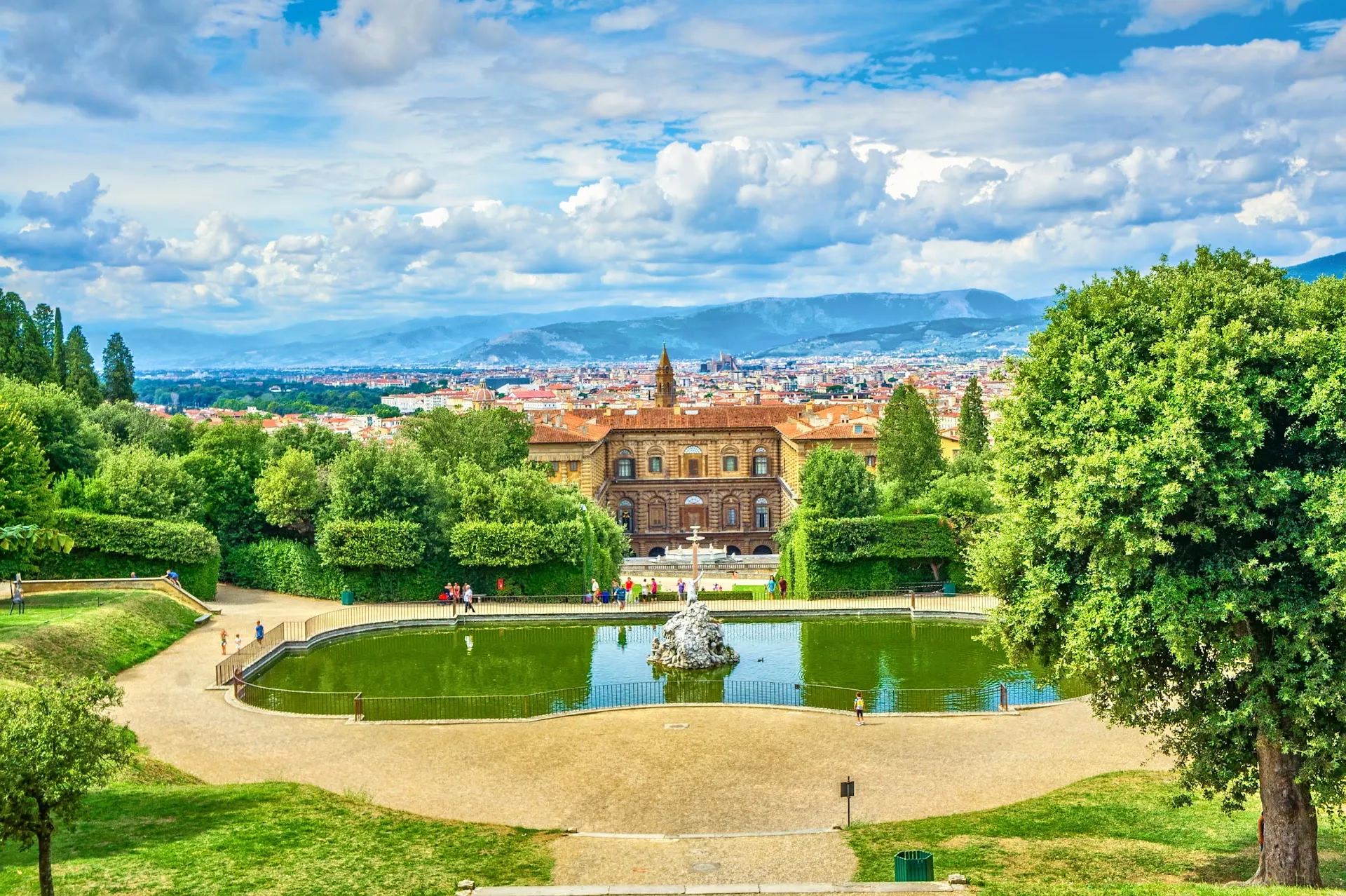
Park4.4
Boboli Gardens
Expansive 16th-century Medici gardens rising behind Palazzo Pitti with grottoes, fountains, sculptures, and terraced hillside paths offering panoramic views over Florence's terracotta roofscape.
Oltrarno
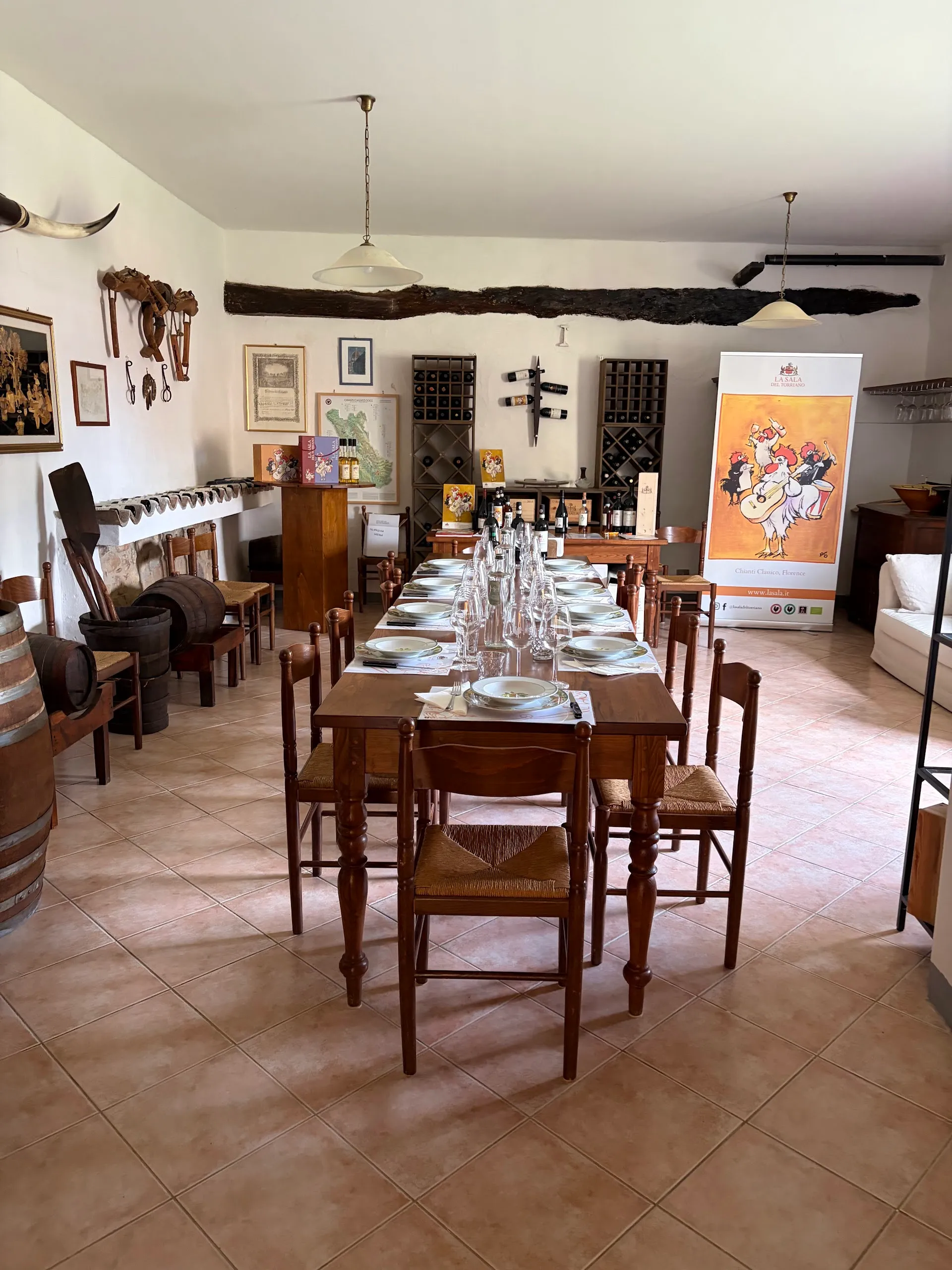
Food
Chianti Wine Tasting Day Trip
Escape into the rolling Chianti hills to visit family-run vineyards producing Chianti Classico and Super Tuscans. Taste wines paired with local pecorino, salumi, and bruschetta drizzled in estate olive oil while overlooking cypress-lined valleys.
Chianti region, 30-60 min south of Florence6-8 hours
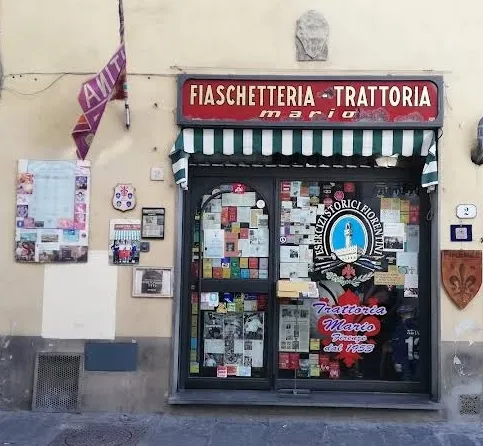
Must visit
Restaurant4.5
Trattoria Mario
No-frills communal-table trattoria serving Florentine classics since 1953. Arrive before noon or queue — there are no reservations, no exceptions.
San Lorenzo
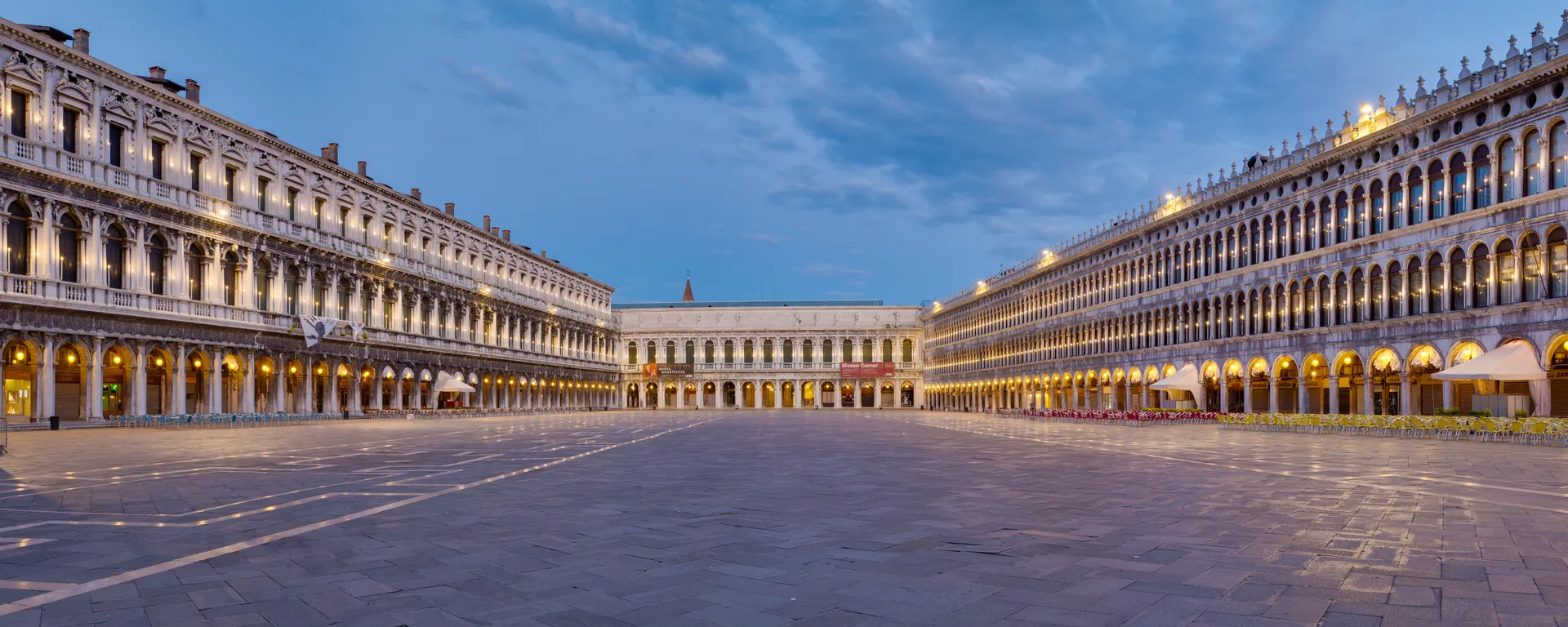
Landmark
Piazza San Marco at Dawn
Napoleon called it the finest drawing room in Europe. The vast piazza surrounded by the Procuratie arcades, the Basilica's Byzantine domes, and the Campanile is transcendent at dawn when empty of the daytime crowds. The geometric pattern of the stone floor extends toward the basilica facade. During acqua alta flooding, the shallow water creates perfect reflections.
San Marco, Venice
Must visit
Temple4.8
St. Mark's Basilica
Breathtaking Byzantine cathedral with golden mosaics covering 8,000 square meters. The jewel of Venice for over 1,000 years.
San Marco
Museum4.7
Doge's Palace
Gothic masterpiece that was the seat of Venetian power for centuries. Tintoretto's Paradise, golden staircases, and the Bridge of Sighs.
San Marco
Must visit
Bar4.3
Harry's Bar
Legendary bar and restaurant since 1931, birthplace of the Bellini cocktail and carpaccio. Hemingway's favorite Venetian haunt. UNESCO cultural heritage site.
San Marco
Architecture
Rialto Bridge at Sunrise
The oldest and most famous of Venice's four Grand Canal bridges. Antonio da Ponte's 1591 stone arch spans 48 meters with its distinctive double row of shops. At sunrise the eastern light illuminates the white Istrian stone and reflects off the Grand Canal water. The bridge and its reflection create a near-perfect arch.
San Polo, Venice
Market4.4
Rialto Market
Venice's historic food market operating since 1097. Fish market (Pescaria) and produce stalls on the Grand Canal. Best in early morning.
San Polo
Scenic Spot4.7
Burano Island
Rainbow-colored fishing village in the Venetian lagoon. Brightly painted houses, lace-making tradition, and excellent seafood. A photographer's paradise.
Burano
Food
Cicchetti Bar Hop in San Polo
Experience Venice's version of tapas — cicchetti. Hop between tiny bacari (wine bars) near the Rialto Bridge, sampling baccalà mantecato, sarde in saor, and fried mozzarella with an ombra (small glass of wine).
San Polo & Rialto area2-3 hours
Must visit
Museum4.6
Peggy Guggenheim Collection
World-class modern art collection in Peggy Guggenheim's Grand Canal palazzo. Pollock, Picasso, Dali, and Magritte in an intimate setting.
Dorsoduro
Other4.4
Libreria Acqua Alta
Whimsical bookshop where books are stored in gondolas and bathtubs to survive flooding. Cats roam freely and a book staircase leads to canal views.
Castello
Must visit
Restaurant4.7
Osteria Alle Testiere
Tiny, acclaimed seafood restaurant with just 22 seats. Impeccably fresh Adriatic fish prepared simply. Book well in advance.
Castello
Experience
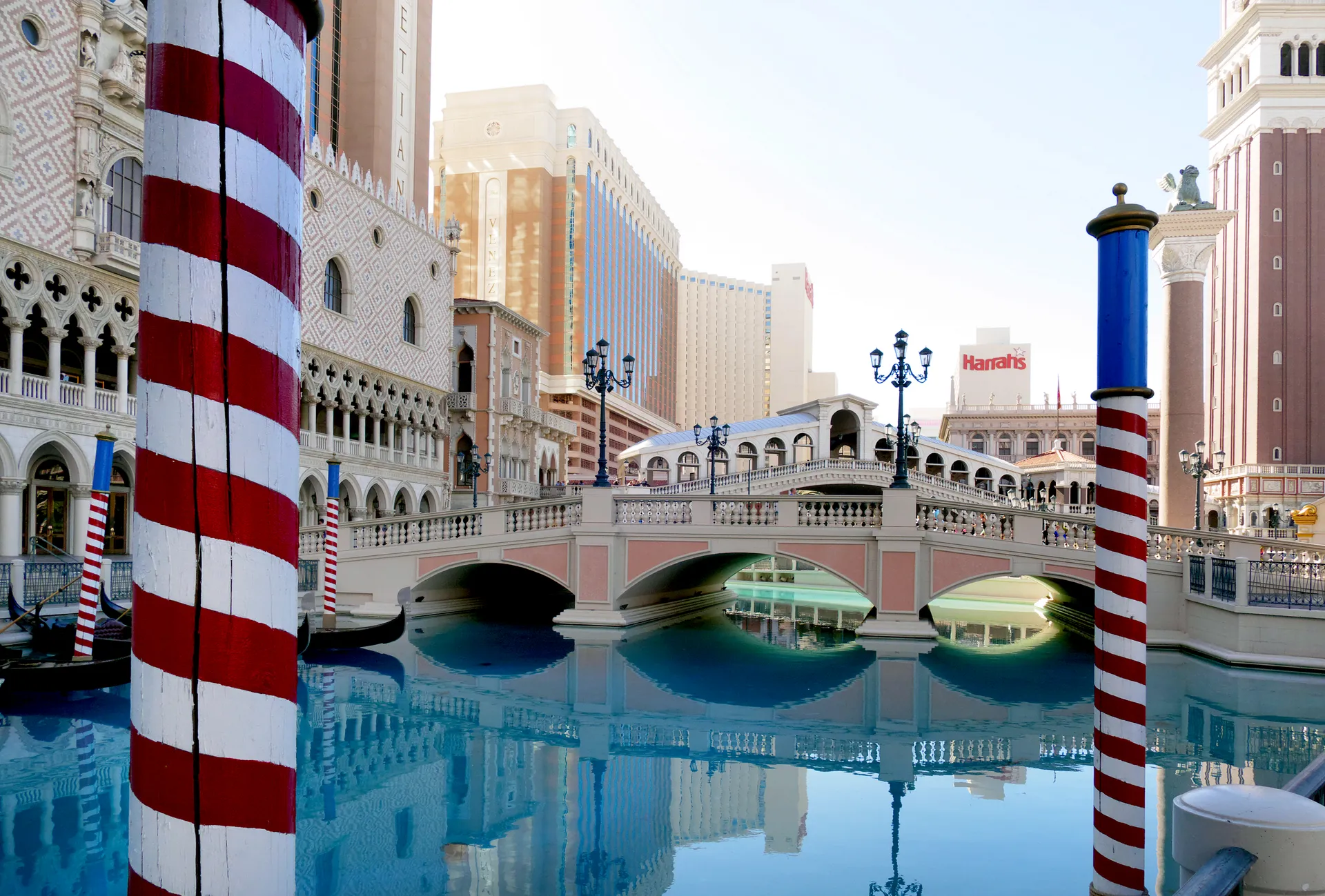
Gondola Ride Through Grand Canal
Glide through Venice's iconic canals on a traditional gondola. While touristy, the experience of floating past centuries-old palazzos in a hand-crafted wooden boat is genuinely magical, especially at sunset.
Grand Canal, Venice30-40 minutes
Viewpoint
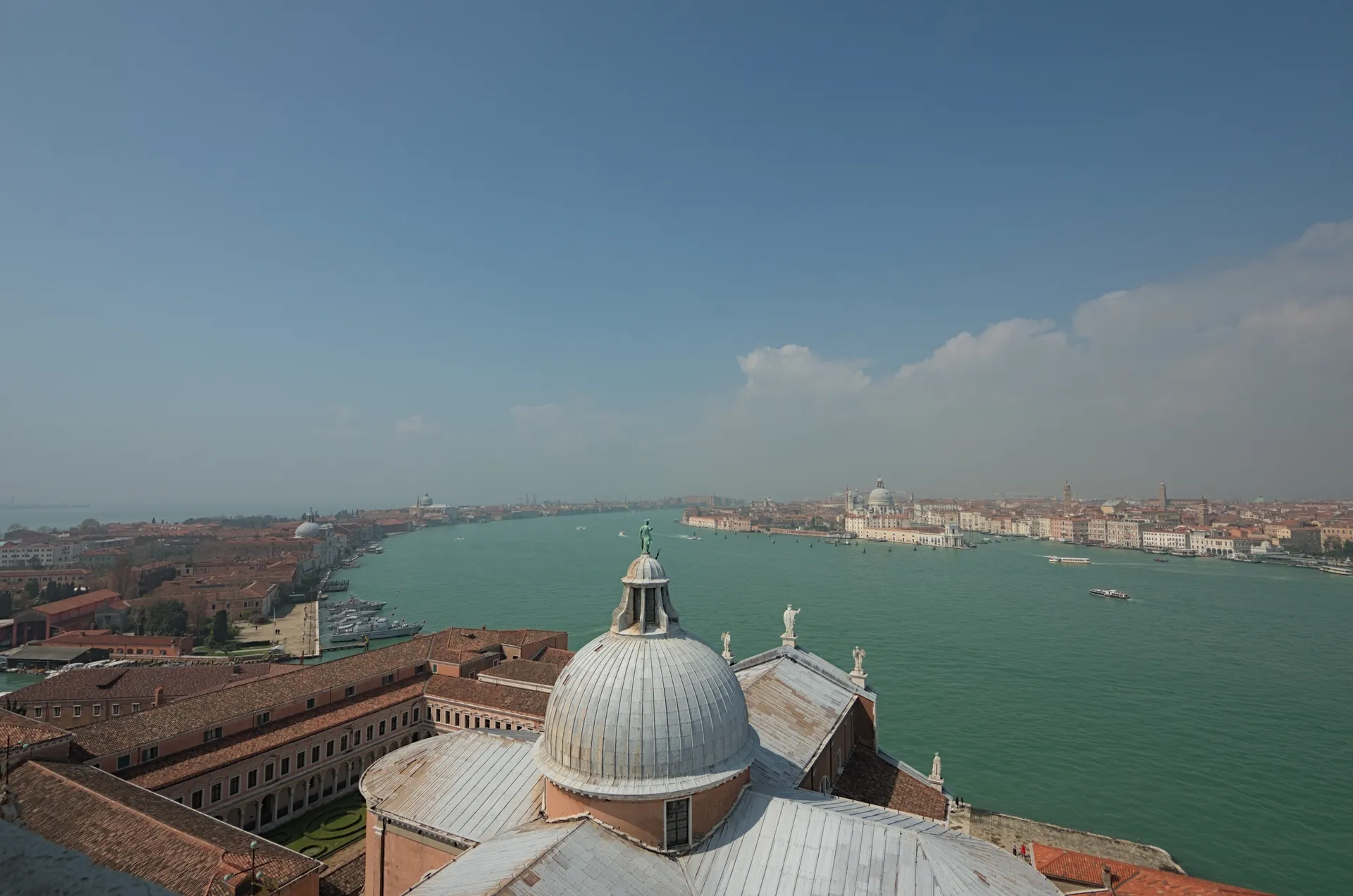
San Giorgio Maggiore Bell Tower
The campanile of San Giorgio Maggiore offers arguably the best panorama in Venice. From 60 meters up you see the entire lagoon, San Marco basin, the Doge's Palace, the full sweep of the Riva degli Schiavoni, and the rooftops of Venice stretching to the mainland. Far less crowded than the San Marco campanile with a broader view.
San Giorgio Maggiore island, Venice
Scenic Spot4.5
Ponte di Rialto
Iconic stone arch bridge spanning the Grand Canal, built in 1591. Lined with shops and offering classic Venice views. Best photographed from the water.
San Polo
Day by day
Day 1Rome
Ancient Rome: Colosseum & the Forum
Must visit
08:30Memorial4.8
Colosseum
Begin with the icon. The vast amphitheatre that once held 50,000 spectators is most atmospheric at opening, before the midday tour groups fill the arena floor and upper tiers.
Centro Storico
Tip: Buy a timed combined ticket online in advance; it also covers the Roman Forum and Palatine Hill on the same day.
10:30
Memorial4.7
Roman Forum
Walk straight from the Colosseum into the ruined heart of the ancient city, a sprawl of temples, arches, and basilicas where Roman public life played out for a thousand years.
Centro Storico
Tip: Climb up to the Palatine Hill for shade and a sweeping view back over the whole Forum.
13:30
Restaurant4.3
Tonnarello
Cross the river to Trastevere for a long lunch of Roman classics like cacio e pepe and carbonara at this bustling neighborhood trattoria with tables spilling onto the cobbles.
Trastevere
Tip: It does not take small-group reservations; arrive just before 1pm or expect a wait.
18:00
Scenic Spot4.6
Trastevere
Spend the evening wandering Trastevere's ivy-draped lanes as they fill with the aperitivo crowd. The old working-class quarter is Rome at its most romantic after dark.
Trastevere
Tip: Piazza di Santa Maria, with its mosaic-fronted basilica, is the natural place to pause for a drink.
Day 2Rome
Vatican City & masterpieces
08:00
Museum4.7
Vatican Museums
Reserve the earliest entry to walk miles of papal galleries that build toward the Sistine Chapel and Michelangelo's ceiling. The collection is overwhelming, so move with intent.
Vatican City
Tip: Pre-book a timed ticket; the standby line can run for hours and the rooms thin out late afternoon.
Must visit
12:30Restaurant4.7
Pizzarium
A short walk from the Vatican, Gabriele Bonci's celebrated pizza al taglio counter sells thick, airy slices topped by the season. Order by weight and eat standing.
Prati
Tip: It is tiny and tables are scarce; grab a couple of slices to go and find a bench nearby.
15:30
Memorial4.9
Pantheon
Back across the river, step into the best-preserved building of ancient Rome, a near-2,000-year-old temple whose vast concrete dome still opens to the sky through a single oculus.
Centro Storico
Tip: Entry is now ticketed; go on the hour and watch the shaft of light track across the marble floor.
17:30
Scenic Spot4.5
Piazza Navona
Finish on Rome's grandest baroque square, built over an ancient stadium and anchored by Bernini's theatrical Fountain of the Four Rivers, ringed by cafes and street artists.
Centro Storico
Tip: Cafe prices on the piazza are steep; sit for one drink to enjoy the view, then eat a street over.
Day 3Rome
Baroque squares, fountains & gardens
08:30
Scenic Spot4.6
Trevi Fountain
Catch Rome's most famous fountain before the scrum. Nicola Salvi's wall of tritons, sea horses, and cascading water is at its calmest just after dawn.
Trevi
Tip: Toss a coin over your left shoulder with your right hand; tradition says it guarantees your return to Rome.
10:00Landmark
Spanish Steps Morning
Walk to the Spanish Steps and climb the elegant 18th-century sweep of travertine for a view down over the boat-shaped fountain and the designer-lined Via dei Condotti below.
Trevi/Spagna area, Rome
Tip: Sitting on the steps is prohibited and fined; admire from the top or the piazza instead.
11:00
Museum4.8
Borghese Gallery
Book a slot at this jewel-box gallery in a leafy villa park, home to Bernini's gravity-defying marble sculptures and a wall of Caravaggios in just a handful of rooms.
Villa Borghese
Tip: Visits are timed to two hours and tickets sell out days ahead; reserve before you arrive in Rome.
18:00Sunset Spot
Pincio Terrace Sunset
End your Rome leg on the Pincio terrace above Piazza del Popolo, the city's classic sunset balcony, with domes and rooftops glowing gold toward St. Peter's.
Villa Borghese, Rome
Tip: Arrive 30 minutes before sundown for a spot at the railing; it is a short stroll from the Borghese gardens.
Day 4Florence
Arrival & the Renaissance core
Must visit
11:00Museum4.9
Duomo & Brunelleschi's Dome
After the morning Frecciarossa from Rome, drop your bags and head to the Duomo, whose vast brick dome by Brunelleschi still crowns the Florence skyline six centuries on.
Centro Storico
Tip: Climbing the dome requires a separate timed reservation; book it now even if you climb on a later day.
Must visit
13:30Restaurant4.6
All'Antico Vinaio
Join the line at Florence's most famous sandwich shop for an enormous schiacciata stuffed with Tuscan cured meats, pecorino, and truffle cream. Cheap, fast, and excellent.
Centro Storico
Tip: There are multiple branches on the same street; pick the shortest queue and eat by the Uffizi a block away.
Must visit
15:30Scenic Spot5.0
Piazza della Signoria Open-Air Gallery
Wander into Piazza della Signoria, an open-air sculpture gallery in front of the fortress-like Palazzo Vecchio, with a replica David and the statue-filled Loggia dei Lanzi.
Centro Storico
Tip: The Loggia is free to walk through; look for Cellini's bronze Perseus holding Medusa's head.
18:30Photography
Ponte Vecchio at Golden Hour
Stroll out onto the Ponte Vecchio, the medieval bridge lined with goldsmiths' shops that has spanned the Arno since 1345, glowing warm as the sun drops behind the hills.
Ponte Santa Trinita or Lungarno embankment
Tip: The best photo of the bridge itself is from the next bridge upstream, Ponte alle Grazie.
Day 5Florence
The great galleries: Uffizi & David
Must visit
08:15Museum4.8
Uffizi Gallery
Open the day at the Uffizi, one of the world's greatest art museums, walking Renaissance halls that lead to Botticelli's Birth of Venus and Primavera. Reserve the first entry.
Centro Storico
Tip: Pre-book a timed ticket online; the standby line is brutal and the early rooms are quietest at opening.
12:30Restaurant4.3
Mercato Centrale Food Hall
Lunch upstairs at the Mercato Centrale food hall, a soaring iron-and-glass market where dozens of stalls cook everything from lampredotto to fresh pasta and Neapolitan pizza.
San Lorenzo
Tip: It is busiest at 1pm; grab a table early, then split dishes from several counters.
Must visit
15:00Museum4.7
Galleria dell'Accademia
See Michelangelo's David in person, the 17-foot marble that turns out to be far more arresting up close than in any photograph, plus his unfinished Prisoners straining from the stone.
San Marco
Tip: Reserve a timed slot; most visitors stay under an hour, so afternoon entries are easy to plan around.
18:30Outdoor
Piazzale Michelangelo Sunset
Climb to Piazzale Michelangelo across the river for the postcard view of the whole city, the Duomo and Arno spread out and the Tuscan hills behind as the light turns rose-gold.
Piazzale Michelangelo, south bank hillside1-2 hours
Tip: Walk up via the rose garden for fewer crowds; bring a bottle of wine and arrive before sunset.
Day 6Florence
Oltrarno, gardens & Tuscan hills
09:00Cultural
Oltrarno Artisan Workshop Walk
Cross to the Oltrarno, the artisan quarter south of the river, and wander its workshops of bookbinders, gilders, and leatherworkers, the living craft tradition behind the Renaissance.
Oltrarno district (south of Arno)2-3 hours
Tip: Many studios welcome visitors mid-morning; the area is quieter and far less touristy than the center.
11:00Park4.4
Boboli Gardens
Step into the Boboli Gardens behind the Pitti Palace, a vast Renaissance landscape of avenues, grottoes, and fountains laid out for the Medici, with city views from the upper terraces.
Oltrarno
Tip: Wear comfortable shoes; the gardens climb a hillside and the best views are at the top by the porcelain museum.
14:30Food
Chianti Wine Tasting Day Trip
Spend the afternoon in the Chianti hills on a guided tasting trip, rolling past cypress-lined vineyards to family estates pouring Sangiovese with local cheese and olive oil.
Chianti region, 30-60 min south of Florence6-8 hours
Tip: Half-day tours leave from central Florence and return by evening; book ahead and skip driving so everyone can taste.
Must visit
20:00Restaurant4.5
Trattoria Mario
Close your Florence stay with classic Tuscan home cooking, the bistecca alla fiorentina and ribollita that define the region, at a beloved lunch-and-dinner trattoria near San Lorenzo.
San Lorenzo
Tip: It is cash-only and famously busy; this institution is known for shared tables, so go ready to make friends.
Day 7Venice
Arrival on the lagoon: San Marco
11:30Landmark
Piazza San Marco at Dawn
Arrive by Frecciarossa into Venezia Santa Lucia, ride a vaporetto down the Grand Canal, and step into Piazza San Marco, the grand ceremonial square Napoleon called Europe's drawing room.
San Marco, Venice
Tip: The square floods (acqua alta) on some high tides in winter; check the forecast and the raised walkways.
Must visit
13:00Temple4.8
St. Mark's Basilica
Step inside St. Mark's Basilica, a Byzantine treasure house whose domes and walls glitter with more than 8,000 square meters of gold mosaic above a marble floor that ripples like water.
San Marco
Tip: Book a skip-the-line slot; large bags are not allowed inside and must be left at a nearby deposit.
15:30
Museum4.7
Doge's Palace
Tour the Doge's Palace next door, the pink Gothic seat of the Venetian Republic, crossing the Bridge of Sighs to the old prison cells through gilded council chambers hung with Tintorettos.
San Marco
Tip: The Secret Itineraries tour goes behind the public rooms into the doge's offices and old cells; reserve ahead.
Must visit
18:30Bar4.3
Harry's Bar
Toast your arrival with a Bellini at Harry's Bar, the wood-paneled institution near San Marco where the peach-and-prosecco cocktail was invented in the 1940s.
San Marco
Tip: It is famously pricey and reservations help at dinner; come for one historic cocktail rather than a full meal.
Day 8Venice
Canals, the Rialto & lagoon islands
08:30
Architecture
Rialto Bridge at Sunrise
Start at the Rialto Bridge while the city is still waking, the graceful stone arch over the Grand Canal at its most photogenic before the day-trippers and the market crowds arrive.
San Polo, Venice
Tip: The early light is best from the Riva del Vin at the foot of the bridge, looking back up the canal.
09:30
Market4.4
Rialto Market
Wander the Rialto Market beside the bridge, the centuries-old hub where Venetian cooks still buy lagoon fish, seasonal vegetables, and produce under wooden awnings.
San Polo
Tip: The fish market is closed Sundays and Mondays; go before 10am while the stalls are full.
11:30
Scenic Spot4.7
Burano Island
Take a vaporetto across the lagoon to Burano, the fishing island famous for its fiercely colored houses and lace-making, a riot of pink, blue, and ochre reflected in the canals.
Burano
Tip: It is a 40-45 minute boat ride; combine it with neighboring Murano for glassmaking if you have time.
18:00
Food
Cicchetti Bar Hop in San Polo
Back in the city, end the day hopping between bacari, the tiny Venetian wine bars, for cicchetti, little plates of crostini, fried seafood, and meatballs washed down with an ombra of wine.
San Polo & Rialto area2-3 hours
Tip: The San Polo and Cannaregio lanes around Rialto have the best clusters; pay per plate and keep moving.
Day 9Venice
Art, quiet corners & a last gondola
Must visit
09:30Museum4.6
Peggy Guggenheim Collection
Spend the morning at the Peggy Guggenheim Collection, the heiress's canal-side palazzo of Picasso, Pollock, and Dali, a bracing modern counterpoint to all the Byzantine gold.
Dorsoduro
Tip: The sculpture garden and canal terrace are a calm place to pause; it opens at 10am and is closed Tuesdays.
11:30
Other4.4
Libreria Acqua Alta
Detour to the Libreria Acqua Alta, the wonderfully eccentric bookshop that stores its stock in gondolas and bathtubs to survive the floods, with a staircase built from old books out back.
Castello
Tip: It is small and gets crowded; go early and step out the rear door for the famous book-stair photo.
Must visit
13:00Restaurant4.7
Osteria Alle Testiere
Have a slow lunch of the lagoon's finest seafood at this tiny, much-loved osteria, where the daily catch and house-made pasta are the whole point. A fitting final Venetian meal.
Castello
Tip: There are only a handful of tables and two seatings; reserve well ahead, as it books out days in advance.
17:00Experience
Gondola Ride Through Grand Canal
Close the trip with the cliched-but-worth-it gondola ride, gliding through silent back canals where the only sound is the oar and the lap of water against centuries-old palazzo walls.
Grand Canal, Venice30-40 minutes
Tip: Fares are fixed by the city; share a gondola to split the cost and choose the quieter inner canals over the Grand Canal traffic.
Day 10Venice
Last morning & departure
08:00Viewpoint
San Giorgio Maggiore Bell Tower
On your final morning, take the short vaporetto to San Giorgio Maggiore and ride the bell-tower lift for the clearest, least-crowded panorama of San Marco and the whole lagoon.
San Giorgio Maggiore island, Venice
Tip: It is a quick visit; this is the view most people miss while queuing for the Campanile across the water.
10:00
Scenic Spot4.5
Ponte di Rialto
Take a last slow walk over the Ponte di Rialto and along the Grand Canal before collecting your bags, soaking up the city one more time before the train back to the mainland.
San Polo
Tip: Allow extra time to reach Santa Lucia station on foot or by vaporetto; there are no cars or taxis in Venice.
Getting between stops
What it costs
A mid-range ten days runs roughly $1,400-2,200 per person excluding international flights: comfortable three-star or boutique hotels, all-train inter-city travel on advance Frecciarossa fares, museum and church tickets (Rome, the Uffizi, the Accademia, and Venice's basilica add up), and generous eating from market lunches to trattoria dinners. Venice is the priciest of the three cities for both beds and food. Booking train tickets and the big-museum slots weeks ahead is the single biggest way to save money and time.~$140-220 / day
Frequently asked questions
- Is 10 days enough to see Rome, Florence, and Venice?
- Yes, ten days covers Italy's three signature cities at a relaxed pace. Three nights in Rome handles the Colosseum, the Vatican, and the baroque center; three in Florence give you the Uffizi, David, the Duomo, and a Tuscan day trip; and two in Venice are enough for San Marco, the canals, and a lagoon island. Because the high-speed trains link the cities in two hours or less, travel days double as half-days of sightseeing, so very little time is lost in transit.
- What is the best way to travel between Rome, Florence, and Venice?
- Take the train. Italy's Frecciarossa high-speed trains connect all three cities center to center: Rome to Florence is about 1 hour 20 minutes, and Florence to Venice is about 2 hours. They are faster and far less stressful than flying or driving, and they arrive in the heart of each city. Book Trenitalia (or the competing Italo) advance fares online weeks ahead for the lowest prices, and in Venice make sure your train ends at Venezia Santa Lucia, not Mestre on the mainland.
- Should I rent a car for this Italy itinerary?
- No. A car is a liability for a Rome-Florence-Venice trip. The cities are connected by frequent high-speed trains, their historic centers are pedestrian or restricted-traffic zones, and parking is expensive and scarce. Venice has no cars at all. If you want to explore the Tuscan countryside, take an organized Chianti wine day trip from Florence instead of driving yourself.
- Which museum and attraction tickets should I book in advance?
- Reserve the big-ticket sights before you arrive: the Colosseum (with the Roman Forum), the Vatican Museums, and the Borghese Gallery in Rome; the Uffizi, the Galleria dell'Accademia for David, and the Duomo dome climb in Florence; and St. Mark's Basilica and the Doge's Palace in Venice. Most use timed-entry slots that sell out days ahead in high season, and pre-booking lets you skip lines that can otherwise eat hours of your day.
- What is the best time of year to do this trip?
- Spring (April to May) and autumn (September to October) are ideal, with pleasant weather, long daylight, and thinner crowds than summer. July and August bring heat, humidity, and the heaviest tourist numbers, particularly in Rome and Venice. Winter is quiet and often beautiful, but cold, and Venice can see acqua alta flooding around high tides, so pack accordingly and check forecasts.
Make this trip yours
Save this itinerary and customize it — dates, stops, budget and friends, all in one place.