Skip to content
Humahuaca

The Complete Guide to Humahuaca

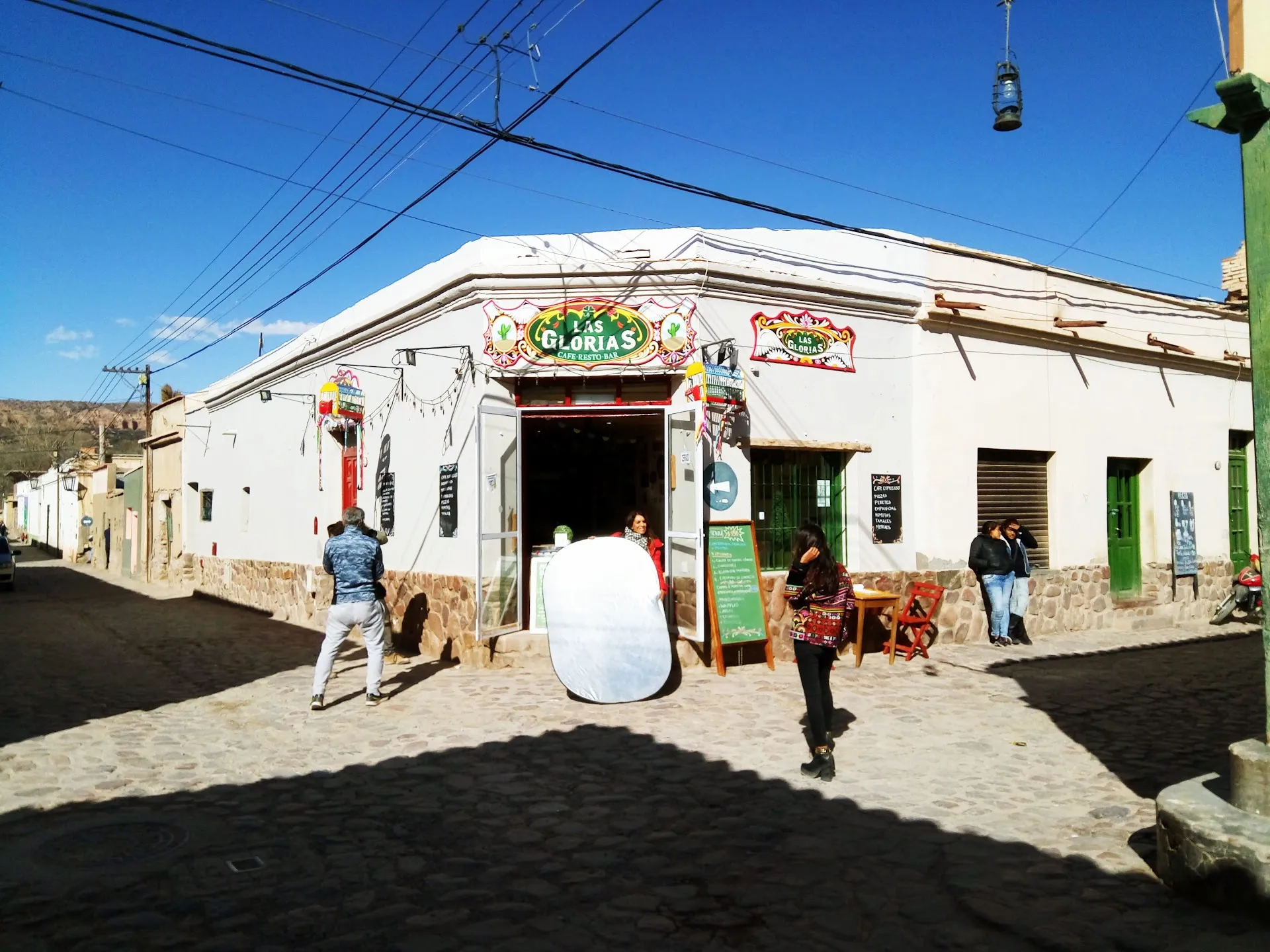
Humahuaca sits at 2,940 meters at the northern hinge of the Quebrada de Humahuaca, the roughly 155-kilometer canyon of red sandstone and eroded polychrome hills that UNESCO inscribed in 2003 as a living cultural landscape, not a museum piece. Tilcara and Purmamarca, an hour or two south, absorb most of the day-trip crowds from Salta; Humahuaca is where the Quebrada's Kolla and Omaguaca communities actually live, trade and worship, and it shows in the texture of the place - a whitewashed adobe town of narrow stone-paved streets and wrought-iron balconies, still ordered by market days, patron-saint feasts and the arrival of Carnaval rather than tour-bus schedules.

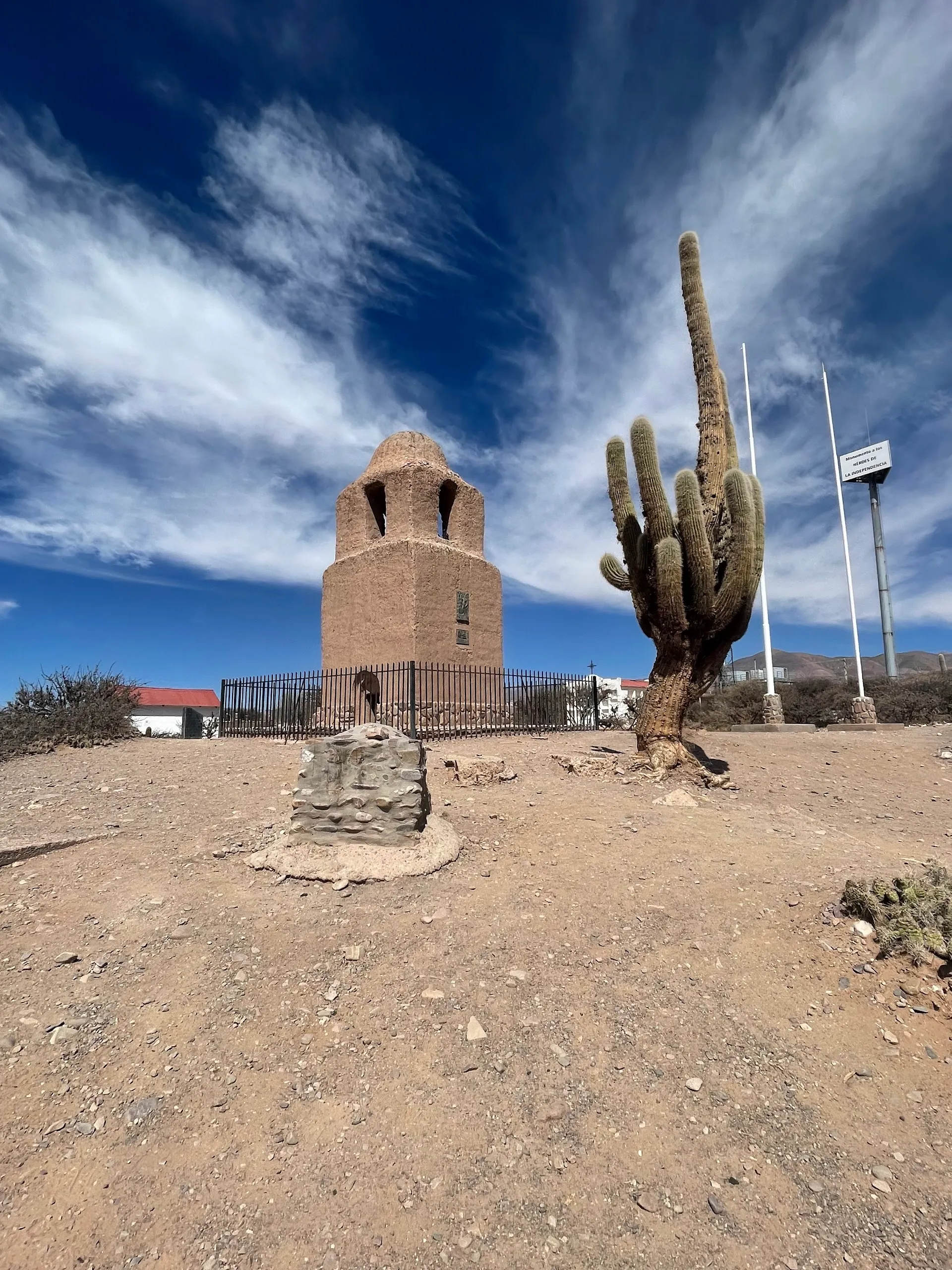
The town itself is compact enough to walk end to end in twenty minutes. Everything sits within a few blocks of the main plaza and the wide flight of steps climbing to the Monumento a los Heroes de la Independencia, the hilltop monument that doubles as the town's daily clock: at noon a mechanical figure emerges from its tower to strike the hour, one of the odder small rituals a visitor can time a coffee around, best watched from beside the adjacent Torre de Santa Barbara, the relocated bell tower of Humahuaca's Jesuit-era church. Below the steps, the daily artisan market spreads along Avenida Belgrano, and a block or two away the colonial cathedral, the municipal market and a handful of century-old peñas fill out a short, dense loop of everything the town center has to offer.

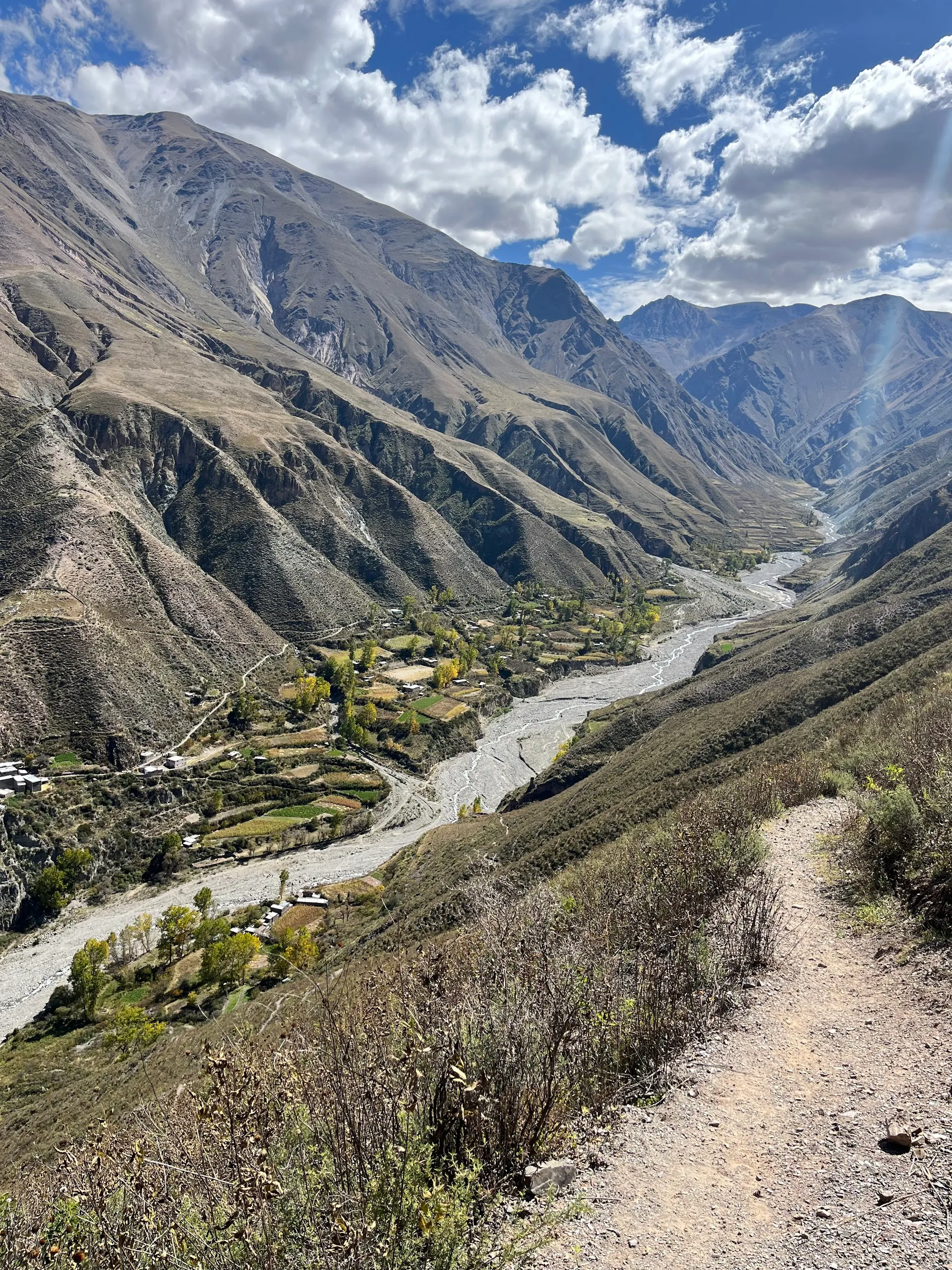
What pulls travelers this far north, past Tilcara and Purmamarca, is what lies just outside town. Twenty-four kilometers up an unpaved provincial road is the Serrania del Hornocal, a fourteen-banded mountain wall at 4,350 meters that gets a fraction of the visitors Purmamarca's Cerro de los Siete Colores does, best seen in the raking afternoon light. Nine kilometers northeast, the pre-Inca agricultural terraces of Coctaca cover more than 4,000 hectares, one of Argentina's largest archaeological sites and usually nearly empty. And south along RN9, a rough but spectacular road climbs over the 4,000-meter Abra del Condor pass to Iruya, a colonial village tucked into the Yungas cloud forest so remote that Humahuaca functions as its practical gateway rather than somewhere travelers reach independently.
Best time to visit

Humahuaca's dry season runs roughly April to November - clear high-altitude skies, cold but manageable nights, and the unpaved roads out to Hornocal, Coctaca and over the Abra del Condor to Iruya at their most reliable. Within that window, September to November brings milder days than the depths of winter (May-August, when nights regularly drop below freezing) without the crowds of the July-August school holidays. The trade-off is Carnaval, Humahuaca's single biggest event, which is tied to the moving Easter date and almost always falls in February or early March - squarely inside the summer rainy season (December-March), when afternoon storms can trigger flash floods and wash out the unpaved routes to the Hornocal viewpoint and, especially, the Iruya crossing over the Abra del Condor. If Carnaval is the priority, build flexibility into any plans around the excursions; if the day trips are the priority, come in the dry months and treat whatever patron-saint feast falls during your visit as a bonus. Whatever the season, pack warm layers - nights are cold at 2,940 meters year-round, even when the days are hot and dry.

Budget

Humahuaca is one of the most affordable bases in Argentina's Quebrada. A dorm bed runs roughly USD 8-15, a market-stall or bodegon lunch USD 4-8, and a full peña dinner with a live folk show USD 15-25. The half-day Hornocal or Iruya excursions, usually run as shared van-and-4x4 trips from the town center, cost roughly USD 20-40 per person. Craft-market souvenirs - wool textiles, ponchos, ceramics - are priced for locals as much as tourists, and gentle bargaining is normal at the market stalls, less so in fixed-price shops.~USD 30-60 / day mid-range / day

Humahuaca rewards more than a lunch stop. A single day covers the town center comfortably - market, cathedral, viewpoint, an evening peña - but staying two nights lets you add Hornocal or the full Iruya excursion without rushing either, and puts you in town for whichever festival happens to fall during your visit: Carnaval's eight days of comparsas and coplas, the August 1st Pachamama offering at the foot of the monument, or one of the patron-saint feasts that still draw processions with cordero on horseback. Aim for the dry season, April through November, when the Quebrada's red rock is at its clearest and the unpaved roads to Hornocal and Iruya are least likely to wash out; expect cold nights year-round at this altitude, whatever the season and however hot the midday sun.

Budgets stretch further here than almost anywhere else in Argentina - this is one of the country's cheapest regions to travel - with hostel beds, market lunches and even the guided excursions priced well below Buenos Aires or Patagonia. Below: the top experiences worth building a trip around, followed by a full practical guide covering a perfect day in town, the signature excursions to Hornocal, Coctaca and Iruya, the festivals and peñas that make this the cultural heart of the Quebrada, the best weaving and craft markets, where to eat, and when to come.

The best of Humahuaca

Curated places worth your time — tap a card for details or to save it.

Catedral de Nuestra Señora de la Candelaria y San Antonio
Temple

Catedral de Nuestra Señora de la Candelaria y San Antonio

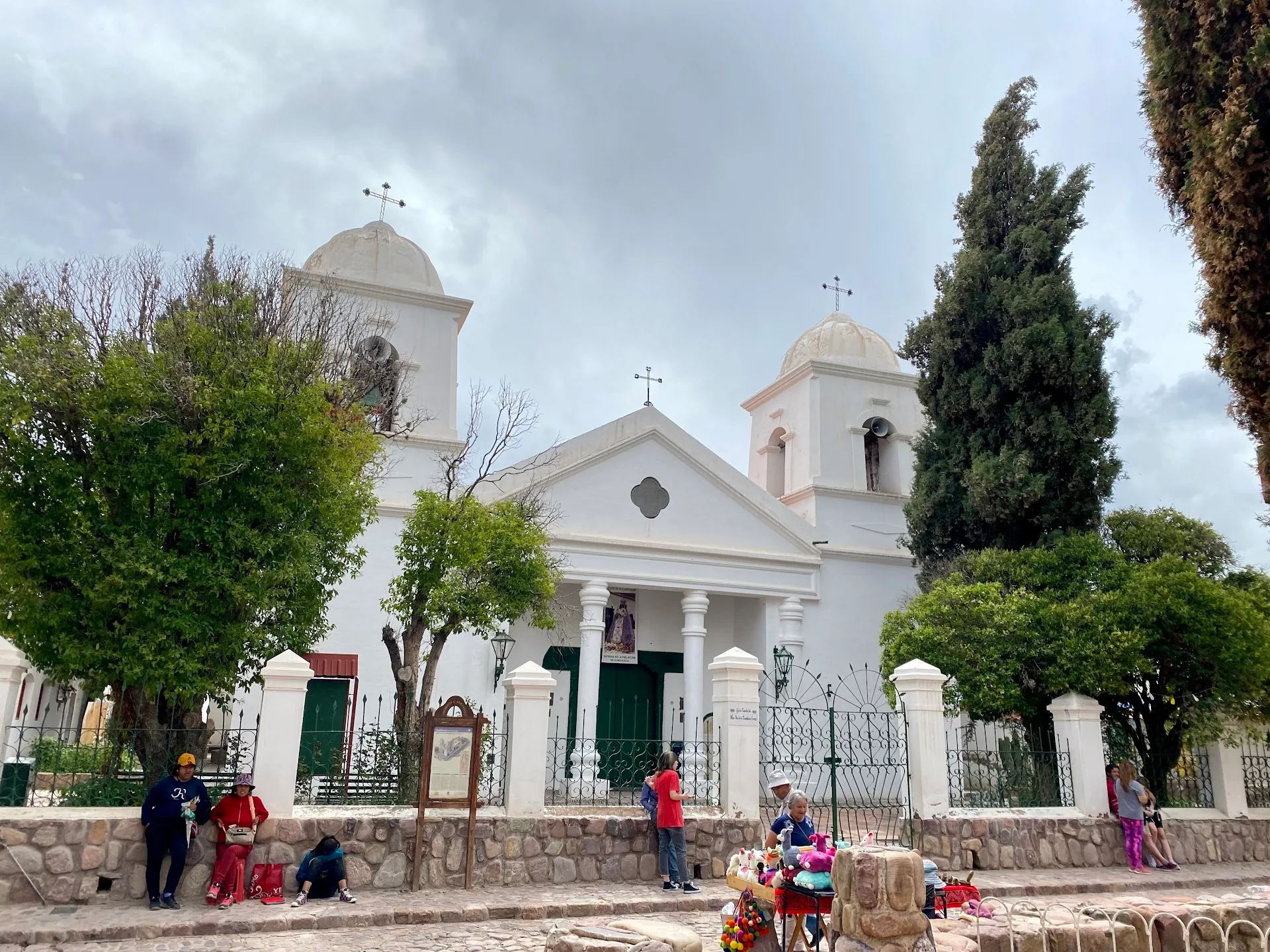
Seat of the Territorial Prelature of Humahuaca, this cathedral church stands on the site of a 1631 parish church raised with the participation of the local Omaguaca community and was declared a National Historic Monument in 1941. Inside, it preserves an ornate 1680 polychrome high altarpiece and a Cuzco-school series of prophet paintings by Marcos Sapaca, alongside the venerated 1640 image of the Virgin of Candelaria brought from Copacabana.

Centro histórico (Plaza principal)
Torre de Santa Bárbara
Memorial

Torre de Santa Bárbara

The sole surviving remnant of a Jesuit-era church built in 1695, this stone bell tower was later fortified and used as a lookout and ammunition store by General Manuel Belgrano's army during the wars of independence. When the Monument to the Heroes of Independence was raised on the same hilltop in the 1930s, the tower was carefully relocated about 50 meters to its current spot, where it doubles today as a viewpoint over the town and the Quebrada.

Cerro Santa Bárbara
Paseo de los Artesanos (Feria Artesanal de Humahuaca)
Shopping Area

Paseo de los Artesanos (Feria Artesanal de Humahuaca)

Daily open-air crafts market spread along the staircases and esplanade at the foot of the Monument to the Heroes of Independence, right next to Humahuaca's main plaza. Stalls sell llama- and sheep-wool textiles, ponchos, hats, ceramics, silver jewelry, carved cardón wood and musical instruments, and locals describe it as the most affordable handicraft fair in the whole Quebrada.

Centro
Mercado Municipal de Humahuaca
Shopping Area

Mercado Municipal de Humahuaca

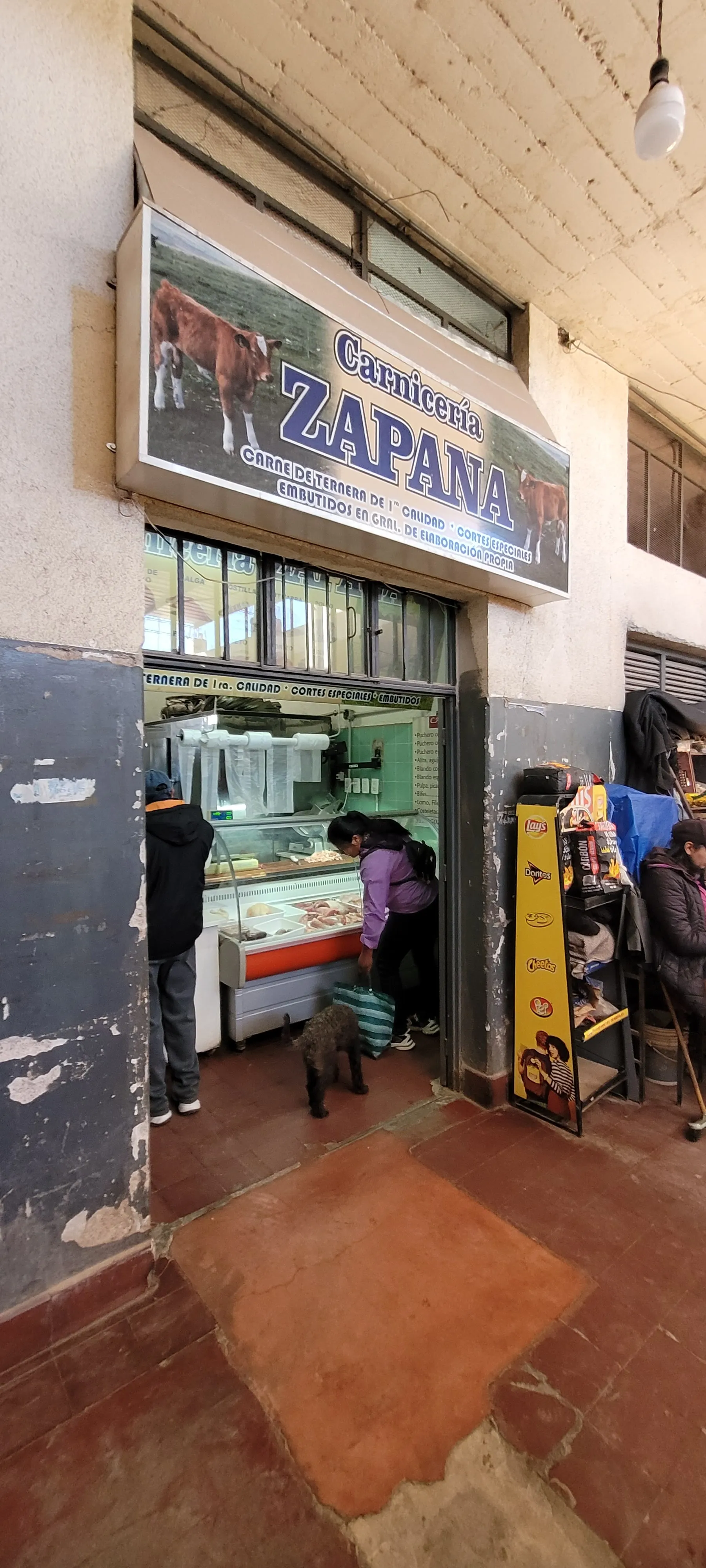
The town's lively municipal market, with stalls run mostly by women, mixes fresh Andean produce with llama- and vicuña-wool textiles, coca leaves and other regional handicrafts. Visitors often single it out for having the best handicraft prices anywhere in the Quebrada.

Sagrada Familia
Peña de Fortunato Ramos
Bar

Peña de Fortunato Ramos

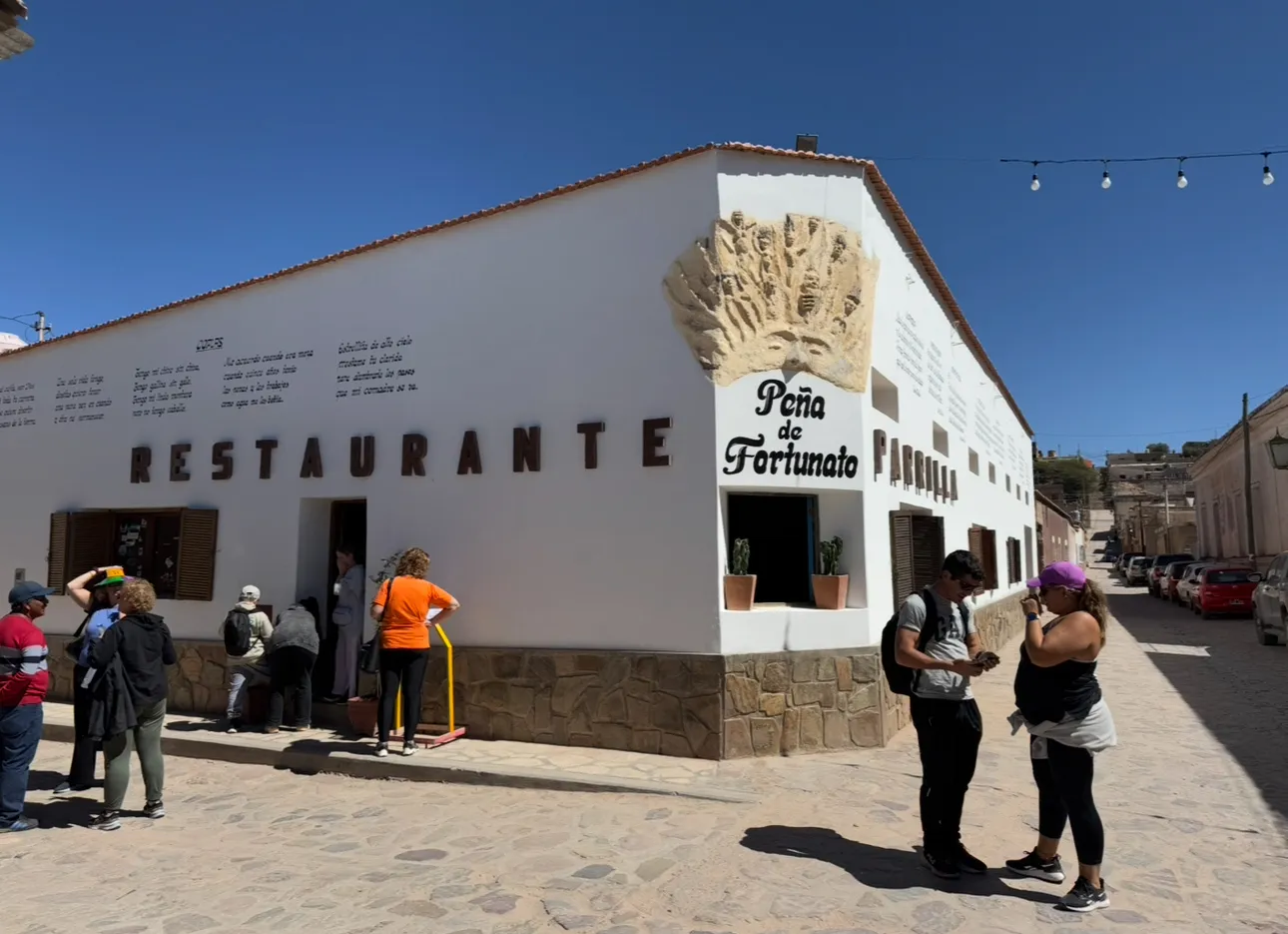
The most visited peña in Humahuaca, run for over five decades by rural teacher, accordionist, and erke player Fortunato Ramos in his own house near the historic center. A lunch-show draws over a hundred visitors on a typical day, moving from zambas to carnavalitos and closing with a solo on the erke horn, while Ramos narrates stories from local rural life between songs.

Centro histórico
Casa del Tantanakuy
Bar

Casa del Tantanakuy

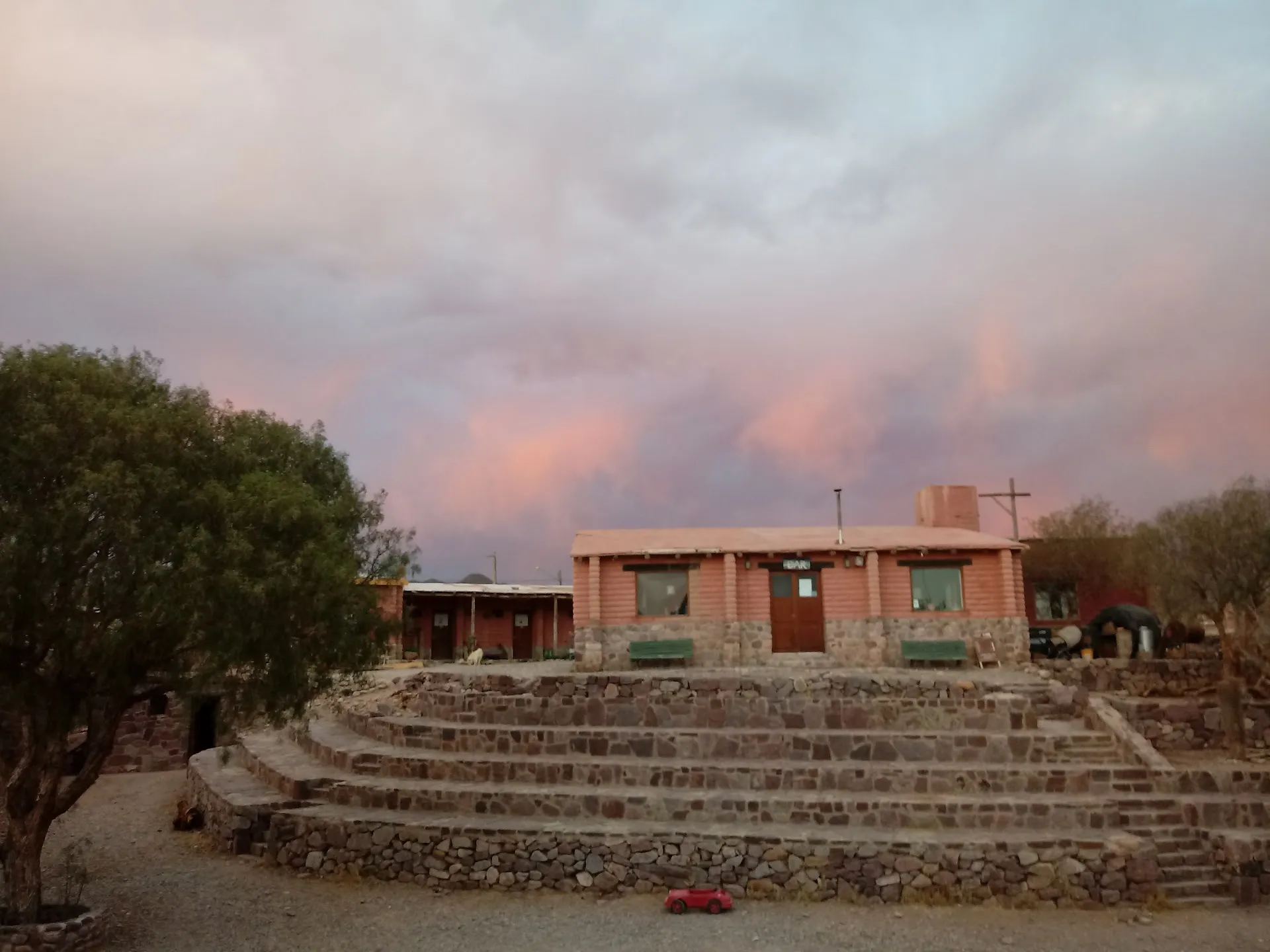
A cultural center and bar founded from the informal artist gatherings that legendary charango master Jaime Torres began hosting in Humahuaca in 1975, formalized as a civil association in 1987 and now run by his family. Evenings regularly bring live Andean folk music, sometimes with impromptu sets from visiting musicians paying tribute to Torres, alongside regional dishes, a library, and workshop spaces for music and weaving.

Barrio Salta
Pachamanka Café & Resto
Restaurant

Pachamanka Café & Resto

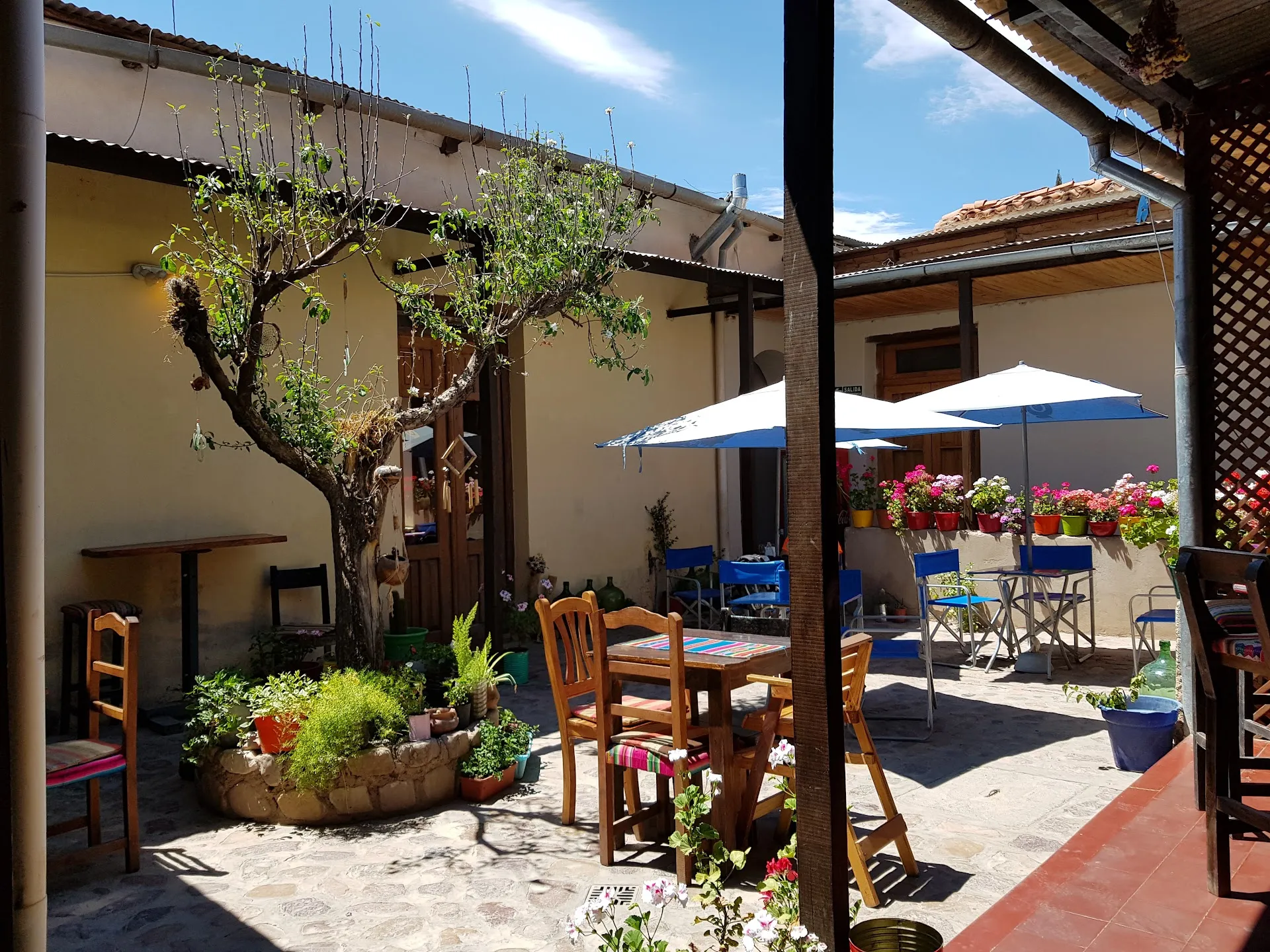
A colorful two-story cafe-restaurant a block and a half from the main plaza, serving Quebradeña specialties such as quinoa- and cheese-stuffed peppers, llama rolls, and lamb ravioli alongside api and coca-leaf infusions. Consistently rated the top restaurant in Humahuaca, it draws both travelers and locals for its long hours and decor filled with regional art.

Centro
Landmark

Andenes de Coctaca

El mayor sistema de terrazas de cultivo prehispánicas de Argentina y uno de los más extensos de la región andina, construido por la cultura Omaguaca sobre las laderas de la sierra de Aparzo. Sus andenes de piedra, canales de riego y recintos de siembra se extienden por más de 4.000 hectáreas y permanecen visibles hasta hoy, con ocupación que va del período Formativo hasta la intensificación incaica.

Coctaca, Departamento Humahuaca
Excursión guiada a Iruya
Experience

Excursión guiada a Iruya

Recorrido guiado de día completo desde Humahuaca que cruza el Abra del Cóndor (~4.000 msnm) hasta el pueblo colonial de Iruya, declarado Sitio Histórico Nacional en 1995 y ubicado dentro de la Reserva de Biosfera de las Yungas. Incluye recorrer sus calles empedradas, la iglesia de San Roque y Nuestra Señora del Rosario (c. 1753) y el mirador de la Cruz.

Departamento Iruya, Salta (acceso vía Quebrada de Humahuaca, Jujuy)
Carnaval de Humahuaca (Desentierro y Entierro del Diablo)
ExperienceGratuito, celebración callejera y comunitaria

Carnaval de Humahuaca (Desentierro y Entierro del Diablo)

Ocho días de comparsas, coplas y música con charangos, anatas y bombos que arrancan con el 'desentierro del diablo' -el Pujllay o Coludo-, un muñeco que representa la alegría y la fertilidad de la tierra, no al espíritu del mal cristiano. El festejo cierra el Domingo de Tentación con el entierro simbólico del diablo en un pozo que representa la boca de la Pachamama, junto a coca, cigarrillos y chicha.

Centro y barrios de Humahuaca
Ritual a la Pachamama en Humahuaca
ExperienceGratuito y abierto al público

Ritual a la Pachamama en Humahuaca

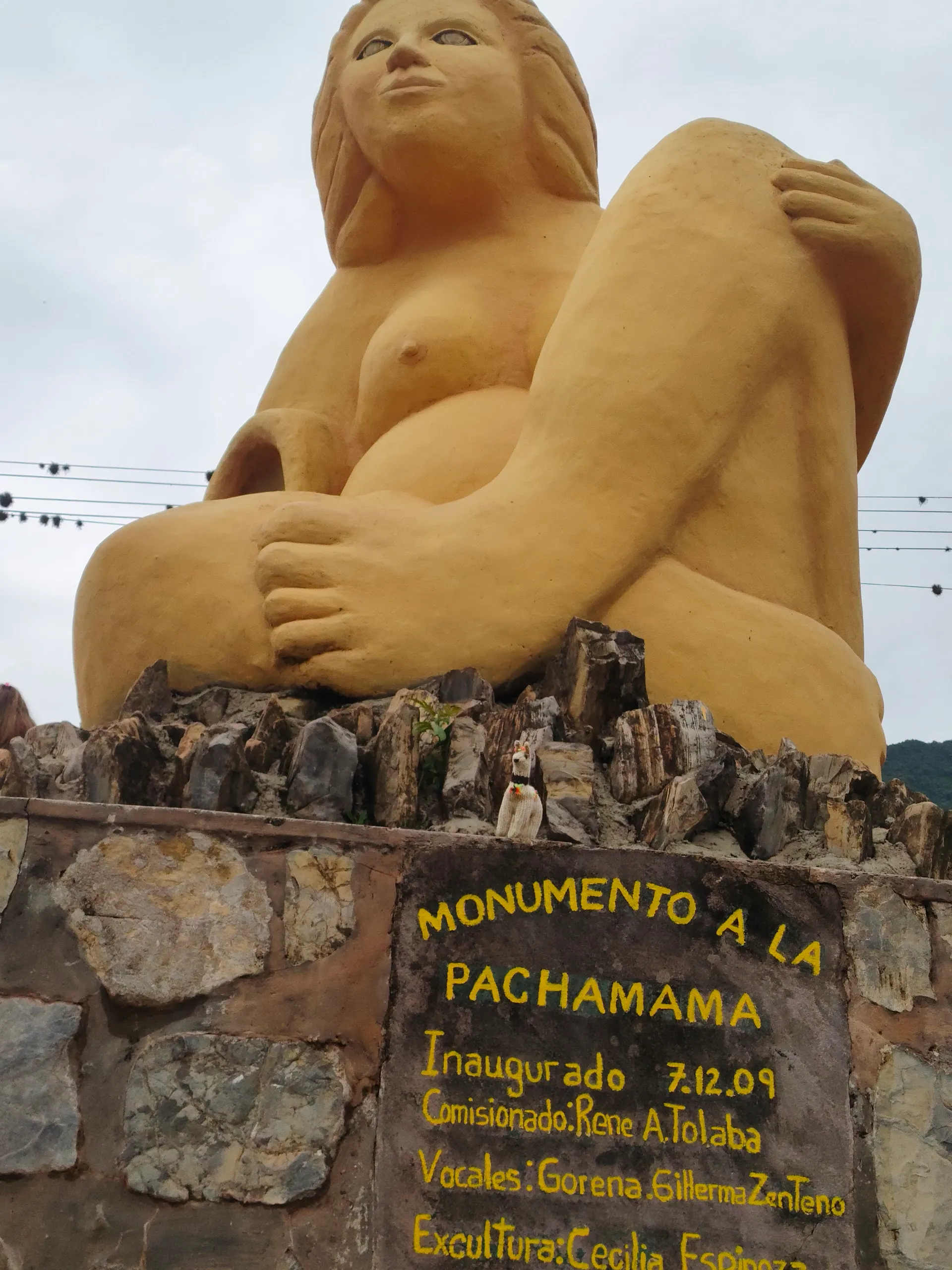
Cada 1 de agosto, representantes de las 26 comunidades originarias del área de Humahuaca se reúnen junto al Monumento a los Héroes para abrir un pozo en la tierra -'la boca de la Pachamama'- y depositar hojas de coca, chicha, cigarrillos y comida como ofrenda a la Madre Tierra. Las ofrendas y agradecimientos continúan de manera informal a lo largo de todo el mes de agosto.

Centro (junto al Monumento a los Héroes de la Independencia y la Torre de Santa Bárbara)
Quebrada de las Señoritas
Landmark

Quebrada de las Señoritas

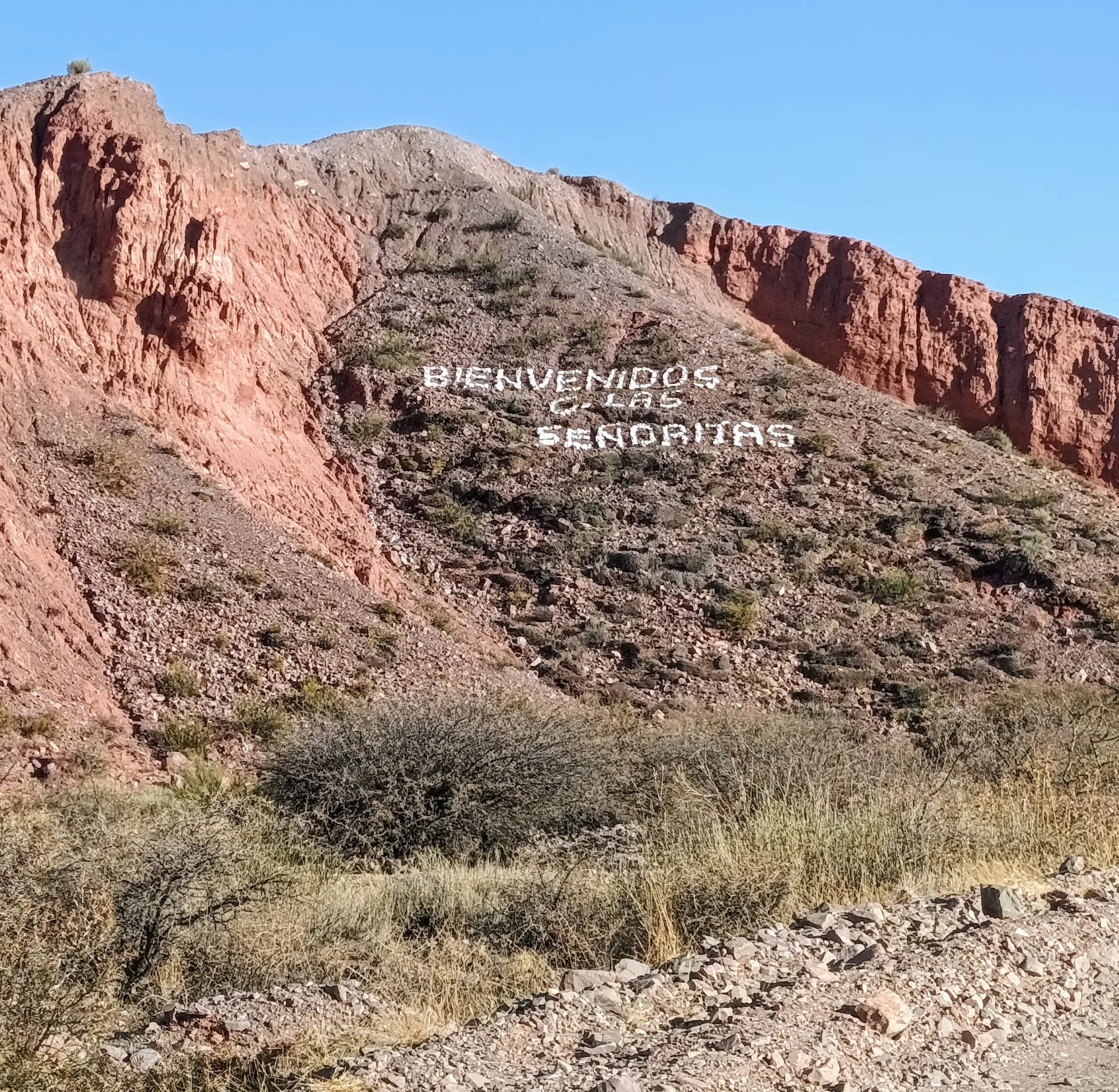
Cañón de formaciones rocosas rojizas de entre uno y tres millones de años de antigüedad, con cuevas y grietas tectónicas talladas por la erosión del agua. Se recorre por un sendero de trekking de dificultad moderada de 2 a 3 horas, y su nombre remite a una leyenda sobre oro incaico escondido durante la conquista española.

Uquía, Departamento Humahuaca

Tours & experiences

Free walking tours and curated paid experiences — save or book in a tap.

Excursión guiada a Iruya
Experience

Excursión guiada a Iruya

Recorrido guiado de día completo desde Humahuaca que cruza el Abra del Cóndor (~4.000 msnm) hasta el pueblo colonial de Iruya, declarado Sitio Histórico Nacional en 1995 y ubicado dentro de la Reserva de Biosfera de las Yungas. Incluye recorrer sus calles empedradas, la iglesia de San Roque y Nuestra Señora del Rosario (c. 1753) y el mirador de la Cruz.

Departamento Iruya, Salta (acceso vía Quebrada de Humahuaca, Jujuy)

Nightlife & live music in Humahuaca

Clubs, jazz dens, listening bars and late-night spots worth staying out for.

Peña de Fortunato Ramos
Bar

Peña de Fortunato Ramos

The most visited peña in Humahuaca, run for over five decades by rural teacher, accordionist, and erke player Fortunato Ramos in his own house near the historic center. A lunch-show draws over a hundred visitors on a typical day, moving from zambas to carnavalitos and closing with a solo on the erke horn, while Ramos narrates stories from local rural life between songs.

Centro histórico
Casa del Tantanakuy
Bar

Casa del Tantanakuy

A cultural center and bar founded from the informal artist gatherings that legendary charango master Jaime Torres began hosting in Humahuaca in 1975, formalized as a civil association in 1987 and now run by his family. Evenings regularly bring live Andean folk music, sometimes with impromptu sets from visiting musicians paying tribute to Torres, alongside regional dishes, a library, and workshop spaces for music and weaving.

Barrio Salta
Pinocho Restaurante
Bar

Pinocho Restaurante

A bodegón-style regional restaurant two blocks from the main plaza that turns into a folkloric peña at night, with a rustic dining room and live folk bands. Diners come as much for the show as the food, with an extra cover charge ('derecho de show') added for the evening live-music sets on top of dishes like cazuela de cabrito and empanadas.

Centro
La Tuna Restaurante
Bar

La Tuna Restaurante

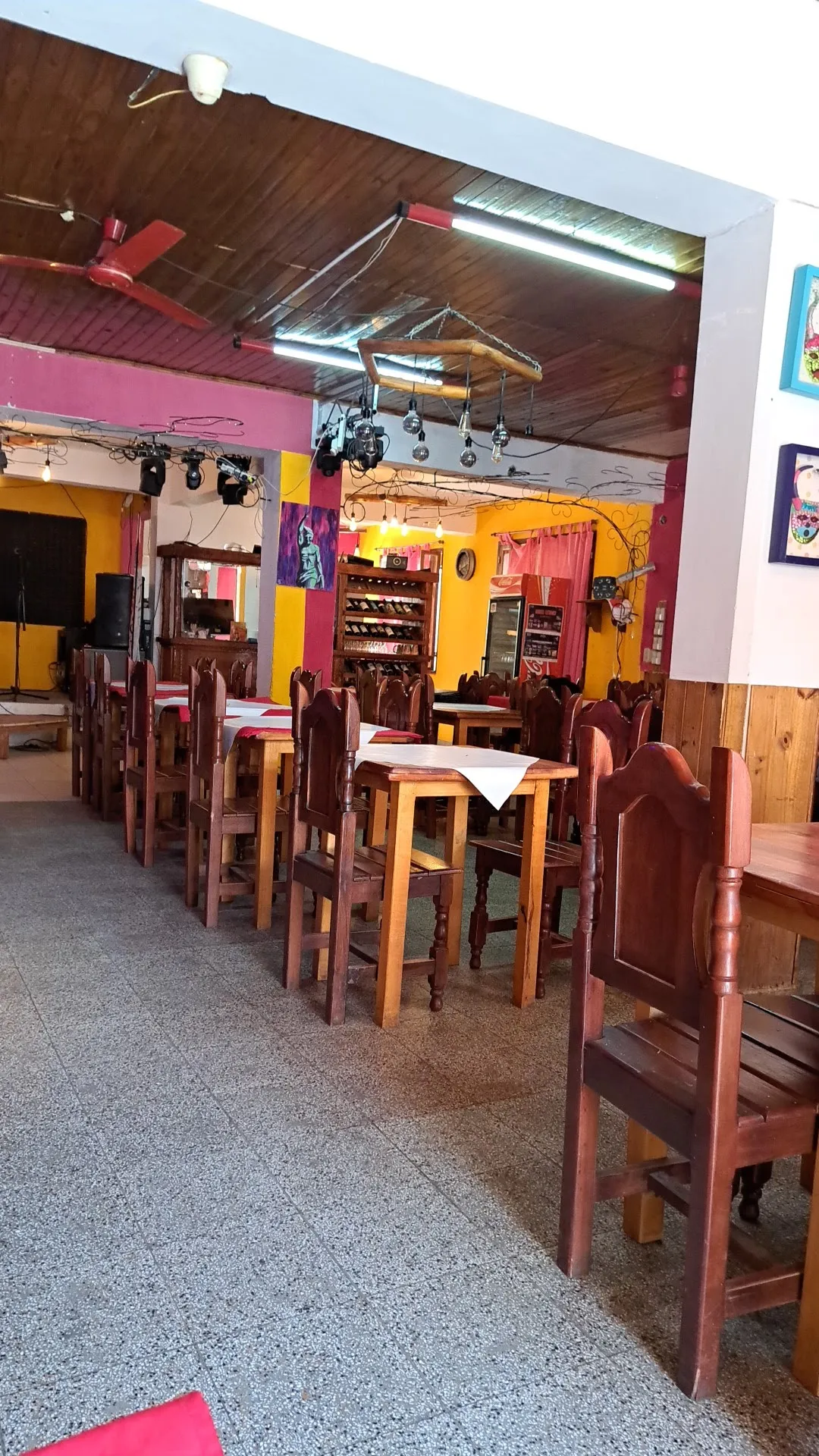
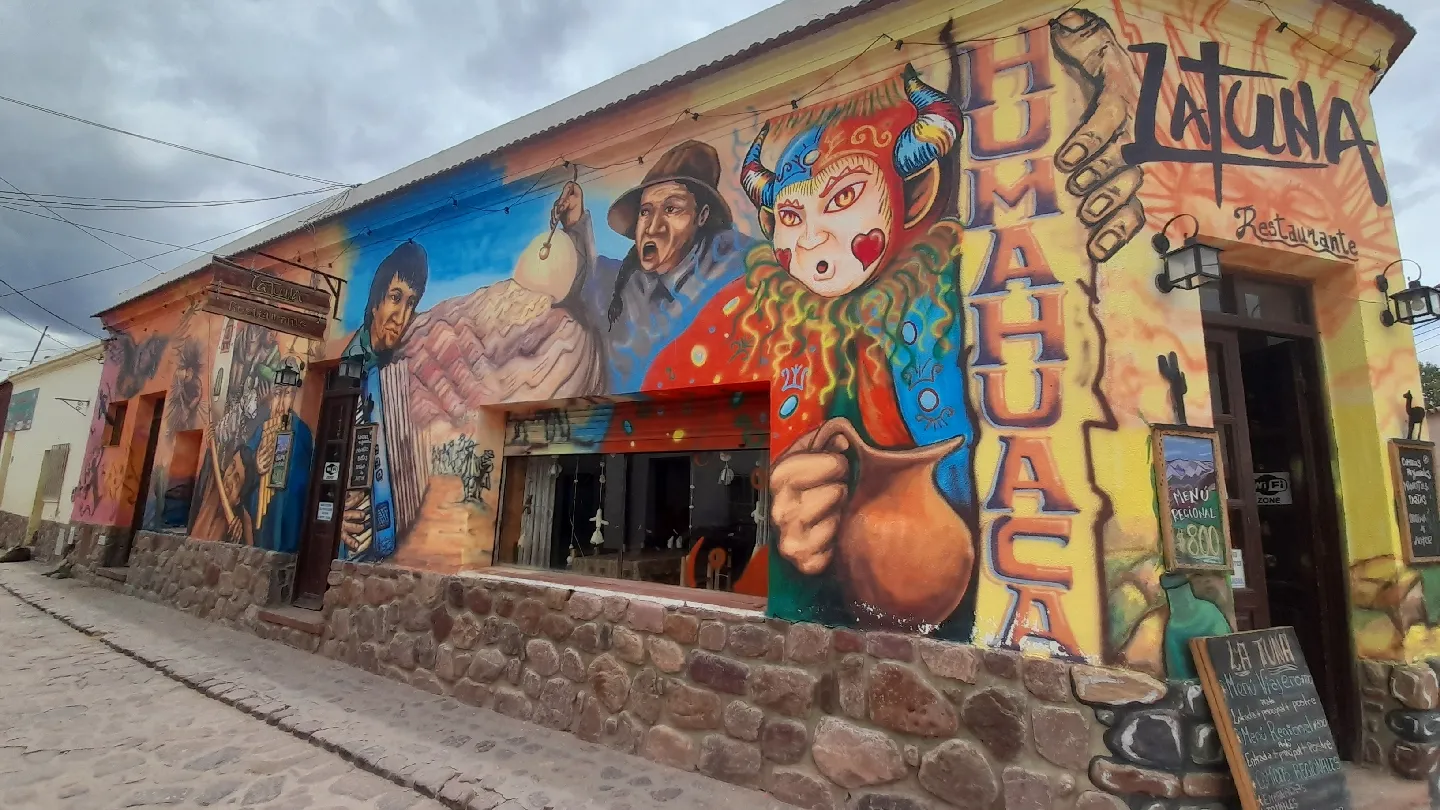
A locals'-pick restaurant on the corner of Córdoba and Corrientes with clay-pottery decor and an ethnic-inspired dining room, popular for regional plates like llama meat and cazuela de cabrito alongside quinoa options. Reviewers frequently note musicians stopping by to play and sing during dinner service, giving it a low-key peña atmosphere without the tourist-bus crowds of the bigger venues.

Sagrada Familia

Useful links

Official resources and quick searches for Humahuaca.

Plan your Humahuaca trip

Explore more of Argentina

Frequently asked questions

How many days do you need in Humahuaca?
One day covers the compact town center comfortably - market, cathedral, viewpoint and an evening peña. Stay two nights if you want to add the Hornocal viewpoint or the full-day Iruya excursion without rushing either.
Is Humahuaca better than Tilcara or Purmamarca?
They aren't really substitutes for each other. Tilcara and Purmamarca are easier day trips from Salta and busier with visitors; Humahuaca sits further north, feels more lived-in than staged for tourism, and is the practical base for the Quebrada's two signature excursions, Hornocal and Iruya, which neither of the other towns reaches as easily.
Do I need a 4x4 to see Hornocal or Iruya?
You don't need to drive yourself - local agencies run half-day and full-day shared excursions to both from the town center, switching to 4x4 vehicles for the unpaved final stretch. Independent drivers should use a vehicle with real ground clearance, not a standard sedan, and check road conditions in the rainy season.
Is the altitude a problem in Humahuaca?
At 2,940 meters, mild altitude effects - headache, breathlessness, poor sleep - are common for the first day or two. Take it easy on arrival, drink extra water, and try the coca-leaf tea sold everywhere, a local remedy. It gets more serious if you push straight on to the Abra del Condor at 4,000 meters, so build in a rest day before a big excursion.
What is Humahuaca's biggest festival?
Carnaval - eight days of comparsas, coplas and folk bands that open with the desentierro del diablo and close on Domingo de Tentacion with a symbolic burial back into the earth. It is tied to the Christian calendar and usually falls in February or early March.
Is Humahuaca safe?
Yes - it is a small, low-crime town oriented around markets, family life and festivals rather than nightlife. The main practical risks are altitude and, in the rainy season, closed mountain roads, not crime.

Ready to plan Humahuaca?

Turn this guide into a real trip — itinerary, map, budget and friends, all in one place.