Innsbruck is the capital of the Alps — a compact, walkable city where a medieval Old Town sits directly beneath 2,000-metre peaks, and a cable car can carry you from a café table to an alpine ridge in twenty minutes. That collision of imperial history and raw mountain landscape is what makes it special: few cities let you tour a Habsburg palace in the morning and stand on a windswept summit by lunch.
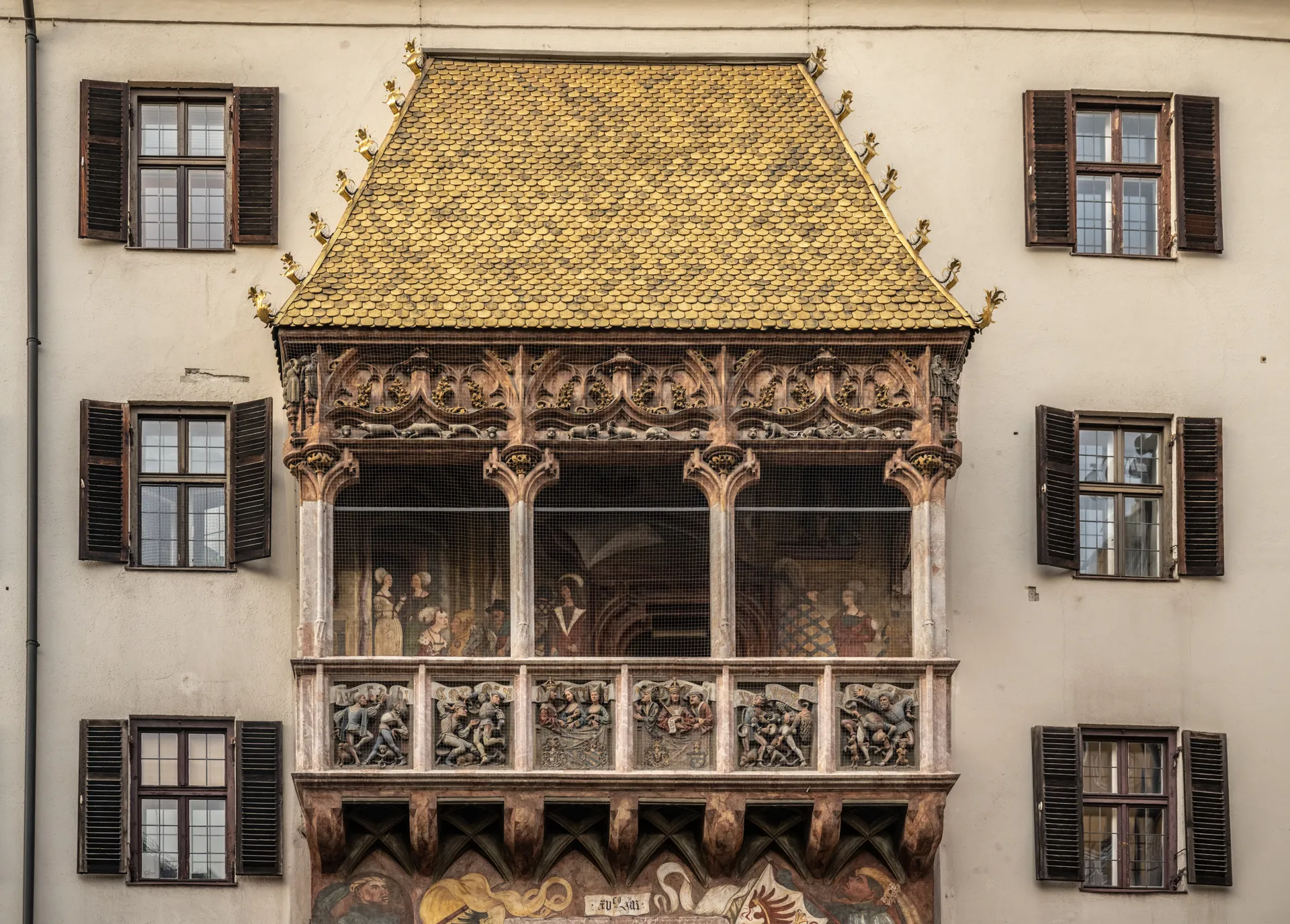
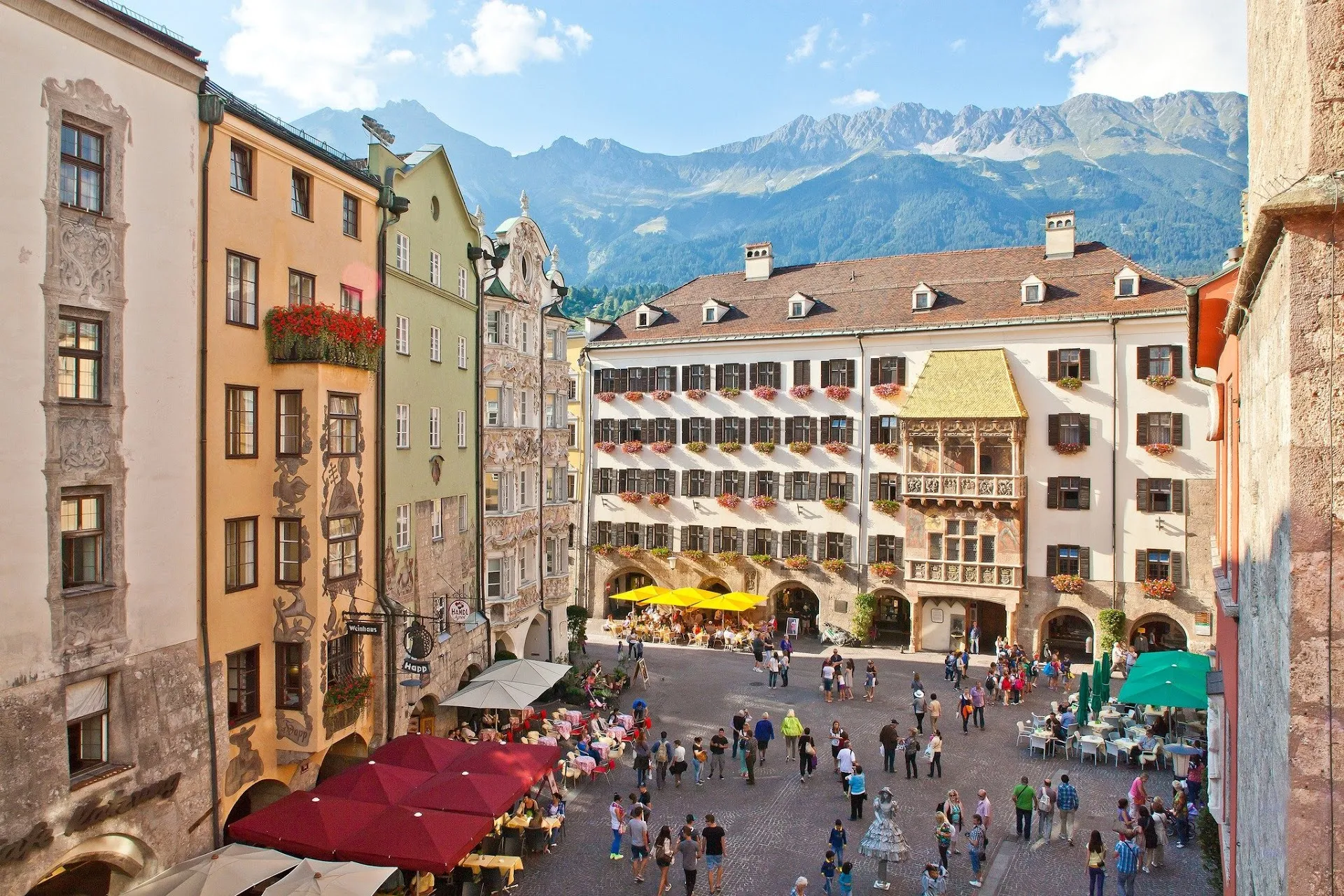
The heart of the city is the Altstadt, a tangle of arcaded lanes crowned by the Golden Roof, the gilded oriel Emperor Maximilian I built around 1500 to watch the square below. Within a few minutes' walk are his Gothic Court Church, with its guard of giant bronze figures, the Rococo-trimmed Imperial Palace, and the baroque Cathedral of St. James. South of the Old Town, the grand boulevard of Maria-Theresien-Straße runs between St. Anne's Column and a marble Triumphal Arch, framed at its far end by the snow of the Nordkette.
Best time to visit
Innsbruck is a true two-season city. June to September brings warm, long days ideal for the cable cars, mountain hikes and terrace meals — the easiest time for first-timers. December to March is ski season, when the surrounding resorts and the Christmas markets under the Golden Roof are in full swing. The shoulder weeks of late spring and October are quietest and cheapest, though some lifts pause for maintenance.
Budget
Innsbruck is mid-priced for the Alps: cheaper than Switzerland, on par with the rest of western Austria. Your biggest costs are the cable cars and excursions — a single Nordkette return is about €44 — so if you plan to ride the lifts and visit museums, the Innsbruck Card (€49/€55/€66 for 24/48/72 hours, covering 22+ sights, one lift journey, the Sightseer bus and public transport) usually pays for itself.~EUR 110-170 / day mid-range / day
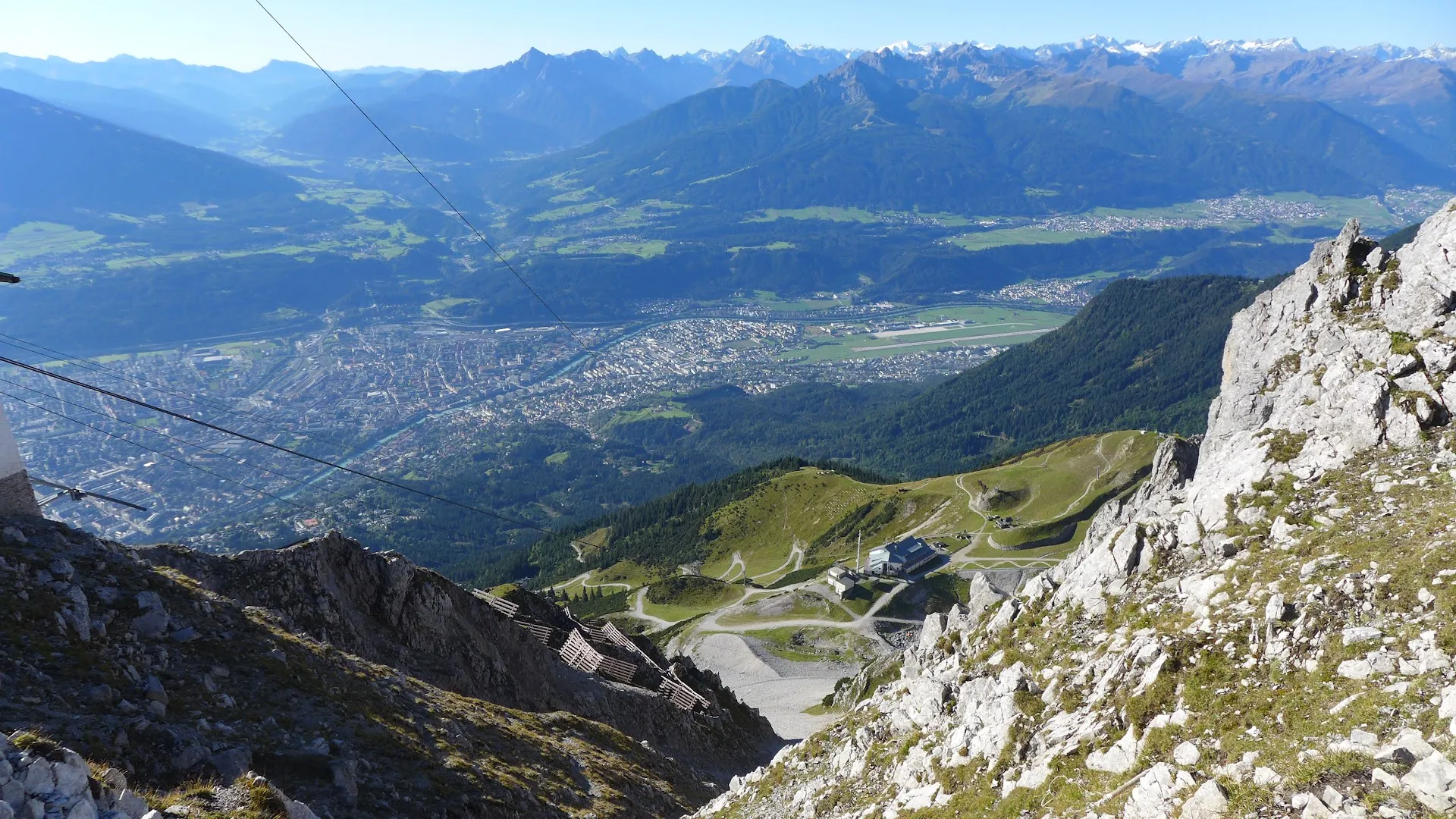
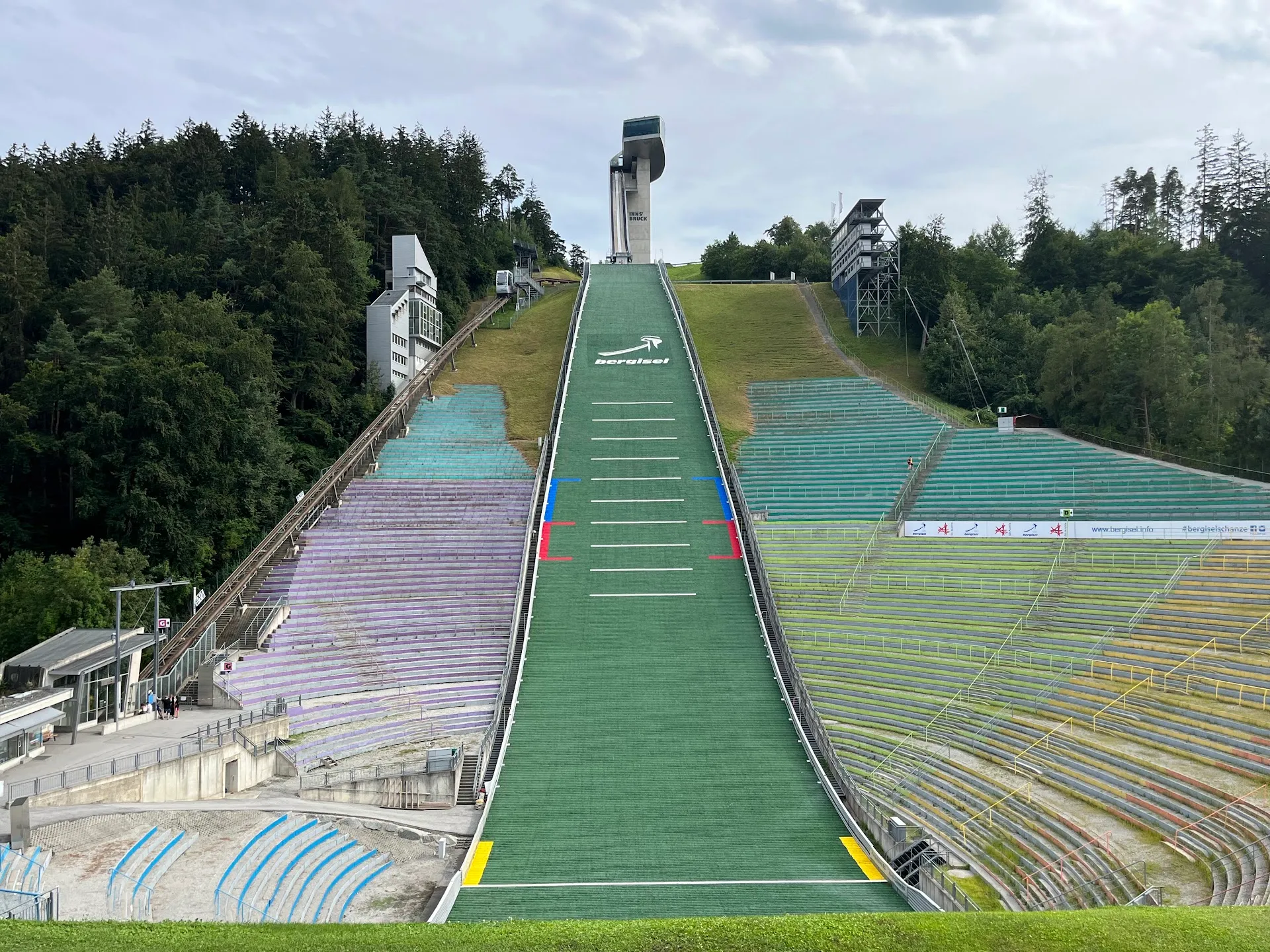
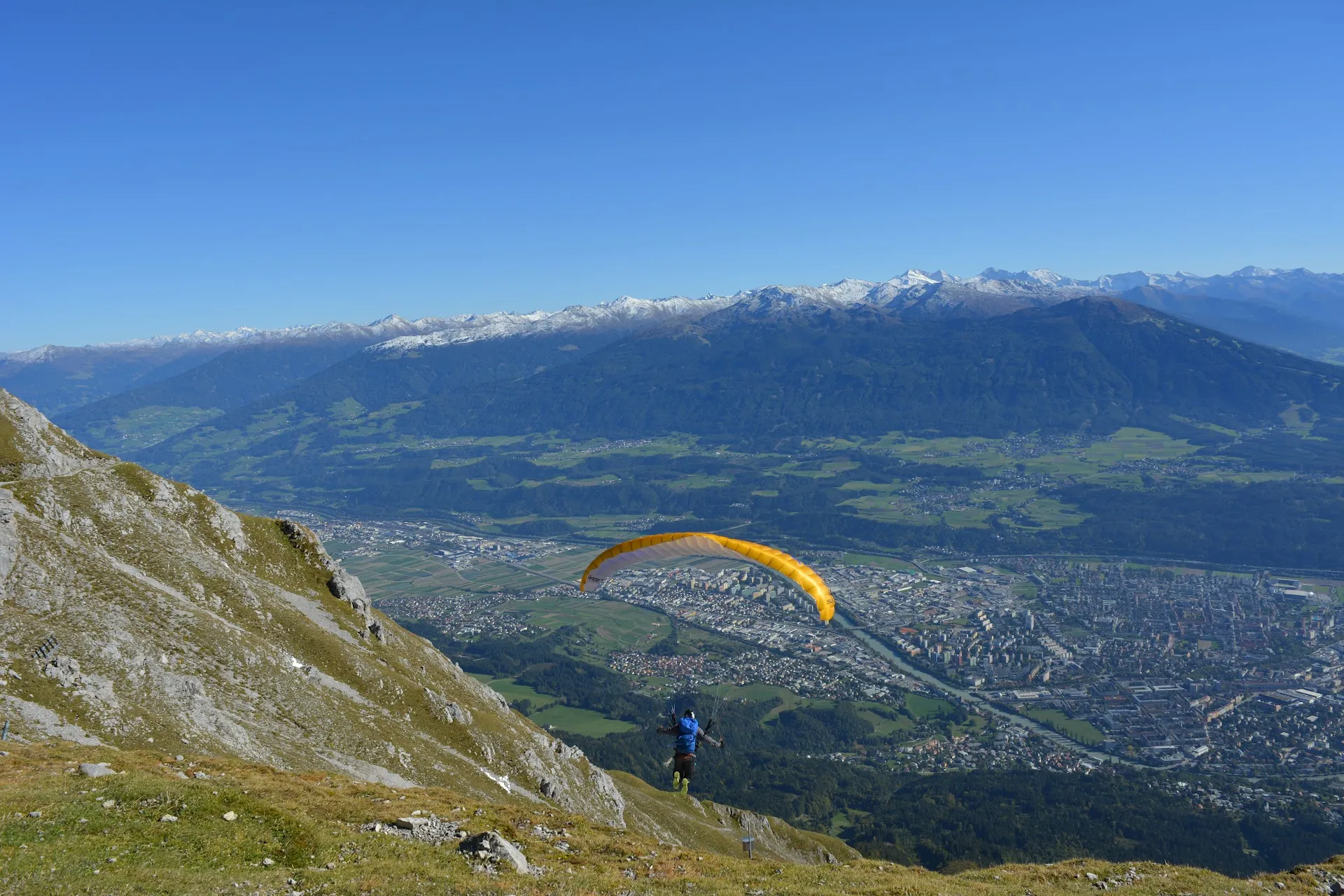
Those mountains are the other half of the story. The Nordkette cable car — its sweeping stations designed by Zaha Hadid — climbs from the city centre to 2,256 m at Hafelekar, with a 360° panorama over Innsbruck on one side and the wild Karwendel on the other. On the southern hills, Hadid's Bergisel ski jump doubles as a viewing tower above a historic battlefield, and the Stubai Glacier and Patscherkofel put year-round snow and hiking within easy reach. Innsbruck has hosted the Winter Olympics twice, and the city still breathes that outdoor energy.
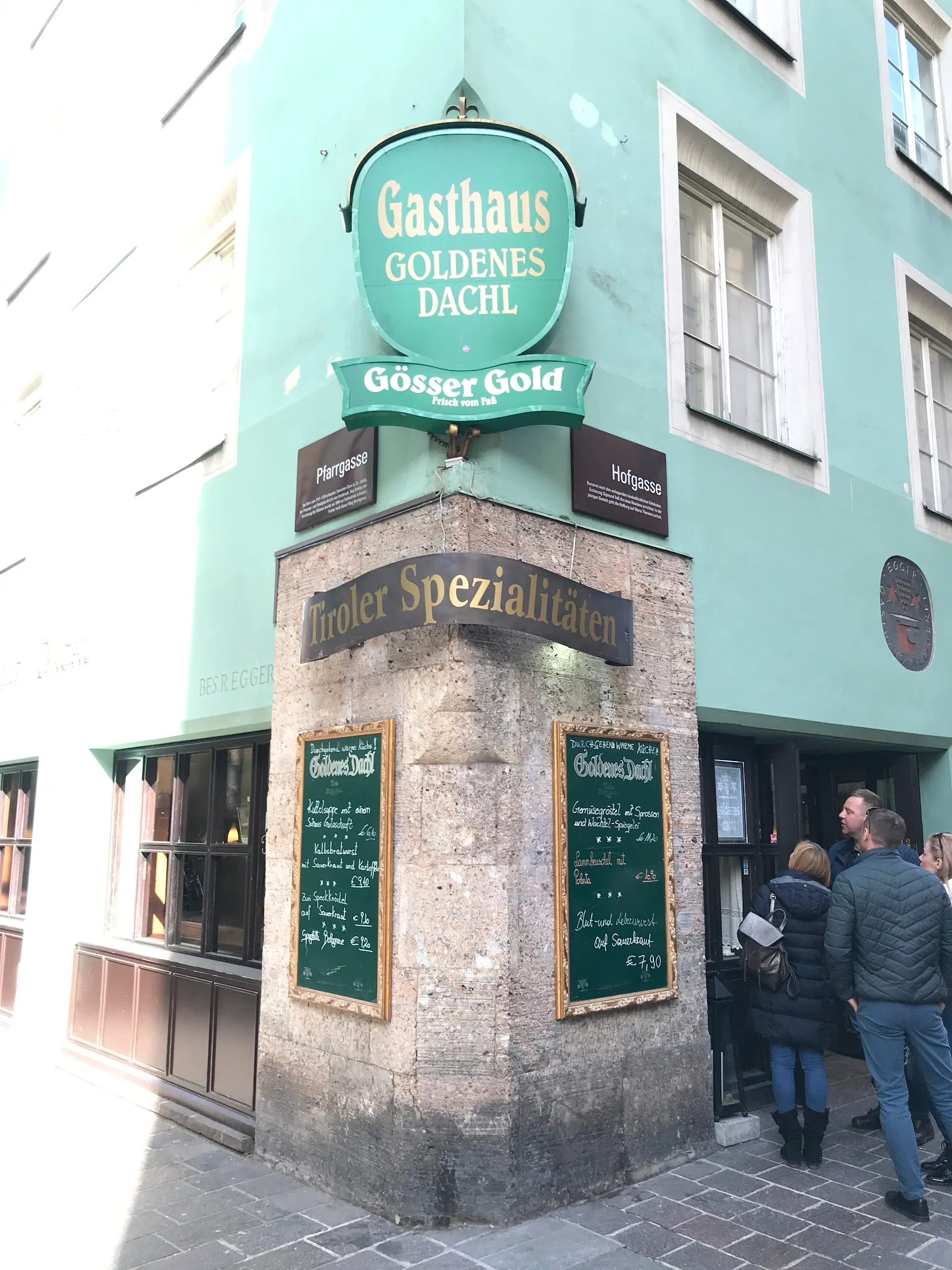
It is also an easy place to enjoy. Tyrolean cooking is hearty and good value — schnitzel and dumplings in a vaulted beer hall, speck and cheese from the riverside market, pralines from a confectioner that has run since 1803. Two days are enough to combine the Old Town with one big mountain trip; three let you add Ambras Castle, the crystal fantasy of Swarovski Kristallwelten, and a slower wander along the Inn. This guide covers the sights, food, neighbourhoods, transport and seasons so you can shape a trip that fits both your boots and your camera.
The best of Innsbruck
Curated places worth your time — tap a card for details or to save it.
Innsbruck's emblem: an oriel balcony roofed with 2,657 fire-gilded copper tiles, built around 1500 for Emperor Maximilian I to watch the square below. The painted reliefs beneath it are the most photographed sight in the city.
Herzog-Friedrich-Straße, Altstadt
Viewpoint
Hafelekar Viewpoint (Nordkette)
At 2,256 m, the top station of the Nordkette cable car delivers a 360° panorama with the city far below on one side and the wild Karwendel range on the other. A short steep path climbs to the 2,334 m Hafelekarspitze for an even bigger view.
Nordkette / Karwendel, above Innsbruck
Must visit
Castle
Imperial Palace (Hofburg)
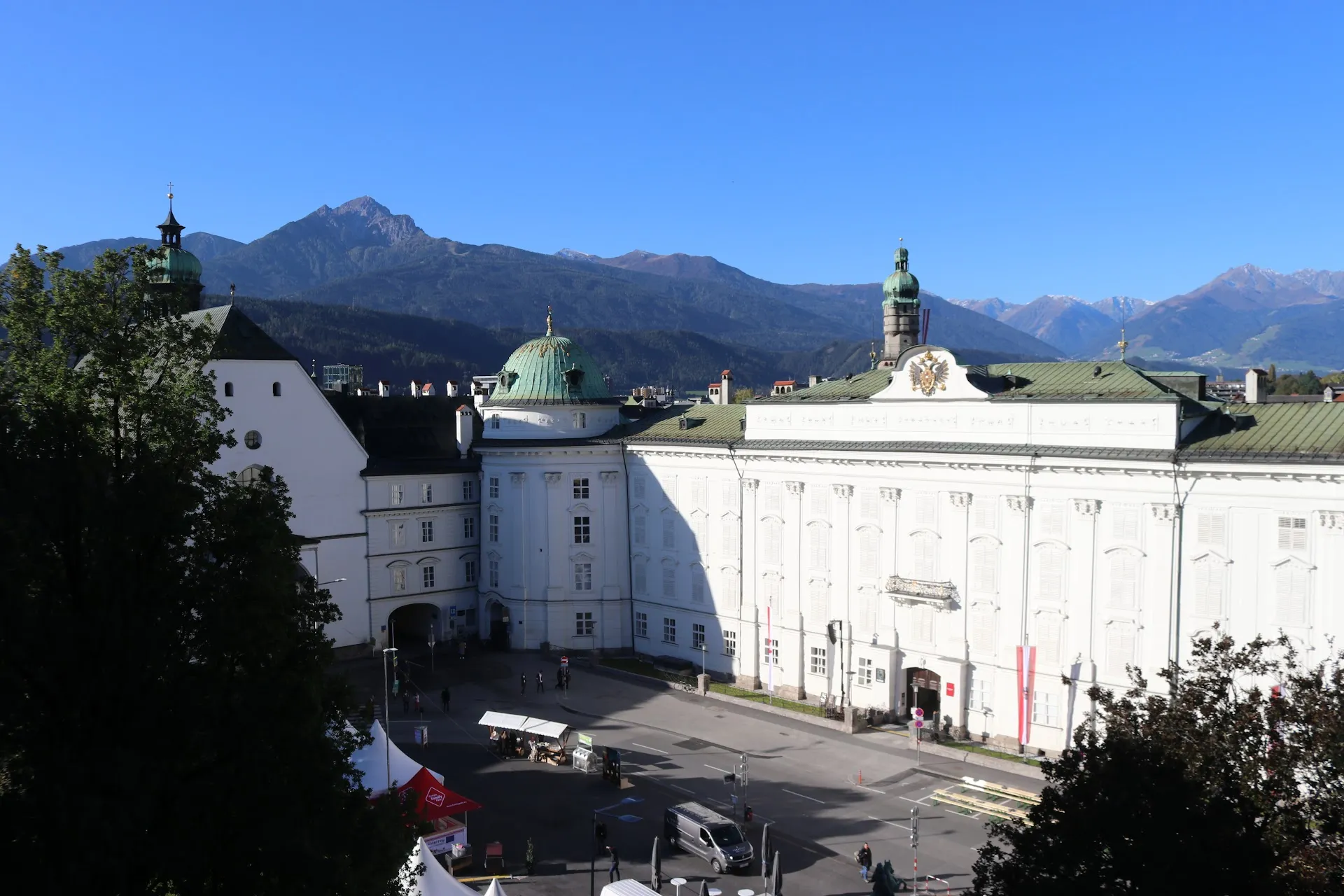
The former Habsburg residence, begun under Archduke Sigmund and given its lavish Rococo interiors by Maria Theresa. Highlights are the frescoed Giant's Hall and the state rooms hung with imperial portraits.
Altstadt
Must visit
Museum
Court Church (Hofkirche)
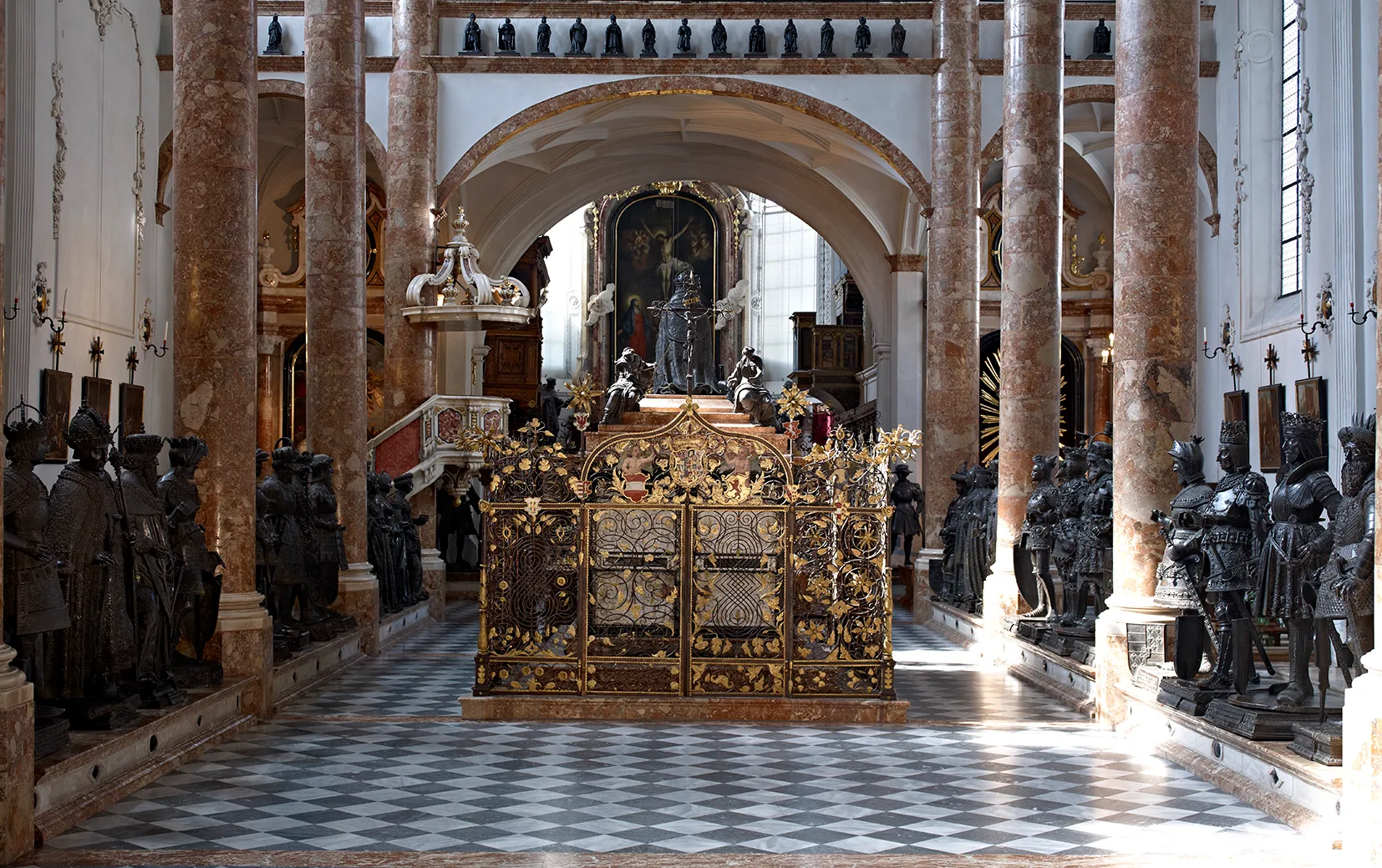
A Gothic church built to hold the monumental empty tomb of Emperor Maximilian I, guarded by 28 larger-than-life bronze figures known as the Schwarze Mander ('black men'). One of Europe's most striking imperial monuments.
Altstadt
Must visit
Castle
Ambras Castle (Schloss Ambras)
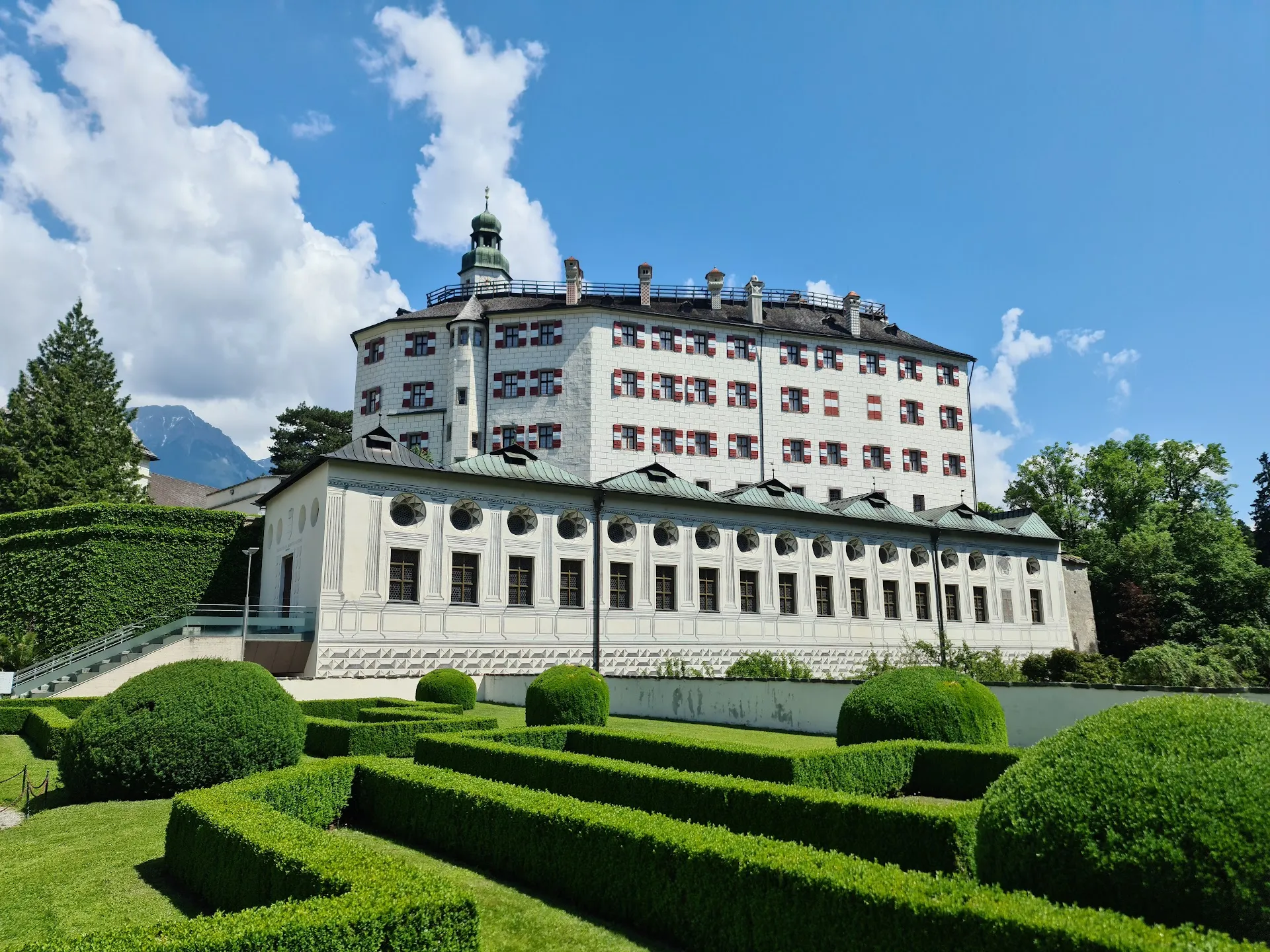
A Renaissance hilltop castle built by Archduke Ferdinand II to house his pioneering collections, often called the world's oldest museum. The chamber of art and curiosities and the frescoed Spanish Hall are the stars, set in formal gardens above the city.
Amras
Viewpoint
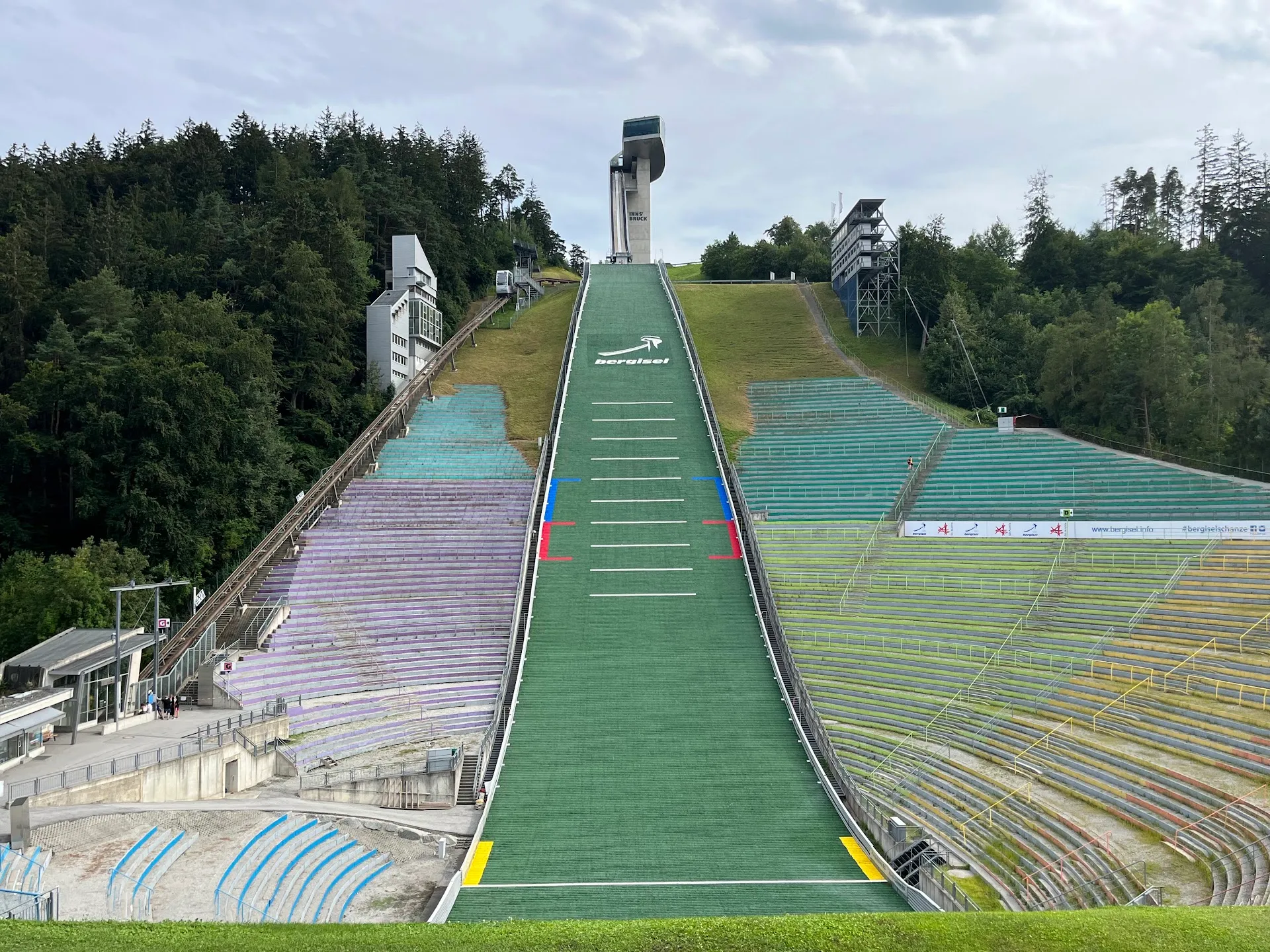
Bergisel Ski Jump & Viewing Platform
Zaha Hadid's swooping 50 m ski-jump tower rises over the historic Bergisel battlefield. A funicular and lift carry you to a viewing platform and café at the top of the inrun for a sweeping look over the Old Town and the Nordkette beyond.
Bergisel hill, south of the centre
Street
Maria-Theresien-Straße
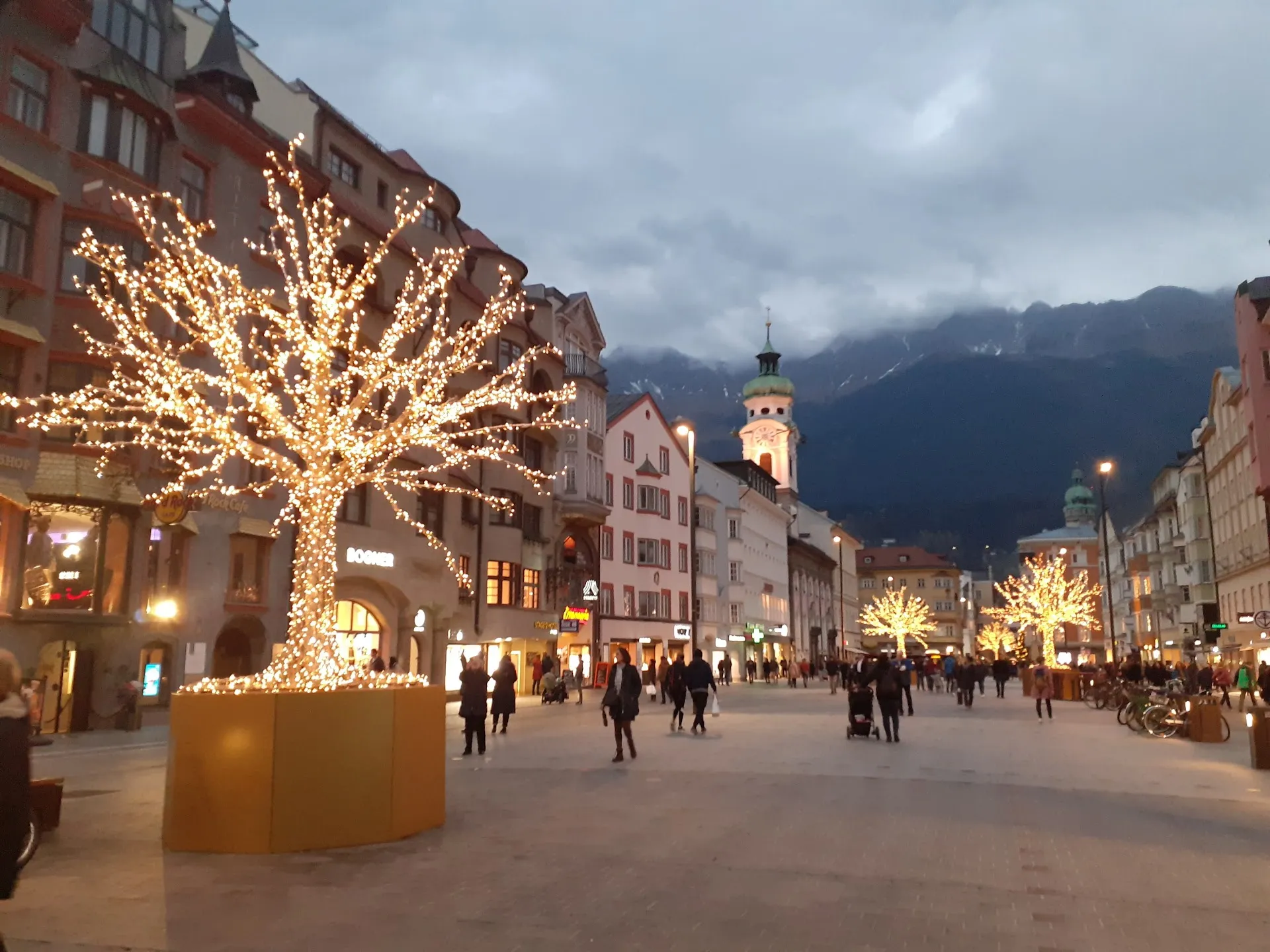
Innsbruck's grand baroque boulevard, lined with pastel facades and framed by the snowy Nordkette at its northern end. The St. Anne's Column rises at its centre and the Triumphal Arch closes it to the south.
City centre
Museum
Swarovski Crystal Worlds (Kristallwelten)
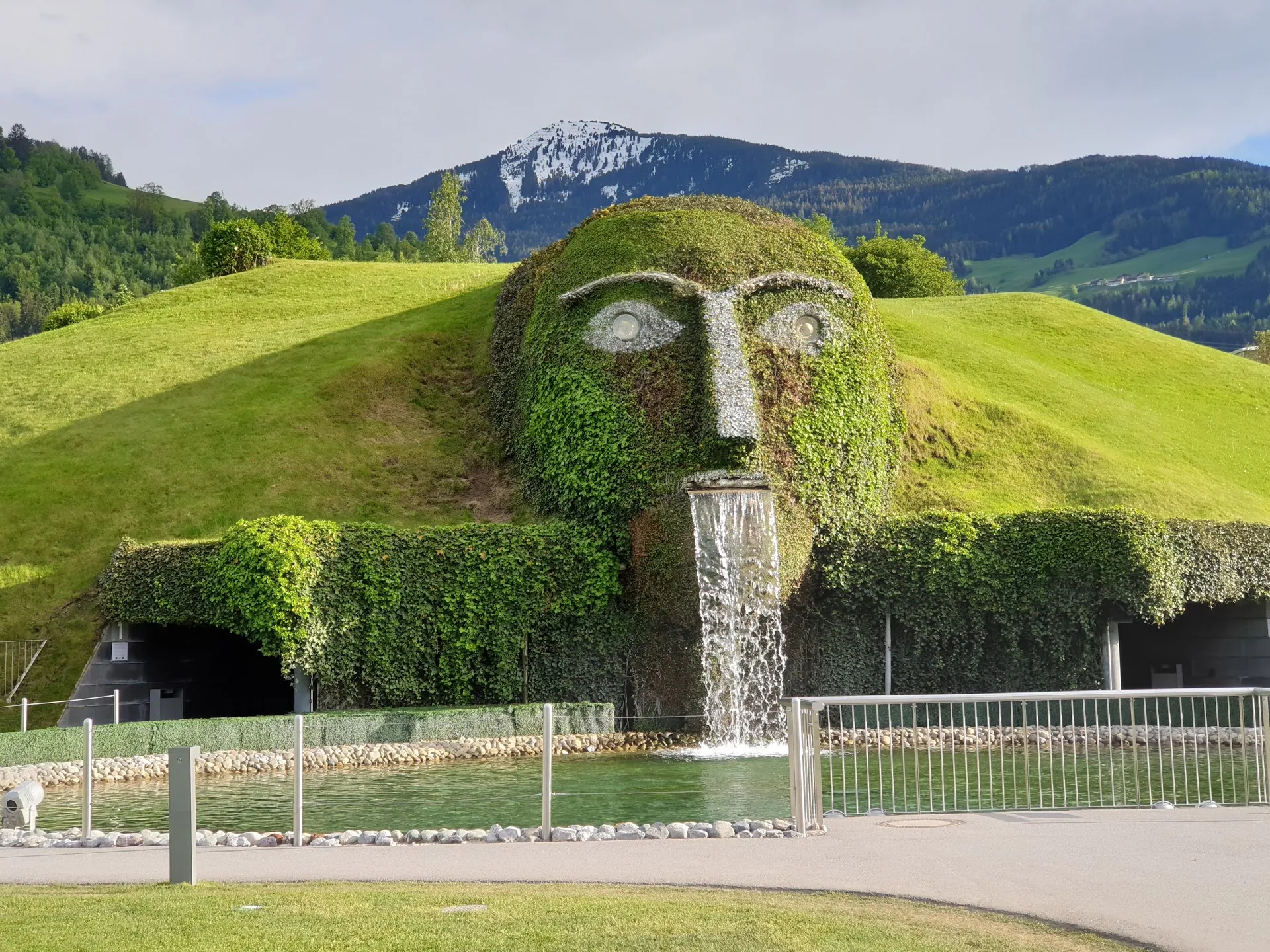
A surreal crystal-themed art attraction in Wattens, 20 minutes east of the city, where the 'Chambers of Wonder' fill with crystal installations by artists and designers, set in a park with a mirrored cloud and a giant playtower. A direct shuttle runs from Innsbruck.
Wattens
Wildlife
Alpenzoo (Alpine Zoo)
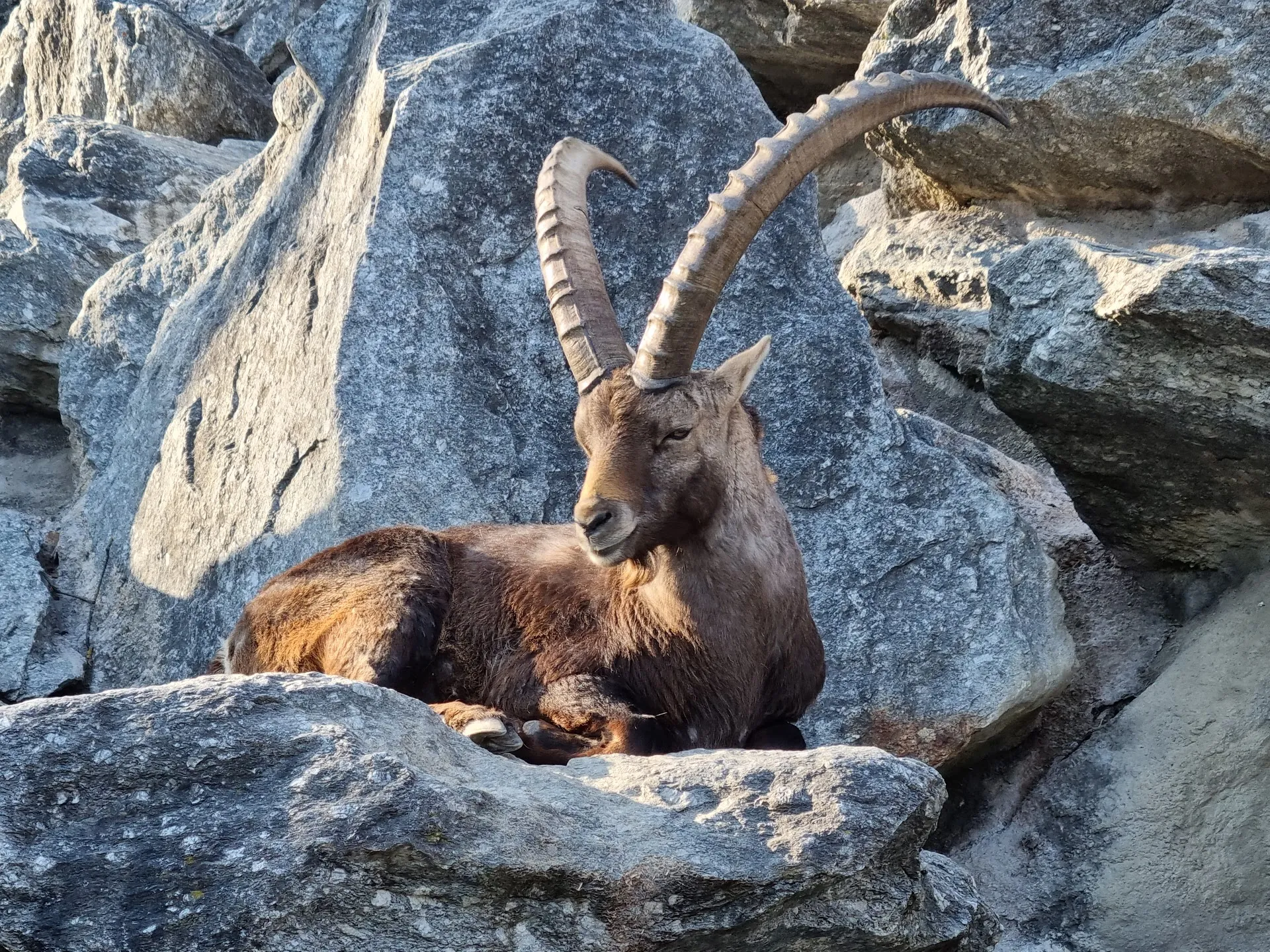
Europe's highest zoo, set on the slopes above the city and devoted entirely to Alpine species — bears, lynx, ibex, bearded vultures and otters. Reached on foot or by a stop on the Hungerburg funicular.
Hungerburg
Architecture
Cathedral of St. James (Dom zu St. Jakob)
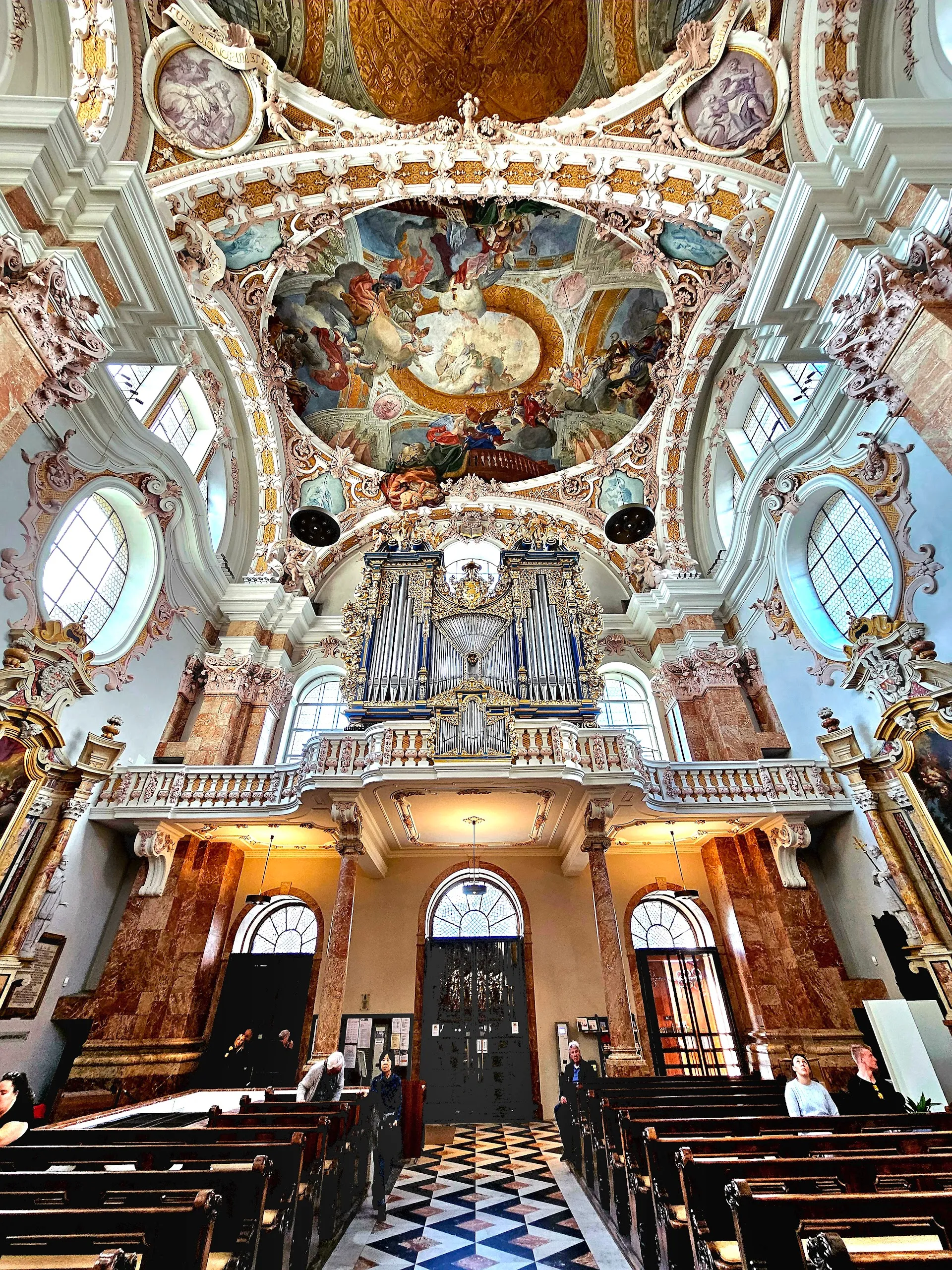
Innsbruck's baroque cathedral, a few steps behind the Golden Roof, with an exuberant frescoed and stucco interior and a venerated Cranach 'Madonna' over the high altar. The twin towers and dome punctuate the Old Town skyline.
Domplatz, Altstadt
Tours & experiences
Free walking tours and curated paid experiences — save or book in a tap.
A tip-based guided walk through the medieval Old Town covering the Golden Roof, Hofburg, Hofkirche, the cathedral and the city's Habsburg and Olympic history with a local guide.
Starts in the Altstadt near the Golden Roof2 hours
Experience€44 return
Nordkette Cable Car to the Top of Innsbruck
Ride from the heart of the city to 2,256 m in about 20 minutes on the Hungerburg funicular and two Zaha Hadid-designed cable cars, stepping out onto alpine ridges with a 360° panorama over Innsbruck and the Karwendel.
Hungerburgbahn Congress station, city centreHalf day
Take the funicular and lift up the inside of Zaha Hadid's iconic ski-jump tower to the panorama platform and café at the top of the inrun, with views down the landing slope and across the city. Jumpers often train below in summer.
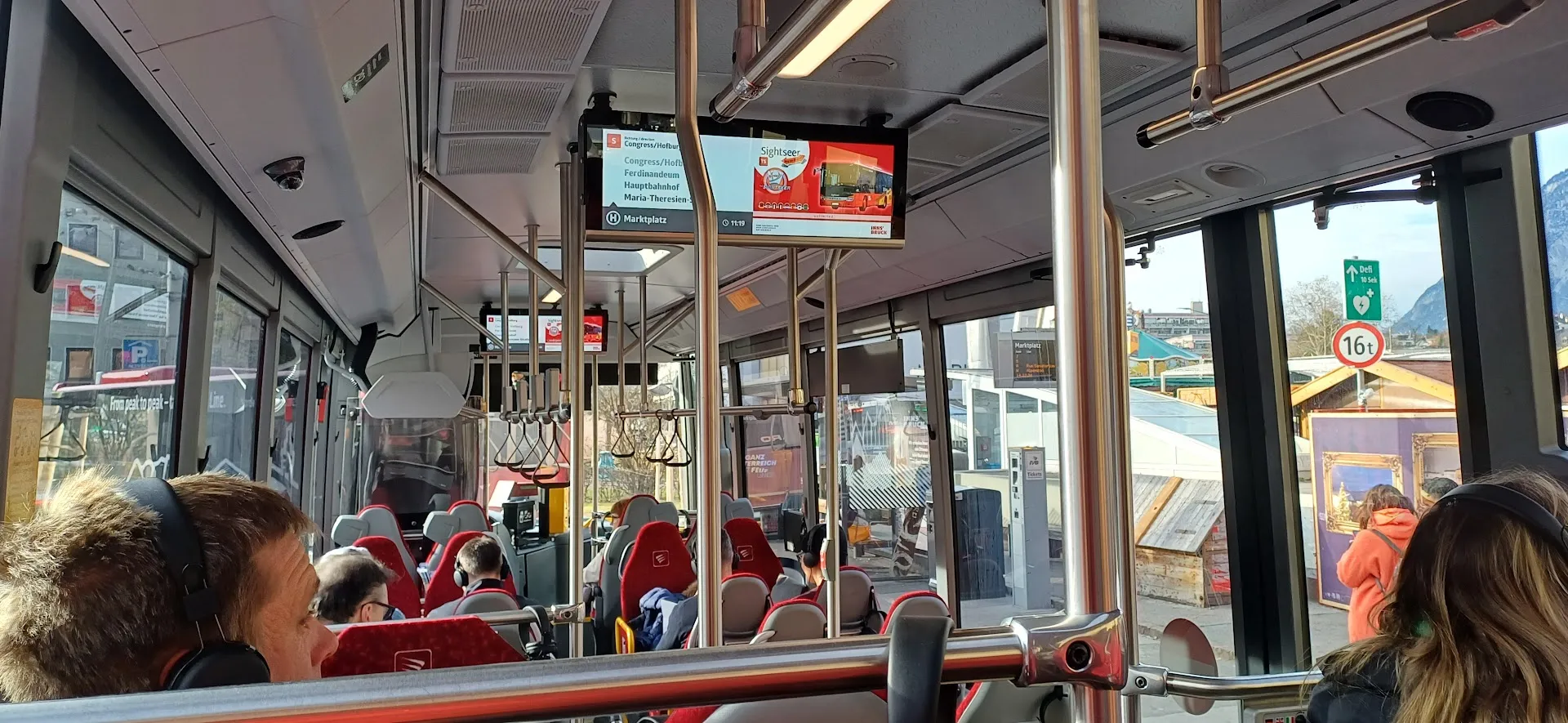
A hop-on, hop-off bus linking the Old Town with Bergisel, Ambras Castle, the Alpenzoo funicular and other sights, with audio commentary — handy for the attractions that are a walk from the centre.
Stops across the city centre and outskirtsFlexible, full-loop ~1 hour
Visit the dreamlike crystal art park in Wattens, where the Chambers of Wonder hold installations by artists and designers and the gardens feature a misting Crystal Cloud and a mirrored playtower. A dedicated shuttle runs from Innsbruck.
Daily budgets and typical prices to plan your spend.
Backpacker
€70/ day
Mid-range
€150/ day
Luxury
€320/ day
Cheap meal
€15
Restaurant meal
€30
Coffee
€3.8
Local beer
€4.2
Transit ticket
€2.8
Taxi (1km)
€1.8
Cost index 70 (New York = 100).
When to go
Best time to visit
July to September is best for hiking, cable cars and terrace dining, while December to March is the ski and Christmas-market season. Late spring and October are the quietest and cheapest, though some mountain lifts pause for maintenance between seasons.
Crowds
High
PeakJuly, August, December (Christmas markets), February (ski)
ShoulderMay, June, September, October
QuietApril, November
Major events
Christmas Markets (Christkindlmarkt)December
Bergsilvester / New Year FestivalDecember
Innsbruck Festival of Early MusicAugust
Tanzsommer dance festivalJuly
Ski season (surrounding resorts)February
Good to know
Practical info before you go.
Tipping
Appreciated — Tipping is modest and not obligatory. Round up or leave about 5-10% for good service in restaurants and cafés, and tell the staff the total you want to pay rather than leaving cash on the table.
Tap water
Safe to drink
Power
Type C/F · 230V
Safety
Very High — Innsbruck is very safe with low crime; normal city precautions suffice. The real risks are in the mountains — check weather and avalanche reports, carry layers and water, and turn back early if conditions change.
Emergency
112
Visa-free for
United States, Canada, United Kingdom, European Union, Australia, New Zealand
Local culture
Language
German
English
High
Dress code
Casual
Useful phrases
Grüß Gott
Hello (the standard Austrian greeting)
Servus
Hi / bye (informal)
Danke schön
Thank you very much
Bitte
Please / you're welcome
Sprechen Sie Englisch?
Do you speak English?
Zahlen, bitte
The bill, please
Local customs
Greet with 'Grüß Gott' when entering shops and small restaurants
Most shops close on Sundays and public holidays, and earlier on Saturdays
Respect mountain etiquette: greet fellow hikers, stay on marked trails and give way going uphill
Austrians value punctuality — arrive on time for tours and reservations
Cash is still widely used; carry some for huts, markets and small cafés
Watch out for
Very few scams; Innsbruck is low-risk
Confirm cable-car and excursion prices in advance, and check whether the Innsbruck Card already covers what you're buying
Useful links
Official resources and quick searches for Innsbruck.
Two days cover the Old Town and one major mountain trip on the Nordkette. Three days let you add Ambras Castle, Swarovski Kristallwelten and a more relaxed pace, and make a good base for day trips into the Tyrolean Alps.
Is the Innsbruck Card worth it?
If you plan to ride a cable car and visit two or more museums, yes. At €49 for 24 hours it covers 22+ attractions, one up-and-down lift journey, the Sightseer bus, the Crystal Worlds shuttle and all public transport — a single Nordkette return alone is about €44.
How do I get from the airport to the centre?
Innsbruck Airport is only about 4 km from the centre. Bus line F runs to the Old Town in roughly 20 minutes, or a taxi takes about 10-15 minutes.
Can you see the mountains without hiking?
Easily. The Nordkette cable car lifts you from the city centre to 2,256 m with no walking required, and the Bergisel and Patscherkofel lifts give big views with minimal effort.
Is Innsbruck better in summer or winter?
Summer is best for hiking, cable cars and terrace dining; winter is best for skiing and Christmas markets. Both are excellent — choose by whether you want boots or skis.
Ready to plan Innsbruck?
Turn this guide into a real trip — itinerary, map, budget and friends, all in one place.