
This twelve-day route runs the length of Germany by fast ICE train, from the windswept north to the Bavarian south. You'll spend three days in maritime Hamburg, exploring its harbour, the red-brick Speicherstadt and the soaring Elbphilharmonie, then ride the ICE ninety minutes east to Berlin for four days of the Brandenburg Gate, Museum Island and the Wall. A final high-speed leg drops you in Munich for four days of Marienplatz squares, world-class museums, Englischer Garten beer gardens and the baroque palace of Nymphenburg. It's built entirely around Deutsche Bahn, so you never need a car — just book your Sparpreis tickets ahead and watch the country roll by the window.
The Grand Tour of Germany: 12 Days from Hamburg to Munich
12 days3 stopsTravellers who want to see Germany end to end — northern harbour city, historic capital and Bavarian south — by train, without a car
The route
- Hamburg3n
- Berlin4n
- Munich4n
Everywhere you'll go
Every stop on this itinerary — tap a card for details or to save it.
Landmark
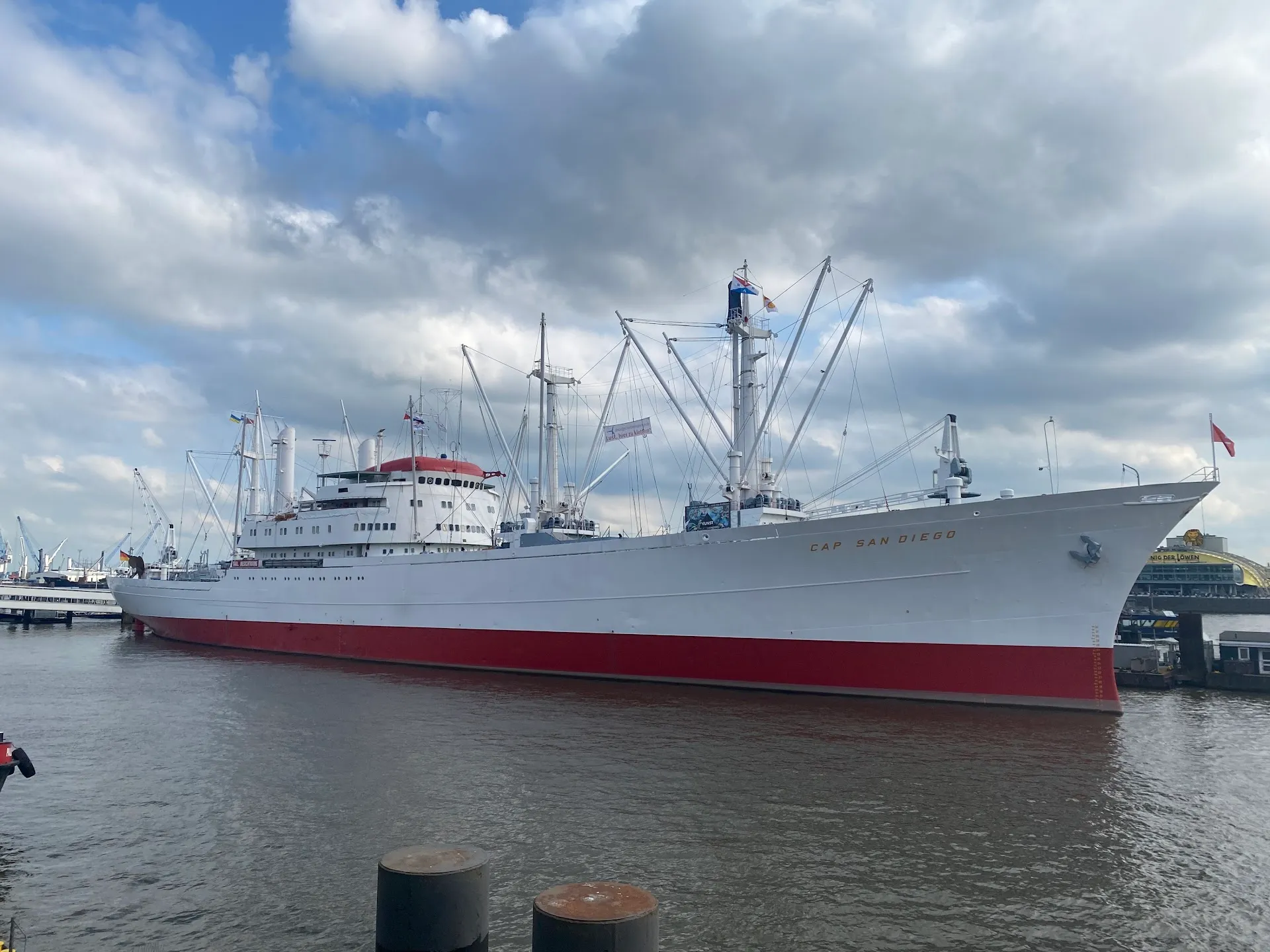
St. Pauli Landungsbruecken
Hamburg's floating landing stages stretch nearly 700 metres along the Elbe, their tuff-stone terminal flanked by two green-domed towers. A working ferry and excursion-boat hub since 1839, the quayside is the classic spot to watch container ships pass while eating a fish sandwich.
St. Pauli
Landmark
Old Elbe Tunnel
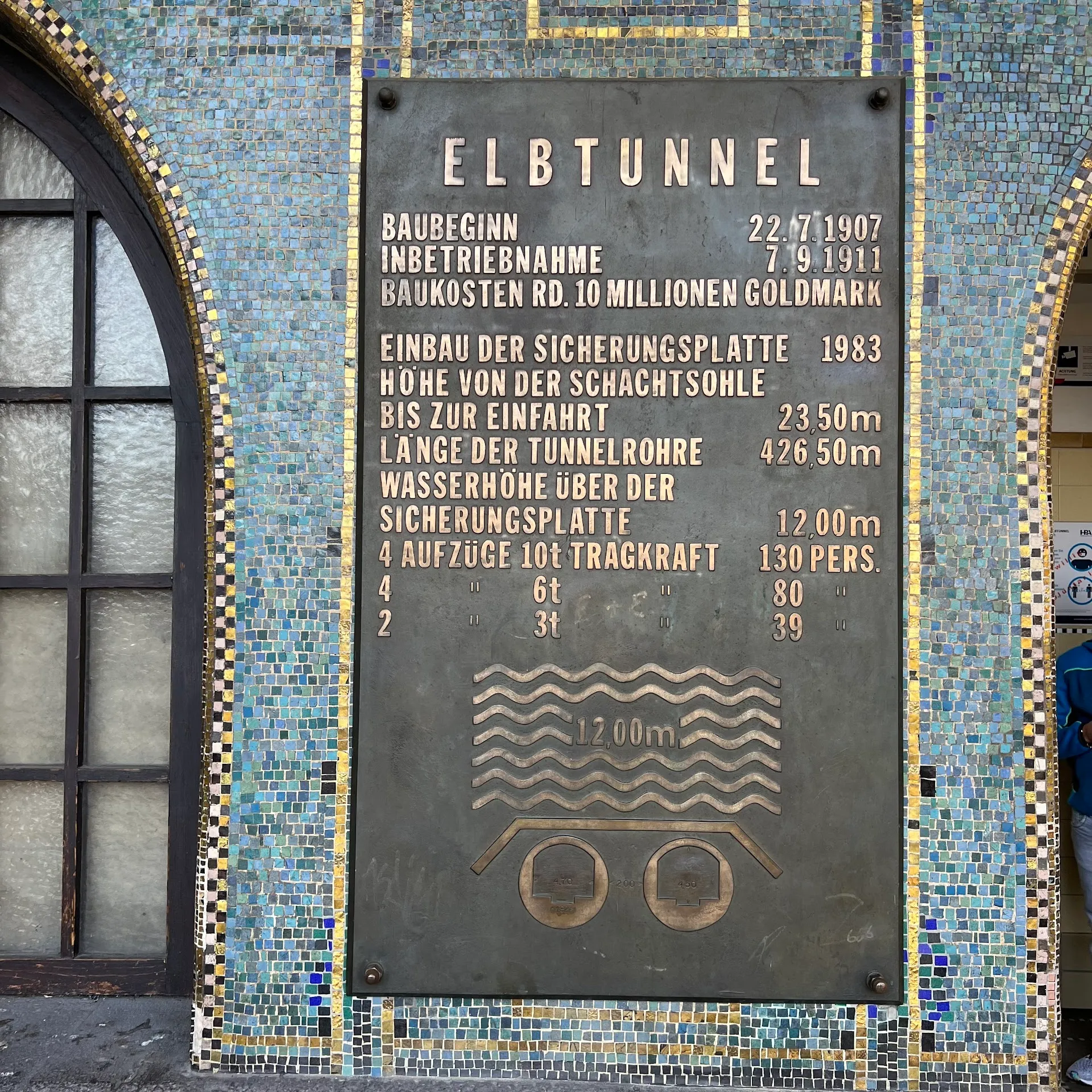
Opened in 1911 as continental Europe's first tunnel beneath a river, the twin tiled tubes run 426 metres under the Elbe between St. Pauli and the Steinwerder shipyards. Pedestrians and cyclists still descend by the original lift cages, free of charge, for a glimpse of an early engineering marvel and a fine view back at the skyline.
St. Pauli
Landmark
Speicherstadt
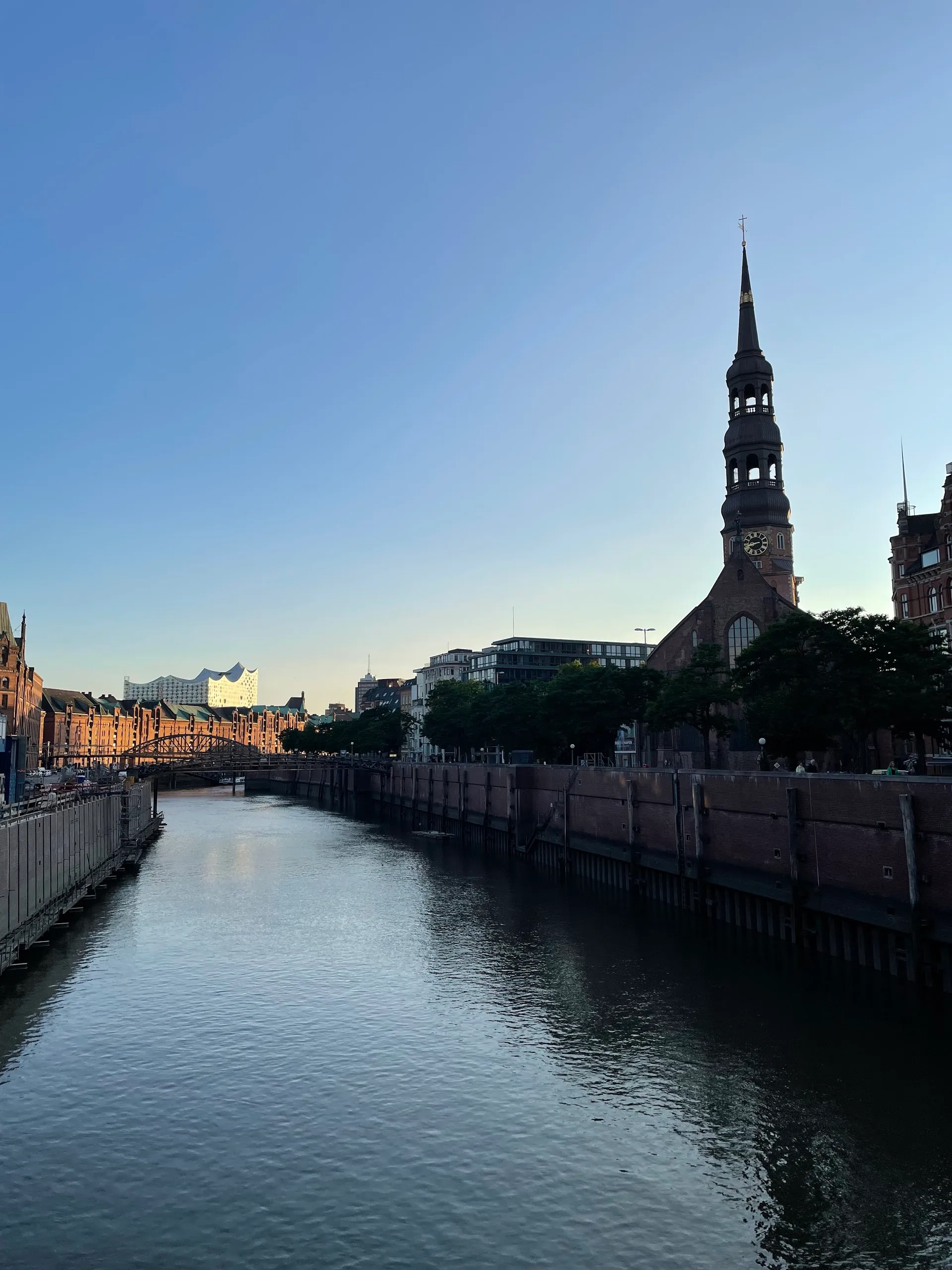
The world's largest unified warehouse complex stretches for more than a kilometre of red-brick gables, little towers and loading hoists set on oak piles above a network of tidal canals. Built from the 1880s as a customs-free port zone, it earned UNESCO World Heritage status in 2015 and is at its most atmospheric when the facades are floodlit at night.
HafenCity
Museum
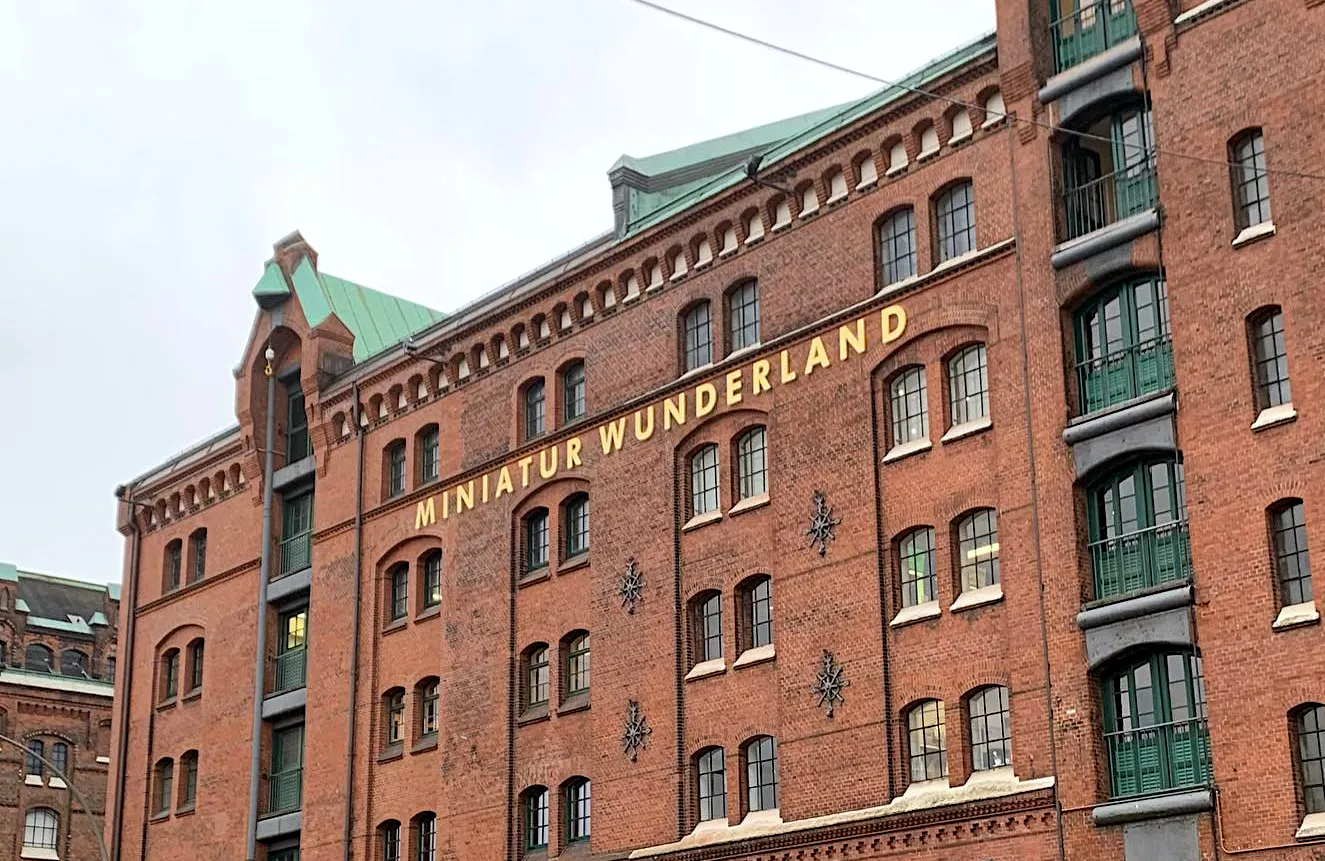
Miniatur Wunderland
Home to the world's largest model railway, this Speicherstadt attraction packs kilometres of track, tiny airports, and meticulously detailed miniature worlds spanning regions from Hamburg to America across several floors. Day-and-night lighting cycles and countless hidden moving scenes have made it Hamburg's single most-visited attraction.
Speicherstadt
Landmark
Elbphilharmonie
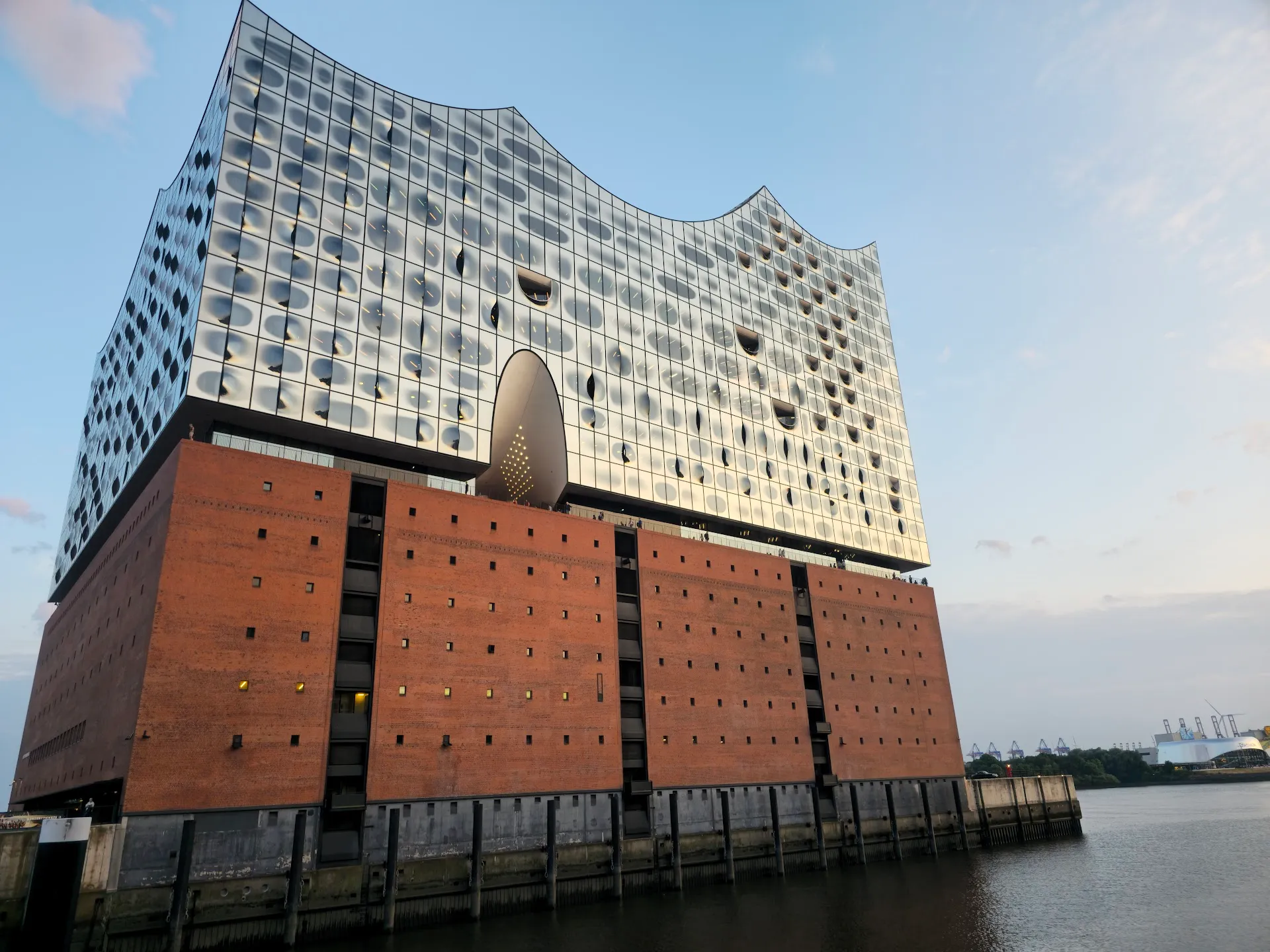
Hamburg's signature 21st-century landmark rises 108 metres over the harbour, crowning a converted 1960s cocoa warehouse with a wave-like glass crown. Beyond its three concert halls, a curving escalator carries visitors up to the public Plaza on the 8th floor for a 360-degree sweep across the city and the Elbe.
HafenCity
Restaurant
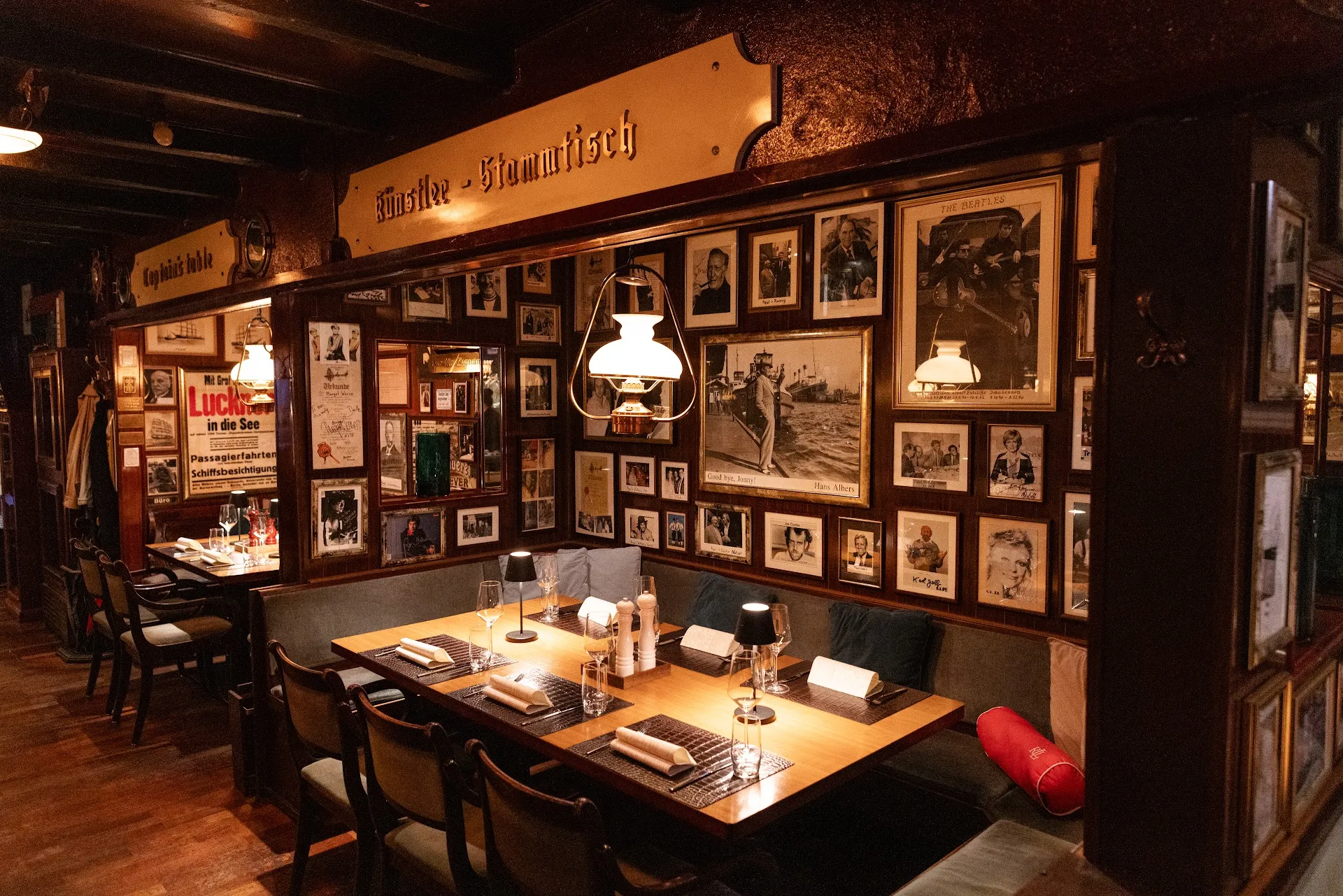
Old Commercial Room
Founded in 1795 near St. Michaelis church, this clubby tavern of mahogany and brass is the classic place to try Hamburg's seafarer dish Labskaus, alongside fresh North Sea fish. It is one of the city's most enduring pieces of Hanseatic dining tradition, open every day of the year bar Christmas Eve.
Neustadt
Architecture
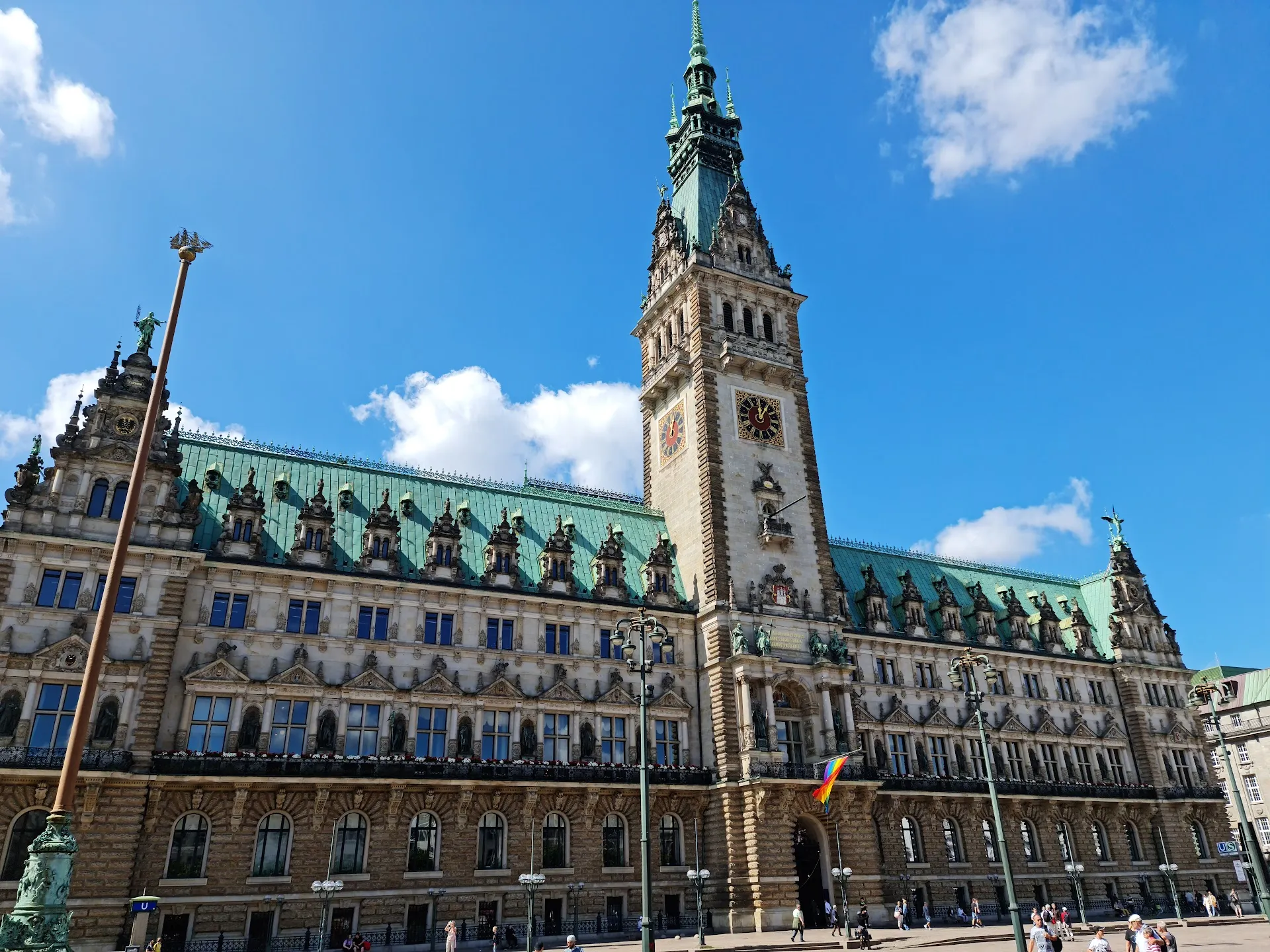
Hamburg Rathaus
The seat of Hamburg's parliament and senate is a lavish Neo-Renaissance palace of 647 rooms, completed in 1897 atop thousands of oak piles. Its sandstone facade bristles with twenty imperial statues, while guided tours reveal the opulent ceremonial halls within.
Altstadt
Landmark
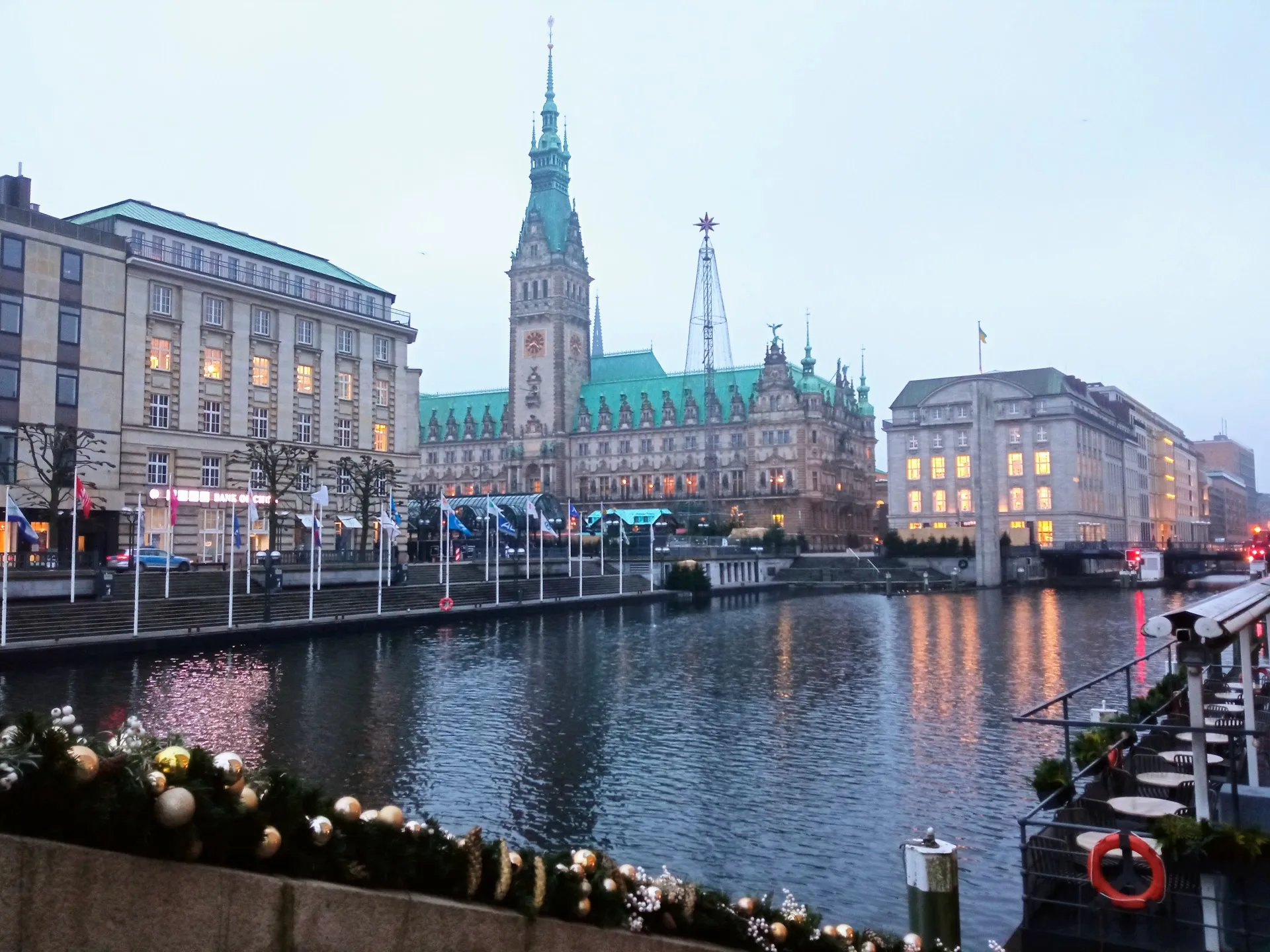
Jungfernstieg
Hamburg's grandest boulevard runs along the southern shore of the Binnenalster lake, lined with cafes, department stores and the historic Alsterpavillon. Laid out as a promenade for the city's well-to-do and asphalted in 1838 (a German first), it remains the social heart of the centre and a hub for Alster ferries.
Neustadt / Altstadt
Landmark
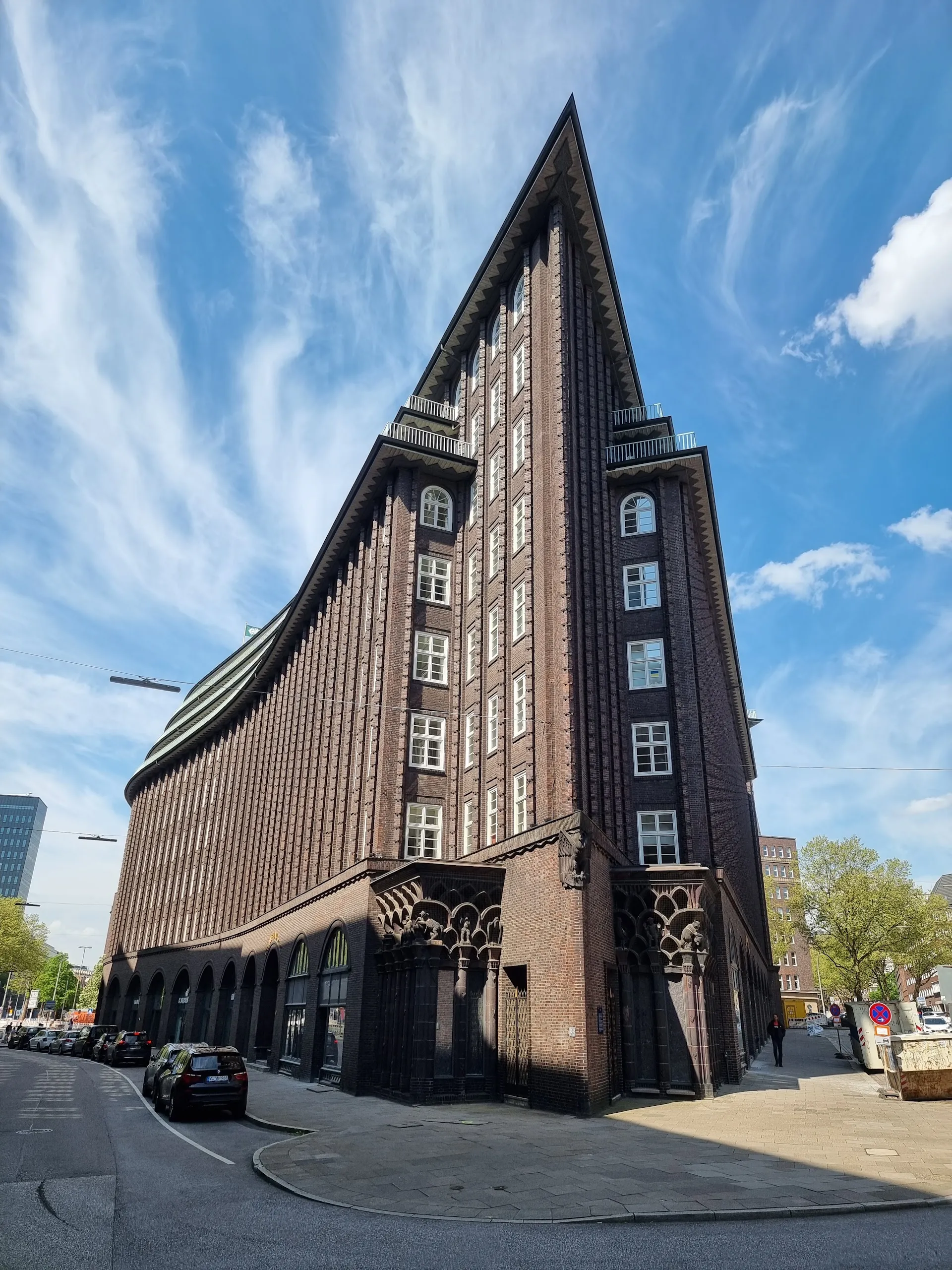
Chilehaus
This ten-storey office block is the masterpiece of 1920s Brick Expressionism, its dark clinker walls tapering to a dramatic point like the prow of a ship. Designed by Fritz Hoeger and named for owner Henry Sloman's Chilean saltpetre trade, it anchors the Kontorhaus District inscribed by UNESCO in 2015.
Kontorhausviertel, Altstadt
Museum
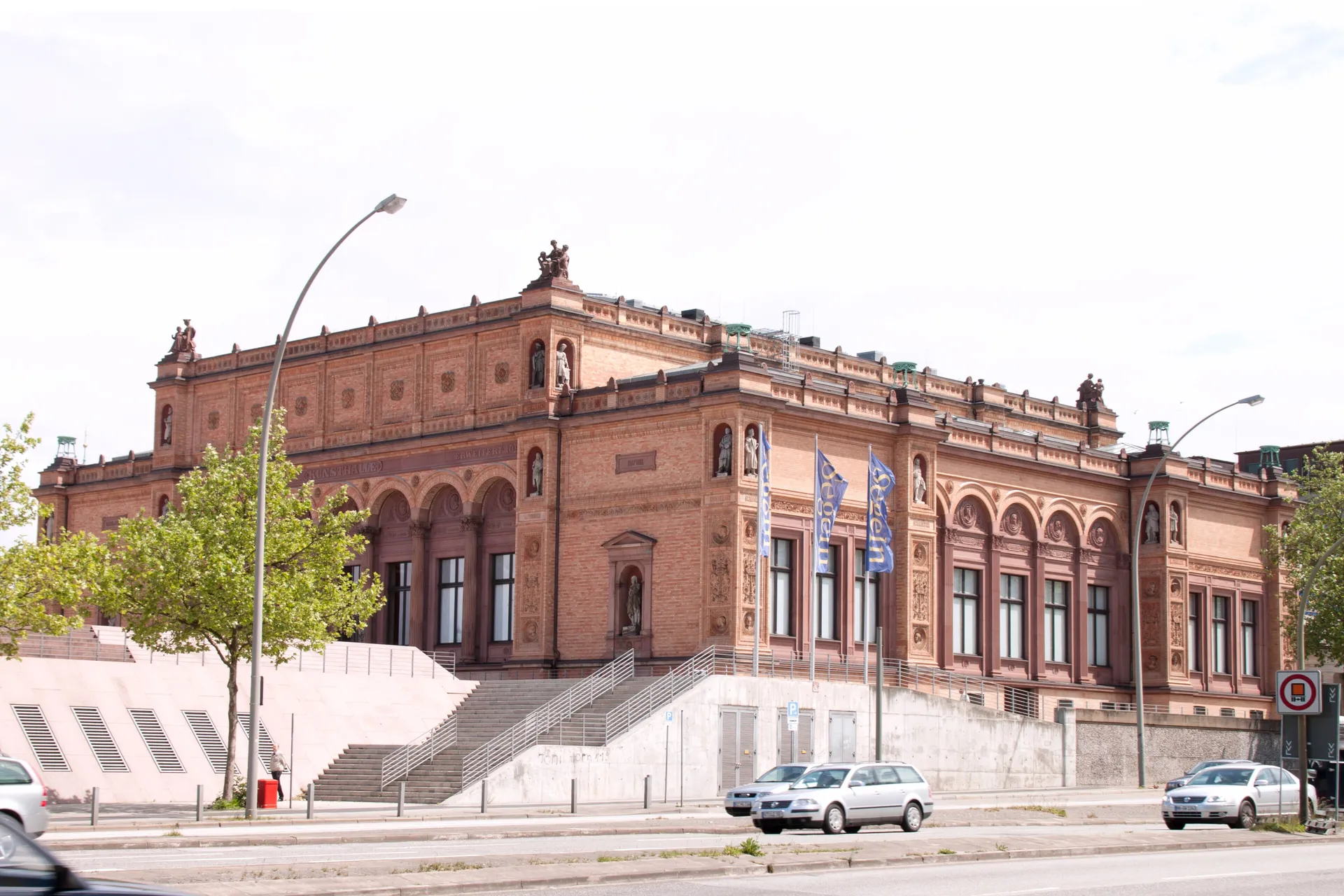
Hamburger Kunsthalle
One of Germany's largest art museums, the Kunsthalle spans seven centuries from medieval altarpieces and Old Masters to 19th-century Romanticism (including Caspar David Friedrich) and a dedicated contemporary wing, the Galerie der Gegenwart. Its interconnected buildings sit in a landmark complex between the main station and the Alster lakes.
Altstadt
Landmark
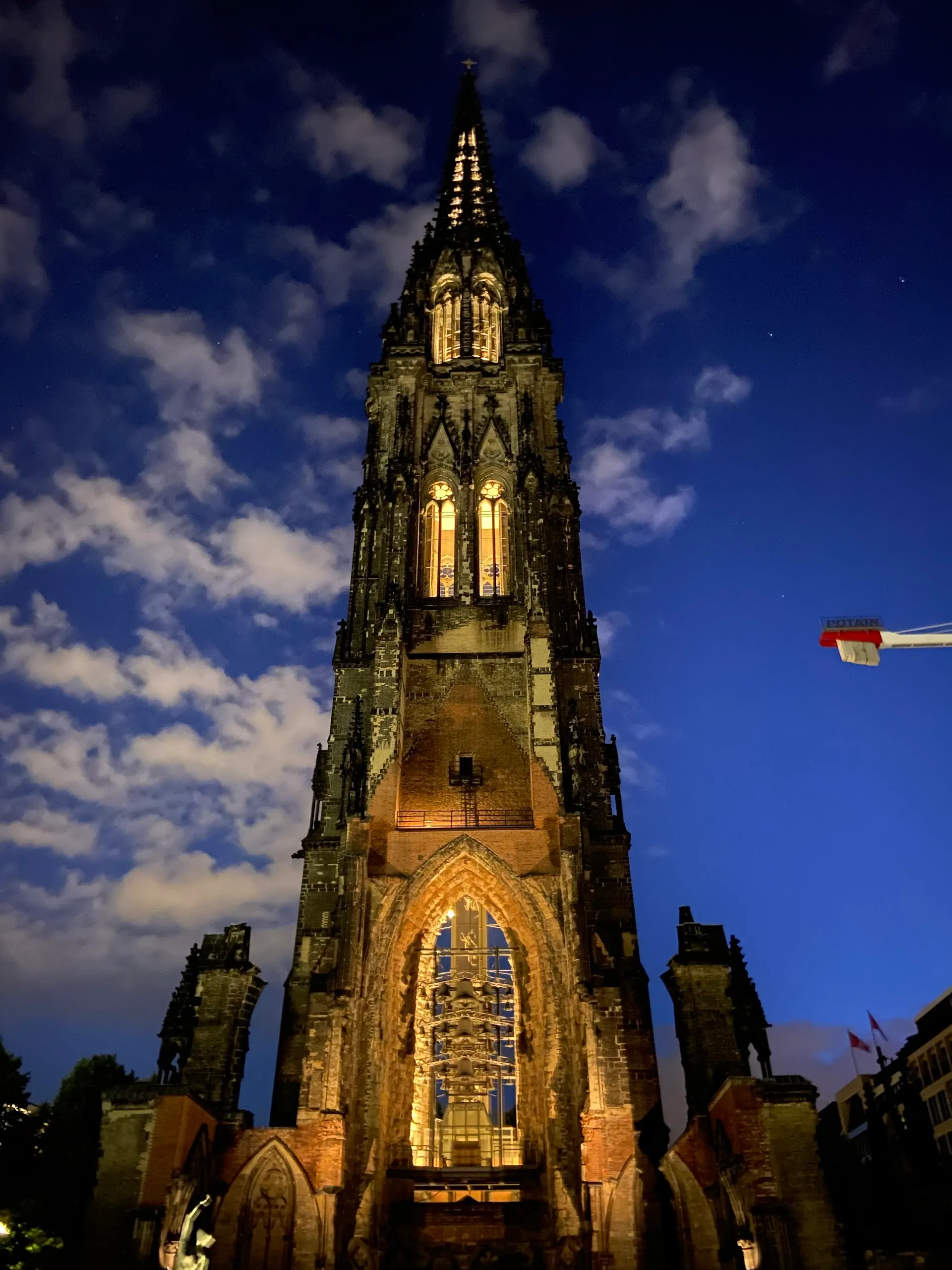
St. Nikolai Memorial
Once briefly the tallest building in the world, this Gothic Revival church was gutted in the 1943 firestorm and deliberately left in ruins as an anti-war memorial. A glass lift now climbs the surviving 147-metre spire to a viewing platform, with an exhibition on the air war housed in the former crypt below.
Altstadt (Hamburg-Mitte)
Restaurant
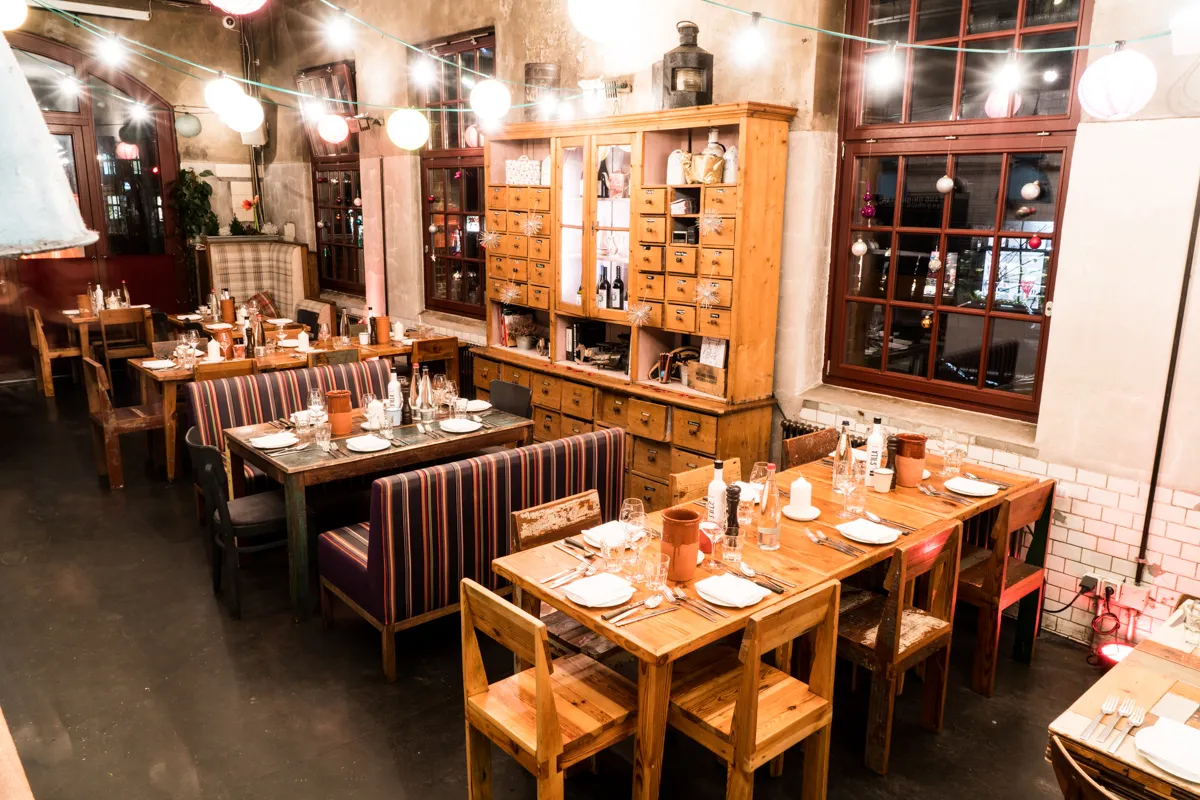
Bullerei
Celebrity chef Tim Mälzer's lively brasserie and deli, opened in 2009 inside a former cattle-auction hall in the trendy Schanzenviertel, serves hearty, ingredient-led grill plates with Mediterranean leanings. It remains one of Hamburg's best-known see-and-be-seen dining rooms.
Schanzenviertel (Sternschanze)
Viewpoint
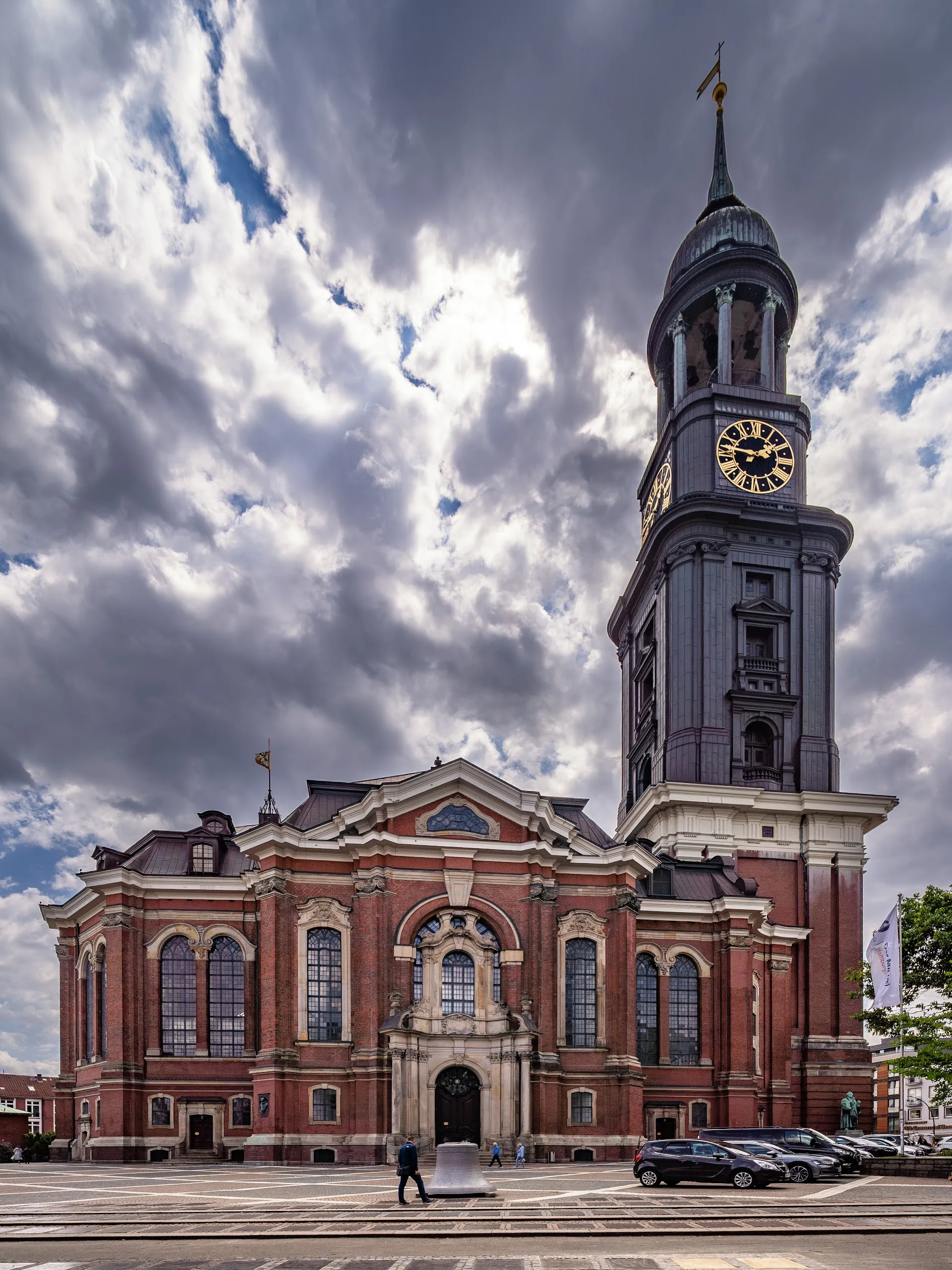
St. Michael's Church
Hamburg's most beloved Baroque church, affectionately called the Michel, is crowned by a 132-metre copper spire that has guided ships up the Elbe for centuries. Visitors can ride or climb the tower for a panoramic harbour view, or descend into the crypt beneath the nave.
Neustadt
Landmark
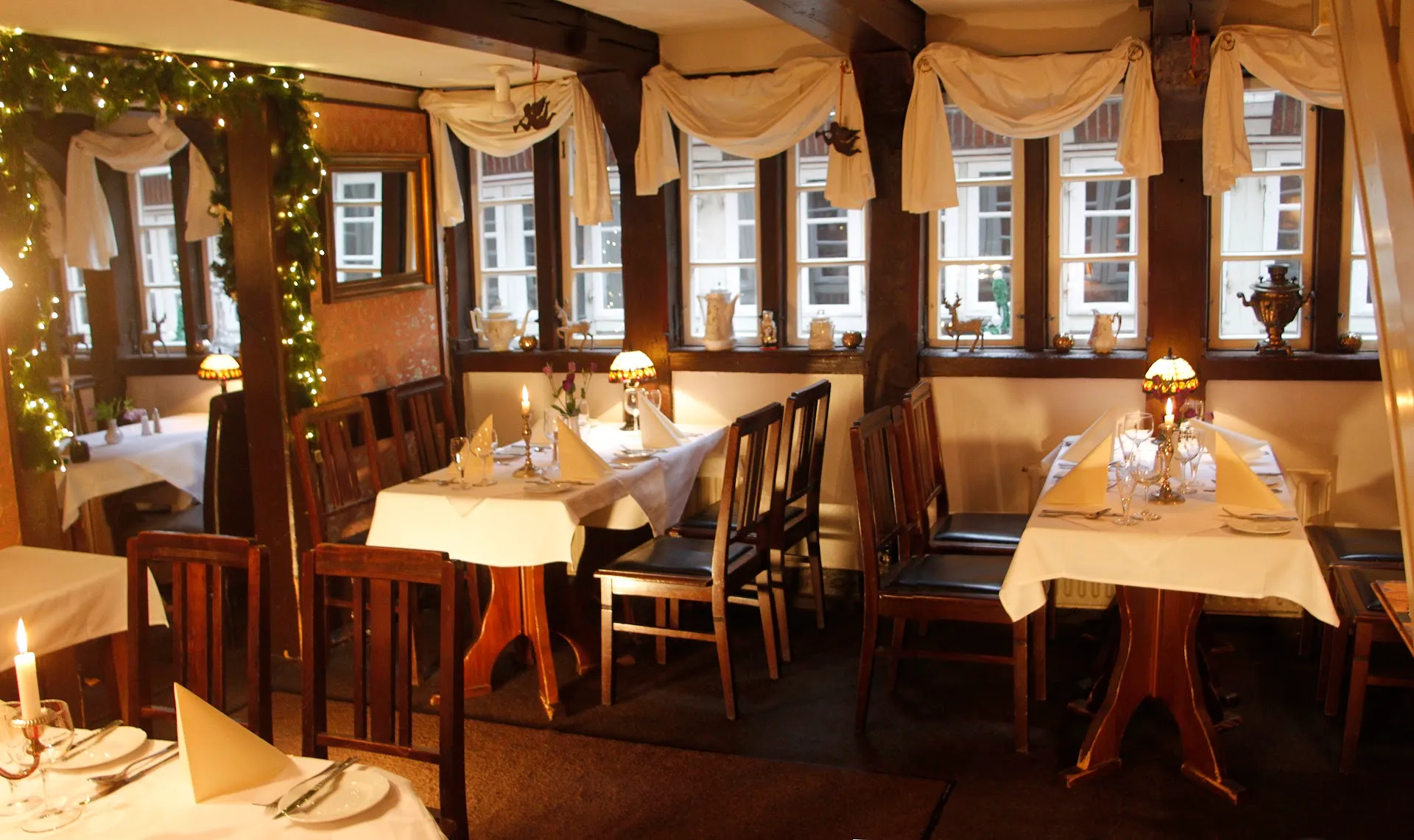
Krameramtsstuben
Tucked behind the Michel, this row of half-timbered houses around a narrow courtyard was built around 1620 to lodge the widows of grocers' guild members. As the last surviving enclosed 17th-century courtyard of its kind in Hamburg, it now shelters small shops, a restaurant and a museum apartment furnished in 1850s style.
Neustadt
Museum
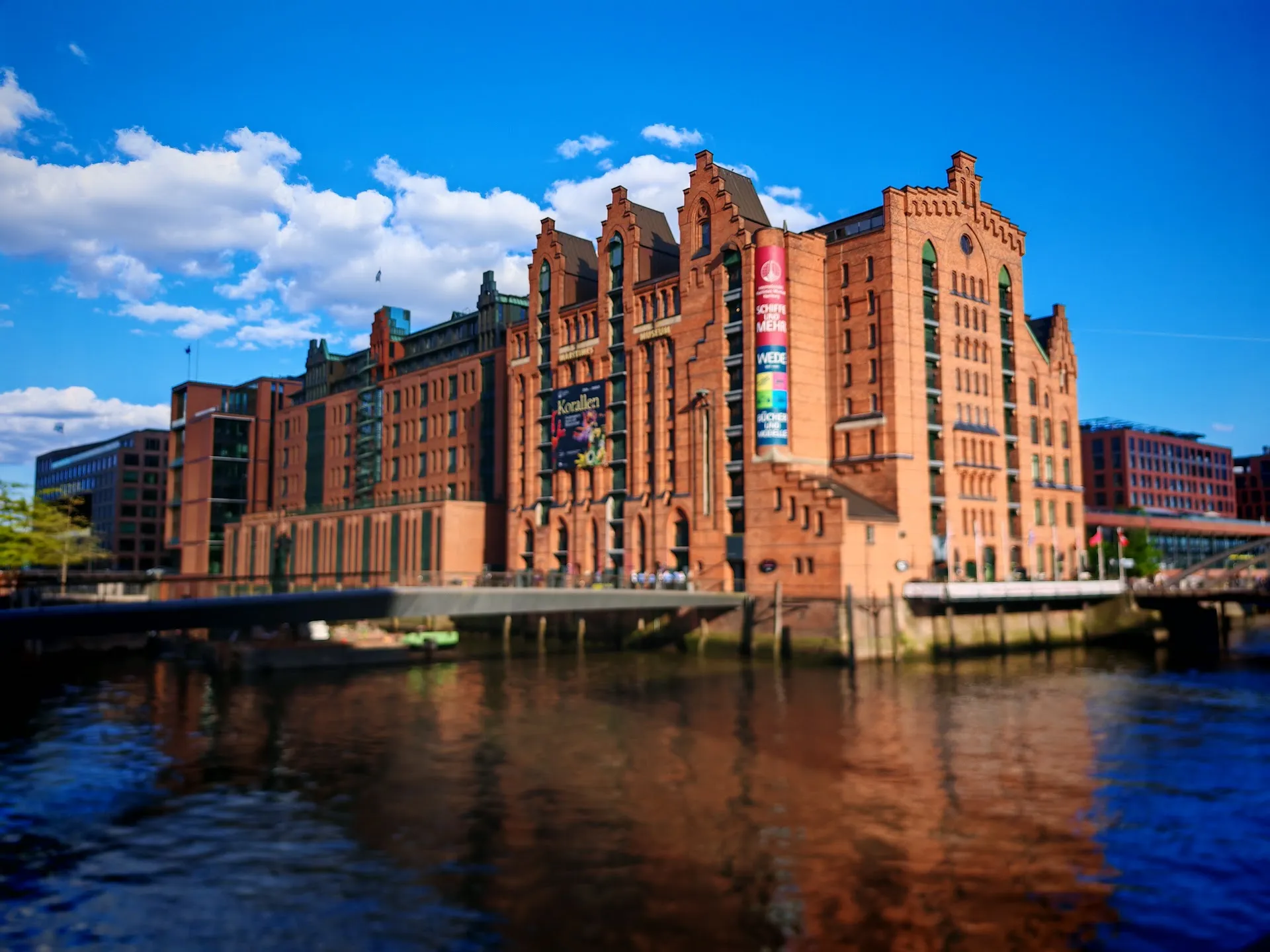
Internationales Maritimes Museum Hamburg
Spread across ten decks of a restored 19th-century brick Kaispeicher warehouse, this museum traces some 3,000 years of seafaring through one of the world's largest private maritime collections of ship models, uniforms, instruments and over a million photographs. Highlights include vast scale fleets, a gold-and-ivory model armada and maritime art.
HafenCity
Landmark
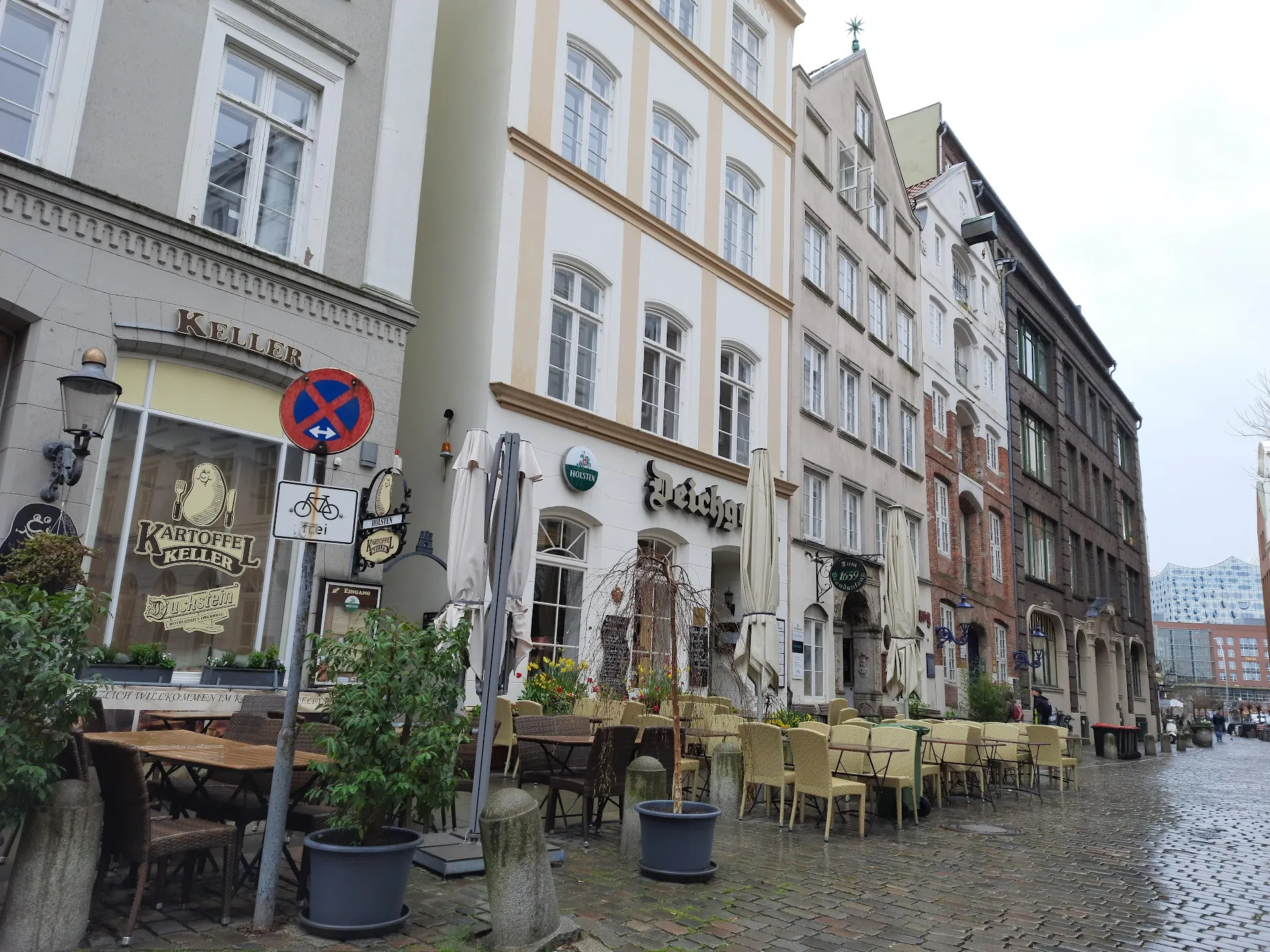
Deichstrasse
Lining the Nikolaifleet canal, Deichstrasse preserves a rare stretch of Hamburg's pre-industrial old town in its tall gabled merchant houses, where counting room, home and warehouse once shared a single roof. The 1842 Great Fire began here yet spared part of the row, which was saved again from demolition by a 1972 referendum.
Altstadt
Landmark
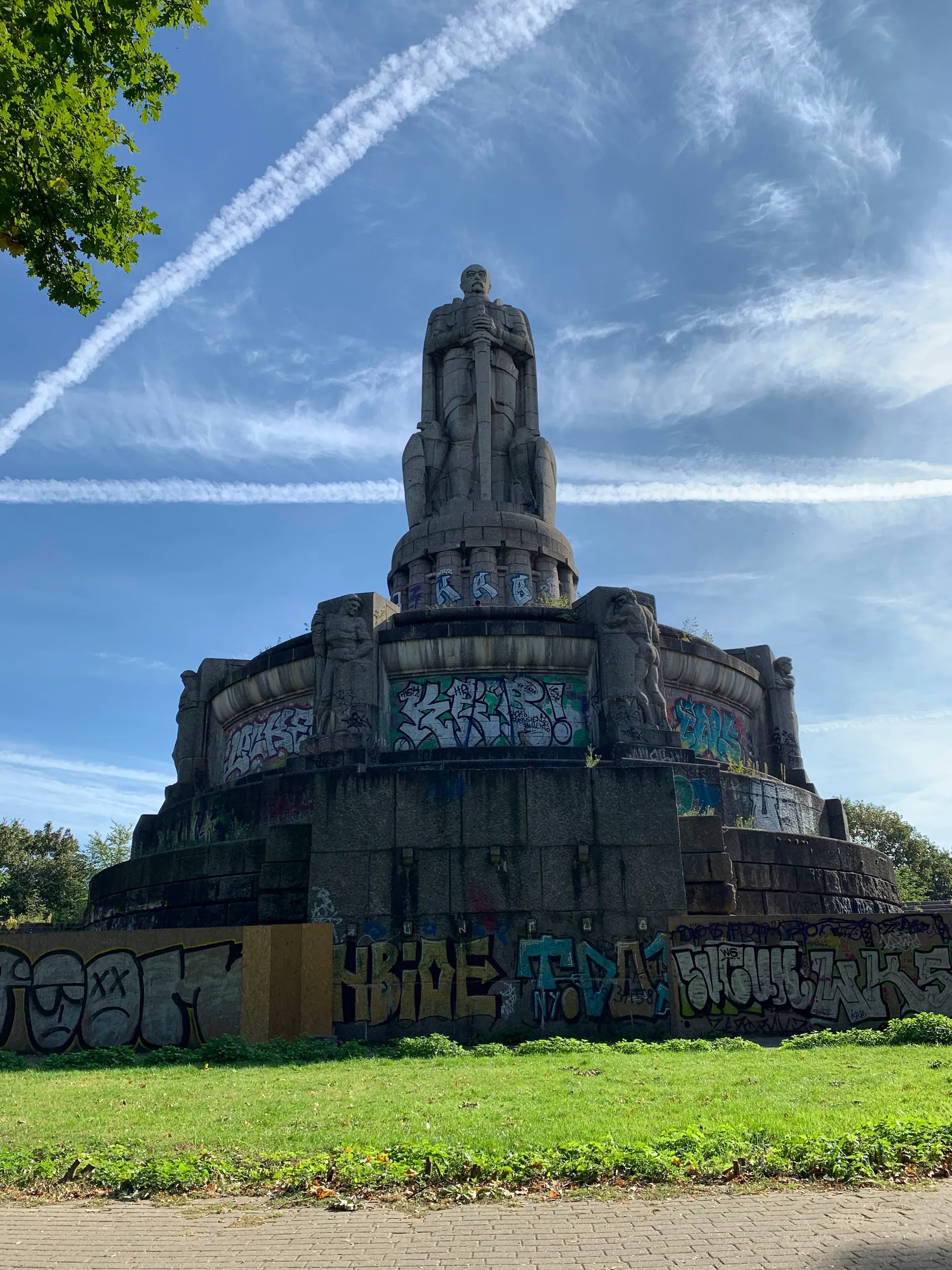
Bismarck Monument
Towering some 34 metres above the Alter Elbpark, this colossal granite figure of Chancellor Otto von Bismarck has loomed over the harbour since 1906. The largest of the world's many Bismarck monuments, it depicts the statesman as a sword-bearing knight keeping watch over the port.
St. Pauli (Alter Elbpark)
Restaurant
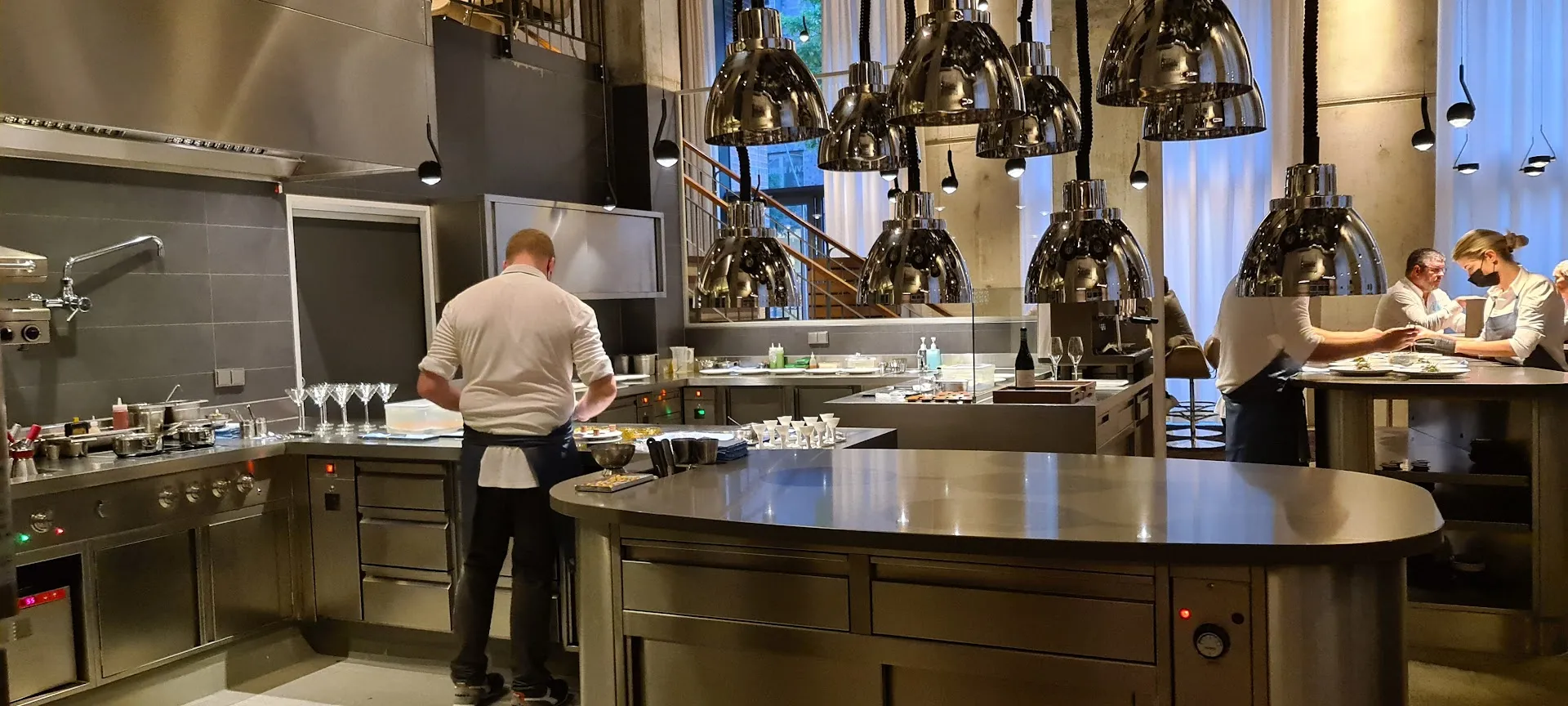
The Table Kevin Fehling
Kevin Fehling's three-Michelin-star restaurant seats every guest at one sweeping cherry-wood counter curving around the open kitchen, dissolving the usual barrier between diner and chef. The single set menu roams across modern European cooking with global accents, precise and intricately layered.
HafenCity
Must visit
Memorial5.0
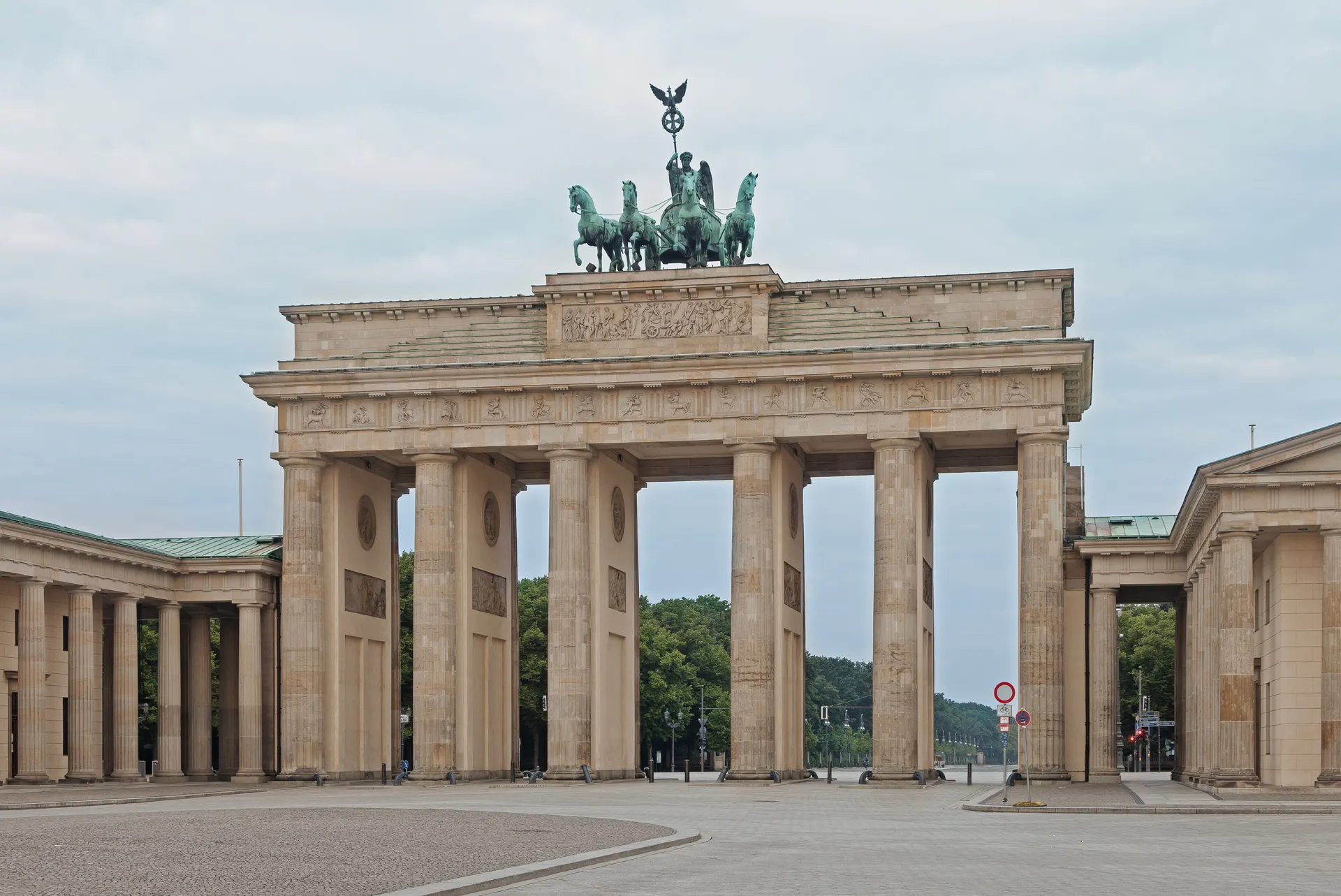
Brandenburg Gate
Berlin's defining neoclassical landmark, completed in 1791 by Carl Gotthard Langhans as a triumphal arch modelled on the Propylaea of the Athenian Acropolis. Topped by the Quadriga chariot sculpture, it stood trapped in the death strip during the Cold War and became the symbol of German reunification in 1989.
Mitte
Must visit
Memorial5.0
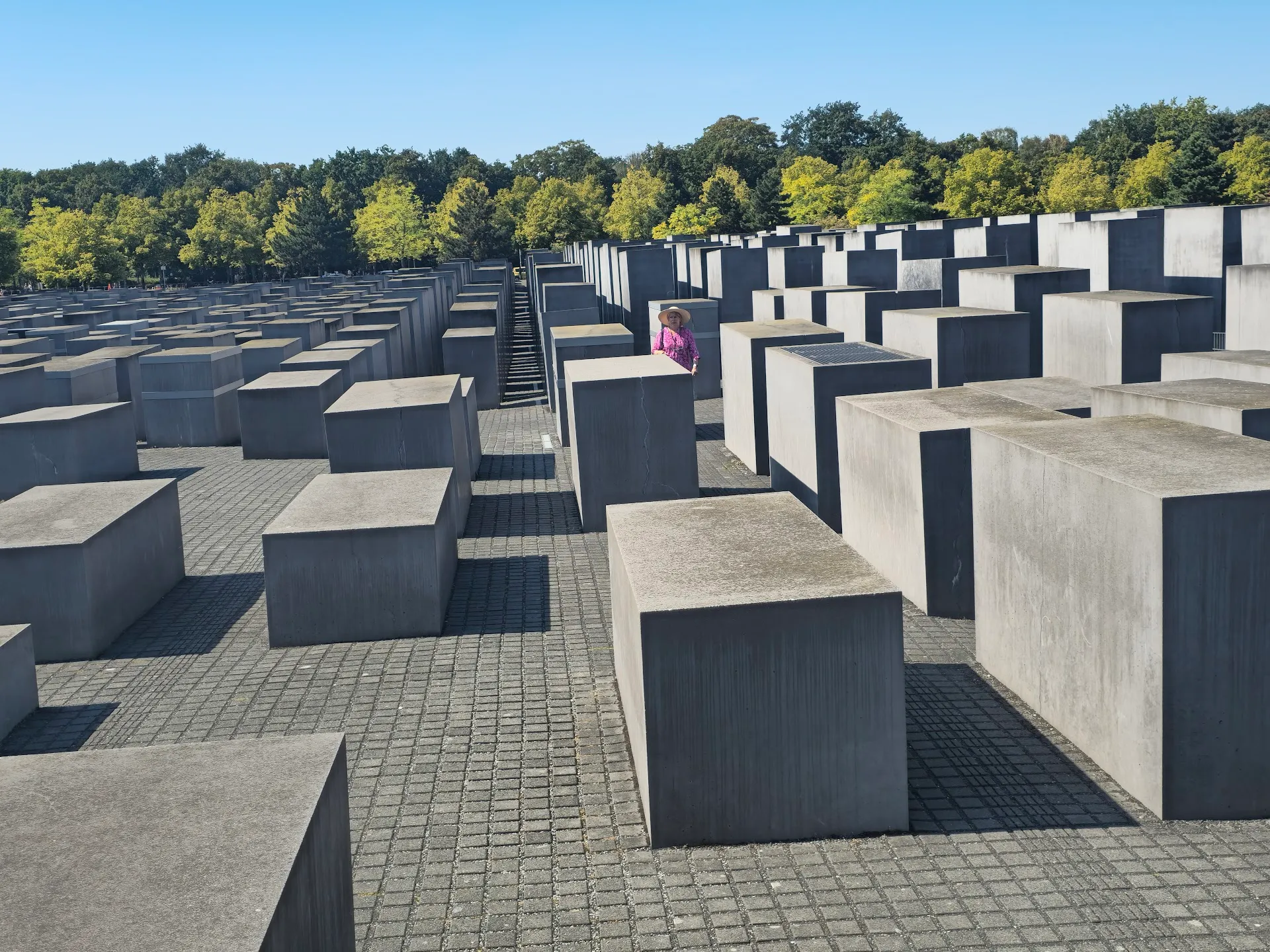
Memorial to the Murdered Jews of Europe
Peter Eisenman's haunting field of 2,711 concrete stelae of varying heights creates a disorienting, wave-like landscape. The underground information center documents individual victims' stories.
Mitte
Scenic Spot5.0
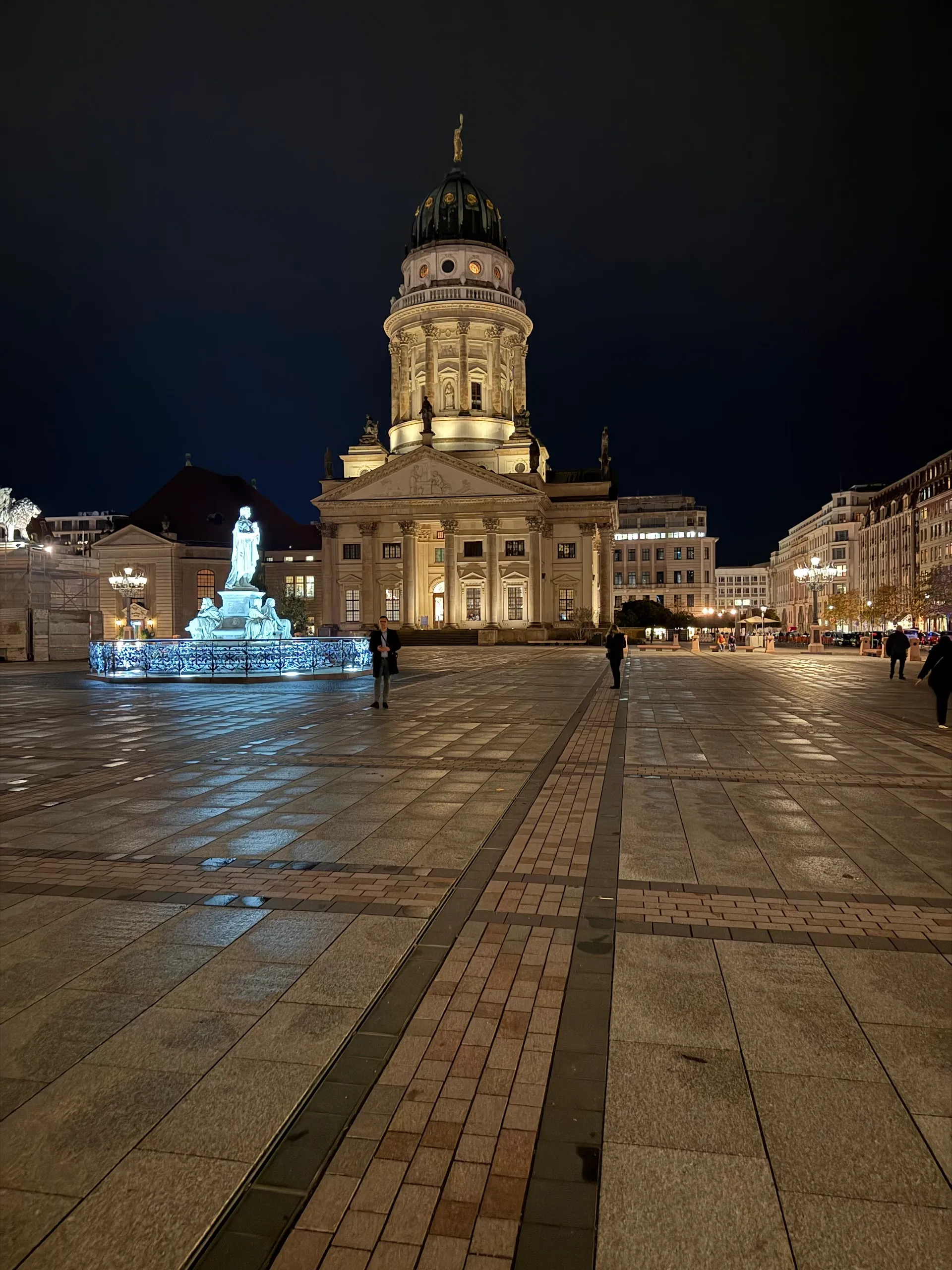
Gendarmenmarkt
Widely regarded as Berlin's most beautiful square, flanked by the matching French and German cathedrals and anchored by Schinkel's neoclassical Konzerthaus. The harmonious ensemble of 18th-century architecture creates a rare sense of grandeur in a city otherwise defined by its contrasts and gaps.
Mitte
CulturalFree
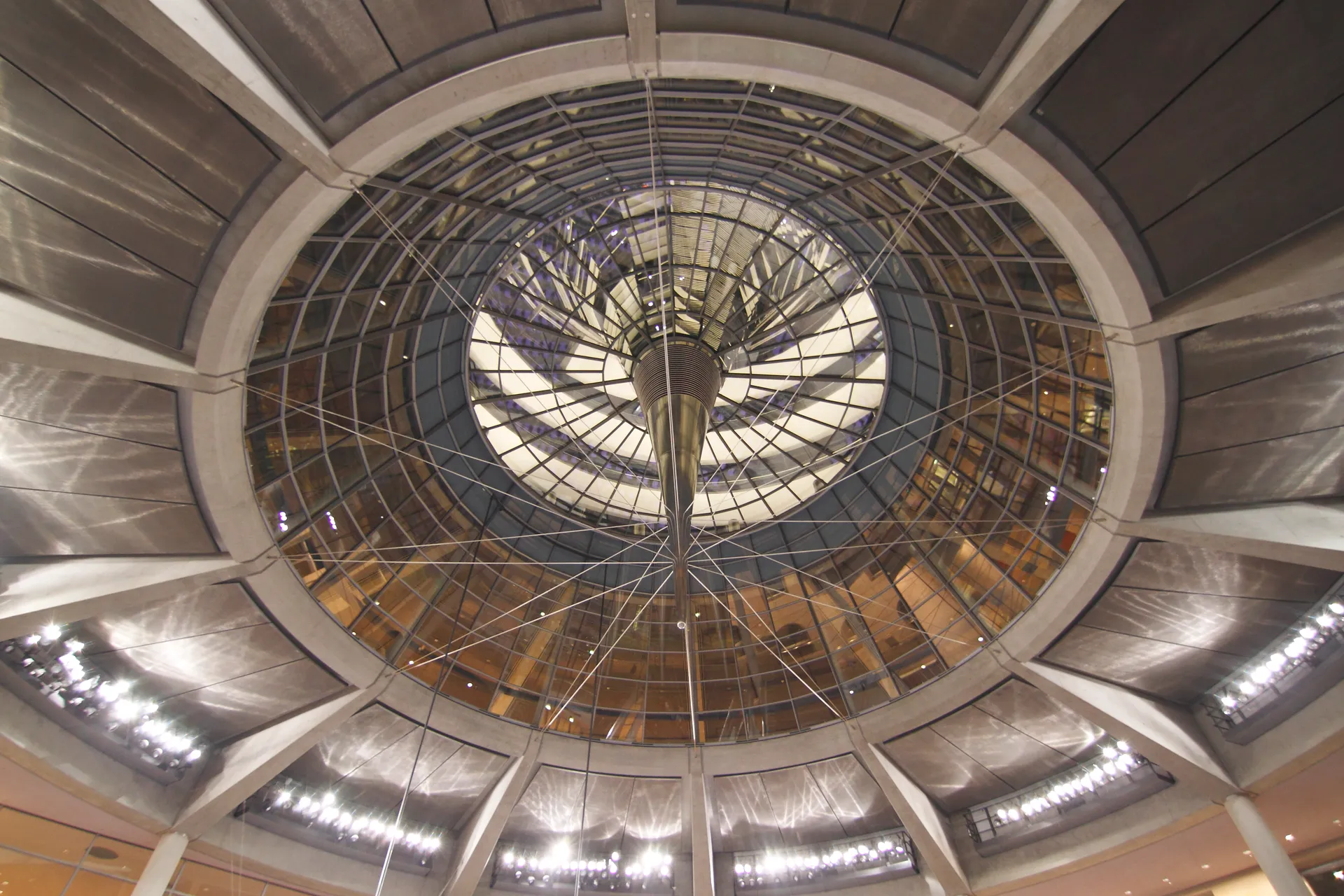
Reichstag Dome Visit
Walk the spiraling ramp inside Norman Foster's glass dome atop the German parliament for 360-degree city views. Free entry but advance booking is mandatory. The audio guide explains Berlin's political history.
Mitte (Tiergarten)1-2 hours
Book this tour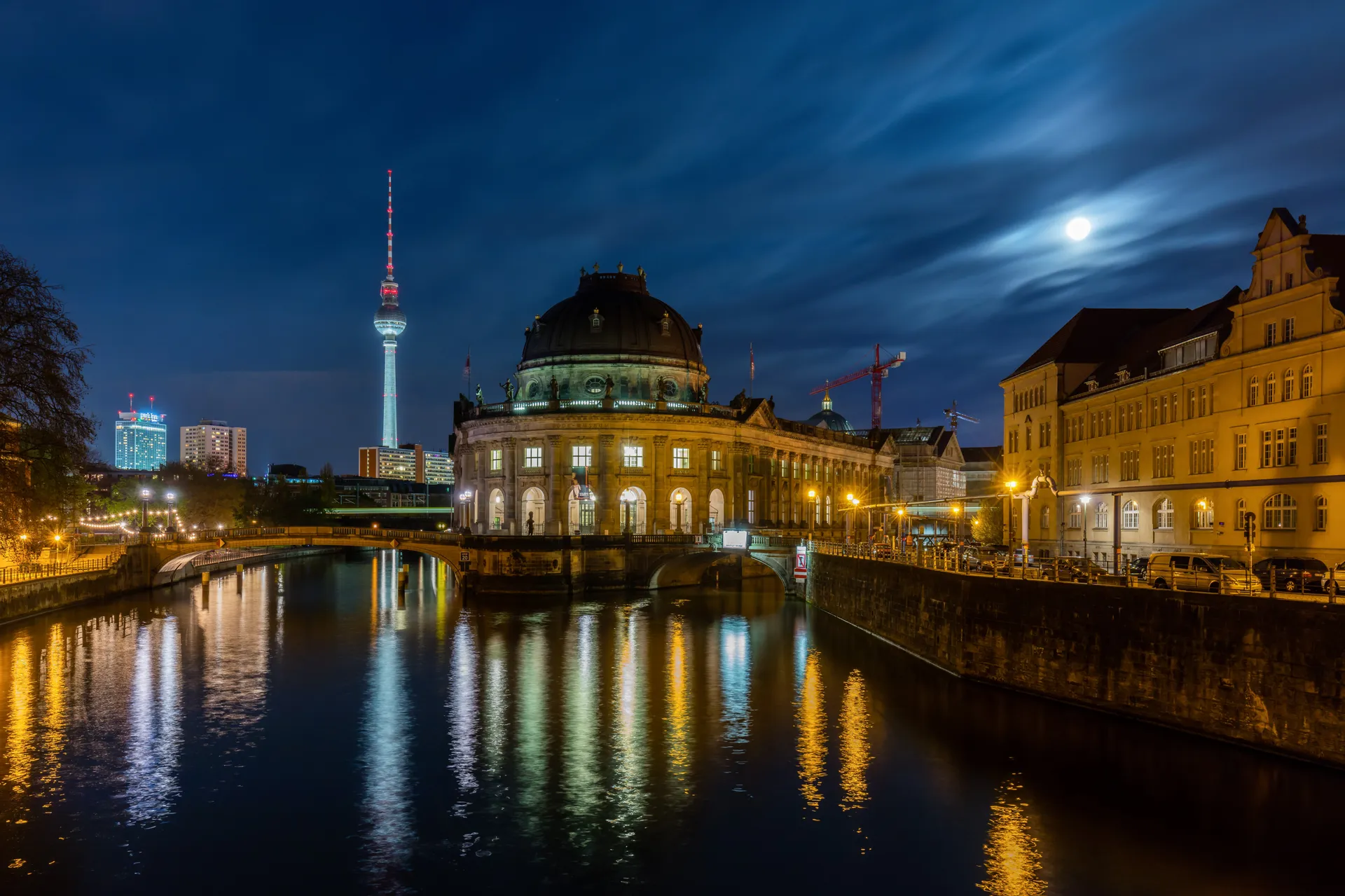
Cultural€19 (day pass)
Museum Island Day
UNESCO World Heritage ensemble of five world-class museums on a Spree river island. From Babylonian gates to Egyptian busts to 19th-century painting, it covers 6,000 years of human civilization.
Mitte (Museum Island)5-7 hours
Book this tour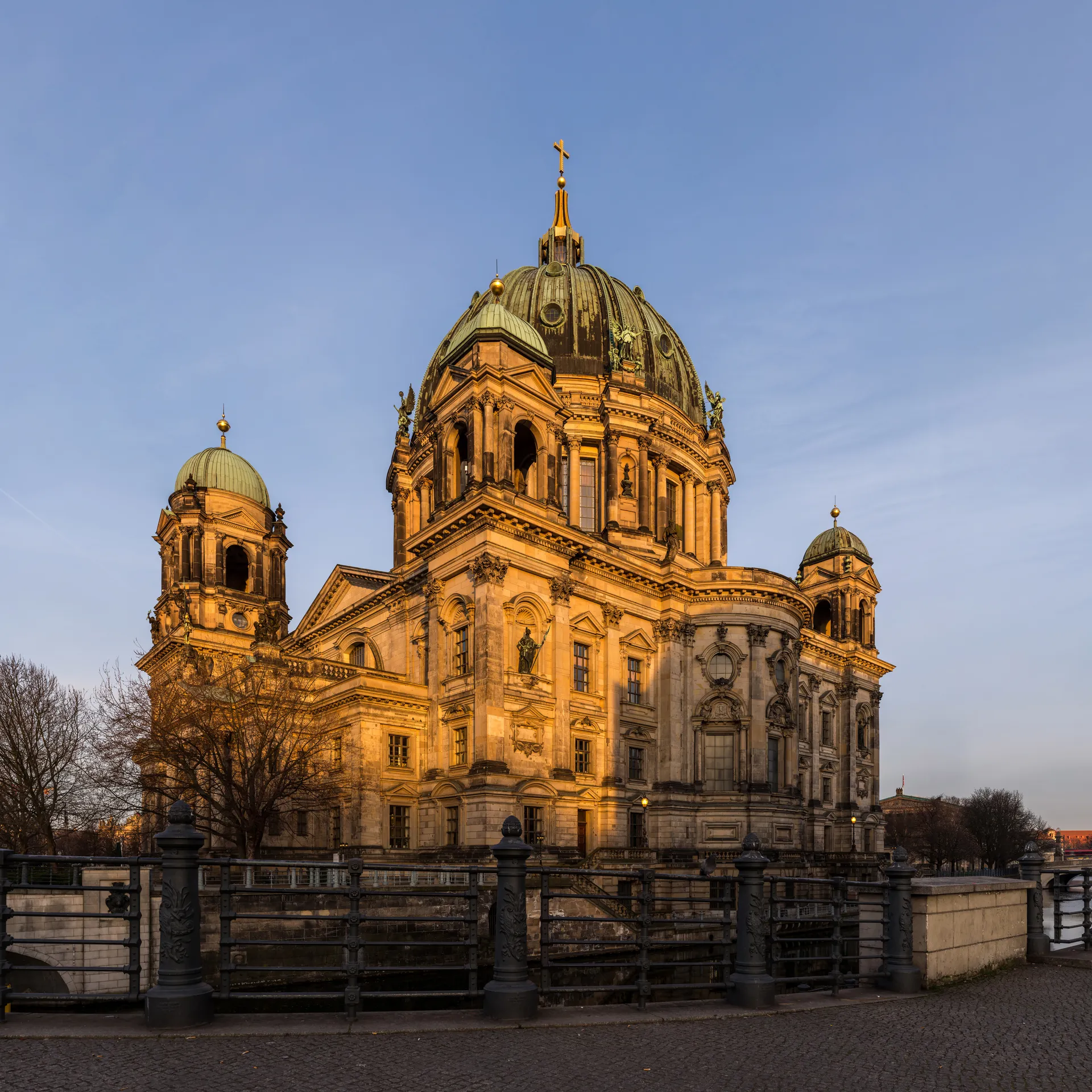
Temple4.0
Berlin Cathedral (Berliner Dom)
A monumental neo-Renaissance Protestant cathedral completed in 1905 on Museum Island, crowned by a 98-metre copper dome. The lavish interior features mosaics, the Hohenzollern crypt with over 90 royal sarcophagi, and a Sauer organ with 7,269 pipes. The dome gallery offers sweeping city views.
Mitte
Must visit
Restaurant5.0
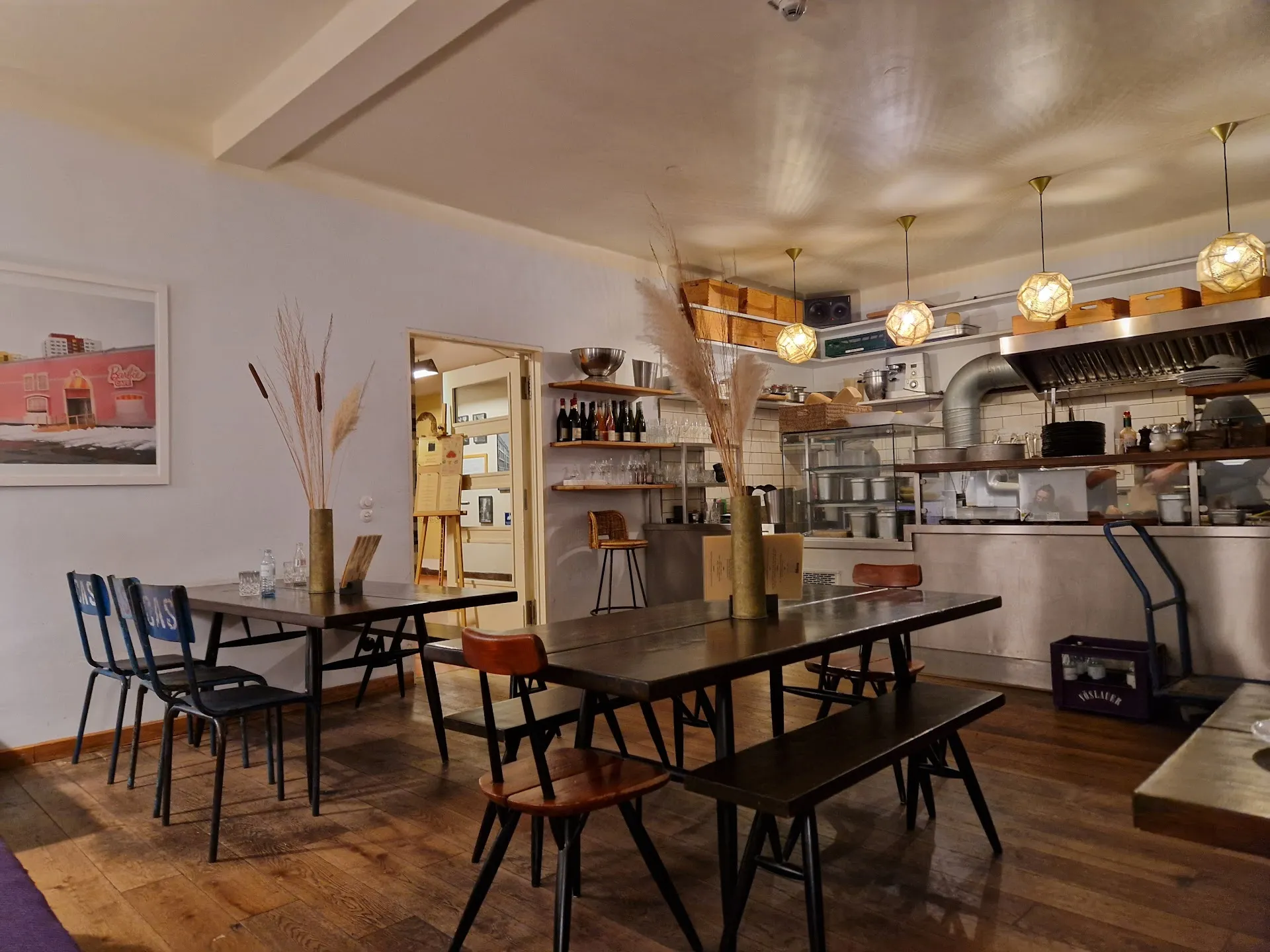
Mogg
New York-style deli serving towering pastrami sandwiches inside a beautifully restored former Jewish girls' school. The 12-hour smoked pastrami is the star of the menu.
Mitte
Architecture
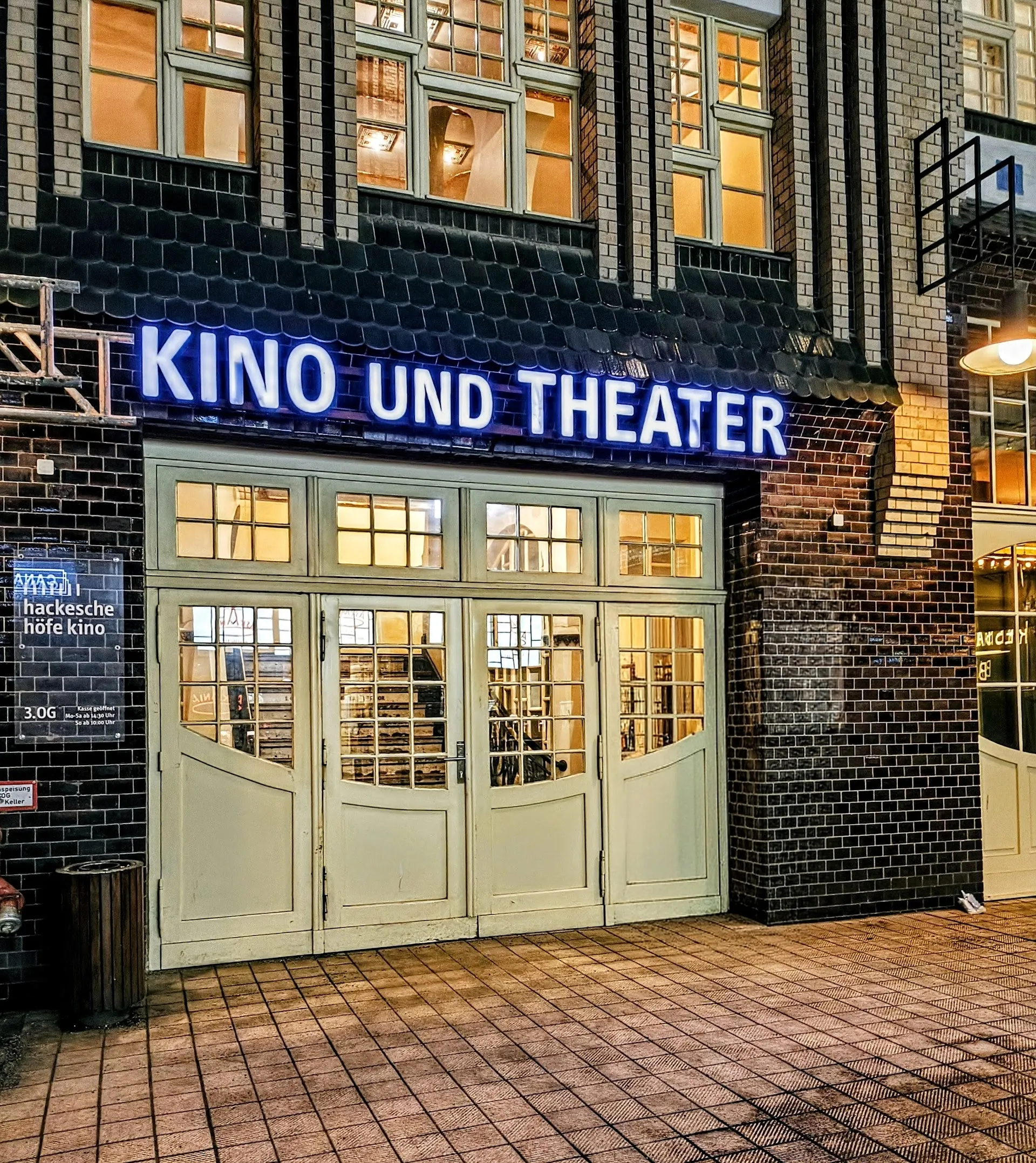
Hackesche Hoefe
Eight interconnected Art Nouveau courtyards from 1906 with ornate Jugendstil tile facades. The first courtyard's geometric blue-and-white tiles are especially striking. Cafes, boutiques, and a cinema fill the spaces.
Mitte
Street
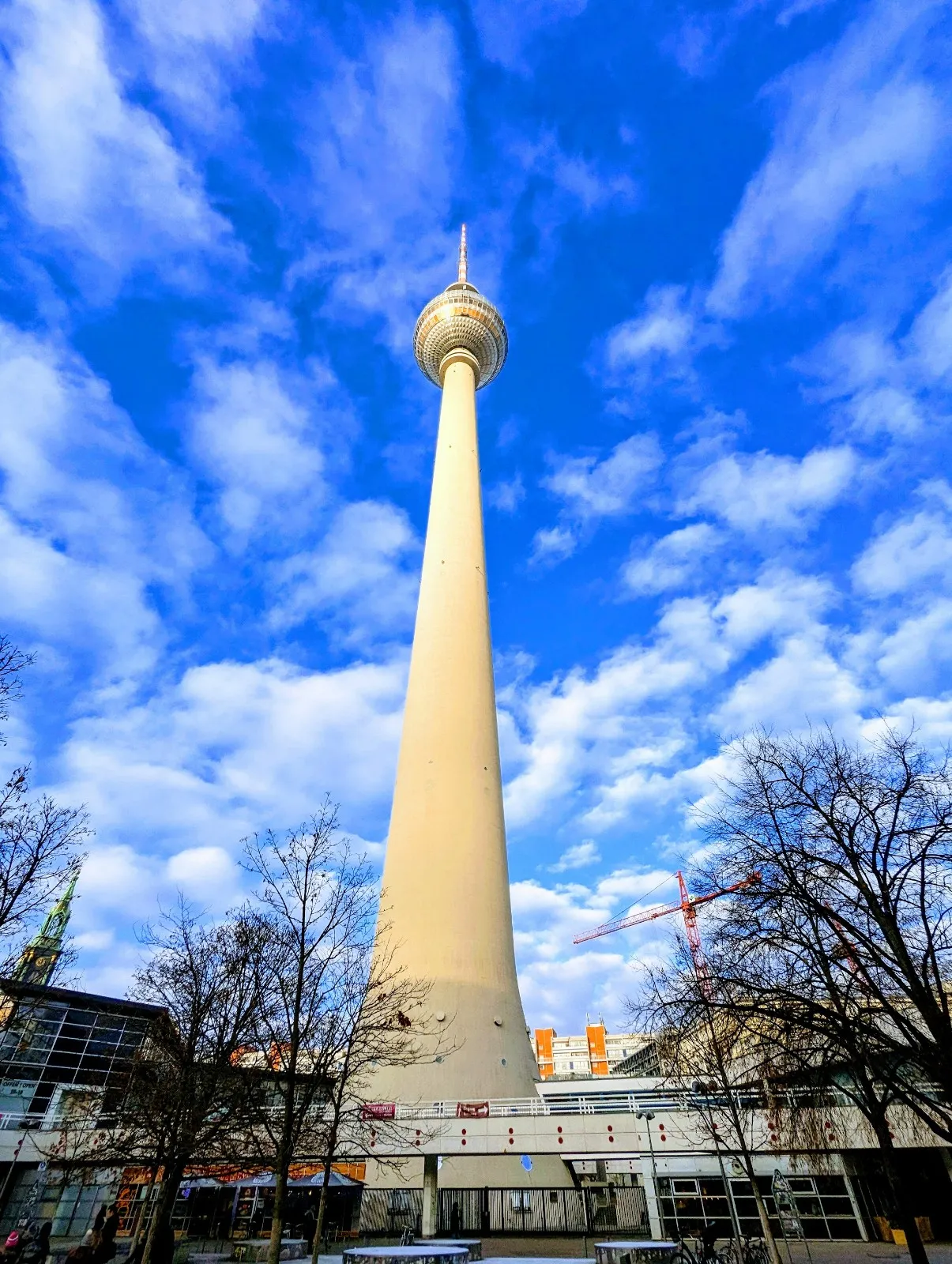
TV Tower from Karl-Marx-Allee
The Fernsehturm framed by the monumental Stalinist architecture of Karl-Marx-Allee creates a quintessentially Berlin composition. The wide boulevard's socialist-realist buildings lead the eye straight to the tower.
Friedrichshain / Mitte
Memorial5.0
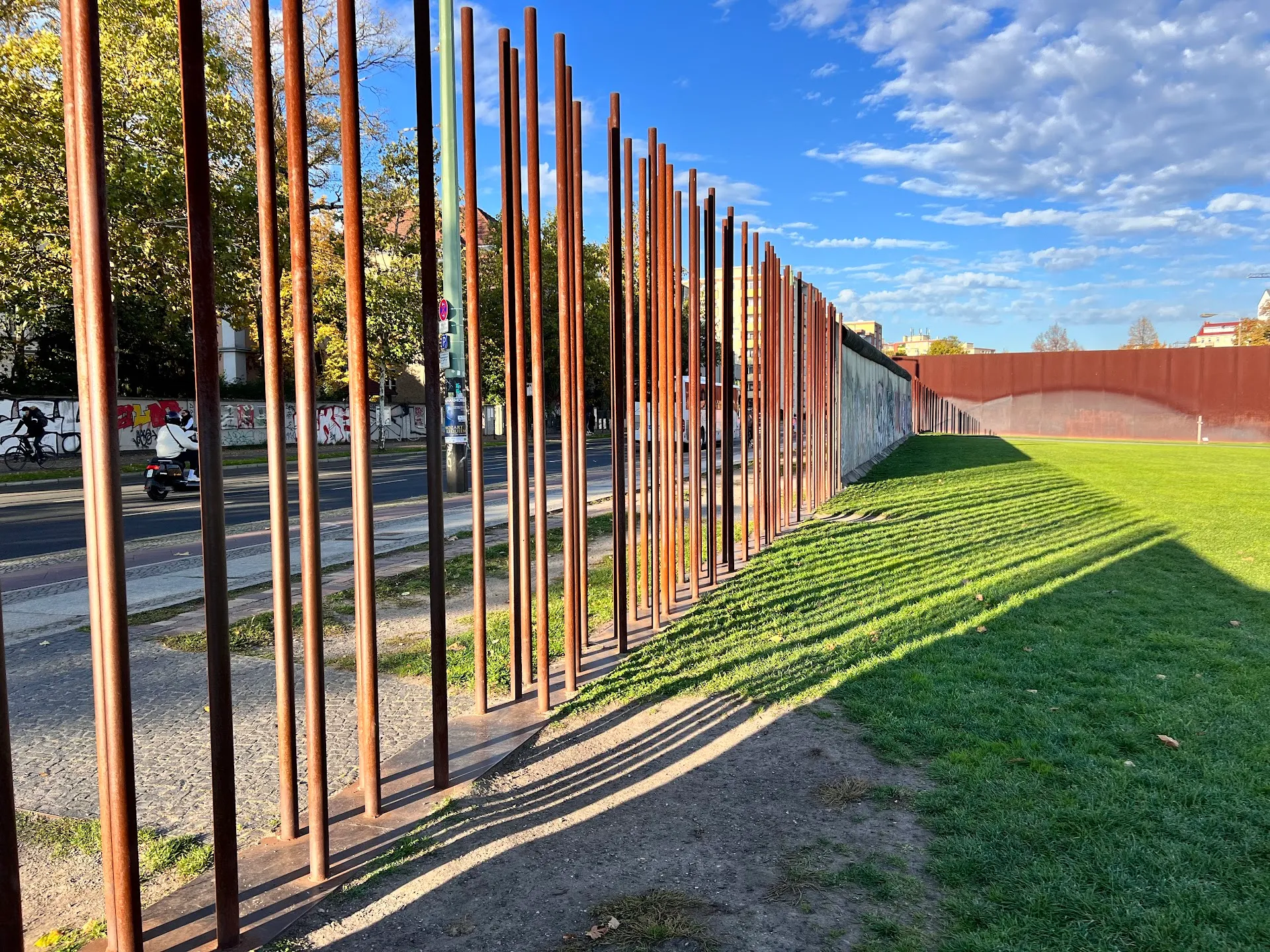
Berlin Wall Memorial
The primary memorial site of German division, preserving an original section of the Wall with watchtower, death strip, and documentation center. More historically informative than the East Side Gallery.
Mitte
Must visit
Memorial5.0
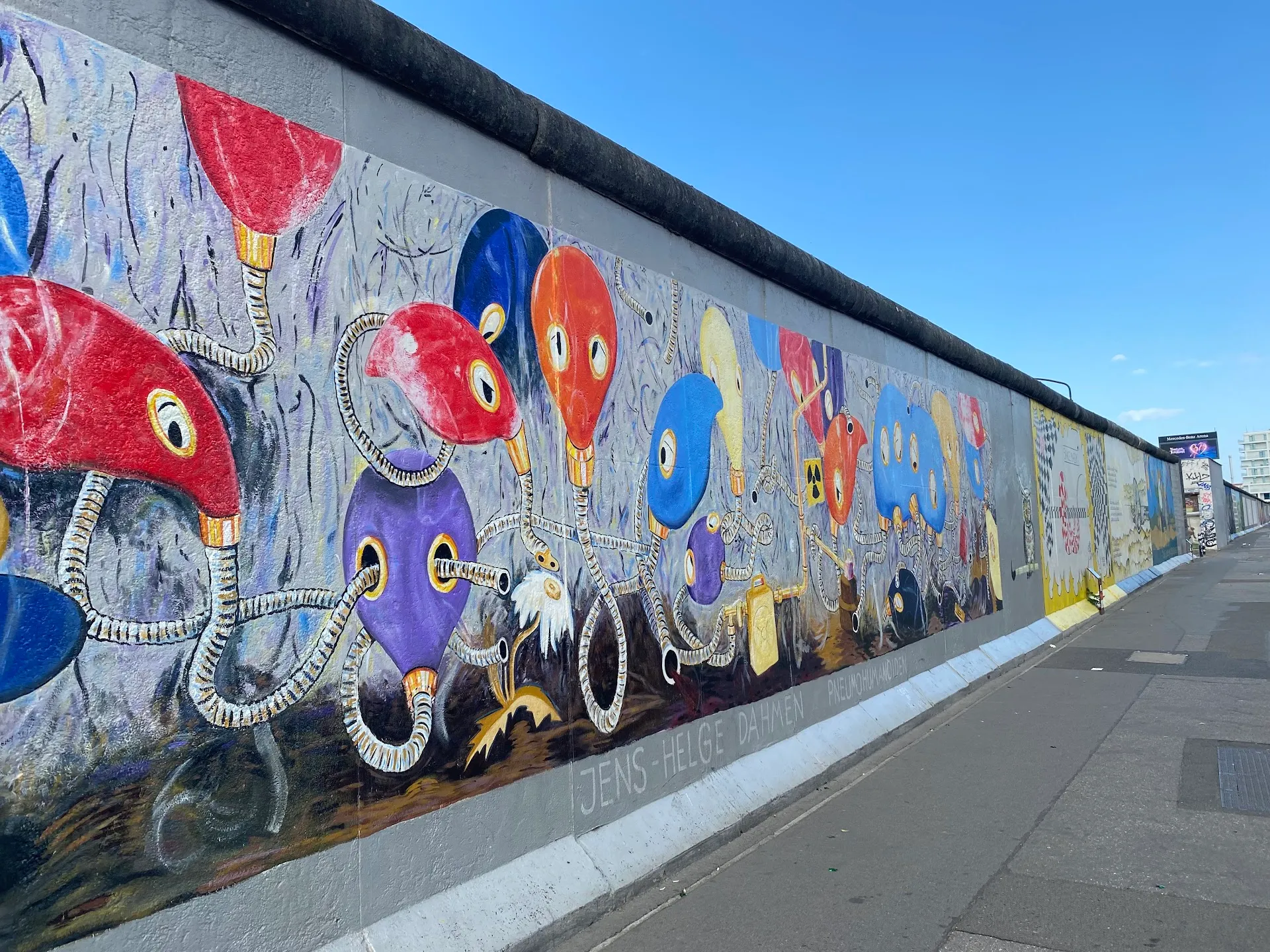
East Side Gallery
The longest remaining stretch of the Berlin Wall at 1.3km, transformed into an open-air gallery with over 100 murals by international artists. Includes the iconic Fraternal Kiss painting.
Friedrichshain
Restaurant4.0
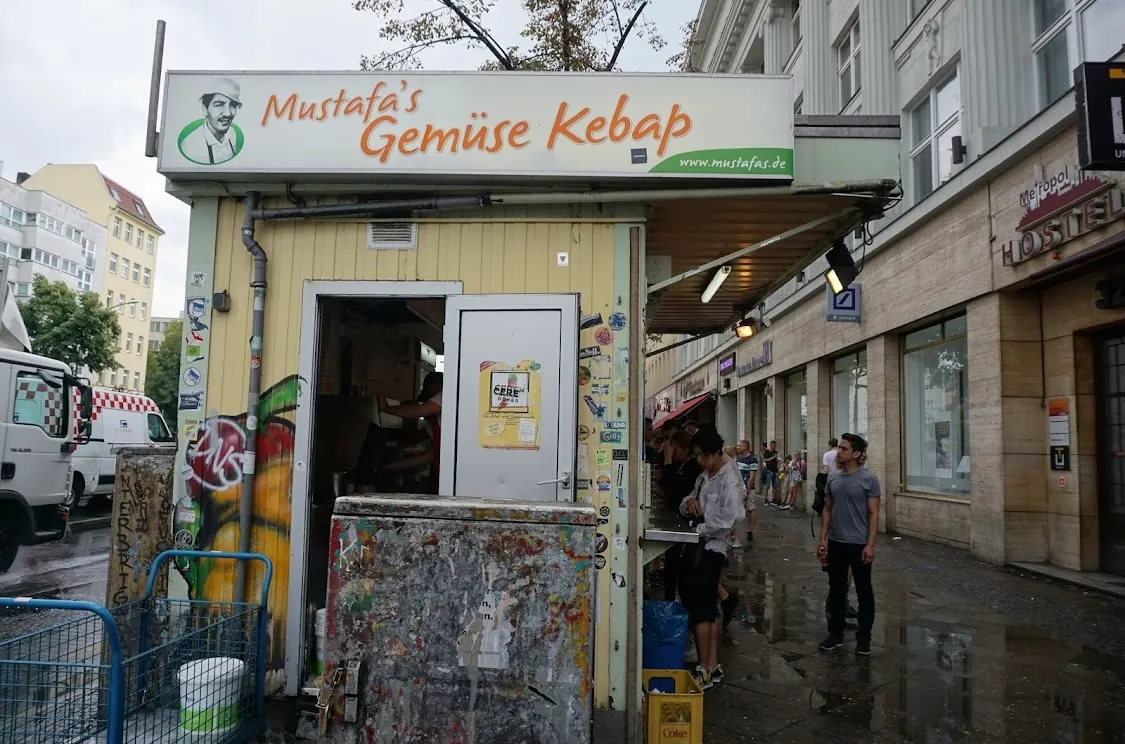
Mustafas Gemuese Kebab
Legendary street food stand famous for its roasted vegetable doner kebab. The queue can stretch for 30+ minutes but locals insist it is worth every second of waiting.
Kreuzberg
Architecture
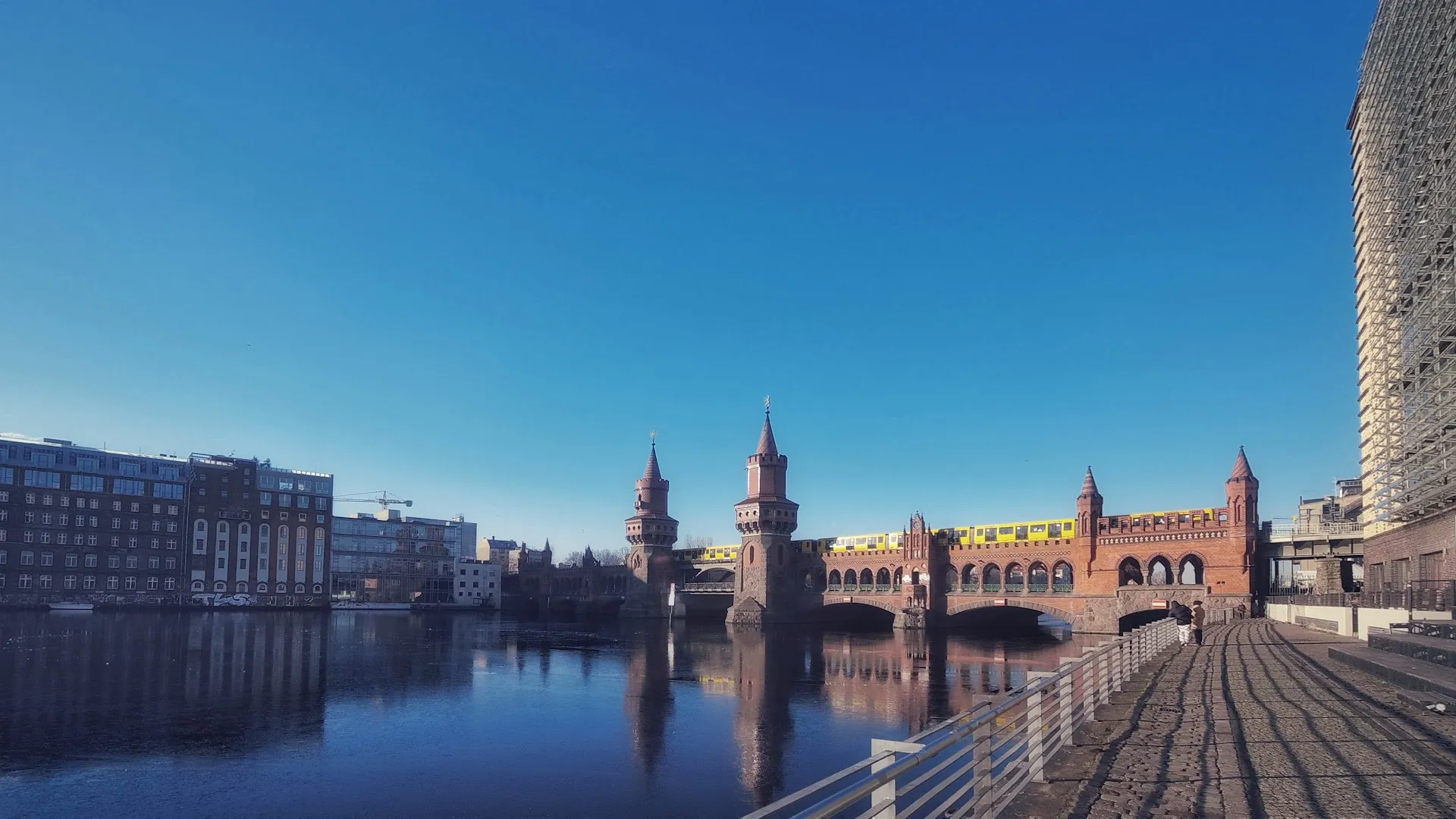
Oberbaumbruecke
Berlin's most beautiful bridge connecting Friedrichshain and Kreuzberg over the Spree. The red brick Gothic towers and yellow U-Bahn crossing create a striking composition, especially at blue hour with reflections.
Friedrichshain / Kreuzberg
Memorial5.0
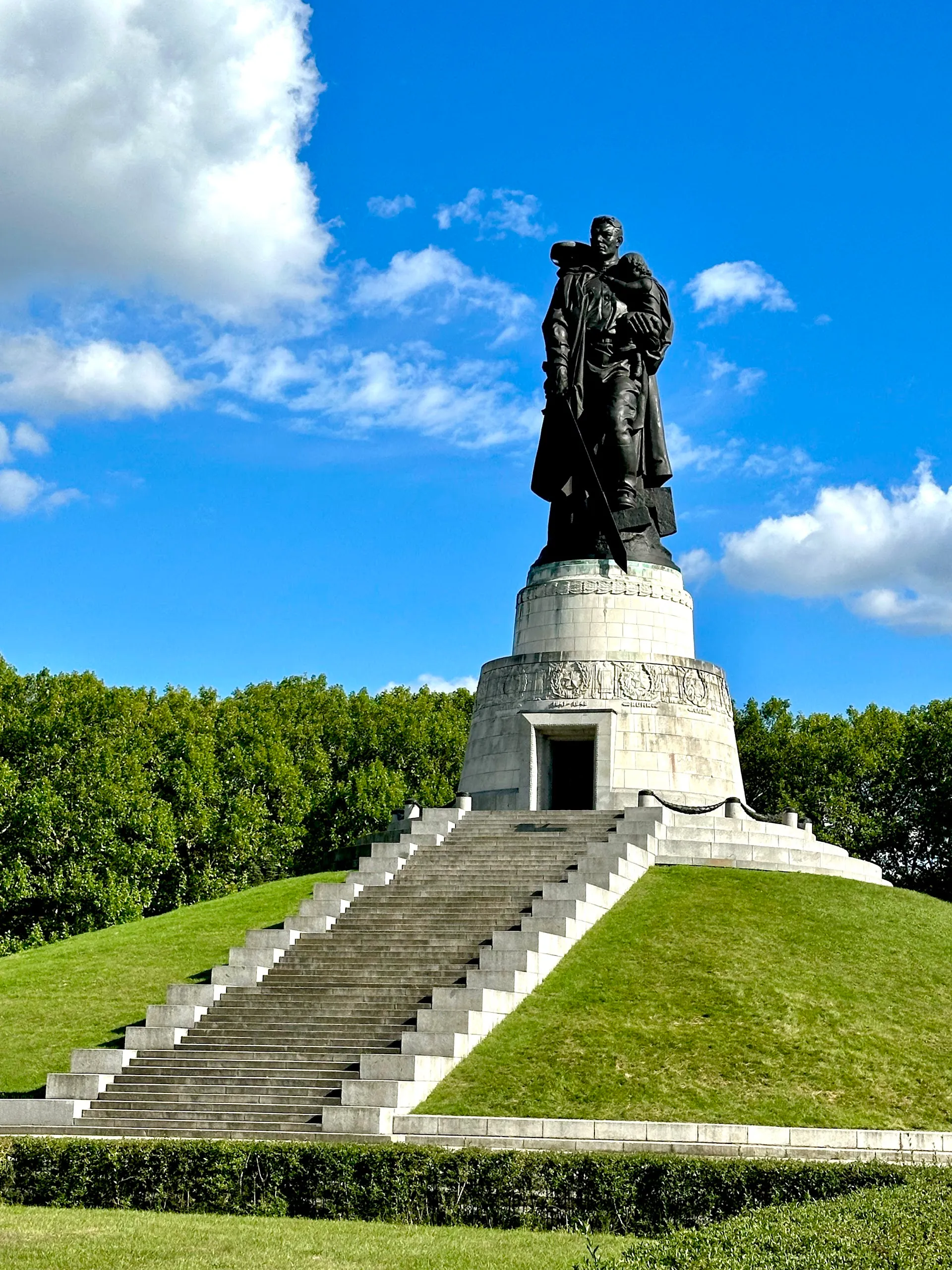
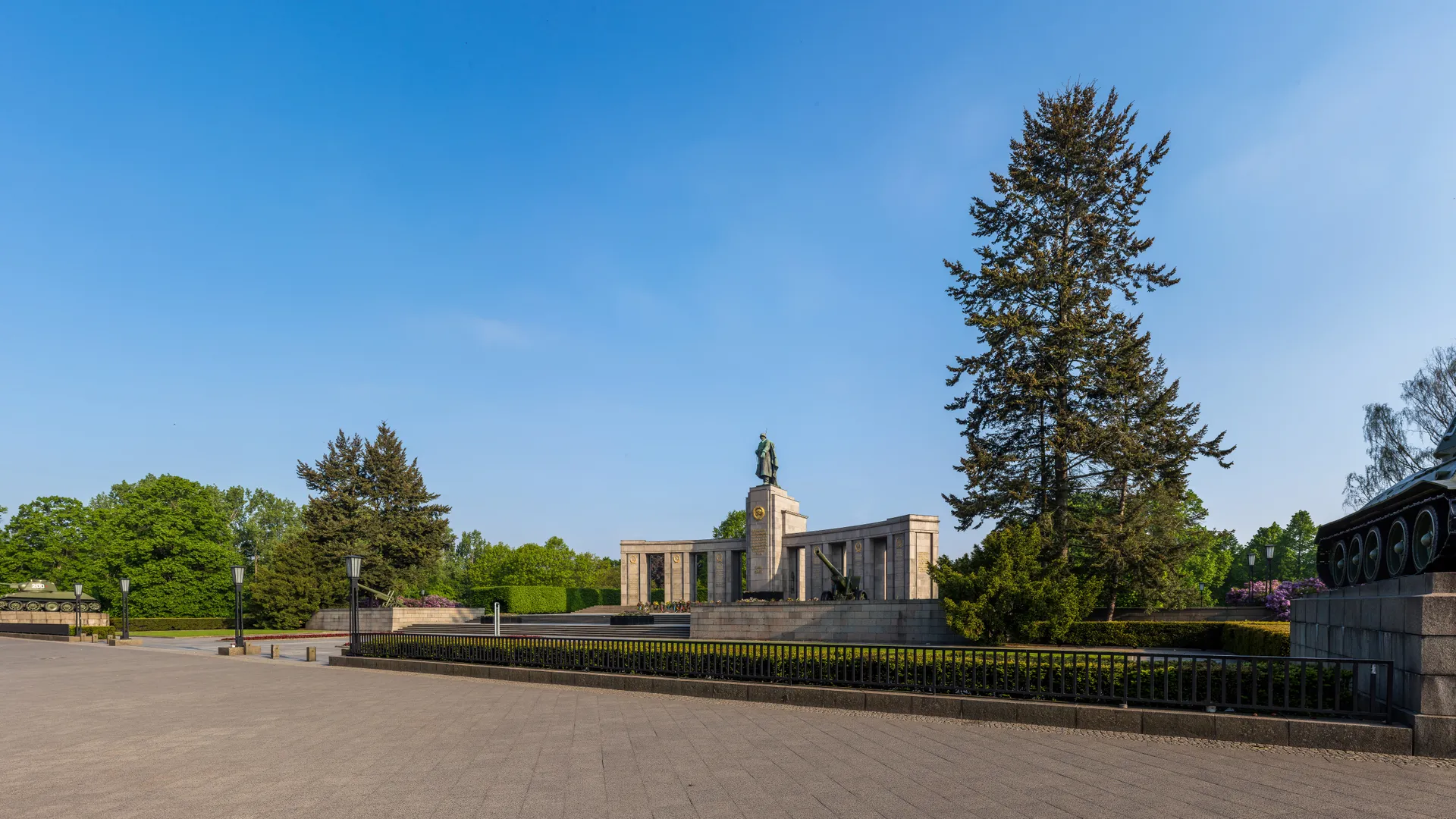
Treptower Park Soviet War Memorial
A monumental WWII memorial and military cemetery in Treptower Park, the largest Soviet war memorial outside the former USSR. The vast symmetrical complex is anchored by a 12-metre bronze statue of a Soviet soldier carrying a child and crushing a swastika underfoot. Over 7,000 Soviet soldiers are buried beneath the landscaped grounds flanked by carved marble sarcophagi depicting the war's progression.
Treptow
Bar4.0
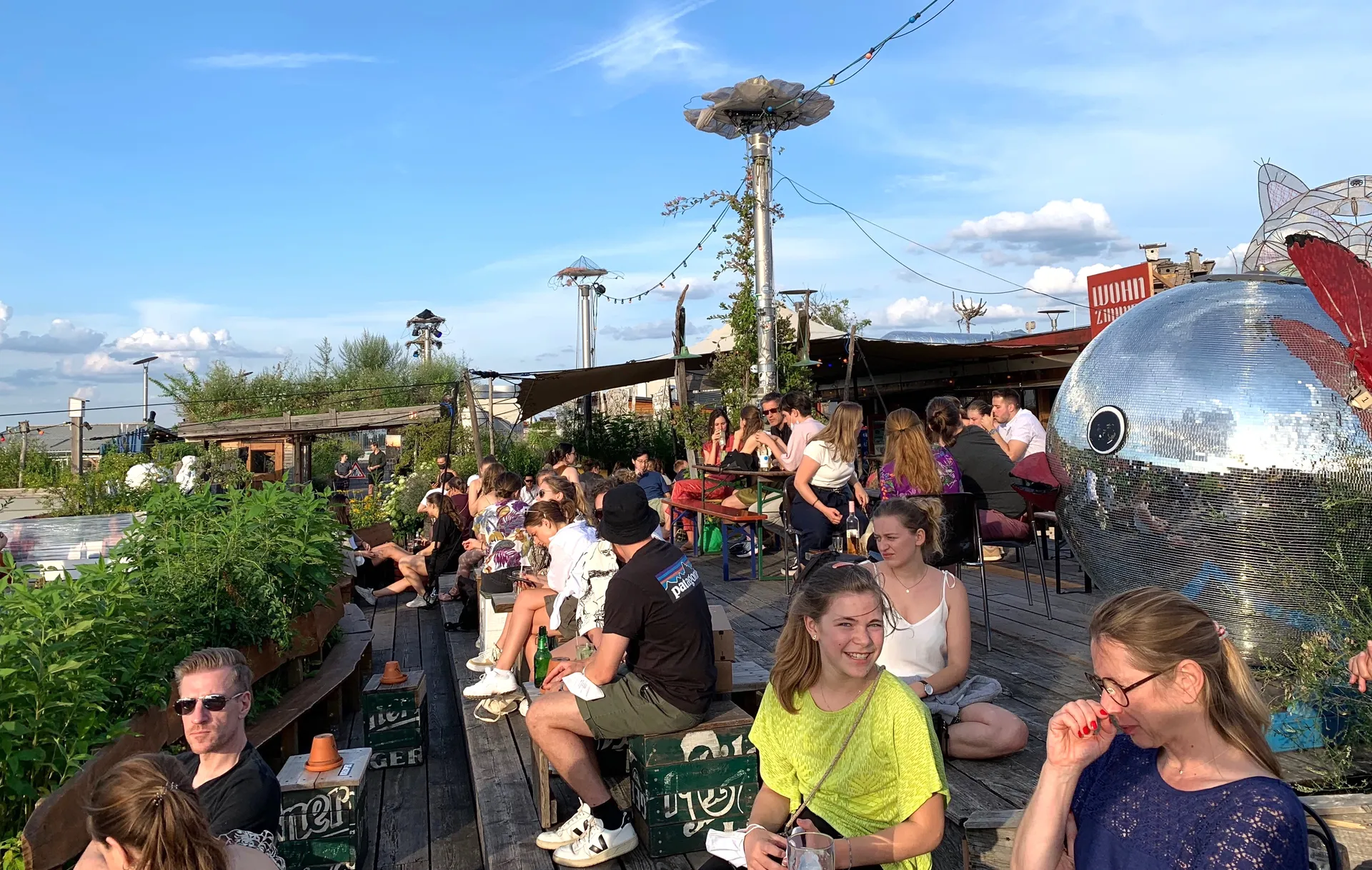
Klunkerkranich
Hidden rooftop bar on top of a parking garage with panoramic sunset views over Berlin. Regular DJ sets, live music, and a community garden vibe. Take the elevator to the top floor and walk up.
Neukoelln
Castle4.0
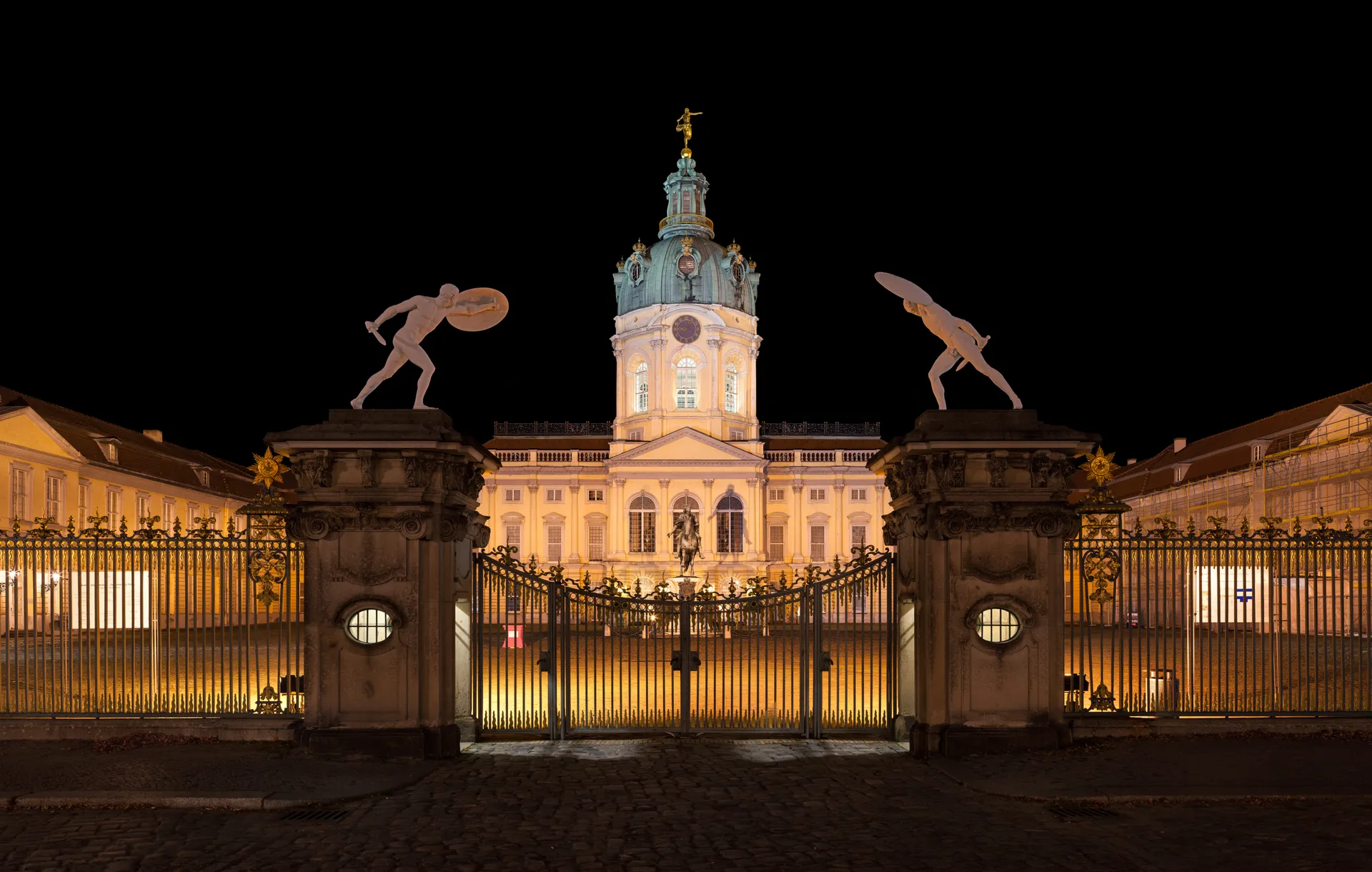
Charlottenburg Palace
Berlin's largest and most opulent palace, built in 1699 for Sophie Charlotte, the first Queen of Prussia. The baroque and rococo state rooms, the Golden Gallery, and the extensive landscaped gardens offer a rare window into Prussian royal grandeur that survived wartime bombing.
Charlottenburg
Park4.0
Tiergarten
Berlin's sprawling 520-acre central park, once a royal hunting ground, now a green sanctuary crisscrossed by tree-lined paths, ponds, and meadows. The Victory Column rises at its centre, the English Garden offers a secluded lakeside cafe, and shaded beer gardens along the waterways draw locals on warm afternoons. A vital green artery connecting the Brandenburg Gate to the Zoo.
Tiergarten
Landmark
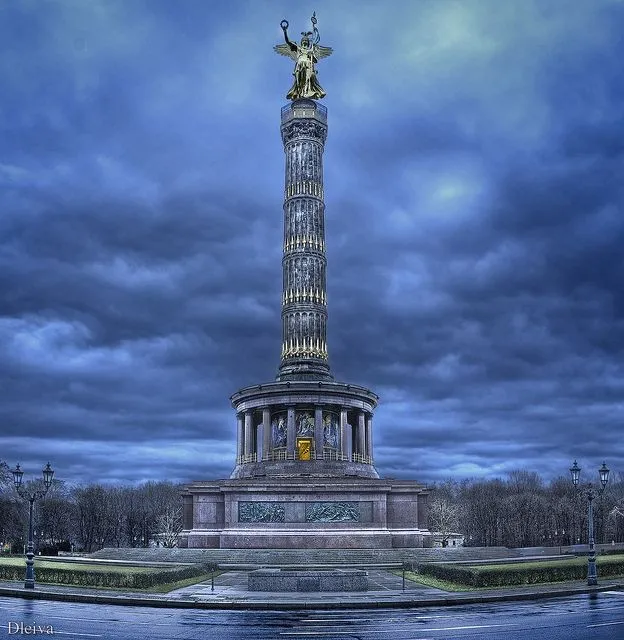
Victory Column (Siegessaeule)
A 67-metre column crowned by a gilded bronze statue of Victoria, originally erected in 1873 to celebrate Prussian military victories. Relocated to its current position at the Tiergarten's central roundabout by the Nazi regime in 1939, the column now offers one of Berlin's finest panoramic viewpoints. The 285-step spiral climb rewards with sweeping views of the Brandenburg Gate, Reichstag, and the park stretching in every direction.
Grosser Stern, Tiergarten
Street
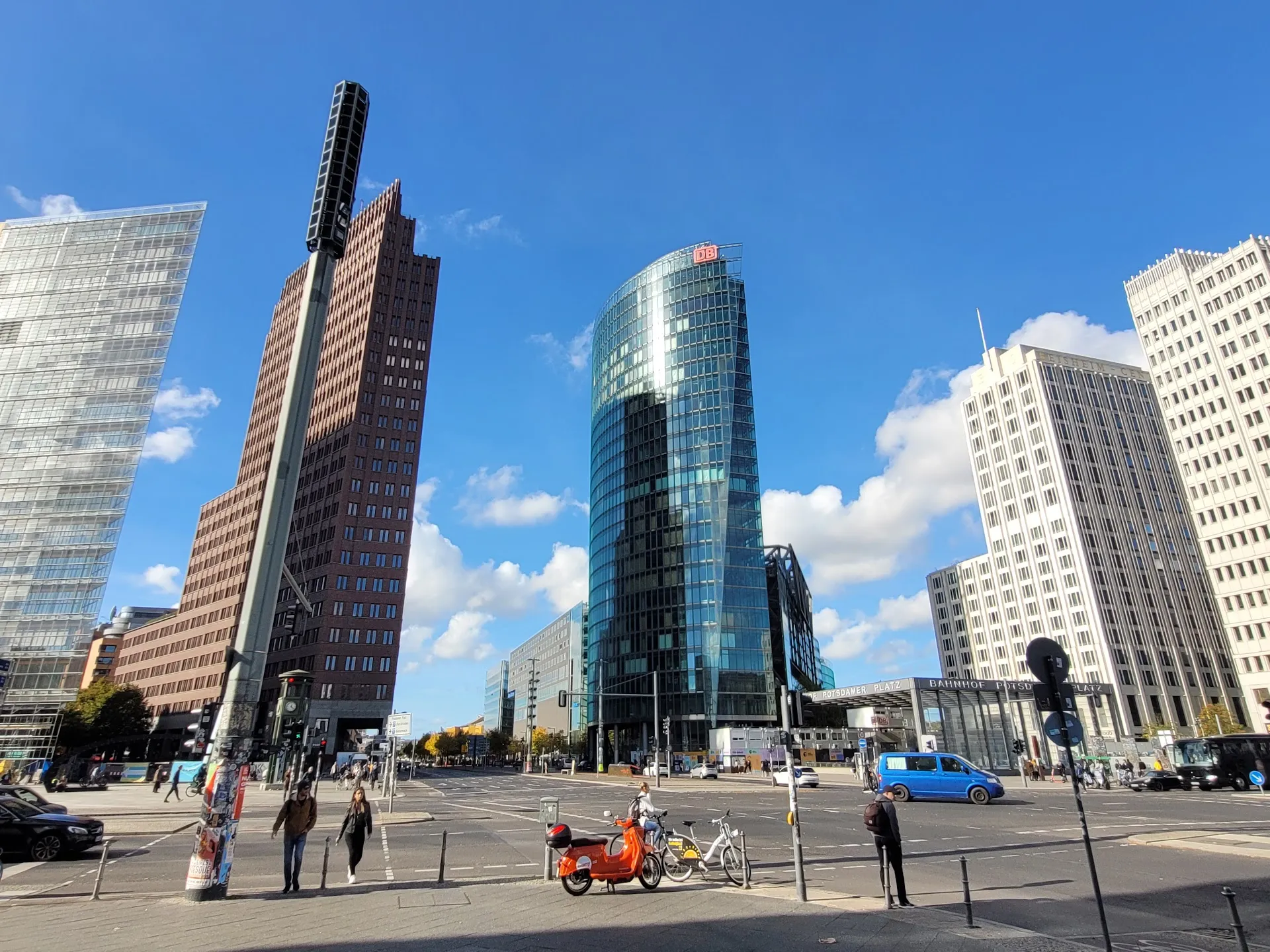
Potsdamer Platz
Once Europe's busiest intersection before being obliterated in WWII and left as wasteland in the Wall's death strip, Potsdamer Platz was rebuilt in the 1990s as a showcase of contemporary architecture. The Sony Center's tent-like glass atrium, designed by Helmut Jahn, creates a dramatic covered public space illuminated by colour-changing lights after dark. A handful of original Wall segments stand alongside as silent witnesses to the square's divided past.
Potsdamer Platz, Mitte / Tiergarten border
Restaurant4.0
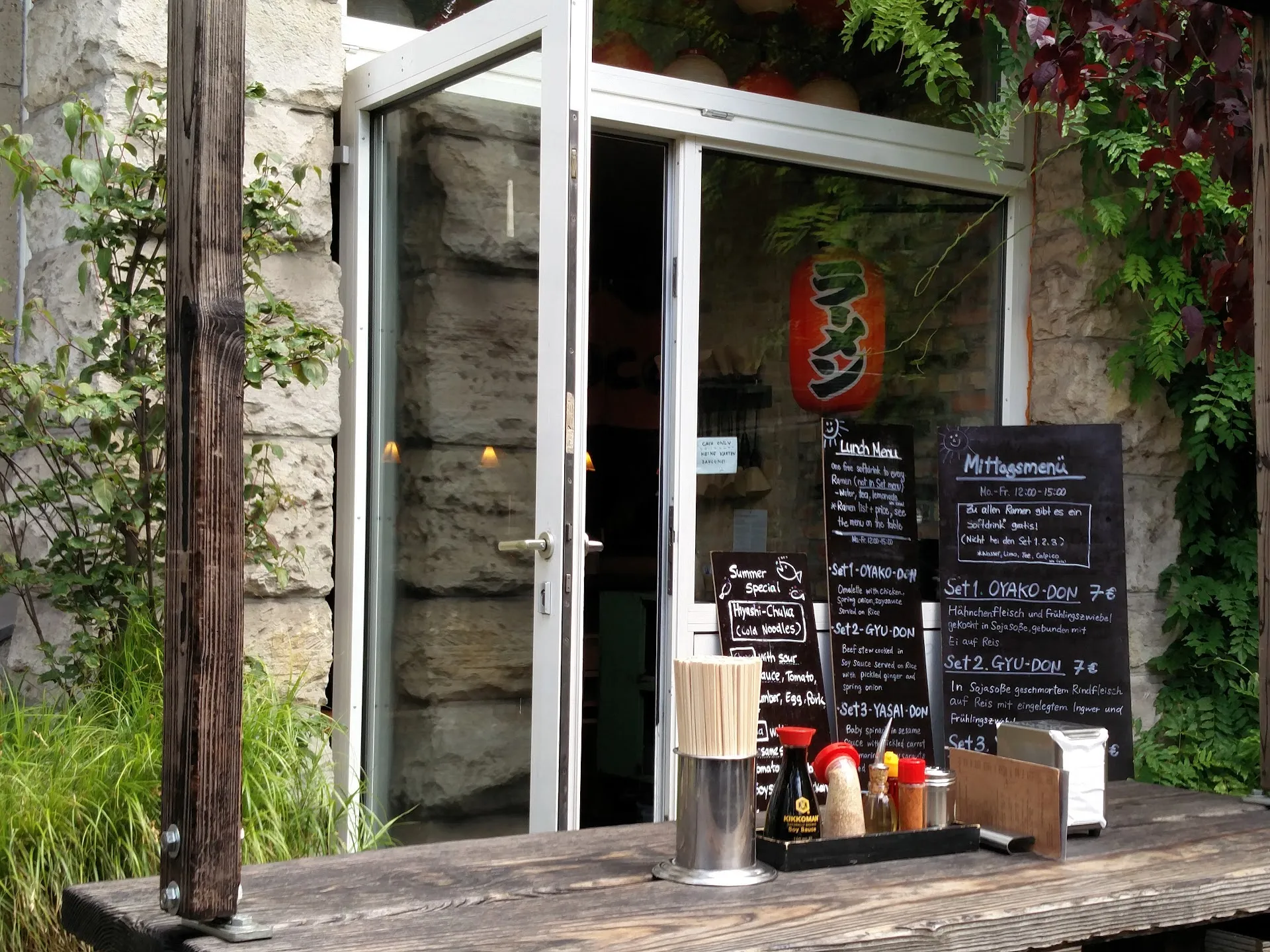
Cocolo Ramen
Authentic Japanese ramen in a cozy basement space along the Landwehr Canal. Rich tonkotsu and miso broths with perfectly chewy noodles at Berlin-friendly prices.
Kreuzberg
Must visit
Club5.0
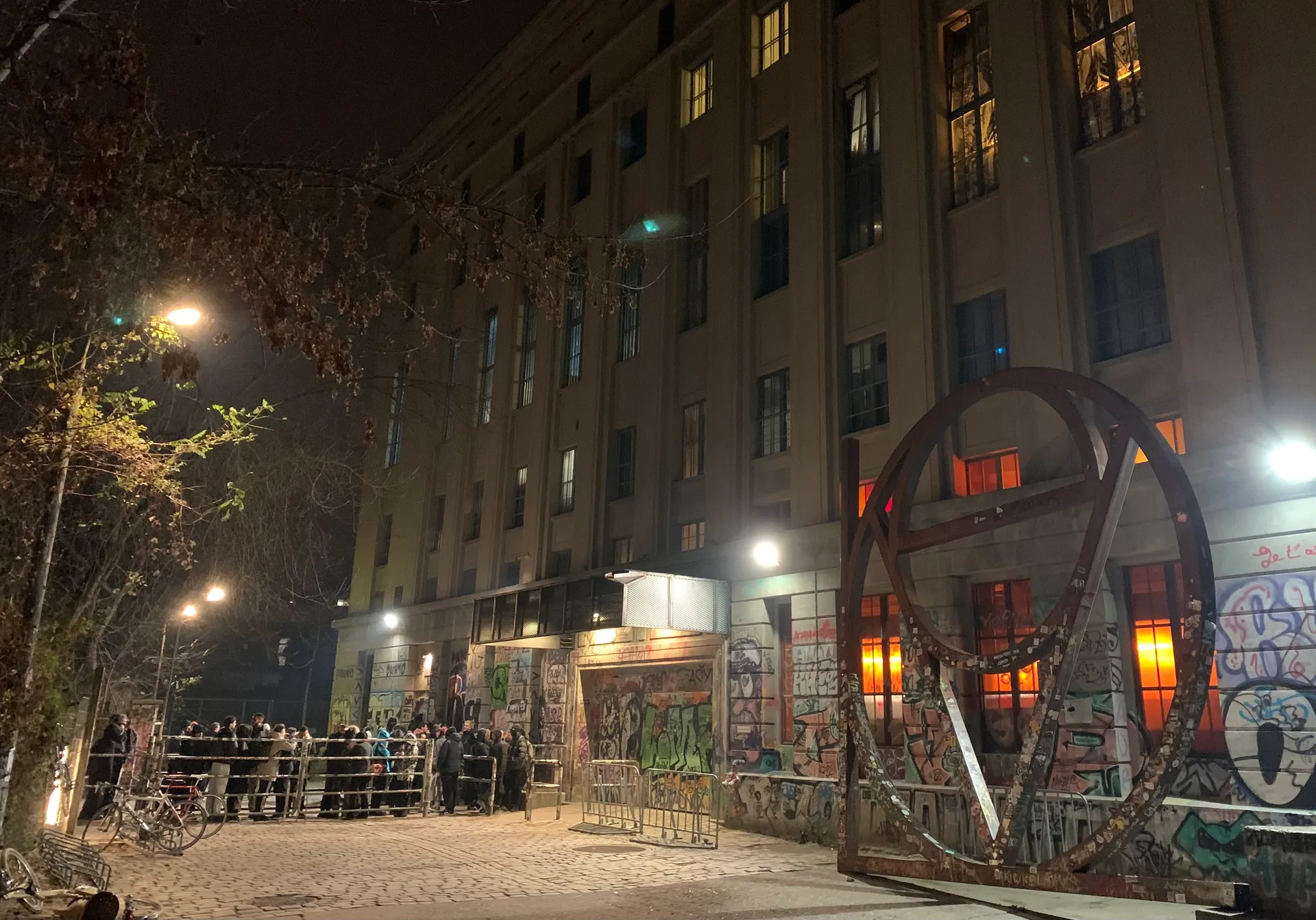
Berghain / Panorama Bar
The world's most famous techno club housed in a brutalist former power plant. Panorama Bar upstairs plays house, the main floor is relentless techno. No photos allowed inside.
Friedrichshain
Landmark
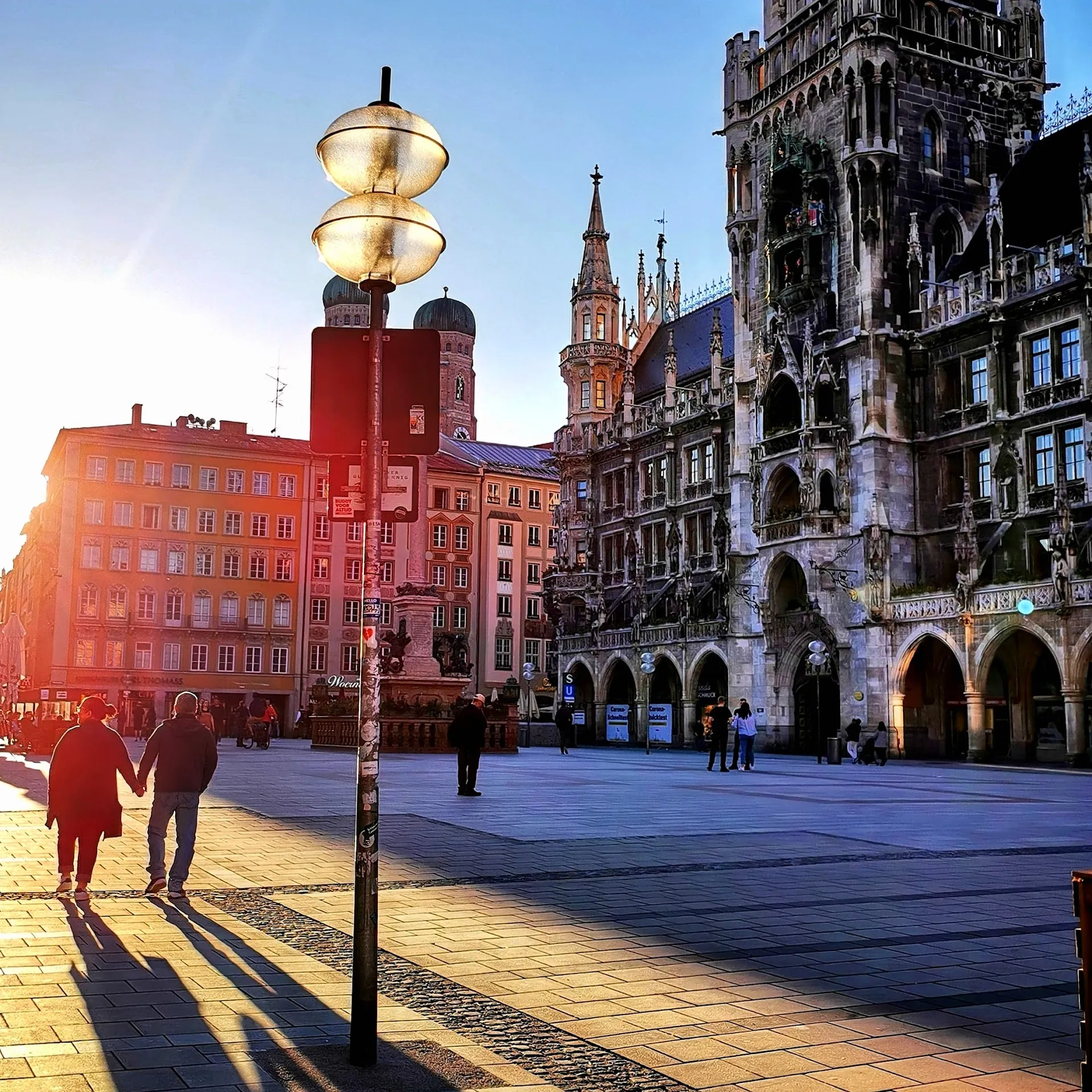
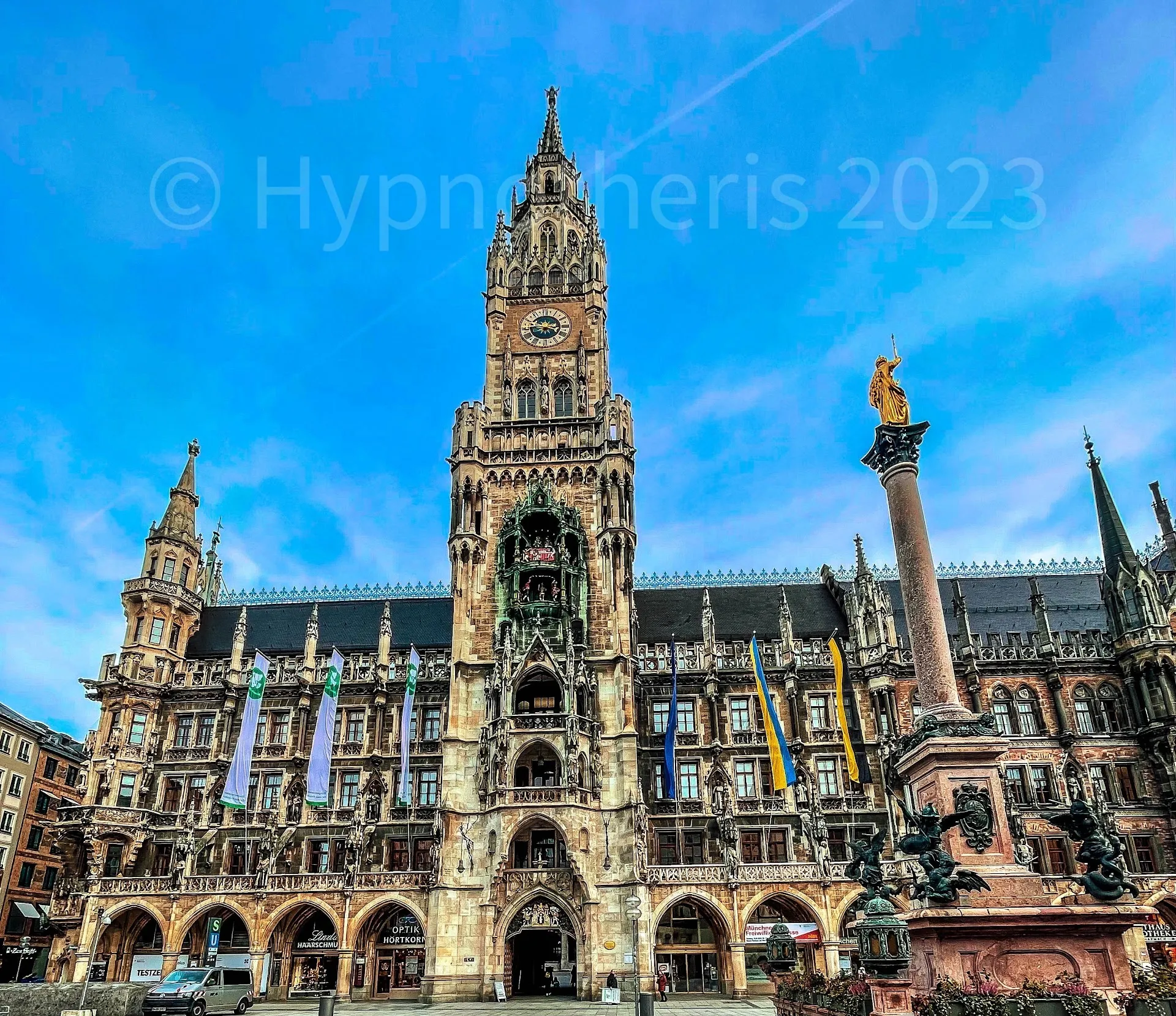
Marienplatz
Munich's central square and civic heart since 1158, dominated by the neo-Gothic New Town Hall (Neues Rathaus) whose tower carries the famous Rathaus-Glockenspiel. The animated carillon re-enacts a 16th-century royal wedding (Duke Wilhelm V and Renata of Lorraine, 1568) and knights' tournament for crowds gathered below the spires.
Viewpoint
New Town Hall Tower
Two elevators inside Munich's neo-Gothic New Town Hall (Neues Rathaus) carry visitors up the Rathausturm to an observation platform roughly 85 metres above Marienplatz, a step-free alternative to the city's church-tower stair climbs (e.g. Alter Peter). The 360-degree platform looks out over the Old Town rooftops and landmarks such as the Frauenkirche, Alter Peter and Theatinerkirche and, on clear days, south to the Alps.
Landmark
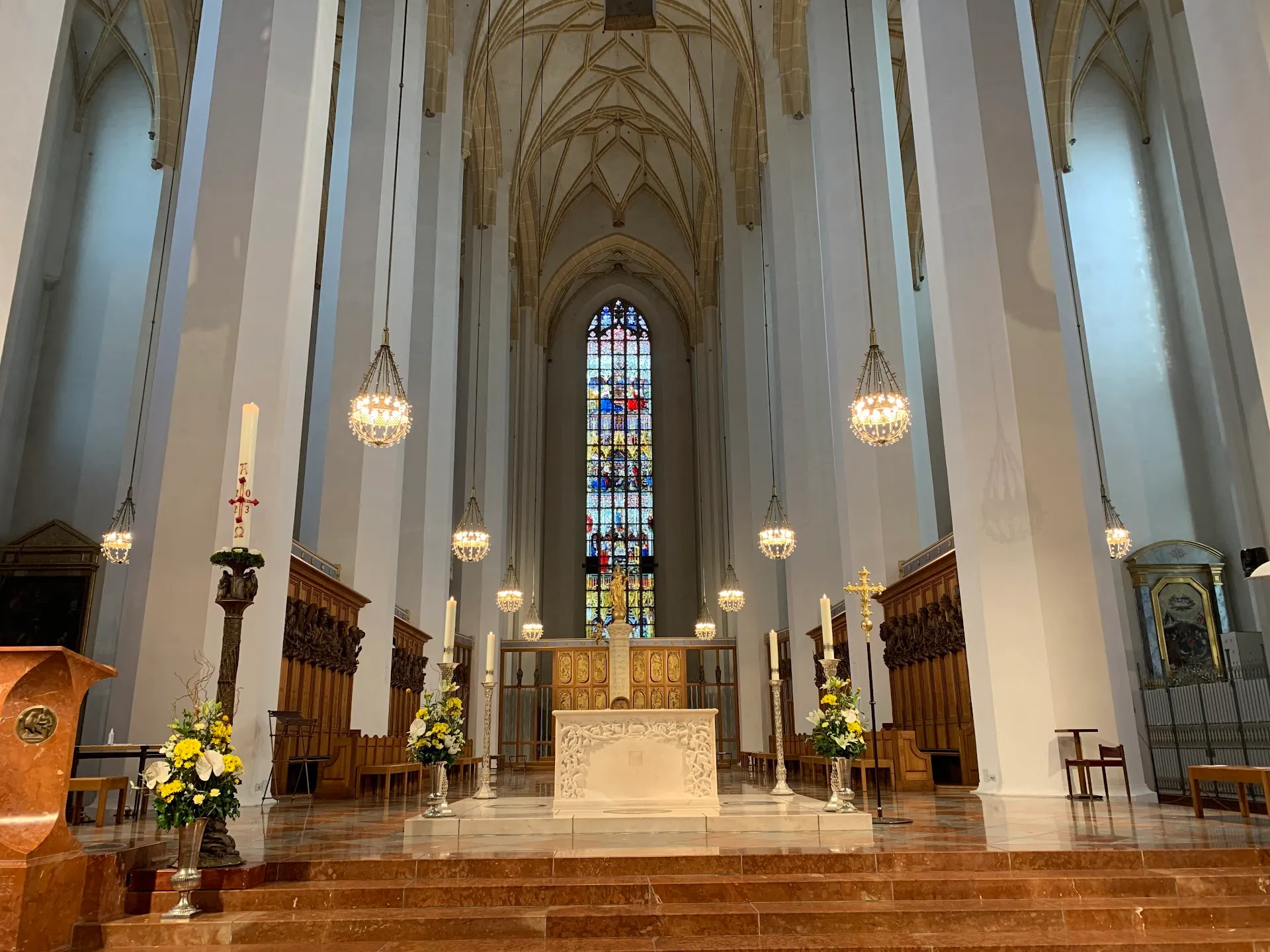
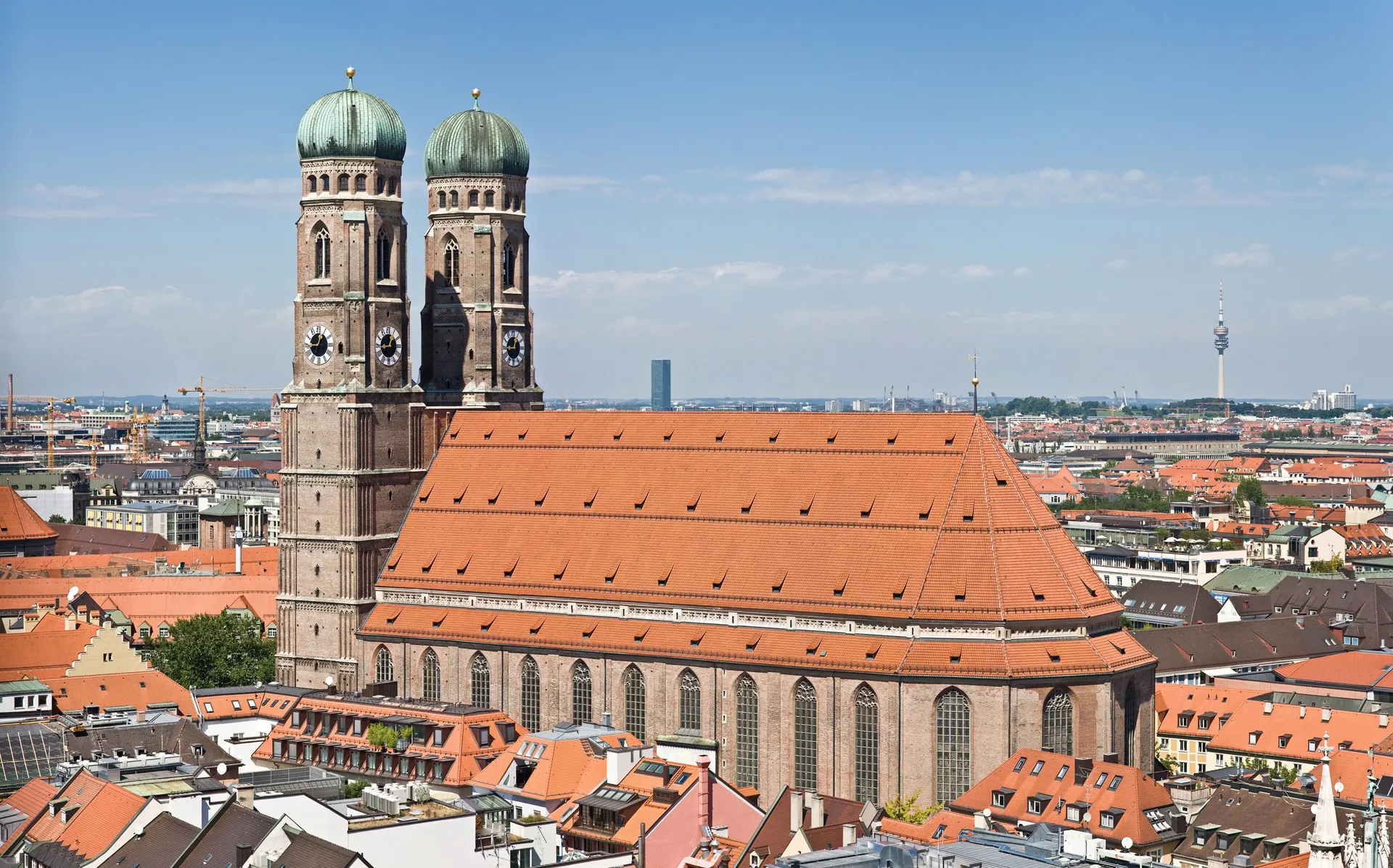
Frauenkirche
The brick-Gothic Cathedral of Our Dear Lady is Munich's defining skyline silhouette, its twin copper-domed towers rising to nearly 99 metres (north 98.57 m, south 98.45 m) — a height the city protects by capping nearby high-rises. Entry to the vast hall-church nave is free; the south tower can be climbed for views toward the Alps.
Market
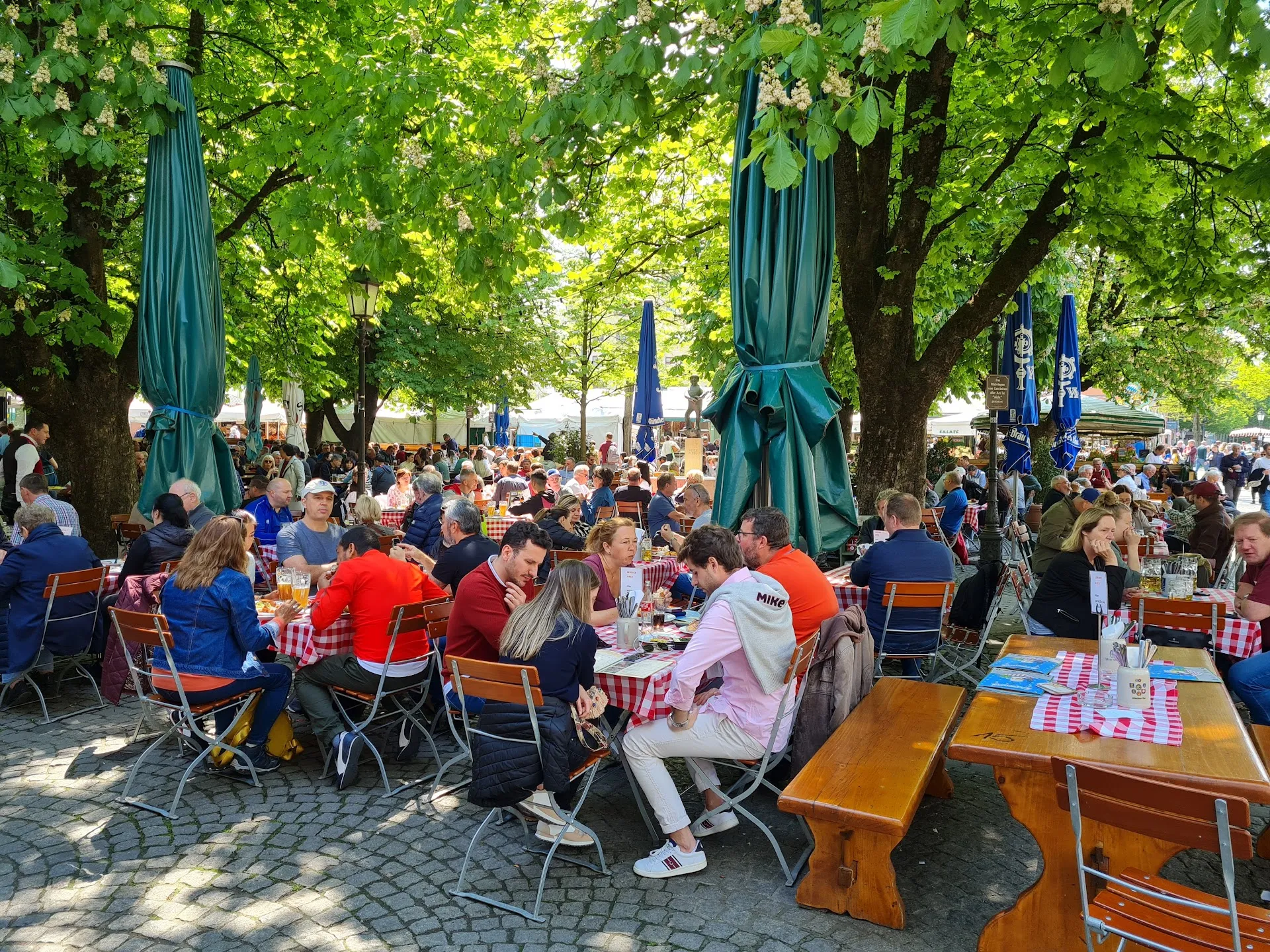
Viktualienmarkt
Munich's most famous food market: a permanent open-air market of more than 100 stalls just southeast of Marienplatz in the old town. Established at its current site by royal decree in 1807, it sells fresh produce, game, poultry, fish, cheese, spices, flowers, juices and Bavarian specialties, and centers on a popular beer garden.
Museum
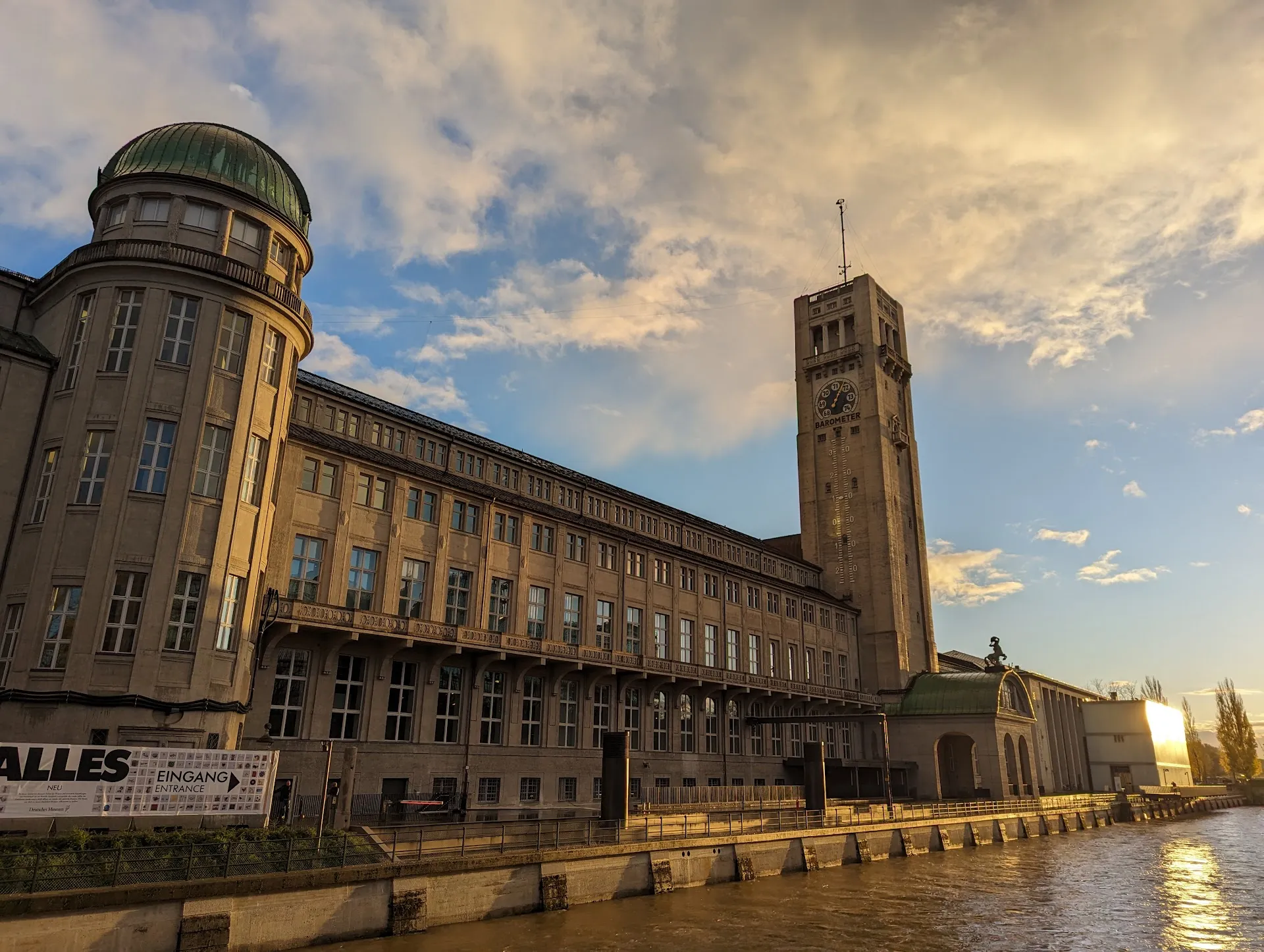
Deutsches Museum
Set on an island in the Isar (the Museumsinsel), the Deutsches Museum is the world's largest museum of science and technology, with tens of thousands of objects spanning mining, aerospace, robotics, energy and dozens of other fields. A major multi-year modernization expanded its hands-on demonstrations, making it a long-standing favorite with families.
Cafe
Tambosi
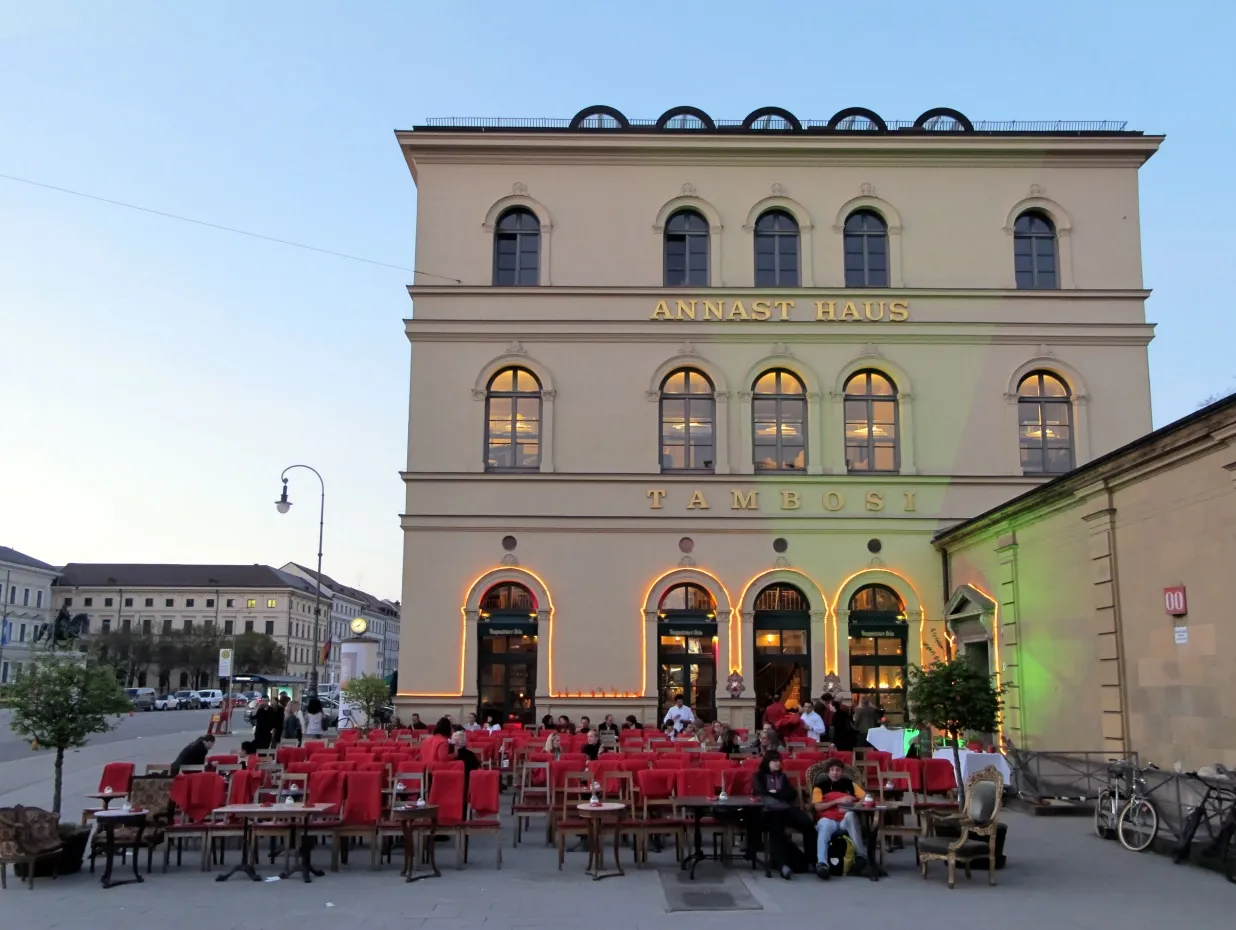
Tracing its roots to a coffee kiosk opened at the Hofgarten in the 1770s (commonly dated to 1775; taken over by Luigi Tambosi in 1810), Tambosi is widely regarded as Munich's oldest café. Today it is an all-day café-restaurant on Odeonsplatz with a sunny Hofgarten terrace, serving coffee and cake by day and running late as a bar on weekends.
Park
Englischer Garten
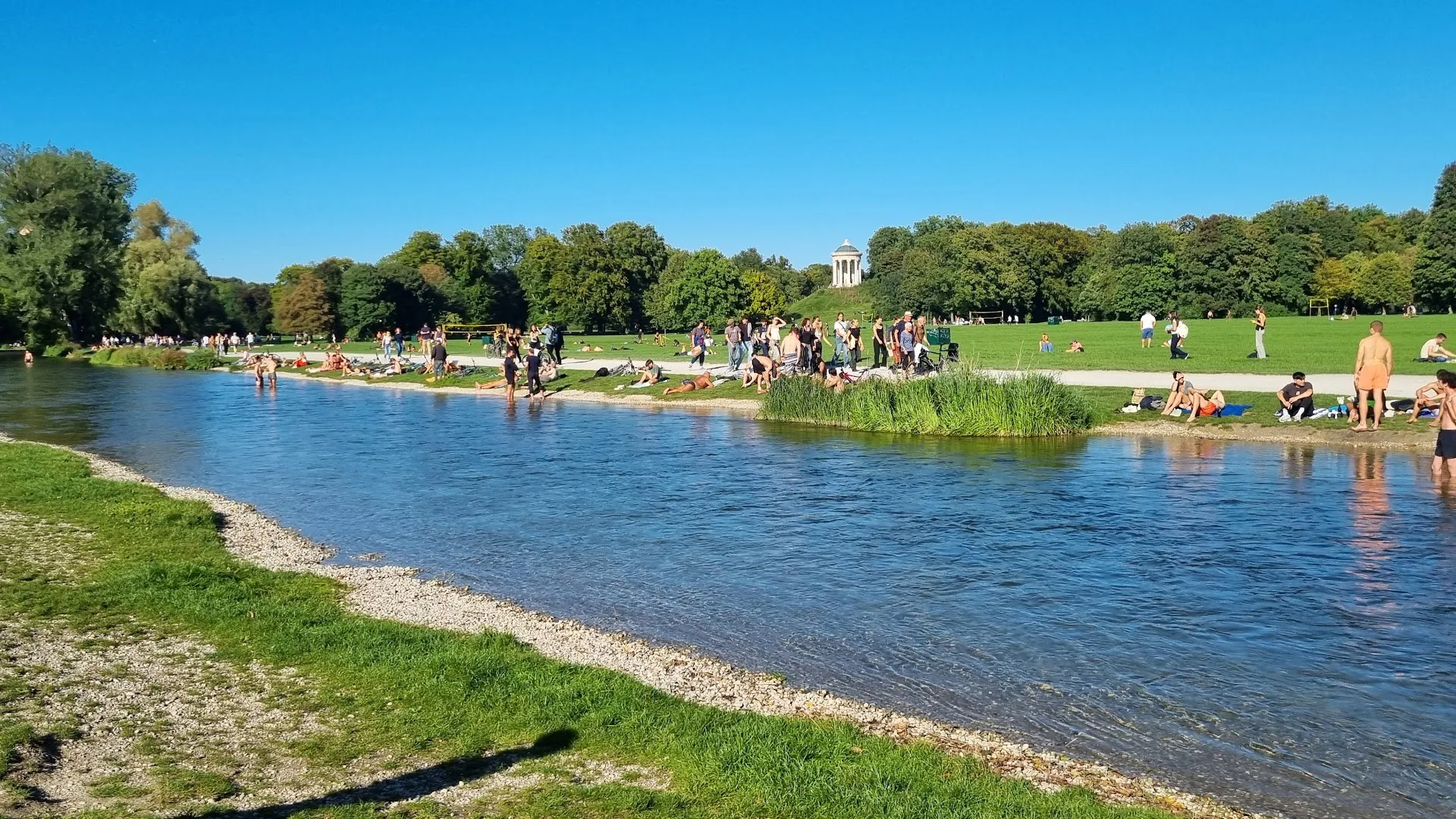
One of the world's largest inner-city parks (~3.7 km² / about 375 hectares), the Englischer Garten stretches along the Isar through central Munich. Laid out from 1789 in the naturalistic English landscape style (commissioned by Elector Karl Theodor, designed under Benjamin Thompson/Count Rumford and Friedrich Ludwig von Sckell), it is famous for the Chinese Tower (Chinesischer Turm) beer garden, the Eisbach standing wave where surfers ride year-round, and vast open meadows. It is free and freely accessible at all hours.
Market
Markt am Wiener Platz
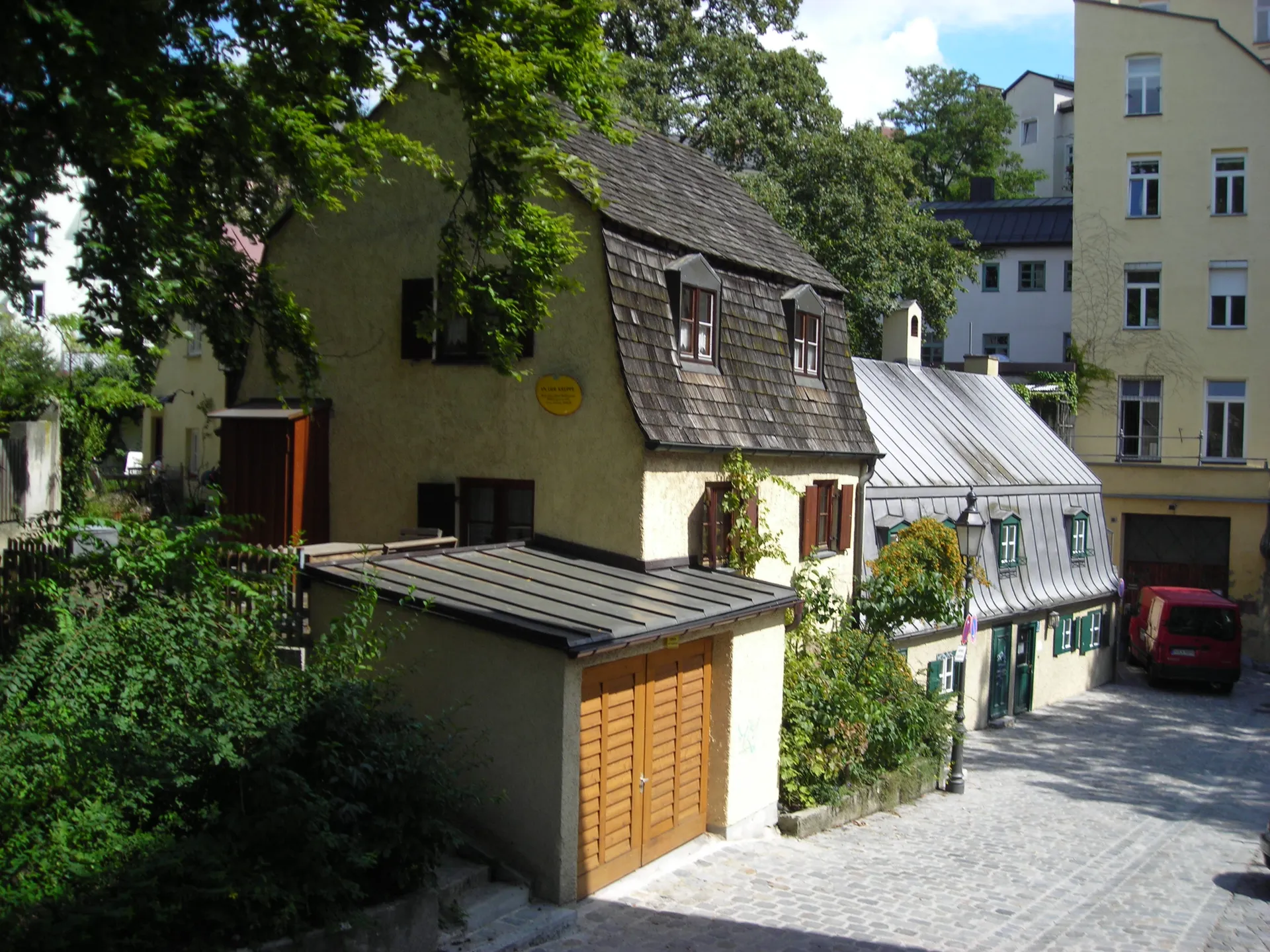
The smallest of Munich's four permanent grocery markets, set on the village-like Wiener Platz in Haidhausen, where the market has stood since 1 November 1889 (the square itself was named Wiener Platz in 1891). Its wooden stalls sell everyday fresh food — fruit and vegetables, meat, fish, bread and flowers — alongside small snack and drink stands. Note: the historic market is under structural renovation (Bestandssanierung) expected to finish in 2027, with an interim market operating on the square around the Fischerbuberl fountain (official opening 25 April 2026).
Haidhausen
Museum
Alte Pinakothek
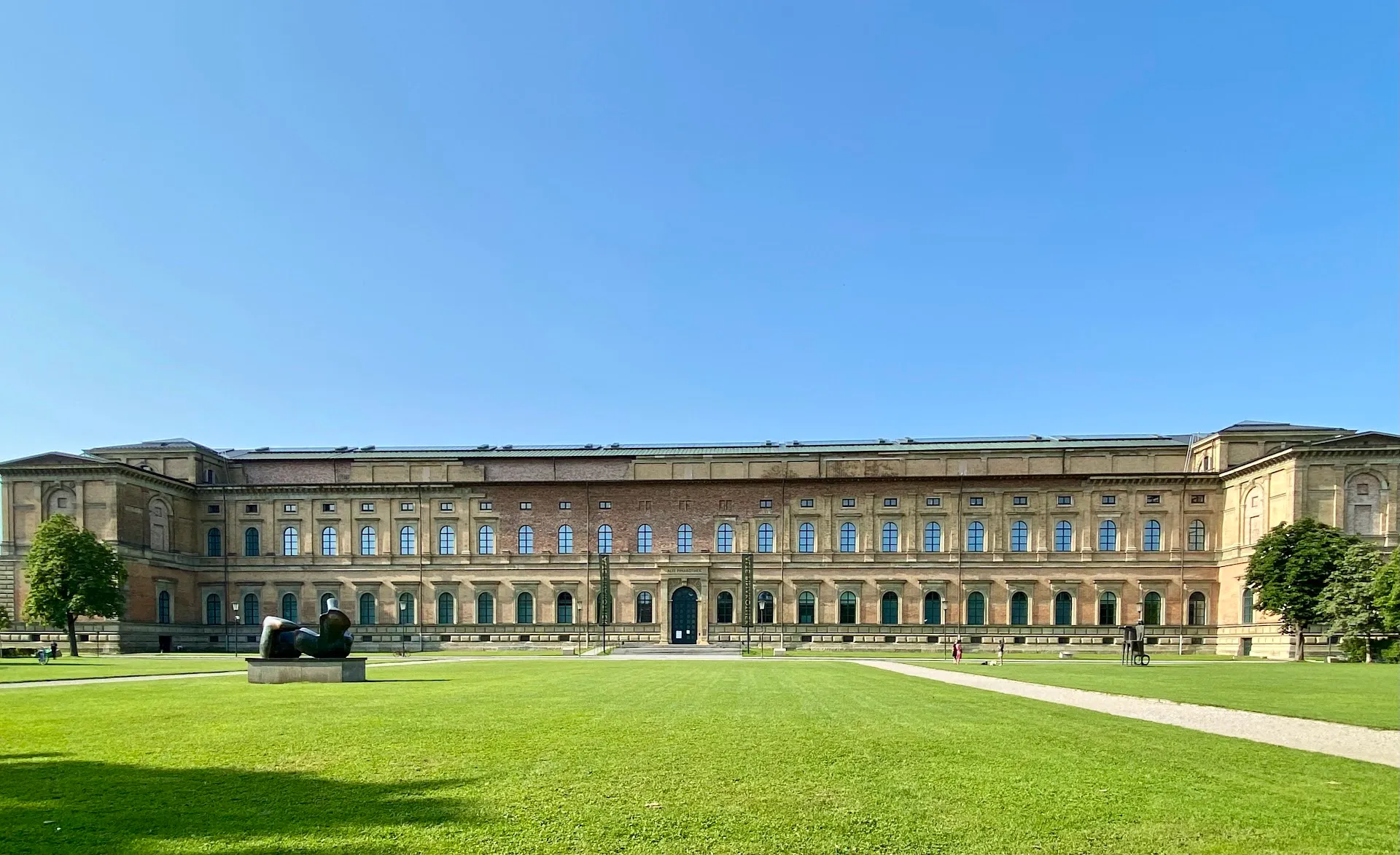
One of the oldest and most important picture galleries in the world, the Alte Pinakothek holds an outstanding collection of European Old Master paintings from the 14th to 18th centuries, with works by Duerer, Rubens, Rembrandt and Leonardo. It anchors Munich's Kunstareal museum quarter.
Museum
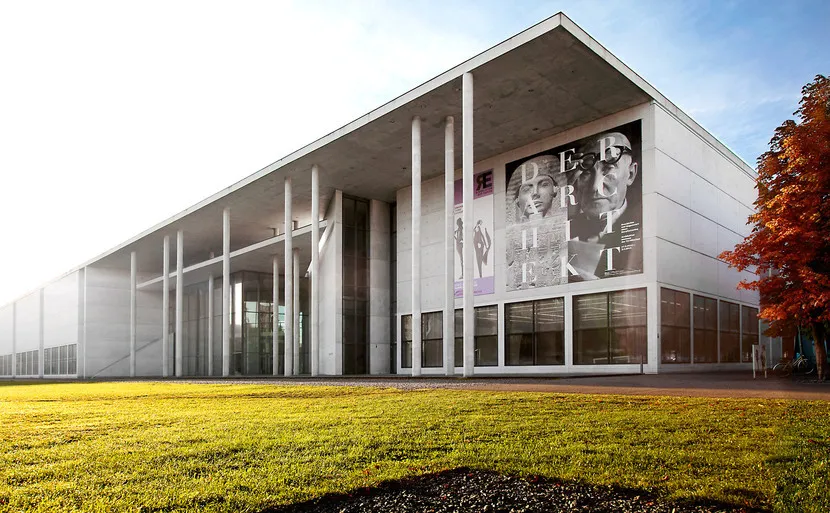
Pinakothek der Moderne
Munich's largest modern art museum unites four collections under one rotunda-lit roof: modern and contemporary art (Sammlung Moderne Kunst), the State Graphic Collection (Staatliche Graphische Sammlung), Die Neue Sammlung design museum, and the Architecture Museum of the Technical University of Munich (Architekturmuseum der TUM). Designed by Stephan Braunfels and opened in 2002, it sits at the heart of the Kunstareal.
Cafe
Man Versus Machine Coffee Roasters
Independent third-wave specialty-coffee roastery in Munich's Glockenbachviertel (Müllerstraße 23). Founded in 2014, Man Versus Machine roasts its own specialty-grade beans and keeps a tight menu of espresso, flat white and rotating filter brews (V60, AeroPress, syphon) in a minimalist, dark-walled space. It is widely regarded as a cornerstone of Munich's specialty-coffee scene; the brand also operates additional cafes elsewhere in the city (e.g. Maxvorstadt/Schwabing).
Glockenbach / Isarvorstadt
Museum
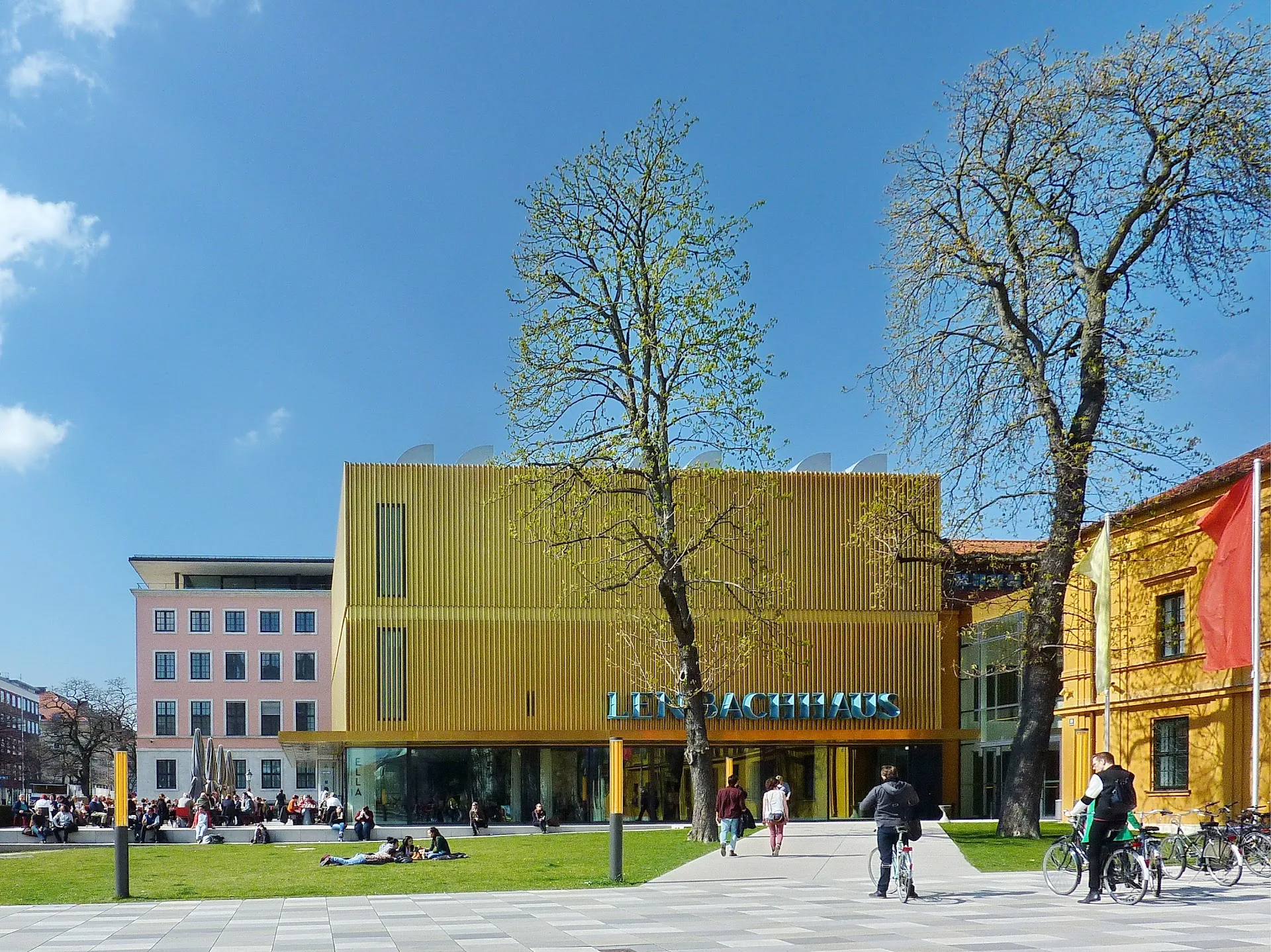
Lenbachhaus
Housed in the Florentine-style villa of painter Franz von Lenbach with a bold golden modern extension, the Lenbachhaus holds the world's largest collection of art by the Blue Rider (Der Blaue Reiter) group, including Kandinsky, Münter, Marc and Klee. It also shows 19th-century Munich painting and contemporary art.
Park
Schlosspark Nymphenburg
The expansive landscape park behind Nymphenburg Palace blends formal baroque parterres, tree-lined canals, and naturalistic English-style woodland (redesigned from 1799 by Friedrich Ludwig von Sckell) across roughly 180 hectares within the garden wall (about 229 ha for the whole complex). Dotted with fountains and ornamental pavilions (Amalienburg, Badenburg, Pagodenburg, Magdalenenklause), it is a free, gated park with seasonal hours and a favorite for strolls and birdwatching.
Landmark
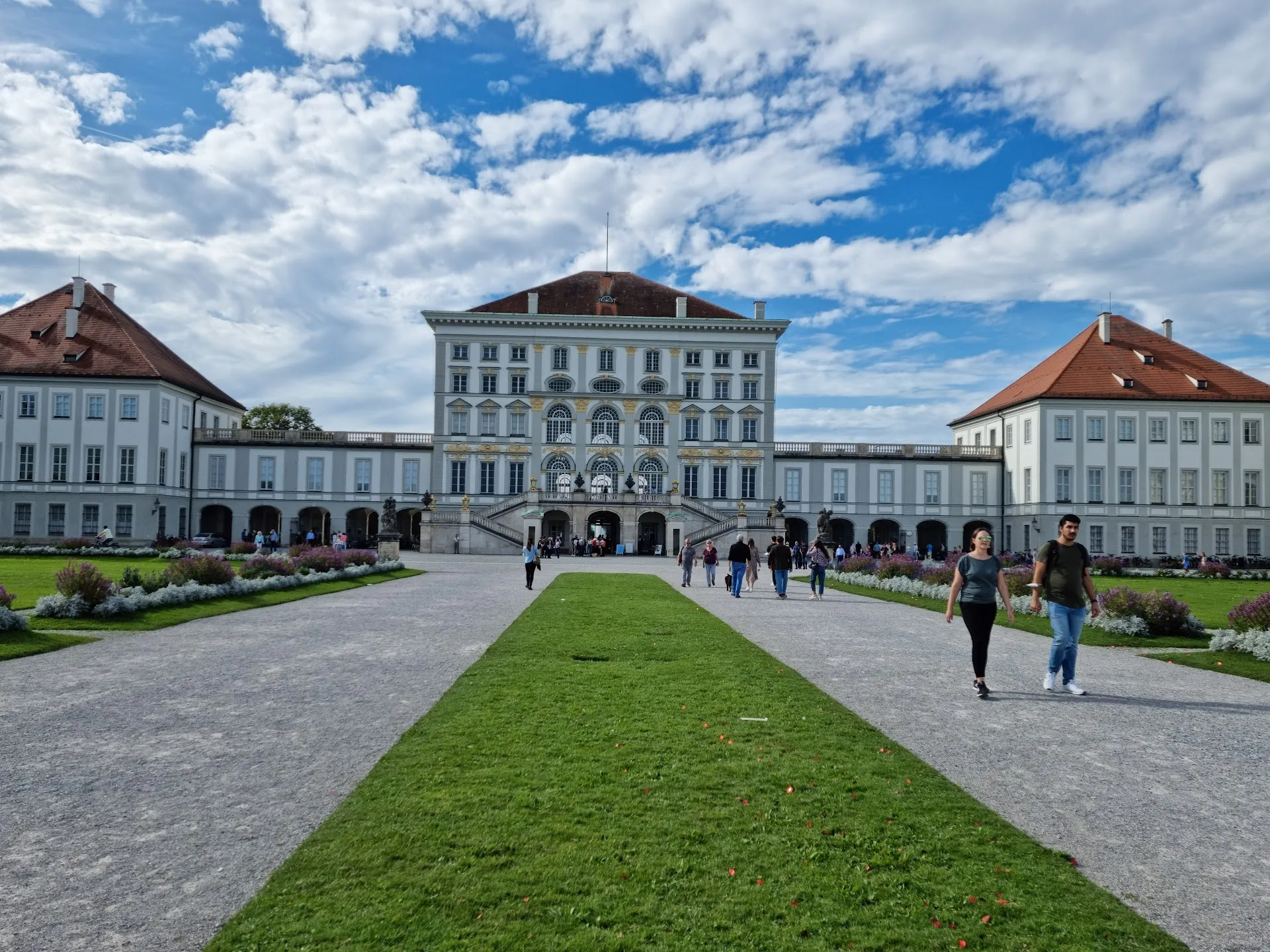
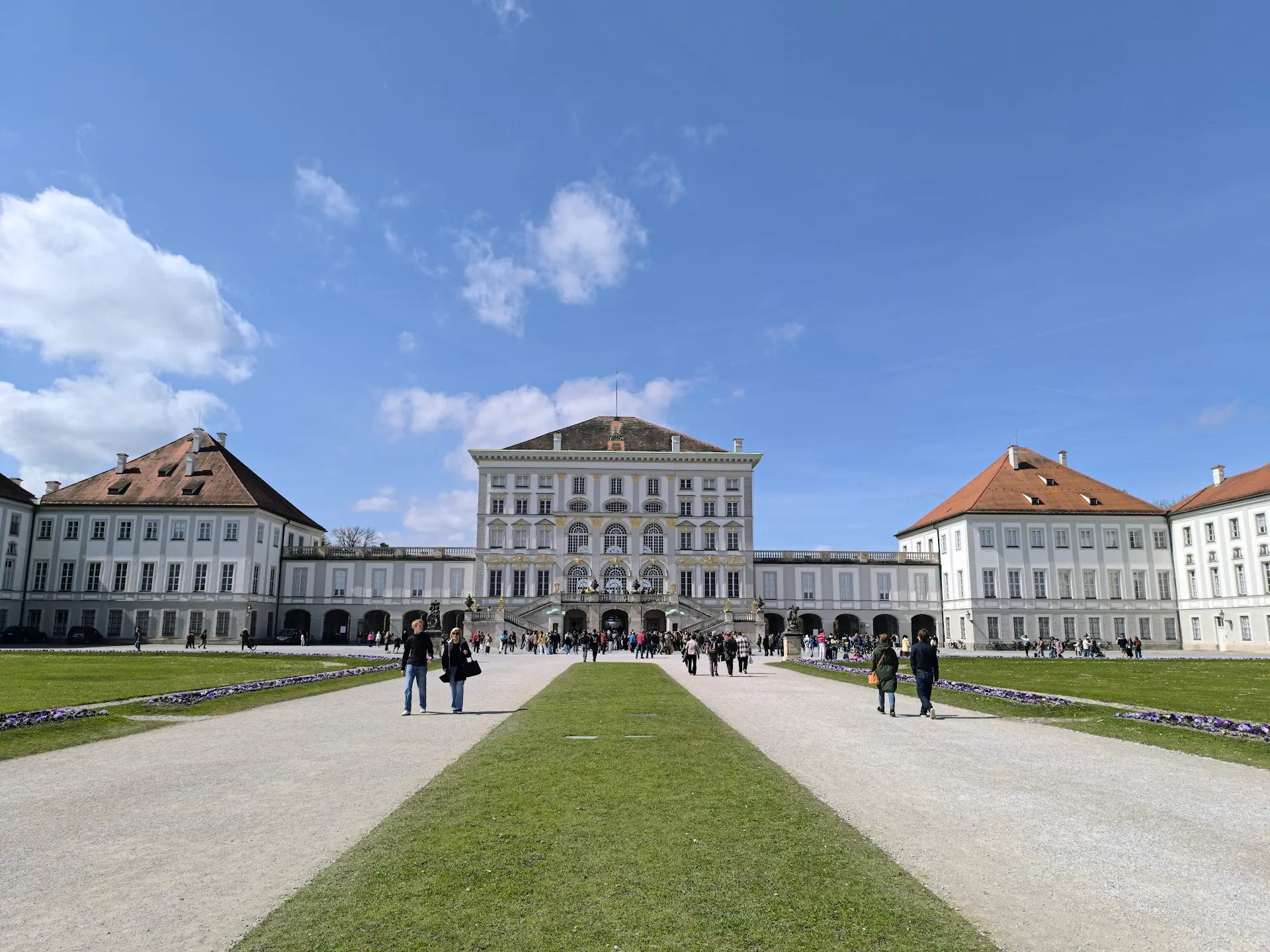
Nymphenburg Palace
A sprawling Baroque summer residence of the ruling Wittelsbach dynasty, Nymphenburg pairs lavish state rooms like the frescoed Great Hall (Steinerner Saal) with a vast landscaped park and garden pavilions. It remains one of Germany's grandest royal palace ensembles.
Park
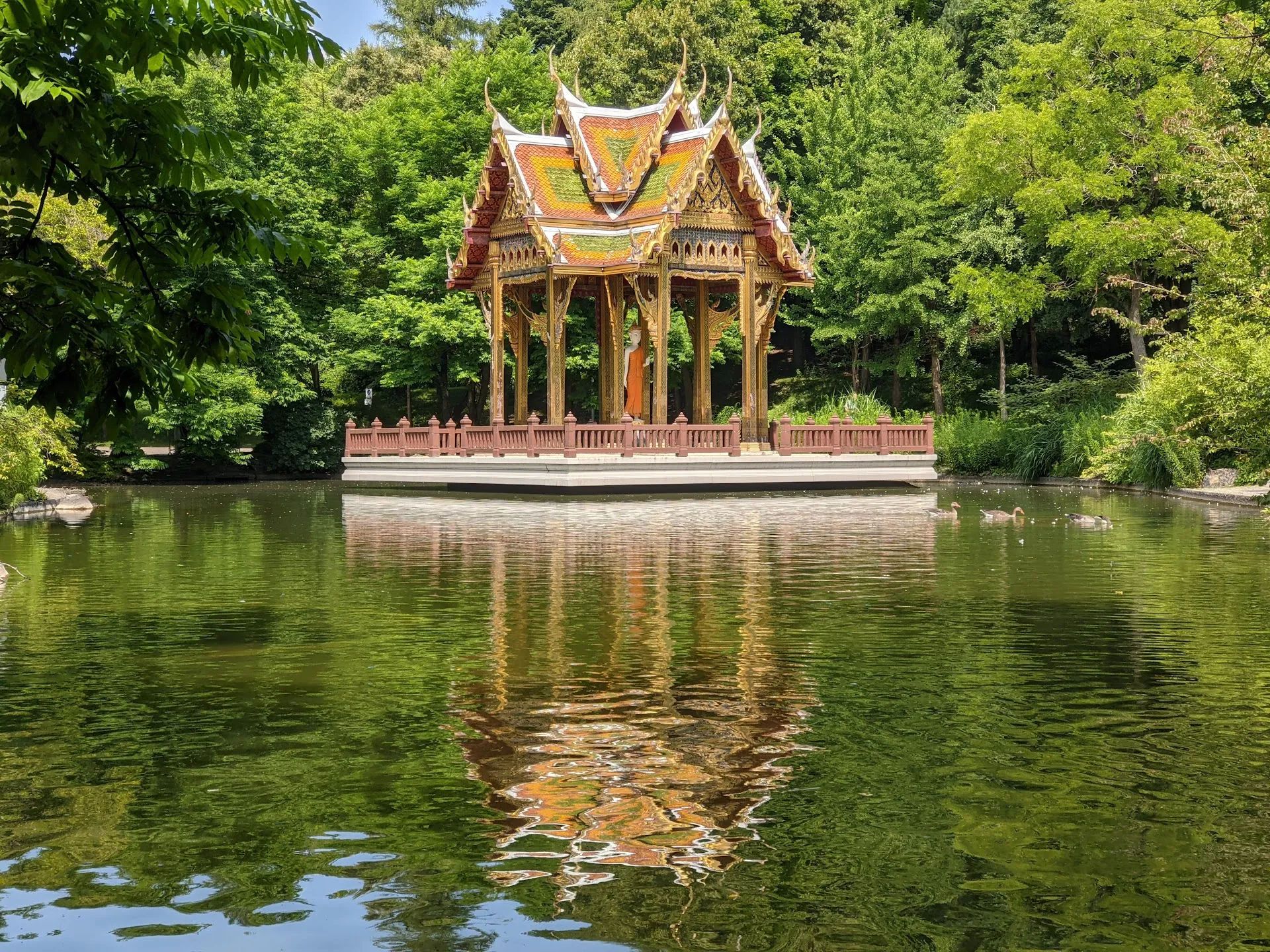
Westpark
Created for the 1983 International Garden Exposition (IGA 83), Westpark is a large public park (~60 ha per the city portal; other sources cite up to ~72 ha) in southwest Munich's Sendling-Westpark district. Highlights include an extensive rose garden, authentic East Asian gardens (Chinese, Japanese, Thai and Nepali), beer gardens, and a lakeside stage (Seebuehne) hosting open-air cinema and concerts in summer.
Viewpoint
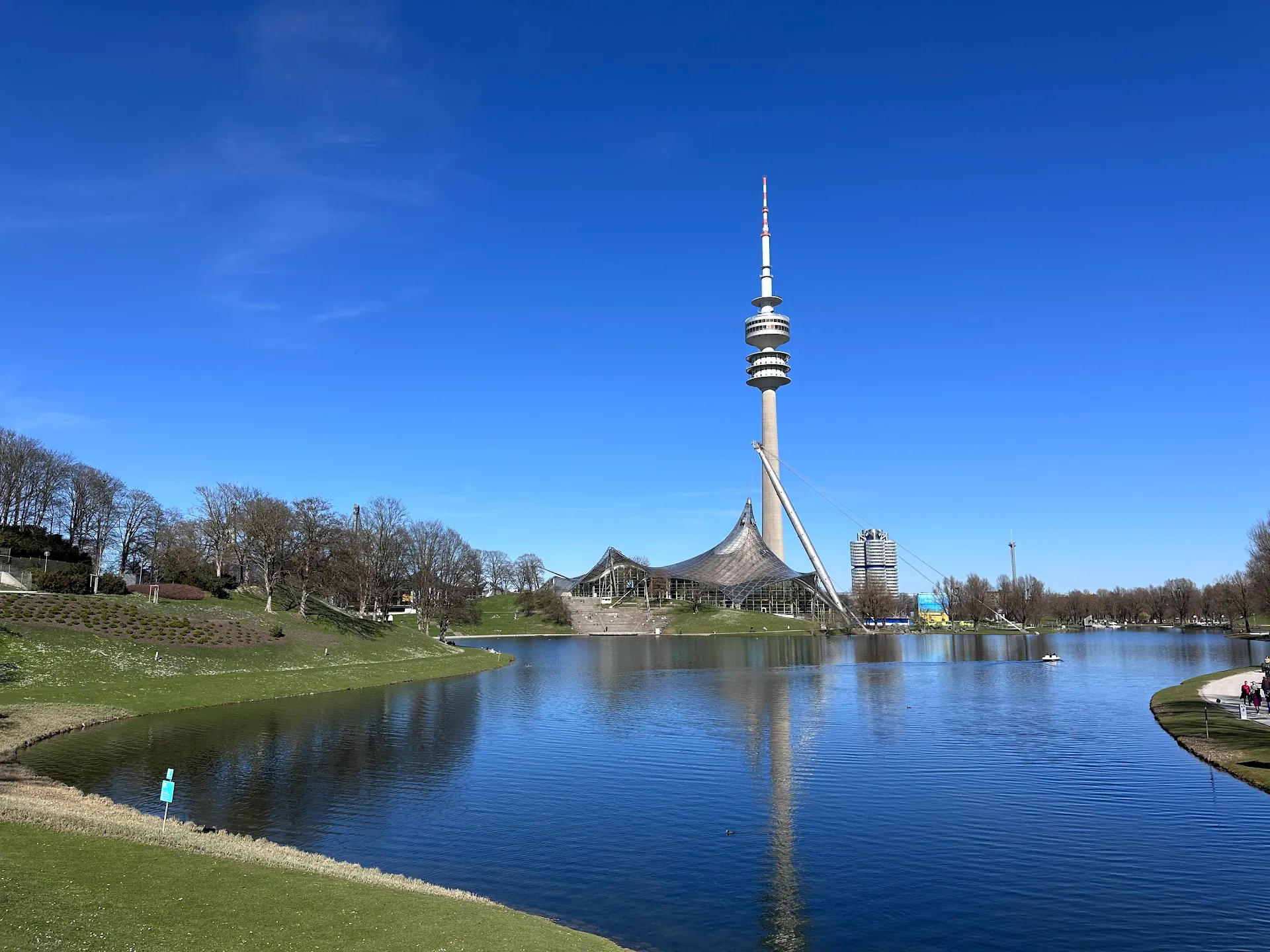
Olympiaberg
A roughly 60-metre grass-covered hill raised from WWII rubble (heaped up 1947–1958 from war debris) in Munich's Olympic Park. The Olympiaberg is a free, freely-accessible viewpoint with a gently ascending paved path to a summit platform offering panoramic views over the park, the city and — on clear days — the Alps. It is one of Munich's favourite sunset and picnic spots.
Viewpoint
Frauenkirche South Tower
The south tower of Munich's twin-domed Frauenkirche (Cathedral of Our Lady) is one of the highest viewpoints accessible in the old town. Visitors climb a short, narrow spiral staircase (about 86 steps) to an intermediate level and then take a lift up to the enclosed tower room, whose viewing platform sits at roughly 80 metres with windows opening onto a sweeping panorama over the historic centre and, on clear days, the Alps. The tower reopened to the public in March 2022 after an approximately ten-year restoration.
Day by day
Day 1Hamburg
Harbour, Speicherstadt & HafenCity
10:00Landmark
St. Pauli Landungsbruecken
Start at the Landungsbrücken, the floating pier promenade where the city meets its working harbour, and hop on a public ferry for a cheap cruise past the docks.
St. Pauli
Tip: Use a normal HVV transit ticket on the harbour ferries (line 62) instead of a pricey tour boat.
11:30Landmark
Old Elbe Tunnel
Take the wood-panelled lift down into the 1911 St. Pauli Elbe Tunnel and walk under the river to the south bank for the classic skyline-and-cranes view.
St. Pauli
Tip: It's free on foot; the far side gives the best photo back across the water to the city.
13:00Landmark
Speicherstadt
Wander the Speicherstadt, the world's largest warehouse district — a UNESCO maze of red brick, canals and iron bridges — and grab lunch among the converted lofts.
HafenCity
Tip: Come back after dark too: the gables are floodlit and reflect beautifully in the canals.
15:00Museum
Miniatur Wunderland
Lose an afternoon in Miniatur Wunderland, the world's largest model railway, where tiny trains thread whole countries and an airport actually 'flies' planes.
Speicherstadt
Tip: Book a timed online ticket well ahead — walk-up queues can run to hours.
17:30Landmark
Elbphilharmonie
Ride the long curved escalator up to the Elbphilharmonie's free Plaza for a 360° terrace view over the harbour and HafenCity at golden hour.
HafenCity
Tip: Plaza tickets are free but capped — reserve a slot online, or try for a same-day one at the box office.
20:00Restaurant
Old Commercial Room
Dinner of proper Hamburg classics — Labskaus, pan-fried plaice and eel soup — at the Old Commercial Room, going strong near the Michel since 1795.
Neustadt
Tip: Order the Labskaus topped with a fried egg, rollmop and beetroot for the full sailor's tradition.
Day 2Hamburg
The Alster, the Rathaus & the old town
09:30Architecture
Hamburg Rathaus
Begin at the lavish neo-Renaissance Rathaus, Hamburg's seat of government, stepping into its arcaded courtyard before a guided tour of the state rooms.
Altstadt
Tip: Short tours run in English most days — check the next available time at the door when you arrive.
10:45Landmark
Jungfernstieg
Stroll the Jungfernstieg, the grand boulevard along the Binnenalster, where fountains play on the lake and white Alster steamers set off across the water.
Neustadt / Altstadt
Tip: A short Alster lake cruise from the jetty is a lovely, cheap way to see the villa-lined shores.
12:30Landmark
Chilehaus
Walk to the Kontorhausviertel for the Chilehaus, a UNESCO-listed 1920s office block whose sharp brick prow really does look like the bow of a ship.
Kontorhausviertel, Altstadt
Tip: Stand at the eastern corner on Pumpen for the famous ship's-prow angle.
14:00Museum
Hamburger Kunsthalle
Spend the afternoon in the Hamburger Kunsthalle, one of Germany's great art museums, from medieval altarpieces to Friedrich's 'Wanderer above the Sea of Fog'.
Altstadt
Tip: The light-filled modern Galerie der Gegenwart wing is included — leave time for it.
16:30Landmark
St. Nikolai Memorial
End at the St. Nikolai Memorial, a bombed church kept as a ruin; take the glass lift up the surviving spire for a view over the rebuilt city.
Altstadt (Hamburg-Mitte)
Tip: The crypt below holds a quietly moving exhibition on the 1943 firestorm.
20:00Restaurant
Bullerei
Dinner at Bullerei, TV chef Tim Mälzer's buzzy brick-vaulted grill in the Schanzenviertel, for steaks, sharing plates and a lively local crowd.
Schanzenviertel (Sternschanze)
Tip: Book ahead; the adjoining deli is a cheaper, walk-in option earlier in the day.
Day 3Hamburg
The Michel, maritime Hamburg & a farewell feast
09:30Viewpoint
St. Michael's Church
Climb (or lift) the tower of St. Michael's — 'the Michel' — Hamburg's great baroque landmark, for the definitive panorama over the harbour and the spires.
Neustadt
Tip: Time it for the daily organ recital or the trumpet-from-the-tower 'Turmblasen' if it's on.
11:00Landmark
Krameramtsstuben
Duck into the Krameramtsstuben beside the Michel, a tiny lane of half-timbered 17th-century almshouses — the last courtyard of its kind in the city.
Neustadt
Tip: There's an atmospheric little period flat to visit and a cosy café tucked among the houses.
12:00Museum
Internationales Maritimes Museum Hamburg
Cross to HafenCity for the International Maritime Museum, nine decks of ship models, instruments and naval history inside a restored brick Kaispeicher warehouse.
HafenCity
Tip: It's huge — focus on a couple of decks and lunch in HafenCity afterwards rather than marching through all nine.
15:00Landmark
Deichstrasse
Walk Deichstrasse, Hamburg's oldest surviving street, a row of gabled merchant houses along the Nikolaifleet canal where the Great Fire of 1842 began.
Altstadt
Tip: Follow the canal round to the Hohe Brücke for the prettiest view of the backs of the houses.
17:00Landmark
Bismarck Monument
Climb up through the Old Elbpark to the colossal Bismarck Monument, the largest statue of the Iron Chancellor anywhere, looming over the harbour.
St. Pauli (Alter Elbpark)
Tip: It's a short, leafy walk up from the Landungsbrücken — good at sunset before dinner.
20:00Restaurant
The Table Kevin Fehling
Mark the end of the north with a blow-out at The Table by Kevin Fehling, Hamburg's three-Michelin-star counter where guests sit at a single sinuous table around the kitchen.
HafenCity
Tip: An expensive, unforgettable splurge — reserve months ahead, or swap in a classic harbour fish dinner instead.
Day 4Berlin
ICE east to the capital & historic Mitte
Must visit
12:30Memorial5.0
Brandenburg Gate
Arrive by ICE from Hamburg and walk to the Brandenburg Gate, the neoclassical arch on Pariser Platz that became the symbol of a divided — then reunited — Germany.
Mitte
Tip: It's a short walk from Berlin Hbf; drop your bags at the hotel first, then come here to start the city.
Must visit
14:00Memorial5.0
Memorial to the Murdered Jews of Europe
A few steps south, walk among the 2,711 grey stelae of the Memorial to the Murdered Jews of Europe, a sloping field of concrete you experience in silence.
Mitte
Tip: The free underground Information Centre beneath it is sobering and worth the time.
15:30Scenic Spot5.0
Gendarmenmarkt
Pause at Gendarmenmarkt, arguably Berlin's handsomest square, framed by the German and French cathedrals and the colonnaded concert hall.
Mitte
Tip: A good spot for a coffee break; the square hosts a famous Christmas market in December.
18:00CulturalFree
Reichstag Dome Visit
End at the Reichstag for a timed evening visit up Norman Foster's glass dome, spiralling above the parliament chamber as the city lights come on.
Mitte (Tiergarten)1-2 hours
Tip: Entry is free but you must register online in advance — a sunset slot is the most magical.
Book this tourDay 5Berlin
Museum Island & the heart of Mitte
09:30Cultural€19 (day pass)
Museum Island Day
Devote the morning to UNESCO-listed Museum Island, five world-class collections on one Spree island — start with the Neues Museum and the bust of Nefertiti.
Mitte (Museum Island)5-7 hours
Tip: Buy timed tickets online; an area pass pays off the moment you visit a second museum.
Book this tour12:30Temple4.0
Berlin Cathedral (Berliner Dom)
Next door, step into the domed Berliner Dom, the Hohenzollerns' grand Protestant cathedral, and climb to the gallery for a close-up view over the island.
Mitte
Tip: The dome walk gives a great rooftop panorama of Mitte for a small extra fee.
Must visit
13:45Restaurant5.0
Mogg
Lunch at Mogg, a New York-style deli inside the restored former Jewish Girls' School, famous for its towering house-cured pastrami on rye.
Mitte
Tip: Order the half-sandwich plus a side if the full pastrami looks daunting.
15:00Architecture
Hackesche Hoefe
Wander the Hackesche Höfe, a linked series of restored Art Nouveau courtyards lined with cafés, boutiques and the tiled façade of the first court.
Mitte
Tip: Slip into the adjoining Haus Schwarzenberg alley for grittier, free street art.
17:00Street
TV Tower from Karl-Marx-Allee
Stroll to Alexanderplatz beneath the soaring Fernsehturm, the GDR-era TV Tower that is still the tallest structure in Germany.
Friedrichshain / Mitte
Tip: Book a timed slot if you want to ride up; otherwise enjoy it from the square below.
Day 6Berlin
The Wall & the East
09:30Memorial5.0
Berlin Wall Memorial
Begin on Bernauer Strasse at the Berlin Wall Memorial, the most complete surviving stretch — death strip, watchtower and all — with a free outdoor documentation centre.
Mitte
Tip: Climb the viewing platform opposite for the one place you can see the full double-wall layout.
Must visit
11:30Memorial5.0
East Side Gallery
Walk the East Side Gallery, a 1.3-km surviving section of the Wall turned into the world's longest open-air mural gallery, including the famous fraternal kiss.
Friedrichshain
Tip: Start early; the best-known panels get crowded with photographers by midday.
13:00Restaurant4.0
Mustafas Gemuese Kebab
Join the queue at Mustafa's Gemüse Kebap near Mehringdamm for Berlin's most famous vegetable döner — griddled halloumi and roast veg in warm flatbread.
Kreuzberg
Tip: Lines can be long; an off-peak mid-afternoon visit moves much faster.
14:30Architecture
Oberbaumbruecke
Cross the double-decker Oberbaum Bridge, the photogenic brick viaduct over the Spree linking Kreuzberg and Friedrichshain — once a Cold War border crossing.
Friedrichshain / Kreuzberg
Tip: Look out for the neon 'rock-paper-scissors' light installation between the two towers.
16:00Memorial5.0
Treptower Park Soviet War Memorial
Take the S-Bahn out to Treptower Park for the vast Soviet War Memorial, a solemn, monumental cemetery for the Red Army soldiers who fell taking Berlin in 1945.
Treptow
Tip: The scale only hits you from the central avenue — walk its full length to the statue.
18:30Bar4.0
Klunkerkranich
Wind up the day at Klunkerkranich, a rooftop bar and garden atop a Neukölln shopping-centre car park, for sundowners over the city's rooftops.
Neukoelln
Tip: Arrive before sunset for a seat; it's casual and often cash-friendly.
Day 7Berlin
Charlottenburg, the Tiergarten & a night out
10:00Castle4.0
Charlottenburg Palace
Head west to Charlottenburg, Berlin's largest baroque palace, for its opulent state rooms, the Porcelain Cabinet and the formal gardens behind.
Charlottenburg
Tip: The garden is free to wander if you'd rather skip the ticketed interior.
12:30Park4.0
Tiergarten
Cross into the Tiergarten, the huge central park that was once a royal hunting ground and is now the city's green lungs of lawns, lakes and shady paths.
Tiergarten
Tip: Hire a rowing boat at Café am Neuen See, or just picnic by the water.
14:00Landmark
Victory Column (Siegessaeule)
Climb the spiral stair of the Victory Column at the park's heart for a golden-angel's-eye view straight down the great avenues.
Grosser Stern, Tiergarten
Tip: It's a tight stair with no lift — worth it on a clear day for the axis view over the city.
16:00Street
Potsdamer Platz
Finish the sightseeing at Potsdamer Platz, rebuilt from Wall-era wasteland into a plaza of glass towers, with a preserved chunk of the Wall still standing.
Potsdamer Platz, Mitte / Tiergarten border
Tip: A fitting bookend to the Wall sites — original segments stand right by the U-Bahn entrance.
19:30Restaurant4.0
Cocolo Ramen
Refuel with a steaming bowl at Cocolo Ramen, a Berlin favourite for rich tonkotsu broth and springy noodles, before a big night out.
Kreuzberg
Tip: Go early — it's small, doesn't take bookings and fills up fast.
Must visit
23:30Club5.0
Berghain / Panorama Bar
If you're up for it, end in Berlin's temple of techno, Berghain, the converted power station that defines the city's legendary club culture.
Friedrichshain
Tip: No phones inside, dress down in black, go very late — and don't take the famously tough door personally.
Day 8Munich
ICE south to Bavaria & Marienplatz
13:00Landmark
Marienplatz
Arrive by ICE from Berlin and head to Marienplatz, Munich's central square, in time for the New Town Hall's Glockenspiel to chime and its figures to dance.
Tip: The Glockenspiel plays at 11:00 and 12:00 year-round, plus 17:00 in summer — time your arrival.
14:30Viewpoint
New Town Hall Tower
Ride the lift up the neo-Gothic New Town Hall tower for a first overview of the red-roofed old town and, on clear days, the Alps on the horizon.
Tip: Quicker and step-free compared with climbing the church towers nearby.
16:00Landmark
Frauenkirche
Walk to the Frauenkirche, the brick-Gothic cathedral whose twin onion-domed towers are the symbol of Munich's skyline.
Tip: Entry is free; look for the legendary 'Devil's Footprint' set into the floor by the entrance.
17:30Market
Viktualienmarkt
Settle into the Viktualienmarkt, Munich's beloved open-air food market, for a first Bavarian Brotzeit and a beer in the central beer garden under the maypole.
Tip: The beer garden pours whichever city brewery is 'on' that season — pull up a bench and share a table.
Day 9Munich
Deutsches Museum & the Englischer Garten
09:30Museum
Deutsches Museum
Spend the morning at the Deutsches Museum, the world's largest science and technology museum, on its own island in the Isar.
Tip: It's vast — pick two or three halls (aviation, marine, energy) rather than trying to see everything.
13:00Cafe
Tambosi
Lunch at Tambosi, a Munich institution since 1775, on Odeonsplatz with tables spilling into the leafy Hofgarten.
Tip: Grab a Hofgarten-side seat and watch the boules players under the arcades.
14:30Park
Englischer Garten
Walk into the Englischer Garten, larger than New York's Central Park, and watch wetsuited surfers ride the standing Eisbach wave at its southern tip.
Tip: Carry on to the Chinese Tower beer garden for a stein under the chestnut trees.
18:00Market
Markt am Wiener Platz
Cross the Isar to Haidhausen and the tiny year-round Markt am Wiener Platz, a cluster of old market huts with a relaxed, local beer garden.
Haidhausen
Tip: A quieter, neighbourhood-feeling spot for an early-evening drink away from the tourist crowds.
Day 10Munich
The Kunstareal museum quarter
09:30Museum
Alte Pinakothek
Open the day with the Old Masters at the Alte Pinakothek — Dürer, Rubens, Rembrandt and Raphael in one of Europe's oldest picture galleries.
Tip: Sunday admission at the state museums is just €1, though special exhibitions cost extra.
11:30Museum
Pinakothek der Moderne
Continue next door to the Pinakothek der Moderne for twentieth-century art, design and architecture gathered under its great daylit rotunda.
Tip: The basement design collection — cars, chairs and computers — is a highlight families love.
13:30Cafe
Man Versus Machine Coffee Roasters
Break for a proper flat white at Man Versus Machine, a cornerstone of Munich's third-wave coffee scene, with a light bite to recharge.
Glockenbach / Isarvorstadt
Tip: A good moment to regroup and decide how much more art you've got in you.
15:00Museum
Lenbachhaus
Finish with the Lenbachhaus, home to the world's greatest collection of Blue Rider (Blauer Reiter) Expressionism — Kandinsky, Münter and Marc in full colour.
Tip: The golden façade and Italianate garden villa are worth a look in their own right.
Day 11Munich
Nymphenburg & green western Munich
09:00Park
Schlosspark Nymphenburg
Tram out to the Nymphenburg palace park, a baroque expanse of canals, lawns, woodland and garden pavilions, at its quietest first thing.
Tip: The park is free; the hidden Amalienburg hunting lodge is the prettiest of the pavilions.
10:30Landmark
Nymphenburg Palace
Tour Nymphenburg Palace itself, the Wittelsbachs' sprawling summer residence, including the Great Hall and Ludwig I's Gallery of Beauties.
Tip: A combined ticket adds the Marstallmuseum's royal carriages and the porcelain collection.
14:00Park
Westpark
After lunch, ride south to Westpark, a landscaped 1983 garden-show park with lakes, an authentic Thai sala, a Japanese garden and two relaxed beer gardens.
Tip: The Mollsee beer garden is the local favourite for an afternoon Maß by the water.
17:00Viewpoint
Olympiaberg
End up on the Olympiaberg, the grassy rubble hill in the 1972 Olympic Park, for a free sunset panorama over the city to the Alps and the BMW towers.
Tip: Bring a drink and join the locals on the grass — it's one of Munich's best free sunset spots.
Day 12Munich
Views & farewell
09:00Viewpoint
Frauenkirche South Tower
On your last morning climb the recently reopened south tower of the Frauenkirche for the classic rooftop view across the old town to the mountains.
Tip: Check the opening times — the restored tower keeps shorter hours than the rest of the church.
10:30Landmark
Marienplatz
Drop back down into Marienplatz for one last look at the square and the Glockenspiel before you pack up.
Tip: Slip into the nearby St. Peter's (Alter Peter) if its tower is open for a final, higher view over the rooftops.
11:30Market
Viktualienmarkt
Round off the trip with a farewell Brotzeit — Weisswurst, a pretzel and a last Bavarian beer — back at the Viktualienmarkt.
Tip: Tradition says Weisswurst should be eaten before noon, so you've timed it just right.
12:30Cafe
Man Versus Machine Coffee Roasters
Finish with a final specialty coffee at Man Versus Machine to round things off before heading to the airport or station.
Glockenbach / Isarvorstadt
Tip: München Hbf and the airport S-Bahn are both an easy ride from the centre — leave plenty of time.
Getting between stops
What it costs
A comfortable mid-range trip — three- and four-star hotels, restaurant meals, the main museums and city transport — runs roughly €130-220 per person per day, with Hamburg and Munich a touch pricier than Berlin. Add about €120-160 total for the two inter-city ICE legs if you book Sparpreis advance fares. Market lunches, Sunday €1 museum entry in Munich and a Deutschland-Ticket for local transport all help keep costs down; a three-Michelin-star dinner in Hamburg is an optional splurge on top.~EUR 130-220 / day mid-range / day
Frequently asked questions
- How do I get between the three cities?
- By Deutsche Bahn ICE high-speed train. Hamburg to Berlin takes about an hour and three-quarters, and Berlin to Munich about four hours, both running roughly hourly. Book Sparpreis advance fares for the best prices, reserve seats, and you'll never need a car.
- Is 12 days enough for Hamburg, Berlin and Munich?
- Comfortably. Three days in Hamburg, four in Berlin and four in Munich cover each city's headline sights at a steady pace, with the two travel days built in. If you have longer, add a Munich day trip to Neuschwanstein or the Alps, or a stop in Dresden or Nuremberg between Berlin and Munich.
- Which direction should I travel?
- This route runs north to south, starting in Hamburg and ending in Munich, which has its own airport with easy links to the Alps and Austria. Reverse it if your flights favour arriving in the south — the trains run just as well the other way.
- Do I need a car for this trip?
- No. All three cities are best explored on foot and by their excellent U-Bahn/S-Bahn networks, and the ICE links them fast and comfortably. A car only helps if you add rural day trips like the Bavarian castles or the Alps.
- When is the best time to go?
- May to September gives the warmest weather, long days and lively beer gardens and harbour life. December is special for Christmas markets in all three cities, though it's cold; spring and early autumn are quieter and cheaper than peak summer.
Make this trip yours
Save this itinerary and customize it — dates, stops, budget and friends, all in one place.