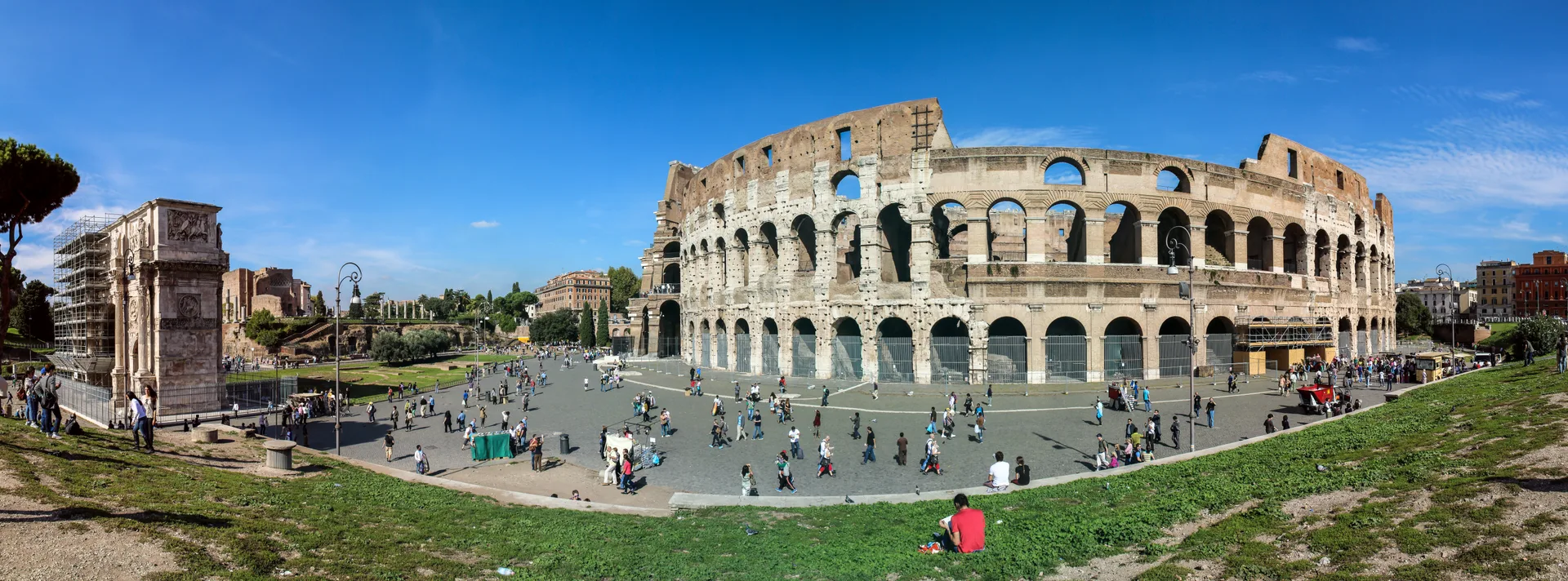
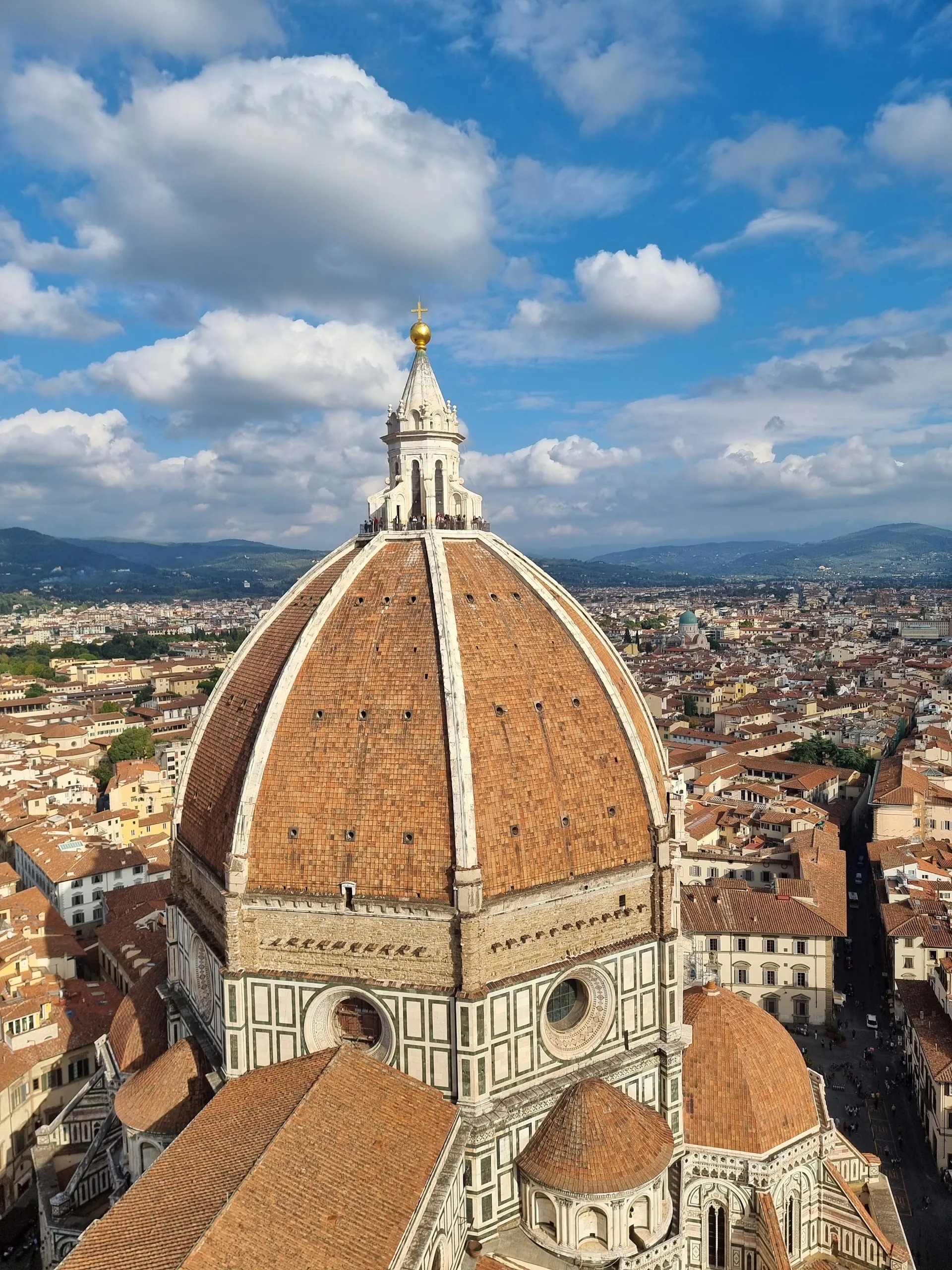
Few countries pack as much into a single trip as Italy. In a week or two you can stand inside the Colosseum and toss a coin in the Trevi Fountain in Rome, climb beneath Brunelleschi's dome and stand before Michelangelo's David in Florence, then glide along the Grand Canal and get lost in the back lanes of Venice, all linked by some of the fastest, most frequent trains in Europe. The country is shaped like a boot stretching from the alpine north to the sun-baked south, and that geography is its gift: in one place you get Renaissance art cities, Roman ruins, rolling Tuscan hills, lagoon islands, dramatic coastlines, and arguably the best food on the continent, region by distinct region.
Most first trips follow the classic triangle of Rome, Florence, and Venice, and for good reason. Rome is the eternal capital, a living museum where ancient ruins, Baroque squares, and Vatican treasures sit beside humming trattorias and late-night gelato. Two and a half thousand years of history are layered into a walkable centre. An hour and a half north by high-speed train, Florence is the cradle of the Renaissance, compact enough to cross on foot, with the Uffizi, the Accademia, the Ponte Vecchio, and a skyline crowned by the terracotta dome of the Duomo. It is also the gateway to Tuscany, with its vineyards, hilltowns, and the towers of Siena and San Gimignano within easy reach. Two hours further on, Venice is unlike anywhere else on earth: a city of canals, bridges, and palazzi built across 100-plus islands, best experienced early in the morning before the day-trippers arrive, with the basilica and campanile of Piazza San Marco at its heart and quieter islands like Murano and Burano a short vaporetto ride away.
What makes Italy unusually easy to plan is the rail network. Two operators, state-run Trenitalia (its Frecciarossa "red arrow" services) and private Italo, compete head-to-head on the same high-speed lines, which keeps prices low and frequencies high. Rome to Florence takes around 1h30m, Florence to Venice about 2 hours, and trains run several times an hour, so you rarely need to plan far ahead except in peak season. Within cities you mostly walk, supplemented by buses, metros (in Rome, Milan, and Naples), and Venice's water buses. You almost never need a car for a city-focused trip; rent one only to explore the Tuscan or Umbrian countryside.
Timing matters. Spring (April to mid-June) and autumn (mid-September to October) are the sweet spots: warm but not scorching, with thinner crowds and prices well below the summer peak. Summer (especially August) is hot, crowded, and expensive, and many Italians take their own holidays then, so some city restaurants close. Winter is quiet and atmospheric, with the lowest prices, cool but rarely freezing in the centre and south. Watch for Easter (early April in 2026), which spikes crowds and prices in Rome and the Vatican.
Practical life is straightforward. The currency is the euro, contactless payment is near-universal, and tap water is safe to drink. A few cultural notes go a long way: coffee culture is precise (a cappuccino is a morning drink, an espresso is taken standing at the bar), lunch and dinner run later than in much of the world, and a modest coperto (cover charge) on your restaurant bill is normal rather than a scam. From late 2026, visa-exempt visitors will gradually need the new ETIAS travel authorization, an inexpensive online step rather than a visa.
Use this hub as your map of the country. Start with the guides on the best time to visit and getting around, weigh up Rome versus Florence to decide where to spend more time, then open the city pages to build your route. Anything you like can be dropped straight into a TripBox itinerary with dates, a live map, and your travel companions, turning the plan in your head into a real, shareable trip in minutes.
When to visit
The shoulder seasons are the best time to visit Italy: late April to mid-June and mid-September to late October bring warm weather, manageable crowds, and prices well below the summer peak. May is often the single best all-round month, with the weather fully warmed up and Easter crowds gone, while October is ideal for autumn light, food and wine, and quieter art cities. Summer (especially August) is hot, crowded, and expensive, with many Italians on holiday and some city restaurants closed. Winter is the cheapest and quietest time, cool but rarely freezing in the centre and south, and atmospheric in Venice and Rome. Note Easter (5 April in 2026), which causes a sharp spike in crowds and prices, especially around Rome and the Vatican.
Budget
Italy spans a wide range. Backpackers can manage on hostel dorms, market and street food, and regional trains; mid-range travellers get three-star hotels, sit-down trattoria meals, and high-speed train rides comfortably; the top end runs to design hotels and Michelin dining. Costs vary by region and season: Venice, Florence, and the big art cities run higher than the south, and shoulder-season prices are 25 to 40 percent below the summer peak. Accommodation and intercity high-speed trains are the biggest variables; coffee, market food, and museum entries are reasonably priced.
Getting around
Italy's high-speed rail is the backbone of any trip and one of the best in Europe. Two operators compete on the same lines, state-run Trenitalia (whose Frecciarossa trains run at up to 300 km/h) and private Italo, which keeps fares low and frequencies high. Rome to Florence takes around 1h30m, Florence to Venice about 2 hours, and Rome to Venice roughly 3h45m, with trains several times an hour; book ahead in peak season for the cheapest fares, as prices rise as seats fill. Smaller towns are served by slower regional trains (cheap, no reservation needed). Within cities you mostly walk: Rome, Milan, and Naples have metros, most cities have buses and trams, and Venice uses vaporetto water buses instead of roads. You almost never need a car for a city trip; rent one only to explore the Tuscan or Umbrian countryside, and note that historic centres have restricted-traffic ZTL zones with steep automated fines.
Visa & entry
Italy is part of the Schengen Area, so citizens of the US, UK, Canada, Australia, and many other countries can enter visa-free for short tourism stays of up to 90 days within any 180-day period. Your passport should be valid for at least three months beyond your planned departure. From the last quarter of 2026, visa-exempt visitors will gradually need the new ETIAS travel authorization, an online application costing about 20 euros and valid for three years; there is an initial transitional period during which it is not yet strictly enforced. The official application portal does not exist yet, so beware of scam sites, and always confirm the current rules for your nationality with an official source before you travel.
Central Italy's region around the capital. Rome anchors it: the Colosseum and Roman Forum, the Vatican and St Peter's, Baroque squares and fountains, and a food scene built on Roman classics like cacio e pepe and carbonara, all in a remarkably walkable historic core.
Tuscany
The Renaissance heartland of rolling hills, vineyards, and art cities. Florence is the hub, home to the Uffizi, the Accademia's David, and Brunelleschi's dome, and the gateway to the wider region of Siena, San Gimignano, and the Chianti wine country.
Veneto
Italy's northeast, fronting the Adriatic. Venice is its jewel, a city of canals, bridges, and palazzi spread across a lagoon, with Piazza San Marco, the Grand Canal, and the glass and lace islands of Murano and Burano nearby.
Seven to ten days is ideal for a first trip, enough to cover the classic triangle of Rome, Florence, and Venice with time to breathe, plus a Tuscan side trip from Florence. Five days works for a focused Rome-plus-Florence introduction, while two weeks lets you add the Amalfi Coast, Cinque Terre, or Milan and the lakes. The high-speed trains make it easy to string several cities together.
When is the best time to visit Italy?
The shoulder seasons, late April to mid-June and mid-September to late October, are best: warm weather, manageable crowds, and prices well below the summer peak. May and October are especially good. Avoid August, the hottest, busiest, and priciest month, and watch for Easter (5 April in 2026), which spikes crowds and prices around Rome.
Do I need a visa to visit Italy?
Citizens of the US, UK, Canada, Australia, and many other countries can visit Italy visa-free for up to 90 days in any 180-day period, as it is part of the Schengen Area. From late 2026, visa-exempt travellers will gradually need the new ETIAS travel authorization, an inexpensive online step (about 20 euros) rather than a visa. Always confirm the current rules for your nationality with an official source before booking.
What is the best way to get around Italy?
High-speed trains. Trenitalia's Frecciarossa and the private Italo compete on the same lines, so fares stay low and trains run frequently: Rome to Florence is about 1h30m and Florence to Venice about 2 hours. Within cities you mostly walk, with metros in Rome, Milan, and Naples and water buses in Venice. You rarely need a car except for the countryside.
How much does a trip to Italy cost?
Backpackers can get by on roughly 60 to 80 euros a day with hostels, market food, and regional trains. Mid-range travellers should plan for about 120 to 200 euros a day including a three-star hotel, restaurant meals, and high-speed train rides. Venice, Florence, and the big art cities run higher than the south, and shoulder-season prices are 25 to 40 percent below the summer peak.
Is Rome, Florence, or Venice better for a first trip?
Most first-timers should see all three, as they are only one to two hours apart by high-speed train and complement each other: Rome for ancient ruins and scale, Florence for Renaissance art and Tuscany, Venice for its one-of-a-kind canals. If you must choose, Rome offers the most range, while Florence is the easiest base for day trips.
Ready to plan Italy?
Build your route across Italy — itinerary, map, budget and friends, all in one place.